
Botswana, located in southern Africa, has a population of 2 million. The country has achieved an impressive record of economic development and poverty reduction over the last half-century. In 1950, Botswana’s GDP per capita was $1,344. Today, it is $15,015, making Botswana a middle-income country. As the second-largest exporter of diamonds, the prudent economic management of diamonds in Botswana is responsible for much of this growth.
The Resource Curse
Paradoxically, many countries that discover large domestic reserves of natural commodities like petroleum, gold or rare-earth metals experience economic stagnation or decline. A recent paper by the International Monetary Fund explains that this trend often occurs because of commodity-dependence. When a country is heavily dependent on just one commodity export and the price of that commodity declines, there is no other revenue stream to salvage the economy. However, Botswana is a standing reproach to this trend. Judicious fiscal policy has allowed Botswana to reap the rewards of their vast diamond reserves while avoiding many potential setbacks.
Botswana’s Fiscal Prudence
Due to its capital intensive nature, the employment potential of mining is Botswana has always been limited. While diamonds make up 40 percent of Botswana’s GDP and 90 percent of Botswana’s exports, diamonds in Botswana only account for four percent of employment. As a result, the government has had to find ways to distribute the wealth generated from diamond exports across the country’s population.
Botswana has been lauded for the effective management of its diamond supply. In particular, the country has employed two strategies to ensure that its diamond exports promote sustainable, egalitarian economic growth: decoupling expenditure and revenue and investing in economic diversification.
First, Botswana has chosen not to automatically increase government spending during economic booms. Instead, when diamond prices rise and government revenue increases, Botswana often saves cash to cushion the blow during price shocks. This long-term economic mindset has prevented recessions. For example, the World Bank writes that when diamond revenues fell in 1981, Botswana used a rainy day fund to avoid any drastic decrease in government expenditure.
Botswana uses six-year National Development Plans to outline their expenditure levels. These plans involve feasibility checks to make sure that investment projects are sustainable even if government revenue falls. Once the National Development Plan has been approved, no additional projects can be added without a majority vote from parliament. These mechanisms work toward assuring that Botswana has enough reserve cash if its diamond reserves falter.
Economic Diversification
The second strategy Botswana uses to grow its economy is diversification into sectors other than diamond mining. A variegated economy is less vulnerable to commodity price shocks. Botswana has invested much of its earnings from diamond exports into incentive structures that encourage manufacturing and agriculture. In 2005, Botswana created the Business and Economic Advisory Council (BEAC) tasked with identifying barriers to diversification and crafting responsive action plans. As a result of this focus, the Botswanan economy has continued to grow even when global diamond prices fall. What is more, manufacturing today comprises 14 percent of Botswanan GDP and is more diversified than it was at independence. Even though Botswana has relied on diamonds for the last few decades, manufacturing growth in Botswana outpaced the sub-Saharan African average from 1970 to 1996.
Botswana’s Progress
Good governance has propelled Botswana from a low-income to a middle-income country. In 1985, 59 percent of the population was living in poverty. Today, that percentage has dropped to 19 percent. In 1966, 60 percent of Botswana’s government expenditure came from foreign aid. Today, only three percent of expenditure comes from foreign aid. As Botswana continues to aim for economic diversification and prudent fiscal management, they stand as an impressive example of the impact that judicious economic policy can have on a vulnerable population.
– Abraham Rohrig
Photo: Flickr
 As a landlocked nation, Austria works closely with other countries in the European Union (EU) on different issues. Therefore, Austria has
 5G is a

 Established in 1973, the Center for Policy Research (CPR) is a non-partisan nonprofit think tank designed to produce
 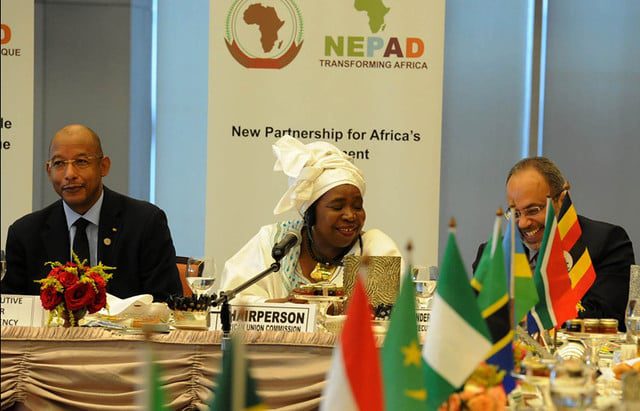 The New Partnership for Africa’s Development (NEPAD) aims to reduce poverty through sustainable development and empowering women. In 2001, African Heads of State and Government of the Organisation of African Unity (OAU) adopted NEPAD. A year later, the African Union ratified the framework for pan-African socio-economic development.