• Link to X
  • Link to Facebook
  • Link to Instagram
  • Link to TikTok
  • Link to Youtube
  • About
    • About Us
      • President
      • Board of Directors
      • Board of Advisors
      • Financials
      • Our Methodology
      • Success Tracker
      • Contact
  • Act Now
    • 30 Ways to Help
      • Email Congress
      • Call Congress
      • Volunteer
      • Courses & Certificates
      • Be a Donor
    • Internships
      • In-Office Internships
      • Remote Internships
    • Legislation
      • Politics 101
  • The Blog
  • The Podcast
  • Magazine
  • Donate
  • Click to open the search input field Click to open the search input field Search
  • Menu Menu

Archive for category: Global Poverty

Key articles and information on global poverty.

Education, Global Poverty

Top 10 Facts About Education in Afghanistan

Top Facts about Education in AfghanistanWhen the United States invaded Afghanistan in 2001, the percentage of Afghan children attending school was extremely low. Now, the educational landscape of Afghanistan is vastly different. More children, especially girls, are enrolled in school. More importantly, they are staying in school. These top 10 facts about education in Afghanistan provide a glimpse of what education looks like in the country now.

Top 10 Facts About Education in Afghanistan

  1. As of 2019, over 9 million Afghan children are in school.
    Around 300,000 students are attending colleges and universities. Additionally, 480,000 new teachers were placed in Afghan schools. Their training was funded by the U.S. Agency for International for Development initiatives.
    https://www.usaid.gov/afghanistan/education
  2. It is rare for Afghan children to drop out of school once they are enrolled.
    Approximately 85 percent of children who start primary school also finish primary school. Plus, nearly 94 percent of boys and 90 percent of girls who start secondary school also finish secondary school.
  3. Literacy rates are high in urban areas.
    Although literacy rates in rural Afghanistan remain relatively low, this is not the case in urban areas. Literacy rates for women living in urban areas are as high as 34.7 percent. However, literacy rates for men living in urban areas are as high as 68 percent.
  4. SEA is improving education.
    Strengthening Education in Afghanistan, a USAID initiative, aims to improve the quality and accessibility of education in Afghanistan. Thanks to SEA, over 4,500 teachers received training in 2018. In the same year, 710 women received scholarships. This allowed them to work toward receiving bachelor’s degrees. SEA scholarships also allowed 150 women to work toward receiving master’s degrees at universities in India.
  5. U.S. interference has improved education.
    In 2007, six years after the U.S. invasion of Afghanistan, 60 percent of Afghan children attended school in temporary settings like tents instead of in school buildings. About 80 percent of teachers were deemed unqualified. The education of 5 million children was restored but 50 percent of children were still not in school. In the past 12 years, improvements have been made on all of these fronts.
  6. There are currently over 3 million children out of school in Afghanistan.
    Out of these 3 million, 60 percent are female. Nearly 17 percent of Afghan girls get married before they turn 15, meaning that they leave school sooner than their male peers.
  7. The number of Afghan children in school is higher now than in 2001.
    While more Afghan children are in school now than in 2001, there have not been significant increases in enrollment numbers since 2011. There are also some parts of Afghanistan that have seen decreased enrollment numbers during the past four years.
  8. In some Afghan provinces, female enrollment rates are as low as 14 percent.
    Only 33 percent of Afghan teachers are female. The number of female teachers varies widely from one region to the next. In some provinces, 74 percent of teachers are female. In others, only 1.8 percent of teachers are female.
  9. Around 50 percent of Afghans age 15 to 24 are illiterate.
    Afghan government spending grew three times higher from 2010 to 2015. However, spending on education was not increased proportionally. Over 50 percent of university students are from high-income areas.
  10. Girls have almost half as many years of schooling than boys.
    As of 2014, boys spend 13 years in school on average. Girls spend an average of eight years in school. Moreover, only 38.2 percent of the adult population is literate. As of 2017, Afghanistan was ranked 79th globally in terms of youth unemployment, with 17.6 percent of its population aged 15-24 unemployed.

These top 10 facts about education in Afghanistan show that though there is still room for improvement, the efforts made in the past 18 years have led to positive results. Needless to say, education is vital. The people of Afghanistan cannot overcome poverty and move toward peace without schools. Fortunately, the Afghan government and multiple organizations, including USAID, have made a great deal of progress. International support, including support for USAID from U.S. voters, can further maintain the progress of education in Afghanistan.

– Emelie Fippin
Photo: Flickr

July 20, 2019
https://borgenproject.org/wp-content/uploads/borgen-project-logo.svg 0 0 Kim Thelwell https://borgenproject.org/wp-content/uploads/borgen-project-logo.svg Kim Thelwell2019-07-20 00:22:122024-06-12 07:49:34Top 10 Facts About Education in Afghanistan
Global Poverty

Budding Hope for Romani People in Bulgaria

Romani People in BulgariaIn the 1400s, Romani people migrated from Northern India to Eastern Europe. Upon first arriving, Eastern European natives supposed they came from Egypt, thus calling them “Gypsies.” While the term “Gypsy” refers to a single ethnic minority, the Romani people came from numerous tribes. They lived as nomads and traditionally worked as craftsmen.

During this time, Eastern Europeans commonly used “Gypsy” as a derogatory term. They discriminated against Romani people, treating them as less than. Due to this history, the term “Gypsy” is avoided today for its negative connotation.

Romani People in Bulgaria

However, in some Eastern European countries like Bulgaria, citizens still discriminate against the Romani people. This discrimination results in poverty among Romani people in Bulgaria. As a result, they are isolated into ghetto-like neighborhoods that are covered in trash and lack clean drinking water. Additionally, the infrastructures and sewage systems of these neighborhoods are in need of repair. In Bulgaria, 40 percent of Romani people live below the poverty line.

The schools in the Romani neighborhoods of Bulgaria are of low quality, both in the quality of curriculum and resources. Because of this, many Romani parents view school as pointless and instead keep their children home. Other parents keep their children home to work for extra income. Some parents need older children to watch their younger siblings during the day. If possible, some Romani parents send their children overseas to school, in hopes they can achieve a better future.

This lack of high-quality education among Romani people in Bulgaria has led to:

  • 22 percent of Romani people in Bulgaria being illiterate.
  • 91 percent not receiving a secondary education.
  • a direct link between the lack of schooling and teen pregnancy, resulting in 6,000 babies being born to underage Romani mothers in 2016.
  • many being unable to speak Bulgarian.

Forming the Set Free Foundation

After acknowledging discrimination against Romani people in Bulgaria not only causes poverty but also makes it nearly impossible to escape, the Set Free Foundation was created. Established in 2000, this nonprofit works to fight for Romani rights in Bulgaria. Their vision is to create a system integrating Romani people into Bulgarian society. In doing so, Romani people would become functioning members of Bulgarian society and receive the same rights and opportunities as Bulgarians.

In order to accomplish this successfully, the Set Free Foundation has created the Renascence Programme which consists of the following components:

  • a 14- to 30-day program that transitions Romani people who have migrated to other parts of Europe back to Bulgaria,
  • a space for Romani people to rest and reflect,
  • assistance for Romani people seeking permanent housing and a job,
  • teaching Romani people how to budget finances, and
  • training for Romani women to ensure they have the necessary skills to enter the job market.

The Set Free Foundation Helps Romani People in Bulgaria

Beyond implementing the Renascence Programme, the Set Free Foundation has accomplished numerous projects to help end poverty among Romani people in Bulgaria. For example, they have built a house in Bulgaria called the Liberty House. This house temporarily houses Romani families in financial crises in need of housing. It consists of three working toilets, three showers and three water basins. The Liberty House can shelter four to six families at a time. And the Set Free Foundation hopes this house is the first of many.

The Set Free Foundation has also partnered with Valley Church to build a garden outside the Liberty House. The garden provides guests with fresh produce during their stay. In addition, Valley Church has donated numerous suitcases full of feminine hygiene products to the Set Free Foundation for Romani women.

The Set Free Foundation encourages supporters to spread the word about poverty among Romani people in Bulgaria. It also welcomes donations to help continue their work. Donations help Romani people gain access to better education and enter the workforce, ultimately resulting in their ability to leave poverty and lead more fulfilling lives.

– Emily Turner
Photo: Wikimedia Commons

July 19, 2019
https://borgenproject.org/wp-content/uploads/borgen-project-logo.svg 0 0 Kim Thelwell https://borgenproject.org/wp-content/uploads/borgen-project-logo.svg Kim Thelwell2019-07-19 23:45:552024-05-29 23:09:53Budding Hope for Romani People in Bulgaria
Global Poverty

Poverty Among Workers in the Cashew Industry

Poverty Among Workers in the Cashew IndustryWithin the past few decades, diet culture has no doubt become a fad in the United States. From weight loss pills and body slimmers to obsessive calorie counting, diet fads are everywhere. For many, dieting means consuming foods that are high in protein and low in cholesterol and saturated fats. A popular type of food that fits this category is cashews. Convenient when it comes to on-the-go snacks, these moon-shaped nuts are full of protein and healthy monounsaturated fats that make them an ideal snack for dieters.

The top importer of cashews for the past decade, the U.S. imported over 147,000 tons of cashews in 2016, a 32 percent increase from the past four years. Of these imports, 92 percent came from Brazil, India and Vietnam. While the high demand for cashews makes them easily accessible to first-world consumers, these tasty treats come with a price: the poverty among workers in the cashew industry.

The Problem: Hazardous & Unethical Working Conditions

Tamil Nadu, a state in India, is home to a vast amount of cashew farms. Around 500,000 Indian citizens work on these farms, the majority of whom are women, some as young as 13. Because these employees are hired without contracts, their employers have no obligation to provide steady incomes, pensions or holiday pay. On top of that, cashew harvesting is physically dangerous.

When harvesting cashews, one must break through two layers of shells to get to the nut. In between those two layers of shells are two chemicals, known as cardol and anacardic acid. Upon coming into contact with the skin, these chemicals leave painful burns. While a simple pair of gloves could protect the hands and flesh of cashew harvesters, employers refuse to permit or provide gloves because they slow down the harvesting process.

The average cashew harvester in India earns around 160 rupees per 10-hour day. This equates to $1.90 per 10-hour day. This amount is not just below the poverty line but below the extreme poverty line. In 2015, around 70,000 cashew harvesters in India went on strike, demanding an increase of 70 cents per day. However, with or without this raise, this wage remains below the poverty line.

Multiple supermarkets that import cashews from Tamil Nadu have voluntarily signed up to be members of the Ethical Trading Initiative (ETI). However, they have not taken action to prevent the unethical conditions of the cashew plantations contributing to the overall poverty among workers in the cashew industry.

The Solution: Combating Unethicality

In 2013, upon acknowledging the poverty among workers in the cashew industry, a company in India called Acceso Cashew Enterprise Private Limited (ACE) was formed. Partnering with U.S. nonprofit Technoserve, ACE works to address inefficiencies in farming practices and conditions of the cashew industry. ACE created an agriculture program to increase the number of cashew crops grown in India utilizing the least amount of resources. This program also improves farmers’ incomes by teaching them sustainability techniques and strengthening their market linkages. In 2014, over 1,000 farmers participated in the program.

Aatmaram Yashvant Agre, a farmer who participated in ACE’s agricultural program, successfully implemented the sustainability techniques to improve his farming. As a result, Agre’s overall cashew production grew by 30 percent. ACE, which works to end global poverty through business solutions, encourages advocacy on the issue of poverty and always accepts donations. By ensuring cashew harvesters are utilizing more efficient farming practices, their profits increase. Thus, poverty among workers in the cashew industry decreases. More efficient farming practices also ensure cashew harvesters avoid practices that cause them physical harm. And ultimately, this enables cashew harvesters to live humanely and lead healthier lives.

– Emily Turner
Photo: Flickr

July 19, 2019
https://borgenproject.org/wp-content/uploads/borgen-project-logo.svg 0 0 Kim Thelwell https://borgenproject.org/wp-content/uploads/borgen-project-logo.svg Kim Thelwell2019-07-19 22:29:102024-05-29 23:09:53Poverty Among Workers in the Cashew Industry
Global Poverty, Government, Human Rights

Top Nine Facts About Human Rights in Cuba

Top Ten Facts About Human Rights in Cuba

Cuba’s complicated political history has contributed to the government’s crackdown on free speech and public criticism of the nation. However, protecting political regimes is no excuse for oppression or violent action in any country or political system. Observing and acknowledging the status of human rights in Cuba is essential to improving the living conditions of those who live there. Here are the top nine facts about human rights in Cuba.

Top Nine Facts About Human Rights in Cuba

  1. Political Protest – The first of the top nine facts about human rights in Cuba pertains to Cuba’s political integrity. The Human Rights Watch reported that the Cuban government uses tactics, such as arbitrary detentions, to intimidate critics. These tactics are also intended to prevent political protest and dissent. In fact, the number of arbitrary detentions rose from a monthly average of 172 to 825 between 2010 and 2016. These unreasonable detentions are meant to discourage Cuban citizens from criticizing the government. Additionally, they result in a serious freedom of speech crisis for the Cuban people.
  2. Political Participation – Although dissent against the government is punished harshly, more Cubans are willing to express discontent with their votes now than in previous years. For example, during a constitutional vote in 1976, only 8 percent of the population voted that they were unhappy with their current constitution. However, in the most recent constitutional vote, 14 percent of the population voted they were unhappy. Although this is still a small percentage of the country willing to express discontent, it signifies substantial improvement from previous years.
  3. Freedom House Rating – In 2018, the Freedom House gave Cuba a “not free” rating. This is due to the Cuban government’s use of detentions to restrict political protest and restrain freedom of the press. However, there have been several notable improvements including the reforms “that permit some self-employment.” These economic reforms give Cubans more control over their personal financial growth.
  4. Right to Travel – There have been improvements in Cubans’ overall right to travel throughout their country and beyond. Since 2003, when travel rights were reformed, many who had previously been denied permission to travel have been able to do so. However, the government still restricts the travel rights of Cubans who criticize the government.
  5. Freedom of Religion – The U.S. State Department reported that although the Cuban Constitution allows for freedom of religion, there have been several significant restrictions on freedom of religion in Cuba. Accordingly, the government has used “threats, travel restrictions, detentions and violence against some religious leaders and their followers.” In addition, the Christian Solidarity Worldwide (CSW), considered an illegal organization by the Cuban government, reported 325 violations of freedom of religion in 2017.
  6. Freedom of Media – The internet is limited and expensive in Cuba. Moreover, the Cuban government censors anything made available to the Cuban people. The Human Rights Watch reported that “the government controls virtually all media outlets in Cuba and restricts access to outside information.” While there are a few independent journalists who publish their work online, the Cuban government regularly takes these sites down so they cannot be accessed by the Cuban people.
  7. Access to Healthcare – Access to healthcare remains strong in Cuba. Despite its economic status, the country has a life expectancy of 77 years.  The World Health Organization even reported a drop in child mortality, reporting only seven deaths for every 1,000 children. This is a substantial improvement compared to 40 years ago when there were 46 deaths per 1,000 children. This strong healthcare system is a great success for the country and brings a higher quality of life to its citizens.
  8. Labor Rights – Cuba possesses a corrupt labor climate. As the largest employer in the country, the government has immense control over labor and the economy. Consequently, workers’ ability to organize is very limited. The state is able to dismiss employees at will. This lack of stability and the constant threat to citizens’ jobs enables the state control that restricts citizens’ rights to free speech.
  9. Political Prisoners – The Cuban government has wrongfully imprisoned several political dissidents. For instance, Dr. Eduardo Cardet Concepción was sentenced to three years in prison for criticizing Fidel Castro. In addition, a family was sentenced to prison for leaving their home during the state-mandated mourning period for Fidel Castro. However, the children of the family were released from prison after a prolonged hunger strike.

Although the Cuban government has been very successful at providing its citizens with a high quality of health care and is providing more economic freedoms, there are still huge restrictions on speech and media in the country. The government can threaten dissenters with unemployment, restrict their right to travel and arrest them on false claims. These restrictions are a serious human rights violation. In order to help provide the Cuban people with the opportunity to fully have a say in their government, it is important for those outside of Cuba to advocate and raise awareness for the plight of the Cuban people.

– Alina Patrick
Photo: Flickr

July 19, 2019
https://borgenproject.org/wp-content/uploads/borgen-project-logo.svg 0 0 Kim Thelwell https://borgenproject.org/wp-content/uploads/borgen-project-logo.svg Kim Thelwell2019-07-19 19:18:492024-05-29 23:00:18Top Nine Facts About Human Rights in Cuba
Developing Countries, Global Poverty, Health

Who Are the Children of the Landfills?

the children of the landfills
Let’s face it, the world produces a lot of waste. In 2016 alone, the world produced approximately 2.01 trillion tons of waste. This is an astronomical number that, by 2050, is expected to increase by 70 percent, according to the World Bank. East Asia and the Pacific region are the world’s largest producers of waste, producing 23 percent or 468 million tons of waste each year. A majority of this waste ends up in landfills. In developing countries, such as those in East Asia and the Pacific region, 90 percent of waste is burned or thrown in unregulated dumps.

This waste disproportionately impacts the poor. In many middle- to low-income cities, nongovernmental companies control waste management and are backed by many of the governments of each country. These companies employ a large percentage of children under the age of 18. Moreover, East Asia and the Pacific region have more working children than anywhere else in the world. The United Nations Environmental Programme states that in cities such as Phnom Penh, Cambodia, the percentage of working children is as high as 51 percent. These children are the children of the landfills.

The Children of the Landfills

These children who work in these toxic waste fills are among the most vulnerable and impoverished in the world. They often have to miss school to work in landfills, contributing to their families’ income. This subsequently contributes to a cycle of poverty, as there is a direct correlation between the amount of education a person receives and their level of poverty. If a child is not given the tools they need to succeed in the modern world, then they are forced to succumb to the depths of poverty as that is all they have ever known.

In many of these countries, the vast majority of landfills are unregulated dumps in which toxic waste is present in alarmingly high amounts. Health symptoms, such as fatigue and headaches, are commonly reported, along with low birth weights and stunted growth in children. These hazardous materials also expose the children who work in these dumps to an increased risk of a variety of cancers including, leukemia, lung cancer and brain cancer.

A Uniquely Dangerous Environment

Sadly, for the children of the landfills, toxic waste is merely one of several hazards they are exposed to on a daily basis. Children must be cautious of where they step due to broken glass and other sharp objects. They also must be wary of water-filled sinkholes hidden by the plastic waste that floats on its surface. If a child were to fall in, they would likely never be found again.

The most dangerous hazard for the children is trash avalanches, caused by workers in bulldozers moving trash as the children collect scraps. The World’s Children Prize tells the story of a 14-year-old girl named Kean who witnessed the dangers of working near the bulldozers. She explains that a young boy was crushed to death by a pile of trash, as the bulldozer operator was oblivious to the child’s presence.

The West and China

East Asia and the Pacific region’s waste problems have recently become exacerbated by China’s decision in 2018 to stop importing most recyclable waste. For 25 years, China was the world’s largest importer of recyclable waste. This sudden shift in the recyclables market prompted the West to redirect it’s waste to countries such as Thailand and Malaysia. These countries have since become overwhelmed with waste, greatly amplifying the plight of the children of the landfills.

The Good News

Fortunately, the United Nations and nonprofits have a plethora of initiatives aimed at fighting poor waste management. In particular, the Gates Foundation works with the governments of East Asian countries to improve sanitation and waste management by implementing more efficient waste management systems.

Organizations, such as the World’s Children Prize, help empower the children of the landfills through education, so they can break free from the cycle of poverty. Similarly, the International Labor Organization fights for the rights of children in these developing countries.

More importantly, the best way ordinary people can help these children is by decreasing individual waste footprints. This can be accomplished in a wide variety of ways. To do so, easy changes can be made, such as using refillable water bottles, declining to use plastic straws and silverware. Bigger changes involve changing one’s diets and methods of transportation. Whether one makes small or big changes, the children of the landfills rely on them to fight for a better future.

– Shane Thoma
Photo: Pixabay


July 19, 2019
https://borgenproject.org/wp-content/uploads/borgen-project-logo.svg 0 0 Kim Thelwell https://borgenproject.org/wp-content/uploads/borgen-project-logo.svg Kim Thelwell2019-07-19 18:56:432019-07-19 18:56:43Who Are the Children of the Landfills?
Developing Countries, Global Poverty, Health

Elton John Champions Fight to End AIDS

the fight to end AIDSOn June 21, President Emmanuel Macron presented Elton John with the highest decoration in France, the Legion of Honour, at the Champs Élysées. It was given during France’s Fête de la Musique in recognition of John’s notable mark on the music industry. The musician’s speech, however, did not focus on his own artistic abilities or the celebration. Rather, John concentrated on the global maladies plaguing the world’s impoverished countries.

In particular, John highlighted the fight to end AIDS as an issue of “great importance.” He further vowed to join Macron in his effort to help those suffering from the illness and prevent it from spreading. In order to achieve this goal, the two have called upon the world’s youth and political leaders to replenish the donation given to the Global Fund.

What is the Global Fund?

The Global Fund is an international organization that aims to strengthen health systems. To do so, the organization focuses on locating and treating individuals with AIDS, tuberculosis and malaria. Over 100 countries have received aid from the Global Fund since its establishment in 2002.

Macron is affiliated with this organization as France is both a founding member and a top financial contributor. Many of the countries who receive aid from the Global Fund were once colonies of the French Empire. To date, France has given more than $4.2 billion in donations to the organization since 2002.

Global Fund Accomplishments

The three diseases, AIDS, tuberculosis and malaria, affect the same population. The organization thus allocates funds in proportion to the amount of population affected in each receiving country. In the past, countries such as Nigeria, Tanzania, and the Democratic Republic of Congo have received the most aid.

The Global Fund has an impressive list of achievements. Since 2002, it has saved 27 million individuals through treatment and prevention methods. Moreover, these accomplishments highlight the efficiency of the organization. In 2017, 17.5 million people were treated with antiretroviral therapy for HIV, 5 million were treated for tuberculosis and 197 million were provided mosquito nets to prevent the spread of malaria. By 2030, the Global Funds hopes to end all three epidemics.

Using Influence to do Good

France has proven to be dedicated to both the Global Fund and the fight to end AIDS. Next October, France will host the organization’s conference in Lyon. In anticipation of the upcoming event, Macron and John have called to raise $14 billion in funding over the next three years.

These ambitious goals become more attainable as awareness increases. John’s speech and Macron’s mobilization in the fight to end AIDS incentivizes the French community. If AIDS, tuberculosis and malaria, are to be terminated by 2030, they will require acute attention and enthusiasm on the part of those fighting to these diseases.

– Annie O’Connell
Photo: Flickr

July 19, 2019
https://borgenproject.org/wp-content/uploads/borgen-project-logo.svg 0 0 Kim Thelwell https://borgenproject.org/wp-content/uploads/borgen-project-logo.svg Kim Thelwell2019-07-19 18:37:412019-07-19 18:37:41Elton John Champions Fight to End AIDS
Global Poverty

Top Martin Luther King Jr. Quotes on Poverty

Top Martin Luther King Jr. Quotes on Poverty
The world knows Dr. Martin Luther King Jr. best as an American activist. He was also a Baptist Minister and a Nobel Peace Prize award winner because of his nonviolent approach to racial prejudice in America. King was not only an anti-racism activist but also a champion for a number of other human rights issues including poverty.

Even decades after his death, poverty is still an issue across the globe. King believed it was the responsibility of those with the ability to eliminate poverty to do just that; to end the pain and suffering of others. Here are the top Martin Luther King Jr. quotes on poverty which came from his written works.

Top Martin Luther King Jr. Quotes on Poverty

  1. King’s 1961 “The American Dream” Speech
    “As long as there is poverty in this world, no man can be totally rich even if he has a billion dollars.”Read the full speech here.
  2. King’s Book “Strength to Love”
    “God never intended for one group of people to live in superfluous inordinate wealth, while others live in abject deadening poverty.”Read more here.
  3. King’s 1964 Nobel Peace Prize Address
    “A second evil which plagues the modern world is that of poverty…Almost two-thirds of the peoples of the world go to bed hungry at night. They are undernourished, ill-housed, and shabbily clad. Many of them have no houses or beds to sleep in. Their only beds are the sidewalks of the cities and the dusty roads of the villages. Most of these poverty-stricken children of God have never seen a physician or a dentist.”“There is nothing new about poverty. What is new, however, is that we have the resources to get rid of it.”“The rich nations must use their vast resources of wealth to develop the underdeveloped, school the unschooled, and feed the unfed. Ultimately a great nation is a compassionate nation. No individual or nation can be great if it does not have a concern for ‘the least of these.’”

    Watch the acceptance speech here.

  4. King’s 1968 “I’ve Been to the Mountain Top” Sermon
    “While millions enjoy an unexampled opulence in developed nations, ten thousand people die of hunger each and every day of the year in the undeveloped world.”Read more here.
  5. King’s fourth and last book, entitled “Where do we go from Here: Chaos or Community”
    “The time has come for us to civilize ourselves by the total, direct and immediate abolition of poverty.”Read more here.

Dr. Martin Luther King Jr. gave many speeches and sermons during his time before his assassination on April 4, 1968, in Memphis, Tennessee. What he was able to accomplish has defined him as a notable leader of history in America and around the world. His legacy lives on as people around the globe continue to fight issues that still exist, like poverty. These top Martin Luther King Jr. quotes on poverty, as well as his other written words, continue to hold meaning for the people fighting to bring awareness to poverty around the globe and end the pain and suffering those in poverty must endure on a daily basis.

– Chelsea Wolfe
Photo: Wikipedia

July 19, 2019
https://borgenproject.org/wp-content/uploads/borgen-project-logo.svg 0 0 Kim Thelwell https://borgenproject.org/wp-content/uploads/borgen-project-logo.svg Kim Thelwell2019-07-19 12:23:512024-05-29 23:00:23Top Martin Luther King Jr. Quotes on Poverty
Global Poverty

How A Cookie is Beating Childhood Anemia in Peru

childhood anemia in peruAnemia has always been a problem for the most vulnerable sectors in the Peruvian population, where access to basic needs, such as nutritional food and good healthcare, is scarce. These realities hit hard on the Peruvian Andes, where around 40 percent of families live in extreme poverty, and 30 percent of their children are severely malnourished, causing them to develop anemia.

The illness can be very damaging, especially for children. Fortunately for them, the 25-year-old, agro-industrial graduate Julio Garay, came up with a simple, yet very efficient solution: a cookie.

How A Cookie is Beating Childhood Anemia in Peru

Garay was born in a rural area located in the province of Ayacucho, where, due to the poor living conditions, one out of three children developed some anemic condition. He even had the illness at age five, which caused him growth and developmental problems later in life.

Luckily, he had the chance to fight back at the illness when he began to study agro-industrial engineering at the Saint Cristobal of Humanga University. For his final thesis, he decided to develop a nutritional cookie that will not only combat anemia in his hometown in Ayacucho, but all of Peru.

The Miracle Components

The cookie is a mix of different ingredients that are known for their high nutritional value: quinoa, bovine blood, kiwicha, chia and cacao. Coming to this final mix was not an easy task for Garay, since the first set of trials were unsuccessful in their mission of raising hemoglobin levels. They also had a sour taste due to the bovine blood that made it very difficult for a child to like.  To improve its taste, Garay decided to add cacao to the mix, improving the flavor significantly. The use of eggs mixed with bovine blood helped to raise the amount of iron supplement in the cookie to 20 mg, the highest in the market.

First Success

In the small community of Mollepate, in Garay’s native region of Ayacucho, the levels of childhood anemia are alarming. It was the perfect place to see if the cookie, later named Nutri Hierro, would significantly raise the standards of hemoglobin in the kids. The parents were instructed to give their kids one packet of Nutri Hierro per day for 30 days, to increase their chances of beating anemia. In the end, their children will go through another medical diagnosis to see if there was any improvement.
The results were favorable; the kids who at the beginning had 10 levels of hemoglobin raised those levels to 15 by the end of the month trial.

What Comes Next: Addressing Childhood Anemia in Peru

Many Peruvian laboratories and business enterprises had their eyes already set on this miracle cookie. However, despite many offers, Garay wanted to start his own company, especially after seeing Nutri Hierro was in high demand. Although he would have to sell his cookies at 50 cents for profit, he reduced the price to 25 cents, making it accessible to impoverished families. Other countries, such as Bolivia and Ecuador, have also requested the product.

Garay does not want to stop here. He is currently developing other dietary supplements that will help brain development in small children, as well as developing vegan options. Safe to say, there are high hopes to not only to eradicate anemia in the most impoverished provinces but also in all Peru.

– Adriana Ruiz
Photo: Flickr

July 19, 2019
https://borgenproject.org/wp-content/uploads/borgen-project-logo.svg 0 0 Lynsey Alexander https://borgenproject.org/wp-content/uploads/borgen-project-logo.svg Lynsey Alexander2019-07-19 10:19:082024-05-29 23:09:44How A Cookie is Beating Childhood Anemia in Peru
Disease, Global Poverty

New Innovation to Transport Fragile Vaccines

Fragile Vaccines

Researchers at McMaster University in Ontario, Canada, have developed a possible breakthrough with regards to the storage of certain fragile vaccines. They have found a way to protect these vaccines from direct heat, negating the need for them to be stored in a cool environment. The implications of this innovation are massive. If organizations like Health Canada approve it, the reach of vaccinations to rural areas will increase, and with that, disease and sickness should decrease.

Coating on Vaccines

The researchers found that placing a gel-like coating over the vaccines was the best way to protect them from the heat. To make this coating, researchers mixed two sugars, trehalose and pullulan, with the vaccine and let it dry. As the sugars dried, the researchers coated the vaccine, making it resistant to heat and rendering the cold chain (the process of storing vaccines at temperatures ranging from 2 C to 8 C) unnecessary. Heat resistance is important because many people living in more rural areas of the world do not have access to refrigeration. Now, individuals living in impoverished areas will have access to a number of vital vaccines, helping protect them from diseases such as Ebola and influenza.

The technology’s development was the result of countless years of testing and hard work. But it is clear that the end product will be more than worth the time spent. When asked about the significance of the technology, Vincent Leung, an Assistant Professor of Chemical Engineering at McMaster and one of the masterminds of the testing, said that it is “very exciting that something we worked on in the lab has the possibility of saving people’s lives one day.” Leung has reason to be proud; the technology is filling a clear need and will undoubtedly have a massive impact upon its implementation.

What Happens Next

Health Canada and the U.S. Food and Drug Administration must still provide approval for the new technology. These organizations will analyze the effectiveness, practicality and safety of the technology. These organizations are likely to approve it because both have already accepted trehalose and pullulan.

The researchers have received funding from many organizations around the world, including the Bill and Melinda Gates Foundation. They are now working with commercial partners in an effort to get the technology to market upon approval. Once accepted, it will likely see heavy usage in more rural parts of the world, such as in many regions of Africa. In many of these areas, individuals do not receive vaccinations for preventable diseases. In fact, more than 7.6 million children in Africa are not vaccinated each year.

This new innovation to transport fragile vaccines has immense potential to shape the future in a positive way. Vaccines will now become cheaper and more efficient to transport around the world. In addition, as more individuals obtain vaccinations, rates of disease and poverty should decrease and life expectancy should increase. While there are still many steps for this new technology to take before implementation, the promise of the technology provides immense hope.

– Kiran Matthias
Photo: Flickr

July 19, 2019
https://borgenproject.org/wp-content/uploads/borgen-project-logo.svg 0 0 Kim Thelwell https://borgenproject.org/wp-content/uploads/borgen-project-logo.svg Kim Thelwell2019-07-19 10:04:172024-05-29 23:00:24New Innovation to Transport Fragile Vaccines
Global Poverty

A Look At Credit Access in Cameroon

Credit Access in Cameroon

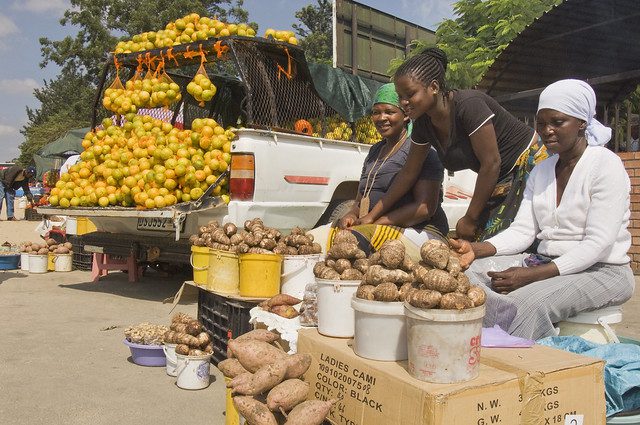
Cameroon is a country in Central Africa located right below the Sahara Desert. With a population close to 24 million, estimates show that 48 percent of the population lives below the poverty line. The majority of those who live in poverty reside in northern, rural regions. Although Cameroon has experienced growth in GDP since 2018, it is the largest economy in the Central African Economic and Monetary Community (CEMAC), a region that has suffered in Africa due to the fall of oil prices. Cameroon aims to become an emerging country by 2035, which means the real GDP will have to grow by 8 percent. In order to reach this goal, credit access is an advancement that must be focused on. Seeking a solution for credit access in Cameroon is a crucial task for its government.

Unfortunately, in 2017, only 10 percent of Cameroon’s population reported that they have a bank account.

Agriculture and the Economy

It’s clear that financial services and education are not reaching a large portion of Cameroon’s population. Often described as a miniature Africa, Cameroon exhibits all the climates of the continent, with a large chain of mountains separating the arid and green regions. This terrain presents a challenge in acclimating the population to new advancements such as mobile banking and loan access.

Cameroon’s economy is rooted in agriculture, something found mostly in rural regions where access to credit is poor. Because of the country’s rich landscape and natural resources, 70 percent of the population’s labor force is in Cameroon farms. However, 23 percent of farmer households rely on subsistence farming, which means they are working to feed themselves and their family. This is an alternative to both consuming and selling the produce.

While subsistence farming can provide a family with a self-sufficient method towards survival, its success is dependent on a non-hazardous climate and funding. Specifically, this is access to expensive chemical fertilizers. Subsistence farming also doesn’t help improve the economy’s investment sector when many people are farming to live instead of making money to save. Most farmers sell their products at the marketplace, where physical cash is exchanged for goods. Out of the 90 percent who do not own a bank account, the majority reported that they had no money to save or made no regular income.

A Need to Expand Credit Access in Cameroon

There are currently around 840 or so accredited microfinance institutions in Cameroon. The country’s loan performance has worsened due to the number of uninformed loans given to consumers. In 2018, the Risk Prevention Bureau for Microfinance (CREMF) was established as a system that helps these institutions track and disseminate the correct data on all their customers. This makes it somewhat easier for them to recover borrowed money. However, the challenge is still present: the majority of these microfinance institutions are in rural areas with low internet connectivity. This makes it difficult to continue giving out loans to those who need them.

In order to make credit access in Cameroon more financially inclusive, mobile services must be extended to rural areas. Additionally, services should also cover financial education and funding for farmers. In 2008, Express Union introduced mobile money. Mobile money offers a quick method for payments and access to finances.

While there are 6.8 million subscribers, there are only 1.5 million active users of mobile money services. The biggest challenge is implementing a cashless culture in a country that is reliant on a cash-based agricultural market.

Improvement Efforts

In order to establish an equal financial climate, the government of Cameroon and the World Bank Group renewed its strategy. This 2017-2021 project focuses on three main areas:

  1. poverty traps in rural areas
  2. access to better transportation
  3. improving weak governance.

The main objectives of this framework are increased market productivity in the agricultural sectors, improved health and improved access to credit in Cameroon.

Another solution to help foster jobs in Cameroon is the Agriculture Investment and Market Development Project (AIMD). Participants of this project are working to pave a bridge between agriculture and agribusiness. For example, this includes:

  • educating farmers on new techniques
  • providing them with the means to create quality produce
  • connecting them with agro-industrial companies like Guinness through mobile applications.

These advancements have helped to boost the financial sector and improve credit access in Cameroon. As a result, the livelihood of the country’s poor has improved. With consistent improvement, it’s possible that Cameroon’s economy can emerge into one that is economically stable, with more equally-distributed prosperity among regions.

– Isadora Savage
Photo: Pexels

July 19, 2019
https://borgenproject.org/wp-content/uploads/borgen-project-logo.svg 0 0 Kim Thelwell https://borgenproject.org/wp-content/uploads/borgen-project-logo.svg Kim Thelwell2019-07-19 10:03:522024-05-29 23:00:49A Look At Credit Access in Cameroon
Page 1259 of 2162«‹12571258125912601261›»

Get Smarter

  • Global Poverty 101
  • Global Poverty… The Good News
  • Global Poverty & U.S. Jobs
  • Global Poverty and National Security
  • Innovative Solutions to Poverty
  • Global Poverty & Aid FAQ’s
Search Search

Take Action

  • Call Congress
  • Email Congress
  • Donate
  • 30 Ways to Help
  • Volunteer Ops
  • Internships
  • Courses & Certificates
  • The Podcast
Borgen Project

“The Borgen Project is an incredible nonprofit organization that is addressing poverty and hunger and working towards ending them.”

-The Huffington Post

Inside The Borgen Project

  • Contact
  • About
  • Financials
  • President
  • Board of Directors
  • Board of Advisors

International Links

  • UK Email Parliament
  • UK Donate
  • Canada Email Parliament

Get Smarter

  • Global Poverty 101
  • Global Poverty… The Good News
  • Global Poverty & U.S. Jobs
  • Global Poverty and National Security
  • Innovative Solutions to Poverty
  • Global Poverty & Aid FAQ’s

Ways to Help

  • Call Congress
  • Email Congress
  • Donate
  • 30 Ways to Help
  • Volunteer Ops
  • Internships
  • Courses & Certificates
  • The Podcast
Scroll to top Scroll to top Scroll to top