Foreign Aid to Nepal: Managing Challenges
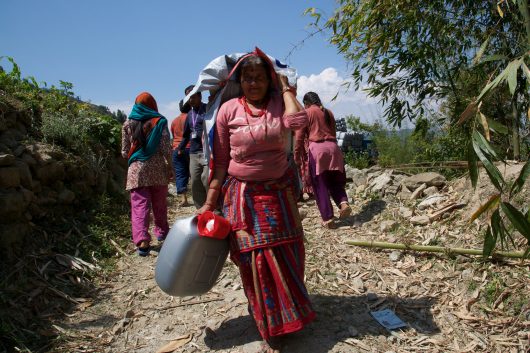
Nepal is a small landlocked country in the middle of Asia. It is a developing country with small savings and investments. The country relies heavily on foreign aid as one-third of the population lives under the absolute poverty line. For decades, this hindered a smooth path toward economic development due to multiple reasons.
The population in Nepal suffers from mass poverty and inequality. Poverty gap reduction is one of the biggest challenges for the Nepali government. In addition, infrastructure is underdeveloped. Many rural areas are not well integrated and connected with the capital, Kathmandu. The inability to provide services to inaccessible areas hinders development in Nepal. Furthermore, there is considerable unemployment — many youths have to work abroad.
Foreign aid is generally a tool to support development. However, Nepal is more dependent on foreign aid for meeting basic needs for its citizens instead of stimulating development. Generally, aid effectiveness depends on how and where it is used. For instance, aid spent on food programs in a specific region could have a higher impact than other areas. Foreign aid to Nepal is critical to get the country out of its development trap. Overall, there is an improvement in the effectiveness measures. Moreover, there is a growing realization among civil society and development partners regarding the need for collective work. It is very important to continually evaluate and coordinate aid programs.
One of the main changes that could enhance aid effectiveness is fewer projects with larger initiatives, which would stimulate investment. The Nepali government could be selective in aid packages by prioritizing the causes that require the most attention.
A survey was conducted to evaluate the effectiveness of foreign aid to Nepal. It will be submitted to the Global Partnership for Effective Development Cooperation in Kenya from Nov. 28 to Dec. 1. The survey was carried out on indicators such as whether development partners have been providing assistance based on the country’s need, the extent to which development partners are following the national system and if development cooperation funding is covered by indicative forward spending plans.
In addition, the survey considers the percent of development cooperation funding scheduled for disbursement recorded in the annual budgets approved by the developing country’s legislature. Pursuant to the survey’s results, aid providers will discuss new ideas for the effective utilization of foreign aid.
– Noman Ahmed
Photo: Flickr
