• Link to X
  • Link to Facebook
  • Link to Instagram
  • Link to TikTok
  • Link to Youtube
  • About
    • About Us
      • President
      • Board of Directors
      • Board of Advisors
      • Financials
      • Our Methodology
      • Success Tracker
      • Contact
  • Act Now
    • 30 Ways to Help
      • Email Congress
      • Call Congress
      • Volunteer
      • Courses & Certificates
      • Be a Donor
    • Internships
      • In-Office Internships
      • Remote Internships
    • Legislation
      • Politics 101
  • The Blog
  • The Podcast
  • Magazine
  • Donate
  • Click to open the search input field Click to open the search input field Search
  • Menu Menu

Archive for category: Food Security

Information and stories about food security news.

Food & Hunger, Food Security, Global Poverty

What is Food Insecurity?

What is Food Insecurity?What is Food Insecurity? Food insecurity occurs when a person is consistently unable to get enough food on a day-to-day basis. This epidemic plagues millions across the globe, resulting in malnutrition, chronic hunger and low quality of health. When a person lives with hunger or fear of going hungry, they are considered to be food insecure. It is important to understand why food insecurity happens and what can be done to alleviate it.

What is Food Insecurity?

Food insecurity can be broken down into three aspects. The first is food availability, which means having physical access to a food supply on a consistent basis. The second is food access, which means that a person has the resources, such as money, available to obtain and sufficient amount of food. The third is food utilization, which addresses how a person consumes food and whether or not they use the food available to maintain a nutritious diet. It is important to note that proper sanitation and hygiene practices also contribute to food utilization.

On average, more than 9 million people a year die from global food insecurity. Unfortunately, poverty and food insecurity have long gone hand-in-hand because people living in poverty are less likely to have sufficient resources to buy food or produce their own. Families without the resources to escape extreme poverty are likely unable to escape chronic hunger as well. There are several factors contributing to the large number of people who are food insecure.

  1. The steady growth in human population contributes greatly to the increase in food insecurity. With more people on Earth comes more mouths to feed. The rate in which food is grown simply isn’t able to keep up with the projected population growth.
  2. Another contributing cause of food insecurity is the global water crisis. “Widespread over-pumping and irrigation” are leading to a depletion of water sources needed to produce agriculture and produce. Water reserves in many countries have dropped drastically, directly impacting food supplies in these countries and others.
  3. Recent climate extremes and natural disasters also affect food supplies, ruining communities and the agriculture within them. Climate change has impacted crops, forests and water supplies, ultimately spiking prices in areas that are already affected.

The Impact of Food Insecurity

Food insecurity impacts individuals, families and communities far and wide. Although the number of people living with hunger has dropped since the 20th century, there are still more than 800 million people in the world without food security. In developing countries, nearly one in six children is malnourished and poor nutrition accounts for almost half of deaths in children under five. While Asia has the highest population of food insecure people, Sub-Saharan Africa has the highest prevalence with 25 percent of the population living in hunger.

Food insecurity can lead to many health problems if a person is not getting the nutrients they need. Malnutrition is an issue that can affect all aspects of one’s health. While food insecurity directly impacts all these people, it indirectly impacts the whole population. The problem of food insecurity is a product of behaviors that people do every day, and it has the ability to affect people who may not even know it.

Combatting Food Insecurity

Despite a large number of impending causes, there are still actions that can be taken in daily life to contribute to combating food insecurity. Urging the government to make nutrition programs that emphasize nutrition as a priority is one way to help in the fight. Even if someone is not exposed to food insecurity in their personal life, they can still put pressure on the government to make policies that could help people in developing countries fight this epidemic.

There are also a number of programs and nonprofit organizations that rely on donations and aid in order to make a big difference. The World Food Programme and World Health Organization are two examples of charities that devote time and resources to combating malnutrition and hunger. Donating food to a local food bank or volunteering at one are more hands-on ways to make a difference. Of course, an emphasis on foreign aid and public policy are two of the most impactful ways to reach the most people in the shortest amount of time.

While the numbers may seem staggering, there has been a 17 percent decrease in global food insecurity since the 1990s, but with awareness and effort, that number could be improved. There is reason to believe that, given the right tools and commitment, global food insecurity could become a more manageable problem in years to come.

– Charlotte M. Kriftcher

Photo: Pixabay

June 1, 2019
https://borgenproject.org/wp-content/uploads/borgen-project-logo.svg 0 0 Kim Thelwell https://borgenproject.org/wp-content/uploads/borgen-project-logo.svg Kim Thelwell2019-06-01 01:30:252019-05-28 16:20:08What is Food Insecurity?
Food Security, Global Poverty

The True Cost of the Rise in Fuel Prices in Zimbabwe

How Rising Fuel Prices in Zimbabwe
A 150 percent rise in fuel prices in Zimbabwe has had dramatic consequences on the lives of the country’s citizens. The rise in Zimbabwe’s cost of living initially started because of confusion behind its currency, but it has leaked into every aspect of living. For example, after the price increase, the price of bread almost doubled within a week. Organizations like USAID and the World Food Program are trying to help alleviete the true cost of the rise in fuel prices in Zimbabwe.

The Currency Crisis and Fuel Prices

After rampant inflation, Zimbabwe got rid of its own currency and adopted others, such as sterling or the South African Rand. Now, however, there is not enough hard currency to back up $10 million in digital funds. This shortage of imports is affecting local stores and supermarkets by making it more difficult to stock their shelves. Thus, the supermarkets that do have stock have been raising their prices. Fuel has also become a big problem.

Zimbabwe now has the highest priced petrol in the world at more than $3 a liter. The second highest prices are in China at around $2 a liter. The government has stated that the significant rise in fuel prices was put in place to prevent fuel shortages and counteract illegal fuel trading. The country mostly imports its fuel, but without hard currency, imported products are difficult to obtain. In addition to this, the government has been accusing people of hoarding fuel and selling it on the black market, which is said to be much cheaper than buying it up front because of the country’s currency crisis.

Food Insecurity

Without fuel, many farmers cannot operate the basic machines that they need to cultivate and harvest crops. Many rural households rely on agriculture as a main source of food, and the prediction of bad harvests by USAID only makes the situation seem worse. In addition, the current drought has left farms without rainfall to water crops, and without fuel, farms cannot power their irrigation systems to counteract poor rainfall.

The Food and Agriculture Organization has stated that “2.4 million people in rural Zimbabwe will be food insecure by March 2019.” This is in part due to the droughts and in part due to the overwhelming increase in fuel prices.  With crop failure and the cost of imports being so high, the government is finding it difficult to import basic necessities such as food and medication.

Plans for Aid

Some citizens believe that effective aid should not come from the local government due to previous allegations that the dominant party prioritizes aid to its own supporters. Organizations like USAID and WFP are partnering to provide emergency food assistance to 665,000 hungry people in Zimbabwe. USAID also supports developmental programs in Zimbabwe such as Amalima.

The Amalima program has families come together to learn productive tasks such as raising livestock and cultivating farmland. The program aims to use these learning tasks to be able to improve child nutrition and help the people in rural communities to better prepare for a food crisis.

The country is certainly in a crisis stage when it comes to food security. Due in part to both the rise of fuel prices in Zimbabwe, the economic crisis and poor harvests due to drought. As aid ramps up to keep up with the needs of the region, many can be saved from starvation and malnutrition. Emergency aid and ongoing developmental programs are doing their part to make sure the people of Zimbabwe lead healthy and fruitful lives.

– Olivia Halliburton
Photo: Pixabay

May 19, 2019
https://borgenproject.org/wp-content/uploads/borgen-project-logo.svg 0 0 Kim Thelwell https://borgenproject.org/wp-content/uploads/borgen-project-logo.svg Kim Thelwell2019-05-19 01:30:482019-05-23 13:23:53The True Cost of the Rise in Fuel Prices in Zimbabwe
Food Security, Global Poverty, Life Expectancy

Top 10 Facts About Life Expectancy in El Salvador

El Salvador

Coming in at 114 out of all countries, El Salvador has a relatively high life expectancy rate for countries within the region. El Salvador is a smaller country situated in Central America known for both its beaches and mountainous regions. With a population of 6,187, 271 people, 32 percent of Salvadorians live below the poverty line. Below are the top 10 facts about life expectancy in El Salvador.

The Top 10 Facts About Life Expectancy in El Salvador

  1. As of 2018, the life expectancy for people living in El Salvador is 75 years. On average, women in El Salvador live longer than men with a life expectancy of 78.6 years. Men have an average life expectancy of 71.8 years. This is on par with the life expectancies of the different countries in Central America
  2. Gang violence has been a prevalent issue in El Salvador and is contributing to a lower life expectancy. In 2015, there were 103 homicides per 100,000 El Salvadorians. That same year, high rates of deadly attacks on women reached 1,062. Homicides, drug trafficking and the use of firearms are all directly related to conflict amongst El Salvador’s gangs.
  3. Since 1960, there has been an increased focus on the healthcare system in El Salvador, which has increased life expectancy by 23 years. As of 2014, El Salvador has spent about 6.9 percent of its gross domestic product and 17 percent of its overall public expenditure on healthcare. The Ministry of Health is the main regulator and care provider of the health system in El Salvador. The Salvadorian Social Security Institute (ISSS) provides the second highest number of care facilities in El Salvador, organizing its services into four regions.
  4. El Salvador has recognized the importance of having trained physicians in order to increase the life expectancy for its citizens. There are 11 institutions of higher education in El Salvador that are working to train health personnel in order to provide a higher quality of care to El Salvadorians and to increase the doctor-patient ratio. From 2010 to 2015, the number of physicians per 1,000 people went from 1.6 to 1.95.
  5. The World Food Programme (WFP) is working in El Salvador to increase food security, which would improve life expectancy. Its strategic outcomes include ensuring nutrition-sensitive social protection for vulnerable households, increasing sustainable production for smallholder farm, determining and increasing resilience to climate change for vulnerable communities, increasing food access for people affected by disasters to food security and strengthening the national and subnational control over nutritional resources. This plan will be enacted by 2021.
  6. As of 2017, 25,000 people in El Salvador were living with HIV/AIDS, which is 0.6 percent of the overall population in the country. Organizations like UNAIDS are working to increase education on HIV/AIDS and to provide more materials for prevention. El Salvador was one of three countries to receive a grant for $26.9 million from the Global Fund to improve access to HIV-related services and to deliver treatments. Currently, 3,000 people are receiving services from prevention clinics set up in El Salvador.
  7. There is a high risk of having a major infectious disease in El Salvador, including a high risk for food or waterborne diseases. Healthcare reform brought attention to a need for vaccinations. In 1990, immunization rates were at 76 percent, but as of 2016, that number had increased to 93 percent. The improvement in immunization rates has had a positive impact on increasing life expectancy in El Salvador.
  8. Sanitation facilities are a contributor to widespread diseases in El Salvador. Rural areas tend to have less access to improved sanitation. Sanitation services in El Salvador have been made accessible to 71 percent of the population, leaving 13 percent of urban populations and 16 percent of rural populations underserved. The National Organisation of Water and Sewer Works (ANDA) is working to ensure coordination between all ministries and government agencies to provide focus on sanitation efforts in El Salvador.
  9. El Salvador is vulnerable to many natural disasters such as earthquakes, volcanoes and flooding. From 2005 to 2013, natural disasters have displaced around 20,913 people and taken the lives of 56 people. Factors that increase life expectancy and quality of life such as access to water, sanitation and education are negatively impacted by displacement. Habitat for Humanity is working in El Salvador to rebuild and increase the resilience of homes in El Salvador. Since 1992, Habitat for Humanity has been able to help around 167,000 Salvadorians by providing housing security.
  10. Currently, the World Bank has committed $290 million in El Salvador. These funds contribute to the improvement of five different projects that protect and enhance vulnerable groups. The World Bank has allocated $50 million towards the Disaster Risk Management Program specifically for natural disasters. This funding has been able to reduce natural disaster displacement, decrease homicide rates, improve the health care system and the overall quality of life in El Salvador.

High vulnerability to natural disasters, a lack of clean water and sanitation sources, gang violence and disparities within the healthcare system have contributed to lower life expectancy rates in El Salvador. However, these 10 facts about life expectancy rates in El Salvador show that attention is now being given to places where intervention can improve living conditions for El Salvadorians. Due to these efforts, the life expectancy rate in El Salvador has been growing at an average annual rate of 0.33 percent.

– Claire Bryan
Photo: Flickr
April 26, 2019
https://borgenproject.org/wp-content/uploads/borgen-project-logo.svg 0 0 Kim Thelwell https://borgenproject.org/wp-content/uploads/borgen-project-logo.svg Kim Thelwell2019-04-26 01:30:162024-05-29 22:59:36Top 10 Facts About Life Expectancy in El Salvador
Food Security, Global Poverty

Sustainable Agriculture in Senegal

agriculture in Senegal
The story of sustainable agriculture in Senegal is one of success that should be used as a guide for other countries. Between 1960 and the early 1980s, Senegal used monocropping, a dangerous practice where only one crop is grown year after year, leaching more and more nutrients from the ground. This eventually left the soil void of essential nutrients. When the area was hit by drought in the early 1980s, the land was unable to cope, and the country suffered from food shortages. However, over the last 20 years, Senegal has been using sustainable agriculture to bring back fertility to the soil.

In 1989, the United States government began working with Rodale International to come up with a plan to restore the soil. The plan was to use crop rotation. Every three years, one of four different plants would be sown in the soil. Each plant would only take certain nutrients from the ground and replace others. One of these plants was peanuts, the plant that caused the problem in the first place, and the second was millet. Both are now the main agricultural exports of Senegal. The other two crops in rotation are cowpeas and cassava.

The International Production and Pest Management Program

The United States and international companies are not the only organizations helping improve sustainable agriculture in Senegal. Senegal has been part of the Food and Agriculture Organization of the United Nations (FAO) IPPM program since 2001. The IPPM (Integrated Production and Pest Management Program) is dedicated to responsible pest control practices. The program touches on many points to control pests; however, its most important lesson is the responsible use of pesticides.

Pesticides remain a continuous problem in Senegal and most of the world due to their overuse. Pesticides stay in the water table, contaminating drinking water. They also hurt the soil since the chemicals build up over time and stay on the crops. When consumed pesticides are harmful to humans and animals. This is not to say that they are not sometimes necessary, but the IPPM suggests a less-is-more approach.

Syngenta

Private foundations are also doing their part. Syngenta, a Swiss-based based agricultural firm, has a foundation called the Syngenta Foundation for Sustainable Agriculture. The foundation works with public and private sector partners in order to finance innovations in sustainable agriculture. They also work with the World Bank, USAID and both the Swiss and Australian governments.

Since 2014, Syngenta has been promoting sustainable agriculture in Senegal’s rice production. In 2015, the organization began helping farmers gain access to better-mechanized equipment to facilitate rice cultivation in the Senegal River Valley. The overall approach of the Syngenta Foundation for Sustainable Agriculture is to work with the entire system. The work with NGO’s and governments to help small farmers become more productive has helped to increase the economic benefit of sustainable farming practices. It also helps the farmers better feed themselves and their families.

Improving the Economy Through Sustainable Agriculture

The soil is becoming productive again, and farmers are gaining access to better techniques and equipment. However, the fight is not over. Senegal suffers from an unemployment rate of 47 percent. In 2017, the agricultural industry employed 77 percent of the population in Senegal, an estimated 6.9 million people. However, the agriculture industry only makes up only about 17 percent of the of the country’s GDP. The next step to better economic stability will be to tackle these issues. Hopefully, like its soil, the Senegalese economy will now rejuvenate and grow for all.

– Nicholas Anthony DeMarco
Photo: Flickr

March 12, 2019
https://borgenproject.org/wp-content/uploads/borgen-project-logo.svg 0 0 Kim Thelwell https://borgenproject.org/wp-content/uploads/borgen-project-logo.svg Kim Thelwell2019-03-12 01:30:432024-05-24 23:55:23Sustainable Agriculture in Senegal
Extreme Poverty, Food Security

Top 10 Facts About Poverty in Palestine

Top 10 Poverty in Palestine
Palestine, a country consisting of Gaza and the West Bank, faces ongoing conflict with Israel, political instability and resource insecurity. While the historical and political situation in Palestine is complex and difficult to explain, here are the top 10 facts about poverty in Palestine in order to provide a clearer picture of the country’s situation.

Top 10 Facts About Poverty in Palestine

  1. Poverty is widespread and severe in Palestine. The Palestine Central Bureau of Statistics found that 29.2% of Palestinian individuals lived in poverty in 2017 and 16.8% of Palestinians were living in deep poverty. Individuals that live below the poverty line are unable to acquire the necessities of food, clothing and shelter.
  2. Poverty is particularly acute in Gaza and Palestine’s refugee camps. While the 13.9% poverty rate in West Bank is alarming, more than half of the individuals in Gaza and 45.4% of individuals in refugee camps live in poverty. Additionally, 33.8% of Gazans and 29.3% of those in Palestinian refugee camps live below the deep poverty line. More than 1.5 million individuals, displaced due to the 1948 Arab-Israeli war, 1967 Six-Day War and Israeli occupation, live in Palestine refugee camps in Lebanon, Jordan, the Syrian Arab Republic, the Gaza Strip and the West Bank.
  3. Poverty in Palestine is on the rise. Palestine’s poverty level increased by 13.2% from 2011 to 2017. In the next two years, the World Bank has predicted a decline in real per capita income and an increase in unemployment, given that the current scenario of Israeli restrictions and the internal divide between the West Bank and Gaza persists.
  4. Unemployment is alarmingly high. Unemployment in Palestine reached 27% in 2017, with unemployment in West Bank at 18% and Gaza at 44%. In fact, Gaza had the third-highest unemployment rate in the world in 2017. The actual rate of unemployment in the West Bank and Gaza is higher than reported as these rates do not account for those who have dropped out of the labor market. Israeli settlements and import restrictions led to increased unemployment by damaging the Palestinian economy through increased production costs and decreased land and resources available for production.
  5. Foreign aid has played a large role in reducing poverty in Palestine. According to the Palestine Central Bureau of Statistics, public aid has reduced the poverty percentage by 11.5%, with deep poverty reduced by 20%. International aid, with the U.S. and U.K. as leading donors, is critical for the Palestinian economy. The West Bank’s economy is fully dependent on aid and 80% of Gazans rely on humanitarian aid for survival.
  6. Just under a quarter of all Palestinians are food insecure. Many Palestinians lack the resources to put substantial meals on the table. Food insecurity poses a threat with 32.7% of Palestinians or 1.5 million people that are food insecure. In Gaza, this figure jumps to 68.5%.
  7. Water quality is low, particularly in Gaza. Water experts have agreed that 97% of the water in Gaza is polluted. Dangerous diseases such as diarrhea which now affects 80% of children under the age of 3 have become more widespread as a result.
  8. Some Israeli policies hinder Palestine’s economic growth. A 12-year blockade of the Gaza strip, a separation wall in the West Bank and time-consuming checkpoints are all Israeli policies that harm Palestine’s economy. Israeli land restrictions in the West Bank lower Palestine’s GDP by $3.4 billion a year, or 35% of Palestine’s economy, by restricting Palestinian access to agricultural and resource-rich land.
  9. Gaza is currently facing an electricity crisis. The 2 million Palestinian residents of Gaza receive electricity for no more than eight hours each day. According to the United Nations Office for the Coordination of Humanitarian Affairs, for the past decade, Gaza has suffered from a chronic electricity deficit or a situation where the demand for electricity far exceeds the supply. The shortage of electricity has decreased the availability of water, sanitation and health services, along with undermining Gaza’s fragile economy, particularly the agriculture and manufacturing sectors.
  10. Many organizations are working persistently to alleviate poverty in Palestine. One of those organizations is the United Nations Development Programme (UNDP) which gives support to the most vulnerable communities through sustainable economic empowerment approaches that decrease dependency on aid. An example of a UNDP project is the Deprived Families Economic Empowerment Programme, a project that aims to graduate impoverished families from being recipients of humanitarian assistance to being economically self-sufficient by providing services specific to their needs. The financial services provided through this program generated 23,000 paid and sustainable jobs and 9,560 family-owned enterprises.

Looking Ahead

These top 10 facts about poverty in Palestine are just snippets of the complex picture of political, historical and economic factors that influence the Palestinian standard of living. There is no magic bullet solution to poverty in any country, but a combination of international support and political collaboration has the potential to greatly improve the lives of many Palestinians.

– Carolina Sherwood Bigelow
Photo: Pixabay

March 7, 2019
https://borgenproject.org/wp-content/uploads/borgen-project-logo.svg 0 0 Kim Thelwell https://borgenproject.org/wp-content/uploads/borgen-project-logo.svg Kim Thelwell2019-03-07 13:30:212024-05-29 22:58:19Top 10 Facts About Poverty in Palestine
Food Security, Global Poverty

The Lasting Effects of El Nino

effects of el nino
The 2015-2016 El Nino climate pattern was one of the most extreme occurrences in years, affecting almost 60 million people, more than half of whom live in Africa. The effects of El Nino created extreme weather changes, ranging from severe drought to severe flooding. These changes posed drastic problems for the population. Drought caused food insecurity and poverty due to crop failure, and flooding created problems with sanitation and increased the spread of water-borne and communicable diseases. Furthermore, flooding threatened infrastructure and housing. The damage also restricted access to healthcare facilities, preventing victims from receiving the help they need.

The Effects of El Nino on Africa

In Southern Africa, El Nino-related droughts had led to massive crop failure. South Africa had a 25 percent drop in maize and a 23 percent drop in grain production. Maize prices were the highest they had ever been following the drop. The drought aggravated the existing food insecurity, with 14 million people already hungry and as crop failure continued, the number of people at risk of hunger increased.

Most El Nino effects are related to soil dryness or reduced rainfall, but in 2016, this occurrence resulted in a massive drought. In Cambodia, 2.5 million people were left without access to clean water. People had to travel long distances in search of clean and drinkable water after the wells and ponds had dried up. In South Africa, parts of Mozambique, Zimbabwe, Zambia and Namibia, these effects of El Nino are still posing problems. In past years, most food production decreases have corresponded to El Nino, regardless of its magnitude.

The Effects of El Nino on South-East Asia

South-East Asia faced droughts and below-average rainfall as well. Thailand had faced its most severe drought in 20 years during the 2015-2016 El Nino. Water levels in dams throughout the country fell below 10 percent, leading to Thailand pumping water from nearby rivers. The Mae Jok Luang Reservoir, for example, typically served 11 sectors and can now, as a result of El Nino, can only serve one.

The droughts hit farmers hard, causing mass crop failure. Rice production and exports especially had gone down in Thailand. Consequently, many farmers found themselves in debt and unable to pay back loans. To deal with financial stress, many Filipino farmers started sending their children into town to work instead of going to school. Indigenous farmers turned to odd jobs as well, giving up on trying to farm in the drought.

The Effects of El Nino on Latin America

Effects of El Nino on Latin America often vary, and in 2016, there were droughts in Colombia, Venezuela, Mexico, Central America as well as floods in Argentina and parts of Peru and Chile. Areas like Brazil had an increase in wildfires and tropical storms as a result of El Nino. Similar to South-East Asia, farming and fishing industries faced decreased production and exports during El Nino.

This was not the first time that El Nino has harmed the health and population of South American fisheries. The 1972 El Nino played a major role in the collapse of the Peruvian fishery, the largest fishery in the world at the time. With less fish, the population of seabirds also decreased, which damaged the seabird-dependent fertilizer industry. The impact on agricultural production led to higher food prices and lower food availability.

As a result of El Nino, 2.3 million people in Central America needed food assistance in 2015-16. The weather conditions also posed a great threat to civilians. Peru declared a state of emergency in 14 provinces where the lives of two million people had been at risk of mudslides and flooding. In October 2015, 500 people in Guatemala City died because of widespread mudslides.

Aid for Countries Affected by El Nino

Fortunately, there are organizations working to combat the effects of El Nino. Care, a nongovernmental organization, for example, has distributed food and emergency supplies to drought-ridden countries. In Cambodia, Care distributed water tanks and filters to the most affected areas. They had continued aid well into 2017.

While the work of organizations like Care is valuable, long-term plans to combat general climate change is necessary for countries to prepare for future climate change events. The results and effects of global warming and weather changes can be felt throughout the whole world, and the countries that suffer the most are usually less developed ones that do not have the right tools to combat this issue. People need to start taking climate issues seriously before it becomes too late to recover from these effects.

– Massarath Fatima

Photo: Flickr

March 2, 2019
https://borgenproject.org/wp-content/uploads/borgen-project-logo.svg 0 0 Kim Thelwell https://borgenproject.org/wp-content/uploads/borgen-project-logo.svg Kim Thelwell2019-03-02 01:30:452024-05-29 22:58:02The Lasting Effects of El Nino
Food Security

Seed Banks’ Importance for the World

Seed Banks Can Help Impoverished Areas
The way that humans have evolved and adapted to changing climates have all been surrounding our food. Today, although it may seem that there is an abundance of food, in reality, it is scarce. In our world, 812 million people face hunger and malnutrition every day for countless reasons.

Working to fight world hunger and continue to adapt to a changing environment are top priorities to ensure that the human species continue to thrive. Through agricultural education, environmental conservation and the efforts of seed banks we can alleviate the issue of world hunger.

Definition of Seed Banks

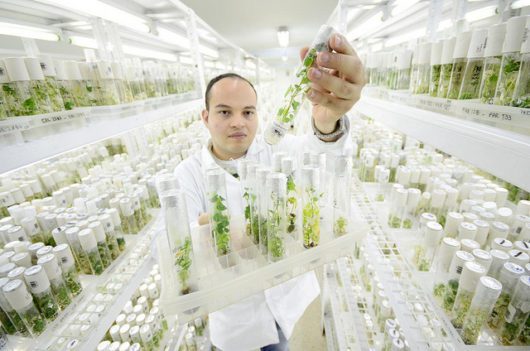
Before getting into how seed banks can help impoverished areas, their definition needs to be established. A seed bank is essentially a gene bank for seeds. They are created in order to prepare for natural disaster and climate changes. By taking seeds from all different plant variations these banks aim to preserve the biodiversity that the world currently has. There are currently more than 1,000 seed banks worldwide established, ranging from the Doomsday Vault that is capable of withstanding being bombed to the small craft container.

The Importance of Seed Banks

Seed banks are mainly a preventative measure in the case that something goes horribly wrong. They are created for the chance of natural disasters, nuclear fallouts and outbreaks of disease. The industrialization of agriculture has made our crops less genetically diverse, and therefore less able to adapt to their surroundings. Seed banks preserve the genetic diversity of the plants in the world. This means that plants designed for different climates will not go extinct as the world’s ecosystem changes.

Location of Seed Banks

Seed banks are located everywhere. In the United States, there are 20 registered seed banks alone. These seed banks are also essentially ensured since there are backup collections of all seeds at the National Laboratory for Genetic Resources Preservation in Colorado. Worldwide, there are more than 1,000 seed banks in place. The largest seed bank is Svalbard International Seed Vault. It is nicknamed the Doomsday Vault. It’s located on the side of a mountain in Norway. It is able to survive bombings, earthquakes and other disasters. It holds 825,000 seed varieties currently, and, even if the power goes out, the vault has the ability to store them for up to 25 years. Seed banks come in all shapes and sizes though. There are many large seed banks on each continent, but individual states and communities also have created smaller seed banks.

Everyone Can Participate

Everybody can create its own seed bank. It is as simple as taking the seeds from the produce and freezing them in a little container for later use. People can also take seeds and donate them to help fight world hunger and feed families across the globe. Organizations like Seeds to the World, Seeds of Peace and Seed Global Health all accept donations of seeds from the produce people eat every day as well as prepackaged seeds. There are also many nongovernmental organizations that support the production of community seed banks worldwide, including the Local Initiatives for Biodiversity Research and Development (LI-BIRD). This organization supports the efforts of local farmers in impoverished areas to overcome the lack of agricultural diversity.

With the rise of genetically modified plants and climate changes people all across the globe face issues related to agriculture and food production. Seed banks can aid areas that are most affected by hunger by ensuring the conservation of local crops that are already adapted to the region and reviving the use of specific plants to provide agricultural stability.

– Emily Triolet

Photo: Flickr

February 9, 2019
https://borgenproject.org/wp-content/uploads/borgen-project-logo.svg 0 0 Kim Thelwell https://borgenproject.org/wp-content/uploads/borgen-project-logo.svg Kim Thelwell2019-02-09 07:30:082024-06-06 00:15:28Seed Banks’ Importance for the World
Food & Hunger, Food Security, Global Poverty

Global Food Insecurity Has a Common Solution

Crop fields Nigeria
Food insecurity is outlawed by international rule of law. The Universal Declaration of Human Rights was adopted by the United Nations General Assembly in Paris on December 10, 1948, as a minimum standard of treatment and quality of life for all people in all nations. Article 25, section 1 of the declaration states: “Everyone has the right to a standard of living adequate for the health and well-being of himself and of his family, including food.”

Causes of Food Insecurity

Often times, countries that are a part of the U.N. fall short on this promise to provide adequate nutritious food to everyone, including the United States of America. Malnutrition and food insecurity can be attributed to many causes worldwide, from political turmoil, environmental struggles and calamities, lack of financial resources and lack of infrastructure to distribute food equally within a country.

It is widely known that the poorest nations often lack the means or the will to sufficiently supply food to the people and their most vulnerable population, ethnic minority groups, women, and children often suffer the most.

In 2006, the Center for Disease Control reported that widespread media attention in 2005 brought global awareness to a food crisis in the West African country of Niger. According to the report, with a population of 11.5 million in 2002, 2.5 million people living in farming or grazing areas in Niger were vulnerable to food insecurity.

Food Supply Chains

In the United States, conventional food supply chains are used in the mass distribution of food. This method starts with produced raw goods. These products are transferred to distribution centers that may offload goods to wholesalers or sell them directly to food retailers, where these goods are finally purchased by consumers at grocery stores and markets. Food may travel long distances throughout this process, to be consumed by people who may have purchased comparable foods grown closer to home.

In her article entitled Food Distribution in America, Monica Johnson writes, “With each step added between the farm and the consumer, money is taken away from the farmer. Typically, farmers are paid 20 cents on the dollar. So even if the small-scale or medium sized farmer is able to work with big food distributors, they are typically not paid enough to survive.”

Hunts Food Distribution Center is one of the largest food distributors in the United States with over $2 billion in annual sales. According to the New York Economic Development Commission, it sits on 329 acres of land in the Bronx, New York and supplies over 50 percent of food consumed by people in the area, and also supplies food to about 20 percent of people in the region. Still, the Food Bank of New York City reported a meal gap of 242 million in 2014 and food insecurity of 22.3 percent, with 399,000 of people affected being children.

Solution to the Problem

About 13 years after the Niger food crisis the country is still one of the poorest in the world. The World Food Program (WFP), headquartered in Rome, Italy, continues to focus on fixing the problem of food insecurity in countries like Niger. Through helping those like Nigeriens build sustainable livelihoods and ecosystems for crop cultivation, the WFP hopes to lessen the high levels of food insecurity and issues related to it, such as malnutrition and high mortality rates among children under the age of 5.

Assisting locals to manage sustainable local food resources through soil conservation, water harvesting, rehabilitating irrigation systems and reducing the loss of biodiversity among other efforts, the organization focuses on local measures to solve food insecurity issues.

The same is happening in the United States. The country plans to upgrade agricultural facilities and operations, a plan that includes working with other food distributors at the state level to increase integration with upstate and regional food distributors, supporting local farms, and providing growth opportunities for emerging regional food distribution models.

Food insecurity is a big problem in developing, but in developed countries as well. Countries need to make sure to promote local agriculture development in order to achieve food production that will suffice each country needs.

– Matrinna Woods

Photo: Flickr

January 6, 2019
https://borgenproject.org/wp-content/uploads/borgen-project-logo.svg 0 0 Kim Thelwell https://borgenproject.org/wp-content/uploads/borgen-project-logo.svg Kim Thelwell2019-01-06 13:30:082019-05-16 13:32:45Global Food Insecurity Has a Common Solution
Food & Hunger, Food Security, Global Poverty, Hunger

How to End Hunger

Saharan African
Between 2015 and 2016, world hunger rose by 20 million people, according to most recent estimates released in a 2016 U.N. report. This issue affects 815 million people worldwide. The single biggest cause of hunger is poverty, but there are also other heavily contributed factors. Since the turn of the century, food production has outpaced population growth, and the world now produces enough food to feed 1.5x the global population. The question of how to end hunger stretches beyond simply farming more effectively. To end hunger, we have to address the issue as more than a supply-demand deficiency.

Poverty

Only 11 percent of world hunger comes from developed countries; by far, the regions most afflicted by hunger are middle- and lower-income. In 2016, 22.7 percent of Sub-Saharan Africans were reported as malnourished. For those living on less than $2 per day, food can be too expensive to maintain a healthy diet. Economic hardship is further expounded by a lack of education and inadequate access to basic needs such as food, potable water and shelter. In this context, poverty and hunger have a cyclical nature. To reduce poverty, you have to reduce hunger and to reduce hunger, you have to reduce poverty. Take a look here to see how the Borgen Project plans to end poverty.

Armed Conflicts and Political Instability

Poverty is not the only factor in global hunger. Armed conflicts and political instability play a major role in keeping food out of hungry mouths. In recent years, conflicts have been rising, which may correspond to the increase of worldwide malnourished people.

War has also increasingly occurred in regions already vulnerable to disease and malnourishment, such as sub-Saharan and Eastern Africa. For example, South Sudan has been the site of a civil war since 2013. In 2017, the fighting played a major role in South Sudan undergoing the first declared famine in six years. Six million people (one in three residents of South Sudan) have been declared severely food insecure.

Violence takes away human capital, removing productive people from countries that need this capital the most. War destroys infrastructure, disrupts children’s schooling and creates more refugees. Peace is no easy task, but it’s a necessary one to achieve food security for all.

Steps Toward Ending World Hunger

The search for how to end hunger continues, despite the recent setbacks. Humanitarian organizations, such as Cooperative for Assistance and Relief Everywhere (CARE) have worked hard to fight hunger and alleviate the problems associated with it. CARE works in 94 countries and impacts 80 million people worldwide.

Other organizations have developed more atypical answers of how to end hunger. Freedom From Hunger, a charitable organization dedicated to ending world hunger through economic empowerment, has instituted savings and micro-financing programs to people at risk of food insecurity. The goal of these programs is to help people plan for the future and pull themselves out of poverty through education, financial services and monetary savings.

The road to ending hunger will be long and hard. There will be more setbacks, but at the end of the day, it’s up to the world to pave a better future.

– Peter Buffo
Photo: Flickr

September 2, 2018
https://borgenproject.org/wp-content/uploads/borgen-project-logo.svg 0 0 Borgen Project https://borgenproject.org/wp-content/uploads/borgen-project-logo.svg Borgen Project2018-09-02 01:30:242024-05-29 22:53:02How to End Hunger
Food Security, Global Poverty, Refugees

Humanity Helping Sudan Project & Refugees of South Sudan

refugees of South Sudan
On July 9, 2011, South Sudan was granted independence from Sudan and became the first African country to secede since Eritrea’s division from Ethiopia in 1993. This succession was the result of a 2005 peace deal that would end Africa’s longest-lasting civil war. As of December 2013, a civil war in South Sudan began when President Salva Kiir accused the previous vice-president, Riek Machar, of planning to overthrow him.

Violence and Insecurity in South Sudan

Once this accusation was made, Machar led a rebellion that took control of several towns and killed thousands. Those that were left in the midst of this civil war were forced to flee to surrounding nations for protection and aid.

In fact, the civil war has caused over 1.5 million South Sudanese to be displaced; in fact, approximately 63,000 people are forced to leave their homes per month. That being said, one of the largest problems South Sudan faces right now is food insecurity. According to World Food Programme statistics, 40 percent of the country’s population needs food assistance. Looking at the bigger picture, this can be credited to lack of land, resources and labor, as a majority of these assets go to defense systems.

The Humanity Helping Sudan Project

The Humanity Helping Sudan Project (HHSP) aims not only to raise awareness for the world refugee crisis but also to create and implement strategies for self-sufficiency and long-term sustainability. This includes, but is not limited to, access to clean water, small-scale farming and fishing and refugee education.

The founder, Manyang Reath Kher, a former refugee of the South Sudanese civil war, spent 13 years as a refugee in various camps between the borders of Sudan and Ethiopia. When he traveled to the United States, he began to raise awareness for the world refugee crisis, especially of the conditions of refugee camps.

HHSP is an organization that guides the refugees of South Sudan out of refugee camps and equips them with the necessary skills to rebuild their lives. For instance, refugees are given portions of land and taught how to farm crops, fish from the rivers and maintain livestock. In addition, this population is also encouraged to attend school to learn skills (including how to build wells and maintain irrigation systems) in hopes of self-sufficiency.

734 Coffee and Future Progress

On the other hand, 734 Coffee, also founded by Kher, aims to raise awareness of the faces and stories of the refugees of South Sudan that create its coffee by finding ways to display the commonly unnoticed refugee impact on its coffee.

When addressing those in poverty, it is important to remember poverty is not solely about money but is rather multi-layered with aspects such as food insecurity, homelessness and advocacy ability. HHSP conveys such facets by using several projects to help the refugees of South Sudan rebuild their lives. These people are given the skills necessary to become self- sufficient in both the short and long terms, and their inspiring and impactful stories now have more of a means to circulate the world as well.

– Jessica Ramtahal
Photo: Flickr

July 10, 2018
https://borgenproject.org/wp-content/uploads/borgen-project-logo.svg 0 0 Borgen Project https://borgenproject.org/wp-content/uploads/borgen-project-logo.svg Borgen Project2018-07-10 01:30:412019-09-25 12:08:23Humanity Helping Sudan Project & Refugees of South Sudan
Page 13 of 31«‹1112131415›»

Get Smarter

  • Global Poverty 101
  • Global Poverty… The Good News
  • Global Poverty & U.S. Jobs
  • Global Poverty and National Security
  • Innovative Solutions to Poverty
  • Global Poverty & Aid FAQ’s
Search Search

Take Action

  • Call Congress
  • Email Congress
  • Donate
  • 30 Ways to Help
  • Volunteer Ops
  • Internships
  • Courses & Certificates
  • The Podcast
Borgen Project

“The Borgen Project is an incredible nonprofit organization that is addressing poverty and hunger and working towards ending them.”

-The Huffington Post

Inside The Borgen Project

  • Contact
  • About
  • Financials
  • President
  • Board of Directors
  • Board of Advisors

International Links

  • UK Email Parliament
  • UK Donate
  • Canada Email Parliament

Get Smarter

  • Global Poverty 101
  • Global Poverty… The Good News
  • Global Poverty & U.S. Jobs
  • Global Poverty and National Security
  • Innovative Solutions to Poverty
  • Global Poverty & Aid FAQ’s

Ways to Help

  • Call Congress
  • Email Congress
  • Donate
  • 30 Ways to Help
  • Volunteer Ops
  • Internships
  • Courses & Certificates
  • The Podcast
Scroll to top Scroll to top Scroll to top