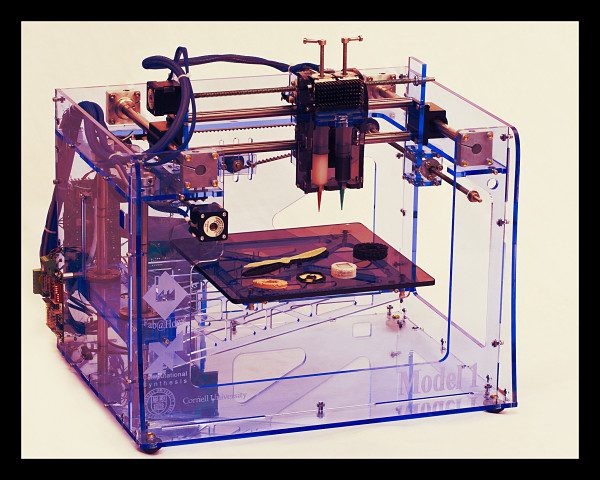
NASA recently invested $125,000 in a project aimed to solve the challenges of supplying food in space missions. The project would astronauts to create their own food in space by utilizing 3D printers.
Just as a paper printer shapes ink to form letters, a 3D printer uses different materials to create a 3D object. To produce food for its astronauts in space, NASA is looking to print edible materials with 3D printers, including powdered forms of carbohydrates, proteins, and other nutrients. 3D printers could be beneficial for long space voyages because powdered substances could last up to 30 years.
While NASA may be looking to use 3D food printers for space travel, there is great potential for the use of 3D printers here on Earth, namely to end world hunger. With the long shelf life of food produce by 3D printers, the concern of food being wasted due to spoilage disappears. The powdered forms of the nutrients are also easier to transport because they exist in a more compact state.
The nutrients used in a 3D printer can also be retrieved from unconventional sources. For instance, insects could be used as a source of protein, which the UN has noted recently as a way to fight world hunger. Insects are rich in protein, emit less greenhouse gases than livestock, and are easy to harvest. Whether or not insects are used as the protein source of printed foods, the 3D printer could allow for better transportation and longevity of nutrients, which would help considerably in the fight to end world hunger.
– Jordan Kline
Source: Food and Agriculture Organization of the United Nations,National Geographic,Time Magazine
Photo: Wikipedia
 UNHCR) said more than 1.5 million Syrian civilians had fled their country to escape the civil war that had been raging there for almost two years. Dan McNorton, a spokesman for the UNHCR, said the actual number of refugees is probably much higher due to concerns some Syrians have regarding registration. In addition, approximately 4 million people have been internally displaced since the beginning of the conflict. So what does this mean for the Syrian people who are now refugees? What can be expected in the life of a refugee?


 Dr. Gerard Barry, project leader for the International Rice Research Institute (IRRI), is developing a type of genetically modified rice called “Golden Rice.” This rice contains the essential nutrient beta-carotene, the source of vitamin A, which is often lacking in the diets of people living in poverty. The GMO rice is referred to as “Golden” because beta-carotene produces an orange color once added to the rice. Dr. Barry and IRRI are working to address vitamin A deficiency in developing countries and hope that Golden Rice is the answer.