• Link to X
  • Link to Facebook
  • Link to Instagram
  • Link to TikTok
  • Link to Youtube
  • About
    • About Us
      • President
      • Board of Directors
      • Board of Advisors
      • Financials
      • Our Methodology
      • Success Tracker
      • Contact
  • Act Now
    • 30 Ways to Help
      • Email Congress
      • Call Congress
      • Volunteer
      • Courses & Certificates
      • Be a Donor
    • Internships
      • In-Office Internships
      • Remote Internships
    • Legislation
      • Politics 101
  • The Blog
  • The Podcast
  • Magazine
  • Donate
  • Click to open the search input field Click to open the search input field Search
  • Menu Menu

Archive for category: Food Aid

Information and news about food aid

Food & Hunger, Food Aid, Food Security

5 Facts About World Hunger

5 Facts About World Hunger

When most people think of world hunger, they picture the emaciated children shown on television commercials or news footage of refugees lining up for food rations. The media portrays hunger as a dire emergency directly resulting from natural disasters, war, or some other kind of unrest. These graphic examples of acute hunger do portray actual people and circumstances, but they fail to account for 92 percent of the world’s hungry who suffer from chronic undernourishment rather than food emergencies. Though the number of people living with chronic hunger has decreased by 130 million people over the past two decades, one in eight people in the world still goes to bed hungry each night. Listed below are five facts about world hunger.

5 Facts About World Hunger

  1. Hunger kills more people each year than AIDS, tuberculosis and malaria combined. Listed as the number one health risk on the WHO’s list of the world’s top ten threats to health, hunger causes 10 million deaths each year. That is roughly equivalent to the number of people killed in the Holocaust.
  2. If female farmers had the same access to resources as their male counterparts, the number of the world’s hungry could be reduced by 150 million people. Though women often hold responsibility for feeding their families, they face severe constraints in accessing the materials and markets needed to contribute successfully to the agriculture sector.
  3. 870 million people currently suffer from hunger. 98 percent of these people live in developing countries, with the largest proportion living in Asia and the Pacific. While the number of hungry people is declining in Asia and Latin America, it is steadily rising in sub-Saharan Africa.
  4. Another 24 million children could be hungry by the year 2050 due to climate change and irregular weather patterns. $7.1-7.3 billion is needed in order to offset the negative impact of climate change on world hunger.
  5. According to the World Food Programme, hunger is the “single biggest solvable problem” facing the world today. It costs just $0.25 per day to provide a child with the nutrients he or she needs to live, and $3.2 billion is needed to feed the 66-million school-age children who are currently hungry. While this may seem like a large amount of money, the U.S. spends more than 200 times that amount on the military alone.

– Katie Bandera

Sources: WFP, World Hunger

July 24, 2013
https://borgenproject.org/wp-content/uploads/borgen-project-logo.svg 0 0 Borgen Project https://borgenproject.org/wp-content/uploads/borgen-project-logo.svg Borgen Project2013-07-24 07:22:512024-05-25 00:03:345 Facts About World Hunger
Food & Hunger, Food Aid

USAID Sends Food Aid to Djibouti

us_food_aid
The decision made by the United States Agency for International Development (USAID) to send financial support to the United Nations World Food Program for the Republic of Djibouti is coming at an imperative time for the country. Djibouti has been experiencing a drought for the past several years and its population, particularly those living in rural areas, is in desperate need of food assistance. USAID has already sent the first installment of the $4 million dollar commitment to Djibouti.

Almost immediately, USAID and its partner, Food for Peace, jumped in to restock Djibouti’s stores of yellow spit peas and vegetable oil. Djibouti is where USAID stores these items for its food assistance programs so it was vital to keep the warehouses fully stocked. As the drought continues, the food situation is expected to become even worse.

This current partnership between USAID and Food for Peace is not the beginning of a relationship between the U.S. government and Djibouti. For the past decade, USAID has been working with the country to reduce hunger and malnutrition. Since 2006, the number of child deaths as a result of malnourishment has reduced from 20% to 0.2% in 2012. This is in part due to USAID’s support of the Famine Early Warning System, a program that observes the country’s food security and raises alerts when the food situation turns for the worse.

This program, and many others that USAID supports, are helping the government of Djibouti to not only recognize famine and hunger, but also learn how to combat and prevent it. While short-term solutions are critical for aiding in ending immediate hunger, USAID is also concerned with long-term solutions, including services that guarantee food for children, pregnant and nursing women, building community gardens, and the overarching issue of reducing poverty.

As for now, USAID’s most recent contribution will be critical for those living through this devastating drought. More food aid will be delivered in the next few months.

– Mary Penn

Sources: Sabahi Online, All Africa
Photo: Council on Foreign Relations

July 23, 2013
https://borgenproject.org/wp-content/uploads/borgen-project-logo.svg 0 0 Borgen Project https://borgenproject.org/wp-content/uploads/borgen-project-logo.svg Borgen Project2013-07-23 04:23:102019-08-13 16:16:01USAID Sends Food Aid to Djibouti
Food & Hunger, Food Aid, Nonprofit Organizations and NGOs

Feed My Starving Children

Feed My Starving Children is a Christian nonprofit organization that aims to feed the hungry. The organization uses volunteers to hand-pack cost effective and easily shippable meals to malnourished children. These packages are then sent to 70 countries around the world.

Feed My Starving Children was first established in 1987 after businessman Richard Proudfit went on a mission trip to Honduras. There he was challenged by the hunger he saw and felt compelled to aid the starving. From then on, Proudfit and many others would work to create the perfect meal plan for the hungry.

By 1993, Cargill food scientist Dr. Richard Fulmer partnered with other scientists from Pillsbury and General Mills to develop “Fortified Rice Soy Casserole” for starving children. For the Feed My Starving Children organization, this nutritious mixture would be known as MannaPack, named after the miraculous food in the Bible. Next in the process would be the hunt for the ideal packaging. In 1994, 1 million plastic bags were donated by Green Giant. Soon, the first shipments of meals were sent off to Rwanda, Haiti, Belarus, and Paraguay.

The finalized product is made up of four primary parts: rice, extruded soy nuggets for protein, vitamins and minerals and vegetarian flavoring, and dehydrated vegetables. The bag of food is simple to prepare and provides a many life-saving calories and nutrition to starving children.

Since its early days, Feed My Starving Children has also developed other packaged meals such as its MannaPack Potato-W formula for weaning children and MannaPack Potato-D, the first and only food developed to help people recover from diarrhea. Furthermore, in 2012 alone, the organization has sent out 153,000,000 meals to countries around the world. One bag of food, which contains meals for 6 children, costs only $1.32 to produce.

Today Feed My Starving Children is one of the nation’s most trustworthy charities. It has earned Charity Navigator’s highest rating for eight straight years.

– Grace Zhao

Sources: Feed My Starving Children, Charity Navigator
Photo: Pitch Engine

July 20, 2013
https://borgenproject.org/wp-content/uploads/borgen-project-logo.svg 0 0 Borgen Project https://borgenproject.org/wp-content/uploads/borgen-project-logo.svg Borgen Project2013-07-20 08:20:002017-02-28 11:53:10Feed My Starving Children
Food Aid, Nonprofit Organizations and NGOs

What is Mercy USA?

mercy-usa
As nearly 1 billion people in the world live on less than $1 a day, Mercy-USA for Aid and Development (Mercy-USA) is a non-profit organization dedicated to improving health and nutrition, as well as pushing for educational and economic development internationally. With a motto of, “Helping people help themselves,” Mercy-USA has been providing aid and helping individuals and their communities become more self-sufficient since 1988, thereby alleviating human suffering worldwide.

Headquartered in Plymouth, Michigan, with overseas offices in countries including Albania, Indonesia, and Lebanon, Mercy-USA is registered with the United States Agency for International Development (USAID). As a result, Mercy-USA receives grants from the United States government for international development. For example, in 2010, Mercy-USA received a grant worth over 1.26 million dollars to help provide freshwater and improve health, sanitation, and nutrition to 118,000 individuals in need in Somalia. This money has gone to support many feedings centers, water wells, and sanitary latrines. Most recently, USAID has provided more than $290,000 to Mercy-USA to combat waterborne diseases by improving hygiene practices in Garissa County, Kenya.

Supported by USAID, agencies of the United Nations, and other partner organizations dedicated to international humanitarian affairs, Mercy-USA works in countries like Bangladesh, Kenya, Bosnia, and many others. Mercy-USA has improved the nutrition of many by providing daily lunches to school children in Gaza and by distributing monthly food baskets to internally displaced and vulnerable families in northern Syria.

In addition to distributing food and supplies to aid in sanitation and hunger relief, Mercy-USA trains individuals to become self-sufficient so that development becomes sustainable, a necessity in effectively battling world poverty and disaster. Mercy-USA has been training farmers in countries like Indonesia and providing computer training to youth in Bosnia. Mercy-USA is an important player in international humanitarian endeavors, having improved the lives of hundreds of thousands of people, from helping to improve nutrition and sanitation to providing agricultural and vocational training.

– Rahul Shah

Source: Mercy USA, USAID
Photo: Mercy USA

July 20, 2013
https://borgenproject.org/wp-content/uploads/borgen-project-logo.svg 0 0 Borgen Project https://borgenproject.org/wp-content/uploads/borgen-project-logo.svg Borgen Project2013-07-20 05:43:202018-08-14 12:18:38What is Mercy USA?
Food & Hunger, Food Aid, Global Poverty, Health

“Nutrition for Growth” and Hunger Alleviation

Nutrition for Growth
With last month’s G8 Summit, and the ‘Nutrition for Growth’ summit hosted in London before that, a lot of the focus has been on large amounts of international aid earmarked to combat global hunger and malnutrition.

Small-scale, localized projects play just as large a role as international aid efforts, and possibly more beneficial. The original Green Revolution increased crop yields dramatically, but at no small environmental cost. If this large-scale intervention played its role, multiple small-scale projects could produce the same results.

One such project fighting food insecurity is the Soil, Food, and Healthy Communities (SFHC) program in Malawi. This program began ten years ago with efforts to educate local farmers and diversify their crops. The original aim of the project was to improve the health, food security, and soil fertility of poor households in Northern Malawi. This goal was additionally tied into participatory research, testing legume systems and looking at more sustainable approaches to achieving greater food security.

By introducing a variety of different legume options, as well as agricultural techniques, the quality and quantity of food can both be increased, as well as improving soil quality through organic input. This Ecohealth approach, focusing on the health of the entire system and humans’ interaction with it, can be simultaneously beneficial to the communities’ short-term needs, as well as allowing for longer-term sustainability.

Ten years on from the initiation of the project there have been many encouraging signs of success. The introduction of semi-perennial rotation systems, and the diversification of crops, led in some cases to annual return yields double that of the previous system. In addition to these straightforward agricultural benefits, a further goal of SFHC was to educate the local populace regarding nutrition.

The introduction of diverse legumes into the crop rotation system improves soil quality and yield, and also diversifies the local diet. This additional food production can then directly influence the health of the children of the community. As a result of this project, child malnutrition has been reduced by two-thirds over the past ten years in a hospital catchment area serving about 70,000 people and covering 600-square kilometers. This is largely due to farmers now producing soybeans, groundnuts, and other legumes, and incorporating them into the local diet.

– David Wilson

Sources: The Guardian, Winnipeg Free Press

July 15, 2013
https://borgenproject.org/wp-content/uploads/borgen-project-logo.svg 0 0 Borgen Project https://borgenproject.org/wp-content/uploads/borgen-project-logo.svg Borgen Project2013-07-15 05:16:442020-06-26 14:34:18“Nutrition for Growth” and Hunger Alleviation
Food Aid

Global Nutrition for Growth Compact

nutrition4_optThe Global Nutrition for Growth Compact has brought politicians, business people, and philanthropists together in an effort to fight global malnutrition. The Compact, signed in London on June 8th, dedicates $4.15 billion over the next seven years to the cause of ending under-nutrition.
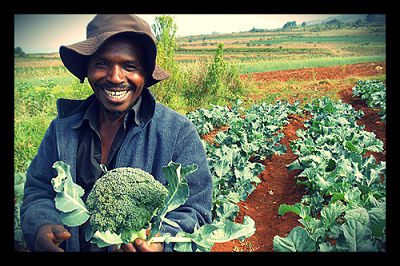
The Global Nutrition for Growth Compact was established with the understanding that malnutrition needs to be combated just as much as malnourishment. Malnutrition occurs when a person has an adequate amount of calories but consumes a diet that is lacking in nutrients that are essential for growth and development. On the other hand, malnourishment is a condition resulting from a lack of calories in a diet. While malnourishment can directly lead to death through starvation, malnutrition more than doubles a child’s likelihood of dying due to weakened bodily functions. Poor nutrition is believed to be the primary cause of 45% of child deaths overall.

Fortunately, the number of children in the world who are stunted (or never reach their potential height) as a result of malnutrition dropped from 253 million to 167 million in the two decades between 1990 and 2010. The improvement is credited to a greater understanding of nutritional regimens that prevent malnutrition. Programs that combat malnutrition focus on remedies that emphasize breastfeeding and provide vitamins and nutrients to pregnant women and developing children. Adequate nutrition is critical for pregnant and breastfeeding mothers, as it provides the components needed for infant development and healthy weight gain. Likewise, it is essential that developing children receive vitamins and nutrients for healthy mental and physical growth.

Researchers believe that a million lives could be saved each year through the implementation of a malnutrition reduction program. In addition to saving lives, the program will also provide children with the nutrients they need for full brain development, a component that helps children be successful in school.

– Jordan Kline

Source: IRIN News
Photo: Action Against Hunger

June 30, 2013
https://borgenproject.org/wp-content/uploads/borgen-project-logo.svg 0 0 Borgen Project https://borgenproject.org/wp-content/uploads/borgen-project-logo.svg Borgen Project2013-06-30 05:00:322024-05-24 23:56:44Global Nutrition for Growth Compact
Food & Hunger, Food Aid

Zambian Government Praises USAID Health Programs

USAID Zambia
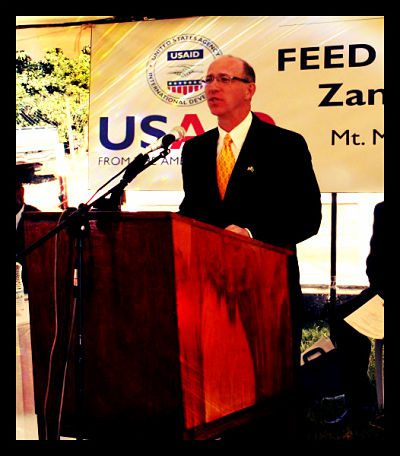
A Zambian Government official, Bert Mushala, praised the American government for its foreign aid initiatives at the launch of two new USAID health programs in Zambia in June. According to USAID Mission director for Zambia, Susan Brems, the two projects, Thrive and Mawa, are aimed at strengthening nutrition within small farming households and with those living with HIV. The initiatives would also focus on enhancing economic opportunities for poor households, encouraging crop diversification.

The Thrive and Mawa programs, funded by USAID and the President’s Emergency Plan for AIDS Relief (PEPFAR), would benefit 21,500 people in the Eastern Province of Zambia. This runs parallel to USAID’s Feed the Future program which is aimed at assisting 200,000 smallholder farming households rise out of poverty, decreasing the percentage of malnourished children, and augmenting the production and consumption of nutritious crops. Zambia was selected as a Feed the Future country because of its vast capability for agricultural growth, along with its large food insecurity.

The Feed the Future program and the Thrive and Mawa programs are all focused around the Eastern Province due to the high prevalence of poverty there. As the Eastern Province Permanent Secretary Bert Mushala has witnessed USAID health programs in this poor region of Zambia and commended USAID’s support of Zambia.

USAID’s programs in Zambia, working under the US Global Health Initiative, have several other focuses besides nutrition and empowering small farmers. Under PEPFAR, USAID works with the Ministry of Health to prevent mother-to -child transmission of HIV. The amount of infants born with HIV has dropped from 39 percent in 2005 to 5 percent in 2010, and over 400,000 Zambians are now on regular antiretroviral treatments for HIV. USAID has also addressed gender-based violence and supported over 500,000 orphans and vulnerable children.

These USAID health programs in Zambia are all part of a larger network of the USAID initiatives in Zambia. USAID also focuses on economic growth, education, and creating a just and democratic government in the country. These initiatives have led to a longer life expectancy for Zambians along with 12 straight years of notable economic growth. As a country that has such potential for growth, particularly in agriculture, a prosperous Zambia is crucial to stability in a region which includes the war torn Democratic Republic of the Congo.

– Martin Drake

Source: USAID
Photo: USAID

June 25, 2013
https://borgenproject.org/wp-content/uploads/borgen-project-logo.svg 0 0 Borgen Project https://borgenproject.org/wp-content/uploads/borgen-project-logo.svg Borgen Project2013-06-25 05:00:312021-06-23 16:27:55Zambian Government Praises USAID Health Programs
Aid Effectiveness & Reform, Food Aid

Food Aid Reform Act: The Facts

Food Aid Reform Act
On Wednesday, June 12 discussions continued on Capitol Hill in an attempt to push forward a modernization of US international food aid policy according to the Guardian’s Cydney Hargis.  HR 1983, the Food Aid Reform Act, would remove laws requiring US food aid to be grown in the United States and then shipped to the receiving countries.  Instead, it would allow food aid to be purchased in areas local to the countries receiving it.  The impact of the Food Aid Reform Act would be twofold:  it would eliminate the time and costs required to ship the food, and it would further stimulate the economies of countries or regions that are receiving US food aid.

Under the Food Aid Reform Act, aid could reach the receiving country up to 14 weeks sooner, giving up to 4 million people better access to food.  It would also significantly decrease transportation costs of US food aid, which make up 50 percent of the US food aid budget.  Right now US food aid has to travel 7,000 miles to reach its destination and that food chain is vulnerable, especially in conflict zones such as what we are seeing right now in Syria.

The other aspect of the Food Aid Reform Act is the stimulation of the local economy where the food is being produced.  When the US ships food to developing countries as aid, the US food can crowd out locally produced food.  This is especially important considering that most of the world’s poorest and those without food security are small farmers.  In shipping food to aid the poorest in the developing world, the US can prevent these farmers from being able to sell their crops at a profitable price, thereby harming the very people which USAID is supposed to be helping.

Purchasing food aid locally will raise the demand for local food, thereby driving up the price and enabling farmers to gain more profit out of the crops they sell.  This profit can then be put towards things like better fertilizers, water pumps, and other things which increase the productivity of these farmers.  When these farmers increase their productivity their communities will develop their food security, fixing the very reason that food aid would have to be provided to these developing nations in the first place.

The Food Aid Reform Act is a piece of bipartisan legislation that will go a long way to modernize US foreign aid.  It will help stimulate developing economies to bring them further towards contributing significantly to the global economy, which will ultimately lead to a more prosperous international community as a whole.

– Martin Drake

Source: The Guardian, House Committee on Foreign Affairs
Photo: ONE

June 24, 2013
https://borgenproject.org/wp-content/uploads/borgen-project-logo.svg 0 0 Borgen Project https://borgenproject.org/wp-content/uploads/borgen-project-logo.svg Borgen Project2013-06-24 15:02:422024-05-24 23:57:04Food Aid Reform Act: The Facts
Food & Hunger, Food Aid

Rethinking Hunger in Africa

Rethinking Hunger in Africa
Philanthropists may be tempted to rejoice that recent trends have shown that the total number of people who face chronic hunger has dropped. New surveys, however, caution those working to eradicate global poverty.

The Afrobarometer is an independent, nonpartisan research project that measures the social, political and economic environment in Africa through a series of regularly-repeated surveys. By consistently asking the same, standard set of questions in more than a dozen African countries each year, the Afrobarometer can track trends in public attitudes that can be shared with various public actors in order to create better dialogue between the public and the government.

When asked in a recent Afrobarometer survey how many times in the past year they had gone without food, 16% of survey participants responded either “always” or “many times.” Even as global instances of chronic hunger drop as a whole, Africa remains the exception to the trend. The U.N. suggests that 239 million African citizens, or nearly 23% of the total African population, meet the U.N.’s criteria for being chronically undernourished.

The situation is even more alarming when one considers that chronic hunger mainly affects African children, who may experience stunting (low height), wasting (low weight) or micronutrient deficiency if exposed to chronic hunger conditions between the ages of 2 and 3. Chronic hunger not only puts children at risk for future health complications but can also impair future economic concerns as well. Studies have also shown that undernourished children eventually earn an average of 20% less than their healthy peers.

The current hunger problems in African can be traced back to a reliance on maize. Though maize is highly caloric, it offers mediocre nutritional qualities and thus can exacerbate malnutrition even as it satisfies daily caloric needs. Both Zambians and Malawians report receiving more than 50% of their calories from maize.

Over-reliance on maize is not just stunting the growth of African children, but also the potential of the African economy and agricultural development. By only producing maize, African farmers limit their access to global markets, thus making them too reliant on foreign aid and capital.

Instead of maize, the U.N. and its associated nutritionists suggest a food fortification program that supplies rural grain mills with a range of foods that include added iodine, zinc and vitamin A to provide an extra nutritional boost. Additionally, initiatives like ReSCOPE are using schools and colleges in Africa to teach a technique called permaculture, which uses a version of organic farming to keep nutrients in the soil to promote sustainable, year-round crops that will help local farming cultures flourish like never before.

These initiatives follow the concept of the “teach a man to fish” proverb. By promoting a culture of food self-sufficiency that allows African farmers to create both the quantity and quality of the food needed to meet their local nutritional needs, global aid communities and governments may be giving Africa the long-overdue ability to stand on its own two feet.

– Alexandria Bruschi

Source: Afrobarometer.org,Think Africa Press
Photo: WPHR

June 24, 2013
https://borgenproject.org/wp-content/uploads/borgen-project-logo.svg 0 0 Borgen Project https://borgenproject.org/wp-content/uploads/borgen-project-logo.svg Borgen Project2013-06-24 04:09:212020-07-03 00:26:41Rethinking Hunger in Africa
Aid Effectiveness & Reform, Food & Hunger, Food Aid, Food Security

Food Aid Reform Act Faces Fight in Congress

Food Aid Reform Act Faces Fight in Congress

Initial support for reforms to food aid came from both parties. It turns out everyone believes money for food aid in emergency situations should go to feed people. The problem comes when determining how that aid should work and where it should be spent. President Obama has introduced reforms to policy dating back to the Eisenhower era, but the food aid reforms have hit trouble in Congress.

The discussion is focused on whom the US should buy food in emergency situations.  Currently, the US purchases food from US farmers and ships it overseas. Reforms to food aid include using money allocated to purchase food from overseas farmers. The US is currently one of the only major food-producing nations that still ships its food overseas rather than purchasing food directly from poorer farmers.

The money involved is around $2 billion; US agriculture is expected to bring in $128 billion of profits this year, making this a small amount in comparison. For poor farmers around the world, it is life-changing. It allows farmers in developing nations to improve their crops and continue to produce and sell their goods. This amount also would help prevent food insecurity, a source of unrest in many nations. Food insecurity is often accompanied by other insecurities as well.

Nigeria’s Minister of Agricultural and Rural Development, Akinwnumi Adesina, is a major supporter of the reforms. The money would help Nigeria continue to promote national security and help farmers grow economically. The Obama plan would shift the $2 billion spent on food aid to the USAID and allow them to use it to purchase food overseas.  Farmers would get a subsidy for at least the first year to replace some of the lost profit. In addition, 55% of food aid dollars will still go to American farmers.

Food aid reforms are long overdue and a key to promoting global development worldwide. They are also a key step in helping the US keep nations secure and conflict at a minimum. The reforms will help countries like Nigeria shift away from food dependence to food independence and become growing, thriving economies.

Call your Congressional leaders today and request they support the Food Aid Reform Act (H.R. 1983).

– Amanda Kloeppel
Source: Bloomberg

June 21, 2013
https://borgenproject.org/wp-content/uploads/borgen-project-logo.svg 0 0 Borgen Project https://borgenproject.org/wp-content/uploads/borgen-project-logo.svg Borgen Project2013-06-21 04:00:042020-07-03 00:18:37Food Aid Reform Act Faces Fight in Congress
Page 11 of 13«‹910111213›»

Get Smarter

  • Global Poverty 101
  • Global Poverty… The Good News
  • Global Poverty & U.S. Jobs
  • Global Poverty and National Security
  • Innovative Solutions to Poverty
  • Global Poverty & Aid FAQ’s
Search Search

Take Action

  • Call Congress
  • Email Congress
  • Donate
  • 30 Ways to Help
  • Volunteer Ops
  • Internships
  • Courses & Certificates
  • The Podcast
Borgen Project

“The Borgen Project is an incredible nonprofit organization that is addressing poverty and hunger and working towards ending them.”

-The Huffington Post

Inside The Borgen Project

  • Contact
  • About
  • Financials
  • President
  • Board of Directors
  • Board of Advisors

International Links

  • UK Email Parliament
  • UK Donate
  • Canada Email Parliament

Get Smarter

  • Global Poverty 101
  • Global Poverty… The Good News
  • Global Poverty & U.S. Jobs
  • Global Poverty and National Security
  • Innovative Solutions to Poverty
  • Global Poverty & Aid FAQ’s

Ways to Help

  • Call Congress
  • Email Congress
  • Donate
  • 30 Ways to Help
  • Volunteer Ops
  • Internships
  • Courses & Certificates
  • The Podcast
Scroll to top Scroll to top Scroll to top