• Link to X
  • Link to Facebook
  • Link to Instagram
  • Link to TikTok
  • Link to Youtube
  • About
    • About Us
      • President
      • Board of Directors
      • Board of Advisors
      • Financials
      • Our Methodology
      • Success Tracker
      • Contact
  • Act Now
    • 30 Ways to Help
      • Email Congress
      • Call Congress
      • Volunteer
      • Courses & Certificates
      • Be a Donor
    • Internships
      • In-Office Internships
      • Remote Internships
    • Legislation
      • Politics 101
  • The Blog
  • The Podcast
  • Magazine
  • Donate
  • Click to open the search input field Click to open the search input field Search
  • Menu Menu

Archive for category: Food Aid

Information and news about food aid

Activism, Aid Effectiveness & Reform, Charity, Food & Hunger, Food Aid, Food Security, Global Poverty, Health

Food Aid in Puntland, Somalia

puntland_cyclone
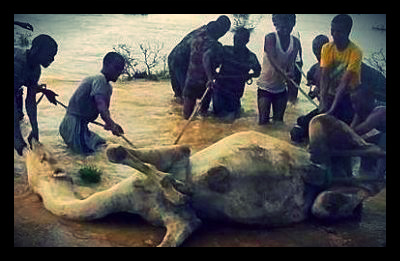
On November 10, a deadly cyclone raged through the region of Puntland, located in Somalia’s northeastern coast. Though the cyclone has reportedly killed up to 300 people, the death toll has not yet been verified. Many of these victims were children and elderly, both of which are more vulnerable to hypothermia and exposure. Moreover, the United Nations says as many as 30,000 people are in need of food aid.

Whole villages have been washed away by the storm, thus forcing local aid workers to struggle to reach the stranded victims due to the damaged infrastructure. Furthermore, large portions of roads have been damaged, driving aid workers to deliver food aid on foot. Many people are also missing, especially in coastal towns where fisherman and their boats have been lost at sea.

Pastoralists have been hit the hardest since their livestock and poorly built homes and barns have been washed away. The region does not normally experience rain so the area’s infrastructure has not been built to withstand this sort of storm. In fact, some of the worst hit villages have lost 90 percent of their livestock to icy rain and flooding.

Moreover, areas infamous for pirates such as the port of Ely are some of the worst affected. This is worrisome as the 2004 Tsunami was considered one of the major triggers of the pirate attacks off the coast of Somalia where 736 people and 32 ships were held hostage.

The World Food Programme (WFP) recently arrived in Puntland and transported 340 metric tons of food including cereal and vegetable seeds to the worst affected areas of Bossaso, Banderbayla, Dongoroyo and Eyl. In total 27, 000 people have been given a month’s worth of food rations. In addition Puntland’s government sent 32 trucks of emergency supplies throughout the needed areas.

Once emergency aid has been distributed and the region is no longer in a state of disaster the WFP will begin recovery work to rebuild the infrastructure of the area. The Food-for-Assets initiative is a recovery program run by the WFP that assists communities in rebuilding their infrastructure in a way that would better withstand a future natural disaster. Moreover, community workers are paid in food rations for assisting with the development.

Further south in Middle Shabelle, flooding has devastated the town of Jowhar and surrounding areas, pushing over 10,000 people to flee their homes. Their water supplies have, furthermore, been contaminated increasing the risk of waterborne diseases, while all standing crops and livestock in the area have been destroyed or lost. The International Committee of the Red Cross has provided 25,800 people with emergency essentials such as kitchen sets, clothes and sleeping mats.  They have also been able to stop flooding and repair riverbanks in five locations and distributed emergency food aid and water.

– Lisa Toole

Sources: AllAfrica: Food Aid, AllAfrica: Twin Natural Disasters, Yahoo, World Food Programme, Aljazeera

January 1, 2014
https://borgenproject.org/wp-content/uploads/borgen-project-logo.svg 0 0 Borgen Project https://borgenproject.org/wp-content/uploads/borgen-project-logo.svg Borgen Project2014-01-01 17:22:102024-05-25 00:37:18Food Aid in Puntland, Somalia
Aid Effectiveness & Reform, Food & Hunger, Food Aid, Global Poverty

Typhoon Haiyan Highlights Food Aid Hindrances

typhoon_haiyan_food_aid_hindrance
Located in the northwestern Pacific, comprised of more than 7,000 islands, the Philippines suffers more storms each year than any other nation in the world.

To date, Typhoon Haiyan is the most catastrophic natural disaster to strike the Philippines. More than 9.7 million people have been affected, with over 3 million of them being displaced due to the storm.

The death toll continues to rise, hitting 3,637 casualties. In a country where poverty and inequality remain a challenge, climatic disasters only thwart the growth of the economy and the citizens.

Typhoon Haiyan destroyed 384,000 acres of rice, corn, and other crops, totaling $105 million worth of damage. These crops are staples in the diets of Filipino culture and countries surrounding them; the damage  is a devastating blow.

With the recent FARM bill heavily under debate in the House and Senate, Congress is in a position to provide the U.S. international food aid program with the flexibility necessary to effectively respond to natural disasters.

Just days after Haiyan struck the Philippines, the USAID’s Office of Food for Peace devoted $7.75 million from the International Disaster Assistance account. These funds will be used to purchase foods for the Philippines and neighboring countries in need.

Currently, 1,100 tons of rice positioned in Sri Lanka are in transit to the distraught area, but are not expected to arrive until December 2. In addition, 55 tons of emergency food products were airlifted from the U.S. to provide aid.

The United States is the top respondent in the world to humanitarian crisis situations around the globe. America’s humanitarianism displays the desire to help others that runs true to core human values.

Yet with food aid come various restrictions that deter not only the process of giving assistance, but the steps to receiving it as well. Food aid restricts the U.S. to only being able to send nutrients that are grown on U.S. soil.

The commodities are then shipped across the ocean; had the U.S. sent rice rather than Sri Lanka, it may have taken 10-12 weeks to arrive. This timeline can be twice as damaging as the storms themselves, considering the starvation and hunger needs that take place immediately after a natural catastrophe.

The argument currently under scrutiny is that it would be much more beneficial to send money; a resource that can be received immediately with limited restrictions.

Although the United States was able to provide financial support, had Typhoon Haiyan taken place at any other time, assistance may not have been available. Due to stipulations on aid, the U.S. may have been limited on cash from responding to crises earlier in the fiscal year.

The U.S. government does not have the flexibility to purchase food resources in any market except its own – a crippling factor that prevents America from being able to reach its full potential of assistance.

Even with the support that has been provided, Typhoon Haiyan has emphasized major errors that exist within food aid. This past spring, President Obama proposed a total reform of food aid. This presidential bid would have forced Congress to consider food aid a foreign aid issue – separating food aid from domestic agricultural issues.

In turn, this would have removed the stipulations that currently surround food aid. President Obama’s proposal was rejected, however, and the FARM bill continues to be ironed out in a special committee in Congress.

– Samaria Garrett
Sources: Common Dreams, Fox News, Brookings

December 8, 2013
https://borgenproject.org/wp-content/uploads/borgen-project-logo.svg 0 0 Borgen Project https://borgenproject.org/wp-content/uploads/borgen-project-logo.svg Borgen Project2013-12-08 04:00:092024-05-25 00:31:49Typhoon Haiyan Highlights Food Aid Hindrances
Food & Hunger, Food Aid, Global Poverty, Health

World Hunger is Biggest Threat to Global Health

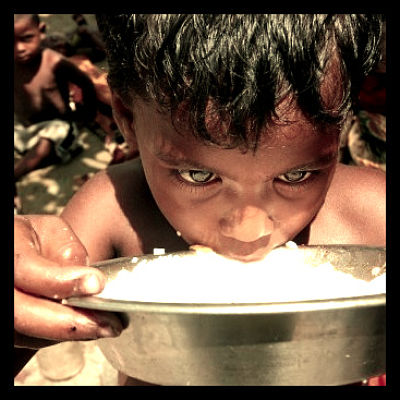
Though it is rarely featured in the daily headlines, world hunger has become the greatest problem facing the world today. Every day, 1 in 8 people go hungry worldwide. The situation has become so severe that experts now recognize hunger as the largest risk to health – surpassing AIDS, malaria, and tuberculosis combined.

Hunger is the worst in developing nations, where nearly 98 percent of the world’s hungry reside. Africa has the greatest number of countries with the highest categories of hunger – in at least 19 of its nations more than 25 percent of the population goes hungry. These issues are exacerbated by war and crisis. For people forced from their homes by violence and for other refugees, food is scarce.

The United Nations spends about $30 million weekly to keep food aid flowing to these problem areas. The efforts of the UN alone are not enough, however. In order to combat this global health risk, the hunger problem needs to be addressed on a global scale.

“It’s getting to a point where if the international community doesn’t wake up and realize that they have to, they must make efforts to find a political solution, otherwise we are not going to be able to sustain this level of response,” said Mathew Hollingworth of the World Food Program. Without the help of the international community, world hunger will continue to endanger people around the world.

– Sonia Aviv

Sources: ENCA, World Food Programme, 15 Min. News
Photo: The Inspiration Room

October 13, 2013
https://borgenproject.org/wp-content/uploads/borgen-project-logo.svg 0 0 Borgen Project https://borgenproject.org/wp-content/uploads/borgen-project-logo.svg Borgen Project2013-10-13 04:00:402024-06-04 02:43:59World Hunger is Biggest Threat to Global Health
Children, Food & Hunger, Food Aid, Food Security

Optifood Software Analyzes Diets to Address Malnutrition

Working through the World Health Organization (WHO), a team of scientists and programmers have created a new software that is capable of analyzing a person’s diet and determining what in their geographic area can be used to supplement nutritional deficits cheaply. The software is currently undergoing USAID-approved trials in Guatemala, with promising results.

According to the Food and Nutritional Technical Assistance III Project (FANTA), malnourished children in the two studied Highlands communities of Huehuetenango and Quiche can be adequately fed for 25-50¢ US each day. The study consists of randomly selected children in the two communities between the ages of 9 and 11 months, and suggests that in addition to breastmilk, potatoes, beans, eggs, tortillas, and fortified cereal, a local powder called Chispitas would complete the children’s diet. Currently, Chispitas is only available to some communities in Guatemala.

With the average Guatemalan woman giving birth to three children, and the average Highlands household earning US$3.15 per day, even Optifood’s findings will require effort to become reality. Most families simply cannot spend 8-15 percent of their income feeding a single baby. And despite the fact that the ingredients in Chispitas can be found locally, the finished product is most available in urban areas where poverty is more severe than in the Highlands.

Whatever the practical limitations, Optifood takes a great step forward by simply identifying, in almost real time, what the nutritional problems are and the optimal, if ultimately impossible, solutions. With workshops being offered in Guatemala and a handful of other countries, to educate local aid workers in the use of the software, hard data can begin to emerge from poor areas and provide international agencies like the WHO the information it needs to assess priorities. It also gives national programs, such as Guatemala’s Zero Hunger Initiative, with a clear set of objectives to accomplish.

As one of the major criticisms of aid organizations is the uncertainty about what funding can actually accomplish, Optifood is able to provide a nutritional “before and after” comparison, elucidating the problem and demonstrating the effects of policy changes or investments.

– Alex Pusateri

Sources: USAID Blog, Google Translate, CIA, INCAP, FANTA Project
Photo: Hunger and Undernutrition Blog

October 11, 2013
https://borgenproject.org/wp-content/uploads/borgen-project-logo.svg 0 0 Borgen Project https://borgenproject.org/wp-content/uploads/borgen-project-logo.svg Borgen Project2013-10-11 04:00:392024-05-25 00:24:30Optifood Software Analyzes Diets to Address Malnutrition
Food & Hunger, Food Aid, Foreign Aid, Global Poverty, USAID, Water

Foreign Aid, Where Does It Go? A Look at USAID

American Foreign Aid USAID
The United States Agency for International Development (USAID) is a successful program engineered to combat poverty. USAID has focused on diminishing poverty in several aspects. Improving nutrition, assisting in food aid, and advancing water supplies are all important USAID goals. These three issues are connected on a deeper scale, as improving nutrition levels is conjoined with clean water supply and food aid assistance.

Proper nutrition is a basic necessity for every human. Malnutrition leads to approximately 2.6 million deaths per year, deaths that could be prevented if steps were taken to counteract malnutrition. USAID has partnered with Scale Up Nutrition (SUN) to help achieve basic nutritional improvement in impoverished areas throughout the world.

USAID and SUN have laid out a strategic approach to achieve their goal. They plan to prevent malnutrition through a package of maternal, infant, and young children programs. USAID and SUN will also combat malnutrition by targeting supplementation to vulnerable groups, managing malnutrition through community based projects, providing nutritional care for those living with HIV/AIDS, and improving the quality of food in the food assistance programs.

USAID is not only well prepared to handle global malnutrition levels; they are also prepared on the food assistance front. USAID works with the UN World Food Programme (WFP) to effectively deliver lifesaving aid to food-barren areas. USAID and WFP have developed a working protocol that efficiently delivers food supplies to shortages worldwide.

USAID and WFP are constantly upgrading their food science programs, allowing them to deliver greater amounts of healthy food to needy areas. USAID is using a supply-chain management system that allows food to be sent out more efficiently. The programs have also combined to implement an emergency food service, which allows USAID and WFP to purchase emergency food in disaster-stricken areas. In addition, USAID also funded the Famine Early Warning System (FEWS), which is highly regarded as one of the best early-warning systems in the world.

Food and nutrition are two basic necessities in life. These epidemics are two of the most common problems known worldwide, yet a third is often overlooked. Lack of clean water supplies is just as important, and it receives a similar amount of attention from USAID. USAID has a specifically laid out plan to implement clean water supplies in needy areas. USAID focuses on increasing access to a sustainable water supply for all communities, finding a way to sanitize the water supplies, and teaching the community key hygiene behaviors to keep the water sanitized.

Through the actions of USAID, positive results can be seen in all of the targeted areas. In 2011, 3.8 million people had better access to clean water. USAID and affiliated programs provided over 1.5 metric tons of food to communities in 2012. The nutrition programs have been equally effective, with predictions that malnutrition will decrease by 20 percent in the next two years in targeted countries. The progress can be easily seen; all of which were made possible by the foreign aid budget that often falls under much criticism.

– Zachary Wright

Sources: USAID, USAID: Food Aid, USAID: Nutrition
Photo: Flickr

October 7, 2013
https://borgenproject.org/wp-content/uploads/borgen-project-logo.svg 0 0 Borgen Project https://borgenproject.org/wp-content/uploads/borgen-project-logo.svg Borgen Project2013-10-07 18:15:212024-05-25 00:23:47Foreign Aid, Where Does It Go? A Look at USAID
Extreme Poverty, Food & Hunger, Food Aid, Global Poverty, Technology

Why Technology Won’t Solve World Hunger

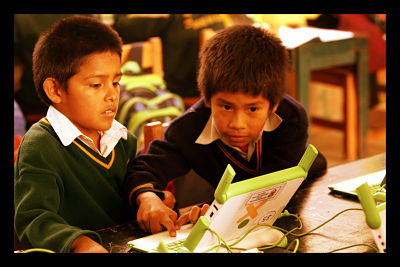
Technology Won't Solve World Hunger Kids Using Laptop
Ideas for ending world hunger are the subject of deep contention and intrigue. Conversations about how best to go about ending hunger are held among regular people far removed from the international, sociopolitical arena or non-profit sector, as well as among leaders in national governments and conferring minds within the United Nations.

Duncan Green in The Guardian recently reminded the world of the stark contrasts between those who can afford to eat and the nearly 900 million who sleep on empty stomachs. Progressive efforts underway in Ghana and Brazil have seen initiatives such as cash transfers to the impoverished and an increase in minimum wage. These programs have made strides, but in nations like India that are growing exponentially, the government must address the issue.

Of the myriad of ways to eradicate hunger, is technology perhaps a truly viable option at this point? If so, are the contributions made by technology being overlooked as a way to finally solve world hunger, or is technology simply a tool in this case?

Josette Sheeran, blogging for The Huffington Post, seems to think that technology is something of a cure-all for world hunger. She talks of the electronic vouchers used in Palestinian territories that give people greater access to food. The World Food Programme (WFP) is responsible for that, and other projects, such as the one in the Philippines that uses texting to feed workers. People participate in work projects and can collect their payment at participating food shops.

The WFP also uses social media with their WeFeedBack initiative that lets the user online select a favorite food and using a special calculator, can see based on its cost how many children would be fed with it. The calculated amount is what WFP encourages the user to donate.

Not long ago, a lab-grown burger patty was cooked and eaten in view of the public, touted as a way to help save both planet and people. A report from The Atlantic posits that the world already produces enough food to feed a growing global population and that new technology won’t necessarily solve the hunger crisis. Three-dimensional food printers are also a new tech tool being developed, but the report makes the case that in-house food printers won’t be an appliance in every kitchen because regular people cannot figure out the technology.

Why, then, would these technologies work in the emergent world? And, even if labs in emergent nations were capable of mass producing meat, consumption would be limited to the middle class and upper classes.

Sarah Sloat for Pacific Standard cites a 2012 paper by CUNY law student Rebecca Bratspies that says food production has grown inversely proportional to the hungry. Better food distribution will help solve hunger more than technological developments. The feeling, then, is that even with the massive amount of resources available to solve the world hunger crisis, the solutions are not dependent upon increased production.

Technology in food production has proven to increase production, but access is still contingent upon how food is distributed and how easily available it is to those who need it. Getting there may not be an issue of widespread production, but rather individual nations doing what they can to feed citizens.

– David Smith

Sources: The Guardian, The Atlantic
Photo: Huffington Post

October 2, 2013
https://borgenproject.org/wp-content/uploads/borgen-project-logo.svg 0 0 Borgen Project https://borgenproject.org/wp-content/uploads/borgen-project-logo.svg Borgen Project2013-10-02 20:43:142017-02-21 12:51:45Why Technology Won’t Solve World Hunger
Developing Countries, Food & Hunger, Food Aid, Food Security, Global Poverty, Inequality, Poverty Reduction

Could GMO’s Help Prevent Food Shortages?

Genetically_Modified_Crops_Prevent_Food_Shortages
With the world population expected to double by 2050, food security will continue to be an increasingly complicated and important issue. More food will be needed to feed more people and, to preserve vital biodiversity sites, we’ll need to produce this additional food using land already devoted to agriculture. While there are many factors that could improve agricultural efficiency, genetically modified crops hold the most potential. Many scientists now believe that transgenic plants could help prevent or minimize future food shortages.

Transgenic plants are those that possess an inserted portion of DNA either from a different member of their own species or from an entirely different species. The inserted DNA serves some special purpose, such as allowing the plant to produce natural insecticides. Once the genes are transferred, they can be passed on to offspring through simple fertilization, allowing farmers to breed advantageous traits in their plants. Transgenic plants have proven extremely profitable in the developed world, accounting for a 5% to 10% increase in productivity, and reducing the cost of herbicides and insecticides.

Such methods could effectively increase productivity in the developing world, where a surge in food production is sorely needed. Developing countries, especially those in the tropics and subtropics, suffer severe crop losses due to pests, diseases, and poor soil conditions. In addition, a lack of financial capital often prevents farmers from investing in high quality seeds, insecticides, and fertilizers. Poor post-harvest conditions such as inadequate storage facilities and thriving fungi and insect populations also fuel crop loss. Currently, pests destroy over half the world’s crop production. Transgenic plants could provide an innovative solution.

Fortunately, bioengineering solutions can be easily adapted from one species to another, allowing one advancement in plant biotechnology to quickly produce many more. For example, insect-resistant strains of several important plant species have been produced using one specific endotoxin. Commercial production of insect-resistant maize, potato, and cotton has already begun. Plant bioengineers hope to use similar technology to create fruits that ripen more slowly, allowing for longer shelf lives and less post-harvest crop loss.

It is important to note that this technology has mostly been established with the developed world in mind. Therefore, adapting it for use in the developing world must be done carefully. For instance, many crops grown in the developing world are local varieties and have not been extensively tested thus far by plant bioengineers. Blindly replacing local crops with bioengineered varieties from the developed world could disturb deep social or religious traditions that are represented in the widely varied cultures in the developing world. Additionally, societies are more likely to embrace a familiar crop than a foreign one. Research and development in bioengineering must, therefore, adapt to include the crops of the developing world.

Although the globe produces enough food for everyone, people everywhere continue to die of starvation. With this unequal distribution in mind, it is imperative that, moving forward, small farmers in the developing world receive the same access to plant biotechnology given to large agribusinesses in the developed world. First-world corporations cannot be granted even more unfair advantages over small landholders in poorer nations, especially as global populations grow and food security becomes ever more scarce and important. As this technology is developed, it is up to us to share it with the developing world in order to minimize severe food shortages in the years to come.

– Katie Fullerton

Sources: Plant Physiology, Colorado State University
Photo: Tree Hugger

August 31, 2013
https://borgenproject.org/wp-content/uploads/borgen-project-logo.svg 0 0 Borgen Project https://borgenproject.org/wp-content/uploads/borgen-project-logo.svg Borgen Project2013-08-31 08:18:222024-06-05 01:53:37Could GMO’s Help Prevent Food Shortages?
Developing Countries, Development, Food & Hunger, Food Aid, Foreign Aid, Global Poverty, Poverty Reduction, USAID

US Foreign Aid to Africa: What We Give and Why

us_foreign_aid

In 2012, the United States provided nearly $12 billion in official development assistance (“ODA”) to African nations. The ODA is allocated to education, health, infrastructure and economic development programs in recipient countries. Currently, the United States allocates foreign aid to 47 African nations and USAID operates 27 missions on the continent.

US Foreign aid to Africa began in the 1960s as many African nations gained independence and the United States sought strategic alliances to counter the influence of the Soviet Union. With the exception of disaster and famine relief, most foreign aid to Africa began to decrease with the collapse of the Soviet Union.

In the 2000s, President Bush more than tripled aid to Africa by establishing programs such as the Child Survival and Health Programs Fund as well as the Global HIV/AIDS Initiative.

Though foreign aid programs are designed to assist recipient nations with development, they also benefit the United States in a number of ways.

First, these programs help build strategic alliances and foster support for democratic transitions. It also stimulates Africa’s growth and development, which provides opportunities for increased trade and direct investment in the continent’s emerging markets.

But for all the benefits, foreign aid to Africa has no shortage of detractors. Many critics point out that much of the money allocated to Africa never reaches the people who most need the assistance. “Eighty percent of U.S. aid to Africa is spent right here in America — on American contractors, American suppliers, and so forth,” said George Ayittey, president of the Free Africa Foundation.

In more corrupt nations, politicians and civic leaders are often charged with misappropriating funds designated for the people. Others critics claim that foreign aid to Africa simply does not work—after 50 years of assistance, Africa still confronts the same issues.

But even critics would have to agree on one crucial point: foreign aid is an integral part of U.S. foreign policy. In Africa, aid programs support a large framework of social and economic assistance for developing nations.

Critics are correct that American companies and corrupt politicians siphon a large portion of foreign aid. But aid to Africa has also done much to improve infrastructure, bolster economic development and improve health care conditions for millions of people on the continent.

– Danial Bonasso
Sources: Foreign Policy Initiative, Washington Post, NPR, One.org
Photo: James Bovard

August 21, 2013
https://borgenproject.org/wp-content/uploads/borgen-project-logo.svg 0 0 Borgen Project https://borgenproject.org/wp-content/uploads/borgen-project-logo.svg Borgen Project2013-08-21 11:44:212024-12-13 17:49:39US Foreign Aid to Africa: What We Give and Why
Food & Hunger, Food Aid, Food Security

5 Things You Didn’t Know about Hunger

hunger_child
Did you know that…

  1. Today, 870 million people worldwide suffer from hunger. Despite a 130 million decrease since 1990, progress has been slower since 2008.
  2. 98 percent of the underfed – 852 million – live in developing countries, where almost 15 percent of the population is undernourished. By contrast, in developed countries, 16 million people are underfed.
  3. Gender-related discrimination has repercussions on hunger statistics. Indeed, if women farmers had access to the same resources as men, up to 150 million underfed people would no longer be hungry.
  4. 45 percent of deaths of children under five are due to poor nutrition. This represents 3.1 million children each year.
  5. The World Food Program calculated that only US $3.2 billion is needed to satisfy the 66 million primary school-age children who attend class hungry.

– Lauren Yeh

Sources: WFP, FAO
Photo: Huffington Post

August 6, 2013
https://borgenproject.org/wp-content/uploads/borgen-project-logo.svg 0 0 Borgen Project https://borgenproject.org/wp-content/uploads/borgen-project-logo.svg Borgen Project2013-08-06 05:01:242024-12-13 17:49:345 Things You Didn’t Know about Hunger
Food & Hunger, Food Aid, Food Security, Foreign Aid, United Nations

What Is Global Food Insecurity?

Global Food Insecurity
There really is no formula to defining global food insecurity. Still, many world health organizations use the term to point out deficiencies in global food security. To understand what something is, it sometimes helps to understand what it is not. This may just be the case with food insecurity. To understand food insecurity, that is, one must first define and understand food security and work backwards. If food security does not exist, then, by definition, you have food insecurity.

The World Food Summit of 1996 defined food security as existing “when all people at all times have access to sufficient, safe, nutritious food to maintain a healthy and active life.” This definition hinges on three qualifications: namely food availability, food access, and food use. Lacking one of these elements of food security, a population faces food insecurity, which can and does arise in an endless permutation of manners.


Global Food Insecurity: Failing Food Security Criteria


To establish food security, say, in a developing nation, food must first be available on a consistent basis. Some will argue that there is currently enough food in the world to feed everyone in the world. Nonetheless, people go hungry due to inconsistency in their daily intake of food. For example, one may go days without a meal. In this situation, a cornucopia of food, arriving two weeks later, does nothing to alleviate that person’s current hunger. As such, food security depends on food availability.

Second, the nation’s population must have access to the right kinds of food to sustain a healthy diet. Not only must a person have food available, that is, it must be the right kind of food. For example, a human cannot survive on rice alone. We need all different kinds of food to live healthy lives. The definition of healthy diet here also includes accommodations to particular dietary needs, such as avoiding certain foods or increasing intake of others.

Finally, food security requires appropriate use of food based on adequate knowledge of basic nutrition and care. In order to maintain a healthy diet, one must know how to eat the food that is available to him or her and portion that food out in a way that best serves the needs of his or her body. When USAID drops bags of food over Africa, for example, it will be helpful to also teach those receiving the aid how to ration the food. Basic sanitation and access to water are included in appropriate use to complete the qualifications of food security.

If even one of these three elements or qualifications is not met, it is easy to see how even a full plate of food, three times a day, may not be enough to maintain a healthy diet. Food security requires that the food is enough to satisfy the short, mid, and long-term needs of the human body and that the person consuming the food does so in an appropriate manner to maintain him or herself. Global food insecurity, or deficient food security from a worldwide perspective, exists in a world where even one person goes hungry.

Though great strides have been made in alleviating global hunger, the current level of food insecurity is unacceptable. Even in the United States, 1 out of 10 households were food insecure, hence the importance of food provision and education programs, like, local food banks. To learn more about food (in)security in the U.S., you can visit this site.

– Herman Watson

Sources: U.S. Food Aid and Security, World Health Organization, World Food Programme, Food and Agriculture Organization
Photo: Security and Sustainability Forum

August 5, 2013
https://borgenproject.org/wp-content/uploads/borgen-project-logo.svg 0 0 Borgen Project https://borgenproject.org/wp-content/uploads/borgen-project-logo.svg Borgen Project2013-08-05 11:35:562024-05-25 00:15:01What Is Global Food Insecurity?
Page 10 of 13«‹89101112›»

Get Smarter

  • Global Poverty 101
  • Global Poverty… The Good News
  • Global Poverty & U.S. Jobs
  • Global Poverty and National Security
  • Innovative Solutions to Poverty
  • Global Poverty & Aid FAQ’s
Search Search

Take Action

  • Call Congress
  • Email Congress
  • Donate
  • 30 Ways to Help
  • Volunteer Ops
  • Internships
  • Courses & Certificates
  • The Podcast
Borgen Project

“The Borgen Project is an incredible nonprofit organization that is addressing poverty and hunger and working towards ending them.”

-The Huffington Post

Inside The Borgen Project

  • Contact
  • About
  • Financials
  • President
  • Board of Directors
  • Board of Advisors

International Links

  • UK Email Parliament
  • UK Donate
  • Canada Email Parliament

Get Smarter

  • Global Poverty 101
  • Global Poverty… The Good News
  • Global Poverty & U.S. Jobs
  • Global Poverty and National Security
  • Innovative Solutions to Poverty
  • Global Poverty & Aid FAQ’s

Ways to Help

  • Call Congress
  • Email Congress
  • Donate
  • 30 Ways to Help
  • Volunteer Ops
  • Internships
  • Courses & Certificates
  • The Podcast
Scroll to top Scroll to top Scroll to top