In the developing world, where education is not guaranteed for all and literacy rates are low, billions of people are denied their legal rights simply because they have no access to information about their rights. Enter the barefoot lawyers, who teach people in their communities how to make the law work for them. BRAC (the one-time Bangladesh Rural Advancement Committee) is the world’s largest non-governmental provider of legal aid, whose Barefoot Lawyers share their expertise. After graduating from BRAC’s crash course in law, the all-female band of paralegals teach others in their community how to protect themselves from bribery or false arrest by asking the right questions and knowing what a real arrest warrant looks like. The key to a functioning democracy are laws that protect the citizenry from abuses of power, but if a population is unaware of these legal protections, the protections might as well be null and void. Basic knowledge of legal rights could help widows receive inheritances, settle arguments over dowries, or prevent unlawful detention and exploitation. Legal literacy could help a farmer keep his land and property, or help a community receive compensation after their land and water has been devastated by a mining project. Many go unprotected by the law simply because they do not know how to put it to use. For these reasons, and for the bigger picture of empowering marginalized people to lift themselves out of poverty, organizations like BRAC think legal empowerment is important enough that it should be one of the Millennium Development Goals. Spreading awareness of legal entitlements enables people to access financial programs which could break the cycle of extreme poverty for families who take advantage. As more people are empowered by the law, which is designed to be of service to all citizens regardless of their economic standing, the idea that all people deserve clean water, food, and shelter as a basic human right will grow. – Jennifer Bills Sources: BRAC Blog
Information and stories on education.

Schooling in the United States and Europe was a source of great fascination to Africans in the 1970s, 80s and early 90s. Over 80 percent of Africans seeking to further their education abroad ended up in these two regions.
Today the West continues to be the first choice for African students, with nearly 55 percent of those studying abroad choosing Western countries, especially France. More and more Africans, however, are now being drawn to Asian universities.
China, a country at the center of this new development, is continuing to improve and advance its educational ideals. In the last five years, Beijing has spent more than $1.26 trillion on education, a target of 4 percent of China’s GDP. The country has an unswerving teacher development scheme. Historically, teaching has been a highly respected profession.
Once teachers are employed in China they must experience a vigorous system of continuous professional development. Groups of teachers work together with master teachers on lesson plans and general improvement.
According to China’s university and college admission system, the number of international students studying in China has significantly increased. In particular, African students are pouring into more than 660 higher education institutions in the country.
Besides the thriving educational culture, the increased enrollment is imperative for Africa’s future because the country can learn from China how best to utilize and manage its many natural resources.
Africa has a dream of reproducing China’s success in manufacturing, construction, technology and healthcare. The economic powerhouse’s sustained growth has primarily been anchored on continuous technological innovation and industrial diversification. The industrial dynamics caused the shift from an agrarian society, where nearly 90 percent of the labor force worked, to non-agriculture and manufacturing sectors. The change was gradual, but continuous and unstoppable.
Today, manufacturing is the economic backbone of China. Its emergence as a manufacturing powerhouse has been shocking. In seventh place in 1980, China overtook the US two years ago to become the world’s largest producer of manufactured goods.
China also used its large manufacturing engine to increase living standards by doubling the country’s GDP per capita over the last decade — the kind of achievement that took the industrializing United Kingdom 150 years. Now, Africans seek to imitate China’s economic accomplishments through knowledge transferred from Chinese classrooms and lecture halls.
The process started a decade ago when African nations began to sponsor their most academically gifted students to attend schools in China. Meanwhile, China also sponsored students majoring in medicine, engineering, economics and journalism. In 1983, China sponsored 400 students. In 2005, the number increased to 2,000. Last year, it funded university education for 5,500 students.
As Africa seeks to learn the best from the best, it is important that the country also cultivates the culture of working hard. China’s forward-looking system has put it on the right path to success. There is no mystery to its methods. China succeeded because it knew what it wanted. This should be the culture that African students studying in China bring back home.
– Scarlet Shelton
Sources: Global Times, UNESCO, Novexcn.com
Photo: Moment
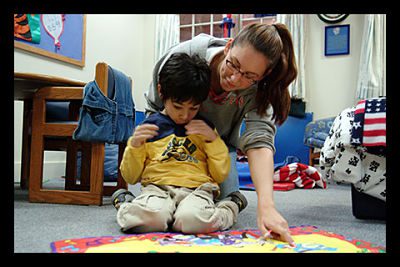
Perkins School for the Blind is an international association that originally started off as a school for the blind. But as time passed, more disabilities were taken care of at the schools. Founded in the United States, today it has grown into an international organization that reaches out to children and adults with disabilities all over the world.
In poverty stricken areas, people with disabilities are the least of the bread-winners’ concern. In a typical family, employment is preferred to education at an early age, and a visually/hearing impaired child or adult is often seen as just an extra mouth to feed. They are marginalized by their own society and family. That is where Perkins International comes in. Perkins International has branches all over the world, including in Africa, Asia, Europe, and South America, giving necessary aid and care to people with disabilities.
Perkins International breaks its work down into four branches: education, advocacy, information and technology, and leadership development. Perkins not only provides education for children with disabilities all over the world, but also works to train the teachers who will assist said children. With advocacy, Perkins International hopes to help children and adults with disabilities achieve recognition and equal treatment, as well as increase awareness about this often under-represented population.
Perkins International also brings new technology to the disabled in the form of their “Perkins Braillers®”, which helps the disabled read and write in Braille, a tactile print language that is accessible to the visually impaired. Finally, Perkins encourages local leadership, by training members of the local community to teach and lead a literacy program for the disabled. The leadership initiative, also known as the Educational Leadership Program, and the Institutional Development Program, also encourages and employs adults with disabilities. This is not only a great economic move, but also gives hope to young disabled children, especially from poverty stricken areas, that they can lead the future as well.
Today the individual branches of Perkins International all over the world can celebrate many triumphs, and it’s these small victories that can lead to larger ones. Whether it is successfully teaching one visually-impaired child how to read Braille, or holding a Braille Cup to encourage reading, learning, and a healthy dose of competition in a school for visually- and hearing-impaired children, the important thing is that children’s lives are being positively impacted.
– Aalekhya Malladi
Sources: IDP
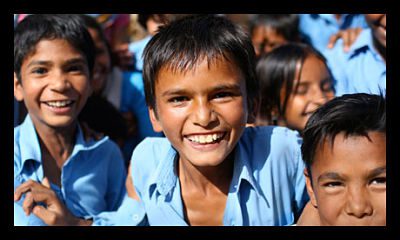
You’ve heard about the problems, but what are global poverty solutions? In fact, there are many:
1. Clean Water and Sanitation
A lot of people in the developed world take clean water and sanitation for granted. We do not realize at times how lucky we are that we don’t have to travel miles to get access to clean water, or drink seemingly safe water only to later find out it was contaminated. Improving water quality and overall sanitation are steps already being taken by non-profit and non-governmental organizations like UNICEF, etc. In fact, UNICEF’s Clean Water Campaign is attempting to do just this: help bring clean and safe tap water to people in developing and third world nations. The potential for a high impact is definitely present: just 5 U.S. dollars can provide clean tap water for one child for 200 days. Cleaner water and safer sanitation lead to healthy and fit children who are able to learn and go to school.
2. Healthcare and the Elimination and Prevention of Diseases
Similar to clean water and sanitation, proper healthcare can also help children and adults be vigorous enough to better take care of their families and work, or pursue education. Many potentially deadly diseases can be averted very simply: for example, one can greatly increase one’s chances of avoiding malaria simply by sleeping inside a mosquito net. Many charities are actively trying to save lives simply by sending nets to poverty stricken families in Africa. Vaccinations and inoculations prevent children from getting easily treatable diseases. Some very treatable diseases go unnoticed and/or untreated in families living in extreme poverty because they are often ignored, not recognized as illnesses, or treatments can’t be afforded. By eliminating and preventing easily treatable diseases, we give a chance to millions of children who otherwise might die of easily treatable maladies.
3. Education
Again, access to basic education is also perhaps something those in developed nations take for granted. Young children living in extreme poverty often have no choice but to seek employment when they reach a certain age in order to help the family financially. They often forgo an education for many reasons: for some, it’s a lack of nearby schools, for others, it’s simple economic necessity, and then there are some who cannot attend school because a lack of proper sanitation and clean water has left them with health problems; these children are unable to learn and perform well in school. Education is a positive feedback cycle in which children who receive an education are able to bring more money home for their families, thereby allowing other children to go to school rather than work. Education empowers people not only economically, but also spiritually and intellectually, potentially leading to a cyclical liberation of the poor.
4. Encouraging Local Innovation
Encouraging local innovation is a great solution to poverty because it stimulates the economy of poverty struck areas as well as supporting self-sufficiency. Some great inventions are currently coming out of Africa; some of them are simple solutions to problems only those living in extreme poverty face. Regardless, this is an eventual result of education, and if encouraged and fostered, it will result in a brighter future for those actively fighting poverty. Organizations like the African Innovation Foundation take it upon themselves to release the potential of individuals in poor African nations who would otherwise go unnoticed.
5. Eliminate Corruption
Eliminating corruption is an extremely significant move in the fight against global poverty. If it’s the higher up officials who hoard money, and prevent aid from going where it is most needed, it will hold back individual countries from eliminating diseases, educating the young, and making clean water accessible to the general population. Additionally, corruption can often result in lax law enforcement, which allows poor nations to become breeding grounds for extremist, sometimes terrorist groups. Eliminating corruption, therefore, would be taking a very big step towards eliminating poverty in general.
– Aalekhya Malladi
Sources: Clean Water Campaign, Netting Nations, Nets for Life Africa, Nothing But Nets, African Innovation Foundation
Photo: The Guardian
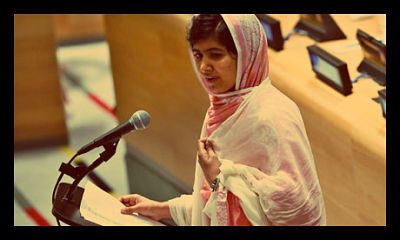
1. Malala Yousafzai works tirelessly as a young advocate for female education, despite being shot in the head last year by the Taliban for these very same efforts. She—in her bravery and brilliance– exemplifies the struggle for girls’ education everywhere.
2. Hillary Rodham Clinton, having served as the first lady and Secretary of State, is now a partner with her husband and daughter at the Bill, Hillary, and Chelsea Clinton Foundation. Within the organization, she has committed herself to improving access to female education and empowering women worldwide.
3. Richard Robbins directed Girl Rising, the extremely popular new documentary that tells the stories of nine struggling girls in the developing world. The film, which has met with great success, espouses the urgent global need for equal access to education.
4. Nicholas Kristof and Sheryl WuDunn published “Half the Sky: Turning Oppression Into Opportunity for Women Worldwide” in 2010, a compelling journalistic account of the developing world, and more specifically, of its disadvantaged women. The book, which spans the entire globe and a diverse set of lifestyles, seems to somehow convey a singular edict: in order to progess—particularly in the developing world– we must provide all women access to an adequate education.
5. Lawrence Chickering has worked for more than thirty years in order to improve the conditions of girls in the developing world, particularly in India, a country where 40% of women are not educated beyond the fifth grade level. His NGO, Educate Girls Globally, has significantly improved female enrollment, retention, and performance in India’s government schools, giving girls access to a variety of transformative resources.
– Anna Purcell
Sources: CBS News, Huffington Post, The Guardian
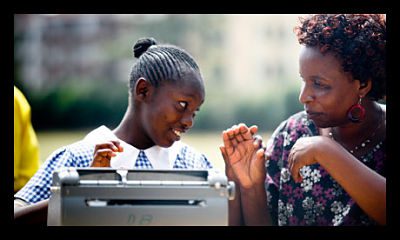
This year, Sense International, an organization targeting sensory disabilities in developing nations, launched its first deaf-blind curriculum in Kenya. The program will formalize education and promote specialized home care for over 17,000 deaf and blind children in a country with no precedent for disability education.
Sense International Kenya has been at work since 2005, when teachers began protesting in earnest to the Kenyan Institute of Education about the lack of programs and metrics to guide and measure deaf-blind education.
Kenya currently has 10 centers of education for the deaf-blind—in a country with a population of 42 million. The great demand for specialized care coupled with a total lack of curriculum has left many classrooms in chaos. Teachers with the best intentions, but no tools, have no recourse.
But the problems have roots far deeper than a lack of curriculum. For many families, the distance is just too great or boarding fees too expensive to enroll their children in the few special learning centers.
Without care or intervention, struggling families often can’t help but marginalize their deaf-blind children. Thousands of disabled people live shuttered, lonely lives due to a lack of education.
Sense International addresses these problems on several fronts. First, it recently pioneered a deaf-blind education program in Kenya, fully equipped with material and performance gauges on every academic level. It built the curriculum based on studiously researched input from parents and teachers of the deaf-blind, as well as established practices from its operations around the world in countries like Romania, Peru, India, and Uganda.
Sense also works with community organizations to ramp up specialized care for children with severe disabilities. They provide home-based education and therapy, train parents to care for their disabled children, and connect families with experts and organizations that offer advanced support.
Yet, perhaps most important of all, Sense advocates for policy geared toward the deaf-blind. For example, Tanzania, one of its countries of operation, currently subsidizes transport costs for disabled children to and from special learning centers. Sense is pressuring Kenya to adopt similar practices.
The notoriously bureaucratic Kenyan government presents another problem in itself. To combat this, Sense is cutting away at the red tape prohibiting reform by maintaining constant contact with leaders on sensitive issues.
“This project has shown just what can be achieved with political will and the expertise of organizations such as ourselves,” reports Edwin Osundwa, the country representative of Sense International Kenya. “We are proud of what has been achieved and are now keen to repeat the process for home-based education.”
– John Mahon
Sources: Sense International, The Guardian
Photo: The Guardian
What is Learning in NGOs? Formed in 2005, Learning in NGOs (LINGOs) is a nonprofit, online educational community that brings together humanitarian organizations to learn new skills and share resources with each other. LINGOs uses a variety of technology including eLearning classrooms, virtual meeting space, online libraries, and project management tools in order to create a comprehensive educational environment for professionals.
Who uses this community? LINGOs is utilized by many large nonprofit organizations who want to increase the knowledge and performance of their employees and connect them to an expansive network of colleagues. To be eligible, NGOs must be working in more than 3 countries and be focused on humanitarian issues such as social justice, crisis relief, or development. Major organizations currently using LINGOs include Habitat for Humanity, International Justice Mission, and World Wildlife Fund.
What skills can you learn through LINGOs? Through partnership with many course providers, such as eCornell and Harvard Management Mentor Program, LINGOs supplies about 40 interactive learning programs to its NGO members. Educational topics to choose from include dealing with traumatic stress in humanitarian situations, project management skills, microfinance, and human rights protection. In addition, members may choose to participate in well-known certificate programs. Some courses require much more time and focus on homework than others, but all of them are designed to provide NGO employees with greater skills.
What are the other benefits of this service? LINGOs believes that using their eLearning platform saves nonprofit employees time and money to invest in what really matters to the organization. In addition to many networking opportunities, there are no transportation costs, and employees can learn virtually whenever they want and from wherever they are in the world. LINGOs estimates that organizations gain over $50,000 in value from their membership. Better skills and increased performance at non-governmental organizations means that they will be able to do even more good in the world of humanitarian aid.
– Caylee Pugh
Sources: LINGOs, NGO Learning
Photo: Lingofeeds,
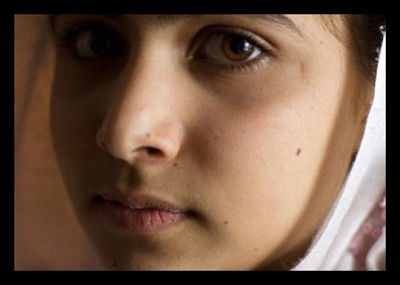
Perhaps no adolescent in the world is regarded with more widespread veneration than sixteen-year-old Malala Yousafzai, the well-known Pakistani advocate for female education who was shot by the Taliban for her convictions in October 2012. Seriously injured from the shooting, Malala was immediately flown to the United Kingdom to undergo a series of emergency operations. Miraculously, she recovered.
Just over a year later, Malala is back in school. However, her life is far from blithe—the urgency for access to education for all girls is ever present. Thus, Malala continues to ceaselessly advocate for girl’s rights, disseminating her message on the global stage.
In order to honor her prodigious efforts in the name of girls everywhere, the United Nations hosted Malala Day on July 12, 2013, her sixteenth birthday. The event—which evolved to be known as “Malala Day”—included a speech by Malala herself, pushing for female education everywhere.
Standing amongst the most powerful leaders in the world, Malala spoke confidently. She beseeched courage from the world’s women: “Let us pick up our books and pens. They are our most powerful weapons. One child, one teacher, one pen and one book can change the world. Education is the only solution.”
She then addressed the personal, demonstrating the unwavering nature of her principles: “The terrorists thought that they would change my aims and stop my ambitions but nothing changed in my life, except this: weakness, fear and hopelessness died. Strength, power and courage were born.”
In a world where 115 schools were attacked last year in Mali, 165 in Yemen, 321 in occupied Palestine, and 167 in Afghanistan, Malala’s struggle has never been more pressing.
– Anna Purcell
Sources: AlJazeera, The Guardian
Photo: National Secular Society
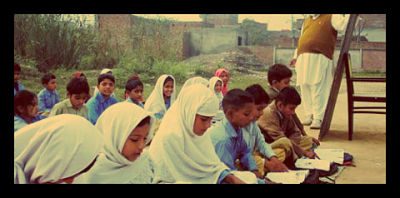
This is the second in a series of posts reviewing the UN’s Millennium Development Goals. The MDGs are a set of eight targets agreed upon by almost every country in the world, based on a shared commitment to the improvement of the social, economic, and political lives of all people. They are to be achieved by 2015 and, with two years to go, it’s time to see how far we’ve come and what is left to be done.
The second of these goals is to achieve universal primary education. All children, regardless of gender or socioeconomic background, deserve the opportunity to receive a high quality education. Because of concerted efforts to meet this goal, more children are attending primary school today than ever before, with 570 million children enrolled in school. From 1999 to 2006, the number of out-of-school children fell from 103 million to 73 million, and primary school enrollment in developing countries increased from 83% to 88%. Primary school enrollment continued increasing, reaching 90% by 2010. However, progress is slowing with the number of primary school aged children out of school falling by only 3 million between 2008 and 2011.
Despite significant progress, children in sub-Saharan Africa are the most likely not to attend primary school, with the net primary school enrollment ratio there increasing to only 71%. This leaves roughly 38 million children without a primary school education. On the other hand, 90% of Southern Asian children attend primary school. This represents excellent progress, although it still leaves 18 million children without the basic reading and math skills they would learn in school.
Inequities in access to primary education represent the main barrier to reaching the second MDG. The UN estimates that, without accelerated progress, 58 of the 86 countries that have yet to achieve universal primary education will not do so by the 2015 goal date. Despite progress in many areas, girls are still significantly more likely to drop out of school than boys are. Children from poorer households and from rural areas also have increased dropout rates.
It is important to note that enrollment numbers are not the only indicator of success or failure when it comes to MDG 2. There is no point in getting children to school if there are inadequate teachers or supplies, or if the learning environment is hostile. Therefore, it is vital to consider the quality of the education as well as the number of children attending school. We must ensure that teachers are trained and well equipped, and that children feel safe at school. Students that attend school on a regular basis should graduate with at least basic reading and math skills. They should also graduate on time, giving them a greater chance of attending secondary school.
Many countries have made significant progress using a variety of programs. Nine countries have increased primary school enrollment by eliminating school fees. These include Ghana, where public school enrollment in impoverished areas skyrocketed from 4.2 million to 5.4 million in 2004 alone, and Kenya, where primary school enrollment jumped by over a million students in just one year. However, abolishing school fees inevitably means less school funding, which presents challenges when it comes to providing adequate school buildings and well-trained teachers.
In Haiti, a $70,000 donation from famous soccer players Ronaldo and Zidene allowed for incredible improvements to schools in a severely impoverished area. UN agencies and NGOs partnered with the Haitian government to promote school attendance, conduct training for teachers, and provide 33 schools with necessary supplies. This positively changed the lives of 4,300 children by significantly improving the quality of their education.
Despite significant progress, 123 million youth, aged 15 to 24, still lack basic reading and writing skills. In a reflection of the persisting gender gap in primary education, 61% of these youth are female. Clearly, there is still work to be done. The UN provides several suggestions for continued efforts on this front. More funding, both from governments and from aid organizations, will be needed to achieve universal primary education by 2015. Annual aid dedicated to basic education in developing countries increased from $1.6 billion in 1999 to $5 billion in 2006, representing a step in the right direction. However, it is estimated that $11 billion will be needed annually to achieve universal primary education by 2015. These funds are needed to train teachers and to ensure that they have all the materials they need to do their job well.
In order to prevent unequal access to education based on socioeconomic status, school fees should be eliminated. At the very least, scholarships should be readily available for children from poorer families. Children should also be provided with free transportation to and from school if needed and with free meals and basic health services at school. Proper nutrition and health services will improve children’s overall well being, and these services would help reluctant children and families to see school as a worthwhile investment. An even more drastic step could be to entice low-income families with cash transfers conditional on their children’s school attendance. This could be especially useful in convincing families to educate their daughters, not just their sons.
A high quality primary school education can set children on the right track, giving them necessary skills to succeed in their personal lives and in the workplace. Primary school education has the power to break the cycle of poverty and to empower disenfranchised social groups. This makes the world’s progress towards universal primary education extremely exciting, and compels us to continue working towards this goal.
– Katie Fullerton
Sources: UN Fact Sheet, UN
Photo: Pakistan Today

It started with a few funny homemade videos posted onto YouTube by a teenager in high school. However, overnight, YouTuber Kevin Wu’s videos shot up half a million views. From then, Wu, known by his YouTube name Kevjumba, would become one of YouTube’s leading cyber-celebrities. His comedy videos gathered millions of views. Today, 4 million people are subscribed to Kevjumba’s channel. His subscribers are roughly equal to the population of New Zealand.
Despite enormous success and fame, Wu has been using his influence for helping those in need, namely by helping to build a school in Kenya. Wu’s involvement in school’s construction began when a The Supply, a non-profit organization, posted a video of students in Nairobi challenging Kevjumba to teach one of their classes. Wu then received a flood of tweets urging him to go to Kenya. Soon enough, this American YouTube star was on his way to Africa.
According to Wu, his trip to Nairobi was life-changing because he learned from The Supply about the 1 billion people living in slums today and witnessed children living in the slums around Nairobi. Wu decided that he would partner with The Supply and commit to aiding the friends he made in Kenya. Wu had already created a charity YouTube channel called Jumbafund where views were generating ad revenue that Wu would donate to charities. Wu decided that he would direct all the funds from his charity channel to The Supply to help fund education for students in Kenya.
After uploading videos about his experience in Nairobi, which generated over 2 million views, Wu was able begin a project to raise funds for The Supply to build a school in Lenana, Kenya. When Wu turned 21, he and partners launched a campaign to urge people to donate 21 dollars to the construction of the school. With $50,000 raised, funding for the school’s construction is now complete. Kevjumba High School is the first secondary school in Lenana, Kenya. It now serves many of the students that Wu met while visiting Kenya.
Kevjumba has revolutionized charity by using YouTube as a platform to truly aid those who need it. This is because Kevjumba’s viewers play a key part in generating the funds to build the school. Each click and each view plays a part in sustaining the school and providing opportunities for children in poverty to have an education. Furthermore, Kevjumba’s popular videos encourage viewers to donate directly. Kevjumba proves that with just a viral video and a compelling cause, anybody can make a difference in the world.
– Grace Zhao
Sources: The Huffington Post, Forbes, Kevjumba.com, PR Newser
Photo: KevJumba
