Information and stories on education.

Red Nose Day Turns 25March 15 will mark the 25th anniversary of the charity organization Comic Relief’s Biannual Red Nose Day. The event, which began in the UK in 1988, is an all-day affair that showcases British comedians performing telethon-style with the ultimate goal of raising money for poverty reduction in Africa. Since the first event, the organization has raised 660 million pounds for the cause.

What now appears to the public as a well-rehearsed and professional telethon was once a much more amateur affair with the most earnest of the organizers and performers of Red Nose Day holding it together. British talk show host and comedian Jonathan Ross recalls one mix-up from the early years when Welsh comedian Griff Rhys Jones began a comedic bit with his trademark enthusiasm only to realize that he was supposed to be presenting a tragic event. Despite moments of confusion, the event was a wild success and continues to be an important national event to this day.

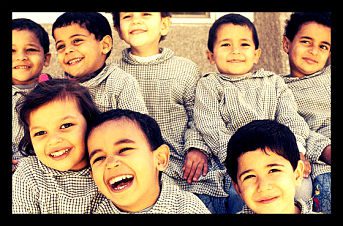
The organization does not simply raise money to be passed on to indiscriminate sources. Walking through the halls of a Comic Relief-assisted school in Accra, Ross was impressed by the real-world impact that a little money collected from thousands of people can make. He recognized the importance of the school to the community in helping the children gain a solid education to escape poverty.  When faced with the reality of the effect that the charity money makes, it is obvious that the school is more than just a place to collect impressive donation statistics or take riveting photos for a catalog. It is an institution that means a great deal to the community.

Ross admits that the idea of using comedy to highlight the tragedy, as in the staggering poverty in Africa, is a risky way to raise awareness. Regardless, the performers and the organization have built a large following in the early years that has only grown since then. At the least, Red Nose Day is a bright and cheery way to bring awareness to global poverty on the international stage.

Sean Morales

Source: The Guardian

Investing in the Future with Universal Pre-KIn his State of the Union address, President Obama called for action on something just as unprecedented as universal healthcare in America – universal preschool.

The White House has released an infographic sharing that at-risk children who do not receive a high-quality early education are 25 percent more likely to drop out of school, 40 percent more likely to become a teen parent, 50 percent more likely to be placed in special education, 60 percent more likely to never attend college and 70 percent more likely to be arrested for a violent crime.

The investment in preschools, therefore, means investing in the future of American life, according to an administration that has championed demands that every child one day receive an affordable college education, and who has also called for sharp restrictions to be placed on assault weapons as a result of increasingly sensationalized acts of gun violence.

The investment in early education may raise a generation out of poverty, as current reports claim that the United States provides, at the moment, some of the least access to the social mobility of the world’s utmost developed nation. This has proven disheartening to a society that functions on the ideals of the American Dream, which is that anyone can achieve anything if they work hard enough.

Investing in the future is a principle that is both bipartisan and essential to the capitalist identity of America. We can only hope that legislators can overcome their differences to invest in this preventative social program, as has been done in the states of Georgia and Oklahoma.

– Nina Narang

Sources: The Huffington Post, The Washington Post
Photo: Post University

Hilary-Clinton-Arab-League
The media is constantly overflowing with updates on technological advancements and products, but their emphasis is truly reflective of the most important aspect of our changing world. Technology, as the humanitarian world has seen in the past decade or so, is not just a luxury for consumers in the first world. In fact, perhaps the greatest use of technology has been in developing countries.

Last week, the now-former Secretary of State Hillary Clinton held a small ceremony for the newest collaborative initiative coming out of the Department of State called “The Open Book Project”. Along with the Arab League Educational, Cultural and Scientific Organization (ALECSO), MIT, Rice University, and the non-profit Creative Commons, among other educational organizations, The Open Book Project strives to extend open educational resources (OERs) to the Arab world in their native language.

While many countries are familiar with OERs, which allow free access to non-commercial users to legally license material for educational or research purposes, translating American textbooks and materials into Arabic is a huge step towards providing much-needed information in an area that does not have adequate access to the best universities or schools.

Websites such as KhanAcademy.org or Coursera.org are priceless tools for young children and adults alike who want to learn more or further their knowledge. In the Arab world, where education can be limited by wealth, geography or gender, The Open Book Project hopes to break these boundaries. This is much more than a technological program; it can and should be seen as an example of “educational diplomacy”. It is a promising relationship between the United States and the Arab League as they come together on the issue of improving the opportunities for young people around the world.

Ambassador Mohammed Al Hussaini Al Sharif, the Arab League’s envoy to the U.S., sees The Open Book Project as “a huge step forward in the Arab-American relations”. By presenting themselves as supporters of increasing education and access to such resources, not only will the United States be improving its public image but more importantly, it is making huge strides in terms of addressing the many issues surrounding global poverty. Education is the main key to achieving success no matter what country someone lives in. By opening up this portal to documents, textbooks, lectures, research and other types of media, The Open Book Project will help people around the world to become productive and active members within their own communities.

Deena Dulgerian

Source:U.S. Dept. of State,Voice of America