• Link to X
  • Link to Facebook
  • Link to Instagram
  • Link to TikTok
  • Link to Youtube
  • About
    • About Us
      • President
      • Board of Directors
      • Board of Advisors
      • Financials
      • Our Methodology
      • Success Tracker
      • Contact
  • Act Now
    • 30 Ways to Help
      • Email Congress
      • Call Congress
      • Volunteer
      • Courses & Certificates
      • Be a Donor
    • Internships
      • In-Office Internships
      • Remote Internships
    • Legislation
      • Politics 101
  • The Blog
  • The Podcast
  • Magazine
  • Donate
  • Click to open the search input field Click to open the search input field Search
  • Menu Menu

Archive for category: Education

Information and stories on education.

Children, Education, Family Planning and Contraception, United Nations

UNICEF’s Global Education First Initiative

UNICEF's Global Education First Initiative
Josephine Bourne is the Associate Director of UNICEF. She sat down for an interview with the Inter Press Service to give her thoughts on the upcoming meetings to be held in Washington D.C. on the Global Education First Initiative.

The meetings will bring together Ministers in Finance from the Democratic Republic of the Congo, Haiti, South Sudan, Yemen, Nigeria, Ethiopia and Bangladesh. The topic of conversation will focus on sustainable solutions between the private sector and civil society organizations. The meetings will center around the importance of education on the global economy.

Bourne believes that the initiative will provide an increased pressure for political commitment in the field of education.  She stated that UNICEF would like to continue to work towards ensuring education for the most vulnerable children, particularly girls, with disabilities as well as children living in conflict territories.

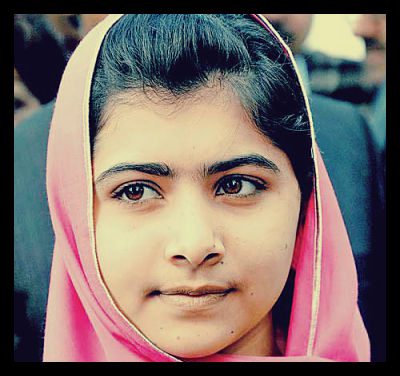
When Bourne was asked if there was one thing in particular that greatly diminished a child’s opportunity to obtain an education, she bluntly stated that being born into poverty as a girl in a rural area is a huge disadvantage. The longer a girl is able to attend school, the fewer children she will have – an incredibly important factor in poverty reduction.

Around the world, girls who have seven years of education have 2.2 fewer children than those that do not. When those girls have children, those children will be healthier and better educated, helping to lower the poverty percentage in their given communities. Bourne believes that this environment leads to economic growth, more female leaders, and more sustainable development.

In the interview, Bourne was also asked about gender equality and education. She said that girls from disadvantaged groups are oftentimes the most marginalized because of the special risks that could take them out of school. She believes that there is serious inequity in schools around the world.

Women’s education and empowerment have been a popular theme in the media lately with the recent release of the documentary “Girl Rising”. While this is a very positive thing, Bourne was quick to note, however, that the increased media attention to gender and education inequality, as well as the empowerment that comes with it are not enough to bring about social change. In her opinion, in order to create lasting change, we need the complete commitment of all duty bearers; from organizations such as UNICEF and the UN to parents and communities; to be involved in the promotion of the human right of education for all children around the world.

– Caitlin Zusy

Source: Inter Press Service
Photo: UNESCO

April 20, 2013
https://borgenproject.org/wp-content/uploads/borgen-project-logo.svg 0 0 Borgen Project https://borgenproject.org/wp-content/uploads/borgen-project-logo.svg Borgen Project2013-04-20 11:41:582024-05-24 23:48:53UNICEF’s Global Education First Initiative
Children, Education

Free Meals for Indian School Children

Free Meals for Indian School Children
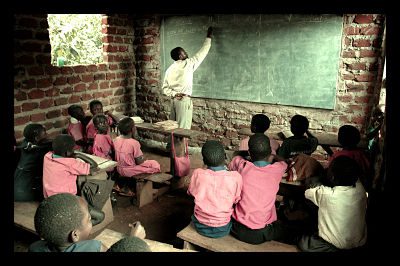
Imagine what it’s like to have to choose between attending elementary school or harvesting wheat as a means of preventing starvation. Sadly, for many children in India where –according to UNICEF – upwards of 40 % of the population under five is underweight, this choice is one that many of their students have to make on a daily basis. However, thanks to the efforts of The Akshaya Patra Foundation and some assembly line ingenuity, free meals for Indian school children are now a reality for many elementary and middle school students.

The free meals for Indian school children program were incorporated following a 2001 Supreme Court Ruling institutionalizing free meals for all children under the age of 13. The Indian Government – in cooperation with The Akshaya Patra Foundation – has been able to feed 1.4 million children a day, resulting in greater attendance and a heightened ability to focus in class. The Foundation’s Vice Chairman, Chanchalapathi Dasa, remarked that “If a child is hungry in the classroom then he or she will not be able to receive all this education.”

But how does the government-run a program to provide that many free meals for Indian school children in one day? The answer is through an ingenious “gravity flow” kitchen that utilizes the technologies of mass production and efficiency. Basically, the kitchen is divided into 3 floors where food is prepped on the third floor, sent down –via a chute – to the cauldrons for cooking on the second floor, and sent down a final chute to be packaged and shipped to the schools on the first floor. Vice-Chairman Dasa added that the organization knew the scope of the problem that they were trying to address and “realized that in order to see a significant impact we have to do it in scale and that we have to use modern techniques of management and innovation” to make a difference.

Programs such as these serve as a much needed shot in the arm in combating global poverty and chronic undernourishment for much of India’s youth. By providing free meals for Indian schoolchildren, investments made by the government today will result in greater technological innovation through educational achievements in the future.

– Brian Turner

Source: CNN
Photo: UNICEF

April 17, 2013
https://borgenproject.org/wp-content/uploads/borgen-project-logo.svg 0 0 Borgen Project https://borgenproject.org/wp-content/uploads/borgen-project-logo.svg Borgen Project2013-04-17 08:34:542020-06-12 01:13:30Free Meals for Indian School Children
Education

UC Berkeley & Global Poverty

UC Berkeley & Global Poverty
The Global Poverty Project was founded by Ananya Roy, a professor of city and regional planning at Berkeley, Tara Graham, an International and Area Studies lecturer and digital media expert and Abby VanMuijen, an artist with the goal of spreading the curriculum of Berkeley University’s most popular minor, Global Poverty and Practice. The three UCal alumni are utilizing digital media and twitter to create a multilayered broadly accessible curriculum that they call critical thinking + improv art + new media. This creative curriculum is being used to spread knowledge about global poverty beyond the classroom.

A project is a new approach to traditional online education that is sweeping the world. While the traditional method of online education tends to simply stick a video recorder in a classroom, the Global Poverty Project seeks to create numerous forms of media and material for students to utilize as a whole or in parts. Eventually, there will be a textbook that utilizes matrix barcode technology that will link to other related information. Each video that is posted also links to useful sites and information. By generating discussions on Twitter, Roy’s classroom, already full with 600 pupils, has expanded, potentially exponentially, and has become a place where students, people on campus and anyone in the world can exchange ideas.

More than creating a groundbreaking approach to online education, Roy, Graham, and VaMuijen are looking to create new and interesting internet videos that spark discussion and critical thinking.“Most of them, I think, are really patronizing and oversimplify the very complex aspects of poverty action. They’re a call to action, but they don’t necessarily explore all the political and ethical issues that smart young people know are at stake,” said Roy about most internet videos that attempt to address poverty.

Each video starts with a question and offers a scholarly argument for a way of thinking about it. VanMuijen then takes video to a whole other level with visual note-taking and creates the videos. Like the minor itself, the videos are framed to encourage thinking about solutions to poverty that steer clear of what Roy sees as two extremes: “The hubris of benevolence, young Americans thinking ‘I’m going to solve poverty during my alternative spring break,’ and the paralysis of cynicism, which we have a lot of at Berkeley, really smart kids who know how to critique everything in the world but they’re not really sure what to do after that critique.” Later, the project, new media, curriculum, and critical thinking about global poverty come together. While Roy lectures, the Twitter feed is projected behind her in the classroom and the videos are being played and igniting discussion all over the world.

– Kira Maixner

Source: UC Berkeley News Center

April 16, 2013
https://borgenproject.org/wp-content/uploads/borgen-project-logo.svg 0 0 Borgen Project https://borgenproject.org/wp-content/uploads/borgen-project-logo.svg Borgen Project2013-04-16 11:00:062020-06-12 01:18:55UC Berkeley & Global Poverty
Education

USAID Helps Nicaraguan Students Graduate

USAID Helps Nicaraguan Students Graduate
Universidad Centroamericana celebrated as 125 students graduated on April 5th. Many of these students had received scholarships from the USAID’s Enterprise and Employment program to study business and technical studies. Nicaragua’s Victoria Fountain, an organization that encourages young people to pursue technical degrees, also supported the students.

These graduates completed courses in “strategic planning, human resources, negotiation techniques, human relations and customer service” for business majors and technical majors took “mechanical drawing, electricity, mechanics, hydraulics and pneumatics.”

USAID and the Victoria Foundation each contributed $107,000 to the University. This money went towards providing books, uniforms, meals, and teachers’ salaries. The two organizations hope to team up to create a food technology degree. Students graduating with this degree would greatly contribute to Nicaragua’s effort to improve its food security. U.S. Ambassador Phyllis Powers, the head of USAID’s Enterprise and Employment Program, and several representatives from the Victoria Foundation attended the graduation celebration. These organization members were thrilled to see their financial contributions utilized to benefit these hard working students and the country of Nicaragua.

As more young people receive a higher education, Nicaragua’s economy and standards of living will begin to improve. Many of these students would not have had the financial means to attend Universidad Centroamericana without the help of USAID and the Victoria Foundation. Now, they have the opportunity to change their lives for the better.

– Mary Penn

Source: TND

April 15, 2013
https://borgenproject.org/wp-content/uploads/borgen-project-logo.svg 0 0 Borgen Project https://borgenproject.org/wp-content/uploads/borgen-project-logo.svg Borgen Project2013-04-15 11:03:082020-06-12 01:28:43USAID Helps Nicaraguan Students Graduate
Education, Foreign Aid

USAID to Expand Its Teacher Training Project in Pakistan

USAID to Expand Its Teacher Training Project in Pakistan
The USAID Teacher Education Project in Pakistan has expanded to provide teaching services to every province in the country. This $75 million project has been working since 2011 to modernize Pakistan’s education system. With the help of Pakistan’s Higher Education Commission (HEC), over 2,600 students have enrolled in 15 universities and 57 colleges across the country. USAID hopes to see this number increase as more teachers emerge from the Teacher Education Program.

In order to reach out to more potential teachers, USAID realized the need to enlarge its program. Not only will the Teacher Education Project offer more locations, it is also giving 1,900 scholarships to students based on merit and financial need.

This higher education program will be implementing suggestions from a study conducted in 2006 that found flaws in Pakistan’s current teacher training system. The study discovered a trend of the government setting unrealistic goals for its education system and then, when it fails to meet those goals, creating new, also idealistic targets that are never reached. By making its goals more realistic, USAID is confident in its ability to improve Pakistan’s education system by producing high quality teachers.

As Pakistan trains more well qualified teachers, the country will begin to experience higher quality of education for its younger students as well. Javaid Laghari, chair of the HEC, is optimistic about Pakistan’s future, “We hope for a good change, when today’s students become tomorrow’s teachers.”

– Mary Penn

Source: UWN
Photo: BarakatNews

April 14, 2013
https://borgenproject.org/wp-content/uploads/borgen-project-logo.svg 0 0 Borgen Project https://borgenproject.org/wp-content/uploads/borgen-project-logo.svg Borgen Project2013-04-14 09:00:472020-06-07 21:59:02USAID to Expand Its Teacher Training Project in Pakistan
Education, Global Poverty

Celebs Participate in 2013 Clinton Global Initiative University

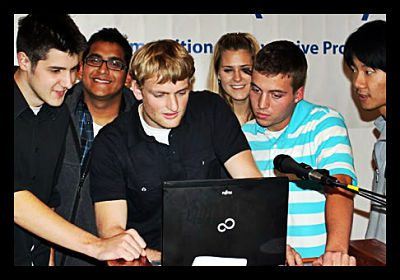
Celebs Participate in 2013 Clinton Global Initiative UniversityThe Clinton Global Initiative University, now in its sixth year, is being hosted this week in St. Louis at Washington University. Along with former President Bill Clinton, TV host Steven Colbert and Twitter founder Jack Dorsey will attend the event that aims to include today’s youth in the world’s most pressing global challenges through college campuses. Various other celebrities, including Jada Pinkett-Smith and Chelsea Clinton are also attending the event.

The event focuses on five main areas of interest relating to global issues, including poverty alleviation, public health, peace and human rights, education, and environment and climate change. The event is expecting around 1,200 participants to attend this year. Washington University is the host college this year because of its dedication “to training the next generation of civic leaders.”

Although the general public is not permitted into the event, some sessions can be viewed online via streaming video here.

– Christina Kindlon

Source: KMOV

April 11, 2013
https://borgenproject.org/wp-content/uploads/borgen-project-logo.svg 0 0 Borgen Project https://borgenproject.org/wp-content/uploads/borgen-project-logo.svg Borgen Project2013-04-11 09:22:042020-06-07 21:56:49Celebs Participate in 2013 Clinton Global Initiative University
Education

Madonna Auction’s Her Painting for Charity

madonna-auction-charity
On May 7, 2013, Sotheby’s will auction a painting from Madonna’s art collection, in its Impressionist & Modern Art Evening Sale. The sale of the Fernand Léger’s “Trois femmes à la table rouge – Three Women” painting is estimated at $5 to $7 million, and all proceeds will benefit the Ray of Light Foundation to support girls’ education in Afghanistan, Pakistan, and other countries.

“I have a great passion for art and a great passion for education. In conjunction with Sotheby’s, I would like to share these two passions. I cannot accept a world where women or girls are wounded, shot or killed for either going to school or teaching in girls’ schools. Let’s change the world!” commented Madonna.

In Afghanistan, just 12 percent of women are literate and it is estimated that only seven girls to every ten boys are able to attend school. In Pakistan, which has one of the largest populations of out-of-school children in the world, it is estimated that there are more than three million primary school-aged girls unable to attend school.

The Fernand Léger painting was done in 1921, at the height of his Mechanical Elements series. Over time, Léger’s rendering of female subjects became increasingly abstract and this painting on auction is an example of his unique Cubist moment. Madonna is taking this valuable piece of art, and turning it into an even more valuable catalyst for social-good.

– Mary Purcell

Source: Look At The Stars


April 5, 2013
https://borgenproject.org/wp-content/uploads/borgen-project-logo.svg 0 0 Borgen Project https://borgenproject.org/wp-content/uploads/borgen-project-logo.svg Borgen Project2013-04-05 13:14:412020-05-04 08:02:18Madonna Auction’s Her Painting for Charity
Education, Health

Gates Foundation Wants New Condoms

Gates Foundation Wants New Condoms

Bill Gates is asking investors and scientists to develop a new gadget—an improved condom.

It may seem like a job for Trojan, but the Bill and Melinda Gates Foundation wants new condoms. The unique request is part of its “Grand Challenges in Global Health” initiative. The program awards grants of $100,000 and follow-up grants of as much as $1 million to individuals who develop solutions to global health issues. The latest report details successful recipients combating malaria, HIV, and tuberculosis.

According to the Grand Challenges website, “Condoms have been in use for about 400 years yet they have undergone very little technological improvement in the past 50 years.” The only major improvements include the switch to latex and quality control measures to test each individual condom during production. Both of these measures increased the effectiveness of condoms, but the basic design of condoms has yet to transform.

Condoms are the most ubiquitous defense against unwanted pregnancy and sexually transmitted diseases. This undervalued resource is a lifesaver in developing countries.  Condoms should be necessary for sexual health, but many men and women shy away from using them due to discomfort, societal stigmas, and reduced sensation. Some cultures perceive condom use as a sign that the person has AIDS.

The Gates Foundation hopes to eliminate these concerns so more people will use condoms regularly. The challenge seeks to make prophylactics more user friendly. “If we could make something better, we could have a really substantial effect on HIV prevention and unintended pregnancy in Sub-Saharan Africa and South Asia,” said Stephen Ward, a program officer at the Bill & Melinda Gates Foundation.

The program is limited to condoms rather than multi-purpose prevention devices (such as vaginal rings) because these programs are not readily available worldwide. The condom is still simple enough that it can be distributed at a low cost. Not to mention, condoms are useful even in communities that lack health care professionals.  “Any advance or new design that gets people to use condoms would be a big plus,” said Dr. Anthony Fauci, one of the world’s leading AIDS researchers.

Applicants must complete a two-page application by May 7. Two frontrunners have already emerged. Origami, a California company, focused on usability and comfort. They are creating a new silicone injection-molded condom.  University of Washington researchers look to increase the effectiveness of anti-HIV drugs.  Their model features electrically spun fabric that allows sperm-blocking drugs to dissolve more quickly.

– Whitney M. Wyszynski
Source: Co.Exist
Photo: CNET

April 2, 2013
https://borgenproject.org/wp-content/uploads/borgen-project-logo.svg 0 0 Borgen Project https://borgenproject.org/wp-content/uploads/borgen-project-logo.svg Borgen Project2013-04-02 11:00:432024-05-24 23:47:08Gates Foundation Wants New Condoms
Education, Food Security, Foreign Aid, USAID

US AID and Nepal Partner to Educate on Agriculture

US AID and Nepal Partner to Educate on Agriculture
Nepal Economic, Agriculture, and Trade Activity (NEAT), a 32-month program funded by USAID, aims to “promote economic growth, reduce poverty, increase food security, and improve lives” throughout Nepal. As part of the program, USAID and Nepal have partnered up through the Nepal Ministry of Agriculture Development to distribute educational materials on agricultural practices in the hopes of improving the production of agriculture in the country.

Through the funding provided by USAID, more than 263,000 pamphlets were handed out detailing specific agricultural instructions, both written in Nepali and as visuals in order to aid those citizens who are illiterate. The pamphlets detail “critical agriculture practice” on 13 types of crops and 3 species of livestock.

The NEAT program has improved the agricultural education of 67,510 households throughout 20 districts of Nepal with a regular lack of access to proper food sources. Thus far, the project has already allowed area farmers to see an increased income of $8.5 million collectively. These farmers and households have had increased access to markets and are better educated on agricultural practices such as pest and disease control, use of fertilizer, improved seed, and “post-harvest handling.”

The Director of USAID’s Social, Environmental, and Economic Development Office, John Stamm, maintained that USAID is dedicated to creating sustainable development solutions, including the NEAT program – which will allow Nepalese citizens greater resources for continuing to improve their lives long after the program ends in August of 2013.

– Christina Kindlon

Source: USAID

March 31, 2013
https://borgenproject.org/wp-content/uploads/borgen-project-logo.svg 0 0 Borgen Project https://borgenproject.org/wp-content/uploads/borgen-project-logo.svg Borgen Project2013-03-31 14:30:432020-06-01 00:46:00US AID and Nepal Partner to Educate on Agriculture
Education, USAID, Women and Female Empowerment

USAID Funds Partnerships for Women’s Leadership

USAID Funds Partnerships for Women's LeadershipUSAID funds partnerships with Higher Education for Development (HED) to encourage women’s leadership throughout a number of developing countries, including South Sudan, Rwanda, Paraguay, and Armenia. As part of the new Women’s Leadership Program, five American universities will partner with universities and colleges throughout the select countries.

The partnership between universities aims at encouraging women’s status in a number of vital sectors for economic development, including agriculture, business, and education. The goals of the program also fall in line with previous goals laid out by USAID as part of the Gender Equality and Female Empowerment Policy, which was released in 2012.

HED will be in charge of administering the programs, which will total one in each country and two in Rwanda. Funding for the program from USAID will total $8.75 million.

Some of the more specific goals of the Women’s Leadership Program will include increased access to higher education and advanced degrees for women, increases in foreign universities research on women’s leadership, and encourage women’s leadership through advocacy in struggling communities. The American universities that are participating in the program are Arizona State University, Michigan State, Indiana University, UCLA, and the University of Florida.

USAID Senior Coordinator for Gender Equality and Women’s Empowerment, Carla Koppell, said “USAID is very excited to be collaborating with academic institutions in the United States and abroad in advancing women’s leadership. These partnerships offer a meaningful and important opportunity to ensure women are empowered and advance in economies and societies globally.”

– Christina Kindlon

Source: USAID

March 27, 2013
https://borgenproject.org/wp-content/uploads/borgen-project-logo.svg 0 0 Borgen Project https://borgenproject.org/wp-content/uploads/borgen-project-logo.svg Borgen Project2013-03-27 09:00:532020-05-26 01:04:42USAID Funds Partnerships for Women’s Leadership
Page 239 of 241«‹237238239240241›»

Get Smarter

  • Global Poverty 101
  • Global Poverty… The Good News
  • Global Poverty & U.S. Jobs
  • Global Poverty and National Security
  • Innovative Solutions to Poverty
  • Global Poverty & Aid FAQ’s
Search Search

Take Action

  • Call Congress
  • Email Congress
  • Donate
  • 30 Ways to Help
  • Volunteer Ops
  • Internships
  • Courses & Certificates
  • The Podcast
Borgen Project

“The Borgen Project is an incredible nonprofit organization that is addressing poverty and hunger and working towards ending them.”

-The Huffington Post

Inside The Borgen Project

  • Contact
  • About
  • Financials
  • President
  • Board of Directors
  • Board of Advisors

International Links

  • UK Email Parliament
  • UK Donate
  • Canada Email Parliament

Get Smarter

  • Global Poverty 101
  • Global Poverty… The Good News
  • Global Poverty & U.S. Jobs
  • Global Poverty and National Security
  • Innovative Solutions to Poverty
  • Global Poverty & Aid FAQ’s

Ways to Help

  • Call Congress
  • Email Congress
  • Donate
  • 30 Ways to Help
  • Volunteer Ops
  • Internships
  • Courses & Certificates
  • The Podcast
Scroll to top Scroll to top Scroll to top