• Link to X
  • Link to Facebook
  • Link to Instagram
  • Link to TikTok
  • Link to Youtube
  • About
    • About Us
      • President
      • Board of Directors
      • Board of Advisors
      • Financials
      • Our Methodology
      • Success Tracker
      • Contact
  • Act Now
    • 30 Ways to Help
      • Email Congress
      • Call Congress
      • Volunteer
      • Courses & Certificates
      • Be a Donor
    • Internships
      • In-Office Internships
      • Remote Internships
    • Legislation
      • Politics 101
  • The Blog
  • The Podcast
  • Magazine
  • Donate
  • Click to open the search input field Click to open the search input field Search
  • Menu Menu

Archive for category: Development

Information and stories on development news.

Development

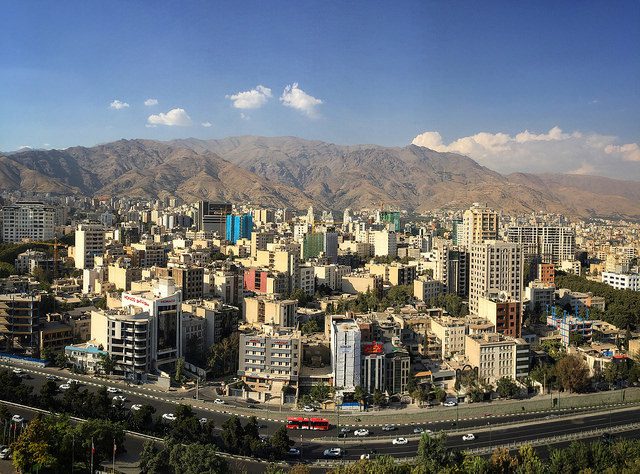
Billion-Dollar Investments in Development Projects in Turkey

5 Development Projects in TurkeyTurkey, the country that straddles the line between Asia and Europe, has been investing billions of dollars to improve its infrastructure. There are five development projects in Turkey that focus on improving its transportation, energy and healthcare systems.

The Istanbul New Airport
The first of these development projects is the construction of Turkey’s third international airport; its current name is the Istanbul New Airport. When completed, this airport will be the largest international airport in the world. As mentioned, since Turkey is a bridge between Asia and Europe, its airports receive a lot of traffic. In 2018, by the airport’s completion, it will have already provided business to 150 million people. This extensive project, with a projected cost of $11.3 billion, will not only hold 500 airplanes and rail-connected terminals but also provide the best security available. Security is a top concern, especially after the Atatürk Airport terrorist attack in 2016 that killed 40 and injured 250 more.

Three-Story Grand Istanbul Tunnel Project
Turkey was not satisfied with developing one record-breaking construction project, so they are also working on a second. The Three-Story Grand Istanbul Tunnel Project is a three-story subsea tunnel, consisting of two highways above and below a railway that will ride in the middle. This 6.5 kilometer tunnel will connect the two ends of Istanbul and will reduce travel times between Hasdal and Çamlık by about 14 minutes. This tunnel system is expected to cost $3.5 billion after completion, which is a modest cost for a transportation system that will service 6.5 million travelers a day.

Trans Anatolian Natural Gas Pipeline Project
The project to build the Trans Anatolian Natural Gas Pipeline Project began in March 2015, yet the project is still ongoing. The project is to develop a pipeline that will send natural gas from Azerbaijan to Europe and Turkey. 10 billion cubic meters of gas will be sent to Europe, and another 6 billion cubic meters will be sent to Turkey starting in 2018. This project will cost $11.7 billion and will provide 15,000 jobs.

Nuclear Power Plants
Along with receiving gas power, Turkey will also invest in developing its own nuclear power after having plans for one since 1970. The first of these plants, Akkuyu 1, will begin construction in 2018 and will begin operation in 2023. This $20 billion dollar plant will produce 1,200 megawatt reactors and will be the first of four reactors built by Rosatom. This is an important investment for Turkey since it spends $50 billion annually on importing energy, and this first plant will provide 5 percent of the country’s energy.

Etlik Integrated Healthcare Campus
The last of these five development projects in Turkey is the Etlik Integrated Healthcare Campus, which will be one of the world’s largest hospital campuses at more than one million square meters. This hospital will offer general care, as well as specialty units for neurological sciences, cardiovascular surgery, orthopedics, pediatrics and many more. These units are also separated into designated areas for diagnosis and treatment, with 3,577 beds for patients. The construction of this center will cost $1.3 billion, take three and a half years to construct, and will provide a 24-year operating term after completion.

Turkey is investing billions upon billions of dollars to ensure a successful and healthy environment for its people. By providing support for these five development projects in Turkey, the government is increasing its citizens’ standard of living with the best technology, convenience and security.

– Scott Kesselring

Photo: Flickr

December 5, 2017
https://borgenproject.org/wp-content/uploads/borgen-project-logo.svg 0 0 Borgen Project https://borgenproject.org/wp-content/uploads/borgen-project-logo.svg Borgen Project2017-12-05 19:52:112019-11-18 00:53:34Billion-Dollar Investments in Development Projects in Turkey
Development, Global Poverty

Development in Somaliland Despite Lack of Recognition

Somaliland Despite being home to 3.5 million people and the ancient cities of Berbera and Zeila, the nation of Somaliland technically doesn’t exist. Since declaring independence in 1991, the northernmost corner of war-torn Somalia has operated as an unrecognized state. While its neighbors in East Africa struggle with autocracy or are outright failed states, Somaliland has built decades of political stability. Now, development in Somaliland is progressing.

Somaliland held presidential elections on Nov. 13, a vote delayed two years due to a crippling drought made worse by the absence of international aid. Unlike the restricted elections held in neighboring Somalia earlier this year, Somaliland has held fully democratic elections since the early 2000s. Development in Somaliland extends to the electoral system: this year the country unveiled the world’s first-ever biometric voting system, using iris scanning technology to identify voters and avoid duplicate ballots.

Hargeisa, Somaliland’s bustling capital, is attracting small businesses from the diaspora as well as large corporations to spur development in the country. Companies including Coca-Cola and Dubai-based DP World are spurring development in Somaliland, announcing deals worth a combined $460 million to build a port in the coastal city of Berbera and a bottling plant outside the capital.

“It is clear that investors will play a critical part in the next chapter of Somaliland’s story, helping this dynamic economy to thrive and prosper and bolstering our bid for recognition,” wrote Somaliland’s Foreign Minister Dr. Saad Ali Shire in the Financial Times.

The East African country’s international status remains a significant hurdle to further economic development in Somaliland, home to a young and fast-growing population. While international partners still do not recognize Somaliland’s independence, organizations including the World Bank are investing in development projects in the country. The World Bank’s Somaliland Business Fund has provided over $20 million in grants and matching funds to private businesses, supporting development in Somaliland and its agriculture, manufacturing and renewable energy industries.

Still unrecognized and facing delays in its elections, Somaliland is by no means perfect. But its ongoing political stability and efforts to attract domestic and foreign investment are putting it on a path of steady economic development.

– Giacomo Tognini

Photo: Flickr

December 3, 2017
https://borgenproject.org/wp-content/uploads/borgen-project-logo.svg 0 0 Borgen Project https://borgenproject.org/wp-content/uploads/borgen-project-logo.svg Borgen Project2017-12-03 12:20:212019-11-18 01:21:08Development in Somaliland Despite Lack of Recognition
Development, Global Poverty

Five Important Development Projects in Algeria

5 Development Projects in Algeria
Since gaining independence from France in 1962, Algeria has been arduously attempting to gain some headway on the international stage. Following a 20-year engagement with the socialist model, Algeria shifted its approach to development in the early 80s, and has been actively engaged in the precepts of globalization ever since.

Yet, the road towards development has yet to reach its end. The following are five development projects in Algeria that aim to settle the country in a place of prosperity and hope, once and for all.

  1. International Fund for Agricultural Development (IFAD)
    IFAD has spent $65.6 million on a series of agricultural development projects in Algeria. First, they aim to strengthen the capacity of rural communities to operate independently. Second, they work to improve irrigation infrastructure, soil and water conservation, management of silo-pastoral ecosystems, livestock husbandry and rural tracks. Lastly, they continue to push for the progression of women’s place in society through the development of rural microenterprises. They have focused assistance on three communities whose economic capabilities are all but limited to agriculture. Currently, their five programs operate in the mountainous areas in the north of the country, the Saharan areas in the south and the coast, where poor fishing communities make up the majority of the population.
  2. Arab Reform Initiative – International Development Research Center of Canada (IDRC)
    After the uprisings in 2011, commonly referred to as the Arab Spring, the fervor slowed as national governments cramped down on protestors. The aim of IDRC funding is to ensure that ideals of democracy and progress are maintained and cultivated in the youth of Algeria. The project, lasting for two years, is managed by the Arab Reform Initiative, and aims to develop the youth as political actors and active citizens engaged in their country’s political, social, economic and cultural spheres.
  3. The Trans-Saharan Highway (La Route Transsaharienne)
    The development of the trans-Saharan highway has been years in the making. The route from Algiers, running through Niger and down through Nigeria, is about 5,000 km. The route itself has been used for trade since the eighth century, but, until recently, has been a road of sand. Paving the road is meant to increase the trade profit between the three nations it runs through. The Algerian government has opted to pay for its portion of the construction from its national budget, a reflection of a trend in their more recent national policy.
  4. World Food Program (WFP) – Algeria’s Sahrawi refugees
    The WFP has operated in Algeria since the late 80s. They work to provide basic food and nutrition needs to the populations of Sahrawi refugees on the country’s Western border. Algeria has hosted Sahrawi refugees from Western Sahara since 1975. The program’s main focus is decreasing a debilitating rate of iron deficiency found in Sahrawi women and children.
  5. Transparency International
    Transparency International is an organization whose aim is to evaluate the transparency of governments. In Algeria, it has determined that transparency is sorely lacking. The country has been scored 34 out of 100, and comes in 108 out of 176 countries. The organization’s tactics are simple. By shining a light on issues of corruption within the government and private sector, Transparency International is able to create accountability in situations where it is sometimes nonexistent. In this way, ideals of transparency have begun to permeate governance, as seen in the 2006 creation of the Central Office for the Suppression of Corruption, an agency tasked with the investigation and prosecution of all forms of bribery in the country.

These five development projects in Algeria are just a small indication of the state of Algerian society today. Ultimately, what these projects exemplify is the potential for further improvement in the North African nation.

– Katarina Schrag

Photo: Flickr

December 3, 2017
https://borgenproject.org/wp-content/uploads/borgen-project-logo.svg 0 0 Borgen Project https://borgenproject.org/wp-content/uploads/borgen-project-logo.svg Borgen Project2017-12-03 11:06:232024-05-29 22:29:35Five Important Development Projects in Algeria
Development, Global Poverty

Five Development Projects in Benin

Five Development Projects in BeninIn Benin, 40 percent of the country lives below the poverty line. The conditions force residents of the country to migrate on a regular basis. The country’s increased investments in infrastructure and sustained economic growth rate highlight its potential to move in the right direction. Below is an overview of five development projects in Benin that could help the country reduce poverty.

Agricultural Productivity and Diversification Additional Financing

One of the ways for a country to reduce poverty is to invest in agricultural programs. This project allows Benin to invest more heavily in its agriculture, as it will restore and improve productivity. It will also support the promotion of improved technologies and the development of production via water management.

Public Investment Management and Governance Support Project

This project will help reduce poverty and increase shared prosperity. The World Bank has issued a $30 million credit to Benin that will better facilitate the efficiency and management of this project. Their aim is to enhance good governance, accountability and promote more transparent management of public funds.

Small Town Water Supply and Urban Septage Management Project

About 22 percent of the country does not have access to adequate drinking water. The Small Town Water Supply and Urban Septage Management Project will increase access to water supply and sanitation. It will also strengthen the service delivery capacity of water supply and sanitation as well as prepare an effective response to potential emergencies.

Energy Service Improvement Project

This project will improve utility power performance and expand access to electricity to various areas across the country. It also aims to promote community-based management of forest resources. Investing in infrastructure is important to build up an economy, so this project, among other development projects in Benin, is extremely important.

National Community Driven Development (CDD) Project

The CDD project has provided grassroots management training. This has helped contribute to the decentralization process and strengthening of both local government and community capacities to better plan and implement development projects. Under the project, 81,000 children have enrolled in school and 10,000 people have gained access to a clean water supply.

These development projects in Benin have the capability of reducing poverty in the country and improving the lives of the individuals who reside there.

– Dezanii Lewis

Photo: Flickr

December 3, 2017
https://borgenproject.org/wp-content/uploads/borgen-project-logo.svg 0 0 Borgen Project https://borgenproject.org/wp-content/uploads/borgen-project-logo.svg Borgen Project2017-12-03 01:30:382024-05-24 23:58:05Five Development Projects in Benin
Development, Global Poverty

Five Active Development Projects in Afghanistan

5 Active Development Projects in AfghanistanThe World Bank Group is currently providing funding for 49 active development projects in Afghanistan. These projects are working to address the full spectrum of needs of the Afghan people. Here are five development projects in Afghanistan currently underway.

  1. Trans-Hindukush Road Connectivity Project. The Hindukush Mountain range spreads across a vast piece of central Asia, including much of eastern Afghanistan. Travel throughout this region is limited and road conditions are generally poor. This project will provide aid to the Afghan government to rebuild and maintain roads spanning the Hindukush mountain region. Improved transportation infrastructure will bring economic growth as well as increased access to resources for people living in remote areas. The project started in 2015 and will come to a close in 2022 and The World Bank group has pledged a loan of $250 million.
  2. Women’s Economic Empowerment National Priority Program. This project came about when the Afghani government accepted a loan of $482.3 million in a plan to enact seven new development projects to combat the growing poverty crisis. The Women’s Economic Empowerment National Priority Program aims to ensure better access to economic opportunities and rights for women.
  3. Urban Development Support Project. The Urban Development Support Project was implemented to strengthen urban policymaking and development on both the national and provincial level. The project aims to improve city planning capabilities, census and data management and urban institution development and accountability. The project began this year and cost $20 million in funding; completion is projected for 2020.
  4. Herat Electrification Project. A small province in western Afghanistan, people in the Heratprovince have limited access to electricity. This project aims to provide homes and businesses in this region with a sustainable source of power. The World Bank group plans to accomplish this by expanding the electrical grid in the region. In areas which are further removed from electrical grid access, solar panels are being implemented to supply power to those who need it. The project began in 2017 and will hopefully be complete by 2022. The total cost of the project is $60 million, which was loaned to the Afghani government by The World Bank Group.
  5. Afghanistan Strategic Grain Reserve Project. This project was started in 2017 and aims to create a reliable stockpile of grain in hopes that in the event of an emergency there will be a safety net of food security. The project has an estimated total cost of $30 million and is hoped to be completed by 2022.

Development projects in Afghanistan such as these are radically improving the quality of life in Afghanistan, however, they only begin to scratch the surface of the larger web of issues preventing Afghanistan from becoming a fully developed country. Cooperation between the World Bank Group and the Afghan government has set the stage for Afghanistan to move closer and closer to development as time moves on.

– Tyler Troped

Photo: Flickr


December 3, 2017
https://borgenproject.org/wp-content/uploads/borgen-project-logo.svg 0 0 Borgen Project https://borgenproject.org/wp-content/uploads/borgen-project-logo.svg Borgen Project2017-12-03 01:30:242024-06-05 02:36:41Five Active Development Projects in Afghanistan
Development, Global Poverty

Five Development Projects in Bangladesh

BangladeshBangladesh is a developing country deep in poverty—about 31 percent of the country lives below the poverty line. Even though poverty is certainly prevalent in the country, strides have been made to reduce it in the past few years. For instance, the literacy rate in the country stands at an average of 72 percent and about 86 percent of the population has access to a drinking water source, according to the World Factbook.

Developing a country is an on-going process. Bangladesh is trying to continue its growth in ways that will ensure the success of the country. Here are five development projects in Bangladesh that will help the country reduce its level of poverty.

  1. Health Sector Support Project. There are areas in Bangladesh, such as Sylhet and Chittagong, whose key health indicators are below average. The Health Sector Support Project will help to strengthen health, nutrition and population management systems. One of the most notable aspects of this project is that it seeks to improve the quality and coverage of essential services, such as immunization coverage for children. According to the World Bank, $515 million was loaned to the country in support of the project.
  2. Bangladesh Insurance Sector Development Project. In order for the health sector to be sufficient, the insurance sector needs to be developed. The World Bank states that this project will “strengthen the institutional capacity of the regulator and state-owned insurance corporations and increase the coverage of insurance in Bangladesh.”
  3. Smart City campaign. The urban population of Bangladesh, which currently stands at 55 million, will significantly contribute to the growing national GDP. According to the Smart City website, this will lead to “burgeoning in cities” and a need to improve the conditions of urban cities. Since cities are “key economic engines” one of the development projects in Bangladesh, the “Smart City” campaign, will help to innovate these areas of opportunities.
  4. Additional Financing to Chittagong Water Supply Improvement and Sanitation Project. Parts of Bangladesh do not have access to an adequate water supply and sanitation. About 13 percent of the country does not have an adequate drinking supply and 39 percent of the country does not have access to water sanitation. This project will increase access to safe water and improve water supply, sanitation and drainage in Chittagong.
  5. Clean Air and Sustainable Environment (CASE) Project. According to the World Bank, poor air quality in urban areas creates serious health hazards and adversely affects the environment and quality of life. Reducing pollution could save lives and diminish disease outbreaks. The CASE project would improve air quality and safe mobility in Dhaka through the implementation of demonstration initiatives.

Increasing water supply and sanitation, innovative technology and improving access to healthcare are significant ways to reduce poverty. With these development projects in Bangladesh, the country is well on its way to implementing practices that will reduce poverty in the country for the long term.

– Dezanii Lewis

Photo: Flickr

December 3, 2017
https://borgenproject.org/wp-content/uploads/borgen-project-logo.svg 0 0 Borgen Project https://borgenproject.org/wp-content/uploads/borgen-project-logo.svg Borgen Project2017-12-03 01:30:112024-05-24 23:59:39Five Development Projects in Bangladesh
Development, Global Poverty

Five Facts About Active Development Projects in Serbia

5 Active Development Projects in SerbiaSerbia is located in the heart of the Balkan Peninsula in Eastern Europe. The United Nations Development Programme measures a country’s overall development through the Human Development Index, which considers all aspects of a nation on its way to development. The Human Development Index ranks Serbia as the 66th most developed country in the world, a ranking which is certainly nothing to scoff at. However, there is still much to be done before Serbia can be considered a fully developed nation. Here are five active development projects in Serbia which are bringing the country closer to becoming fully developed.

  1. Floods Emergency Recovery Project
    The aim of this project is to make the nation less vulnerable to damaging floods, and to improve the response strategies of people living in areas which are at a high risk of flooding. This project will aid farmers in taking precautionary measures in case of a flood so that such an event would not cause a devastating effect on the food supply and economy.
  2. Corridor X Highway Project
    Corridor X refers to the road network which leads from Austria to Greece, connecting the nations of the Balkan Peninsula. This is a critical route for trade, commerce and travel, and there has been a great deal of construction on the highway to try and connect the road networks leading through Serbia. Development projects in Serbia like this one will move the nation closer to becoming fully developed, and will bring increased economic prosperity.
  3. Enhancing Infrastructure Efficiency and Sustainability Project
    This project has a similar goal to the Corridor X Highway Project in that it aims to bring increased connectivity between the different regions of Serbia. By improving infrastructure like roads, water systems and hospitals, this project will help to grow Serbia’s economy and increase ease of travel for Serbian citizens.
  4. Real Estate Management Project
    The Real Estate Management Project addresses an issue which is currently holding Serbia back on the path to development. This project will essentially make the real estate system in Serbia more reliable, accountable and transparent. It will create a dependable system of determining property value, thus ensuring that people pay the right amount of tax on their property. Serbia is adopting an internationally accepted standard of property valuation to achieve this goal.
  5. Deposit Insurance Strengthening Project
    The Deposit Insurance Agency is essentially Russia and Eastern Europe’s version of the American Federal Deposit Insurance Corporation (FDIC), and will serve as a financial safety net or backbone behind the banking industry in Serbia. Strengthening the Deposit Insurance Agency will make banking in Serbia more reliable, and will spark economic growth in the nation.

These projects only begin to scratch the surface of all the work that has been done, and has yet to be done, in bringing Serbia into the developed world. While there is an immense list of things that need to be addressed and improved before Serbia can be considered fully developed, development projects in Serbia such as these are leading the way into the future.

– Tyler Troped 

Photo: Flickr

December 2, 2017
https://borgenproject.org/wp-content/uploads/borgen-project-logo.svg 0 0 Borgen Project https://borgenproject.org/wp-content/uploads/borgen-project-logo.svg Borgen Project2017-12-02 12:41:292019-11-18 01:27:55Five Facts About Active Development Projects in Serbia
Development, Global Poverty

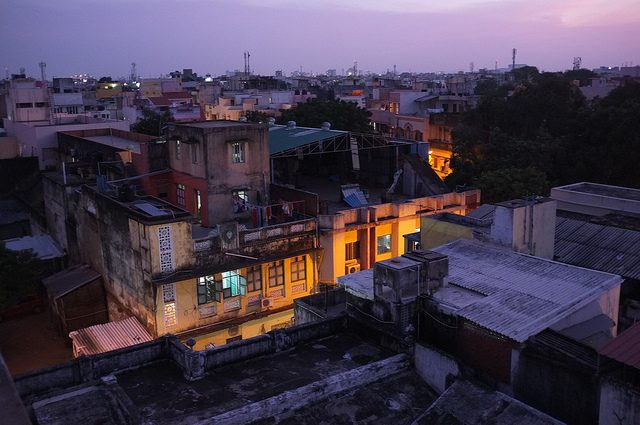
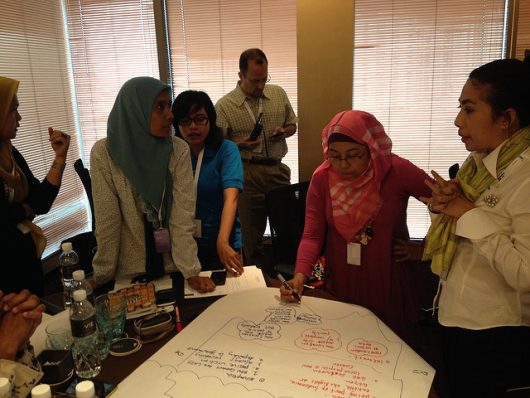
Five Development Projects in Indonesia

Development Projects in Indonesia
Indonesia, a country known for its large economy and diverse population, is home to 243 million people. Previously, the country dealt with an autocratic leader and has had many issues with corruption. However, the country’s newest president, Joko Widodo, wants to make the country more democratic. With 
poverty affecting 11 percent of the population and many people living in “near poverty”, several development projects in Indonesia have been working toward solutions.

Here are five development projects in Indonesia that are addressing different issues in order to make the country better for its citizens.

The National Program for Community Empowerment (PNPM Mandiri)

PNPM Mandiri works within the poorest communities in Indonesia to help develop villages. By engaging in these projects, community members have access to employment and help their community’s infrastructure. It is a flagship community organization for the government. The program also teaches others how to plan communities and apply the practices elsewhere in Indonesia. The program is now operational in 70,000 communities throughout 33 provinces.

Asian Development Bank’s Microfinance Program

As a way to invest in communities, the Asian Development Bank (ADB) started a microfinance program to help small businesses in North Sumatra. The program was originally intended to help businesses after the 2004 earthquake and tsunami. Instead of having a bank, representatives visit communities and give presentations where business owners can get loans. This enables businesses to expand and allows people to get loans that they thought they could not have gotten before. The microfinance program provides “finance that changes lives.”

Mass Rapid Transit (MRT) in Jakarta

The MRT is an infrastructure development project aimed to relieve traffic congestion. It is being built by the Jakarta government and it will be completed in 2027 with a construction cost of over $1 billion. This project is going to impact almost 500,000 people daily so they can travel efficiently to their jobs and improve the economy.

IFAD in Indonesia

Similar to the ADB microfinance program, IFAD invests in the rural sector. IFAD focuses on investing in remote and vulnerable areas. It has invested over $400 million into Indonesia since 1980 and helps establish public-private partnerships. It places an emphasis on smallholders in these communities.

The Legal Empowerment and Assistance for the Disadvantaged (LEAD) Project

This program works to ensure that the most marginalized in Indonesia are given the proper rights and treatment. The LEAD Project aims to spread awareness of legal rights regarding government services and legal claims. As a result, policies have been strengthened and government officials have been more responsive to marginalized communities claiming rights and bringing up legal issues.

Indonesia has issues that span the rural and urban areas as well as in the spheres of legal and human rights. These 5 development projects in Indonesia will benefit the people as the country continues to progress.

– Emilia Beuger

Photo: Flickr

December 1, 2017
https://borgenproject.org/wp-content/uploads/borgen-project-logo.svg 0 0 Borgen Project https://borgenproject.org/wp-content/uploads/borgen-project-logo.svg Borgen Project2017-12-01 01:30:012024-05-29 22:29:29Five Development Projects in Indonesia
Development

Five Development Projects in Iraq

Iraq, a country attempting to rebuild itself after decades of war, has implemented various projects to help stabilize the country. The five development projects in Iraq that are among the forefront include a decrease in the number of citizens diagnosed with tuberculosis, a crisis response program, a water improvement project, oil and gas development projects and a reconstruction project that spans various Iraqi cities.

To address the many health concerns in Iraq, the country partnered with UNDP, who created the Global Fund TB Grant. The grant provided emergency cell phones for tuberculosis patients to ensure they can reach centers to avoid treatment interruptions that threaten to increase drug resistance. Since the implementation of the grant and enhanced TB testing, 36,800 cases of TB were successfully treated, resulting in a 92 percent treatment success rate in 2014, and the detection and treatment of 25,900 new smear-positive TB cases.

The second of the development projects in Iraq was the creation of the Iraq Crisis Response and Resilience Programme (ICRRP), another project supported by the UNDP. The ICRRP was created to address the large humanitarian crisis in the country.

More than 10 million people were affected by development gaps, and more than 3.3 million had to flee their homes. This crisis led the UNDP and Iraq to create the ICRRP to prevent human rights violations, reduce the risk of gender-based violence and develop cohesion among diverse communities. Using a gender mainstreaming approach, the program also aims to address the practical and strategic needs of affected women. The ICRRP has helped create jobs for 14,000 people, gave 94,000 enhanced livelihoods in eight governorates and gave 5,000 Syrian refugees and displaced residents legal support.

On the energy resource side, the Rumaila field, the world’s fourth-largest oilfield, has helped increase the number of producing wells by 50 percent. The field has produced more than three billion barrels since 2010 and in December 2016 was producing 1.45 million barrels a day, generating over $200 billion. In addition, the Rumaila oilfield project has helped create numerous jobs and generated more revenue and energy for Iraqi residents.

One of the most significant development projects in Iraq is the Bismayah construction project, which aims to house half a million people within four years. The $8 billion project faced a six-month setback after the project’s land was lost to Islamist militants and the obstacles of providing clean water and electricity to the housing units.

This is due to the fact that Iraq is still trying to make up for the years lost to war, so they rely on foreign investments in electricity, as well as refineries, transport, telecoms and health. The clean water supply obstacle is due to the fact that the water has not been delivered to the city’s purification plant, making the available rooms unlivable. Despite the drawbacks, the project has surged on.

To benefit the Iraqi people apartments are available for a down payment of just $6,300, which is equal 10 percent of the total cost of the smallest 100 square meter homes. The monthly rent is less than the minimum government wage, making them extremely affordable.

To address the ongoing water concerns, Australian firm Protechnique has helped start the $80 million Basra Project. The project aims to provide engineering, procurement and construction services for the project’s transmission reservoir and transmission pump station. The pumping station will also concentrate on chlorine building, blending chambers, electrical substation, generator building and more.

The project is expected to be completed by December 2018 and will operate with neighboring pumping and circulation stations to pump water from a desalination plant to Basra.

As Iraq continues to rebuild itself, the country will see an increase in jobs, revenue, housing, clean water and other resources. The above development projects in Iraq are the country’s first stepping stones on a long road to recovery.

– Amira Wynn

Photo: Flickr

November 30, 2017
https://borgenproject.org/wp-content/uploads/borgen-project-logo.svg 0 0 Borgen Project https://borgenproject.org/wp-content/uploads/borgen-project-logo.svg Borgen Project2017-11-30 07:30:582024-05-29 22:29:31Five Development Projects in Iraq
Development, Global Poverty

Five Development Projects in the Dominican Republic

Development Projects in the Dominican RepublicThe Dominican Republic has many ongoing development projects occurring throughout the country. Some projects are government-funded, while others are funded by nonprofits or international organizations, like the World Bank. In a country with 10.2 million people, there are still many living in poverty and many who are underprivileged. The tourist economy does a lot to benefit the nation, but more needs to be done to meet the needs of the people. Here are five development projects in the Dominican Republic that aim to help the people of the country. 

The World Bank’s Dominican Republic Youth Development Program

The stated goal of the program is to “[improve] the employability of poor, at-risk youth by building their work experience and life skills and expanding second chance education programs to complete their formal education.” The program aims to improve job opportunities, access to education and social protections.

Through participating in the project, youth learn basic workforce skills and attain an education. The program has been fairly successful as it has met most of the intermediate result indicators. Thus far, not all the goals have been met: one goal is that 70 percent of students obtain a new degree, but so far only 63 percent have. However, the initial results indicate that the program has had a positive impact on youth and has taken a significant step forward to bolstering the job force in the Dominican Republic.

The Peace Corps’ Education Program

The Peace Corps has been working on improving Spanish among children in the Dominican Republic. This program has led to the collaboration between teachers and Peace Corps volunteers to help students succeed. Specifically, the project aims to address Spanish literacy, with a primary goal to involve the community so that students can learn to read and write in their language.

The DREAM Project

The DREAM Project was founded in order to make up for the lack of resources in schools of the Dominican Republic. Their programs consist of working with children in early childhood education and primary school education, as well as contributing to a holistic youth development. They also have summer camps and vocational training. According to the DREAM Project’s website, the organization “provides more than 800,000 hours of quality education to more than 7,500 children through 14 different programs across 27 communities in the Dominican Republic.”

USAID’s Dominican Republic Sustainable Tourism Alliance

Although the Dominican Republic has a large tourism industry, the industry has had negative impacts on the local community and environment of the island. In order to combat poverty and environmental issues, USAID created the Dominican Republic Sustainable Tourism Alliance (DSTA) to develop a more sustainable tourism industry.

The DSTA works to improve environmental management capabilities as well as stimulating tourism efforts through sustainable operations and the development of marketing and sales strategies. The “all-inclusive” model that the tourism industry currently has is changing quickly under this development project.

Project HOPE

Project HOPE works to combat the high maternal and infant mortality rates in the Dominican Republic. The organization just opened its third maternal child health clinic in 2017. The organization regularly works with the Dominican Association of the Order of Malta to train workers to care for mothers and children.

Thousands of women and children have been positively affected by the care provided by the organization and its partners. In addition to its work with maternal mortality, the organization has worked on village health bank programs and provided HIV/AIDS education and counseling.

Many organizations are concerned with developing job opportunities for the citizens of the Dominican Republic. They aim to bolster the economy and train a future working class. These five development projects in the Dominican Republic operate across several sectors to help the nation achieve long-lasting self-sufficiency and prosperity.

– Emilia Beuger

Photo: Flickr

November 29, 2017
https://borgenproject.org/wp-content/uploads/borgen-project-logo.svg 0 0 Borgen Project https://borgenproject.org/wp-content/uploads/borgen-project-logo.svg Borgen Project2017-11-29 19:26:482024-05-29 22:29:28Five Development Projects in the Dominican Republic
Page 91 of 163«‹8990919293›»

Get Smarter

  • Global Poverty 101
  • Global Poverty… The Good News
  • Global Poverty & U.S. Jobs
  • Global Poverty and National Security
  • Innovative Solutions to Poverty
  • Global Poverty & Aid FAQ’s
Search Search

Take Action

  • Call Congress
  • Email Congress
  • Donate
  • 30 Ways to Help
  • Volunteer Ops
  • Internships
  • Courses & Certificates
  • The Podcast
Borgen Project

“The Borgen Project is an incredible nonprofit organization that is addressing poverty and hunger and working towards ending them.”

-The Huffington Post

Inside The Borgen Project

  • Contact
  • About
  • Financials
  • President
  • Board of Directors
  • Board of Advisors

International Links

  • UK Email Parliament
  • UK Donate
  • Canada Email Parliament

Get Smarter

  • Global Poverty 101
  • Global Poverty… The Good News
  • Global Poverty & U.S. Jobs
  • Global Poverty and National Security
  • Innovative Solutions to Poverty
  • Global Poverty & Aid FAQ’s

Ways to Help

  • Call Congress
  • Email Congress
  • Donate
  • 30 Ways to Help
  • Volunteer Ops
  • Internships
  • Courses & Certificates
  • The Podcast
Scroll to top Scroll to top Scroll to top