• Link to X
  • Link to Facebook
  • Link to Instagram
  • Link to TikTok
  • Link to Youtube
  • About
    • About Us
      • President
      • Board of Directors
      • Board of Advisors
      • Financials
      • Our Methodology
      • Success Tracker
      • Contact
  • Act Now
    • 30 Ways to Help
      • Email Congress
      • Call Congress
      • Volunteer
      • Courses & Certificates
      • Be a Donor
    • Internships
      • In-Office Internships
      • Remote Internships
    • Legislation
      • Politics 101
  • The Blog
  • The Podcast
  • Magazine
  • Donate
  • Click to open the search input field Click to open the search input field Search
  • Menu Menu

Archive for category: Development

Information and stories on development news.

Development, Global Poverty

Sale of Diamond Funds Development Projects in Sierra Leone

development projects in sierra leoneThe Peace Diamond, the second-largest diamond ever mined in Sierra Leone, sold on December 4, 2017 for $6.5 million. The sale comes as a relief to the government. as the proceeds from the sale of the diamond will go towards development projects and infrastructure in the country.
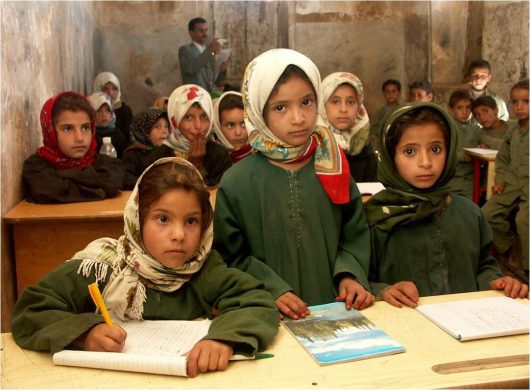
The village where the diamond was found, Koryardu, has no running water, electricity, roads or schools. Given that the country is still recovering from the recent Ebola virus outbreak, these are much-needed funds. These are five development projects in Sierra Leone that the sale of the diamond could potentially help.

  1. Strengthening Access to Health Care and Community-Led Development
    Girls often have to spend many hours obtaining clean water for their families. This hampers their ability to receive an education. The Strengthening Access to Health Care and Community-Led Development project provides support on a local level so that communities can access services like clean drinking water.
  2. Productivity and Transparency Support Credit
    The goal of this project is to promote transparency in government decisions in order to increase productivity in agriculture and efficiency in education.
  3. Revitalizing Education Development in Sierra Leone Project (REDiSL)
    The Ebola virus was devastating to the country. Development projects in Sierra Leone that were aimed at education had to be delayed to support the recovery from Ebola. REDiSL will allow for a scaling up of the current education system and improve learning environments.
  4. Western Area Power Generation Project
    The purpose of this project is to increase the power generated by independent power producers and to mobilize private capital. Its key component consists of a recovery plan to help support economic growth post-Ebola and create jobs by providing reliable electricity services to the Freetown Capital Western Area.
  5. Health Service Delivery & System Support Project
    After the Ebola outbreak, many regions need to rebuild, but also be prepared for future emergencies. The purpose of this project is to improve the quality of essential maternal and child health services in their current state but also provide an immediate and effective response to constituents in case of an emergency.

With the country still reeling from the Ebola outbreak, it is necessary, now more than ever, to rebuild and develop the nation. The sale of the diamond provides a ray of hope that, given the opportunity, will help with these development projects in Sierra Leone.

– Dezanii Lewis

Photo: Flickr

December 20, 2017
https://borgenproject.org/wp-content/uploads/borgen-project-logo.svg 0 0 Borgen Project https://borgenproject.org/wp-content/uploads/borgen-project-logo.svg Borgen Project2017-12-20 07:30:232024-05-29 22:29:54Sale of Diamond Funds Development Projects in Sierra Leone
Development, Global Poverty

Development Projects in Yemen Bringing Security in Crisis

development projects in yemenThe crisis in Yemen has threatened the livelihoods of many people. When the conflict escalated in 2014 and 2015, the need for development projects in Yemen skyrocketed. The U.N. estimates that 21.2 million people in Yemen are in need of assistance, which is 82 percent of the population. This leaves only a small percentage untouched by the conflict.

Mohammed Mansour Yahiya is a coffee farmer affected by the conflict that arose in Yemen. In 2015, the suspension of salaries due to the conflict worsened his chances of providing for his family. His work and livelihood found hope when the USAID contributed just over $15 million to the Yemen Emergency Crisis Response Project (YECRP). Through this USAID fund and implementation by the UNDP in partnership with the Social Fund for Development, small farmers found solace in the Small and Micro Enterprise Promotion Service intervention project. This project seeks out farmers to modernize technologies and methods of production. Mohammed Mansour Yahiya became one of 350 coffee farmers supported by this project, which enabled their coffee to reach markets. Development projects in Yemen such as this one restore hope to individuals.

The Yemen Multisector Humanitarian Response Programme follows the YECRP in providing humanitarian aid in the form of food security. This project partners with NGOs to seek out malnourished individuals, the most vulnerable in Yemen, and provides cash and voucher assistance. This program works to eradicate malnourishment and integrate prevention and treatment of the condition through three sectors: nutrition, sanitation and health. Progress is being seen via partnerships with CARE, ACTED and Oxfam.

The third development project within Yemen is the Integrated Urban Service Emergency Project, which restores access to crucial urban services. With $150 million alloted for this project, it aims to support the restoration of safe water, sanitation, transportation, energy and solid waste management, while using local resources to improve the economy and lives within Yemen through employment and self-sufficiency.

Continuing to build self-sufficiency and developing Yemenis’ skill base is the Smallholder Agricultural Restoration and Enhancement Project for Yemen. The project strives to increase the use of productive and nutrition-enhancing agricultural practices. It works to increase production, income and nutrition through strengthening the community land and water management and efficient and responsible animal husbandry.

Developing farming skills and agriculture techniques provides a basis to grow the economy, and with equal access to medical health and education the quality of life will increase. The Second Basic Education Development Project, with a budget of $66 million, trains 68,000 teachers, headmasters and supervisors in Yemen. The project’s efforts will build additional classrooms, train headmasters and recruit and hire 700 rural women as teachers. Also included in this project is funding for poor families in rural areas to assist with equal opportunities for girls to attend school.

These development projects in Yemen seek to close the economic gap between Yemen and other countries and to provide security during the crisis. These projects aim to help the people of Yemen and ensure that the basic needs of the most vulnerable populations are being met.

– Bronti DeRoche

Photo: Flickr

December 20, 2017
https://borgenproject.org/wp-content/uploads/borgen-project-logo.svg 0 0 Borgen Project https://borgenproject.org/wp-content/uploads/borgen-project-logo.svg Borgen Project2017-12-20 07:30:192024-05-29 22:29:54Development Projects in Yemen Bringing Security in Crisis
Development

5 of the Most Significant Development Projects in Laos

Development Projects in LaosThe small, landlocked country of Laos is one of the poorest nations in Southeast Asia. Home to 6.6 million people, Laos is also a fast-growing emerging market that registered 7 percent GDP growth in 2016. The Laotian government is embarking on ambitious development projects to build up new infrastructure and energy sources in the least developed country in the region. Here are five development projects in Laos:

The Asian Development Bank (ADB)’s Livestock and Economic Development Project

In northern Laos, the ADB is helping empower local women by providing them with livestock so that they can economically sustain themselves and their families. The Livestock Development Project disburses $16.5 million through various regional projects across the country, with funds contributed from the ADB and other international aid agencies. Ever since it began in September 2006, the project has helped women play more important roles in their families and local communities.

The U.N. Development Programme (UNDP)’s Climate Change Readiness Project

The U.N.’s Green Climate Fund is supporting the Laotian government in seeking solutions to climate change and improving the county’s access to renewable energy. The UNDP has pledged a funding programme as part of its Readiness and Preparatory Support Programme, an 18-month project designed to help local stakeholders across the government and different sectors of the economy to reform the agricultural sector, forestry and environmental practices in local communities. Environmental development projects in Laos arising from the programme will hopefully aid Laos in its fight against the effects of climate change.

High-Speed Rail Link to China and Thailand

As part of the high-profile “One Belt, One Road” initiative, China is investing $6 billion on a rail line connecting Thailand to the southern Chinese city of Kunming — with 420 kilometers running through Laos, connecting towns and cities throughout the country. While the project will surely increase connectivity, the rail line has been criticized for its displacement of locals living along the line, including the eviction of over 4,400 Lao families from their homes. While only 14 percent completed, the project has provided employment for over 7,000 local Lao workers and is contributing to infrastructure development in the poorly connected country. The line is one of many high-profile development projects in Laos currently under construction, including major hydropower plants.

The World Bank’s Mekong Integrated Water Resources Management Project

The Mekong River is one of the longest rivers in Southeast Asia, and is an important water source and vital artery in Laos and neighboring countries. The World Bank’s Mekong Integrated Water Resources Management Project seeks to coordinate closer collaboration between Laos and its neighbors on access to water in the Lower Mekong Delta, particularly in improving the management of water resources and fisheries in the densely populated region. The initiative also includes development projects in Laos to improve the sustainability of the Mekong river basin’s water resources and improve the management of floods.

The World Bank’s Health Governance and Nutrition Development Project

The World Bank is expanding access to health and improved nutrition in Laos by contributing $15 million in additional financing to healthcare development projects in Laos. The funding will support the modernization of healthcare information systems and efforts to increase access to reproductive care, maternal care and healthcare for children. Since launching in 2015, foreign governments including Australia and Japan have since pledged $5 million for an immunization drive and reforms in the healthcare sector in Laos.

Laos is relying both on international organizations and aid groups as well as on its wealthiest and largest neighbor, China, in pursuing both economic development and a way out of poverty for millions of its citizens. Expanded access to healthcare and water resources through World Bank projects are just two of many development projects in Laos as the country pursues greater human development to go along with its rapid pace of economic growth.

– Giacomo Tognini

Photo: Flickr

December 17, 2017
https://borgenproject.org/wp-content/uploads/borgen-project-logo.svg 0 0 Borgen Project https://borgenproject.org/wp-content/uploads/borgen-project-logo.svg Borgen Project2017-12-17 08:32:362024-05-29 22:29:565 of the Most Significant Development Projects in Laos
Development

Five Noteworthy Development Projects in Lebanon

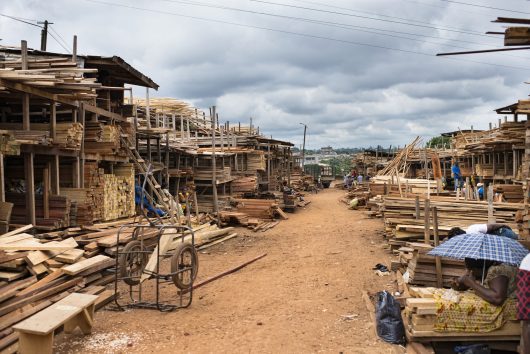
Development Projects in LebanonLebanon is a small country bordered by the countries Israel and Syria. Since gaining its independence in 1943, Lebanon has experienced turmoil within the country. This includes a civil war that lasted from 1975 to 1990, Syrian military occupation from 1976 to 2005, continued fighting between Israel and the Hezbollah militia and a short-lived war in 2006. In more recent times, over one million registered Syrian refugees have fled to Lebanon due to the ongoing Syrian Civil War. As a result of these events, numerous organizations have been working within Lebanon to address a wide variety of concerns and challenges. Below are five noteworthy development projects in Lebanon that are currently being implemented.
The Lebanon Host Communities Support Programme (LHSP)

The LHSP was created in 2012 under the United Nations Development Programme (UNDP) in response to the Syrian Civil War and in joint cooperation with the Ministry of Social Affairs. The LHSP works in communities where there is a high risk of tension and hostility due to the high numbers of Syrian refugees resettling in these communities. The total budget is over $39 million, with top donors including Denmark, Ecuador and Italy. The LHSP aims to facilitate conflict resolution, create peaceful coexistence and stability and maintain livelihoods and services, making this project a standout in terms of noteworthy development projects in Lebanon.

The Water Supply Augmentation Project of Lebanon

This project, approved in 2014 and projected to end in 2024, is funded by the World Bank and aims to increase the available water supply to the greater Beirut and Mount Lebanon regions. This project includes various components such as financing and constructing the Bisri Dam, constructing pipelines to the already existing Joun reservoir and expanding the Ouardaniyeh water treatment plant. The total estimated cost of this project is $617 million.

Project Supporting Economic and Social Fund for Development (ESFD)

Another example of development projects in Lebanon is the ESFD, which is also a UNDP affiliated project. It was created in 2011 to improve employment and community development opportunities in Lebanon. Due to UNDP’s strong partnerships with local authorities and actors in various parts of the country, this project will support ESFD in working in poorer regions of Lebanon to assist in job creation and community outreach programs. The sole donor of this project is the Lebanese Council for Development, providing a total of over $12 million to this project.

Lebanon Country Programming Framework (CPF)

The CPF, which was started in 2016, aims to address various issues identified in the Ministry of Agriculture Strategy of 2015-2019 and the Food Security Strategic Response Plan of 2016. This project focuses exclusively on seven distinct areas which include increasing food security in vulnerable communities, improving food sanitation and safety, strengthening reliable nutrition information systems, providing assistance to develop sustainable agricultural practices, implementing sustainable management of land, establishing an efficient agricultural statistics system and promoting the increase of crop value chains.

Sports for Development Project

Launched in 2013, this project is a joint collaboration between the U.N. Children’s Fund (UNICEF) and HOOPS Club, with the objective of fostering communication between Syrian refugees and Lebanese communities. This project has been implemented in Beirut, Akkar, Baalbek and Sour, where there has been a large influx of Syrian refugee families. This project brings together young people from both communities to encourage interaction and the free exchange of ideas and thoughts. Due to the Syrian Civil War, many Syrian refugee children lost their close network of friends and this project helps to foster friendship and establish harmony between the two communities.

Although Lebanon has experienced a broad range of events and political turmoil in just the last 50 years, there are numerous actors, institutions and organizations that are working to improve the situation in Lebanon. Although these projects listed are noteworthy development projects in Lebanon, they are not alone in working to secure a better and brighter future for Lebanese citizens and those that have just started calling Lebanon their home.

– Miho Kitamura

Photo: Flickr

December 13, 2017
https://borgenproject.org/wp-content/uploads/borgen-project-logo.svg 0 0 Kim Thelwell https://borgenproject.org/wp-content/uploads/borgen-project-logo.svg Kim Thelwell2017-12-13 09:49:452024-05-29 22:29:52Five Noteworthy Development Projects in Lebanon
Development, Global Poverty

Exploring Five Important Development Projects in Cameroon

Development Projects in Cameroon
Cameroon, or “miniature Africa” is filled with immense diversity in anthropology, history, and climate geography.  Captivating in its beauty, Cameroon is striking for its undiscovered natural resources and government’s stability. Nevertheless, there are few development projects that have been “left dormant while awaiting investments in the different sectors of agro-industry, road, port and airport infrastructure, energy, real estate and urban planning, in the mining industries and new technologies.”

The April 2013 Act granted various tax and customs exemptions over a five to ten-year period.  Although this act is an incentive for the private sector, the installation phases of new investors were facilitated and their production safeguarded.

With a goal to boost the economic growth rate and tap into a potential 300 million consumer market here are five development projects in Cameroon that aim to be completed by 2035.

  1. National Roadway: The first version of this FCfa 14, 976.5 billion national railroad plan was presented on April 28, 2011 in Yaoundé. This project would expand the current infrastructure, interconnecting the country to adjacent states, “while opening up the main agricultural and mining production areas.”  Currently CAMRAIL, Cameroon’s earliest authorized rail company, is a favorable route compared to travel by bus, especially in rainy seasons. Nevertheless, this project’s progression has been sluggish, with its completion date estimated for 2020 due to a lack of funding.
  2. Agriculture: The Inter-Professional Council for Cocoa and Coffee (CICC) has shared their concerns with the Institute of Agricultural Research for Development (IRAD) regarding climate change challenges faced by farmer. A project in the works, IRAD is formulating a cocoa and coffee variety that will be more resilient to current extreme climate changes as part of the development projects in Cameroon. Dedicated to restarting their cocoa and coffee industry, production will hopefully be increased from 60,000 tons to 185,000 tons by 2020.
  3. Inclusive and Resilient Cities Development Project: Launched on August 22, 2017, this project will focus on improving access to infrastructure in poor urban communities and urban management itself. With a projected cost of $160 million, this project has four major components: strengthening capacity for inclusive and resilient urban management, improving connectivity and living environments in beneficiary cities, the Contingent Emergency Response, and Project Management, Coordination, Monitoring, and Evaluation. The closing date for this project is March 31, 2024. 
  4. Telecommunication: Chinese company, ZTE, opened up in December 2015 with capital of FCfa 480 million. Named “ZTE Cameroun Sarl” the company covers a telecoms infrastructure, training on their networks, as well as repair and maintenance. Using this grant, ZTE can directly promote their equipment to the Cameroon market.
  5. Solar Energy: Seeing the sun as wealth, Vincent Bolloré, president of the Bolloré group, strives for decentralized systems to bring electricity to villages where electricity access is costly. In 2016, the group completed the Canal Olympia cinema, a project located at Yaoundé I University that is entirely operated by solar power.

These five development projects in Cameroon not only promote the welfare of the locals, but also create incentives for international interest.  The year 2035 is a big one for Cameroon, and hopefully, funding will receive a big push so these projects can both thrive but maintain longevity.

– Tara Jackson

Photo: Flickr

December 12, 2017
https://borgenproject.org/wp-content/uploads/borgen-project-logo.svg 0 0 Borgen Project https://borgenproject.org/wp-content/uploads/borgen-project-logo.svg Borgen Project2017-12-12 01:30:272024-05-29 22:29:39Exploring Five Important Development Projects in Cameroon
Development, Global Poverty

Five Development Projects in Fiji

FijiFiji is a developing country that is widely popular with tourists due to its tropical atmosphere. It has a population of over 900,000 people; however, roughly 28 percent of the population lives in poverty. There are several development projects in Fiji being facilitated that seek to address poverty along with other issues currently facing the country.

Community Youth Empowerment Project (CYEP)

The Community Youth Empowerment Project is an initiative by the Peace Corps. The program seeks to focus on the promotion of behavior change and empower youth to live more productive lives. CYEP also includes activities that are targeted towards parents and youth service providers to promote positive youth development. The volunteers who carry out the project often serve as teachers of life skills and health classes in a middle or high school setting. The volunteers also work outside of schools performing community-based development.

One volunteer, Kelli Maddock, uses music as a method of teaching life skills to youth. “Most of the time, I use music therapy techniques such as lyric analysis to enhance critical thinking skills in regards to life skills, singing to boost self-esteem or songwriting to increase confidence,” wrote Maddock in her article for the Peace Corps. One song that Maddock has used is “Blurred Lines” by Robin Thicke and Pharrell to address the topics of consent, rape culture and victim-blaming.

Fiji Development Bank Project

Seeking to create innovative financial solutions for businesses in Fiji, the Fiji Development Bank Project provides loans for various industries. These loans include commercial loans, bus loans, small and medium business loans and agricultural loans. The project has been established for 50 years this year.

Fiji Community Development Program (FCDP)

Funded by the Australian government, one of the development projects in Fiji is the Fiji Community Development Program. The FCDP seeks to mitigate the social and economic hardships faced by vulnerable and poor communities. It does so by funding community development work and improving the Civil Society Organization’s (CSO) capacity to provide necessary programs for vulnerable communities. The FCDP also focuses on promoting enhanced communication between the government and CSOs and increasing the resilience of the communities by giving them the tools and knowledge needed to deal with hardships when they arise.

United Nations Development Programme (UNDP)

The United Nations Development Programme aims for effective governance, inclusive growth, resilience and sustainable development and gender equality in roughly 170 countries and territories. Their initiatives in Fiji include promoting sign language as a method of acquiring equal access to services and advocating for rights. The UNDP also provides aid to neighboring countries like the Solomon Islands by conducting safety drills for students in preparation for tsunamis and other natural disasters.

Australian Centre for International Agricultural Research (ACIAR)

The Australian Centre for International Agricultural Research seeks to improve the development of the Pacific region islands by working with their civil societies and government. The ACIAR believes in the importance of agriculture, forestry and fisheries sustaining households across the Pacific islands, including Fiji. The ACIAR also aims to invest in and empower women, as women play a key role in household food gardening, tree production and the marketing of horticultural and fisheries products. The ACIAR seeks to reduce poverty by transforming agricultural, fisheries and forestry into income-generating activities.

With these development projects in Fiji, the country will be able to continue to grow and reduce its poverty rates.

– Blake Chambers

Photo: Flickr

December 10, 2017
https://borgenproject.org/wp-content/uploads/borgen-project-logo.svg 0 0 Borgen Project https://borgenproject.org/wp-content/uploads/borgen-project-logo.svg Borgen Project2017-12-10 13:37:152024-06-04 01:03:15Five Development Projects in Fiji
Development, Global Poverty

Five Development Projects in Cabo Verde

Cabo Verde

Cabo Verde is a chain of islands off the coast of Senegal, West Africa. Despite having only 10 percent arable land, limited mineral resources, mountainous terrain and an arid climate, Cabo Verde has been developing rapidly. This is mainly due to the booming tourism industry and development projects in Cabo Verde.

Being a small island nation, there are a few challenges with development. The money spent on transportation between the nine inhabited islands is quite high. Several infrastructure constraints exist which make the delivery of public services and energy in need of improvement. Due to Cabo Verde‘s climate, the agriculture industry is not able to reach its full potential. Lastly, being an island in the Atlantic Ocean, it is susceptible to climate change, rising sea levels and natural disasters.

In light of these challenges, five development projects in Cabo Verde have been created to boost the economy, increase tourism and ensure the well-being of the residents on the islands.

  1. The Competitiveness for Tourism Development project recognizes tourism as the economy’s main source of growth, with the public sector as the key force. This project backs the implementation of Cabo Verde’s vision for this industry. The project began in April 2016 and will cost approximately $3.7 million.
  2. The Transport Sector Reform Project consists of four components. The first is road preservation with routine maintenance. The second component is the development and operationalization of a road and bridge management system. The third is a road safety action plan which puts an accident database and monitoring and evaluation system in place. Finally, there will be an inter-island transport strategy to improve the quality of services and the management of ports and airports.
  3. Another one of the five development projects in Cabo Verde is the Water Supply Development Project of Santiago Island. It is a $220 million project aiming to strengthen the bulk of the water supply on Santiago Island. There will be construction on two water treatment plants with reverse osmosis technology, 12 water reservoirs, 14 pumping stations and about 100 miles of water mains.
  4. The Cabeólica Wind Project was created to develop the use of wind power as a more sustainable alternative to imported fossil fuels. This project will help achieve Cabo Verde’s goal of using 100 percent renewable energy sources by 2020. On four of Cabo Verde’s islands, a 25.5-megawatt facility is meeting about 25 percent of the nation’s energy demands.
  5. The final of the five development projects in Cabo Verde is the Watershed Management and Agriculture Support Project. It was created to increase productivity in agriculture by supporting the conversion of dry farmland to higher-value horticultural production. This was done by improving natural resource management, including the sustainable use of soil and water resources. The project also improves the capacity to support the development and implementation of community-based watershed management plans.

As a middle-income country with a relatively low poverty rate, Cabo Verde is able to design projects like these to continue promoting growth and achieve goals. These development goals will boost the economy, increase tourism and ensure the well being of the residents and visitors on the islands and keep the poverty rate low.

– Lorial Roballo

Photo: Flickr

December 9, 2017
https://borgenproject.org/wp-content/uploads/borgen-project-logo.svg 0 0 Borgen Project https://borgenproject.org/wp-content/uploads/borgen-project-logo.svg Borgen Project2017-12-09 10:25:222020-01-08 15:34:37Five Development Projects in Cabo Verde
Development, Global Poverty

Five Development Projects in Jordan

Development Projects in JordanJordan’s economy is projected to grow within the next year. Despite regional instability in Africa and the Middle East, five development projects in Jordan work toward the common goal of improving socio-economic conditions for its citizens.

City-to-City Exchange

In 2015, the US Agency for International Development conducted a city-to-city exchange program between Pocatello, Idaho and Hooksett, New Hampshire and three cities in Jordan: Al-Shou’la, Muath bin Jabal and Tabaquet Fahel. The program began in March of 2015 with the objective to advise the local Jordanian government on economic development ideas and approaches.

US representatives acting as advisors collaborated on plans for a local farmers market in Al-Shou’la, municipal development in Muath bin Jabal and the development of a refrigeration system in Tabaquet Fahel. These projects were devised to stimulate the economy and benefit local farmers and producers. The city-to-city program hopes to help in areas of infrastructure, education and the deliverance of basic needs to Jordanians.

Al-Manar Project

The Al-Manar Project is a free national human resource development center that works to advance the career prospects of Jordanians. This is accomplished by offering human resource information that may support Jordanian advancement in the career field. Gender and social inclusiveness are the main concerns for the project.

Al-Manar provides career counseling, online career development, access to human resource information and guidance for university students and professionals alike. Career Development Coordinator Dr. Khaled AlQudah is currently working on improving support in schools.  Distribution of information is accomplished via physical locations and updated online databases accessible by anyone.

The Rural Economic Growth and Employment Project

The Rural Economic Growth and Employment project was developed in 2015 to involve small-scale local farmers and reinforce the agricultural sector to benefit the country collectively. Designed to reduce unemployment among the youth, the six-year-long project includes loan extensions to farmers and the promotion of their produce. This may include ISO safety and quality certifications.

Renewable Energy

Steady economic growth is succeeding in Jordan, says a 2017 report from the International Institute for Applied Systems Analysis.  Accordingly, the growth is positively correlated with the use of fossil fuel consumption. Fossil fuels currently act as Jordan’s main electrical supply.

The government has set out to replace at least 10 percent of nonrenewable resources with renewable energies by 2020. Nuclear energy, wind and solar energies are among those in contention to comprise the 10 percent goal. Governmentally sanctioned development projects in Jordan are in the planning and implementation phases of working toward this goal, the report says.

Jordan’s Vision 2025

Jordan’s vision for 2025 is a holistic approach that includes the development of nine economic pockets throughout the kingdom. These include support for local businesses and entrepreneurship. E-commerce and gaming were among some of the prospects tied up in this vision’s plan.

Under the same program, Jordan’s foreign trade policy is designed to supplement local businesses by improving market access to Jordanian exports like clothing, pharmaceuticals and produce. The side-effects of empowering local businesses such as Jordan’s Classic Fashion Apparel Industry Co. Ltd. include an emphasis on employee satisfaction and social responsibility.

According to the 2016 World Bank’s Economic Outlook Report for Jordan, these five development projects in Jordan are contributing to its improved future. With all the kingdom’s recent success, the pursuit of economic and social victories are sure to continue.

– Sloan Bousselaire

Photo: Flickr

December 8, 2017
https://borgenproject.org/wp-content/uploads/borgen-project-logo.svg 0 0 Borgen Project https://borgenproject.org/wp-content/uploads/borgen-project-logo.svg Borgen Project2017-12-08 01:30:082019-11-15 06:02:45Five Development Projects in Jordan
Development, Global Poverty

Addressing Five Current Development Projects in Iran

Development Projects in IranIran has the second largest economy in the Middle East and North Africa, after Saudi Arabia. However, since the country’s nuclear program became public in 2002, the United Nations, the European Union and several individual countries and organizations have imposed sanctions on Iran in order to prevent the development of military nuclear capability. These sanctions made it difficult, and in some cases impossible, for international aid to reach impoverished parts of the country. For instance, the World Bank has not approved a Country Assistance Strategy for Iran and has not approved new lending to the country since 2005. Some international organizations, though, are funding programs to aid in providing health care and increasing environmental sustainability.

Here is a look at five development projects in Iran:

  1. Malaria Control (United Nations Development Programme)
    In partnership with national and international partners such as the World Health Organization, the United Nations Development Programme has implemented the Intensified Malaria Control in High Burden Provinces towards Falciparum Elimination project in Iran to eliminate the disease. The project, started in October 2011, includes distributing insect nests to protect against infected mosquito bites, training volunteers to engage in early case findings and collaborating with local women as a symbol of community participation.
  2. Stanford Iran 2040 Project (Stanford University)
    Established in 2006, the Stanford Iran 2040 Project allows researchers all around the world to study issues related to the future of the Iranian economy. The core research centers on economy, population, energy, water, agriculture and the financial system. From this research, experts will be better equipped to aid in Iran’s future development by evaluating how these issues affect the country.
  3. Carbon Sequestration Project (United Nations Development Programme)
    The Carbon Sequestration Project aims to capture and control atmospheric carbon in arid and semi-arid regions of Iran and to improve the socioeconomic status of local communities. So far, the project has created 577 permanent jobs, held 400 training programs, established microcredit systems with 63 Village Development Groups, rehabilitated over 30,000 hectares of land and empowered women to play an active role in all of the project’s initiatives.
  4. Iran Transport Projects (Iranian Ministry of Roads and Urban Development)
    The Ministry of Roads and Urban Development in Iran has signed 13 contracts worth $12 billion since March 2015 with investors from the Iranian private sector and foreign companies. These investments fund development projects in Iran across air, road, marine and rail transportations. Some of the notable plans include a 230-mile freeway connecting the city of Kerman to the Persian Gulf Port of Bandar Abbas, as well as a high-speed railroad connecting Tehran to Isfahan, a central tourism hub.
  5. Country Coordinating Mechanism Funding (United Nations Development Programme)
    Country Coordinating Mechanisms (CCMs) develop and submit grant proposals to the Global Fund based on national needs. The Global Fund is a partnership organization designed to accelerate the end of AIDS, tuberculosis and malaria as epidemics. CCMs allow for local ownership and participation in decision-making processes.

These development projects in Iran provide hope for the nation to move toward a more stable and sustainable future.

– Richa Bijlani

Photo: Flickr

December 6, 2017
https://borgenproject.org/wp-content/uploads/borgen-project-logo.svg 0 0 Borgen Project https://borgenproject.org/wp-content/uploads/borgen-project-logo.svg Borgen Project2017-12-06 07:30:002024-05-29 22:29:27Addressing Five Current Development Projects in Iran
Development, Global Poverty

Five Active Development Projects in India

Development Projects in IndiaIndia is the second-most populous nation, and the eighth largest nation by area in the world, and yet the nation is still lacking many of the necessities of a developed country. Thanks to the World Bank Group, and other investors, India is in the process of becoming a developed country by improving the full range of infrastructural and cultural problems that persist today. Here are five active development projects in India which you should know about.

  1. National Agricultural Higher Education Project. One of the major development projects in India began in August of 2017 and was made possible by $165 million of funding from the World Bank and other organizations. The goal of the project is to improve the current agricultural industry in India through the betterment of the country’s agricultural universities. The idea behind the project is that by improving the quality of agricultural education, farming practices will become more efficient, sustainable and will yield a greater volume of food to feed the nation’s high population.
  2. India Ecosystems Service Improvement Project. The goal of the Ecosystems Service Improvement Project, put broadly, is to try and ensure that interactions between humans and the ecosystem are not overtly harmful to the environment. More specifically, the project will hopefully improve land management and the overall health of the ecosystems of India through increasing and promoting biodiversity and sustainable resource use.
  3. Andhra Pradesh 24x seven Power for All Project. This development project in India focuses on delivering sustainable, reliable and more readily available electricity to citizens living in the Andhra Pradesh region of the country. This region encompasses both urban, and rural communities, with all sharing a common issue of having unreliable access to electricity. The Power for All Project will cost a whopping $570 million, $240 million of which has been pledged as a loan from the World Bank.
  4. Nagaland Health Project. The aim of this development project in India is to increase the availability and quality of healthcare services in the Nagaland region. The project began in 2016 and is expected to conclude in 2023, with a total cost of $60 million.
  5. Shared Infrastructure for Solar Parks Project. This project aims to equip India with the necessary infrastructure to implement solar energy systems across the country. This is being accomplished via the construction of many large scale solar parks throughout the country. These parks will harness solar energy via solar panels and then distribute the collected energy to the larger public power grid. The project will make the nation more efficient in its consumption of power and will make electricity more available to the Indian population.

These are just five of the 121 active development projects in India which are being organized by the World Bank Group. Projects like these are bringing India closer to becoming a fully developed nation and improving the quality of life for all of the Indian people.

– Tyler Troped

Photo: Flickr

December 6, 2017
https://borgenproject.org/wp-content/uploads/borgen-project-logo.svg 0 0 Borgen Project https://borgenproject.org/wp-content/uploads/borgen-project-logo.svg Borgen Project2017-12-06 01:30:002024-05-29 22:29:33Five Active Development Projects in India
Page 90 of 163«‹8889909192›»

Get Smarter

  • Global Poverty 101
  • Global Poverty… The Good News
  • Global Poverty & U.S. Jobs
  • Global Poverty and National Security
  • Innovative Solutions to Poverty
  • Global Poverty & Aid FAQ’s
Search Search

Take Action

  • Call Congress
  • Email Congress
  • Donate
  • 30 Ways to Help
  • Volunteer Ops
  • Internships
  • Courses & Certificates
  • The Podcast
Borgen Project

“The Borgen Project is an incredible nonprofit organization that is addressing poverty and hunger and working towards ending them.”

-The Huffington Post

Inside The Borgen Project

  • Contact
  • About
  • Financials
  • President
  • Board of Directors
  • Board of Advisors

International Links

  • UK Email Parliament
  • UK Donate
  • Canada Email Parliament

Get Smarter

  • Global Poverty 101
  • Global Poverty… The Good News
  • Global Poverty & U.S. Jobs
  • Global Poverty and National Security
  • Innovative Solutions to Poverty
  • Global Poverty & Aid FAQ’s

Ways to Help

  • Call Congress
  • Email Congress
  • Donate
  • 30 Ways to Help
  • Volunteer Ops
  • Internships
  • Courses & Certificates
  • The Podcast
Scroll to top Scroll to top Scroll to top