• Link to X
  • Link to Facebook
  • Link to Instagram
  • Link to TikTok
  • Link to Youtube
  • About
    • About Us
      • President
      • Board of Directors
      • Board of Advisors
      • Financials
      • Our Methodology
      • Success Tracker
      • Contact
  • Act Now
    • 30 Ways to Help
      • Email Congress
      • Call Congress
      • Volunteer
      • Courses & Certificates
      • Be a Donor
    • Internships
      • In-Office Internships
      • Remote Internships
    • Legislation
      • Politics 101
  • The Blog
  • The Podcast
  • Magazine
  • Donate
  • Click to open the search input field Click to open the search input field Search
  • Menu Menu

Archive for category: Development

Information and stories on development news.

Development, Global Poverty

5 Development Projects in Bhutan Introduced in 2017

development projects in bhutan
Bhutan, officially the Kingdom of Bhutan, is a small country that sits on the Himalayas’ eastern edge in south Asia. The nation is considered one of the world’s least developed countries, and agriculture is at least 80 percent of Bhutan’s economy. Bhutan has made significant strides in development in recent years, and has been able to maintain solid growth and economic stability.

In 2017, The World Bank approved and funded five development projects in Bhutan. These projects are an effort to further the economic growth of the country.

1. Bhutan BLSS Economic Census

BLSS stands for Bhutan Living Standard Survey and was reintroduced in February 2017. It is a household survey that is taken by the National Statistics Bureau. The survey was previously conducted in 2003, 2007 and 2012. After its introduction in February, the survey was again taken in March 2017. The survey provides many critical indicators, such as the national poverty line and National Accounts statistics.

2. Preparation of Strategic Program for Climate Resilience

The Preparation of Strategic Program for Climate Resilience was introduced in February 2017 and will be completed by September 2019. This long-term plan is meant to help Bhutan improve national climate resilience. The project will build on ongoing activities in Bhutan to incorporate climate resilience in development planning. Bhutan then plans to use the project to help create a climate-resilient investment plan for the country.

3. Food Security and Agriculture Productivity Project

The Food Security and Agriculture Productivity Project was introduced in April 2017 and will be completed by December 2022. The project’s goal is to combat Bhutan’s reliance on food imports and to increase local agriculture. Since Bhutan is mainly an agriculture country, this increase will also help lower unemployment and reduce poverty.

4. Bhutan Youth Employment and Rural Entrepreneurship Project

The Bhutan Youth Employment and Rural Entrepreneurship Project was introduced in May 2017 and as of yet, has no closing date. The project’s goal is to increase employment opportunities in Bhutan, specifically for youth; many of the opportunities created are in agriculture. With more job opportunities, the Bhutanese economy will continue to improve as a result of this project. 

5. Strengthening Public Financial Management Project

The Strengthening Public Financial Management Project was introduced in September 2017 and will conclude in January 2021. The project’s goal is to help the Bhutanese manage their budget and public funds more efficiently. This will help the development and strengthening of public services and governance.

With the approval of these five development projects in Bhutan, The World Bank has loaned the Royal Government of Bhutan over 15 million U.S. dollars. The World Bank has worked closely with Bhutan since 1998 when Bhutan’s first project was approved.

The goal of these five development projects in Bhutan is to increase employment opportunities, decrease national poverty and strengthen Bhutan’s economy. Though it is still too early to see any significant changes since these five development projects in Bhutan were implemented, these efforts have laid a satisfying groundwork for the Bhutanese to build on.

– Courtney Wallace

Photo: Flickr

January 12, 2018
https://borgenproject.org/wp-content/uploads/borgen-project-logo.svg 0 0 Borgen Project https://borgenproject.org/wp-content/uploads/borgen-project-logo.svg Borgen Project2018-01-12 06:52:232019-12-17 12:02:365 Development Projects in Bhutan Introduced in 2017
Development, Global Poverty

5 Things to Know About Development Projects in Lesotho

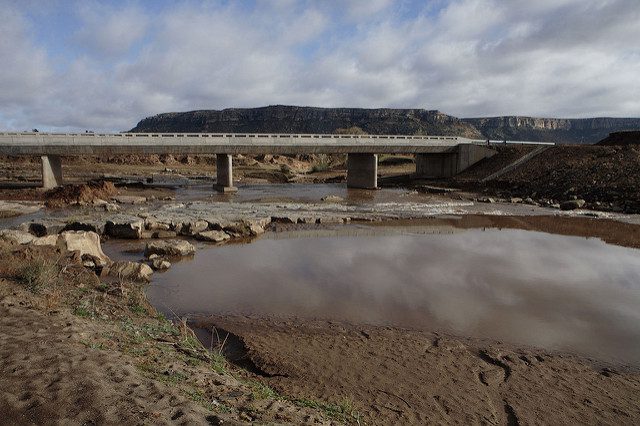
development projects in lesothoLesotho is a small landlocked country surrounded by South Africa, with a population of nearly two million people. Natural resources in Lesotho are scarce and fragmented, a result of the highland’s arid environment and the lowland’s limited agricultural space. The lack of natural resources and the country’s high poverty and unemployment rates have made the Lesotho population economically dependent on South Africa.

There are several development projects in Lesotho dedicated to increasing agricultural production, constructing income-generating activities and improving development effectiveness. Below are five development projects in Lesotho.

  1. Lesotho Highlands Water Project (LHWP)
    The LHWP is a binational infrastructure project between South Africa and Lesotho intended to provide water to an arid region of South Africa and to generate hydroelectricity and income for Lesotho. Phase I of the project was completed in 2003; work on Phase II of the LHWP began in 2013. Phase II involves water transfer and hydropower components that are meant to increase both water transmission to South Africa and the amount of electricity generated in Lesotho by 2020.
  2. Cultural Heritage Plan
    The Cultural Heritage Plan was developed and implemented in response to Phase II of the LHWP. Its objective is to preserve and manage Lesotho’s history by protecting cultural heritage and burial sites, rock art and Stone Age occupation sites.
  3. Lesotho Smallholder Agricultural Development Project (SADP)
    Work began on the SADP in early 2012, as part of the Lesotho government’s National Strategic Development Plan, but the project’s design was restructured in 2016. The project’s development objectives are to increase and improve the marketed portion of agriculture output among project beneficiaries and to generate practical responses to an Eligible Crisis or Emergency.
  4. Sustainable Energy for All Project
    In 2016, the Lesotho government implemented the Sustainable Energy for All project. Developed by the United Nations Development Program (UNDP) and the Global Environment Facility (GEF), the project’s goal is to improve access to clean energy services in the rural areas of Lesotho by 2021.
  5. Lesotho Data for Sustainable Development Project
    The Lesotho Data for Sustainable Development Project was implemented by the Lesotho government in 2016 and is expected to reach its developmental goals by January 2018. The project’s objectives include the collection, analysis and distribution of development data; the construction of institutional and technical capacities for the management and evaluation of development projects; and to improve national and sectoral capacities to generate data and facilitate accountability for resources.

The rate of poverty in Lesotho has declined steadily over the last decade, an achievement credited to economic growth. With these development projects in Lesotho, the nation should continue to improve its capacity to address development challenges and constraints, to sustain growth and to prioritize human welfare progression.

– Gabrielle Doran

Photo: Flickr

January 10, 2018
https://borgenproject.org/wp-content/uploads/borgen-project-logo.svg 0 0 Borgen Project https://borgenproject.org/wp-content/uploads/borgen-project-logo.svg Borgen Project2018-01-10 07:30:392024-05-29 22:30:185 Things to Know About Development Projects in Lesotho
Development, Global Poverty

5 Development Projects in Myanmar

development projects in myanmarLocated in Southeast Asia, Myanmar is a country filled with political and ethnic strife and its income gap is the largest in the world. Myanmar is in desperate need of foreign aid to alleviate current problems such as illegal drug production, human rights issues and poverty. Development projects in Myanmar are crucial.

These five major development projects in Myanmar focus on areas where sustainable change can be brought about.

Community-Oriented Reproductive Health Project

In Myanmar, there is particularly low access to health services. This is especially evident in rural communities where there is a lack of knowledge, experience and healthcare providers. Similarly, there’s a scarcity of resources, facilities and basic services.

To combat this, the Japanese International Cooperation Agency (JICA) implemented the Community-Oriented Reproductive Health Project in 2004. Its main focus is on training healthcare providers in Maternal and Child Health (MCH) and upgrading health centers. The project trained one MCH promoter for every 30 households in targeted communities which ensures future, self-reliant health.

Dawei Development Project

Proposed in November 2010, the Dawei Development Project is a planned economic zone. The Dawei Development project in Myanmar would create hundreds of thousands of jobs, contributing to five percent of Myanmar’s GDP by 2045. Initially focusing on textiles, a few years down the line it hopes to attract industries such as automotive and plastics.

National Community Driven Development Project

Approved in November 2012, this development project in Myanmar aims to improve rural communities’ access to infrastructure and basic services, such as an improved government response to crisis or emergencies. It notes that most of Myanmar’s issues with poverty indicate a strong concentration in rural areas.

With plans to benefit almost 3,000 villages home to over two million poor people, this project uses a people-centered approach through which villages receive block grants to fund projects they decide and implement themselves.

Southeast Disaster Risk Management Project

The Southeast Disaster Risk Management Project will help Myanmar in one of its most crippling areas: natural disasters. Each year, disasters cost the country approximately $184 million and hurt the poor much more than other classes.

This development project in Myanmar will contribute $116 million to efforts geared towards the reduction of flooding and improve the government’s response to disasters and emergencies across the country.

Development Programs in Myanmar: Microfinance

The Asian Development Bank (ADB) executes a funding project that has, since 2010, contributed $622 million in new loans. Currently, it operates in India, Bangladesh and Indonesia. However, in 2017 it raised another $100 million to finance loans which will allow projects to expand into Myanmar.

With the implementation of these development projects in Myanmar, there is hope to bring more equality into the country. With a strong emphasis on increasing economic prosperity, these projects will similarly decrease the percentage of impoverished citizens in Myanmar. Myanmar will begin to grow into a prosperous and equal country.

– Nick McGuire

Photo: Flickr

January 9, 2018
https://borgenproject.org/wp-content/uploads/borgen-project-logo.svg 0 0 Borgen Project https://borgenproject.org/wp-content/uploads/borgen-project-logo.svg Borgen Project2018-01-09 01:30:242019-11-12 21:57:375 Development Projects in Myanmar
Development, Global Poverty, United Nations

The History of the United Nations

history of the united nationsThe name United Nations (U.N.) was coined by President Franklin D. Roosevelt and was first used on January 1, 1942 in the Declaration by the United Nations. Twenty-six nations pledged to continue resistance against the Axis powers in the Declaration by the United Nations. Though the name was coined in 1942, the United Nations did not become official until 1945.
A key event in the history of the United Nations is the San Francisco conference, which convened on April 25, 1945. The conference was presided over by Roosevelt, British Prime Minister Winston Churchill, and Soviet Premier Joseph Stalin. Fifty nations were represented at this conference, most of which were from the North, Central, and South American republics.

The nations met in San Francisco to draw up the U.N. Charter, which was signed on June 26, 1945. However, the U.N. did not officially come into existence until October 24, 1945 when the majority of the signatories ratified the Charter. The charter did not come into force until this date because the five permanent members of the U.N. Security Council — China, France, Russia, the United Kingdom and the United States — ratified it.

The main goal of the U.N. Security Council is to maintain international peace, which was among the original aims that many nations had in mind when founding the U.N. Of the five permanent members of the Security Council, all but France were intended to serve as the enforcers of peace, as claimed by Roosevelt. The other allied nations were tasked with establishing other organizations, such as the Food and Agriculture Organization (FAO), to aid the U.N. in its tasks.

Prior to the creation of the U.N., another organization, the League of Nations, existed with a similar goal of achieving peace and promoting international cooperation. The 58-member League of Nations was established under the Treaty of Versailles in 1919. After failing to prevent the Second World War, the League of Nations ceased its activities. Thus, the history of the United Nations began, as many countries saw the necessity for a more successful international organization.

Prior to the more well-known San Francisco conference was the Quebec conference of August 1943. During this conference, Secretary of State Cordell Hull and British Foreign Secretary Anthony Eden decided to begin drafting a declaration calling for an international organization.

Since its creation, the U.N. has addressed many global issues, such as women’s rights, children’s rights and the refugee crisis. Keeping in mind its original goal of maintaining world peace, the U.N. created the U.N. Emergency Force (UNEF) on November 7, 1956. The UNEF, as well as many other organizations and individuals, have been awarded Nobel Peace Prizes.

Today, U.N. membership totals 193 countries and includes almost every single recognized independent state. The U.N. still focuses on its main goals of peacekeeping and building, conflict prevention and humanitarian assistance. Though it has accomplished a lot since its founding, the history of the United Nations has only just begun and the organization has a lot of work in store for the future.

– Haley Rogers

Photo: Flickr

January 6, 2018
https://borgenproject.org/wp-content/uploads/borgen-project-logo.svg 0 0 Borgen Project https://borgenproject.org/wp-content/uploads/borgen-project-logo.svg Borgen Project2018-01-06 01:30:212024-05-29 22:30:02The History of the United Nations
Development

5 Development Projects in The Gambia

development projects in the gambiaThe Gambia is a relatively small country in Western Africa, surrounded by Senegal. It has maintained political stability since independence in 1965. Despite this, the country still faces a multitude of issues which development projects in The Gambia seek to address.

In 2017, former President Jammeh’s 21-year reign came to an end. The citizens elected President Adama Barrow to office with hopes of ushering in a new era for The Gambia. Below are five development projects in the Gambia that are currently being implemented.

Food and Agriculture Sector Development Project (FASDEP)

With arable land and poor soil quality, food production has been a constant struggle for The Gambia. The Food and Agriculture Sector Development Project focuses on community-based pond fish-farming. It has worked towards assuaging food shortages since 2015.

FASDEP has provided the necessary tools and constructed 45 ponds to date. Each pond is expected to bring a profit of $217. The 200 ponds supported by FASDEP have and will continue to provide income and food security.

The Maternal and Child Nutrition Health Results Project

The Maternal and Child Nutrition Health Results Project, funded by the World Bank and other donors, has the goal of improving overall nutrition and health of women and children living in The Gambia. Many aspects are included in this project such as improving the health system, improving health service delivery, and promoting reproductive and maternal health through proper nutrition.

The project has also identified 12 practices carried out by both families and communities which they believe will enhance child survival rates. Included in these are basic hygiene and sanitation practices. The project continues to promote healthcare and implement these practices in specific regions of the country.

National Agricultural Land and Water Management Development Project (NEMA)

This project specifically works to aid women and young adults in The Gambia and reduce poverty rates. By implementing sustainable land and water management practices, productivity will increase among this group.

The main goals of NEMA include addressing the proper use of farmland and the development of domestic markets. These goals will be met by enhancing the usage of watershed areas, which are key to many ecosystems and usable for crop production, and by making agriculture profit-oriented, which gives an income to these women and young adults.

The Participatory Integrated-Watershed Management Project

This project more deeply focuses on the development of watershed management in The Gambia. The project works specifically in rural areas to not only increase income but also to protect natural resources, of which watersheds are a critical component.

The targets of this project are broader and include anyone who manages or relies on crops for an income. Citizens take the reins in this project and plan and implement the recommended practices independently.

A variety of issues are addressed through the Watershed Management project such as women’s rights, malaria prevention, environmental sustainability and more. In the future, this idea may expand to broader development projects in the Gambia and other potential countries.

The Emergency Development Policy Operation Project

The Emergency Development Policy Operation Project has been implemented in the last six months of 2017. In direct response to an economic crisis in The Gambia following a poor agricultural and tourist season, the project works to not only strengthen the country’s financial position but also provide key services to citizens that otherwise may have gone unfunded.

Specifically, the project hopes to mitigate the consequences to the country’s health centers. The $56 million project will continue to provide financial support and will also implement sustainable measures to ensure the financial security of the country going forward.

These five development projects in The Gambia have been vital to the survival of the country and will continue to be as citizens learn to become economically self-sufficient and sustainable. The Gambia has seen many struggles since gaining independence, but with the aid of these projects, the people may truly become independent.

– Megan Burtis

Photo: Flickr


January 1, 2018
https://borgenproject.org/wp-content/uploads/borgen-project-logo.svg 0 0 Borgen Project https://borgenproject.org/wp-content/uploads/borgen-project-logo.svg Borgen Project2018-01-01 01:30:532020-03-26 12:27:155 Development Projects in The Gambia
Development, Global Poverty

5 Development Projects in Malaysia

development projects in malaysiaOne of the most vibrant economies in Southeast Asia, Malaysia consists of two regions separated by 640 miles of water. Though it is relatively peaceful, occasionally there is racial tension. To address issues of income inequality, several development projects in Malaysia are active.
Less than one percent of Malaysians live in extreme poverty. However, more than 40 percent of the population is impoverished. Compared to other Southeast Asian countries, income inequality is relatively high in Malaysia. Despite these issues, there are many projects that hope to fight this inequality issue. 

Below are short descriptions of five development projects in Malaysia.

Scatec Solar Project

Scatec Solar, a company in Malaysia, recently won a grant to construct a 40 MW plant. Located in northwest Malaysia, it expects to deliver 65 GWh of solar power and earn about $6 million a year. Construction is due to begin in 2018 and finish in 2019.

This is not Malaysia’s first solar plant grant win, which makes its renewable energy commitment evident. Furthermore, this continuous string of solar power growth shows a definitive market in Malaysia.

Program for Bornean Biodiversity and Ecosystems Conservation II

The Program for Bornean Biodiversity and Ecosystems Conservation was created by JICA in 2001. The project focused on the biodiversity and conservation of ecosystems in the Sabah region of Malaysia. It implemented the Sabah Biodiversity Centre (SaBC) and managed the river basins of the Kinabatangan and the Segama rivers. Further, it created state park activities in the Sabah region.

Development Projects in Malaysia: Green Cities

The Green Cities project is also known as the Sustainable Urban Management Support for Follow-up Activities in Melaka, Malaysia. It builds on previous Green Cities development projects in Malaysia implemented by the Asian Development Bank.

The original Green Cities projects focused on improving climate resilience in Malaysia. The plan addressed economic growth and sustainability in an urban environment.

Kota Kinabalu Composting Project

In 2008, the World Bank approved the Kota Kinabalu Composting Project. It created this project to avoid further methane and greenhouse gas pollution from a landfill in Telipok, Malaysia. By diverting waste to a sorting and compost plant, workers recover the recyclable parts of the waste and convert the biodegradable portion into a large-scale compost.

To fully reach its goal, the World Bank constructed a 500 tonne/day sorting plant. Although it has yet to reach completion, the goal is still possible in the coming few years.

Global Knowledge and Research Hub

In March 2016, the World Bank Group officially launched its Global Knowledge and Research Hub in Malaysia. Focused on Malaysia’s aims to become a high-income economy through sustainable and inclusive growth by 2020, it will support their economic plans, and share lessons with developing countries.

The first of its kind, this Hub will address skill shortages, help implement Malaysia’s SME plan, unlock the potential for Malaysia’s digital economy and many other plans.

By pursuing these development projects in Malaysia the nation will continue to grow. As a result, it will bring a larger percentage out of poverty and reach its national economic goals.

– Nick McGuire

Photo: Flickr

December 31, 2017
https://borgenproject.org/wp-content/uploads/borgen-project-logo.svg 0 0 Borgen Project https://borgenproject.org/wp-content/uploads/borgen-project-logo.svg Borgen Project2017-12-31 01:30:202019-11-12 22:17:535 Development Projects in Malaysia
Development, Global Poverty

Health and Nutrition Key Parts of Development Projects in Nepal

development projects in nepalIn April 2016, the US Agency for International Development (USAID) signed an agreement with NGOs to provide five new development projects in Nepal, totaling $121 million in aid. Here is an overview of those projects:

Suaahara II – $63 million

This five-year (2016-2021) program is “dedicated to improving the health and nutrition status of women and children”. It will build on existing improvements in maternal, infant and young child nutrition practices through various mediums such as activities, media programs and mobile technology. This program aims to reduce stunting produced by malnutrition during critical developmental stages (conception to 24 months) and improve maternal and child health services. In addition, the integrated strategies will work with government development projects in Nepal to expand services for adolescents and social attitudes towards delayed marriages and family planning.

Feed the Future Seed and Fertilizer Project- $15 million

This five-year project will bring targeted aid to promote sustainable increases in crop productivity in the agricultural sector and provide food security to common Nepalese families. The program plans to achieve this using improved seeds and “Integrated Soil Fertility Management technologies.” It hopes to equip local farmers and national partners with the technology and information needed to sustain and grow crop productivity.

Sustainable, Just and Productive Water Resources Development in Western Nepal – $2.5 million

This three-year project was created to promote sustainable water resource development in an area particularly vulnerable to climate change. It hopes to provide accurate information and base knowledge for policymakers and companies to use in their decision making regarding water ecosystems. They will focus their efforts in the Karnali and Mahakali river basins of Nepal.

Civil Society: Mutual Accountability Project – $15 million

This five-year program aims to “foster a more legitimate, accountable, and resilient Nepali civil society” through effective policy advocacy, media use and government engagement. The program will incorporate gender equality as a common thread throughout all project activities.

Programme for Aquatic Natural Resources Improvement – $25 million

Lastly, this five-year program’s goals include reducing threats to Nepalese biodiversity and increase human and ecological resilience to climate change through improved water management. It will provide critical support to areas strained by overuse, increased populations and climate change. This program hopes to incentivize water conservation engagement at all levels of society, from fisherman to politicians, through political engagements, informational activities, and academic research.

According to Ambassador Alaina B. Teplitz, these USAID-funded development projects in Nepal “address both the continuing needs of the Nepali people post-earthquake, and at the same time build sustainable communities that support Nepal’s long-term development goals.”

– Belén Loza

Photo: Flickr

December 30, 2017
https://borgenproject.org/wp-content/uploads/borgen-project-logo.svg 0 0 Borgen Project https://borgenproject.org/wp-content/uploads/borgen-project-logo.svg Borgen Project2017-12-30 01:30:442019-11-12 22:18:46Health and Nutrition Key Parts of Development Projects in Nepal
Development, Global Poverty

5 of the Most Influential Development Projects in Zimbabwe

development projects in zimbabwe
Droughts, land reform and a decrease in production have plagued Zimbabwe since the turn of the century in 2000. But despite these economic challenges, there are five development projects in Zimbabwe that hope to alleviate some of the current struggles that common residents of the country face.

Zimbabwe Rural School Development Programme

Beginning in 2001, the charity Zimbabwe Rural School Development Programme (ZRSDP) was created as a means to counteract the lack of education that affects many children in the country. In 2016, the most recent accomplishment of the ZRSDP included the Peace and Good Hope Primary School in Bulawayo.

This school had grown to a student population of 200 since its foundation in 2002; however, it functioned with six desks, five benches and four toilets that served for not only the students but also two teachers. Devoting over 40,000 GBP ZRSDP helped create proper classrooms, toilets and teacher accommodations at Peace and Good Hope Primary School. Due to this increase in facilities, the school now holds 240 students and a full teaching staff.

Youth and Women Empowerment Project

The African Development Fund plans to create targeted employment opportunities and increase the value of sales in horticulture products for targeted youth and women. Running from 2017 to 2019, this project will cost UA 3.79 million. Through this project, the Fund aims to address fragility risk that threatens Zimbabwe’s development, which includes gender inequality, regional development imbalances, poor governance and technician skills shortages. Development projects in Zimbabwe via these efforts will really lay the foundation for future gain.

Integrated Urban Water Management

The government of Zimbabwe expressed interest in the African Water Facility’s program, “Cities of the Future,” in November of 2013. The project will handle the important water and sanitation infrastructure needs, and “the Municipality of Marondera with a population of 65,000 inhabitants was selected by the Government of Zimbabwe to receive support to develop an integrated water and wastewater Master Plan that will in part present detailed prioritized investments.”

Transport Sector Plan

A plan for sustainable development of the transport infrastructure could get implemented into development through this proposed study, “The target area is the entire population of Zimbabwe and transit transport that will benefit from reduced cost of movement of goods, persons and services as a result of improved transport infrastructure in the country upon implementation of the recommendations of the Transport Sector Master Plan.”

Lake Harvest Aquaculture Expansion

Lake Harvest Aquaculture is the largest integrated tilapia fish farm in sub-Saharan Africa. Expansion of the farm would offer more job opportunities, improved food security through low-cost protein access and increase government revenue.

Change is slowly but surely coming to Zimbabwe through each of these endeavors. These development projects in Zimbabwe are just the beginning of empowerment to the people, but in time they will serve as the catalyst for larger, more sustained change.

– Tara Jackson

Photo: Flickr

December 28, 2017
https://borgenproject.org/wp-content/uploads/borgen-project-logo.svg 0 0 Borgen Project https://borgenproject.org/wp-content/uploads/borgen-project-logo.svg Borgen Project2017-12-28 01:30:162019-12-06 13:35:245 of the Most Influential Development Projects in Zimbabwe
Development, Global Poverty

5 Development Projects in Sudan to Know About

development projects in sudan
Sudan has been rife with conflict for most of its existence. The country is dealing with economic challenges, health concerns, a large population living below the poverty line and the ever-present threat of violent conflict. Many organizations are working in Sudan to help improve conditions for those living there, and progress is being made. As an example, the life expectancy in Sudan has risen from 58.4 in 2000 to 64.2 in 2015. Ahead are five development projects that are making a difference in Sudan.

  1. Earlier this year, the Sudanese government and the African Development Bank launched the ENABLE Youth Program. This project helps youth in the country get involved in agriculture and learn business skills that will help them make a living. This is an important step in diversifying Sudan’s economy and decreasing its reliance on oil.
  1. The Strengthening Sub-National Fiscal Policy Management project is seeking to promote greater equity in Sudan’s public resource use and increase government transparency. There is a large disparity in resource allocation between different regions within Sudan and this project is working to level the playing field.
  1. The second phase of the Sustainable Livelihoods for Displaced and Vulnerable Communities in Eastern Sudan project (SLDP2) is continuing to help people living in Sudan’s poorest region identify labor needs and find workers to complete these tasks. This creates new jobs that do not require a great deal of training and work toward the betterment of the community.
  1. The International Fund for Agricultural Development (IFAD) has made development projects in Sudan a priority since 1979. Today the organization focuses its programs on agriculture and livestock. It is working to enhance crop productivity and increase access to financial services in Sudan’s rural farming communities.
  1. The United Nations Development Project (UNDP) is confronting many key issues in Sudan. UNDP projects in Sudan focus on poverty reduction, establishing and stabilizing democratic institutions and fighting HIV, malaria and other diseases.

Development projects in Sudan have played an important role in improving the quality of life for those living in the country. With continued investment from the global community and regular evaluation of projects’ effectiveness, there is hope for a more stable and peaceful Sudan.

– Aaron Childree

Photo: Flickr

December 23, 2017
https://borgenproject.org/wp-content/uploads/borgen-project-logo.svg 0 0 Borgen Project https://borgenproject.org/wp-content/uploads/borgen-project-logo.svg Borgen Project2017-12-23 01:30:452024-05-29 22:29:565 Development Projects in Sudan to Know About
Development, Global Poverty

5 Development Projects in Tanzania

development projects in tanzaniaTanzania is a stable democracy in East Africa, home to 54 million people and a rapidly growing economy. Despite concerns over the creeping authoritarianism of President John Mafuguli, Tanzania is experiencing an economic boom with 7 percent GDP growth registered in 2016. Through investments in infrastructure and energy projects, Tanzania’s government hopes to pull millions out of poverty. Here are five development projects in Tanzania:

Kikonge Dam and Hydropower Project

The African Development Bank’s African Water Facility (AWF) is providing Tanzania with a 2 million euro grant for a feasibility study for a multipurpose energy project in Kikonge, in the southwest of the country. The Kikonge dam, irrigation, and hydropower project would contribute to agricultural development in the region and improve water supply to local communities. Kikonge would boost Tanzania’s hydropower supply by 53 percent, allowing the government to invest in further development projects in Tanzania.

World Bank’s Tanzania Rural Electrification Expansion Program

The World Bank is financing a project that will connect 2.5 million poor Tanzanian households to the national electricity grid by 2021. The Tanzania Rural Electrification Expansion Program will also build the country’s renewable energy capacity and contribute to the government’s energy development projects in Tanzania. “Access to electricity is critical to extend economic opportunities and reduce poverty,” said Bella Bird, World Bank country director for Tanzania.

Nordic Development Fund’s Sustainable Charcoal Business Development Fund

The Sustainable Charcoal Business Development Fund seeks to reduce deforestation and greenhouse gas emissions in Tanzania, providing sustainable charcoal for businesses as an alternative to unsustainable wood. The Nordic Development Fund’s project has succeeded in reducing deforestation and mitigating emissions, as well as contributing to local and small business development projects in Tanzania.

Dar-es-Salaam Maritime Gateway Project

The International Development Association is backing the $345 million Dar-Es-Salaam Maritime Gateway Project that will refurbish and upgrade the port of Dar-es-Salaam, Tanzania’s coastal former capital and largest city. The port is a hub for regional trade, with about 35 percent of its cargo going to and from landlocked neighbors in south and east Africa. As the volume of trade is set to double by 2030, the project will expand and deepen the port’s berths as well as improving its rail and transport links to support other development projects in Tanzania. “Improvement of the port’s infrastructure is long overdue,” said Deusdedit Kakoko, Director General of the Tanzania Ports Authority.

USAID’s Tusome Pamoja (Let’s Read Together) Project

USAID partners with the Tanzanian government in its flagship education project, Tusome Pamoja, or Let’s Read Together in Kiswahili, Tanzania’s most-spoken language. Launched in 2016, the project aims for improved student outcomes in Kiswahili for grades one through four in primary school, working with teachers and providing materials for students, teachers, and all stakeholders. Over five years, Tusome Pamoja seeks to reach around 1.4 million children from 3,000 elementary schools across Tanzania.

As Tanzania seeks outside investment to build newer infrastructure in its ports and cities, the government is also investing in other development projects in Tanzania targeting education, energy, and deforestation. Investments in renewable energy and electrification will connect more Tanzanians to the grid and could help the country reduce poverty and boost development beyond its impressive economic growth rate.

– Giacomo Tognini

Photo: Flickr

December 20, 2017
https://borgenproject.org/wp-content/uploads/borgen-project-logo.svg 0 0 Borgen Project https://borgenproject.org/wp-content/uploads/borgen-project-logo.svg Borgen Project2017-12-20 11:42:352019-12-06 13:44:395 Development Projects in Tanzania
Page 89 of 163«‹8788899091›»

Get Smarter

  • Global Poverty 101
  • Global Poverty… The Good News
  • Global Poverty & U.S. Jobs
  • Global Poverty and National Security
  • Innovative Solutions to Poverty
  • Global Poverty & Aid FAQ’s
Search Search

Take Action

  • Call Congress
  • Email Congress
  • Donate
  • 30 Ways to Help
  • Volunteer Ops
  • Internships
  • Courses & Certificates
  • The Podcast
Borgen Project

“The Borgen Project is an incredible nonprofit organization that is addressing poverty and hunger and working towards ending them.”

-The Huffington Post

Inside The Borgen Project

  • Contact
  • About
  • Financials
  • President
  • Board of Directors
  • Board of Advisors

International Links

  • UK Email Parliament
  • UK Donate
  • Canada Email Parliament

Get Smarter

  • Global Poverty 101
  • Global Poverty… The Good News
  • Global Poverty & U.S. Jobs
  • Global Poverty and National Security
  • Innovative Solutions to Poverty
  • Global Poverty & Aid FAQ’s

Ways to Help

  • Call Congress
  • Email Congress
  • Donate
  • 30 Ways to Help
  • Volunteer Ops
  • Internships
  • Courses & Certificates
  • The Podcast
Scroll to top Scroll to top Scroll to top