 Egypt, a nation located in northeast Africa, has always been a country that has looked towards the future. In 2000, the Middle East Intelligence Bulletin nicknamed it the “Future Economic Powerhouse of the Arab World”, and it seems the future they were talking about is happening now. With five development projects in Egypt including housing, manufacturing and electrical infrastructure, Egypt is making its name in the modern world.
Egypt’s Growing Rail Infrastructure
Egypt’s Minister of Transportation, Dr. Hesham Arafat, spoke in March 2017 about its growing investments in the rail industry. Egypt will invest $16.73 billion into new high-speed rail projects that will link Hurghada to Luxor, Luxor to Cairo and Cairo to Alexandria. The longest line, the one from Cairo to Luxor, will take five years to construct, while the one from Luxor to Hurghada will take four and the Alexandria to Cairo line taking three years.
Dr. Arafat stated that “These three lines are proposed for promoting tourist activity that is expected to reach more than 30 million tourists per year by 2025”. By providing quick and easy transportation, this will keep tourists off the roadways and allow tourists to more easily explore Egyptian culture.
Egypt Advances Its Solar Projects
With technology relating to solar energy becoming cheaper and more advanced, Egypt’s Minister of Electricity Mohamed Shaker hopes to fund solar development projects in Egypt. Their goal by 2022 is to have 20 percent of Egypt’s energy supply come from renewable energy sources, including solar. ACWA Power, a Saudi Arabian electricity company, is developing and building three solar plants with a 120MW capacity in northern Aswan. These three plants alone will provide power to 80,000 households and will reduce carbon dioxide emissions by 156,000 tons per year.
New Jobs Through Manufacturing
Egypt has recently restructured its subsidies and liberalized the exchange rate, which has earned it attention from manufacturing companies, including General Electric. General Electric’s CEO in Egypt and North Africa, Ayman Khattab, announced that it will be providing 100 locomotives to the Egyptian Railway Authority.
The benefit to Egypt is not only the locomotives, but the fact with the help of the Arab Organization for Industrialization, 50 of these locomotives will be assembled in Egypt. This will provide Egyptians with jobs, and if things go well with this project, it opens the doors for Egypt to take on more manufacturing projects for other companies.
New Cairo Will House Five Million
By the year 2050, the United Nations predicts the nearly 6.5 billion people will be living in cities. To accommodate this change, Egypt is developing New Cairo Capital, a collection of 21 residential districts that can provide housing to five million people. Besides the housing, these districts will have 1,250 mosques and churches, 2,000 schools and colleges and 600 medical facilities. This project, costing $45 billion in total, will be completed by 2022.
Egypt Continues to Build Its New Roadway System
The last of the five development projects in Egypt is a new roadway system. Egyptian roads are crowded with those providing goods; providing alternate highways allows fast transportation for regular commuters. 1,154km of new roadways are in the process of design and construction, with 400km of this being dedicated to a link between Cairo and Assiut. A 37km link will be built alongside the Cairo-Suez highway to help take some of the traffic load off that highway. In total, this project is expected to cost $524.3 million.
– Scott Kesselring
Photo: Flickr
 The South American country of
 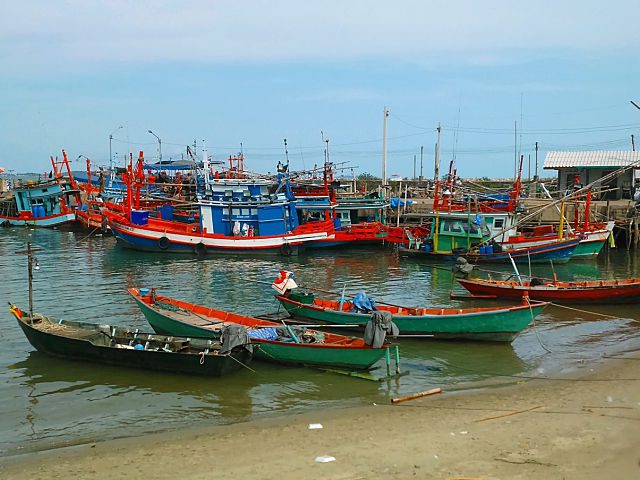 Economic development in Thailand has been increasing rapidly over the past 40 years.
 China is the world’s
  Surgeons Michael Wood, Archibald McIndoe, and Tom Rees came up with a plan to provide medical assistance in remote regions of East Africa
 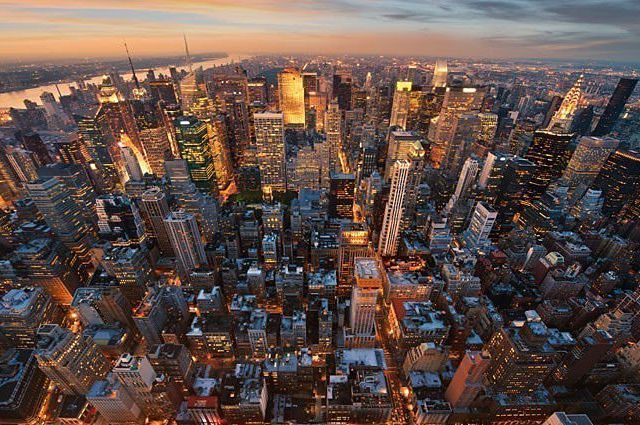 Since 2013, the U.N. has celebrated October 31 as World Cities Day in support of global urbanization and sustainable urban development. This year’s theme of “Innovative Governance, Open Cities” highlights the important role of urbanization as a source of global development and social inclusion. Urbanization in developing countries contributes to poverty reduction, access to sanitation facilities and education equality if managed correctly.
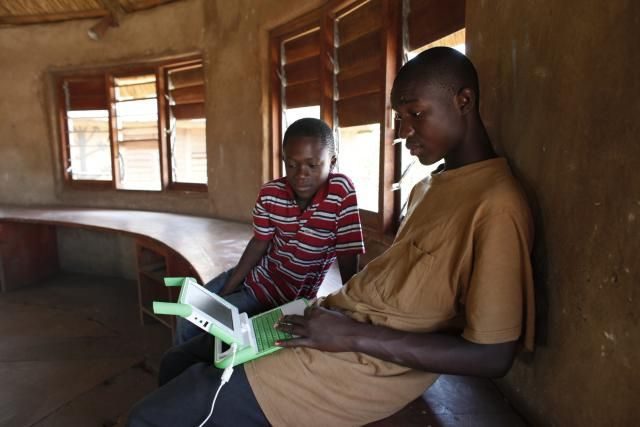 Even with active funding partners, some development agencies may fall short if lacking internal infrastructure. While funding is certainly an important aspect of achieving sustainable development goals, it may be just as important to ensure that the strategists and support for development projects are up to date and relevant.
  The United Nations Education, Scientific and Cultural Organization, better known by its acronym, UNESCO, is under scrutiny after the United States stated it will withdraw from the organization by December 31, 2018. Founded in 1945 in response to the horrific aftermath of both World War I and II, the organization currently has 195 member states and 10 associated states.
 In 2015, 72 countries participated in The Organization for Economic Cooperation and Development’s (OCED) triennial Programme for International Student Assessment. The test examines 15-year-olds’ aptitude in reading, math and science. Singapore, China, Japan, South Korea, Estonia, Canada and Switzerland are consistently among the top 10 performing countries in all subjects, with Singapore ranking number one across the board.