• Link to X
  • Link to Facebook
  • Link to Instagram
  • Link to TikTok
  • Link to Youtube
  • About
    • About Us
      • President
      • Board of Directors
      • Board of Advisors
      • Financials
      • Our Methodology
      • Success Tracker
      • Contact
  • Act Now
    • 30 Ways to Help
      • Email Congress
      • Call Congress
      • Volunteer
      • Courses & Certificates
      • Be a Donor
    • Internships
      • In-Office Internships
      • Remote Internships
    • Legislation
      • Politics 101
  • The Blog
  • The Podcast
  • Magazine
  • Donate
  • Click to open the search input field Click to open the search input field Search
  • Menu Menu

Archive for category: Development

Information and stories on development news.

Development

5 Development Projects in Tonga

5 Development Projects in Tonga

Tonga is a country comprised of 170 islands in the South Pacific, located close to Fiji and American Samoa. The island nation has a relatively high unemployment rate. This, coupled with an economy largely dependent on agricultural means of making money, has led to the creation of various development projects in Tonga. In recent years, these projects have improved stability in different aspects of the country.

Education

In 2012, the Peace Corps began a development project in Tonga designed to teach English as a foreign language. Aside from teaching English, the project’s larger goals are to improve the Tongan education system through the utilization of more computers and other technology. It also assists Tongan teachers in discovering new methods of teaching that are more student-centred. In addition, the project focuses on helping students develop healthy lifestyle habits. These lifestyle lessons are taught as part of the English language curriculum.

Growth Development

One of the more recent development projects in Tonga began in April 2017. The World Bank approved $5 million for policy reforms in the island nation. According to a press release on the World Bank website, these reforms aim to “improve the management of public finances, boost government accountability and encourage a more dynamic and inclusive economy.”

Climate Change

In 2013, the Asian Development Bank launched the Climate Resilience Sector Project in Tonga. This projects helps strengthen the country in the face of increasingly dangerous threats from climate change. The project finances low cost solutions which are executed at the local community level. Aside from this, the Asian Development Bank is also working with the Tongan government to create more renewable energy. By 2020, Tonga hopes to get 50 percent of its energy from renewable sources.

Environmental Protection

In July 2014, the United Nations Development Programme’s Pacific Office in Fiji created a project with the intention of protecting the ecosystem of the Fanga’uta Lagoon Catchment on Tongatapu Island. The project’s three main goals are to improve management of the lagoon, introduce an environmental management plan and educate local communities and national stakeholders about the role of the lagoon ecosystem and the benefits of protecting it.

Improved Healthcare System

The Australia-Tonga Aid Partnership, created in 2016, is a project where the Australian government provides funding each year to assist development projects in Tonga. Just last year, Tonga received around $30.4 million in aid from Australia. In particular, one of the projects that utilizes this funding is the Tonga Health System Support Program.

Phase One of the program began in 2009. Following this, Phase Two of the program started in March 2015. The objectives of the program are to stop the progression of noncommunicable diseases, generally advance health care services across the nation, provide enhanced mental health services, improve gender equality and provide access to universal health care.

Tonga has begun to experience a flourishing tourism industry that is becoming a main source of income for the nation. As a result of these five development projects in Tonga, the country can maintain economic, environmental and social stability as it continues to progress.

The support from these organizations will help Tonga combat increasing environmental risks that the country will face from climate change. Through these programs, Tonga will only continue to grow and further advance their infrastructure.

– Jennifer Jones

Photo: Flickr

January 24, 2018
https://borgenproject.org/wp-content/uploads/borgen-project-logo.svg 0 0 Borgen Project https://borgenproject.org/wp-content/uploads/borgen-project-logo.svg Borgen Project2018-01-24 01:30:542024-05-29 22:38:475 Development Projects in Tonga
Development, Global Poverty

The Effects of Overcrowding and the Behavioral Sink Theory


A high population density may, in some instances, lead to inconveniences. Some of these inconveniences, like traffic and crowded sidewalks, are frustrating while others, such as a lack of resources, may be dangerous. Ethologist John B. Calhoun studied the effects of increased population density on the behavior of mice and concluded his studies with the theory of the behavioral sink. The theory is still largely contested and influences studies of human behavior, and this article will seek to answer the questions: what is a behavioral sink and how valid is the theory?

The Experiment

At the start of the study, Calhoun crafted a utopia where the mice could thrive in a secluded space and reproduce without a fear of predators or a lack of resources.

The mice utopia quickly spiraled into chaos once overcrowding commenced. In the worst instances of overpopulation, pregnant female mice experienced a higher number of miscarriages and mothers were losing track of their children. Other mice resorted to fighting when in direct contact with other mice for prolonged periods.

The strange actions of the group of mice are assumedly correlated with the heightened population; this relationship is then referred to as “behavioral sinks.” Calhoun reported the results of his mice experiment in the 1962 issue of Scientific American, and the concept of the behavioral sink soon garnered the attention of the public.

The Controversies

The work eventually proved controversial for a few reasons: first, the behavior of mice cannot be used independently to understand the behavior of humans; second, when scientists tried to study the behavioral sink theory in humans, they had to decide which human behaviors they would consider similar to the unusual behavior of the mice. For instance, some mice exhibited different sexual behaviors ranging from asexuality to bisexuality; and third, in order to detect this behavior in human beings, some researchers used STDs and illegitimacy as equivalents, an obviously offensive comparison.

The other controversy involved further experiments that proved the theory of behavioral sink did not hold up in human populations. Psychologist Jonathan Freedman conducted a similar, but significantly more humane, experiment with students to observe their behavior in situations of overcrowding in which he found no negative effects of overcrowding, but instead of over-socialization.

The Results

“Rats may suffer from crowding; human beings can cope,” stated Freedman in regards to Calhoun’s findings.

The theory played on the anxieties of those who disliked crowded areas, which were often people of low-income. Many felt that there was not only a higher rate of general crime  in the low-income areas, but that there was also a higher chance that a crime would be committed against them. These classist conclusions led some to ask: what are the positive contributions of the behavioral sink theory?

Calhoun began to explore the importance of “spiritual space” as well as physical space, a concept that aligned pretty directly with Freedman’s theory of coping strategies. Calhoun cited creativity and art as giving people the ability to create distance between others in order to cope with overcrowding. This concept of stress related to over-socialization was a part of Calhoun’s experiments that positively influenced thought and research well after the 1970s.

– Danielle Poindexter

Photo: Flickr

January 24, 2018
https://borgenproject.org/wp-content/uploads/borgen-project-logo.svg 0 0 Borgen Project https://borgenproject.org/wp-content/uploads/borgen-project-logo.svg Borgen Project2018-01-24 01:30:172019-12-26 17:02:56The Effects of Overcrowding and the Behavioral Sink Theory
Development, Global Poverty

5 Development Projects in Croatia

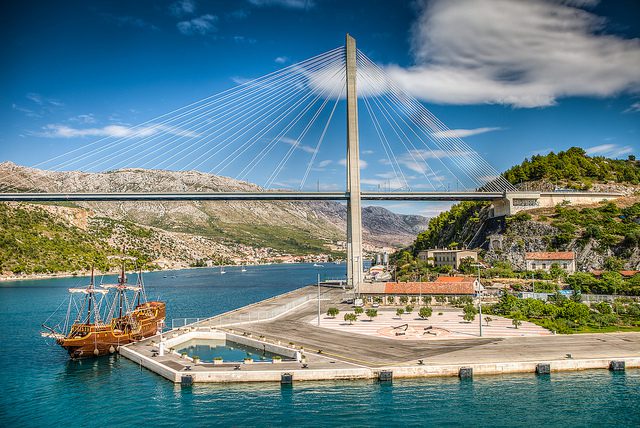
development projects in croatiaLocated in Europe, Croatia is a country with access to clean water and an almost perfect literacy rate, standing at 99 percent. Despite certain successes, the country struggles with other issues, such as high unemployment which stands at 44 percent. Here are five development projects in Croatia that are creating change in the country.

Modernization and Restructuring of the Road Sector Project

The purpose of this project is to strengthen the institutional effectiveness, enhance operational efficiency and increase the debt service capacity of Croatia’s road sector. The road network in Croatia is the largest infrastructure asset in the country.

Croatia’s road network is of vital importance to its economy, as it encourages industry growth and tourism. By expanding the road sector, Croatian roads can integrate with other European networks. Furthermore, for the country to continue to maintain relations with other entities, development projects in Croatia like these are necessary.

Croatia Innovation and Entrepreneurship Venture Capital Project

One of the best ways to help reduce poverty and develop a nation is to increase innovation and creativity within a country. This project allows that exact thing. It aims to strengthen risk capital financing for startups in Croatia. This could also add a fresh wave of businesses to the country and potentially create more jobs for the country.

Sustainable Croatian Railways in Europe

In addition to innovation, infrastructure is another way to reduce poverty. Building up the country’s infrastructure could have many potential benefits, as evidenced by the Modernizing and Restructuring of the Road Sector Project.

The Sustainable Railways in Europe Project aims to further develop infrastructure in Croatia by improving the operational efficiency and the financial sustainability of the public railway sector.

The World Bank approved three loans totaling $183.4 million in support of the country developing its railway sector. Croatia’s railway system has changed dramatically in the past in order to meet the criteria of the European Union (EU). The loan and the project combined will continue to see more changes, including making the railway companies more customer-oriented.

Health System Quality and Efficiency Improvement

Improving the health system of a country is another way to reduce poverty within a country. Specifically, the project aims to improve the healthcare delivery system to better provide sustainable health services; rationalize the hospital network to streamline healthcare services; strengthen the government’s capacity to develop and monitor effective health sector policies and promote effective public health interventions.

Development projects in Croatia have made vast improvements to its health system in recent years. However, there are still areas needing improvement. For example, Croatia suffers from an uneven availability of healthcare across regions in addition to lacking quality care. The project would increase efforts to improve the country’s healthcare system and afford citizens much-needed care and increased access.

Together for Sustainable Development in Croatia

This project depends on community involvement to help sustain local development through networking and partnerships. Its specific objective is to “strengthen the voice of civil sector in shaping, monitoring and evaluating sustainable development policies on local, national and international level through networking, cross-sectoral partnership and capacity building,” according to Croatia Rural Development Network.

The project anticipates cooperation from Croatian civil society networks as well as European networks. Its ultimate goal is to have stakeholders for sustainable development and an increased level of citizen and CSO participation in the process of monitoring of sustainable rural policies. With such innovative tactics, Croatia should be able to find and develop more ways to lift itself out of poverty.

These development projects in Croatia are small, but necessary, steps in the right direction for reducing poverty and enabling growth.

– Dezanii Lewis

Photo: Flickr

January 21, 2018
https://borgenproject.org/wp-content/uploads/borgen-project-logo.svg 0 0 Borgen Project https://borgenproject.org/wp-content/uploads/borgen-project-logo.svg Borgen Project2018-01-21 15:20:062024-05-29 22:38:515 Development Projects in Croatia
Development, Global Poverty

Five Extremely Important Development Projects in Syria

5 Development Projects in SyriaSyria, home to many diverse ethnic and religious groups, is a country that has lost hundreds of thousands of lives to war and violence. Because of this crisis, millions of people are displaced and in need of humanitarian assistance, and development projects in Syria aim to address this need.

Like many countries in the world, Syria is fighting extreme poverty. According to the United Nations Development Programme, four out of five Syrians live in poverty and 64.7 percent of the population lives in extreme poverty. The Arab region is the only region in the world where poverty has increased since 2010, rising from 28 percent in 2010 to 83.4 percent in 2015.

Here is a list of five development projects in Syria that may help relieve the nation’s citizens.

  1. Switzerland donates ambulances to Syria’s suffering population
    Switzerland financed twelve new ambulances to help the people of Syria facing the consequences of the war. Syria was in need of more ambulances as a result of the devastatingly high number of victims caused by the war, including attacks against hospitals. The vehicles were purchased through the International Federation of Red Cross and Red Crescent Societies (IFRC) in Dubai. This project was completed in 2017.
  2. Contribution to UNRWA’s Programme Budget 2017-2020
    The United Nations Relief and Works Agency is one of Switzerland’s key multilateral partners in the Middle East, addressing all kinds of humanitarian aid needs, including medical services, education, emergency assistance, healthcare and more. With more funds contributed to its budget, it has been able to work toward universal access to quality primary health care, basic education, relief and social services to refugees in need. This is an ongoing project expected to be completed by 2020.
  3. Swiss experts to U.N. agencies in the frame of the regional crises in the Middle East
    Through this completed project, experts from Switzerland were able to provide technical support and advice. The experts accounted for the provision of shelter in camps and noncamp settings for vulnerable displaced persons; for a multisector and multistakeholder strategy for cash-based response for IDPs, refugees and host communities; for the protection of the most vulnerable population, including children and youth; advice and strategic planning on activities in the domain of water; and support to the coordination of humanitarian interventions within the U.N. agencies and national/international actors.
  4. Contribution to UNRWA’s General Fund 2016
    Contributions to UNRWA’s 2016 General Fund allows for the sustaining of the agency’s humanitarian and human development programs, servicing over five million Palestine refugees and contributing to peace and stability in the Middle East. This completed project targeted Palestinian refugees living in Jordan, Lebanon, Syria and the occupied Palestinian territory. Results included financial support enabling various programs in health and education, and management reforms including resource mobilization, ERP and more.
  5. UNDP- Livelihoods Restoration in Crisis- Affected Communities in Syria
    This completed two-year project worked on restoration interventions in Rural Damascus, Horns, Tartous and Latakia. The project created local economic opportunities and restored critical community infrastructure and services, improving access to hygiene and other basic needs.

These committed development projects in Syria leave marks of improvement and hope in a nation that has been ravaged by violence and poverty for far too long.

– Julia Lee

Photo: Flickr

January 20, 2018
https://borgenproject.org/wp-content/uploads/borgen-project-logo.svg 0 0 Borgen Project https://borgenproject.org/wp-content/uploads/borgen-project-logo.svg Borgen Project2018-01-20 01:30:372024-05-29 22:38:43Five Extremely Important Development Projects in Syria
Development, Global Poverty

Development Projects in Kosovo Promoting Equality

5 Development Projects in KosovoDespite turbulence in the past, Kosovo is undergoing rapid economic development at present. However, this is not distributed evenly across all populations and parts of the country. However, there are numerous development projects in Kosovo working to change that. These five promise to make a major difference.

USAID Engagement for Equity

This program works to support local civil society groups in developing policies to promote greater equity for marginalized groups and communities in Kosovo. This project has had a broad reach and has made especially notable improvements in gender equity. Kosovo has relatively strong protections for women on the books, but few women are aware of their rights and often have difficulty taking advantage of them because of the patriarchal culture in Kosovo that is common in many Balkan societies. This problem is especially pronounced when it comes to property rights, as women traditionally did not own or inherit property.

USAID recently worked with Kosova Women 4 Women to organize a class that taught women what their rights are and how to exercise them. While this seems small, this is an example of development projects in Kosovo that have a much broader reach than they seem. Women who have property in their names or register property jointly with their husbands have a much easier time accessing credit, which helps them to start small businesses, promoting the growth of the entire economy as well as greater financial security for women.

LuxDev Health Sector Support Programme

Luxembourg has been a major donor to Kosovo’s health sector for many years and has contributed to many successful projects. This latest project is expected to be completed in 2019 and will build on the successes of previous projects. Its goals primarily center around improving institutional capacity and management to ensure full implementation of previous achievements, as well as increasing access to and affordability of care.

InTerDev 2

InTerDev 2 is the latest in a series of projects supported by the UNDP to reduce economic insecurity, particularly in southern Kosovo and among minorities and women. Its primary goals are to bring down the high unemployment rate, address underemployment and precarious employment, improve public services, and end the socioeconomic exclusion of women and minority groups. The plan is to do this by expanding the capacity of municipalities and local actors, especially in rural areas, to assist underserved populations, supporting small and medium-sized business owners who wish to modernize and expand and by promoting job growth at the local level.

Kosovo Safety and Security Project

This comprehensive approach to security, spearheaded by the U.N. but also supported by several EU member states, seeks to improve security in Kosovo by focusing on small arms control, countering violent extremism, and improvements in policing. Recent years have seen multiple development projects in Kosovo focus on addressing violent crime and cracking down on the illegal trade and possession of small firearms and explosive materials. The Safety and Security Project seeks to build on best practices learned from these projects to strengthen and empower Kosovo’s law enforcement agencies. Another effect of this project will be to bring Kosovo into compliance with EU regulations regarding firearms, helping to put Kosovo on a more equal footing with its neighbors. It is also hoped that the root causes of illegal weapons possession can be mitigated, helping to make Kosovo safer.

Institutional and Technical Support for the Water Supply System

This project is a follow-up to the 2016 project of the same name, both organized by Luxembourg. The 2016 project saw the creation of the Mitrovica Regional Water Company and supporting infrastructure. The current project aims to strengthen the management and customer service capabilities of the company and enable it to run more efficiently from a business standpoint. This comes as other development projects in Kosovo are also working to strengthen and support private sector activity. Also included in the current project are the use of satellite imagery to identify leaks and the replacement of some aging infrastructure to make the water supply system more efficient and more environmentally friendly by reducing the amount of water wasted as a result of leaks.

These projects all promise to jump-start economic development in Kosovo and lift people out of poverty. They will all have a major impact on quality of life and some even promise to help calm the lingering tensions in Kosovo as a result of the conflict. Improved economic conditions and stronger legal frameworks will also make major strides towards rectifying the ongoing issues surrounding property ownership. Once this is resolved, the credit access problem in Kosovo will also become much more manageable. Taken together, these improvements promise to strengthen Kosovo’s economy and bring down the poverty rate, which is good for everyone.

– Michaela Downey

Photo: Flickr

January 19, 2018
https://borgenproject.org/wp-content/uploads/borgen-project-logo.svg 0 0 Borgen Project https://borgenproject.org/wp-content/uploads/borgen-project-logo.svg Borgen Project2018-01-19 07:30:502024-05-29 22:30:17Development Projects in Kosovo Promoting Equality
Development, Global Poverty

Five Important Development Projects in Azerbaijan

5 Development Projects in Azerbaijan

Over the past two decades, Azerbaijan has transitioned from a struggling young democracy to a major powerhouse in the South Caucasus region. This transition was precipitated largely by capitalizing on increased revenues from oil and natural gas. That being said, poverty is still an issue in Azerbaijan.

Fortunately, there are a number of development projects in Azerbaijan that are currently underway and promise to improve circumstances for many Azerbaijanis. Here is a look at five of them, some completed and some still underway.

  1. Highway Three
    Many development projects in Azerbaijan have focused on infrastructure. However, not all of this new infrastructure has been accessible to all Azerbaijanis. Highway Three and projects like it, which are being financed in part by the World Bank, aim to rectify this gap by creating a fledgling interstate system that better connects all parts of the country.
    Highway Three is notable because, in addition to connecting two of Azerbaijan’s largest cities, the highway and its offshoots will also serve rural areas. The project is being done in conjunction with efforts to modernize Azerbaijan’s existing highways and bring them up to international standards.
  2. A new medical clinic in Kamalli
    Working together with the Azerbaijani government, USAID has just finished helping to replace an aging one-room clinic with a more spacious and better-equipped facility in the rural community of Kamalli. The clinic opened in October 2017, and is expected to serve over 2,000 people from Kamalli and other neighboring communities in the rural province of Saatli. Similar development projects in Azerbaijan in recent years have made a significant dent in morbidity and mortality rates.
  3. Water supply improvements in Shahsevan-Tazakend
    Also in October, residents of Shahsevan-Tazakend, with the assistance of the Azerbaijani government and USAID, installed almost a kilometer of new pipes and two new water storage tanks. These new installations are meant to alleviate the repeated chronic water shortages that this area has been experiencing in recent years, in addition to eliminating the need to walk long distances to collect water each day for the 800 members of this community. This project is typical of the numerous other development projects in Azerbaijan that have helped to improve living conditions for over 150,000 people.
  4. A new agrobiodiversity preservation project
    In February 2017, Azerbaijan and the UNDP launched a new initiative focused on preserving Azerbaijan’s agrobiodiversity as a part of the U.N.’s Sustainable Development Goals. The project will run for five years and will target the regions of Shaki, Goranboy and Goychay.
    The Azerbaijani government spearheaded the design of the project, which will receive support from the U.N. and focuses on protecting native crops and encouraging their use in commercial farming. The project also aims to promote research and development on native crops and increase market access for small farmers who grow native crops.
    Like many other development projects in Azerbaijan, this was designed with an eye on the future and hopes to promote resilience and productivity in agriculture in the face of climate change, as Azerbaijan also works to reduce its dependence on oil and natural gas as a revenue source.
  5. The National Innovation Contest
    The U.N. sponsored a contest for young scientists and entrepreneurs to put forth their best ideas for helping Azerbaijan accelerate its progress toward meeting the U.N. Sustainable Development Goals. The ideas may potentially be used to inspire future development projects in Azerbaijan.
    This is the latest in a series of efforts to support research and development for similar concepts. The awards for the contest were presented in a ceremony on December 21, 2017. The winners included projects focusing on improving credit access and access to the legal system, as well as projects focused on alternative fuel sources.

In addition to major improvements in quality of life and major reductions in poverty, these development projects in Azerbaijan all promise to help the country transition to a greener economy and reduce its dependence on fossil fuels as a revenue source. In doing so, these projects will also improve the health outcomes for all Azerbaijani people and help more citizens make a living in sustainable ways. These projects make Azerbaijan an excellent example of how supporting sustainability efforts can also improve health and help to diversify a growing economy.

– Michaela Downey

Photo: Flickr

January 19, 2018
https://borgenproject.org/wp-content/uploads/borgen-project-logo.svg 0 0 Borgen Project https://borgenproject.org/wp-content/uploads/borgen-project-logo.svg Borgen Project2018-01-19 01:30:442024-05-29 22:30:17Five Important Development Projects in Azerbaijan
Development, Global Poverty

Five Development Projects in Niger

Development Projects in NigerNiger is a landlocked country in Western Africa. Despite receiving aid from foreign entities, it remains one of the poorest countries in the world. These five development projects in Niger work to address several of the root problems contributing to poverty and instability in the country.

Niger Solar Electricity Access Project (NESAP)

With an average of only 14.3 percent of its population having access to electricity, Niger remains among the least “electrified” countries in the world. However, in 2017, the World Bank approved the sponsorship of the Niger Solar Electricity Access Project (NESAP).

This project is designed to increase solar energy access to rural and peri-urban areas, where access to electricity drops to 5.4 percent. It consists of four components: market development and research, rural electrification, solar hybridization and access expansion and technical assistance and implementation support.

Resilience in the Sahel Enhanced (RISE) Initiative

RISE consists of a number of humanitarian programs by the U.S. Agency for International Development (USAID) that focus on food security, nutrition and sanitation. It also includes programs designed for the health of women and small children, combatting malnutrition and monitoring compliance to health-related legislation.

National Malaria Control Program (NMCP)

As of 2013, malaria affected 32 percent of the population, and it remains the leading cause of death for Nigeriens. NMCP works to combat malaria by establishing a stable supply chain committee. Furthermore, it improves the availability of commodities and the overall performance of malaria prevention efforts.

Niger’s National Education and Training Sector Program

The government of Niger launched a 10-year program expanding into 2024 that tackles the prominent education issue in the country. Currently, the 30 percent literacy rate in the country highlights a need for increased access and quality of education. USAID has also partnered with the Nigerien government to assist with development projects in Niger.

These projects are aimed at raising the quality of education, especially for females, who suffer from the 18 percent gender gap in school enrollment. The program focuses on building community efforts toward education and active parental involvement. It also works to build a reading culture to increase the literacy rate and knowledge retention.

Water Mobilization Project to Enhance Food Security in Maradi, Tahoua and Zinder Regions (PMERSA-MTZ)

PMERSA-MTZ, funded by the Global Agriculture and Food Security Programme (GAFSP), aims primarily to build water collection and mobilization infrastructure. It also attempts to strengthen activities that benefit farmers and herders.

Since 2011, it has successfully built wells, thresholds, dams, ponds, boreholes, water banks, dikes, ravines and more. It also continues to train experts and livestock assistants to build capacity for production. Among its other initiatives, the PMERSA-MTZ continues to promote income-generating activities for Nigeriens and contribute to environmental protection and soil conservation efforts in the region.

These active development projects in Niger have consequently improved the quality of life for the country’s population. By working toward minimizing the root causes of poverty in Niger, these programs can boost the development of the country and its citizens’ ability to sustain themselves.

– Francesca Colella

Photo: Flickr

January 18, 2018
https://borgenproject.org/wp-content/uploads/borgen-project-logo.svg 0 0 Borgen Project https://borgenproject.org/wp-content/uploads/borgen-project-logo.svg Borgen Project2018-01-18 01:30:222019-11-11 22:16:24Five Development Projects in Niger
Development, Global Poverty

2021 Promises Prosperous Development Projects in Zambia

In 2017, the government of Zambia launched it’s seventh National Development Plan (NDP), running until 2021. Through this plan, the Zambian government aims for the country to become a thriving middle-income nation by 2030 by building on previous NDPs. Here are five development projects in Zambia to know about.

  1. Infrastructure is one of the top priority development projects in Zambia, and is upheld in the country’s National Vision 2030. From 2017 to 2021, $8.75 billion will be invested in Zambia’s infrastructure. Some of the funding focuses are $4.7 million in rebuilding railroad transportation, $2.4 million funding the energy sector, $788 million to the airports and $493 million to road funding.
  2. Improving health services is a critical element to achieving the Vision 2030. The health services model has been re-engineered to punctuate health promotion, disease prevention and alternative and rehabilitative services in “close-to-client” settings. In 2017, the Ministry of Health, with the support of the Centers for Disease Control and Prevention Zambia, developed the national eHealth 2017-2021 strategy document.
  3. In June 2016, the government of Zambia launched the World Bank-funded project, Girls’ Education and Women’s Empowerment and Livelihoods (GEWEL) Project. The $65 million project has the objective to increase livelihood support for women and increasing secondary education for disadvantaged adolescent girls living in extremely poor households in certain districts. According to the World Bank, the aim of the project is “to provide 14,000 girls with secondary school bursaries, and 75,000 women with productivity grants to start small businesses.” A year later, reports show this development project in Zambia has gained roots. So far, the project has paid the tuition fee of 8,669 girls and counting.
  4. Poaching and illegal wildlife trafficking have Zambia’s tourism under threat. In May 2016, through the Community Forest Program, USAID funded a canine program that combats wildlife crime first hand. Four handlers and their dogs were funded by USAID for the initial three-month intensive program. USAID has reported that the, “highly trained detection dogs have imprinted on the scent of ammunition, bushmeat, ivory, pangolin and weapons such as rifles.” As of September 2017, 23 suspected poachers have been apprehended thanks to the canines, as well as firearms, ivory and live animals.
  5. There has been a paradigm shift in the macroeconomic framework from a sectoral to an integrated development approach. This multisectoral approach aims at dealing with domestic challenges and climate changes, as well as gainful and productive employment. One of the policy’s specific objectives is to create productive job opportunities while improving the country’s competitiveness.

With most of these projects gaining momentum, the outcome for 2021 shouldn’t be a surprise. Development projects in Zambia are not only helping to improve the lives of locals, but also to allow the nation to compete on a global scale.

– Tara Jackson

Photo: Flickr

January 15, 2018
https://borgenproject.org/wp-content/uploads/borgen-project-logo.svg 0 0 Borgen Project https://borgenproject.org/wp-content/uploads/borgen-project-logo.svg Borgen Project2018-01-15 07:30:272024-05-29 22:30:102021 Promises Prosperous Development Projects in Zambia
Development, Global Poverty

4 Development Projects in Namibia

development projects in namibiaNamibia lies on the southwest coast of Africa and is comprised of both mountains and desert. The climate and terrain pose multiple challenges to its citizens. Nonetheless, nearly 2.3 million people still inhabit this country, 54.3 percent of which live in rural areas. Here are four development projects in Namibia, many led by the United Nations Development Programme (UNDP) working to make life easier for these citizens.

Scaling up Community Resilience to Climate Variability

Namibia has consistently faced problems over the years relating to water scarcity. In 2013, the country fought an intense drought that endangered one million of the 2.3 million people living there. As one of the driest countries in Southern Africa, Namibian farmers depend on rainy seasons to make a living. It did not arrive in 2013.

This UNDP project focuses on enhancing protective measures to ensure food and water security despite climate variations. The project focuses specifically on women and children. Close to 80 percent of the 4,000 involved households are led by women. The project also includes children from 75 Namibian schools.

The project will result in the use of sustainable agricultural practices and the restoration of wells and floodwater pools by the end of 2019.

Sustainable Management of Namibia’s Forested Lands (NAFOLA)

Namibia’s forests are vital to its citizens. In such a dry climate, forests promote biodiversity and water conservation, prevent soil erosion and provide food and resources for the Namibian people. Through this five-year project, the goal is to strengthen 11 community forests and promote community use and management of the resources NAFOLA provides.

This is one of the development projects in Namibia that also promotes sustainable agriculture and livestock practices. In turn, it aims to put less pressure on forest resources.

The Global Fund Grant to Combat Tuberculosis

Namibia ranks fourth on the list of countries worst affected by tuberculosis (TB). In 2014, 9,882 people were diagnosed with the disease, a 7 percent decrease from 2013.

The Global Fund to Fight AIDS, Tuberculosis and Malaria has given a $25.6 million grant to the Namibian Ministry of Health and Social Services to fight Tuberculosis within the country. This project includes enhancing patient quality of care and management of those living with TB and HIV as well as Multi-Drug Resistant TB.

Protected Areas System Strengthening to Sustainably Address New Management Challenges in Namibia (PASS Namibia)

Namibia is home to 21 Protected Areas consisting of forests, deserts and grasslands. These areas are also hosts to a diversity of species which includes mammals, birds and amphibians. Furthermore, 44 percent of this land is under conservation management.

This project was initiated in an effort to make Namibia a more advanced tourist destination. Not only does environmental tourism boost local economies, but it can also provide much-needed revenue to keep up with conservation efforts. The project also hopes to gain support for the implementation of an institutional framework by 2018 that will prolong conservation efforts.

The support of development projects in Namibia can make a significant difference for the citizens who live there. These projects will give Namibians a more sustainable and secure future.

– Megan Burtis

Photo: Flickr

January 14, 2018
https://borgenproject.org/wp-content/uploads/borgen-project-logo.svg 0 0 Borgen Project https://borgenproject.org/wp-content/uploads/borgen-project-logo.svg Borgen Project2018-01-14 21:46:302024-05-29 22:38:434 Development Projects in Namibia
Development, Global Poverty

5 Important Facts on Development Projects in Guinea

development projects in guineaWith an abundant range of humanitarian and economic issues, foreign aid and development projects in Guinea impact topics ranging from creating sustainable energy sources to fighting and preventing the spread of the Ebola virus. Here are five projects that have contributed to the improvement of Guinea.

  1. The installation of the Kaleta hydropower plant in May of 2015
    Located on the western African shore and home to over 12.6 million people, Guinea contains a large amount of potential energy through 12 main rivers. With only 26 percent of Guinea’s population living with electricity, the potential for hydroelectric energy to improve the country’s situation is huge. Many development projects in Guinea work toward creating accessible electricity, thereby strengthening the country’s ability to react to emergencies such as Ebola.
    According to USAID, in 2015, when Electricité de Guinée (EDG) began its management of the national grid with funding from the World Bank, one huge accomplishment was the installation of the Kaleta hydropower plant. The hydropower plant approximately doubled the output of electricity in Guinea and is beginning to meet the nation’s demand.
  2. China’s response to the Ebola outbreak
    The more access to electricity and communication that Guinea has, the more prepared and reactionary it can be to outbreaks like Ebola. According to the World Health Organization (WHO), about 11,310 Ebola-related deaths were confirmed in western African countries like Guinea, Liberia and Sierra Leone. With an insufficient number of medical supplies and personnel, patients were reported dying while waiting in line for treatment.
    One of several development projects in Guinea was driven by the Chinese government. The Chinese government gave over $4.5 million to West African countries, including Guinea, to fight the recent Ebola outbreak in 2014. China sent medical supplies as well as personnel to assist Guinea in treating patients. All efforts were directly coordinated with WHO as well as with the United Nations.
  3. StopPalu project
    Another disease that wreaks havoc on Guinea’s population is malaria. As a preventable and curable disease, malaria impacts large amounts of Guineans every year following the rainy season, according to USAID. While the disease is treatable, it can be very costly for poor families.
    Garambé, a town in Guinea, was plagued with malaria so frequently that people began accepting it as the norm. USAID’s program, the StopPalu project, aimed to strengthen malaria resistance by 50 percent by 2017, and began distributing 3.3 million insecticide-treated bed nets, proven to have drastically reduced the spreading of malaria, in 2013. According to Assietou Diallo, the head nurse at the Garambé health center, the usual 50 malaria patients per month has been reduced to under 10 patients thanks to preventative measures.
    StopPalu also has trained about 1,300 volunteer medical personnel to help identify and treat malaria. This measure helps patients in remote villages who cannot travel to medical centers.
  4. Girl-friendly school EAF (Aide et Action)
    Another issue that plagues Guinea is the severe lack of education for women and children. About 40 percent of children are out of school, and only about 30 percent of young girls are literate.
    One of the reasons that attendance in schools is so low in Guinea is because many children are tasked with taking care of domestic issues and tending to crops. Without a proper education, issues such as poor family planning and the spread of HIV/AIDS rise to the surface of Guinean societies.
    Girl-friendly school EAF, which lasted from 2014 to 2017, combated these issues by working to improve educational systems in Guinea. This project aimed to improve education in rural areas by training instructors on better methods of teaching as well as on how to remove obstacles that prevent girls from receiving their education. The Turing Foundation contributed €150,000 to this educational development project.
  5. UNITLIFE
    Roughly one out of three children in Guinea are affected by malnutrition and suffer from growth stunts, according to UNICEF. However, several African countries have agreed to a program designed to use micro levies to fund the fight against malnutrition, UNITLIFE, agreeing to use their natural resources to provide nutritious food to hungry children. Adopted in 2015, the levies were predicted to produce $100 million to $200 million in one year.

These development projects in Guinea will pave the way for sustainable prosperity by giving citizens the opportunity to be healthy and well-educated.

– Austin Stoltzfus

Photo: Flickr

January 13, 2018
https://borgenproject.org/wp-content/uploads/borgen-project-logo.svg 0 0 Borgen Project https://borgenproject.org/wp-content/uploads/borgen-project-logo.svg Borgen Project2018-01-13 17:57:522024-05-29 22:30:185 Important Facts on Development Projects in Guinea
Page 88 of 163«‹8687888990›»

Get Smarter

  • Global Poverty 101
  • Global Poverty… The Good News
  • Global Poverty & U.S. Jobs
  • Global Poverty and National Security
  • Innovative Solutions to Poverty
  • Global Poverty & Aid FAQ’s
Search Search

Take Action

  • Call Congress
  • Email Congress
  • Donate
  • 30 Ways to Help
  • Volunteer Ops
  • Internships
  • Courses & Certificates
  • The Podcast
Borgen Project

“The Borgen Project is an incredible nonprofit organization that is addressing poverty and hunger and working towards ending them.”

-The Huffington Post

Inside The Borgen Project

  • Contact
  • About
  • Financials
  • President
  • Board of Directors
  • Board of Advisors

International Links

  • UK Email Parliament
  • UK Donate
  • Canada Email Parliament

Get Smarter

  • Global Poverty 101
  • Global Poverty… The Good News
  • Global Poverty & U.S. Jobs
  • Global Poverty and National Security
  • Innovative Solutions to Poverty
  • Global Poverty & Aid FAQ’s

Ways to Help

  • Call Congress
  • Email Congress
  • Donate
  • 30 Ways to Help
  • Volunteer Ops
  • Internships
  • Courses & Certificates
  • The Podcast
Scroll to top Scroll to top Scroll to top