• Link to X
  • Link to Facebook
  • Link to Instagram
  • Link to TikTok
  • Link to Youtube
  • About
    • About Us
      • President
      • Board of Directors
      • Board of Advisors
      • Financials
      • Our Methodology
      • Success Tracker
      • Contact
  • Act Now
    • 30 Ways to Help
      • Email Congress
      • Call Congress
      • Volunteer
      • Courses & Certificates
      • Be a Donor
    • Internships
      • In-Office Internships
      • Remote Internships
    • Legislation
      • Politics 101
  • The Blog
  • The Podcast
  • Magazine
  • Donate
  • Click to open the search input field Click to open the search input field Search
  • Menu Menu

Archive for category: Children

Information and stories addressing children.

Children

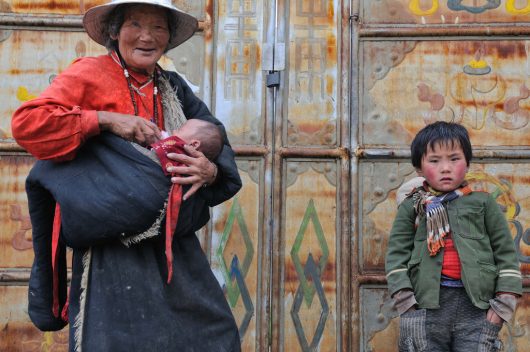
10 Facts About Orphans in China

10 Facts About Orphans in China
China, being home to over 1.4 billion people, currently faces an issue of housing for one of its most vulnerable and impressionable demographics: orphans. These 10 facts about orphans in China will show how many orphans are brought in to the adoption system in infancy with little to no knowledge of the journey to come.

10 Facts About Orphans in China

  1. Being an orphan does not necessarily mean that the child is parentless. In fact, many of the children seeking new homes have parents that are either unable to take care of them or have abandoned them for various reasons.
  2. According to a 2016 statistic, there are currently more than 460,000 orphans in China. The exact number of orphans is undetermined, as the statistic may only show state-operated orphanages.
  3. The vast majority of abandoned children suffer from severe birth defects and serious health issues. However, parents are unable to provide them with proper care; likewise, the state does not provide medical assistance for abandoned children.
  4. Many children, usually newborns, are usually given to baby hatches. A baby hatch is a small home where parents drop off children, where they hopefully will be taken to an orphanage.
  5. The Ministry of Civil Affairs began the baby hatch program as a response to the increasing number of abandoned infants. Currently, there are 32 baby hatches across China, and each hatch only accepts children from within the same city.
  6. Children with disabilities are usually unable to find homes that can provide specific medical attention, and after a certain age, some live within senior homes.
  7. Chinese orphanages are highly lacking in the proper education and medical resources needed for disabled children. As a result, disabled children are often excluded from activities necessary for social development.
  8. According to the Adoption Law of the People’s Republic of China, children over the age of 14 become ineligible for international adoption, at which point they are either transferred to a senior living center or have to find work.
  9. The potential parent of an adoptive child can refuse to adopt the child before the age of 10 without consent from the child. Once the child reaches 10 years of age, they are given the right to consent an adoptive relationship.
  10. It is also understood that if the relationship between the child and the adoptive parent begins to negatively impact the child’s life, the adoption can be terminated through a mutual agreement.

These 10 facts about orphans in China shed some light on a large and controversial issue. Although China is able to provide a multitude of opportunities for jobless adults, enact laws on senior care and ensure its citizens are not left behind, there is very little knowledge of or care for welfare-seeking children. In hopes of combating these issues, organizations such as Rainbow Kids work alongside orphanages and other nonprofits to provide the education and parental assistance needed to ensure the children’s safety and well-being, giving them hope and opportunities for the future.

– Adreena Carr

Photo: Flickr

April 1, 2018
https://borgenproject.org/wp-content/uploads/borgen-project-logo.svg 0 0 Borgen Project https://borgenproject.org/wp-content/uploads/borgen-project-logo.svg Borgen Project2018-04-01 01:30:192024-12-13 17:58:4110 Facts About Orphans in China
Children, Global Poverty

10 Facts About Orphans in Africa

orphans in africa
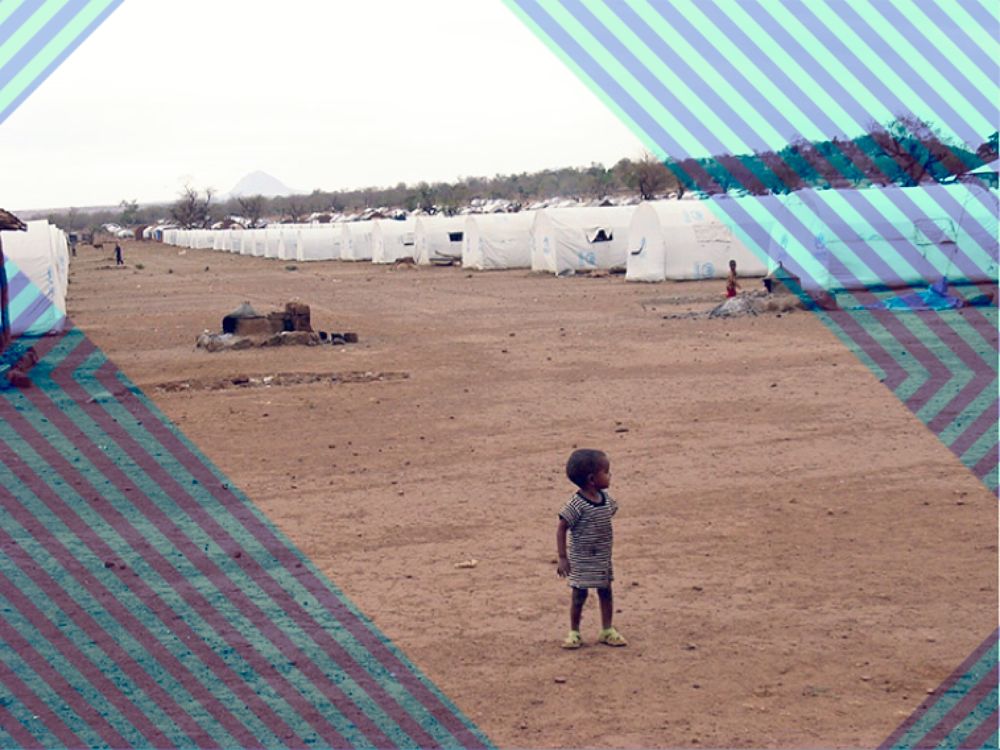
As the poorest continent in the world, the people of Africa face many struggles regarding poverty. These struggles impact the lives of children the most, and many are left orphaned and fending for themselves.

10 Facts About Orphans in Africa

  1. There Are Millions of Orphans in Africa
    In the entire continent of Africa, there are an estimated 52 million orphans. Statistics for orphans combine three groups, including those that have lost both parents, those that have lost a father and those that have lost a mother.
  2. Africa Is Home to More Than a Quarter of All Orphans
    With approximately 140 million orphans in the world, Africa’s 52 million make up more than 30 percent of the entire orphan population.
  3. Millions in South Africa Alone
    There are an estimated 3.5 million orphans in South Africa alone. As of 2014, 812,000 have lost both parents, 2.13 million have lost their fathers and 611,000 have lost their mothers.
  4. Close to a Quarter of African Youths are Orphaned
    In sub-Saharan regions of Africa, around 20 percent of the population under 18 is considered orphaned.
  5. Millions Orphaned by AIDS
    Approximately 32 percent of orphans in Africa have had a parent or parents die from AIDS. Many of these children suffer from the disease as well. AIDS continues to be a major epidemic in Africa, and the number of those affected continues to rise.
  6. Many Recent Orphans Lost Their Parents to Ebola
    Thousands of African children were orphaned by losing parents to Ebola. The Ebola epidemic was especially detrimental to West Africa at its height, spreading through many countries, including Guinea, Liberia and Sierra Leone, leaving close to 4,000 children without parents.
  7. Orphans Lead a Difficult Life
    Many orphans have no support and are forced to fend for themselves as well as their siblings. This includes maintaining a household, providing food and working to support themselves as well as fund education and medical costs. Yet, because of their young age, orphans are often unable to find any kind of stable income. Fear and stigmatization of diseases such as AIDS also contribute to unemployment.
  8. Extended Family Members Are Unable to Provide Support
    Many orphans turn to extended family members for support, but they are often unable to provide it. Their extended family often includes grandparents and women, who tend to make 31 percent less than the average household.
  9. Foreign Aid Supports Orphans
    There are many foreign aid organizations and projects aiding and supporting African orphans, including USAID. USAID’s Orphans and Vulnerable Children Program focuses on improving the health and well-being of African children, including orphans. This program focuses on reducing educational disparities, providing physiological care and support, helping fund families’ essential needs and ensuring legal support and protection.
  10. The Number of Orphans Is Decreasing
    Since 2001, with the help of foreign aid, the number of orphans in Africa, along with the rest of the world, has decreased and is continuing to decrease. This decline, although small, has been very consistent throughout the years, at approximately 0.7 percent per year.

The plight of orphans in sub-Saharan Africa is the culmination of a number of factors that require a multi-faceted and cooperative strategy to curb. As things begin to get better by some measures, it remains critical to continue the push for foreign aid at the scale of national policy.

– Keegan Struble

Photo: Flickr


March 29, 2018
https://borgenproject.org/wp-content/uploads/borgen-project-logo.svg 0 0 Borgen Project https://borgenproject.org/wp-content/uploads/borgen-project-logo.svg Borgen Project2018-03-29 01:30:272024-05-29 22:39:5910 Facts About Orphans in Africa
Child Soldiers, Children, Human Trafficking, War and Violence

Robbed Childhoods: The Worst Countries to Be a Kid

Worst Countries to be a Kid
Poverty, famine, violence and abuse have robbed many children of their childhoods. About 9.2 million children die every year, and that does not include the kids who manage to survive in harsh and dangerous conditions. Countless children must learn to survive in times of war, starvation and less than adequate health services. The following are a few of many worst countries to be a kid.

War-Torn Countries: Afghanistan and South Sudan

In Afghanistan, a country ridden by war, about 1.9 million children are in need of assistance. Not only do these children battle against the poverty of their country, but they are also caught in the crossfire of the war.

This is one of the worst countries to be a kid because of the dangers of war. In the first nine months of 2017, about 700 children were killed in Afghanistan; civilian-populated areas have seen a sharp increase in violence in the past years, and a majority of victims were children. In fact, there has been a 9 percent increase in child mortality.

If children survive these vicious attacks, the experiences then lead to severe distress and trauma. Studies have shown that children who survive attacks have a higher chance of suffering from psychological issues and experiencing a negative impact on long-term development. While children are innocent bystanders in Afghanistan, other countries include youth as children soldiers.

South Sudan is in the midst of a violent civil war, and the National Liberation Movement has taken it upon themselves to recruit children into its armies. South Sudan is one of the worst countries to be a kid because the majority of the time, children are forced to become soldiers against their will.

More than 700 children have been taken into the National Liberation Movement, and more than that were kidnapped or brought in by force.

Many of these child soldiers were taken at such a young age that their military existence has become their way of life. This can cause kids to feel trapped and less likely to seek escape. Earlier this year, about 300 children soldiers were released from the Liberation, but their ranks will unfortunately only be replaced.

Child Sex Trafficking: Thailand and China

As of 2004, 800,000 children under the age of 16 were trapped in the sex trade in Thailand alone. Thailand is the most prominent countries for sex tourism, and more than half its victims are kids.

Many of the children are foreigners because traffickers usually seek children who come from immigrant families. These children are a diverse group from Cambodia, Vietnam, Burma, India and Bangladesh, and it is not hard for recruiters to find children since parents or brokers will use kids as an avenue to earn money.

China is also known for its part in child sex trafficking. Similar to Thailand, children in China are subjected to prostitution and the sex trade. Traffickers target vulnerable children who are either disabled with mental disabilities or who are from migrating families.

Improvement in the Worst Countries to be a Kid

Though these facts are disheartening, international organizations such as UNICEF are working to prioritize children’s safety. The organizations have impacted numerous areas across Africa, East Asia, the Pacific and parts of Europe, and now continue to fight to decrease the number of worst countries to be a kid across the globe.

– Cassidy Dyce

Photo: Flickr

March 22, 2018
https://borgenproject.org/wp-content/uploads/borgen-project-logo.svg 0 0 Borgen Project https://borgenproject.org/wp-content/uploads/borgen-project-logo.svg Borgen Project2018-03-22 01:30:122024-05-29 22:39:51Robbed Childhoods: The Worst Countries to Be a Kid
Children, Global Poverty

Varied Organizations Helping Orphans in Romania

Helping Orphans in RomaniaUnder Nicolae Ceaușescu’s rule, many Romanian orphans were neglected by their caretakers and often abused. Though Ceaușescu’s rule ended in 1989, many still suffer from the effects of the old regime and can only survive by stealing, begging or prostituting themselves. However, helping orphans in Romania has become an initiative for many entities.

How AFFEO Is Helping Orphans in Romania

In April 2016, the organization A Family for Every Orphan (AFFEO) started a project to help Romania’s orphans get adopted. One child they helped was a Romanian girl named Maria who suffered from a congenital skin disease. If Maria was not soon adopted, she would be sent to a special orphanage for handicapped children.

Through AFFEO’s help, Maria was soon adopted by a couple named Dan and Dana. The couple has three other children as well and will be able to provide for Maria’s needs through their promising careers. AFFEO presently takes donations for their project to help more Romanian orphans find new homes.

An Optometrist’s Free Services to Romania’s Orphans

Since 2004, Dr. Michael McQuillan (a Camarillo, California optometrist) has traveled nine times to Sibiu, Transylvania to help hundreds of Romania’s orphans. In February 2017, he planned to buy a new vision screener that would allow him to treat more children during his trips. A GoFundMe page was also created to help him raise money for buying the screener and additional equipment before his next visit to Romania.

After visiting the Romanian children, Dr. McQuillan notices the reactions of children who can see correctly for the first time in their lives. “There’s lots of big smiles and hugs,” says Dr. McQuillan. “They thank me, and then they ask why would I leave the comfort of home and see someone like them.” Dr. McQuillan’s answer to that question is that a book he read, The Purpose of Divine Life by Rick Warren, inspired him to provide free optometry services to Romania’s orphans.

Paws2Rescue Makes a Difference in Romanian Orphans’ Lives

Founded in 2013 by Alison Standbridge, the charity Paws2Rescue has continued to help Romania’s abused dogs and neglected orphans. In October 2017, Standbridge recalled how many of Romania’s children arrive at their orphanages behaving like the abused dogs in public shelters. “They’re scared, they shy away, they don’t know how to talk and they cannot be touched,” she said.

Paws2Rescue is helping orphans in Romania every Easter and Christmas. The charity is supported by TV personality Ricky Gervais, who raises awareness of Paws2Rescue through social media and donations. In October 2017, Paws2Rescue also held donations for Christmas gifts to be placed in shoeboxes. The charity planned to send them to Romania and give the gifts to orphaned children in the first week of December.

New and Safer Orphanages in Romania

Romania’s children were often neglected in the country’s socialist-era orphanages. In January 2018, the Robin Hood Centre (RHC) announced plans to build two family-style residences that would provide Romania’s orphans with care, education, emotional support and counseling. Romania also plans to close down its socialist-era orphanages for the sake of giving children safer living conditions.

The organization Hope and Homes for Children (HHC) is helping RHC in its initiative. When HHC began its work in Romania during the 1990s, there were 105,000 orphans confined into the country’s state orphanage system. “We have now brought that down to just over 7,000,” said HHC’s chief executive Mark Waddington in January 2018.

The age of Romania’s neglected orphans is steadily coming to an end through the continuing work of these organizations, charities and individuals. Helping orphans in Romania will be an ongoing effort that could inspire the aid of other entities as well. Work will continue being done to improve the lives of Romania’s orphaned children.

– Rhondjé Singh Tanwar

Photo: Flickr

March 20, 2018
https://borgenproject.org/wp-content/uploads/borgen-project-logo.svg 0 0 Borgen Project https://borgenproject.org/wp-content/uploads/borgen-project-logo.svg Borgen Project2018-03-20 07:30:282024-05-29 22:39:55Varied Organizations Helping Orphans in Romania
Child Soldiers, Children, Global Poverty

Life After Being a Child Soldier: Five Ways Things Are Changing

life after being a child soldier
Historically, children have often been used in conflict and, up until the Middle Ages, most cultures considered them equivalent to small adults. As of 2017, seven countries actively used both boy and girl children for armed fighting. However, countries, governments and armies have heard the many voices that call for the absolution of child soldiers.

Just at the beginning of February 2018, a few hundred child soldiers were released in South Sudan; last year saw the release of over 5,000 child soldiers. While this is a great step towards human justice, life after being a child soldier is still a difficult journey as well. Here are five ways humanitarians and psychologists have found useful for creating a healthy environment post wartime experiences.  

Terminology

Child abductions are easy to classify as victimhood. While this title is true, it is only a small percentage of what the child has experienced. Children who escape their wartime prisons are survivors, and highlighting the importance of words helps shape a new identity in the life after being a child soldier. A victim can bring about a shame mentality and, depending on experiences, create ostracization.

The simple term ‘survivor’ puts an ex-child soldier in a different place in the world and in their own internal self-worth, as the word acknowledges what they have been through, while also underlines their strength. This phrase is much more preferable than than letting the one event — or victimhood — define them.

Check Western Thought

There is an overwhelming support and advocacy in the world for child soldiers. Many countries send people and finances to fight the use of child soldiers. Humanitarian aid can be amazing and overwhelmingly generous, but when the aid dries up (either people leave or funds are allocated elsewhere) it can leave some ex-child soldiers at risk again.

For example, typical Western group therapy can leave children more vulnerable if proper therapy is not continued afterward. Proper therapy can be difficult to follow through when a local solution and resources are not present and/or utilized.

Community

Unstable environments put children at risk for being recruited or abducted into armies in the first place. When a child returns home, studies have shown a community’s acceptance or rejection can be key to the success for a survivor. Utilizing local traditions and ceremonies for the life after being a child soldier cement a child’s place in local society.

Embracing local traditions or customs and incorporating that into a healing process is also a public announcement that the child is welcomed and supported.

Education

Many children are taken away from their home before they have a chance to finish school. Education is important because it brings normalcy back to the survivor’s life as well as prepares them for something other than fighting. Unfortunately, it is not always a perfect system.

A returning 16-year-old may feel shame if he or she needs to return to a 10-year old’s classroom. Fortunately, some towns have been able to create basic classes tailored for an older student.

This is still not completely reproducible as education, in general, is limited, but efforts have been made to create cheap and easy access to more educational opportunities.

Job Skills

Learning job skills is an important part of a survivor becoming successful in life post-war. Apprenticeship can be particularly useful in that it provides an education, community and small funds for food and shelter. Also, apprenticeship is reproducible and available for grown-up ex-child soldiers.

Apprenticeship has not been researched significantly compared to the importance of education or community, but the benefits of a job are acknowledged. Someone who has a skill and is able to provide for themselves and family become a part of society and prevent risk for later recruitment.  

Children in at-risk areas are taken because their lack of fear, they are easy to control, and probably have little to no community support. Children returning home can find themselves in similar circumstances with the added trouble of psychological trauma. Finding ways to assist in lasting support for life after being a child soldier can transform ex-child soldiers into contributing members of society.

A combination of education and community with proper support are the key building blocks to taking back and reinventing the lives that armies stole in the children.

– Natasha Komen

Photo: Flickr

March 4, 2018
https://borgenproject.org/wp-content/uploads/borgen-project-logo.svg 0 0 Borgen Project https://borgenproject.org/wp-content/uploads/borgen-project-logo.svg Borgen Project2018-03-04 01:30:392024-12-13 17:58:38Life After Being a Child Soldier: Five Ways Things Are Changing
Children, Hunger, Nonprofit Organizations and NGOs

Feedie and the Lunchbox Fund Fight Childhood Hunger in South Africa

“Feedie” and The Lunchbox Fund Fight Childhood Hunger in South AfricaAccording to the Lunchbox Fund, 12 million South African children under the age of six are living below the poverty line. Unsurprisingly, this means that a fifth of households in South Africa experience continual hunger.

This has daunting consequences. Lack of adequate nutrition can cause growth stunting. In fact, 27 percent of children under the age of five have stunted growth in South Africa. In many cases this is irreversible. Malnutrition causes not only physical damage but mental deterioration as well. It negatively affects children’s learning ability and capacity to concentrate. When the top priority of a household is to fulfill hunger, and it struggles in doing so, the importance of school drops to a negligible level.

An app and a nonprofit have partnered to fight this problem and reduce childhood hunger in South Africa.

Feedie

Feedie is an app that allows food lovers to share photos of their meals on social media pages. However, this is not just any food photography app. It allows foodies to take their love of photographing food to a humanitarian level.

With the app, people can upload photos of their meals at participating restaurants, and that restaurant will donate 25 cents to the Lunchbox Fund, which provides lunches for impoverished South African schoolchildren. There are approximately 100 participating restaurants, including Del Posto, The Spotted Pig and La Esquina in New York.

The Lunchbox Fund

The Lunchbox Fund is a nonprofit that focuses on childhood hunger in South Africa. They work to provide a daily nutritious meal to orphaned and poor school children in townships and rural communities in South Africa. They believe that food insecurity should not inhibit children from achieving a basic human right: going to school.

The Lunchbox Fund has created a menu revolving around nutritious foods that children love, including maize, rice, lentils, beans, samp, gravy, soya mince, porridge, soy milk, 100 percent juice, peanut butter and vegetables. These meals have been approved by the Nutrition Information Centre at the University of Stellenbosch, ensuring that they contain adequate amounts of macronutrients and micronutrients that are essential to healthy brain and body development.

They work in all nine provinces and are dedicated to providing daily lunch meals to schoolchildren yearly. The Lunchbox Fund has calculated that 4,719,480 meals are necessary to feed vulnerable children in all provinces. They aim to reach four million children that do not receive government food subsidies at school.

Successes and Donations

The Lunchbox Fund has been feeding children since 2005. Since its birth, it has served an impressive 14.4 million meals. Just in 2017, 4.9 million meals were served. Even more astounding is that 25,000 children receive meals every day.

Schools that have nutrition programs tend to see higher academic achievement among students. Attendance and academic retention increases when children can focus and look forward to eating a fulfilling meal. Schools partnered with the Lunchbox Fund can expect to experience these trends.

Every cent that is donated goes toward fighting childhood hunger in South Africa. Impressively, if the average amount of money that Americans spend weekly on groceries ($151) were donated, it would feed three students for an entire year. This illustrates the huge impact that an inexpensive meal can have on a child’s health and education. The success of the Lunchbox Fund can serve as a model to help children at risk of hunger all over the world.

– Mary McCarthy

Photo: Flickr

March 1, 2018
https://borgenproject.org/wp-content/uploads/borgen-project-logo.svg 0 0 Borgen Project https://borgenproject.org/wp-content/uploads/borgen-project-logo.svg Borgen Project2018-03-01 07:30:322024-05-29 22:39:36Feedie and the Lunchbox Fund Fight Childhood Hunger in South Africa
Children, Global Poverty

UNICEF Works to Reduce the Child Mortality Rate in Somalia

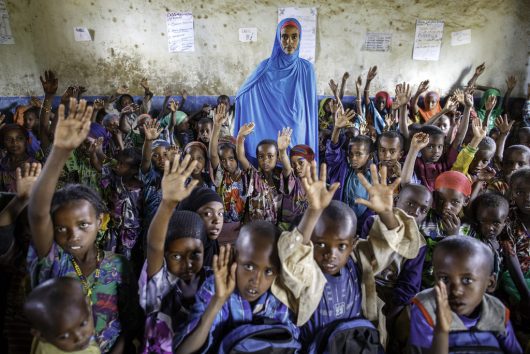
child mortality rate in SomaliThe child mortality rate, also known as the under-five mortality rate, is the number of deaths of children and infants under the age of five years per 1,000 live births. Many of these deaths are attributed to malnutrition, lack of safe drinking water or proper sanitation and diseases. Countless underdeveloped countries suffer from insufficient support systems that contribute to the child mortality rates increasing worldwide, one of these countries being Somalia. The child mortality rate in Somalia is among the highest in the world.

One out of seven Somali children dies before they turn five, measuring at a rate of 137 deaths per 1,000 live births with a staggering number in the south and central areas of Somalia. Pneumonia, diarrhea, diseases, polio, measles and neonatal disorders are among the leading causes contributing to the high infant and child mortality rate in Somalia.

The lack of government security and widespread internal conflict over the past several decades in Somalia has made it difficult for progression to occur and has left the country in extreme poverty. UNICEF has taken it into its own hands and has implemented interventions that have helped those at risk and created some highly recognizable accomplishments. Humanitarian interventions backed by UNICEF in South Central Somalia and some areas in Puntland and Somaliland protect about 2.5 million individuals.

UNICEF has given humanitarian assistance to those in need by providing health services and supplies for the polio and measles vaccination campaign plan and primary health service delivery at Mother and Child Health clinics, which have benefited roughly 201,550 people at risk. Through the Mother and Child Health clinics and Health Post, UNICEF supports about 70 percent of primary health services in Somalia by equipping the nation with medicine, equipment, vaccines and management supplies.

With the polio outbreak that began in May of 2013, the support offered by UNICEF has allowed for a little over 35 additional immunization campaigns to be implemented for children under five. Several of these campaigns have also targeted children under 10 years old and adults. In October 2015, the polio outbreak was declared over thanks to the support provided by UNICEF.

UNICEF has also established a community-based strategy through an Integrated Community Case Management (ICCM) in order to reduce common childhood illnesses that contribute to the child mortality rate in Somalia. The ICCM is designed to use skilled and supervised health professionals in regions that lack access to medical sites in order to deliver health assistance to children. The program is also building up a team of health officials, service administrators and community-based leaders to manage any health risk or crisis that threatens the area. The strategy has benefited roughly 21,000 households thus far. 

Somalia has also been scaling up its Essential Package of Health Services (EPHS). These packages, backed by UNICEF, have been adopted as the primary health programme by Somali Health Authorities. EPHS is the main outlet used to strengthen child healthcare and safe motherhood programs, which include child immunizations, maternal, reproductive and neonatal health and treatment of common diseases and HIV. The program has already begun in 39 locales in seven areas throughout Somalia and is continuing to grow. A potential 4.2 million people will benefit from the EPHS services.

UNICEF’s continuous collaboration with partners in working to reinforce the volume of Somali health officials that respond to the health concerns of the population will not only strengthen the governance and leadership of local health authorities but will also improve access to quality healthcare in order to ensure children survive past their fifth birthday.

– Zainab Adebayo

Photo: Flickr

February 20, 2018
https://borgenproject.org/wp-content/uploads/borgen-project-logo.svg 0 0 Borgen Project https://borgenproject.org/wp-content/uploads/borgen-project-logo.svg Borgen Project2018-02-20 01:30:412024-05-29 22:39:26UNICEF Works to Reduce the Child Mortality Rate in Somalia
Children, Education, Global Poverty

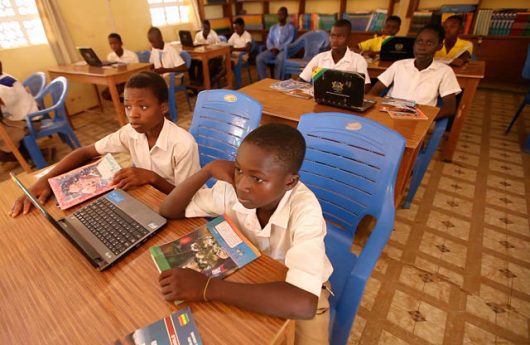
Educational Reform in Ghana Providing Opportunities for Children

educational reform in Ghana

In 1993, the Republic of Ghana established the Ministry of Education to provide easier educational access to Ghanaian citizens. The ministry focuses on academic, technical and vocational programs. The Ministry of Education also concentrates on infrastructure, the refurbishing of schools and bringing in newly trained teachers and academic scholars.

Seven years later, in 2000, Ghana incorporated a new educational reform program, called the Ghana Education Trust Fund. The fund was installed to provide quality education from basic (elementary) schooling to tertiary (college; trade schools).

Educational reform in Ghana finally began with Ghana’s Vision 2020 Act, which started in 1996. The plan was broken down into four parts: The First Step (1996-2000), Ghana Poverty and Reduction Strategy (2003-2005), Growth and Poverty Reduction Strategy (2006-2009) and the Ghana Shared Growth and Development Agenda (2010-2013).

The 2020 date was set to give the Ghanaian government enough time to accomplish all of its goals, with hopes that the government will go above and beyond to exceed all of its expectations in time. Ghana finished the project in 2015, accomplishing a great deal five years before the deadline.

Education has been free for primary school (elementary) and middle school. However, high school was optional, with most high schools being privately owned, making it difficult for many families to afford higher education for their children and causing students to drop out at a young age.

In 2014, Ghana’s president partnered with the World Bank to announce a new project called the Ghana Secondary Education Improvement Project, which launched free public education at the high school level in 2017, giving children a chance to stay in school to further their education in the hope that free education will lower the dropout rate in Ghana.

The financing provides $156 million over five years, between 2014 and 2019. The plan will help the Ghanaian government improve its educational reform plan, provide educational access to underserved children, improve the quality of education and provide technical assistance. Students and teenagers are welcoming educational reform in Ghana and the chance to attend free higher-level educational institutions, and are hopeful that this program will give them the opportunity for a better life not only for themselves, but for their families too.

Promoting educational reform in Ghana will not only provide children with better academic opportunities and skills, but will also help fight against child labor. Although Ghana has set up many laws and acts against child labor, such as the Child Protection Compact and the Worst Forms of Labor acts, many children still find themselves forced into harsh labor conditions rather than attending school and receiving a proper education.

The Child Labor Coalition website tells a story of a young boy whose father sold him to human traffickers because there was no money for his education. Lake Volta, the area the child was sold into, is known for forced child labor and actively ignoring Ghana’s current laws against such dreadful circumstances. The children are usually made to work anywhere between 10-20 hours per day, are terribly abused and fed very little.

As terrifying as this is, educational reform in Ghana is the key to a brighter future for these children. It is the answer to ending child labor and lowering dropout rates. Ensuring that Ghanaian children are provided with more opportunities and prospects will allow the country of Ghana to flourish, keeping children and their families happier and healthier while providing a safer environment for all of Ghana.

– Rebecca Lee

Photo: Flickr

February 17, 2018
https://borgenproject.org/wp-content/uploads/borgen-project-logo.svg 0 0 Borgen Project https://borgenproject.org/wp-content/uploads/borgen-project-logo.svg Borgen Project2018-02-17 07:30:332024-05-29 22:39:21Educational Reform in Ghana Providing Opportunities for Children
Children, Developing Countries, Global Poverty

Closing the Gap for Children with Disabilities in Vietnam

Closing the Gap for Children with Disabilities in VietnamChildren with disabilities are one of the many marginalized groups in the world that often face discrimination. In many countries, cultural beliefs dictate that disabilities arise from the influences of past lives, supernatural forces or the past actions of a parent.

Education is one of the most effective ways of not only breaking these myths, but also breaking the cycle of discrimination experienced by children with disabilities. According to information gathered from the Global Disability Rights Now, approximately 5.8 percent of Vietnam’s population, 5,203,180 people, are living with disabilities. Of these, 23.3 percent are children with disabilities in Vietnam under the age of 19.

Disabled children are less likely to finish or even begin school for many reasons, including gaining little to no access to adequate learning materials, having a lack of trained professionals who understand their needs and having no proper facilities to attend school. Denying these children the right to education not only impacts their learning, but also any hinders any chances of employment opportunities and social and personal development. In order for all children to benefit from basic human rights without facing prejudice, disability inclusion needs to be integrated into all policies and plans devised by a country.

The World Bank has shown support for integrating inclusive education practices for children with disabilities through lending projects and activities. One of the programs implemented for children with disabilities in Vietnam is the Vietnam Intergenerational Deaf Education Outreach Project (IDEO). Under the IDEO, sign language is taught to deaf children and their families in the comfort of their own homes by a mentor who is hearing impaired, a sign language interpreter and a teacher who can hear.

Evaluations documented and recorded from the project showed that using sign language helped to improve deaf children’s language and cognitive development and also their ability to communicate with others. The outreach project has also helped more than 50 deaf adults become mentors to children who are hearing impaired, trained approximately 200 hearing teachers to use sign language in order to effectively support deaf children and instructed more than 50 hearing people as communication facilitators or sign-language interpreters.

The implementation of the IDEO project has strengthened school involvement and organizations in backing the education of deaf children, and has also opened a new method to teaching sign language for these children with disabilities in Vietnam. With the support of similar projects being integrated in the near future, the gap for achievement for disabled children will hopefully decrease.

– Zainab Adebayo

Photo: Flickr

January 31, 2018
https://borgenproject.org/wp-content/uploads/borgen-project-logo.svg 0 0 Borgen Project https://borgenproject.org/wp-content/uploads/borgen-project-logo.svg Borgen Project2018-01-31 07:30:272019-11-08 02:30:50Closing the Gap for Children with Disabilities in Vietnam
Aid, Children, Global Poverty

Aid for Children Working in Bolivia

Bolivia’s working age is the lowest in the world. At 10 years old, children can legally work for themselves, their families and for others. Better education and a change in cultural attitude is the only way to provide aid for children working in Bolivia.

Bolivia’s Child and Adolescent Code was passed in 2014. It lowered the legal working age to 10 in an effort to prevent the exploitation of many children already working in Bolivia. But with 850,000 child laborers in Bolivia and only 78 inspectors, it is difficult to enforce regulations. Many children work illegally starting at the age of five.

Bolivian lawmakers wanted to set the minimum working age at 14, which led to riots as shoe shiners, bricklayers, street vendors and other child workers clashed with police in 2013.

The law passed with support from Bolivian President Evo Morales, who said that working children develop “social awareness.” President Morales worked with his father at age six, herding llamas.

Aid for children working in Bolivia cannot come from regulations alone, as they are too lax and purport a vicious cycle of poverty. Working from a young age threatens their health, exposes them to violence and reinforces integral cycles of poverty. As it stands, 60 percent of children working in Bolivia drop out of school in order to continue working.

Four years after the law passed, many fear that the law is failing to protect Bolivia’s working children. Children and their families must get approval from the government to work; however, only about 30 percent of applications are dealt with. Many ignore the law and put children to work unsupervised.

Bolivia has 8.3 million citizens and 59 percent of the population lives in poverty. Culture and need both contribute to child labor. It is seen as normal in Andean culture for children to help support the family. Therefore, aid for children working in Bolivia must extend from a change in social values and political priorities.

Child labor deprives children of their right to go to school, but Bolivian children need money to buy books. They also need to feed their younger siblings and help their family pay the bills. Poverty levels have decreased in Bolivia over the last few years, but children still play a key role in keeping many families afloat.

Aid for children working in Bolivia comes only in the form of regulations and unions that aim to prevent the exploitation of workers. The Union of Child and Adolescent Workers of Bolivia is an organization of young workers that have united to defend themselves from exploitation. They supported Bolivia’s Child and Adolescent Code and do not want the cessation of child labor in Bolivia, but the improvement of its regulation. By fighting for better protection for child workers, groups like this can ensure fair treatment of children in the short term while working to change the cultural norms in the long term.

– Sam Bramlett

Photo: Flickr

January 31, 2018
https://borgenproject.org/wp-content/uploads/borgen-project-logo.svg 0 0 Borgen Project https://borgenproject.org/wp-content/uploads/borgen-project-logo.svg Borgen Project2018-01-31 01:30:482024-05-29 22:38:56Aid for Children Working in Bolivia
Page 90 of 137«‹8889909192›»

Get Smarter

  • Global Poverty 101
  • Global Poverty… The Good News
  • Global Poverty & U.S. Jobs
  • Global Poverty and National Security
  • Innovative Solutions to Poverty
  • Global Poverty & Aid FAQ’s
Search Search

Take Action

  • Call Congress
  • Email Congress
  • Donate
  • 30 Ways to Help
  • Volunteer Ops
  • Internships
  • Courses & Certificates
  • The Podcast
Borgen Project

“The Borgen Project is an incredible nonprofit organization that is addressing poverty and hunger and working towards ending them.”

-The Huffington Post

Inside The Borgen Project

  • Contact
  • About
  • Financials
  • President
  • Board of Directors
  • Board of Advisors

International Links

  • UK Email Parliament
  • UK Donate
  • Canada Email Parliament

Get Smarter

  • Global Poverty 101
  • Global Poverty… The Good News
  • Global Poverty & U.S. Jobs
  • Global Poverty and National Security
  • Innovative Solutions to Poverty
  • Global Poverty & Aid FAQ’s

Ways to Help

  • Call Congress
  • Email Congress
  • Donate
  • 30 Ways to Help
  • Volunteer Ops
  • Internships
  • Courses & Certificates
  • The Podcast
Scroll to top Scroll to top Scroll to top