• Link to X
  • Link to Facebook
  • Link to Instagram
  • Link to TikTok
  • Link to Youtube
  • About
    • About Us
      • President
      • Board of Directors
      • Board of Advisors
      • Financials
      • Our Methodology
      • Success Tracker
      • Contact
  • Act Now
    • 30 Ways to Help
      • Email Congress
      • Call Congress
      • Volunteer
      • Courses & Certificates
      • Be a Donor
    • Internships
      • In-Office Internships
      • Remote Internships
    • Legislation
      • Politics 101
  • The Blog
  • The Podcast
  • Magazine
  • Donate
  • Click to open the search input field Click to open the search input field Search
  • Menu Menu

Archive for category: Children

Information and stories addressing children.

Activism, Children, Education, Global Poverty

4 Children’s Books on Global Issues

Clean_Water__for_Elirose_Good_Books_For_Children
Children are the future. Today, our youngest generation has the ability to learn about global issues through reading. Check out the educational books below:

1. Clean Water for Elirose by Ariah Fine

This book tells the story of Maria and her friends who love all kinds of different drinks. When they learn about a girl their age who doesn’t have clean water to drink they set out to help her find access to what she lacks. Literature review site goodreads.com describes it as a “[…] children’s picture book about the lack of clean drinking water in the world and how we can help.” All profits from this book go to support clean water projects.

2. Little Things Make Big Differences: A Story About Malaria by John Nunes and Monique Nunes

Little Things Make Big Differences: A Story about Malaria, is a story about a young Tanzanian girl named Rehema. The story focuses on Rehema’s battle with one of the world’s most fatal diseases, malaria. When she was a baby, Rehema was infected with the disease but survived because her parents were able to get treatment for her. In the book, Rehema describes what children in rich countries can do to help fight malaria.

3. The Secret River by Marjorie Kinnan Rawlings

This book depicts how poverty affects families, with a focus on kids. Rawlings’ children’s book tells the story of a girl poet named Calpurnia and her family who worry that they will go hungry because there are no fish left in the river. Luckily, Calpurnia meets a medicine woman in the forest who helps her find the way to a secret river, teeming with catfish, which appears only when desperately needed and disappears when the heart and belly are full. The ending teaches kids that there is always a way to help aid those in need.

4. The Can Man by Laura E. Williams

Laura E. Williams provides a sweet but direct lesson about poverty in today’s society. Williams tells the story of a young boy named Tim who fantasizes about getting the skateboard of his dreams. But Tim’s parents can’t afford to buy him the skateboard for his birthday, so he puts on rubber gloves and starts collecting cans in a quest for cash. Soon he finds himself racing a homeless can collector to gain access to the best spots in the neighborhood for cans. As he gets to know “The Can Man,” Tim learns there are things in life more valuable than any object.

– Stephanie Olaya

Sources: Good Reads: Clean Water for Elirose, Good Reads: Global Issues for Kids, One, Huffington Post
Photo: Clean Water for Elirose

December 3, 2013
https://borgenproject.org/wp-content/uploads/borgen-project-logo.svg 0 0 Borgen Project https://borgenproject.org/wp-content/uploads/borgen-project-logo.svg Borgen Project2013-12-03 05:44:482017-12-07 04:24:044 Children’s Books on Global Issues
Activism, Children, Education, Global Poverty

Children’s Books on Poverty

In America, we often tend to live inside of a bubble, a comfortable space in which we utilize blissful ignorance to the outside world and its problems.

But this bubble has a negative impact on what’s beyond it – the rest of the world. By choosing to live in ignorance, people who need help are unable to receive it. Where that problem begins is in the home – with children.

Being privileged to a comfortable lifestyle as a child, I grew up typically getting what I wanted for Christmas and birthdays. My sister was given an iPod when they first came out, while I eventually came to be the owner of a Gameboy Color, a Nintendo 64 and a GameCube. Then again, sometimes there were disappointments – things I had asked for that were not wrapped up in brightly colored packages under the tree.

It was important to my parents to make sure that my sister and I got gifts we would actually use, but even more important was the lesson that we wouldn’t always get what we want.

That lesson applies in a large scale to the problem of global poverty, and authors are now tackling it. Not only do these lessons come in large, adult books, but they are now being offered in the pages of children’s books.

The following books educate and reinforce principles regarding economic differences, while also validating the emotions of the poor readers. The refreshing part is that these books do not intend to preach; they teach the values of resourcefulness and gratefulness.

  • The Can Man by Laura E. Williams, illustrated by Craig Orback: Tim’s parents can’t afford the skateboard he dreams of for his birthday, so he puts on rubber gloves and starts collecting cans in a quest for cash. Soon he finds himself racing a homeless can collector to the best spots in the neighborhood for cans. As he gets to know “The Can Man,” Tim learns there are things in life more valuable than any object.
  • Lucky Beans by Becky Birtha, illustrated by Nicole Tadgell: Marshall Loman is sick of beans because he has had to eat them every night since his father lost his job. In this Depression-era story, a bean counting contest at a local shop and one boy’s math-savvy help a family get back on their feet again.
  • The Hundred Dresses by Eleanor Estes, is a classic story about a Polish immigrant girl who is teased for saying she has one hundred dresses, when she wears the same faded old dress every day. It is told from the perspective of the teaser’s friend. I read this story aloud over the course of a week, engaging the children during and after each reading in a philosophical discussion about the ethical dilemma of being a silent bystander.
  • Si, Se Puede! by Diana Cohn, is a bilingual story about the Service Employees International Union organizing drive and janitors’ strike in Los Angeles. It is useful to discuss why and how workers form unions, what a strike is, the importance of community support, and connections between the story of the janitors’ organizing drive and local labor struggles.
  • The Streets Are Free by Karusa, is a bilingual story about children in a Venezuelan barrio who organize and protest about the lack of a playground in their neighborhood and the eventual community action which builds it. Children can retell and then make captioned drawings to illustrate a story of community organizing told by a “guest activist” visitor to the classroom. These can be displayed, then bound into a class book.
  • Shingebiss by Nancy Van Lann, is an Ojibwe legend about a merganser duck who demonstrates the values of persistence, conservation and resourcefulness in order to survive the northern winter. This is a favorite of my students and my own children. Shingebiss is an excellent role model to refer to when the going gets rough. I am often impressed by hearing my students exhort each other to be persistent or praise each other for being resourceful in their problem solving. I start to proudly think, “Wow! Did I teach them that vocabulary?” and then humbly remind myself, “no, they learned it from a duck.”
  • Tight Times by Barbara Shook Hazen, is about a boy in a financially stressed family who really wants a pet dog. Told from the child’s perspective, it describes the boy’s spontaneous adoption of a stray kitten against the backdrop of the father’s anger at his sudden job loss. Children can easily make text-to-self connections with the story as they discuss how a sudden change of circumstances can affect everyone in a family.
  • The Lady in the Box by Ann McGovern, is about two children who notice and then befriend a homeless woman living in their neighborhood.
  • Fly Away Home by Eve Bunting, is about a homeless boy and his father who live at an airport. I use both this book and The Lady in the Box to help children see beyond the “shopping bag lady” stereotype of homelessness, to recognize that people of all ages and circumstances can become homeless for a brief or longer period of time, for a variety of reasons, and that shelters are not solutions in themselves.

– Samantha Davis

Sources: Huffington Post, Scholastic
Photo: Georgina Public Libraries

December 2, 2013
https://borgenproject.org/wp-content/uploads/borgen-project-logo.svg 0 0 Borgen Project https://borgenproject.org/wp-content/uploads/borgen-project-logo.svg Borgen Project2013-12-02 04:29:512024-05-25 00:33:02Children’s Books on Poverty
Children, Disease, Global Poverty, Health, Malaria

10 Global Health Accomplishments From the Past Decade

Global Health Accomplishments WHO
Global health has a huge impact with poverty. In many poverty-stricken areas, a lack of proper health equipment and the spread of diseases is a major function in the poverty trap. These countries rarely have the bare minimum to handle widespread disease and other health complications, making it hard truly to combat a global health issue. Despite these bleak conditions, there have been impressive global health accomplishments. The work and time put in by programs such as United States Agency for International Development (USAID) and Centers for Disease Control and Prevention (CDC) have made these ten necessary improvements for impoverished areas.

Global health has improved by leaps and bounds over the past decade. Many different factors have caused this great revolution of health, but ten specific reasons can be credited with carrying the weight. Without improvement in these specific areas by programs like USAID and the CDC, many of the great advancements seen today in global health would have never had the funds to be reached.


Factors Contributing to Global Health Accomplishments


In many areas with great health risks; immunizations and vaccines are not made readily available. Without these treatments, many people are often infected by disease that could otherwise be avoided or contained with the assistance of vaccination and immunization. First, USAID immunization programs have provided the funds to treat up to three million impoverished people per year.

Many nations struggle with health issues because of water deprivation. Second, USAID introduced oral hydration therapy to these areas, in hopes it would counteract dehydration problems. As of today, the oral hydration therapy has been successful in areas all around the globe, with tens of millions of people being properly nourished through the low-cost program yearly.

Thirdly,  not only is the oral hydration therapy combatting worldwide dehydration, USAID has partnered with The United Nations Drinking Water Supply to help some 1.3 billion people receive proper water nourishment sources.

Sanitary water is a vital piece to figuring out the poverty puzzle, but the eradication of poverty begins with the young people. Fourth, the average number of children per family in impoverished nations has dropped from 6.1 in the mid-1960s to 4.2 today. In addition, infant and child deaths have decreased by 50 percent in these impoverished areas.

Fifth, USAID child survival programs have made a 10 percent child mortality rate reduction in just the past eight years. Not only has the number of children’s lives saved risen, but life expectancy has improved by 33 percent in these nations.

The decrease of major diseases worldwide is a major improvement made possible by USAID, CDC, and similar programs worldwide. Sixth, Smallpox has been eradicated, and now only exists in laboratories. Seventh, USAID has accounted for thirty-two HIV/AIDS prevention programs throughout the world.

Eighth, over 850,000 people have been reached by the HIV program, and (ninth) another 40,000 people have been trained to treat the virus. Lastly, programs like the CDC have been responsible for the diminishing malaria cases, from 2004 (2.1 million cases) to 2009 (1.8 million cases).

By combatting major poverty causing issues such as disease epidemics, unsanitary water, and child mortality rates, programs such as USAID and the CDC have been instrumental in causing the turnaround of world poverty. With the continued support from these programs, the world’s impoverished people can be assured of better conditions outside of these ten beneficial starts.


10 Key Global Health Accomplishments


1. USAID immunizations and vaccines have provided funds to treat up to three million impoverished people per year.

2. Introduction of oral hydration therapy in impoverished areas.

3. Supplied roughly 1.3 billion people proper nourishment sources.

4. Average number of children per impoverished family has dropped from 6.1 to 4.2.

5. 10 percent child mortality rate reduction.

6. Smallpox only exists in laboratories.

7. USAID has 32 HIV/AIDS programs throughout the world.

8. 850,000+ people have been reached by the HIV program.

9. 40,000 have been trained to treat HIV.

10. Diminishing malaria cases, from 2.1 million to 1.8 million over a five year period.

– Zachary Wright

Sources:  USAID, CDC

Photo: USAID

October 26, 2013
https://borgenproject.org/wp-content/uploads/borgen-project-logo.svg 0 0 Borgen Project https://borgenproject.org/wp-content/uploads/borgen-project-logo.svg Borgen Project2013-10-26 09:12:512024-05-25 00:28:4310 Global Health Accomplishments From the Past Decade
Children, Education, Global Poverty, Slums, Women & Children, Women and Female Empowerment

Adolescent Girls, Bearing the Brunt of the Burden


“I am 17 years old. In the relief camp, when I was sleeping in the night, I was raped. I did not know what had happened to me. I do not know the face of the man. I had heavy bleeding…now I see some disturbances in my body and when my mother took me to the hospital, I was told I am pregnant”.

This is what a young girl from Tamul Nadu in India experienced after a tsunami devastated her hometown. Like her, millions of other girls in developing countries are the hardest hit by disasters in comparison with other segments of the population. Not only do women receive non-preferential treatment during emergency rescues, but they are also at a greater risk of sexual exploitation, child marriage, and being deprived of an education.

According to a report released by Plan International, a child rights NGO, girls fare far worse during disasters than the rest of the population. Given their gender, age, and humanitarian status, girls and women experience a triple disadvantage during crises since pre-existing inequalities and vulnerabilities are exacerbated.

In this way, a 14-year-old girl in a slum will experience a flood or an earthquake differently from a 14-year-old boy in the same situation. Such is the case of a son and a daughter who were swept away by a tidal surge in a cyclone that hit Bangladesh in 1991. The father of these children is cited as saying that he could not hold on to both and had to release his daughter because “his son had to carry on the family line.”

In other cases, adolescent girls and women are driven to sell sex because they have no alternative to feed themselves and their children. “I don’t work. I don’t have parents to help. So, for around a dollar, you have sex just for that…it’s not good to do prostitution, but what can you do?” said Gheslaine, who lives in a camp in Croix-de-Bouquets in Haiti.

Disasters also lead to an increase in child marriages. Research in Somaliland, Bangladesh and Niger found that child marriage is often used as a community response to crises in which girls are sold for income and food. In Niger, girls are taken out of school, wed and impregnated at the age of 13. Many of them suffer from fistula (a rupture between the birth canal and bladder caused by prolonged obstructed labor) and die.

One of the least prioritized issues during disasters is facilitating education for girls. Although most families would rather continue education for boys rather than girls, girls who receive an education are more likely to be healthy, marry later in life, and survive into adulthood. In fact, it is one of the most important determinants of practically all desired outcomes related to the Millennium Development Goals, from poverty reduction, to reduced infant mortality rates, and to enhanced democratization.

Despite the evidence that confirms that the empowerment of women has a transformative power in all types of societies, this study reveals that the rights to protection, education, and participation are still not granted to most women and girls, especially during crises.

– Nayomi Chibani
Feature Writer

Sources: IRIN, Plan International
Photo: UNHCR

October 25, 2013
https://borgenproject.org/wp-content/uploads/borgen-project-logo.svg 0 0 Borgen Project https://borgenproject.org/wp-content/uploads/borgen-project-logo.svg Borgen Project2013-10-25 08:39:292024-05-25 00:28:01Adolescent Girls, Bearing the Brunt of the Burden
Children, Global Poverty, Inequality

Where Children Sleep Photography Project

It’s hard to say exactly how much of an impact a photo can have. At the risk of cliché, I won’t say that a picture is worth 1,000 words. Imagine seeing hundreds of photographs that detail not only a child’s appearance and age, but also the place they call their own – where they sleep.

James Mollison decided to take on that mission himself. A 40-year-old native of Kenya who grew up in England, Mollison had always been interested in art and design. He graduated from Oxford Brooks University and, later, Newport School of Art and Design with degrees in art, design, film, and photography. After attaining his degree, Mollison moved to Italy in order to work at Fabrica, Benetton’s communications research center and creative lab. This was where the idea for the Where Children Sleep Photography Project came about.

Among his other achievements and publications lies this creation, published in November 2010 – “stories of diverse children around the world, told through portraits and pictures of their bedroom.”

The aforementioned juxtaposition is exactly what Mollison longed to create, in order to point out the inequalities that exist all over the world. The two extremes he found most interesting were in a top-floor apartment in New York and a mud hut in Lesotho, Africa: the bedrooms of Jaime and Lehlohonolo.

Jamie went to a prestigious school in the area. He also had quite a hectic schedule filled with extracurricular activities such as judo, swimming, cello, and kickball. He would often study his finances on the Citibank website.

Lehlohonolo, in contrast, lived a highly different life. Along with his three brothers, who were AIDS orphans, he lived in a mud hut. The floor of this hut was where the boys would sleep, “cuddling up to each other for warmth during the freezing cold nights. Two of Lehlohonolo’s brothers walked to a school eight kilometers away where they are also given monthly rations of food -– cereal, pulses and oil. They couldn’t remember the last time they ate meat. Sadly, they will probably live in poverty for the rest of their lives because crops are difficult to grow on the infertile land and there are no prospects of employment. The vulnerability of these kids was very upsetting.”

When asked what he hoped people would take away from this collection of photos, Mollison said, “We tend to inhabit a small world of friends, family, work, school etc. I hope the book gives a glimpse into the lives some children are living in very diverse situations around the world; a chance to reflect on the inequality that exists, and realize just how lucky most of us in the developed world are.”

– Samantha Davis

Sources: New York Times Blog, Where Children Sleep, Huffington Post
Photo: Visual News

October 23, 2013
https://borgenproject.org/wp-content/uploads/borgen-project-logo.svg 0 0 Borgen Project https://borgenproject.org/wp-content/uploads/borgen-project-logo.svg Borgen Project2013-10-23 04:12:472024-05-25 00:27:36Where Children Sleep Photography Project
Children, Global Poverty, Health, Sanitation, USAID, Women & Children

Hand Washing Can Save Millions of Lives

A mother’s typical question to a child, “did you wash your hands?” may have seemed like a pesky reminder when growing up, but research shows that hand-washing is one of the most important and live-saving habits that can be instilled in a society. Hand-washing with soap has been shown to reduce the incidence of diarrhea by almost one half and of acute respiratory infections by roughly one third.

Since hand-washing is one of the most cost-effective ways to reduce deaths of children under five from diseases like diarrhea and pneumonia – possibly by up to 70% -, the global health soap brand Lifebuoy is teaming up with USAID to create a neonatal program designed to raise awareness of the link between newborn survival and hand washing with soap.

The program targets new mothers and birth attendants through antenatal clinics and health workers. The campaign also uses innovative videos to appeal to the mother’s maternal instinct by communicating the message “hand-washing helps your child survive.” Persuasive advocates such as the Indian actress Kajol also support the cause and help generate awareness of the importance of hand-washing, especially after having used the toilet or before preparing food.

Another initiative which aims to modify everyday behavior is the Global Scaling Up Hand-washing Project, supported by the World Bank in countries such as Peru, Senegal, Tanzania, and Vietnam. These interventions found that while will and motivation to change habits might be present, hand-washing is also dependent on the ease of access to both water and soap. In this way, the program has aimed to make changes in the way soap and water are accessed in households.

The initiative has also found that in countries such as Senegal, men can also play a critical part in the behavior-changing process. Since they are seen as the role-models or leaders of their households, future interventions will also incorporate campaigns that include or are aimed at men.

– Nayomi Chibana
Feature Writer 

Sources: USAID, World Bank
Photo: Old Picture of the Day

October 21, 2013
https://borgenproject.org/wp-content/uploads/borgen-project-logo.svg 0 0 Borgen Project https://borgenproject.org/wp-content/uploads/borgen-project-logo.svg Borgen Project2013-10-21 11:06:442024-05-25 00:29:42Hand Washing Can Save Millions of Lives
Children, Food & Hunger, Food Aid, Food Security

Optifood Software Analyzes Diets to Address Malnutrition

Working through the World Health Organization (WHO), a team of scientists and programmers have created a new software that is capable of analyzing a person’s diet and determining what in their geographic area can be used to supplement nutritional deficits cheaply. The software is currently undergoing USAID-approved trials in Guatemala, with promising results.

According to the Food and Nutritional Technical Assistance III Project (FANTA), malnourished children in the two studied Highlands communities of Huehuetenango and Quiche can be adequately fed for 25-50¢ US each day. The study consists of randomly selected children in the two communities between the ages of 9 and 11 months, and suggests that in addition to breastmilk, potatoes, beans, eggs, tortillas, and fortified cereal, a local powder called Chispitas would complete the children’s diet. Currently, Chispitas is only available to some communities in Guatemala.

With the average Guatemalan woman giving birth to three children, and the average Highlands household earning US$3.15 per day, even Optifood’s findings will require effort to become reality. Most families simply cannot spend 8-15 percent of their income feeding a single baby. And despite the fact that the ingredients in Chispitas can be found locally, the finished product is most available in urban areas where poverty is more severe than in the Highlands.

Whatever the practical limitations, Optifood takes a great step forward by simply identifying, in almost real time, what the nutritional problems are and the optimal, if ultimately impossible, solutions. With workshops being offered in Guatemala and a handful of other countries, to educate local aid workers in the use of the software, hard data can begin to emerge from poor areas and provide international agencies like the WHO the information it needs to assess priorities. It also gives national programs, such as Guatemala’s Zero Hunger Initiative, with a clear set of objectives to accomplish.

As one of the major criticisms of aid organizations is the uncertainty about what funding can actually accomplish, Optifood is able to provide a nutritional “before and after” comparison, elucidating the problem and demonstrating the effects of policy changes or investments.

– Alex Pusateri

Sources: USAID Blog, Google Translate, CIA, INCAP, FANTA Project
Photo: Hunger and Undernutrition Blog

October 11, 2013
https://borgenproject.org/wp-content/uploads/borgen-project-logo.svg 0 0 Borgen Project https://borgenproject.org/wp-content/uploads/borgen-project-logo.svg Borgen Project2013-10-11 04:00:392024-05-25 00:24:30Optifood Software Analyzes Diets to Address Malnutrition
Children, Human Rights, Slavery

Child Labor 101

21st Century Child Labor Global
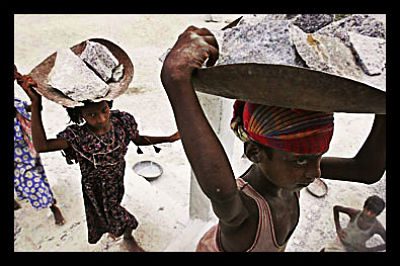
According to the International Labor Organization, approximately 211 million children are working around the world. These children range from ages five to 14, and most are working in order to provide support for their poor families. Nearly 128 products from 70 countries are made through child labor – many cases of which are forced child labor. While some children elect to start working at a young age to help support their families, many are forced into labor and treated as slaves in bondage.

In addition to poor treatment, the work environments children are forced to work in are often dangerous and harmful to their health. When children are sent to scour hazardous lakes filled with toxins in order to search for metals and jewels, the consequences are extremely damaging to their health. Much of the merchandise purchased by Americans is made in other countries, many of which are still developing and relying on labor from children. Children are often forced into labor by their government, or their government simply ignores the fact that companies and factories are forcing children to work for their own profit. Some of the products made by children include clothes, tobacco, metals, jewels, food items, pornography, holiday decorations, and electronic goods. This wide span of merchandise leaves little that child labor has not infiltrated.

In the worst cases of child labor, children are used much like slaves. In these cases, children are trafficked, often times forcing them to deal in illegal activities like drug trafficking, prostitution, and weapon conflict. Binding the children in debt is another method used by companies to ensure that the children will continue to work under their authority.

According to a report conducted by the Bureau of International Labor Affairs, India has the highest percentage of child workers. India is followed by China, which is then followed by smaller countries throughout sub-Saharan Africa. In 2008, as many as one in every four children in sub-Saharan Africa were forced into labor, and commonly sent to work in diamond mines and factories. In Ethiopia, an estimated 60 percent of children are forced into labor to help support their families, the child’s income usually amounting to a dollar a month.

In Afghanistan, an increasing number of underage girls are being sold in order to pay off debt, and more than 30 percent of children are working in major industries rather than attending school. Some of the worst forms of child labor occur in Somalia where 40 percent of children under the age of 15 are forced to engage in sex slavery and armed conflict.

Though the statistics concerning child labor may seem bleak, an increasing number of organizations and nations are rising up to help put an end to child labor. The International Labor Rights Forum (ILRF) is an advocacy organization that has been fighting for years to redesign working conditions across the world focusing on women in the workforce, sweatshops, and child labor. The U.S. Labor Department has also joined the stand against child labor: one of its recent reports says that Brazil is no longer relying on child labor for coal production, and that India and other countries have started anti-poverty programs to help end child labor.

– Chante Owens

Sources: Fox Business, International Labor Rights Forum, Business Insider
Photo: NYTimes

October 7, 2013
https://borgenproject.org/wp-content/uploads/borgen-project-logo.svg 0 0 Borgen Project https://borgenproject.org/wp-content/uploads/borgen-project-logo.svg Borgen Project2013-10-07 18:10:212018-02-26 10:35:30Child Labor 101
Activism, Children

5 Inspiring Things Brad Pitt has done for Humankind

brad_pitt_bono
Most well-known for his performances on the big screen, Brad Pitt is showing the world that he has much more to offer than just cinematic entertainment value. Pitt has been involved in a number of projects and activist campaigns to help those in need around the world.

Below is a list of five remarkable and inspiring things that Brad Pitt has done for the world:

1. In 2004, Pitt joined the One Campaign as a spokesman alongside Bono to help advocate for an additional 1 percent of the U.S. budget to go towards supplying Africa with basic needs such as clean water, education, medicine, and food. Pitt has made frequent trips to Africa using his celebrity status to successfully draw media attention and support for the campaign.

2. Pitt traveled to Haiti in 2006 to visit a school supported by the Haitian foundation, Yéle Haiti Foundation. There, he assisted the charity by aiding projects focused on bettering health, community development, environment and education in Haiti through media, sports, and music.

3. In 2007, following the devastation of Hurricane Katrina, Pitt started a project in New Orleans to help build environmental friendly housing in the Ninth Ward. He and Angelina Jolie bought a mansion in the French Quarter of New Orleans to ensure that the project would be a part of their daily life. Pitt also teamed up with Global Green USA as a sponsor of a competition to design and build energy-efficient housing in the Ninth Ward that was both environmental friendly and affordable.

4. In addition to physically joining the ranks of advocacy campaigns and organizations, Pitt and Jolie continually show their support for global issues by donating to various foundations. In 2006 alone, the couple is reported to have donated more than $8 million to charity.

5. Last on the list of inspiring things, but certainly not the least, is Pitt’s history of adopting children with Jolie. The couple currently has six children, three of whom were adopted from different countries. The celebrity couple has certainly shown the world that adoption is a powerful way to make a big difference in a child’s life.

– Chante Owens

Sources: Today News, Look to the Stars, About.com
Photo: U2 Station

October 4, 2013
https://borgenproject.org/wp-content/uploads/borgen-project-logo.svg 0 0 Borgen Project https://borgenproject.org/wp-content/uploads/borgen-project-logo.svg Borgen Project2013-10-04 15:32:382017-11-30 11:11:155 Inspiring Things Brad Pitt has done for Humankind
Advocacy, Children, Global Poverty

Advertisers Without Borders Promote Social Causes

Advertisers_Without_Borders
Advertisers Without Borders (AWB), founded in 2002 by Guillermo Caro, is an international network of advertising professionals who donate their time to promote global social causes. Through innovative public service campaigns, AWB brings awareness to issues like poverty, health, environmental care, and peace culture.

One of their recent campaigns, The Children Notwork, was designed to create awareness about global child labor. AWB created profiles on the professional network LinkedIn for textile, coffee, toy, and food companies. It then created dozens of fictitious profiles of children who supposedly worked for those companies. The “children” began to send direct messages to random LinkedIn professionals, executives, entrepreneurs, and leaders on the website. If these messages were read, AWB provided the recipient with a link to The Children Notwork website and detailed information about child labor.

This innovative campaign spurred conversation across the world, finally meeting AWB’s objective to create awareness about the 215 million children who are victims of exploitation and child labor.

Another of AWB’s campaigns, Whatever you do to the world you do to yourself, is composed of a series of four ads to promote greater care for the environment. The four images mirror each other in design, but depict four different issues, namely deforestation, littering, whale poaching, and pollution. Each ad contains a self-inflicted environmental wrong and the connection to the arm that commits it.

Each of AWB’s campaigns is designed to get the public engaged in the world’s issues through innovative, thought-provoking advertising techniques. Said best by anthropologist Margaret Mead, “Never doubt that a small group of thoughtful, committed citizens can change the world.” Advertisers Without Borders is doing just that.

– Tara Young

Sources: Advertisers Without Borders, The Children Notwork, The CreTimes

October 4, 2013
https://borgenproject.org/wp-content/uploads/borgen-project-logo.svg 0 0 Borgen Project https://borgenproject.org/wp-content/uploads/borgen-project-logo.svg Borgen Project2013-10-04 04:38:212024-06-05 01:53:38Advertisers Without Borders Promote Social Causes
Page 131 of 137«‹129130131132133›»

Get Smarter

  • Global Poverty 101
  • Global Poverty… The Good News
  • Global Poverty & U.S. Jobs
  • Global Poverty and National Security
  • Innovative Solutions to Poverty
  • Global Poverty & Aid FAQ’s
Search Search

Take Action

  • Call Congress
  • Email Congress
  • Donate
  • 30 Ways to Help
  • Volunteer Ops
  • Internships
  • Courses & Certificates
  • The Podcast
Borgen Project

“The Borgen Project is an incredible nonprofit organization that is addressing poverty and hunger and working towards ending them.”

-The Huffington Post

Inside The Borgen Project

  • Contact
  • About
  • Financials
  • President
  • Board of Directors
  • Board of Advisors

International Links

  • UK Email Parliament
  • UK Donate
  • Canada Email Parliament

Get Smarter

  • Global Poverty 101
  • Global Poverty… The Good News
  • Global Poverty & U.S. Jobs
  • Global Poverty and National Security
  • Innovative Solutions to Poverty
  • Global Poverty & Aid FAQ’s

Ways to Help

  • Call Congress
  • Email Congress
  • Donate
  • 30 Ways to Help
  • Volunteer Ops
  • Internships
  • Courses & Certificates
  • The Podcast
Scroll to top Scroll to top Scroll to top