• Link to X
  • Link to Facebook
  • Link to Instagram
  • Link to TikTok
  • Link to Youtube
  • About
    • About Us
      • President
      • Board of Directors
      • Board of Advisors
      • Financials
      • Our Methodology
      • Success Tracker
      • Contact
  • Act Now
    • 30 Ways to Help
      • Email Congress
      • Call Congress
      • Volunteer
      • Courses & Certificates
      • Be a Donor
    • Internships
      • In-Office Internships
      • Remote Internships
    • Legislation
      • Politics 101
  • The Blog
  • The Podcast
  • Magazine
  • Donate
  • Click to open the search input field Click to open the search input field Search
  • Menu Menu

Archive for category: Children

Information and stories addressing children.

Children, Education, Refugees and Displaced Persons

3 Types of Education for Refugee Children

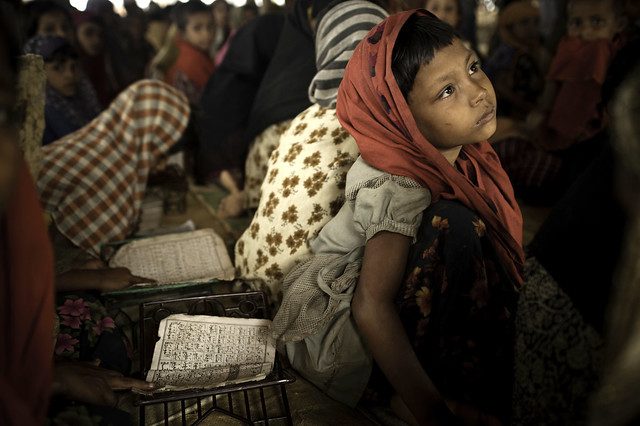
Education for Refugee ChildrenWhile the civil war rages, education in Syria fails to be a priority. Unfortunately, those forced to flee suffer a similar fate. The U.N. reports that only 50% of refugees, from Syria or elsewhere, are enrolled in primary education. Education for refugee children is invaluable; it provides safety, stability, psychological support and social support.
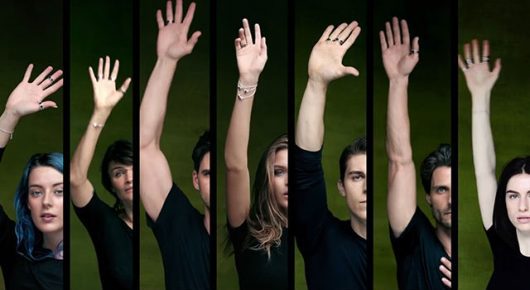
Refugee services in various countries have set up different types of education for refugee children. UNICEF calls this initiative the “No Lost Generation.” Below are three different forms of education various countries and organizations have made available for refugee children.

Integration into Local Schools

In some places, refugee children are integrated into the local school system. This is one of the fastest ways to assimilate children into their new environment as well as help normalize their lives.

Unfortunately, many places are not able to handle the extreme increase in the school system. Because of their small populations and large numbers of refugees, 56% of refugee children in Jordan and 80% in Lebanon are not in school. Those who do attend face many challenges and often drop out.

At best, schools are overcrowded and well-intentioned teachers lack the training and resources to assist students who have suffered so much psychological distress.

At worst, refugee children are blamed for the crowding and abused by their teachers and fellow students. UNICEF has set up teaching training to improve education in Syria and nearby countries.

Additional Programing

Some refugee programs provide additional assistance to help ease the transition for incoming students. Refugees are often out of school for months or even years. Returning to school often involves overcoming these gaps as well as language or cultural barriers.

Lexington Refugee Ministries in Kentucky provides after school and summer programming to help children adjust to their new schools. Volunteers assist with tutoring, social adjustment and college readiness workshops. Similar programs are popping up in various countries.

Drop-in Centers

UNICEF and Save the Children International have partnered to set up drop-in centers in refugee camps globally. While this does not have the same advantages as traditional schooling, it provides flexibility necessary for many refugees.

Because of a lack of food security, many refugees prioritize work over education. Although they are not a permanent solution, drop-in centers allow children to keep up their education while they work or move around. The children receive training in a trade, basic education and an opportunity to play with other kids.

Education for refugee children is extremely valuable, but traditional schooling is not always an option. While it can be frustrating to have schools bursting at the seams, it is important to remember that the children are victims, not perpetrators, of the situation.

UNICEF tells the story of a young boy named Ahmed who has been able to receive some schooling by attending a drop-in center. He says, “I feel happy here. At this place, I can have fun, and every day I learn so much. The math I learn here also helps me with my work.” For kids like Ahmed, education is the best hope for a better future.

– Jeanette I. Burke
Photo: Flickr

August 18, 2016
https://borgenproject.org/wp-content/uploads/borgen-project-logo.svg 0 0 Borgen Project https://borgenproject.org/wp-content/uploads/borgen-project-logo.svg Borgen Project2016-08-18 01:30:012024-12-13 17:54:403 Types of Education for Refugee Children
Advocacy, Children, Global Poverty

5 Things to Know About #RaiseYourHand Campaign

#raiseyourhandA partnership between the jewelry and luxury goods brand Bulgari and the nonprofit Save the Children has led to a new philanthropic campaign entitled #RaiseYourHand. Together, these groups are working to aid children around the world who are affected by marginalization, natural disasters, war, disability and poverty. Here are the five things to know about #RaiseYourHand campaign:
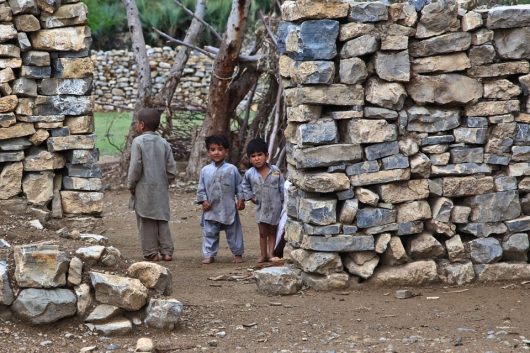
  1. Bulgari has released a bracelet specifically created for Save the Children’s #RaiseYourHand campaign. The beautiful, sterling silver and black ceramic piece is available at some major retailers as well as on the Bulgari website and in Bulgari stores. $100 of each bracelet purchase goes straight to Save the Children making it a beautiful way to showcase your passion for the cause.
  2. #RaiseYourHand is more than just a catchy hashtag. In fact, Fabrizio Ferri, the campaign’s Creative Director, explained the meaning behind the campaign title, saying, “We raise our hand to signal our presence, our interest, our attention, our participation. To signal that we do not hide, that we have no fear, that we believe we have an answer. Raising our hand while wearing the ring or the bracelet symbolizes our support for Bulgari’s effort to raise funds for Save the Children.” The Instagram hashtag is a stream of celebrities and do-gooders from the fashion industry holding a hand up in support of children in need.
  3. The supporters of #RaiseYourHand include actresses Meg Ryan and Naomi Watts, models like Tali Lennox, Lily Aldrige, Helena Christensen and many others. Plenty of well-known faces have already taken initiative and gotten involved in a campaign that has done and will continue doing good for vulnerable populations in the world.
  4. This is not the first time Bulgari and Save the Children have worked together. In fact, they have been working together since 2009. This partnership has been extremely beneficial in raising funds for Save the Children programs, it has also led to more global visibility for the Save the Children organization.
  5. Already the partnership between Bulgari and Save the Children has been wildly successful. The sales of the custom-designed Bulgari pieces have helped raise $50 million for Save the Children. Said donations have impacted one million people spanning 33 countries on five different continents.

This partnership has already proven itself capable of doing massive amounts of good in the world. The CEO of Bulgari, Jean-Christophe Babin, spoke up about the work Bulgari and Save the Children do together, saying, “Bettering the world is a quality inborn in Bulgari’s company culture. We are proud to partner with Save the Children to do our part in making a better tomorrow.”

– Jordan Little
Photo: Forbes

August 15, 2016
https://borgenproject.org/wp-content/uploads/borgen-project-logo.svg 0 0 Borgen Project https://borgenproject.org/wp-content/uploads/borgen-project-logo.svg Borgen Project2016-08-15 01:30:172024-12-13 17:55:365 Things to Know About #RaiseYourHand Campaign
Children, Global Poverty

Five Facts About Children Born in Poverty

Children born in poverty

Five Facts About Children Born in Poverty

  1. UNICEF estimates that 39 percent of children in low and middle-income countries are living in extreme poverty. These children born in poverty must survive on less than $1.25 a day. From education to food security, severe poverty impacts nearly every aspect of a child’s life. According to UNICEF, “Nearly half of all deaths in children under five are attributable to undernutrition.” It is estimated that over three million children die every year from hunger.
  2. In countries like Madagascar, the only meal many children receive in a day is school lunch. Malnutrition also causes children to be more susceptible to illnesses like malaria, pneumonia and measles. Several organizations like UNICEF, USAID and Save the Children have programs to provide adequate nutrition to children in developing countries.
  3. A 2015 report published by the World Health Organization (WHO) and the World Bank Group estimated 400 million people were without access to basic healthcare throughout the world. Approximately nine million children under the age of five die yearly. The WHO estimates 70 percent of these deaths are preventable with better access to medical care.
  4. The U.N. reports that children comprise half of the world’s refugee population. These children come from conflict-ridden countries like Syria, Sudan and Iraq and many are internally displaced. Access to adequate healthcare, education and shelter are all challenges refugee children must face. Many of these children lost their entire family to violence within their home countries.
  5. Children born in poverty are also more likely to be affected by mental health problems. Even in developed countries like the U.S., long-term financial stress is linked to poor mental health. Rates of anxiety and depression are higher among low-income individuals. The loss of close family members can also increase the likelihood of adverse mental health for children born in poverty.

Poverty is a cyclical condition and education is crucial to ending chronic poverty. Children born to low-income families are statistically likely to remain impoverished due to a lack of education and opportunities.

The U.N. reports that between the years of 1994 and 2009, “Rural households where the household head had completed primary education were 16 percent less likely to be chronically poor.”

These promising statistics are the driving force behind government-led programs and NGOs to increase access to education.

– Saroja Koneru

Photo: Pixabay

August 5, 2016
https://borgenproject.org/wp-content/uploads/borgen-project-logo.svg 0 0 Borgen Project https://borgenproject.org/wp-content/uploads/borgen-project-logo.svg Borgen Project2016-08-05 01:30:472024-12-13 17:54:39Five Facts About Children Born in Poverty
Children, Global Poverty, Poverty Reduction

Effects of Poverty on Society

Effects of Poverty on Society Violence
Issues like hunger, illness, and poor sanitation are all causes and effects of poverty. That is to say, that not having food means being poor, but being poor also means being unable to afford food or  clean water. The effects of poverty are often interrelated so that one problem rarely occurs alone. Bad sanitation makes one susceptible to diseases, and hunger and lack of clean water makes one even more vulnerable to diseases. Impoverished countries and communities often suffer from discrimination and end up caught in a cycle of poverty.


Effects of Poverty on Society


The vicious cycle of poverty means that lifelong barriers and troubles are passed on from one generation to the next. Unemployment and low incomes create an environment where children are unable to attend school. Children must often work to provide an income for their family. As for children who are able to go to school, many fail to see how hard work can improve their lives as they see their parents struggle at every day tasks. Other plagues accompanying poverty include:

  • Crippling accidents as a result of unsafe work environments—consider the recent building collapse in Bangladesh.
  • Poor housing—a long-lasting cause of diseases.
  • Water and food related diseases that occur simply because the poor cannot afford “safe” foods.

Ultimately, poverty is a major cause of social tensions and threatens to divide a nation because of income inequality. This occurs when the wealth of a country is poorly distributed among its citizens—when a tiny minority has a majority of the money. Wealthy or developed countries maintain stability because of the presence of a middle class. However, even Western countries are gradually losing their middle class. As a result there has been an increased number of riots and clashes. For society, poverty is a very dangerous factor that can destabilize an entire country. The Arab Spring is a great example of how revolts can start because of few job opportunities and high poverty levels.


Child Poverty


The number of children affected by poverty has been increasing since the 1960s. Children are those with the least amount choice and ability to change their circumstances. There is very little they can do to help their families, nor should they have to. Usually by the age of six they can be enrolled in child labor. Nearly all the potential effects of poverty impact the lives of children—poor infrastructure, unemployment, malnutrition, domestic violence, child labor, and disease. Simply analyzing the effects of child poverty on education in developed countries alone reveal some disturbing statistics:

  • Children from poor backgrounds lag behind at all stages of education.
  • By the age of three, poorer children are estimated to be nine months behind children from wealthier backgrounds.
  • By the end of primary school, students receiving free school meals are estimated to be about three terms behind their peers.
  • By 14, this gap increases to over five terms.
  • By 16, children receiving free school meals are about 1.7 grade points below their more affluent peers’ average GPA.


Effects of Poverty and Violence


The effect of poverty on terrorism is not as straightforward as the media often perceives it to be. Poverty fuels terrorism by creating a state of misery and frustration that pushes people to join terrorist organizations. But more research shows, it is more complicated.

Of course, some terrorists come from poor countries with high unemployment, and terrorist organizations often provide higher salaries than other jobs. But terrorism may not be a direct effect of poverty. So what is the source of frustration and anger?

Studies show that countries with weak governments, fragile institutions, and limited civil rights are a great environment to nurture the production of terrorist activity. Countries undergoing difficult transitions—i.e. from authoritarian to democratic regime—often encounter political instability with the blurring of certain rules and laws.

These periods of profound change come with a transformation of social order, values, and methods of governing that many people may find distressing and unsettling. Therefore, stabilizing and empowering political institutions is a crucial part of fighting against the dangerous consequences of poverty.

– Scarlet Shelton

Sources: Poverties.org, CPAG, UK Government

August 3, 2016
https://borgenproject.org/wp-content/uploads/borgen-project-logo.svg 0 0 Borgen Project https://borgenproject.org/wp-content/uploads/borgen-project-logo.svg Borgen Project2016-08-03 04:43:352024-05-25 00:13:41Effects of Poverty on Society
Children, Global Poverty

Child Poverty in New Zealand

Child poverty in New Zealand

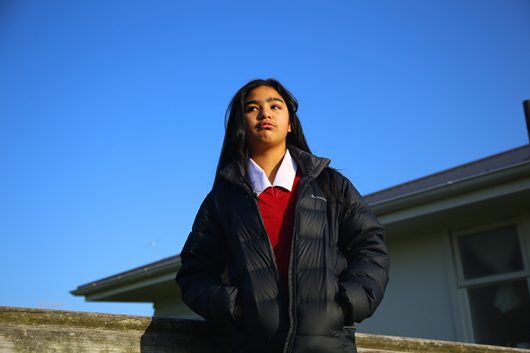
New Zealand is among the world’s most developed countries. The average life expectancy of its population is over 80 years of age, and the country’s education system is considered one of the best in the world. Unfortunately, poverty exists and is a challenge. In particular, child poverty in New Zealand is a real issue.

Approximately 305,000 children in New Zealand live in poverty. This means over a quarter of children living within the country are underprivileged. Additionally, 14 percent of these children cannot afford basic food, housing or clothing. According to UNICEF, “the economic cost of child poverty is in the range of NZ $6-8 billion per year.”

The organization states the failure to invest in poverty reduction efforts in the present will lead to major economic issues in the future.

Children that grow up in poverty–which is often in households with single-parents, large families or a disabled relative–are more likely to experience health problems, struggle to access education and become imprisoned in the future. Unfortunately, childhood poverty is cyclical and is not easily escaped from generation to generation.

In New Zealand, certain ethnic groups have higher rates of child poverty than others. Specifically, the Maori and Pacific populations face greater child poverty than the rest of the country.

Eliminating child poverty is not only a humanitarian responsibility but also an opportunity to help the country’s economy. According to UNICEF, eliminating child poverty can help improve New Zealand’s economy in the long run. Lowering child poverty rates would decrease the financial burden of healthcare and crime. Essentially, the entire community can benefit from aid programs.

Consequentially, many are calling upon the government to increase funding and programs available to the poor. There are multiple organizations dedicated to alleviating child poverty in New Zealand, including UNICEF, KidsCan and Child Poverty Action Group (CPAG).

KidsCan is an organization working to provide impoverished children with essential food, clothing and healthcare. Organizations such as these are crucial to solving the child poverty crisis within the country.

CPAG is another independent charity raising awareness and funding for child poverty in New Zealand. The organization believes that the government has not implemented any substantial efforts to reduce the problem.

It is crucial to address child poverty specifically as newer generations can break the cycle of poverty when given proper resources.

– Saroja Koneru

Photo: UNICEF

August 3, 2016
https://borgenproject.org/wp-content/uploads/borgen-project-logo.svg 0 0 Borgen Project https://borgenproject.org/wp-content/uploads/borgen-project-logo.svg Borgen Project2016-08-03 01:30:112024-05-27 09:34:46Child Poverty in New Zealand
Children, Global Poverty

Child Poverty in Japan: A Hidden Epidemic

Child Poverty in Japan
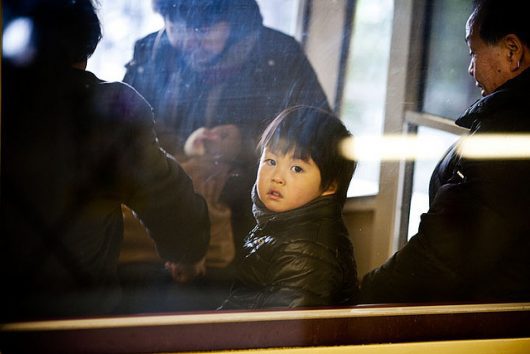
The media covers news regarding poverty in developing countries, but rarely does one see media coverage of poverty in a first-world country like Japan.

First-world countries are defined by their developed infrastructures, capitalist economies and mass industrialization. Because it is a first-world country, there is an assumption that the level of poverty in Japan would be relatively low, yet this is not the case.

In fact, in 2014 the Japanese government found that the relative poverty rate (those who live on less than half of the national median income) was 16 percent of the total population of Japan. According to the Organization for Economic Co-Operation and Development (OECD), the national median income of Japan is around ¥2.75 million, which converts to $27,323.

The majority of people who fall in that 16 percent do not have permanent employment contracts, instead relying on irregular work at construction sites or manufacturing production lines. So while unemployment in Japan falls below 4 percent, irregular and part-time workers (who fall in the relative poverty rate category) comprise around 40 percent of the Japanese workforce.

Another hidden hardship for the country is the amount of child poverty in Japan.

One in six children lives in poverty in a dual-parent family; one in two children live in poverty in Japan with a single parent.

A large contributing factor to child poverty in Japan is the cost of education. Parents living on less than ¥3mil a year struggle to afford the ¥200,000 a year required for their child to attend public high school full time in addition to rent, utilities, food, clothing and other miscellaneous expenses.

Inability to get the education they deserve deprives the Japanese workforce of the skilled laborers necessary to keep the economy thriving.

Community centers, such as the one established in Saitama by the Saitama Youth Support Net, a nonprofit organization run by university student volunteers, help combat the problem of child poverty in Japan by offering free tutoring services to financially strapped families who cannot afford expensive schools or private tutors for their children.

Other anti-child-poverty advocates have created a petition on Change.org for a state-backed scholarship program for poor families; as of June 2016, it had garnered over 5,000 supporters.

Hopefully, more progress will be made to help make education more accessible to all children in Japan in the future.

– Bayley McComb

Photo: Flickr

July 31, 2016
https://borgenproject.org/wp-content/uploads/borgen-project-logo.svg 0 0 Borgen Project https://borgenproject.org/wp-content/uploads/borgen-project-logo.svg Borgen Project2016-07-31 01:30:312024-12-13 17:54:53Child Poverty in Japan: A Hidden Epidemic
Children, Education, Global Poverty

UNICEF’s School in a Box: A Foreign Aid Success

School in a box
During times of emergency, priorities turn to basic essentials like food, water and shelter. While these are clearly the most important, UNICEF argues that a fourth thing needs to be added as a necessity: education. UNICEF’s school in a box provides an incredible solution.

Education is one of the best ways to preserve normalcy, social resources and safety that is invaluable to primary school-aged kids. They are not alone in this belief; a study by Duke University Professor E. Frankenburg explains that people with access to education are better equipped to handle crises.


School in a Box:  Education in Crisis Response


How can schools be efficiently supplied after emergency?

UNICEF came up with an answer that is a fast and affordable foreign aid success. Within three days of a tsunami or other crisis, they can deliver a ‘School in a Box’ with three months worth of supplies for one teacher and 40 students. They are perfect for places recently hit with a natural disaster or a sudden influx of students.

It is all inclusive so that a classroom can be set up anywhere. In addition to the classic materials like paper, books and pens, the kit contains toys, a radio, educational posters and can of paint that can turn any flat surface into a blackboard.

Translations are available in most languages and UNICEF has tried to make it as non-culturally specific as possible. Boxes can be supplemented with locally produced materials and lesson plans.

This program was created in the mid-1990s, along with UNESCO’s similar Teacher Emergency Package. Originally, it was used in Rwanda but has spread to at least 12 countries including Pakistan, Haiti, Japan and even the United States. It has been a foreign aid success: in 2014 alone, 106,201 kits were distributed.

These kits can be sponsored for a mere $209.11 on UNICEF’s website. While this program is not a permanent replacement for locally supported schools, School in a Box provides a quick and effective way to give kids education during an emergency.

– Jeanette I. Burke

Photo: The Epoch Times

July 28, 2016
https://borgenproject.org/wp-content/uploads/borgen-project-logo.svg 0 0 Borgen Project https://borgenproject.org/wp-content/uploads/borgen-project-logo.svg Borgen Project2016-07-28 01:30:262024-06-04 01:17:43UNICEF’s School in a Box: A Foreign Aid Success
Children, Education, Global Poverty

Children in Crisis Areas Struggling with Education

Children in Crisis AreasAccording to a recent UNICEF report, approximately one in four children of school age resides in countries affected by war and humanitarian crises. There are around 462 million children in crisis areas whose education suffers, particularly areas in Syria and Eastern Ukraine.

Of this number, 75 million children are out-of-school, and the situation worsens for school-aged girls. UNICEF reports that over 63 million girls do not attend school and the numbers continue to rise. School-aged girls are in desperate need of a support system to improve their access to education and their chances at a successful future.

An education system not only provides basic instruction but also incorporates a daily schedule, food access and safe shelter for children during times of conflict. Conflicts in Eastern Ukraine have destroyed one out of every five schools and conflicts in Syria have rendered 6,000 schools unusable for education. The sites that can no longer be used as schools are now used as shelters for families or bases for armed forces.

As a result of the humanitarian crises in these areas, many children often receive no chance at an education. However, a recent emergency education fund will help to provide better education for the students facing difficulty, improving their family life and reactions to local conflicts as a result.

The World Humanitarian Summit was held in Istanbul in late May, where an emergency education fund called ‘Education Cannot Wait’ was proposed. The fund will provide for the educational needs of children who are suffering as a result of living in conflict zones.

Education Cannot Wait will attempt to raise $4 billion in the next five years for children in crisis areas struggling with education access and quality. This will support the 2015 Sustainable Development Goals which include a proposal for all school-aged children to have access to free and quality primary and secondary education by 2030. Improving the education systems for children in conflict zones will minimize or mitigate the issues of poverty on a larger scale.

– Amanda Panella

Photo: Flickr

July 24, 2016
https://borgenproject.org/wp-content/uploads/borgen-project-logo.svg 0 0 Borgen Project https://borgenproject.org/wp-content/uploads/borgen-project-logo.svg Borgen Project2016-07-24 01:30:072024-12-13 17:54:31Children in Crisis Areas Struggling with Education
Children, Global Poverty

9 Facts About Child Poverty

Child_Poverty
Every day, the effects of poverty take the lives of thousands, with children suffering the most. Chronic poverty makes children more susceptible to disease, hunger, and developmental problems. Here are the most concerning facts about child poverty:

  1. According to the World Bank, more than 400 million children are living in extreme poverty (less than $1.25 a day).
  2. Roughly 16,000 children die each day—mostly due to preventable or treatable conditions.
  3. UNICEF estimates that over 2 million children ages 10-19 have HIV.
  4. Roughly half of all deaths of children under the age of five are caused by malnutrition.
  5. The International Labor Organization reports that 168 million children are child laborers; many of them in dangerous lines of work, such as factory jobs.

The question then arises, what can be done about child poverty? The good news is that, despite the previous data, progress is being made every day combating this issue. Here are four facts on the fight against child poverty:

  1. According to UNICEF, the mortality rate for children under age 5 has decreased by 53 percent since 1990.
  2. The World Health Organization says the most important element in reducing the mortality rate for children is increasing access to healthcare worldwide, particularly in preventative measures such as vaccines.
  3. Global programs, such as the Meningitis Vaccine Project (MVP), are working to achieve WHO’s goal of increasing access to preventative care. Started in 2010, more than 235 million Africans have been vaccinated against meningitis through MVP.
  4. Ending child poverty can start with an individual. You can donate to an organization working to combat child poverty, and you can do things like contact congress to voice support for increasing foreign aid to causes like this.

The global community has made strides in combatting child poverty, but there is still work to be done to ensure sustainable futures for the world’s youth.

– Emily Milakovic

Photo: U.N. Multimedia

July 19, 2016
https://borgenproject.org/wp-content/uploads/borgen-project-logo.svg 0 0 Borgen Project https://borgenproject.org/wp-content/uploads/borgen-project-logo.svg Borgen Project2016-07-19 01:30:452024-12-13 18:06:059 Facts About Child Poverty
Children, Global Poverty

UNICEF Releases Video for Childhood Poverty Awareness

Childhood poverty awareness
UNICEF recently released a video showing how people react to children based on the types of clothes they are wearing. The video was in conjunction with the State of the World’s Children Report of 2016, sending a strong message to society about childhood poverty awareness.

The social experiment video that UNICEF released in company with the State of the World’s Children Report of 2016 has sparked an overdue societal reaction. The video has ignited conversations about what can be done to increase childhood poverty awareness.

UNICEF’s message following the video was that the world must invest in poor children before the world becomes more divided and unequal. It is a call to action motivated by a sense of urgency and the conviction that a better world is possible.

In the video, the production team dresses a little girl named Anano in very nice clothes. As she stands alone on the sidewalk, people consistently ask her if she is lost and try to help her. When the production team changes Anano’s appearance, dressing her in scrappy clothes with soot on her face, a drastic change occurs. Looking as if she is stricken by poverty, those passing by ignore her. She is left alone in the street without anyone giving her a second glance.

In the second experiment, the production team has Anano enter a restaurant using the same set-up. When she was dressed in stylish clothing, many customers are very friendly towards her and are willing to entertain her. When her appearance changes, she is greatly ignored. As she walks past tables, women move their purses out of range and suggest that she be taken out of the restaurant. Anano became so upset after this scene that production had to halt the video.

What is clear is the heart-wrenching message that UNICEF is trying to portray with the release of this video. Although reading a report may strike a chord, visual images often evoke stronger reactions.

The emotions that society feels while watching the video are the emotions that UNICEF would like everyone to feel knowing that there are millions of children around the world living in extreme poverty. It is not enough to feel for just Anano; as a society, it is imperative that these reactions are put into actions and are carried out throughout the world.

In the 180 pages of the State of the World’s Children Report of 2016, UNICEF notes that childhood poverty awareness must be increased today in order to achieve the Millennium Development Goals by 2030. If these goals are not met, 167 million children will live in extreme poverty by that time. In addition, 69 million children that are now under the age of five will die before 2030 and 60 million children of age to attend primary school will not attend.

The report covers child health, education, poverty and equality. It urges society to strengthen the principles of increasing child poverty awareness by allowing the public to have access to information about the number of children living in poverty. The report also suggests ways to accelerate the processes of investing in equity and creating innovative ways to finance the poorest of the poor.

One disparity that UNICEF reports on is the lack of health providers in poor countries. Sub-Saharan Africa has 1.8 million fewer health workers than its population needs. With women facing a 1-in-36 chance of dying from pregnancy-related complications, UNICEF urges that child survival begins with women’s health.

The report concludes that the futures of millions of impoverished and vulnerable children will be endangered unless the world advances the pace of the developments that are being made in mitigating childhood poverty awareness.

– Kimber Kraus

Photo: YouTube

July 14, 2016
https://borgenproject.org/wp-content/uploads/borgen-project-logo.svg 0 0 Borgen Project https://borgenproject.org/wp-content/uploads/borgen-project-logo.svg Borgen Project2016-07-14 01:30:582024-12-13 17:54:51UNICEF Releases Video for Childhood Poverty Awareness
Page 103 of 137«‹101102103104105›»

Get Smarter

  • Global Poverty 101
  • Global Poverty… The Good News
  • Global Poverty & U.S. Jobs
  • Global Poverty and National Security
  • Innovative Solutions to Poverty
  • Global Poverty & Aid FAQ’s
Search Search

Take Action

  • Call Congress
  • Email Congress
  • Donate
  • 30 Ways to Help
  • Volunteer Ops
  • Internships
  • Courses & Certificates
  • The Podcast
Borgen Project

“The Borgen Project is an incredible nonprofit organization that is addressing poverty and hunger and working towards ending them.”

-The Huffington Post

Inside The Borgen Project

  • Contact
  • About
  • Financials
  • President
  • Board of Directors
  • Board of Advisors

International Links

  • UK Email Parliament
  • UK Donate
  • Canada Email Parliament

Get Smarter

  • Global Poverty 101
  • Global Poverty… The Good News
  • Global Poverty & U.S. Jobs
  • Global Poverty and National Security
  • Innovative Solutions to Poverty
  • Global Poverty & Aid FAQ’s

Ways to Help

  • Call Congress
  • Email Congress
  • Donate
  • 30 Ways to Help
  • Volunteer Ops
  • Internships
  • Courses & Certificates
  • The Podcast
Scroll to top Scroll to top Scroll to top