• Link to X
  • Link to Facebook
  • Link to Instagram
  • Link to TikTok
  • Link to Youtube
  • About
    • About Us
      • President
      • Board of Directors
      • Board of Advisors
      • Financials
      • Our Methodology
      • Success Tracker
      • Contact
  • Act Now
    • 30 Ways to Help
      • Email Congress
      • Call Congress
      • Volunteer
      • Courses & Certificates
      • Be a Donor
    • Internships
      • In-Office Internships
      • Remote Internships
    • Legislation
      • Politics 101
  • The Blog
  • The Podcast
  • Magazine
  • Donate
  • Click to open the search input field Click to open the search input field Search
  • Menu Menu

Archive for category: Children

Information and stories addressing children.

Children, Education, Global Poverty

Designing Africa’s Digital Education at the World Economic Forum

Africa_Digital_Education World Economic Forum

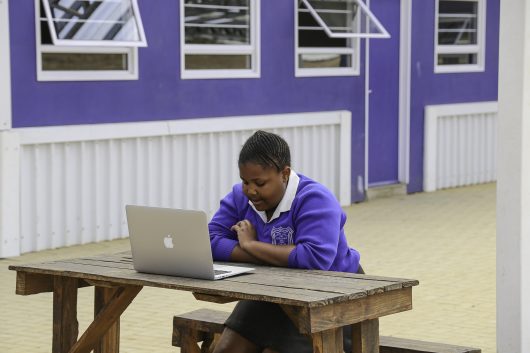
Digital education is a hot button topic in the United States, and last week, an international panel convened in Kigali, Rwanda, to discuss the efficacy of digitalizing African education systems. Held at the World Economic Forum on Africa, the friendly debate included education and governmental officials and digital education technology experts from around the world. Together, the panel discussed the two great hardships of African education—access to education and quality of education—in the context of a digital education revolution.

When some imagine the future of digital education, they see holograms and tablets, but the Digital Education panel put that idea to rest. “An educational overhaul isn’t feasible or realistic,” said Rapeland Rabana, founder of Rekindle Learning. “[We need to] look where we can build on what we already have,” she added.

In this way, struggling African governments will not be overwhelmed by new technological demands. Besides, according to TIME Magazine, only around 20 percent of Africans have access to the internet, and 40 percent don’t even have access to regular electricity. The argument can be seen that a hologram-touting educational reform system would do little in this environment.

One of the most important ideas discussed by the panel was that of privatized messaging platforms, like Messenger, WhatsApp or WeChat, as the digital basis for educational apps. Although attempting to privatize education could pose challenges of its own, Minister of Youth Jean Philbert Nsengimana pointed out that most African governments could not complete an educational transformation on their own. Instead, he said, “[We should] move away from the either-or debate and look at how the system can work together.”

Globally 57 million school-age children, many of whom are young girls, do not have the opportunity to attend school. Although the panel’s focus was digital education in Africa, the members did not forget that education is an issue outside of the continent.

Nsengimana brought this up and made it clear that he sees digital education as a means of inclusion for these educationless students, especially the young girls. Despite the logistical difficulties and the long implementation project, the Digital Education Panel at the World Economic Forum on Africa came to an encouragingly simple conclusion: by using the technologies that are already in place and focusing on accessibility in addition to advanced development, digital education tools will without a doubt be the future of education in Africa.

– Sage Smiley

Photo: Flickr

July 10, 2016
https://borgenproject.org/wp-content/uploads/borgen-project-logo.svg 0 0 Borgen Project https://borgenproject.org/wp-content/uploads/borgen-project-logo.svg Borgen Project2016-07-10 01:30:082024-12-13 18:06:09Designing Africa’s Digital Education at the World Economic Forum
Children, Gender Equality, Women and Female Empowerment

Afghanistan’s Sesame Street Debuts Female Muppet

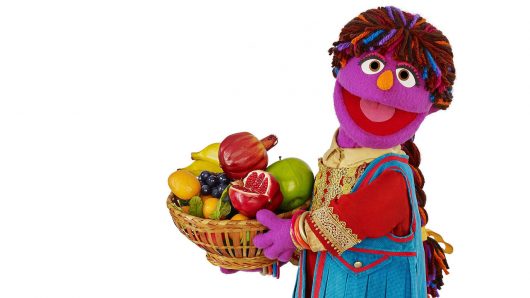
Afghanistan's Sesame StreetAfghanistan’s Sesame Street is debuting its first Afghan Muppet character, who just happens to be a girl.
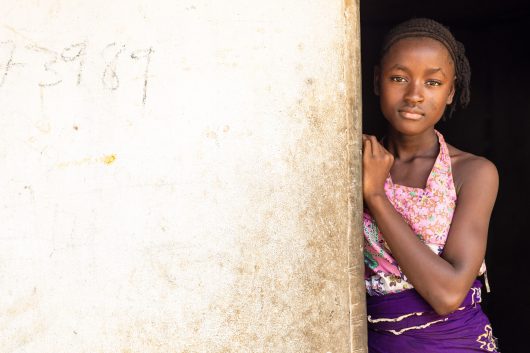
According to PBS Newshour, although Afghanistan’s Sesame Street has been running for about five years, it has mostly included international versions dubbed into local languages, with only short sequences filmed locally.

The character is a six-year-old with multi-colored hair, wearing a headscarf with her school uniform, reported the New York Times. The debut of a female character is noteworthy for Afghanistan, where women’s rights are strictly curtailed.

Also notable is the extremely low rates of both education and literacy for girls in Afghanistan, with 85 percent of girls receiving now formal schooling, and a literacy rate of 24 percent, reported Newshour.

Under these circumstances, having a bright and curious female character like Zari debut to audiences in Afghanistan is a positive step. The Huffington Post reports that Afghanistan’s Sesame Street is the most watched show by young children in the country. Sesame Workshop, the non-profit that produces Sesame Street, recorded that 81 percent of children aged three to seven have seen it.

Sherrie Westin, Sesame Workshop’s executive vice president of global impact and philanthropy, spoke to Reuters about her excitement in introducing a female character. She thinks she may just have the power to change some minds, including fathers’ attitudes about educating daughters.

Westin told Reuters, “The exciting part about Zari is that she is modeling for young girls that it is wonderful to go to school and that it’s ok to dream about having a career.”

Specifically, Zari will appear in segments about health, exercise and well-being, reported the Huffington Post. One segment will feature Zari visiting her doctor for a check-up, and asking how she can become a doctor herself. Zari will interview various kinds of professionals for the show.

She will also speak directly to viewers and interact with kids in person on the show, said the New York Times.

According to Huffington Post, Sesame Workshop is working with the Afghan education ministry to try to reduce any resistance to the notion of an empowered female character on a popular children’s show.

Sesame Street changed attitudes in the U.S. when it debuted almost 40 years ago. As Westin told Reuters, “Part of the power of the broadcast and Zari’s potential as a role model is to reach children and parents where they may not have access to other educational content.”

– Katherine Hamblen

Photo: Flickr

July 4, 2016
https://borgenproject.org/wp-content/uploads/borgen-project-logo.svg 0 0 Borgen Project https://borgenproject.org/wp-content/uploads/borgen-project-logo.svg Borgen Project2016-07-04 01:30:502024-12-13 17:54:28Afghanistan’s Sesame Street Debuts Female Muppet
Children, Education, Global Poverty

DREAMS Innovation Challenge: Empowering Young Girls

Empowering Young GirlsGlobally, 62 million girls are not enrolled in school, half of whom are adolescents. In addition, girls with access to “a basic education are three times less likely to contract HIV.” Those in the fight against global poverty are willing to invest in education for empowering young girls because of the incredible benefits it reaps.
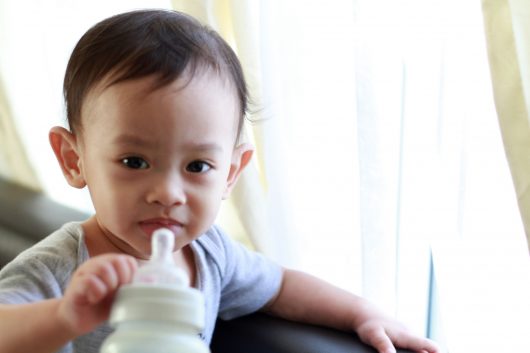
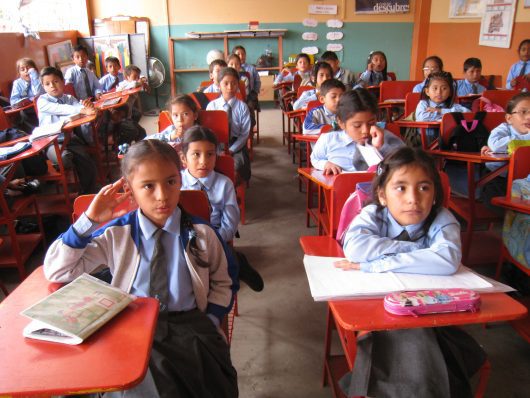
On March 15, 2016, the U.S. Global Strategy to Empower Adolescent Girls was launched by Secretary Kerry. According to the U.S. Department of State Official Blog, “Investing in girls’ education is not only the right thing to do, it’s the smart thing.”

In September 2015, the Sustainable Development Goals were adopted by 193 nations. They seek to achieve these goals by 2030. The investment in girls’ education supports the targets of quality education, gender equality, suitable work opportunities and good health.

The DREAMS Innovation Challenge is an organization that is offering $85 million for innovative approaches to reduce HIV infections in young girls in sub-Saharan Africa.

Part of achieving an AIDS-free generation is empowering young girls through education. DREAMS has partnered with PEPFAR (President’s Emergency Plan for Aids Relief) to address the social isolation, economic disadvantage, discriminatory cultural norms, orphanhood and gender-based bias that prevents adolescent girls from attending or remaining in school.

Similarly, Let Girls Learn, a United States initiative to ensure girls receive an education, recognizes that keeping girls in school can transform their families, communities and countries. Societies with educated women are healthier and stronger because more of the population has the skills, expertise and self-assurance to lift themselves out of poverty.

Providing adequate resources and opportunities for empowering young girls to pursue their dreams facilitates global development, security and prosperity. The gender and age of children should not be seen as setbacks. Rather, they are key factors in a society’s ability to grow socially and economically.

As stated in the Executive Summary of the U.S. Global Strategy to Empower Adolescent Girls, “While adolescence is a time of great vulnerability for girls, it is also an ideal point to leverage development and diplomacy efforts. It is an opportunity to disrupt poverty from becoming a permanent condition that is passed from one generation to the next.”

– Emily Ednoff

Photo: Flickr

July 3, 2016
https://borgenproject.org/wp-content/uploads/borgen-project-logo.svg 0 0 Kim Thelwell https://borgenproject.org/wp-content/uploads/borgen-project-logo.svg Kim Thelwell2016-07-03 01:30:092024-12-13 17:54:30DREAMS Innovation Challenge: Empowering Young Girls
Children, Disease, Global Poverty, Health

The Economic Importance of Breastfeeding

Breastfeeding
The importance of breastfeeding is not limited to health benefits. Higher rates of breastfeeding reap economic benefits too, which in turn can alleviate the strain of poverty in developing nations.

According to a series of studies published in The Lancet, a British medical journal, if a greater number of women breastfed from birth through at least six months of their baby’s life, it could save nearly 820,000 lives and billions of dollars.

The United States Department of Agriculture (USDA) estimates that if 50 to 75 percent of mothers breastfed through six months, the U.S. alone would save $3.6 billion each year.

The actual savings could be even higher, as these figures come from the cost savings of only three illnesses that are most common among children who are not breastfed. Breastfeeding reduces the risk factor of many other diseases and health complications as well.

In poorer countries, breastfeeding substantially reduces the number of childhood deaths from preventable diseases such as pneumonia and diarrhea.

These diseases are most commonly found in children in poor and underdeveloped countries, which typically already suffer huge economic losses from health problems.

Not only can breastfeeding greatly reduce the risk of these health problems, it can also save millions that would be spent treating these diseases after the fact.

The continued evidence of the importance of breastfeeding is greatly heartening. The difficulty is in getting this critical information to the women who need it most.

As a Huffington Post article explains, the real and current battle involves increasing awareness and education specifically to poorer mothers about the importance of breastfeeding.

Investments in healthcare programs in developing countries should continue focusing on health education, with a strong priority on basic elements of women’s health.

By increasing awareness of women’s health, including the importance of breastfeeding, countries can save many precious lives and valuable resources.

– Emily Milakovic

Photo: Flickr

June 29, 2016
https://borgenproject.org/wp-content/uploads/borgen-project-logo.svg 0 0 Borgen Project https://borgenproject.org/wp-content/uploads/borgen-project-logo.svg Borgen Project2016-06-29 01:30:312024-12-13 18:06:10The Economic Importance of Breastfeeding
Children

UN, ILO Push for Enforcement of Child Labor Laws

Child Labor Laws
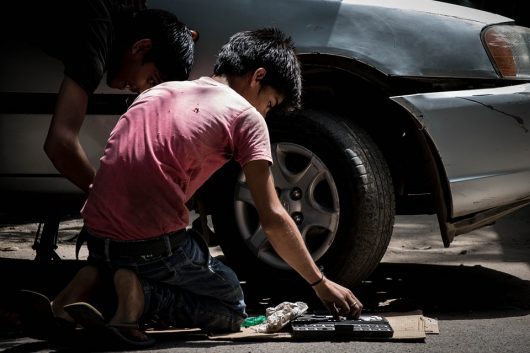
On World Day, June 12, the U.N. announced a renewed focus on child labor laws and supply chains. With so many children working, the U.N. says that all supply chains potentially use child labor.

Child labor encompasses “work that deprives children of their childhood, their potential and their dignity, and that is harmful to their physical and mental development.”

The International Labor Organization (ILO) and the U.N. have declared that nations must pass legislation in order to make lasting change. National governments need to adopt and enforce legislation that defines child labor and protects children against it.

Don’t child labor laws already exist?

Yes: ILO Convention No.182 helps to define the worst forms of child labor and makes a long term goal of the effective elimination of the issue. Also, Convention No. 138 sets the legal age at which a child may begin working.

For most member states of the U.N., the basic minimum age of labor is 15, with the possible exception of 14-year-olds in developing nations. The ILO stresses that no person under the age of 18 should be doing hazardous labor.

Considering that Convention No. 138 was written in 1973 and No. 182 in 1999, the goal of ending child labor is by no means a new one.

While conditions have improved since the inception of these conventions, 215 million children still take part in child labor today. Their employers often force them to work in the drug or sex trafficking industries. Some of these children are even forced to tote a gun and kill others.

Because child laborers number in the hundreds of millions, eradication may seem impossible. Fortunately, however, the numbers are dropping.

As more nations adopt the ILO’s conventions on child labor, the problem continues to diminish. In 2000, only 93 countries had ratified Convention No. 138 and  established a minimum age for child labor.

That same year, some 16 percent of children aged 5-17 were exposed to child labor worldwide. The most recent statistics from 2014 show that the number has dropped to 13.9 percent.

As the number of countries that have ratified Convention No. 138 jumps to 169, these small improvements will continue to grow in power and significance.

The real improvement comes with the ratification of Convention No. 182. Since 1999, hazardous child labor has dropped from an estimated 171 million children in 2000 to 85 million today. In addition, 180 countries have ratified this convention.

Ratification of these child labor laws and conventions has been effective in diminishing the problem, but it has not been enough to eradicate child labor.

In order to enforce child labor laws, governments must raise awareness of the problem. In addition, they must enact laws that enforce minimum working age and acceptable working conditions for children.

With World Day’s focus on child labor and its ensuing push for enforcement of ILO Conventions 182 and 138, world leaders will work to decrease the number of child laborers over the coming years.

-Aaron Parr

Photo: Pixabay

June 15, 2016
https://borgenproject.org/wp-content/uploads/borgen-project-logo.svg 0 0 Borgen Project https://borgenproject.org/wp-content/uploads/borgen-project-logo.svg Borgen Project2016-06-15 01:30:042020-06-18 13:58:57UN, ILO Push for Enforcement of Child Labor Laws
Children, Education, Global Poverty

Providing Education to Displaced Children in Ecuador

Education_Ecuador

The 7.8 magnitude earthquake that shook Ecuador back in April left behind serious damages across the country. 120,000 displaced children were forced to leave school as they were uprooted and their schools were damaged.

“Education is a lifeline for children going through the trauma of chaos and destruction,” said Grant Leaity, UNICEF Representative in Ecuador. “It helps give them a daily routine and a sense of purpose and puts them on track for psychological recovery.”

To ensure children continue their education during this time, UNICEF is building temporary education centers. They are working to install fifty temporary spaces to hold classes in, and are giving out 700 “school in a box” kits. These kits come a variety of school supplies, including chalk, slates and notebooks. UNICEF’s goal is to reach about 80,000 children with these measures, ensuring that they do not fall any farther behind.

Other organizations are taking similar measures. Plan International is building safe spaces for children which include temporary education centers as well. “We know that children are going to be among the most affected by this disaster, so it is of the utmost importance to work quickly and efficiently to help girls and boys cope with the stress of what they’ve been through and give them the space to express themselves in a safe and secure environment,” said Rossana Viteri, director of Plan International Ecuador.

Additionally, these centers will provide training to parents on how to help their children during this time. Training programs include hygiene, sanitation and safety. The goal is to protect the livelihoods of displaced children across the country. The health training is important, because UNICEF reports that thousands of displaced children are at a heightened risk of disease. The risk is highest in coastal areas, which have been deemed “hotspots” for diseases such as Zika and malaria.

For groups like UNICEF and Plan International, ensuring children maintain the best possible living standards is one of the top priorities while Ecuador rebuilds. If children can maintain their education through this crisis, they will be better equipped to someday return to school.

– Emily Milakovic

Photo: Flickr

June 10, 2016
https://borgenproject.org/wp-content/uploads/borgen-project-logo.svg 0 0 Borgen Project https://borgenproject.org/wp-content/uploads/borgen-project-logo.svg Borgen Project2016-06-10 01:30:382024-06-07 05:07:36Providing Education to Displaced Children in Ecuador
Children, Education, Global Poverty, Health

Early Childhood Development Now, Success Later

Child_Education

Children can be underestimated. They are born with the ability to absorb the world around them, and their experiences shape them in unique ways. The effects of early childhood development can have a significant impact on their success when it is time for school and future careers.

By age three, children’s brains are 82 percent of their adult size. It is vital to exercise the brain in its earliest years in order to reach developmental milestones later. Everyday activities like talking, reading and singing strengthen young children’s minds.

Trillions of neural synapses, or brain-cell connections, form in the first few years of a baby’s life. Connections will be lost indefinitely if a child is not stimulated with interaction and early experiences.

Playing, speaking and singing to babies prepares them to have a larger vocabulary, succeed in school and even increases their chance of graduating high school.

“The evidence is vast: exposing children before the age of five to stimulating environments strengthens their language development, social and emotional health, problem solving abilities, memory function, use of logic, analytical skills and ability to cope with new situations – leading to significantly better performance later in school,” said Alice Albright, Chief Executive Officer of Global Partnership for Education, in a Huffpost Education blog.

Albright points out that countries around the world have recently embraced the evidence and began to invest in their early childhood development programs.

Although early childhood development is important purely for the well-being of children, research has shown profound economic benefits as well. According to the Huffpost blog, for every dollar countries spend on pre-school programs, there is a $7 to $8 of economic, health and social progress.

Successful initiatives begin well before pre-school, with pre-natal maternal health, proper nutrition for breastfeeding mothers and adult caregiving skills.

Many cultures around the world benefit from classes that train the community to provide nurturing and age-appropriate activities in pre-school. Particularly low-income and disadvantaged communities often need extra efforts to create an engaging environment that will strengthen the cognitive development of children under two.

Quality early childhood care feeds a child’s ability to reach their full potential and contribute to their society.

Some obstacles developing countries encounter in establishing Early childhood care and education (ECCE) programs are a lack of funding, limited country capacity and low social demand. Organizations like Global Partnership for Education combat these barriers by providing technical and financial support, providing grants to finance the programs and supporting capacity development and knowledge sharing by pointing to the evidence.

Even though children do not talk back initially, they will learn and understand faster if they are engaged and spoken to. It is vital to educate populations around the world on the impact of early childhood care on development because it is not always prioritized simply for lack of knowledge. Quality ECCE can transform the resilience of communities and reap economic benefits.

– Emily Ednoff

Photo: Flickr

June 9, 2016
https://borgenproject.org/wp-content/uploads/borgen-project-logo.svg 0 0 Borgen Project https://borgenproject.org/wp-content/uploads/borgen-project-logo.svg Borgen Project2016-06-09 01:30:182024-12-13 18:06:04Early Childhood Development Now, Success Later
Children, Global Poverty, Health

USAID Combats Maternal, Neonatal & Child Mortality in Ethiopia

Health_mother_ Child Mortality

USAID is working with the Ethiopian government to reduce maternal, neonatal and child mortality rates, according to their website. Ethiopia has one of the highest rates of maternal deaths in the world.

“Women have a one-in-52 chance of dying from childbirth-related causes each year,” according to USAID. “Every year, more than 257,000 children under the age of five die and 120,000 die in the neonatal period. More than 60 percent of infant and 40 percent of under-five deaths in Ethiopia are neonatal deaths.”

Increasing Health Care Services

This dire situation calls for extensive health care services. Ninety percent of Ethiopian women give birth in their homes in order to observe cultural traditions and be surrounded by company they trust. Health facilities can spread awareness about the value of institutional delivery in decreasing mother and child mortality rates; many mothers have never heard the benefits of skilled birth attendance and postnatal care.

Preventable complications like hemorrhage, infection, unsafe abortion, hypertensive disorders and obstructed labor are to blame for 80 percent of maternal deaths.

USAID has intervened in family, community and facility care by increasing accessibility of health services. A health extension program includes basic obstetric and newborn care, essential newborn care, management of neonatal and childhood illnesses, coverage of immunizations and the early identification and treatment of sick children, all of which go a long way to decreasing the child mortality rate.

Additionally, they funded the Integrated Family Health Project, an activity that seeks to promote and strengthen family planning and maternal, newborn and child health practices and services. With the cooperation of health programs throughout Ethiopia, the IFHP impacts about 40 percent of the country’s entire population.

The Health Ministry and various organizations provide health facilities with ambulances, equipment and skilled staff. The majority of communities in Ethiopia lay in rural regions that place women in a vulnerable position when a complication arises during childbirth, and many fatalities occur in the transfer to a health facility.

Global Involvement

The Government of Germany recently contributed 10 million euro to UNICEF, bolstering its emergency response to drought affected regions in Ethiopia. This support will provide life-saving assistance to severely malnourished children and pregnant and lactating women. Lack of nutrition threatens close to half of a million children under the age of five and nearly 140,000 lactating women in the Somali area.

By providing preventive, promotional and basic curative health and nutrition services to mothers, infants and young children, USAID and other organizations like UNICEF are saving lives and combating illness and disability.

– Emily Ednoff

Photo: Flickr

April 27, 2016
https://borgenproject.org/wp-content/uploads/borgen-project-logo.svg 0 0 Borgen Project https://borgenproject.org/wp-content/uploads/borgen-project-logo.svg Borgen Project2016-04-27 01:30:092020-06-19 06:22:12USAID Combats Maternal, Neonatal & Child Mortality in Ethiopia
Child Soldiers, Children, Global Poverty

Info About Child Soldiers: What You Need to Know

Info About Child Soldiers
According to DoSomething.org, “in the last 15 years, the use of child soldiers has spread to almost every region of the world and every armed conflict. Though it is hardly possible to define an exact number, thousands of children soldiers are illegally serving in armed conflict around the world.”

Eight Facts About Child Soldiers

    1. Currently, there are between 250,000 and 300,000 children soldiers globally.
    2. The recruitment for children starts at the age of 10 and they are used as instruments within wars to execute individuals unreasonably.
    3. A child soldier is any minor, regardless of gender, under the age of 18 who is recruited by a state or non-state armed group and who is used as a fighter, messenger, spy or even for sexual purposes.
    4. “Children are recruited because they are more manageable, more obedient and more easily manipulated than adults. Children are also less conscious of danger, and it is harder for them to see the difference between absence and death,” according to Humanium.
    5. Young people are more likely to get recruited if they come from marginalized communities, are displaced from their houses, live in a combat zone and do not have access to education.
    6. Humanium emphasized that “children who are orphaned, unaccompanied or living in a difficult family environment, see it as a solution to their problems, and taking part in an armed group seems safer than confronting these problems. Revenge, community identity and ideology can also influence children.”
    7. Additionally, armed forces take minors because they are less expensive to recruit and train compared to adults.
    8. “Child soldiers are usually presented as victims of adults, and forced recruitment is more readily emphasized than voluntary engagement,” said Humanium.


There are some extreme cases where children volunteer to become soldiers because it is a better option to the reality they face every day. They see this as an outlet from their current situation.

– Isabella Rolz

Sources: Child Soldiers, Do Something, Humanium
Photo: Flickr

April 12, 2016
https://borgenproject.org/wp-content/uploads/borgen-project-logo.svg 0 0 Borgen Project https://borgenproject.org/wp-content/uploads/borgen-project-logo.svg Borgen Project2016-04-12 01:30:582024-12-13 17:54:15Info About Child Soldiers: What You Need to Know
Children, Global Poverty, Human Trafficking

The Loss of Freedom: Different Types of Human Trafficking

Human Trafficking
There are several types of human trafficking, and they all have a common denominator: an abuse of the intrinsic vulnerability of the victims.

According to the United Nations Office on Drugs and Crime, human trafficking is defined as “the recruitment, transportation, transfer, harbouring or receipt of persons, by means of the treat or use of force or other forms of coercion.”

Trafficking of individuals is a serious crime and a heinous violation of human rights.

“Every year, thousands of men, women and children fall into the hands of traffickers, in their own countries and abroad. Almost every country in the world is affected by trafficking, whether as a country of origin, transit or destination for victims,” said the UN.

The following are various categories linked to human trafficking.

Sex Trafficking

The United Nations Office on Drugs and Crime suggested that 53 percent of the victims are forced into sexual exploitation. “Sex trafficking is the recruitment, transportation, or harboring of persons through threat, use of force, or other coercion for the purpose of sexual exploitation. This includes movement across borders, as well as within the victim’s own country,” affirmed Human Trafficking Search.

The International Labour Organization estimated that there is a worldwide profit of $100 billion for forced commercial sexual exploitation.

Additionally, “the perceived inferior status of women in many parts of the world has contributed to the expansion of the trafficking industry,” confirmed Human Trafficking Search.

Involuntary Domestic Servitude

Involuntary servitude happens when a domestic worker becomes enslaved in an exploitative position they are incapable of escaping.

“Domestic servitude is the seemingly normal practice of live-in help that is used as a cover for the exploitation and control of someone, usually from another country. It is a form of forced labor, but it also warrants its own category of slavery because of the unique contexts and challenges it presents,” said End Slavery Now.

Forced Labor

According to Human Trafficking Search, “Forced labor is work or service that is extorted from someone under the menace of any penalty and work or service that the person has not offered voluntarily.”

The International Labour Organization estimated that approximately 20.9 million people are enslaved to forced labor, and 4.5 are subjected to sexual forced exploitation.

Debt Bondage

“Debt bondage is a type of forced labor, involving a debt that cannot be paid off in a reasonable time,” said Human Trafficking Search. It is a period of debt during which there is no freedom, consequently, it is also known as debt slavery.

Child Soldiers

Child soldiers are described as persons under the age of 18, who have been recruited by armed forces in any capacity. Currently, there are thousands of soldiers worldwide.

“The definition includes both boys and girls who are used as fighters, cooks, porters, messengers, spies, or for sexual purposes,” added Human Trafficking Search.

Child Sex Trafficking

There are approximately 1.8 million children subjected to prostitution or pornography globally.

The Human Trafficking Search defined it as “a sexual exploitation by an adult with respect to a child, usually accompanied by a payment to the child or one or more third parties.”

Child Labor

A child is considered to be involved in child labor activities if this minor is between the ages of 0 and 18, is involved in a type of work inappropriate for their age and in a dangerous work environment.

However, there are several forms of child labor. The most common ones are related to the informal sector of the economy and are linked to agricultural labor, mining, construction and begging in the streets.

Said by the Polaris Project, “human trafficking is a form of modern slavery – a multi-billion dollar criminal industry that denies freedom to 20.9 million people around the world. And no matter where you live, chances are it’s happening nearby. From the girl forced into prostitution at a truck stop, to the man discovered in a restaurant kitchen, stripped of his passport and held against his will. All trafficking victims share one essential experience: the loss of freedom.”

– Isabella Rolz

Sources: Human Trafficking Search, UNODC, End Slavery Now, Polaris Project, United Nations, International Labour Organization

April 9, 2016
https://borgenproject.org/wp-content/uploads/borgen-project-logo.svg 0 0 Borgen Project https://borgenproject.org/wp-content/uploads/borgen-project-logo.svg Borgen Project2016-04-09 01:30:362024-12-13 18:05:55The Loss of Freedom: Different Types of Human Trafficking
Page 104 of 137«‹102103104105106›»

Get Smarter

  • Global Poverty 101
  • Global Poverty… The Good News
  • Global Poverty & U.S. Jobs
  • Global Poverty and National Security
  • Innovative Solutions to Poverty
  • Global Poverty & Aid FAQ’s
Search Search

Take Action

  • Call Congress
  • Email Congress
  • Donate
  • 30 Ways to Help
  • Volunteer Ops
  • Internships
  • Courses & Certificates
  • The Podcast
Borgen Project

“The Borgen Project is an incredible nonprofit organization that is addressing poverty and hunger and working towards ending them.”

-The Huffington Post

Inside The Borgen Project

  • Contact
  • About
  • Financials
  • President
  • Board of Directors
  • Board of Advisors

International Links

  • UK Email Parliament
  • UK Donate
  • Canada Email Parliament

Get Smarter

  • Global Poverty 101
  • Global Poverty… The Good News
  • Global Poverty & U.S. Jobs
  • Global Poverty and National Security
  • Innovative Solutions to Poverty
  • Global Poverty & Aid FAQ’s

Ways to Help

  • Call Congress
  • Email Congress
  • Donate
  • 30 Ways to Help
  • Volunteer Ops
  • Internships
  • Courses & Certificates
  • The Podcast
Scroll to top Scroll to top Scroll to top