• Link to X
  • Link to Facebook
  • Link to Instagram
  • Link to TikTok
  • Link to Youtube
  • About
    • About Us
      • President
      • Board of Directors
      • Board of Advisors
      • Financials
      • Our Methodology
      • Success Tracker
      • Contact
  • Act Now
    • 30 Ways to Help
      • Email Congress
      • Call Congress
      • Volunteer
      • Courses & Certificates
      • Be a Donor
    • Internships
      • In-Office Internships
      • Remote Internships
    • Legislation
      • Politics 101
  • The Blog
  • The Podcast
  • Magazine
  • Donate
  • Click to open the search input field Click to open the search input field Search
  • Menu Menu

Archive for category: Aid

Aid, Global Poverty

Examining the Work of Irish Aid in Vietnam

Irish Aid in Vietnam
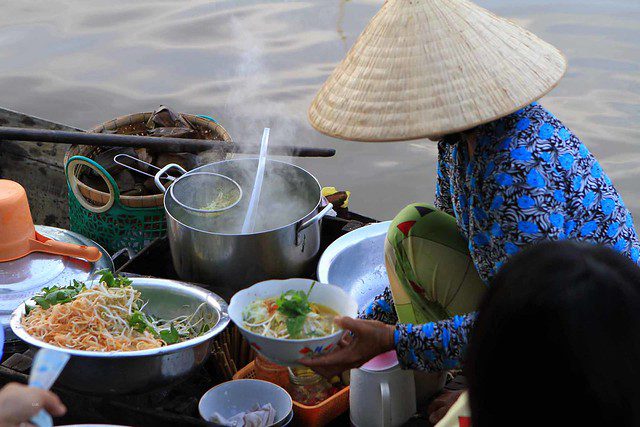
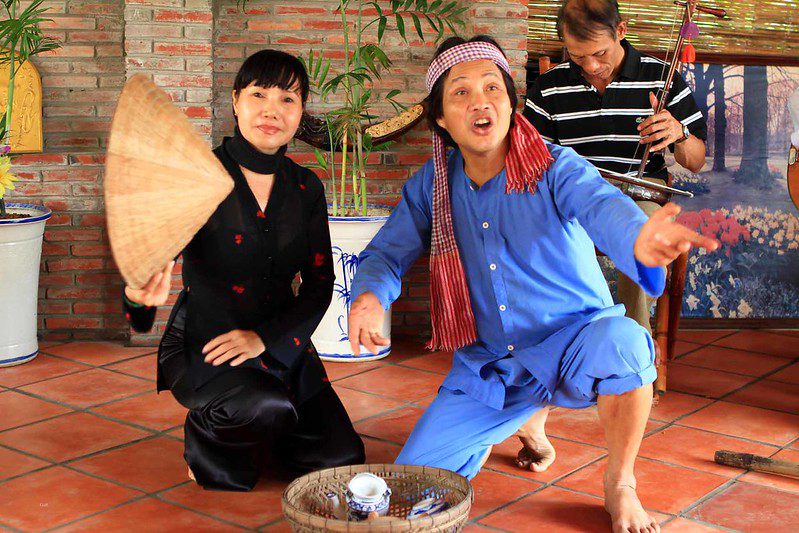
The S-shaped country of Vietnam has many picturesque sights to behold. Rice paddies stretch out over the Mekong and Red River Deltas that run through the country. Vietnam’s geography includes hills and various elevations with only 20% of the country being flat. Despite the beauty of Vietnam, the people in the country find themselves in need of aid. Since 2005, Ireland has been providing much-needed assistance to Vietnam. Ireland’s Department of Foreign Affairs and Trade runs the Irish Aid Programme. Irish Aid in Vietnam has provided various forms of assistance for the Vietnamese people.

Irish Aid’s Support of Ethnic Minorities

The aid that Ireland offered to Vietnam has given support to numerous sectors within the country. Sectors working with Irish Aid include human rights, agriculture, education and health. From 2011 to 2016, Irish Aid spent 17 million Euros on its Vietnam Country Strategy. One goal that the organization is working toward is the inclusion and provision of sustainable development for the various ethnic minorities that live in Vietnam. The largest of all the ethnic groups in Vietnam is the Kinh, otherwise known as the Viet. There are 53 other ethnic groups outside the Kinh that vary in how much of Vietnam’s population they make up.

Through the Irish embassy in Vietnam, Irish Aid has been addressing the needs that these ethnic groups need to better improve their quality of life. These needs include access to basic nutrition and gender empowerment. Irish Aid determines the needs of these ethnic groups by working with them and partnering with NGOs that are active in Vietnam.

Results of Irish Aid in Vietnam

Vietnam has made many improvements in various areas over the years. Life expectancy in Vietnam rose from 70 years to 76.25 just from 2005 to 2016 according to the World Bank. The stunting rate for children under the age of 5-years-old in Vietnam declined by 5% in only five years. In 2010, the stunting rate was at 29.3% and by 2014, it declined to 24.9%. Some of the work of Irish Aid in Vietnam has benefited the Vietnamese people as well. For one, the program was able to finish 60 different infrastructure projects that improved living conditions for the various ethnic minorities residing in Vietnam. Irish Aid also assisted with landmine removal across a distance of 879,431 meters.

Irish Aid held 132 landmine education sessions that taught about the dangers of landmines in Vietnam. These sessions helped to educate 38,124 children. Lastly, Irish Aid helped 400 people with disabilities in gaining employment or an improved living situation.

Despite the hardships for the people living in Vietnam, Irish Aid continues to assist. Not only has the organization provided aid, but its work has and is having a positive impact on the people of Vietnam.

– Jacob E. Lee
Photo: Flickr

July 29, 2021
https://borgenproject.org/wp-content/uploads/borgen-project-logo.svg 0 0 Lynsey Alexander https://borgenproject.org/wp-content/uploads/borgen-project-logo.svg Lynsey Alexander2021-07-29 15:23:202021-08-06 13:23:56Examining the Work of Irish Aid in Vietnam
Aid, Aid Effectiveness & Reform, Foreign Aid, Global Health, Global Poverty

Greenland’s Foreign Aid Dilemma

Greenland's Foreign Aid
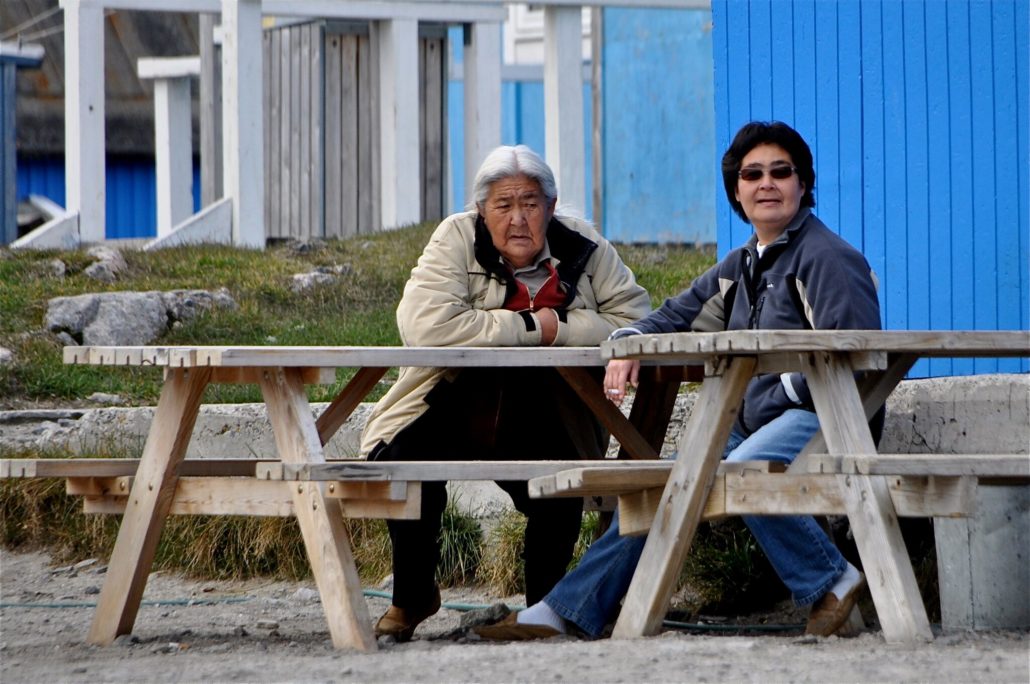
Many countries around the world benefit from foreign aid, but few rely on it for their livelihood. Greenland is one of the few countries that would struggle to exist at all without it, as Greenland’s foreign aid is essential to its economy. Each year, Denmark, Greenland’s former colonial ruler, gives the island nation about $591 million in subsidies. That represents about 60% of the Greenlandic government’s budget and comes to more than $10,000 for every person living in Greenland. The subsidy, however, is not the cure-all Denmark might hope it to be.

Greenland’s Foreign Aid and Social World

Greenland is a land of contradictions. It is the largest island in the world, yet has a population of fewer than 60,000 people. Its average income is about $33,000, placing it far above the international average, yet Greenland also suffers from a suicide rate seven times higher than in the United States, and a poverty rate of 16.2% as of 2015. Traditional practices remain the norm in many parts of the country. Fishing accounts for 90% of Greenland’s exports, and dog sleds are still a common sight in the island’s undeveloped interior.

How can Greenland receive so much aid and still suffer from such social ills? Part of the answer lies in international politics. Although Greenland is nominally independent, many of its politics are still under the control of Denmark. Worried about losing influence in Greenland, Denmark has often blocked other countries’ efforts to invest in Greenland.

For example, Denmark raised objections to a $12.1 million aid package to Greenland from the U.S. in 2020. While politicians raised some valid concerns about the package (particularly in light of President Trump’s tactless 2019 offer to buy Greenland from Denmark), the fact remains that foreign investment would almost certainly enrich Greenlanders. This would be especially relevant if Greenlanders, rather than Danes, were the ones to make decisions about foreign aid.

Potential Wealth in Greenland

On the other hand, Greenland itself enjoys huge sources of potential wealth. The island is strategically located in the arctic region. Greenland also possesses valuable mineral deposits in its interior, which global warming will eventually uncover. Unfortunately, Denmark’s reluctance to permit foreign aid, and a lack of local capital, have prevented Greenland from taking advantage of these resources.

Greenland’s dependence on Danish money is a major source of instability for the country. Were the Danish government to change its policy, Greenland’s fragile economy would collapse. Greenland’s reliance on fish also creates uncertainty, since fish prices tend to fluctuate quickly. Economic development, as well as investment from a variety of countries, would remove much of the country’s economic uncertainty.

The goal of foreign investment should be to make countries prosperous and, eventually, self-sufficient. Greenland, however, shows few signs of becoming more economically independent from Denmark. Greenland’s GDP has grown very slowly and actually shrank between 2013 and 2014, despite Denmark’s funding. Danish aid to Greenland seems to have become an absent-minded gift, rather than an aid program with a clear purpose and goals.

Consequences of Denmark’s Aid

If Denmark sticks to the status quo of offering aid but preventing others from doing the same, Greenland will continue to suffer from its high poverty rate. Denmark will still have to pay huge sums of cash to keep the Greenlandic economy afloat.

However, if Denmark were to permit more investment in Greenland and put more emphasis on helping Greenland achieve self-sufficiency, Greenland would become wealthier and its economy would be more stable. This would in turn benefit Denmark because Greenland would eventually no longer need so much financial support. Whatever Greenland’s foreign aid future holds, it seems clear that it can do better than the status quo.

– Thomas Brodey
Photo: Flickr

July 20, 2021
https://borgenproject.org/wp-content/uploads/borgen-project-logo.svg 0 0 Kim Thelwell https://borgenproject.org/wp-content/uploads/borgen-project-logo.svg Kim Thelwell2021-07-20 16:44:122024-05-30 22:24:03Greenland’s Foreign Aid Dilemma
Aid

Charlize Theron Hosts Africa Outreach Project Gala

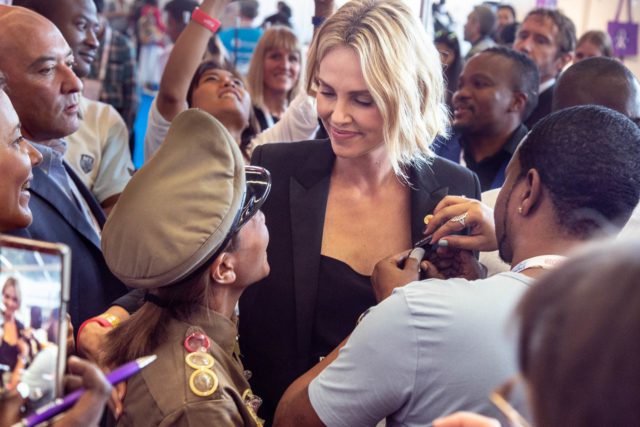
Africa Outreach ProjectOn June 26, 2021, actress Charlize Theron held a gathering at Universal Studios during the first showing of the “F9” movie. The event was to promote the Charlize Theron Africa Outreach Project. The occasion featured an outdoor party where celebrities auctioned donations for the foundation. There was also a question and answer session with the actors and producers of the new “Fast and Furious” movie, including Charlize Theron, Vin Diesel, Jordana Brewster, and the film director, Justin Lin. The gala was just one of the ways Theron utilizes her celebrity platform to aid South Africans suffering from HIV.

The Charlize Theron Africa Outreach Project

Theron created the Charlize Theron Africa Outreach Project in 2007. The project prevents the spread of HIV by aiding in the healthcare and education of young people. The project’s primary goal is to allow young Africans to have promising futures free from disease and give them an equal chance at life. To further this commitment, the initiative assists other African firms in helping address societal needs by providing university grants to young Africans.

Many solutions exist in the fight against the spread of HIV in South Africa, including education. South African women are less probable to get HIV if they complete university. In this way, providing young people with access to quality education intertwines with the fight against HIV. Accordingly, Theron’s gala directed the donations to helping South Africans receive the necessary education to remain healthy and live productive and fulfilling lives.

The Need for Aid

According to the Charlize Theron Africa Outreach Project, 67% of people infected with HIV reside in South Africa. The organization projects that 26 million people in the area currently live with HIV. In addition, almost 4,600 South Africans are diagnosed with HIV per week. Moreover, South Africa “represents less than 1% of the world’s population” but constitutes 20% of those infected with HIV worldwide.

The Charlize Theron Africa Outreach Project also states that education in South Africa is plagued with challenges such as school abandonment and limited accessibility to school supplies. As a result, citizens have a tough time finishing school. In fact, nearly 50% of South Africans who begin college leave prior to finishing their studies.

Furthermore, many young students experience the burdens of absent teachers, substance abuse, sexual abuse and early pregnancy on top of being impoverished. Consequently, less than half of students who start the first grade end up graduating from 12th grade. In addition, a lower percentage of these young students are eligible for college. As such, the youth cannot contribute to the region’s economic development, which keeps the region impoverished.

Theron’s 2020 Fundraiser

In August 2020, Theron held a fundraising party similar to this year’s June 2021 gala. The 2020 fundraiser featured a drive-in screening of “Mad Max: Fury Road.” Once again, the proceeds went toward the Charlize Theron Africa Outreach Project. Theron held the event in the parking lot of the Grove Mall in Los Angeles. However, the party only allowed 90 vehicles due to COVID-19 guidelines and cost $1,000 for two individuals. Attendants remained in their cars and listened in to “the night’s audio” by tuning into 89.1 FM.

Theron has used her celebrity platform to raise awareness about successful approaches to stop the spread of HIV and safeguard those already infected with it. The star’s strategy to encourage donations is very creative and garners much-needed support in the fight against HIV. Through more galas or other creative fundraising avenues, the Charlize Theron Africa Outreach Project will be able to sustain the valuable aid it provides to young Africans by improving access to education and decreasing the risk of HIV.

– Jannique McDonald
Photo: Flickr

July 20, 2021
https://borgenproject.org/wp-content/uploads/borgen-project-logo.svg 0 0 Kim Thelwell https://borgenproject.org/wp-content/uploads/borgen-project-logo.svg Kim Thelwell2021-07-20 07:30:042021-07-19 23:55:59Charlize Theron Hosts Africa Outreach Project Gala
Aid, Global Poverty, Human Trafficking

5 Nonprofit Organizations Fighting Human Trafficking

dedicated to fighting human trafficking
There are several organizations fighting human trafficking, as it is an ongoing problem that continues to spread around the world. There are 21 to 45 million people trapped in some sort of slavery today. Whether it is referred to as “modern-day slavery” or “human trafficking,” the exploitation of people is still taking place. Fortunately, there are many organizations and nonprofits dedicated to fighting human trafficking and ending this inhumane practice. Here are five nonprofit organizations fighting human trafficking.

5 Nonprofits Working To Stop Human Trafficking

  1. Apage International Mission (AIM): AIM is a Christian nonprofit organization dedicated to fighting human trafficking by protecting and caring for trafficking survivors and other victims of exploitation. Don and Bridget Brewster founded the nonprofit in 1988 after seeing the prevalence of child trafficking in Cambodia. The couple moved to Cambodia to help fight human trafficking and take a stand for the oppressed. The girls that AIM rescues often grow up to become abolitionists, with some even joining the organization. Through the nonprofit, they become social workers, teachers, artisans and even part of AIM’s SWAT team. AIM started a SWAT team after it partnered with the Cambodian government. Most of the SWAT raids on brothels that trafficked underage girls were successful. The organization has rescued more than 1,500 trafficking victims and has greatly improved the lives of trafficking survivors in Cambodia.
  2. Destiny Rescue: Tony Kirwan founded Destiny Rescue in 2001 after living in Thailand. Its mission is to rescue children from human trafficking and help them to remain free. Rescue, reintegration and prevention are the key focuses of Destiny Rescue. It has highly trained agents who go undercover in bars, brothels and on the street to track down human traffickers. After rescuing people who were trafficked, Destiny Rescue helps them return to normal life by reuniting them with families, transferring them to a transitional home and developing a Path to Freedom Plan to help decrease the vulnerabilities that led to exploitation. Destiny Rescue is diligent and dedicated to fighting human trafficking while helping victims get back on their feet.
  3. The Coalition to Abolish Slavery and Trafficking (CAST): CAST is a nonprofit organization founded in 1988 after the El Monte sweatshop case where 72 Thai workers were slaves for eight years. Founder Dr. Kathryn Macmahon and a group of activists became committed to fighting modern-day slavery and human trafficking. They created the nonprofit to provide relief, social services and outreach for those who have been victims of forced labor and modern-day slavery. It helps survivors by bringing awareness to modern slavery, advocating for antitrafficking policies and helping those who have been trafficked become reintegrated into society.
  4. Crisis Aid International: This nonprofit provides services that help the most vulnerable people in the world. It partners with other organizations to bring food, materials, medicine and other necessary items for those who need them. The organization serves people who have suffered as a result of natural disasters, famine, wars, human trafficking and other types of catastrophe. Founded in 2002, Crisis Aid International has helped approximately 1,378 sex trafficking victims, the youngest being four years old.
  5. Frees the Slaves: Free the Slaves is a lobbyist group and nonprofit. Its mission is to finish the work of early abolitionists fighting against slavery. Today, modern slavery exists in the form of forced labor, forced marriage and sex trafficking, with 50% of victims being children under the age of 18. Free the Slaves helps those held in bondage escape slavery, rebuild their life and continue to make a future for themselves and their families. The nonprofit advocates for human trafficking victims, empowers them through education and brings hope to those in slavery by letting them know their rights. Free the Slaves wants to demonstrate that creating a world without slavery is possible.

While human trafficking still persists, nonprofits are putting in the effort to eradicate this unjust practice. With organizations like Agape International Mission, Destiny Rescue, Coalition to Abolish Slavery and Trafficking, Crisis Aid International and Free the Slaves, fighting human trafficking is a group effort. These, along with many other organizations, will continue to fight for a future where people will no longer worry about forced labor, sex trafficking, forced marriage or any other cruel form of exploitation.

– Jose Ahumada
Photo: Flickr

May 23, 2021
https://borgenproject.org/wp-content/uploads/borgen-project-logo.svg 0 0 Kim Thelwell https://borgenproject.org/wp-content/uploads/borgen-project-logo.svg Kim Thelwell2021-05-23 01:31:232021-05-20 09:24:225 Nonprofit Organizations Fighting Human Trafficking
Aid, Global Poverty, USAID

Examining USAID Programs in Kenya

USAID programs in Kenya
Former U.S. President John F. Kennedy created the United States Agency for International Development in 1961. Kennedy’s goal was to spearhead the United States’ international development and humanitarian initiatives. Additionally, the highest executive position is the Administrator of the USAID. This position’s responsibilities include executing foreign aid programs under the guidance of the President. Furthermore, the Administrator of the USAID selects members of the President’s cabinet and the State Department. USAID coordinates with different levels of the United States government. As a result, this agency often works closely with the State Department to achieve common goals. USAID programs in Kenya also contribute to the global economy and aid in alleviating global poverty.

USAID’s mission statement is to dedicate itself to the promotion of democratic values in its works and advance freedom and prosperity. As such, USAID is well-integrated into the United States’ foreign policy vectors and gives perspective in improving the lives of many in the developing world.

Mark Green is the most recent non-acting Administrator for USAID since 2017. USAID’s agenda underwent reorientation and Administrator Mark Green’s tenure resulted in the reframing of its definition of foreign assistance. Journey to Self-reliance is a new policy that emerged to reforge all existing USAID policies and strategies.

USAID’s Program Cycle’s policies and decisions reinforced its initiatives. In addition, an evaluative set of processes regarding a structured cycle of self-examination, planning, implementation and re-examination of outcomes helps countries become more self-reliant.

USAID Today in Kenya

USAID programs in Kenya have been making a difference for more than 60 years. Kenya received $540 million in aid from USAID in the 2019 fiscal year. Thus, this ranks Kenya as the fourth most-funded African country. As a result, USAID programs in Kenya provide more than the average $144 million funding that these regions typically receive. The HIV/AIDS sector receives the greatest amount of aid from USAID. It contributes a total of $260 million.

Kenya’s performance scores of self-reliance lag behind the average low and middle-income countries. However, Kenya surges ahead in having an open and accountable government. Yet, Kenya’s safety and security rates at 33 points out of 100. This is significantly lower than the statistical average. Thus, the nation’s lowest-performing index is the poverty rate. Kenya’s poverty rate is a mere 14 out of 100, whereas the statistical average rests at 44.

USAID Programs’ Focuses

USAID programs in Kenya have three primary focuses. First, it aims to effectively implement governmental devolution. This requires devolving the powers of the central government to regional bodies. Second, it aims to strengthen the health and human capacities of Kenyans. Lastly, it has the goal of driving environmentally sustainable economic growth.

Kenya’s economy is the largest and most diverse economy in all of East Africa. It serves as an important trading hub for the African continent. However, agriculture makes up the backbone of Kenya’s economy today. Agriculture provides an obvious pathway for economic development and poverty reduction. Furthermore, agribusiness accounts for roughly 40% of Kenya’s overall workforce and roughly a quarter of its annual GDP.

As an example of the United States government’s integrated approach to foreign aid, USAID’s Feed the Future initiative is currently improving social, business and human health in Kenya by increasing productivity and income. Moreover, its greater agenda is to develop a more effective and sustainable agricultural future.

– Marshall Wu
Photo: Flickr

April 10, 2021
https://borgenproject.org/wp-content/uploads/borgen-project-logo.svg 0 0 Kim Thelwell https://borgenproject.org/wp-content/uploads/borgen-project-logo.svg Kim Thelwell2021-04-10 01:31:432024-05-30 22:23:06Examining USAID Programs in Kenya
Aid, Global Poverty, War, War and Violence

Japan’s Emergency Grant Aid to Armenia-Azerbaijan

Japan’s Emergency Grant Aid
Armenia primarily controls Nagorno-Karabakh, a portion of land in Azerbaijan. This area experienced a major war conflict. The war has plagued Armenia and Azerbaijan for the past three decades. Additionally, Armenia and Azerbaijan have struggled with humanitarian crises including food insecurity, repairs for local shelters and medical support since 1988. However, the U.S. granted $10 million to humanitarian crises to provide food, shelter and medical supplies to those the conflict heavily affected. Additionally, the European Union provided €3 million in aid for food, clothing for winter and medical supplies. In addition, Japan’s emergency grant aid has helped aid people in Azerbaijan.

According to BBC, Azerbaijan sought to suppress the separatist movement, while Armenia backed it. This led to ethnic clashes and after Armenia and Azerbaijan declared independence from Moscow, a full-scale war ensued. Nagorno-Karabakh remains part of Azerbaijan while still under Armenian control. However, a ceasefire occurred in September 2020 and Armenia and Azerbaijan received additional aid.

Aid to Armenia and Azerbaijan

A study that the country’s Statistical Committee conducted revealed that 23.5% of Armenia’s population was living below the poverty line as of 2018. While much of the population lives below the poverty line, only 1% of the population lives in extreme poverty. However, access to education, security, neglect and freedom of speech factor into what contributes to the impoverished cities in Armenia.

Aid to Armenia’s population can benefit from hospital supplies, winter clothing and food could begin the process of rebuilding Armenia and its people. As a result of the destruction caused by the conflict, many had to flee their homes. Countries provide emergency support to give Armenia humanitarian needs and basic supplies. Furthermore, it can spread awareness to help those in need in Armenia and Azerbaijan. The need for food, shelter and medical supplies is evident.

Japan’s Emergency Grant Aid

Japan implemented a $4.8 million emergency grant aid to help those in Armenia and Azerbaijan in February 2021. Armenia is receiving $3.6 million of Japan’s grant aid whereas the remaining $1.2 million is going towards Azerbaijan. This aid goes toward medical training in six hospitals and supplies medical equipment. Furthermore, there are new hand-washing stations in three elementary schools to ensure safe water access, hygiene kits, renovation repairs to evacuation centers, relief supplies for winter and educational supplies for 15 schools.

The Asian Development Bank states that 5% of Azerbaijan’s population lived under the poverty line in 2018. This country is a developing country facing many issues. Azerbaijan’s healthcare is among the top two priorities in efforts to maintain a well-rounded economy. Budgeting for healthcare has increased by 44.5% since 2019.

Japan’s emergency grant aid of $1.2 million to Azerbaijan goes toward medical equipment for one hospital, access to safe water, relief items for during their winter and food assistance for about 800 people.

– Vanessa Morales
Photo: Flickr

April 9, 2021
https://borgenproject.org/wp-content/uploads/borgen-project-logo.svg 0 0 Kim Thelwell https://borgenproject.org/wp-content/uploads/borgen-project-logo.svg Kim Thelwell2021-04-09 07:30:302024-06-06 00:59:32Japan’s Emergency Grant Aid to Armenia-Azerbaijan
Aid, Aid Effectiveness & Reform, Development, Economy, Global Poverty

India’s Foreign Aid Explained

India's Foreign Aid
The Republic of India receives millions of dollars each year in foreign aid. This money goes toward ending poverty and improving living standards. However, as India develops and modernizes, the government has started to lend a helping hand to poorer nations across the world. Many see India’s foreign aid as both a tool for diplomacy and an act of good faith. As in the words of India’s Development Partnership, its approach to foreign aid is, “shaped by India’s struggle for independence and solidarity with other colonized and developing countries and the inspiring leadership of Mahatma Gandhi…” The nation is transitioning from a recipient to a donor, as the nation often gives more in foreign aid than it receives.

By The Numbers

The Indian Government allocated $1.32 billion for foreign aid in its 2019-2020 budget year (around 0.3% of the budget). This amount follows a trend of India drastically stepping up its foreign aid over the past decade. The budget went from around $500 million in 2010 to a peak of $1.5 billion in 2015. Despite a three-year slump in funding, the central government is now stepping back up to the plate. The main focus of India’s foreign aid centers around the development and modernization of its recipients.

Most of India’s foreign aid goes to countries in Asia and Africa, as it seeks to improve relations with its neighbors and assert its global presence. The nations India is providing aid to include Myanmar ($56 million), Bangladesh ($24.5 million) and Bhutan ($392.7 million). Aid that these nations receive has the goal of promoting regional stability and creating higher living standards. The Indian Government has also taken more interest in Indian Ocean countries such as Mauritius ($161 million), Sri Lanka ($35 million) and The Maldives (~$81 million) to increase Indian presence in the Indian Ocean.

How India’s Foreign Aid Helps

India’s foreign aid goes to a variety of projects such as infrastructure, agriculture and energy. The nation has invested billions in infrastructure projects in nations like Nepal and Afghanistan, such as hydroelectric plants, dams and schools. Famously, India and Afghanistan finished the Salma Dam, renamed the Afghan-India Friendship Dam. The Dam cost India around $300 million and provides hydroelectric power and irrigated farmland to the surrounding area. Additionally, India gave millions in foreign aid to Caribbean nations to improve their renewable/clean energy sectors that combat pollution and environmental challenges.

India is also heavily active in humanitarian efforts and disaster relief, frequently giving out loans, medical supplies and other types of assistance. The Brookings Institute has even called the nation “The Neighborhood First Responder,” helping with disaster relief in Sri Lanka, Afghanistan and Myanmar. Humanitarian aid has gone to nations like Fiji after Cyclone Winston hit the nation in 2016. Recently, India has helped combat the COVID-19 pandemic through monetary aid, donating food and distributing vaccines. Brazil, which faces a vaccine shortage, received 2 million doses from the Indian government.

Indian-US Relations

India is a prime example of how U.S. Foreign Aid benefits all sides. Nations like the United States have invested heavily in India and continue to help the government combat problems that plague the nation. As a result, India and the U.S. are now close allies and often cooperate on shared goals such as combating environmental challenges and ending extreme poverty. The two nations also cooperate with each other in international organizations like the U.N. and IMF. Both nation’s economies benefit from a strong India, with bilateral trade totaling around $149 billion. A diverse array of U.S. businesses operate in India, from energy and infrastructure business to ones involving technology and entertainment.

– Malcolm Schulz
Photo: Flickr

April 8, 2021
https://borgenproject.org/wp-content/uploads/borgen-project-logo.svg 0 0 Kim Thelwell https://borgenproject.org/wp-content/uploads/borgen-project-logo.svg Kim Thelwell2021-04-08 15:54:062024-05-30 07:56:49India’s Foreign Aid Explained
Aid, Developing Countries, Global Poverty, Health, Technology

The Need for Telemedicine in Brazilian Communities

Telemedicine in Brazilian Communities
Brazil is using telemedicine to change the way the country’s most vulnerable interact with the healthcare system. Brazil is a South American democratic power that has over 211 million people living within its borders. A 2010 census indicated that over 11 million Brazilians lived in favelas. Those living in favelas have an economic disadvantage and limited access to quality healthcare. In the favelas, many Brazilians lack a healthy water supply to maintain hygiene. Additionally, the clustered homes in favelas are increasing the chances that infectious diseases will spread through them. As a result, these communities need better access to public health resources and telemedicine in Brazilian communities must improve.

Brazil’s Unified Health System suffers from geographic disparities in access and a lack of funding. The Brazilian health system already had issues meeting the needs of the people in poor urban and rural areas. However, once the COVID-19 pandemic hit, the health system became strained even more. Luckily, for the most vulnerable people of Brazil, there are organizations trying to bridge the gaps in Brazilian healthcare.

SAS Brazil’s Mission to Bring Telemedicine to Brazilian Communities

SAS Brazil describes itself as “a [nonprofit] and itinerant Brazilian social organization, which believes in technology and invests in health innovation.” Eight friends formed the nonprofit in 2013 when they attended an international rally. In 2019, it received over $120,000 and had an operating budget of around $200,000 in the same year. However, its expenses for the same year were $200,000. It runs on a budget that relies on multiple sources of revenue including donations to continue its mission of providing the healthcare needed in Brazilian communities.

In the organization’s founding year, it helped 1,500 people. Meanwhile, in 2019, it helped 13,000 people. SAS Brazil’s work consists mostly of expeditions to communities in 14 Brazilian states. Cocos is a municipal region in the northeast of Brazil. The nonprofit has served over 840 individuals in that area alone as of 2019. A major change in Brazilian healthcare regulations has expanded its mission.

Brazil’s Remote Healthcare Regulation Changes

Brazil has 79 telemedicine-related laws and regulations. However, these many attempts to create a whole and codified framework for healthcare services in Brazil have fallen short. Up until the year 2020, SAS Brazil faced this problem as Brazil only allowed remote healthcare services between medical professionals. However, the Ministry of Health with the Federal Council on Medicine revised the rules to allow contact between healthcare professionals and patients. SAS Brazil can now bring medical expertise to more remote and poor areas throughout Brazil.

Looking Ahead

Numerous factors in Brazil’s favelas and impoverished communities play a role in making healthcare technology expansion vital to these regions. The lack of medical professionals, transportation and high need has created a disparity in access to telemedicine in Brazilian communities like favelas. Moreover, the COVID-19 pandemic has exasperated the disparity tremendously. However, new developments are decreasing the access gap for many Brazilians. Nonprofit organizations, like SAS Brazil, are providing “free medical free basic medical consultations and guidance for residents of favelas in different cities in Brazil.”

– Jacob Richard Bergeron
Photo: Flickr

April 5, 2021
https://borgenproject.org/wp-content/uploads/borgen-project-logo.svg 0 0 Kim Thelwell https://borgenproject.org/wp-content/uploads/borgen-project-logo.svg Kim Thelwell2021-04-05 07:34:312024-06-04 01:03:20The Need for Telemedicine in Brazilian Communities
Aid, United Nations

PDRF and NAFCON Provide Aid to the Philippines

Aid to the Philippines
In November 2020, the Philippines faced several moderate-strength typhoons: typhoons Vamco, Goni and Molave. After the disastrous effects of these storms, organizations based in the Philippines and the U.S., as well as ambassadors from European countries, pulled together to provide resources to aid the Philippines in its time of need. In particular, the Philippine Disaster Resilience Foundation (PDRF) and National Alliance for Filipino Concerns (NAFCON) both stepped in to assist those who lost their homes and who were in great need of supplies like food, shelter, water and soap.

The Philippines’ 2020 Typhoon Season

Each typhoon occurred within weeks of one another during the Philippines’ 2020 typhoon season. Typhoon Molave was the first to hit the Philippines and Vietnam. The Category Two natural disaster began on Oct. 25, 2020, in Batangas. Eight days later, Typhoon Goni hit Bicol on Nov. 2, 2020, destroying cities as a Category Five typhoon. Typhoon Goni was the strongest to hit the Philippines since Typhoon Meranti in 2016.

Typhoon Vamco

The situation worsened beginning on Nov. 11, 2020, as Typhoon Vamco reached the islands. According to the Saffir-Simpson Scale, which generally moves from 210-249 kilometers per hour, Vamco was a Category Four typhoon. Typhoon Vamco affected areas across the Philippines such as Bicol, Calabarzon, Central Luzon and Manila. Moreover, around 350,000 people lost their homes due to this most recent tragedy. Additionally, the storm affected 4 million people due to the destruction of farmland and businesses.

What is the PDRF?

In November 2020, the Philippine Disaster Resilience Foundation teamed up with Dutch, German and United Nations ambassadors to help the Philippines and Cagayan Valley. The Philippine Disaster Resilience Foundation, or PDRF, is a private organization the provides aid during emergencies and disasters within the Philippines. The PDRF managed to deliver food and non-food items to Cagayan Valley in an event called “Aksyon Para Sa Cagayan.” People secured hygiene kits and food, while other organizations like AirAsia provided labor by helping move supplies and managing transportation and temporary housing. The PDRF, along with Netherlands Ambassador Saskia de Lang, German Ambassador Anker Reiffenstuel and U.N. Coordinator Gustavo Gonzalez cooperated to distribute food and organize hygiene kits and other supplies to those in need.

What is NAFCON?

One other group that is working to provide aid and resources to those the typhoon has affected is NAFCON, or the National Alliance for Filipino Concerns. NAFCON is a U.S.-based Filipino advocacy alliance intended to focus on Filipino and Filipino-American wellness. Various organizations involved with NAFCON include Kabataan Alliance, Filipino Community Center, Filipino Migrant Center and Malaya Movement. NAFCON uses connections with the U.S. to gain exposure to provide aid to the Philippines following Typhoon Vamco.

A super typhoon has hit the Philippines that has robbed many people of their homes and livelihoods. Still, Filipinos are lucky to have organizations like PDRF and NAFCON mobilizing to provide aid to the Philippines following Typhoon Vamco. With continued efforts both at a national and international level, Filipinos can hopefully recover and prosper in spite of the effects of this natural disaster.

– Alyssa Ranola
Photo: Flickr

April 3, 2021
https://borgenproject.org/wp-content/uploads/borgen-project-logo.svg 0 0 Kim Thelwell https://borgenproject.org/wp-content/uploads/borgen-project-logo.svg Kim Thelwell2021-04-03 01:31:202024-05-30 07:56:46PDRF and NAFCON Provide Aid to the Philippines
Aid

The Impact of The Liberian Civil War

The Liberian Civil War
Freed American slaves founded the country of Liberia. It boasts a reputation as an African state that upholds many western values. English is Liberia’s official language, and the country modeled its constitution after the United States’ constitution and named its capital Monrovia after James Monroe. Additionally, Liberia literally means “Land of the Free.” For 130 years, this uniquely American country celebrated independence and economic power. Then in 1980, members of the Krahn ethnic group overthrew the governing body and executed the president and 13 of his aides. This violent coup d’état led to a civil war nearly a decade later, which lasted until 2003. Today, the country is working through the lasting effects of The Liberian Civil War.

The Current State

The Liberian Civil War subjected Liberia’s 4.61 million citizens to tremendous pain and terror. According to the Liberian Truth and Reconciliation Commission, the war killed an estimated 250,000 people. Another 1 million experienced displacement from their homes and had to go abroad as refugees. For years, the United States government and other African nations have hosted these refugees. However, repatriation has proven to be difficult due to the instability of Liberia’s economy.

In 2019, the Human Development Index (HDI) ranked Liberia in the low human development category. This means that Liberians are losing out on “a long and healthy life, access to knowledge and a decent standard of living,” according to the HDI’s basic dimensions of human development. Along with this, “Currently 38.4% of the population is food insecure, 25% of the population does not have access to drinking water and just 17% have access to basic health services.”

The 14-year civil war tested the nation and the livelihoods of many who suffered. Despite this, a glimmer of hope exists for the country. Work is underway to reverse the trends that the violent conflict set forth more than 40 years ago.

Action Against Hunger (AAH)

Food security, water accessibility and health services have proven to have experienced the most damage due to Liberia’s post-war economy. As a result, aid has been mainly targeting these sectors. NGOs, IGOs and the Liberian government have each worked to improve the lives of Liberian citizens.

In the fight against food insecurity, Action Against Hunger (AAH) has greatly impacted Liberia. In 2019, AAH’s team in Liberia reached 301,507 people through screenings and treating malnutrition. AAH has also partnered with Scaling Up Nutrition Civil Society Alliance in Liberia to further its work. AAH advocates on the local and national levels for more support to improve general nutrition statuses all around the nation.

Water Accessibility

Water accessibility is another struggle throughout the country. After the war, Liberia’s new government developed a program called WASH. The intent of the program was to improve water quality, sanitation and general hygiene. USAID—the largest donor to the WASH sector—focuses on and addresses the infrastructure surrounding accessibility and sanitation. The program is also expanding services to both rural and urban communities. As a result, more than 353,000 new people have access to improved drinking water and nearly 154,000 have access to improved sanitation.

Malaria and Ebola

Following these fronts, general health services in Libera have exhibited positive growth. The Ebola outbreak that ravaged sub-Saharan Africa put Liberia’s health system to the test and cracks began to show. In the wake of the epidemic, the CDC expanded its focus beyond malaria intervention by investing in stronger “laboratory, surveillance, emergency management and workforce capacities to respond to disease outbreaks in support of the Global Health Security Agenda.” The CDC also teamed up with Riders for Health in the fight against Ebola. Since 2015, the partnership has transported over 300 relay stations to help rapid diagnosis of the disease. The country has not fully recovered from The Liberian Civil War but these organizations are striving to help it meet that goal.

Looking Ahead

Years of devastation due to war shook the country’s institutions to the core. But as time progresses, the improvements within Liberia are unmistakable. Efforts by NGOs, IGOs and the Liberian government alike provide hope for a recovered Liberian economy. Sustained efforts will allow Liberia to put its civil war in the past.

– Matthew Hayden
Photo: Flickr

April 3, 2021
https://borgenproject.org/wp-content/uploads/borgen-project-logo.svg 0 0 Kim Thelwell https://borgenproject.org/wp-content/uploads/borgen-project-logo.svg Kim Thelwell2021-04-03 01:30:172024-05-29 23:17:54The Impact of The Liberian Civil War
Page 24 of 65«‹2223242526›»

Get Smarter

  • Global Poverty 101
  • Global Poverty… The Good News
  • Global Poverty & U.S. Jobs
  • Global Poverty and National Security
  • Innovative Solutions to Poverty
  • Global Poverty & Aid FAQ’s
Search Search

Take Action

  • Call Congress
  • Email Congress
  • Donate
  • 30 Ways to Help
  • Volunteer Ops
  • Internships
  • Courses & Certificates
  • The Podcast
Borgen Project

“The Borgen Project is an incredible nonprofit organization that is addressing poverty and hunger and working towards ending them.”

-The Huffington Post

Inside The Borgen Project

  • Contact
  • About
  • Financials
  • President
  • Board of Directors
  • Board of Advisors

International Links

  • UK Email Parliament
  • UK Donate
  • Canada Email Parliament

Get Smarter

  • Global Poverty 101
  • Global Poverty… The Good News
  • Global Poverty & U.S. Jobs
  • Global Poverty and National Security
  • Innovative Solutions to Poverty
  • Global Poverty & Aid FAQ’s

Ways to Help

  • Call Congress
  • Email Congress
  • Donate
  • 30 Ways to Help
  • Volunteer Ops
  • Internships
  • Courses & Certificates
  • The Podcast
Scroll to top Scroll to top Scroll to top