• Link to X
  • Link to Facebook
  • Link to Instagram
  • Link to TikTok
  • Link to Youtube
  • About
    • About Us
      • President
      • Board of Directors
      • Board of Advisors
      • Financials
      • Our Methodology
      • Success Tracker
      • Contact
  • Act Now
    • 30 Ways to Help
      • Email Congress
      • Call Congress
      • Volunteer
      • Courses & Certificates
      • Be a Donor
    • Internships
      • In-Office Internships
      • Remote Internships
    • Legislation
      • Politics 101
  • The Blog
  • The Podcast
  • Magazine
  • Donate
  • Click to open the search input field Click to open the search input field Search
  • Menu Menu

Archive for category: Aid

Aid, Charity, Global Poverty

The Importance of Community-Led Projects in the Aid Sector

Community-Led Projects
The charity sector plays an important role in poverty reduction but its approaches have at times garnered criticism in terms of efficacy and reach. From Peace Direct, Third Sector and Non-Profit Quarterly comes a swelling of proposals to make charity work more effective, more democratic and more conscious. More specifically, community-led projects in the aid sector stand as a solution to strengthen aid efforts globally.

Issues in the Charity Sector

Decolonization academic Khadijah Diskin said at the BAME Fundraising Virtual Conference 2021 that the charity sector was “explicitly tied to the colonization of the Global South” and if “charities do not acknowledge their histories, they are likely to be repeated.”

A report published by Peace Direct and partners, including Adeso (African Development Solutions), Alliance for Peacebuilding and WCAPS (Women of Color Advancing Peace Security and Conflict Transformation) sheds further light on the issue.

The report published in 2021, titled “Time to Decolonise Aid,” claims that “power and resources remain dominated by, and between, certain organizations and relationships largely based in the Global North.” As a result, decision-making often ignores indigenous knowledge and experience. Instead, aid efforts are centered around “Western values and knowledge,” leading to misunderstanding and the reinforcement of old ways of perceiving the Global South as unknowledgeable and desperate.

From a purely practical standpoint, this makes the delivery of aid very difficult. It means extra people have to be employed to do a job that would otherwise be done by local people with intimate knowledge of the issues. Peace Direct closes the report with recommendations. NGOs are to adopt a “transitional mindset,” which puts in place targets for the “transfer of power and resources to local organizations.” Finally, NGOs are asked to “re-evaluate partnerships… so that they are more equitable and mutually accountable.”

Progress

Since the publishing of the “Time to Decolonise Aid” report, progress is invisible. The Inter-Agency Standing Committee (IASC) is a global institution that boasts membership from the World Food Programme (WFP), the World Health Organization (WHO) and the Office of the High Commissioner of Human Rights (OCHCR). The IASC organized the Grand Bargain Caucus on Funding for Localisation in March 2023, in response to criticisms of efficacy and reach in regard to the aid sector.

Those represented in the agreement included USAID, DG-ECHO, Denmark, OCHA, UNHCR, Save the Children, IFRC, A4EP and the Northwest Syria NGO forum. All agreed that localization, or community-led projects in the aid sector, stood as the solution. All present also agreed that a target of 25% of total spending by NGOs should go toward community-led projects. A roadmap formalizes this target and directs all to:

  • “Measure funding to Local and National Actors (LNAs)” only from what is channeled directly – one must not count indirect funding such as support costs or cash delivery toward the 25% goal.
  • “Report all funding to LNAs through publicly available platforms” – all information on provider, recipient and location is to be provided.
  • “Develop individual roadmaps for when and how [to reach] the 25% target” – organizations must present this at the next Annual Meeting in June 2023.

Targeting 25% of all budgets to community-led projects in the aid sector is a huge win for social justice. The signatories present have great reach and can provide the necessary capital to get genuinely transformative local action off the ground.

Impactful Community-Led Projects

Community-led projects are not only more ethically sound but they are also more effective. This is according to Sami Adler of Global Giving, an NGO that “actively work[s] to shift power toward [their] partners.” This is because, as the executive director of the Solidarity Foundation Shubha Chacko suggests, “emotional closeness, shared sentiments and beliefs and commonality in terms of background and experiences” all collide and contribute to impactful service.

The Solidarity Foundation

This is visible in the work of the Solidarity Foundation. The Solidarity Foundation is a registered trust based in India that supports sex workers and gender/sexual minorities. Sex workers in India face a multitude of issues that contribute to “extremely poor” conditions of life. Prostitution is legal, but there are multiple barriers to soliciting and brothel keeping. Labor laws do not safeguard sex workers and sex workers have no access to trade unions. As a result, abuse cannot be policed, pushing sex workers further into the shadows.

Instead of receiving protection, sex workers are subject to violent and moral policing that seeks to correct their “deviancy” rather than seeking to investigate the roots of their condition. Poverty is a “contextual factor” regarding sex work in India.

The Sarvojana Coalition

According to the Sarvojana Coalition, an NGO that supports sex workers in the region, poverty pushes as much as 68% of women into the trade. Solidarity Foundation supports these sex workers by hiring those who previously worked in the trade into outreach and leadership roles. The empathy that comes from a former sex worker means sex workers are more likely to seek help. Sex workers can expect no moral judgment or shaming. Rather, the organization shows them that they matter and that there are viable alternatives to sex work if they desire it. Crisis Management, for example, is a project that the Solidarity Foundation team organizes. It is a hub in the local area that “increases a sense of well-being and improves access to justice” by offering walk-in support in times of crisis.

The Solidarity Foundation highlights the importance of community-led projects in the aid sector. By allowing members of a particular to take the lead on projects, aid can improve in terms of both reach and efficacy.

– James Durbin
Photo: Flickr

June 10, 2023
https://borgenproject.org/wp-content/uploads/borgen-project-logo.svg 0 0 Kim Thelwell https://borgenproject.org/wp-content/uploads/borgen-project-logo.svg Kim Thelwell2023-06-10 01:30:122023-07-10 01:14:49The Importance of Community-Led Projects in the Aid Sector
Aid, Charity, Children, Global Poverty

5 Charities Operating in Kazakhstan

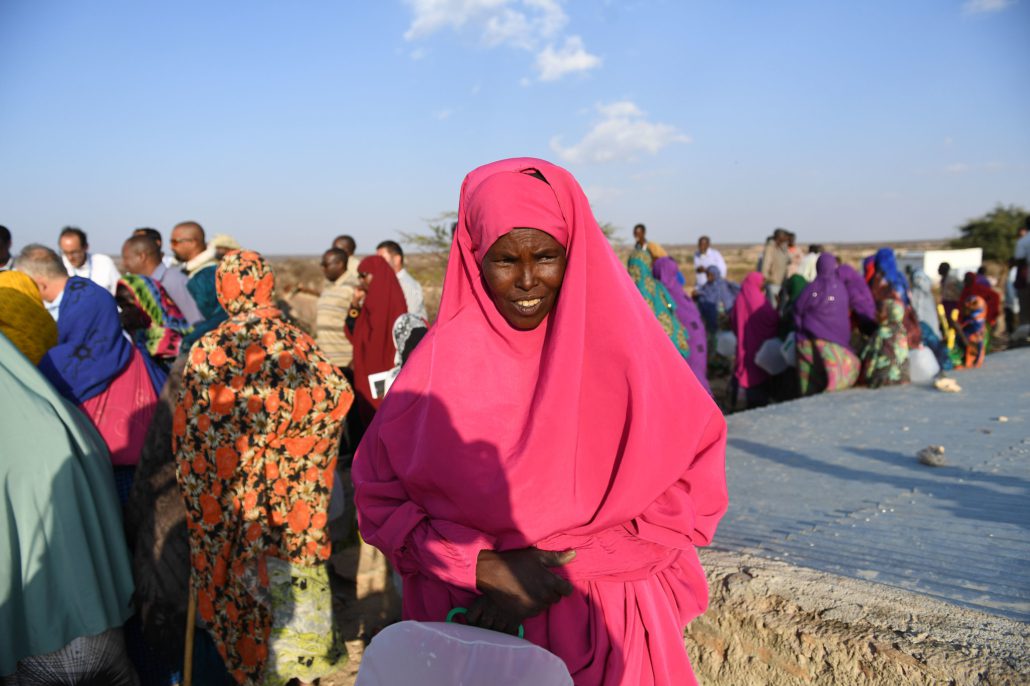
Charities Operating in KazakhstanHuman Rights Watch (HRW) calls attention to major issues affecting low-income families and disabled children in Kazakhstan. While it is access to state benefits for the former, the latter face barriers that exclude them from education. Child-focused charities continue playing a crucial role in alleviating these issues and addressing the needs of those affected. Here are five charities operating in Kazakhstan, acting as agents of change. 
5 Charities Operating in Kazakhstan

  1. Niyet: Niyet is a private nonprofit organization working to improve the living conditions of all children experiencing adversity, including orphans, children with disabilities and children from impoverished families. In 2018, Kazakhstan had about 26,000 orphans and children living without parental supervision. Meeting child support needs can play a significant role in helping to prevent family separations. Sourced from a comprehensive database of underprivileged children, the recipients receive donations from Niyet in the form of cashless support or personalized certificates. Two implemented programs, Food Basket and Road to School, offer these certificates in exchange for food and school supplies at partnered markets and shops. Magnum Cash & Carry is one of the accessible partnered retail stores, with more than 50 outlets in the Almaty region of Kazakhstan.
  2. ITeachMe: This is a public charity and development center based in Almaty that fights for the labor rights of disabled and vulnerable people. Created in March 2020, the organization teaches digital skills to boost the employability of its beneficiaries and help them better integrate into society. ITeachMe helps in placing young, disadvantaged people on the path to better economic opportunities. With multiple programs and 45 professional courses, the organization asserts that 90% of its graduates go on to secure employment. It delivers its free ITeachMe Program 6.0 in Russian, Kazakh and sign language. Under expert supervision, the educational course delves into programming, project management and more. The OrleTECH Program comprises more than 150 video tutorials and is available to individuals between the ages of 18 and 40 who are interested in learning how to design websites or test software. During the COVID-19 pandemic, ITeachMe provided emergency assistance. Through the support of the U.S. Urgent Action Fund, ITeachMe provided humanitarian aid to 80 underserved people living in cities and rural areas and supplied “life-saving medicines” to 26 people. ITeachMe also provided legal and psychological counsel through chatbots and instant messaging apps, which continue to function to this day.
  3. Botashym: Botashym is an organization with a focus on medical aid. Established in 2017, its goal is to raise funds to aid orphans, children with cerebral palsy, disadvantaged families and veterans. It provides its services both inside and outside Almaty. Children up to 13 years of age make up the priority demographic for rehabilitation. Whatever the disability, Botsashym informs parents of the latest clinics or treatment methods. Botashym helps to raise the treatment costs for selected children by creating individual profiles with targeted fundraising goals. In 2022, the nonprofit raised enough money to rehabilitate 16 children with different diseases of varying severity. The organization does not require the family of beneficiaries to bear any costs. Through treatment, children can improve both mobility and speech. Botashym is currently developing an Orphans Assistance program.
  4. Kasietti Zhol Foundation. This Astana-based nonprofit offers free rehabilitation services. Kasietti Zhol’s mission is to provide high-quality rehabilitation for children with cerebral palsy without requiring overseas travel. To accomplish this, the organization holds a worldwide School of Mentors initiative and organizes seminars aimed at educating and training professionals, social workers and parents on the latest rehabilitation methods. As part of its Healthy Children Project, more than 1,000 children received comprehensive rehabilitation at no cost in 2021. The #KazakhstanDoGood project brings awareness to the lack of rehabilitation for disabled children. In 2021, Kazakhstan had only 40 medical rehabilitation centers that were equipped to treat children with disabilities. More than 26,000 children are living with cerebral palsy in the country, yet only 20% manage to access rehabilitation. Families below the poverty line struggle to find treatment and usually have to wait for openings. In some cases, parents opt to leave their children in orphanages. For this reason, Kasietti Zhol opened rehabilitation centers in nine orphanages in Kazakhstan. Four children with special needs found adoptive families after treatment. The #KazakstanDoGood project aims to open 14 rehabilitation centers for children with cerebral palsy. Kasietti Zhol’s president, Gulmira Abeldinova, disclosed that from October 2022 to January 2023, the charity’s rehabilitation center took in 183 children for free rehabilitation. In 2023, it will concentrate on developing ways to address neuro-orthopedic disorders in children.
  5. Dara Foundation: Dosaeva Gulnar Yesengeldinovna established the Dara Foundation with the aim of enhancing the quality of life for underprivileged children through the creation of more efficient support systems. The foundation seeks to provide better assistance to those in need. The Mentors program offers three levels of mentoring: individual, corporate and coaching. At the corporate level, 34 organizations partner with Dara Foundation to introduce at-risk youth to various professions and offer workshops, internships and scholarships. Currently, there are 15 cities in Kazakhstan hosting the Mentors program and more than 200 orphans have partnered with mentors since 2014. Today, 138 children have finished internships and higher education courses through the Dara Foundation and more than 100 children have received individual coaching.

Looking Ahead

Many Kazakh children and families still face hardships but ongoing efforts of charities operating in Kazakhstan and the government of Kazakhstan bode signs of better opportunities and progress for the young generation. The results so far are encouraging and paint a positive outlook for the future.

– Clare Calzada
Photo: Flickr

April 18, 2023
https://borgenproject.org/wp-content/uploads/borgen-project-logo.svg 0 0 Kim Thelwell https://borgenproject.org/wp-content/uploads/borgen-project-logo.svg Kim Thelwell2023-04-18 07:30:052023-04-17 06:05:015 Charities Operating in Kazakhstan
Aid, Global Poverty

OCHA Overcomes Challenges to Delivering Aid in Somalia

Aid in Somalia
Since 2015, the African nation of Somalia has experienced five consecutive rainy season failures. The country is currently facing yet another drought, which will have serious impacts on food insecurity in the country. Humanitarian organizations like the U.N. Office for the Coordination of Humanitarian Affairs (OCHA) have made efforts to provide humanitarian aid in Somalia to combat the drought and prevent famine in the region. However, OCHA has faced obstacles in delivering aid in Somalia due to conflict in the area.

Conflict and Poverty in Somalia

Somalia has been in a state of civil war since 1988. Despite numerous attempts at peace, the conflict has failed to come to a resolution and has severely impacted poverty in the country. According to a World Bank report from 2019, almost 70% of the population of Somalia lived in poverty. Of the millions of people internally displaced due to the conflict, 74% endured poverty. The conflict has not only contributed to poverty in the country but has also presented barriers to delivering humanitarian aid in Somalia.

How Violence Makes Aid Difficult

Providing humanitarian aid in Somalia has proven difficult due to violence in some areas. According to OCHA, 565 “access incidents” were reported in 2022, threatening the “safety of aid workers” and the delivery of aid. More than 375,000 people living in areas controlled by armed non-state groups need humanitarian aid but are out of the reach of humanitarian organizations like OCHA. In Laas Caanood, aid programs, such as “school feeding, safety net and nutrition” initiatives, faced delays due to the risk of violence and conflict, affecting more than 15,700 households, a February 2023 OCHA situation report says. Despite these hurdles, OCHA continued to find ways to safely aid those in need.

Successful Aid Missions

To reach those in need, OCHA carried out multiple “caravan missions” using a U.N. Humanitarian Air Service (UNHAS) Cessna Caravan aircraft and a World Food Programme (WFP) helicopter. According to an OCHA situation report, the organization conducted 38 aid missions to 34 hard-to-access locations in Somalia between June 2021 and August 2022. Many of these areas had not seen humanitarian aid missions for a while. These missions helped aid “vulnerable people in hard-to-reach areas” and stand as examples of the determination of organizations like OCHA to provide humanitarian aid in Somalia.

OCHA also detailed successful operations in the Banadir region, an area with circumstances considered both “volatile and unpredictable” with aid workers often facing road closures and checkpoints when attempting to access hard-hit areas.

Despite these challenges, however, OCHA has proved successful in providing humanitarian aid to Somalia. In 2022, the organization reached 96% of its targeted population, providing aid to some 7.3 million people in the country. Initially targeting 761,000 people for nutrition assistance, OCHA reached 1.4 million Somali people with this assistance in 2022. OCHA also nearly reached its goal for food security, reaching 6.2 million people out of its 6.4 million target number. These successes are great examples of the dedication of humanitarian aid organizations like OCHA and their commitment to providing aid to all who need it, even if challenges present themselves along the way.

– Mohammad Samhouri
Photo: Flickr

March 1, 2023
https://borgenproject.org/wp-content/uploads/borgen-project-logo.svg 0 0 Naida Jahic https://borgenproject.org/wp-content/uploads/borgen-project-logo.svg Naida Jahic2023-03-01 07:30:442023-02-28 07:16:55OCHA Overcomes Challenges to Delivering Aid in Somalia
Aid, Global Poverty, Poverty

Everything to Know About Poverty in Ukraine

Poverty in Ukraine
Russia’s invasion of Ukraine began in February 2022 and has resulted in thousands of deaths and casualties on both sides. The attacks left 8 million people displaced in Ukraine by May 2022 and 7.8 million Ukrainians fleeing the country as of November 2022. With more than 250 days of the invasion, Ukrainians are likely to live with a blackout until at least March 2022, the EU will give a further £2.2 billion to help with the reconstruction of the country and the Word Health Organization (WHO) warned that Ukraine’s health system is “facing its darkest days in the war so far.” All of the factors have undoubtedly increased the poverty rate in Ukraine to 25% and future estimates it could be rising to 55% or more by the end of 2023.

Increase in Poverty

The damage that the war inflicted on infrastructure and the economy has obviously increased Ukraine’s poverty. The unemployment rate has increased and is currently at 35% and over months some workers have seen their incomes reduced by as much as 50%. World Bank Eastern Europe Regional Country Director Arup Banerji stated that “As winter really starts biting, certainly by December or January, there may be another internal wave of migration, of internally displaced persons.” As a result of the displacement of more people from their houses and fewer jobs available, the poverty rate in Ukraine will worsen as Russia’s invasion continues.

COVID-19

The WHO and Ukraine’s Ministry of Health announced that 22% of people in the country are struggling to access essential health care and COVID-19 spreading with 23,000 new cases reported since October 2022. With a low vaccination rate minus booster, millions of Ukrainians are not immune to it which has therefore led to an increase in cases. UNICEF delivered 2.3 million doses of the vaccine through the U.S. government for distribution in 23 regions of Ukraine. Recently, the Biden administration wrote a letter to Congress requesting $38 billion to help Ukraine with efforts, with $9 billion going towards COVID-19 vaccine access and long-term research.

Infrastructure Damage

Within recent weeks, Russian missiles and drones have struck 40% of Ukraine’s energy infrastructure that have created blackouts across the country. Eighty percent of Kyiv residents have been deprived of water and 350,000 homes have lost all power. The World Bank believes that Ukraine needs $349 billion to reconstruct the country. The process of cleaning and clearing explosive remains of war will need $11 billion in the next two years and $62 billion in the next 10 years. Other costs such as the rebuilding of roads, schools and hospitals will need more funding and could take away from the government supporting residents then lead others into poverty, increasing the rate after the ending of the invasion.

Solutions

Ukraine has received military assistance from other countries, the U.S. is the largest provider having committed $19.3 billion since the start of the Biden Administration. The Disaster Emergency Committee has helped 248,000 people in six months with food aid and opened 200 centers for displaced people. Similarly, the British Red Cross launched its appeal and described how it would use people’s donations. For example, £20 “could provide five blankets to families taking shelter.” Since its launch, the organization has helped 5 million people with emergency relief and 8 million with access to clean water.

Looking Ahead

The poverty rate in Ukraine has worsened significantly as it faces the impact of war. The country will need a complete rebuild that could cost more than $500 billion and leaves people in life-altering situations without homes and jobs. Russia’s invasion does not have an end date, it will continue to damage the economy and more importantly ruin the lives of Ukrainians.

– Mohamed Hassan
Photo: Flickr

January 6, 2023
https://borgenproject.org/wp-content/uploads/borgen-project-logo.svg 0 0 Jennifer Philipp https://borgenproject.org/wp-content/uploads/borgen-project-logo.svg Jennifer Philipp2023-01-06 07:30:222023-01-03 12:10:49Everything to Know About Poverty in Ukraine
Aid, Foreign Aid, Global Poverty

Social Media’s Effects on Foreign Aid

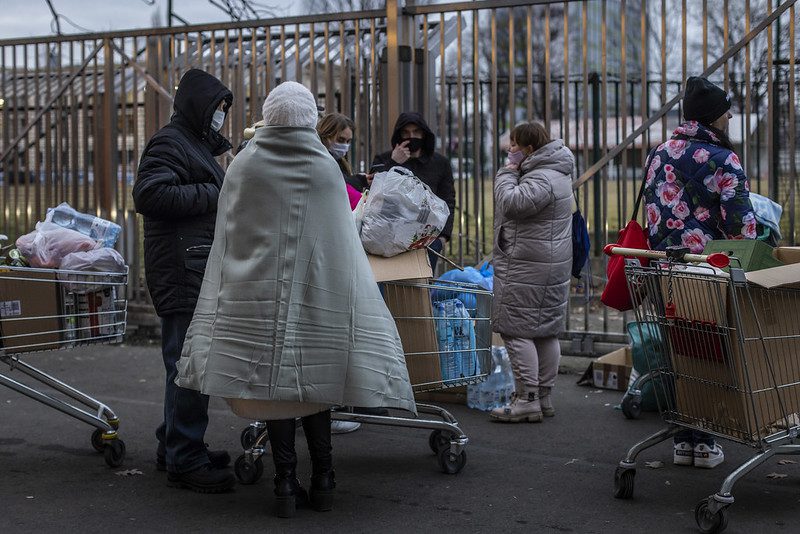
Social Media’s Effects on Foreign Aid Nowadays, most people seek their news from various social media platforms (Twitter, Instagram, Facebook and TikTok). The rise of news media in the 1980s brought a new age where audiences access real-time global news constantly. One of these newer platforms is TikTok, the first major non-U. S. social media competitor, originating in China from the company ByteDance. Currently, TikTok’s platform highlights social media’s effects on foreign aid as global crises like the war in Ukraine unfold in real time from Ukrainian influencers who urge action. Digital platforms like TikTok can influence popular opinion on foreign policy. Social media’s effects on foreign aid and how a country allocates this aid stem from these platforms’ ability to determine what information and ideas are shared.
A closer look at how news content influences American opinions on foreign aid and relations comes from recent Pew Research Center surveys. These surveys found that compared to other countries, Americans view foreign policy very differently depending on where they receive their news. The survey found that those who received their political news from right-leaning media sources were less open to international cooperation than those who viewed their news from various news sources. Similarly, those that rely on left-leaning sources were more open to foreign intervention. These surveys demonstrate how important news and social media are to informing U.S. citizens about foreign affairs and policy and how they direct their audiences to act.

The CNN Effect

The term “CNN effect,” created in the 1980s around the new media boom, underlines communication technology’s ability to potentially spur responses from domestic audiences and political leaders regarding global events covered in real-time, according to Piers Robinson’s study.

One example of the CNN effect is the West’s intervention in Northern Iraq and Somalia, which sparked a debate about social media’s impact on foreign aid and policy. During this time, as citizens learned about news in Northern Iraq and Somalia, they increased pressure on politicians to respond to these crises. According to Robinson’s study, the debate sparked because citizens often worked with incomplete information without context or wrong information. Therefore, they influenced their public leaders and how they responded to the conflict too hastily. This demonstrates the importance of fighting misinformation on social media platforms, as the news people digest through social media directly impacts the pressure they put on their political leaders to respond to foreign issues.

The War in Ukraine: A Case Study

On Feb. 24, 2022, a TikTok video documented the beginning of the Ukraine war depicting missiles falling over Kyiv, providing early, decontextualized and direct access to images and videos of the Russian Invasion. Many have named the war in Ukraine “the first TikTok war,” although other conflicts, such as the Syrian civil war and the Arab Spring uprisings, have been covered by social media. However, the platforms used for organizing protests and broadcasting footage were mainly Facebook and Twitter.

Access to direct photos and footage of the war in Ukraine from Ukrainian accounts raises Western sympathies as foreign news floods media feeds. Ukrainians are much less distant than war victims in the past as people recognize the same references, music and social networks as those in Ukraine. Ukrainian photojournalism on social media creates a new intimacy, especially as traditional news organizations pull their journalists out of the war in Ukraine for safety reasons.

The White House Briefing Session

The current war in Ukraine is an example of social media’s effects on foreign aid and how foreign leaders, specifically the U.S., approach news regarding the war in Ukraine. In March 2022, the White House reached out to Ukrainian TikTokers to hold a briefing session regarding the war in Ukraine. Thirty influencers attended the Zoom call alongside the special adviser for communications at the White House National Security Council, Matt Miller and former White House press secretary Jen Psaki. They covered the United States’ goals to distribute aid and information about the United States’ reaction should a nuclear attack.

Since most of Generation Z receive their news via TikTok and use the platform to research news topics and learn about the larger world, the White House decided to hold the briefing to ensure the information on TikTok comes from an authoritative, reputable source. The guests, Gen-Z creators with 500,000+ followers, noted the importance of knowing the correct information regarding the war in Ukraine because they “set the tone” for information their audiences receive and how they assess it.

Human Rights at the Forefront

Since the beginning of the war in Ukraine, social media companies and messaging services have aimed to block disinformation and state-sponsored media to respect human rights in wartime. As crises worldwide are viewed daily, companies are called to fulfill human rights responsibilities on their platforms. This includes avoiding infringement on human rights and addressing adverse impacts on human rights that stem from media and messaging companies’ practices. The Human Rights Watch documents social media companies’ underinvestment in human rights challenges worldwide, despite these platforms’ roles in spreading misinformation. Moving forward, monitoring the incitement of violence, hate speech and disinformation is crucial for social media platforms and responding adequately to conflicts.

News and Social Media In Review

The War in Ukraine and the long list of other global crises covered by social media are examples of social media’s effects on foreign aid. The ability of global citizens to view intimate, real-time footage and news about the crisis in Ukraine elicits sympathy for foreign affairs. This direct access to human rights violations encourages media consumers to act and call their leaders to respond to foreign crises.

– Arden Schraff
Photo: Unsplash

January 3, 2023
https://borgenproject.org/wp-content/uploads/borgen-project-logo.svg 0 0 Jennifer Philipp https://borgenproject.org/wp-content/uploads/borgen-project-logo.svg Jennifer Philipp2023-01-03 07:30:132023-01-02 09:35:31Social Media’s Effects on Foreign Aid
Aid, Global Poverty

How Countries are Helping Ukraine

Helping Ukraine
In February 2022, Russian President Vladimir Putin announced the beginning of a full-scale land, sea and air invasion of Ukraine. As of August 2022, the fighting has caused the internal migration of more than 6.6 million Ukrainians. Military losses are extreme on both sides, with an estimated 9,000 Ukrainians dead and 45,200 Russians either wounded or killed, NPR reported in August 2022.

A Restricted Response

Due to Russia’s economic, social and military power, it is extremely difficult for other nations to assist Ukraine. Slovakia, Lithuania, Poland, Finland, Hungary, Romania, Estonia, Germany, Czech Republic, Greece, Belgium, Netherlands and Latvia all heavily depend on Russian oil. These countries are virtually unable to assist Ukraine, as this factor has caused inflation and threatens economic collapse.

Larger, less dependent countries, such as the United States, Japan and the United Kingdom, are also restricted due to the veto power of the United Nations. Because of Russia’s veto power — determined by the outcome of World War II — the United Nations as a whole has no capability of placing any restrictions or punishments on Russia for the country’s actions. However, despite these challenges, countries worldwide are still attempting to use their power to assist Ukraine.

Aid That is Helping Ukraine

In the United States, Ukrainians have risen to the top of the immigration list. As of June 2022, the U.S. has accepted more than 20,000 Ukrainian refugees and has provided them with food, clothing, technology, housing and education upon their arrival. The U.S. also placed several sanctions on Russia and has invested $19.3 billion in security defense for Ukraine since January 2021. This includes $18.3 billion since “Russia’s launched its premeditated, unprovoked, and brutal war against Ukraine on February 24, [2022].” Along with the U.S., Belgium, Canada, Czech Republic, France, Germany, Greece, Portugal, Romania, Spain, Sweden, Netherlands and the United Kingdom have also sent military aid to Ukraine.

Countries located closer to Ukraine – Poland, Moldova, Romania, Slovakia and Hungary – are helping Ukraine by accepting and providing for millions of displaced Ukrainians. Over the past year, several nonprofit organizations have also joined in helping Ukraine, such as United24, Razom for Ukraine, UNICEF, Doctors Without Borders, Save the Children, International Medical Corps, Voices of the Children and more.

The current aid that various organizations are offering Ukraine varies from health care to psychological support. Voices of the Children, for example, is a charitable foundation in Ukraine, that aims to provide psychological and psychosocial support for children who experience war, while Save the Children helps deliver lifesaving aid to vulnerable children in Ukraine. UNICEF, similar to other major organizations, supports the sanitation and protection of the Ukrainian people by providing a variety of aid and an immense amount of assistance from volunteers.

Looking Ahead

As the Ukrainian War trudges on, these efforts are becoming vital to the country’s survival and its people. Through these efforts, the Ukrainian people may be able to focus more on themselves and their families, rather than the stress of survival.

– Sania Patel
Photo: Flickr

November 28, 2022
https://borgenproject.org/wp-content/uploads/borgen-project-logo.svg 0 0 Jennifer Philipp https://borgenproject.org/wp-content/uploads/borgen-project-logo.svg Jennifer Philipp2022-11-28 04:09:142022-11-30 11:02:04How Countries are Helping Ukraine
Aid, Global Poverty

Somalia’s Debt Relief With the IMF’s Assistance

Somalia's Debt Relief
The International Monetary Fund (IMF) staff voted in October 2022 to put a vote through to the executive board that, if approved, will grant $10 million to Somalia for debt relief. The new IMF vote is not Somalia’s first time receiving debt relief, but it represents foreign investment expectations for the East-African country. The IMF staff-level agreement combined with other recent foreign debt relief aid can help Somalia’s burdensome debt drop from $5.2 billion to $550 million by the end of 2023.

Somalia’s Economic Strife

Countless factors stress Somalia’s need for debt relief. Somalia’s government and politics fractured in 1991, with an ensuing civil war, leaving Somalia with a government representative of a non-unified nation. Somalia had no proper representation of the various political and regional differences, meaning the nation fell behind the rest of the world in economic development. The issues surrounding Somalia’s critical workforce and agriculture exports represent the financial struggles best.

A secondary key issue is Somalia’s reliance on agriculture. As of 2020, about 80% of the workforce was in agriculture, but seven out of 10 Somalians live in poverty. The high poverty rate of the agrarian-based Somalians partially stems from the intense droughts beginning in the 2018 rain season and locust outbreaks destroying crops. The agricultural difficulties resulted in the intense starvation of more than 213,000 Somalians. The food shortage Somalians are navigating worsened when the war in Ukraine broke out and caused food prices to skyrocket worldwide. The soaring food prices are exacerbating Somalia’s strained food supply further.

Despite the constant changes in Somalia for three decades, Somalia’s debt relief has become an attainable goal as Somalia’s government changed and moved towards new economic policies. The new policies helped Somalia return to the global stage and become a viable partner and economically reliable international force.

The Way Somalia’s Economy Has Recovered So Far

Somalia’s debt relief path truly began when Somalia implemented its Provisional Constitution of 2011, formed an internationally recognized Federal government and created five Federal Member States. The member states recognize the regional differences and political expectations that vary from region to region, creating partial unity towards a common goal. The new government drafted a series of economic reforms that created local economic flow. Economic reforms throughout Somalia provided the government with the framework to maintain financial stability and begin international operations once more.

Since the new government came into power, Somalia’s Gross Domestic Product (GDP) has steadily improved. Despite factors like the food shortage and agricultural struggles, Somalia’s GDP has held firm but quickly drained. About 96% of Somalia’s GDP goes towards paying off its $5.2 billion national debt. Thankfully, the remarkable economic improvements by Somalia reached the decision point for the Heavily Indebted Poor Countries (HIPC) Initiative. The World Bank and IMF are the driving forces behind the HIPC, and both recognize the efforts of Somalia’s government, thus beginning the process of qualification for the HIPC in March 2020. The HIPC helps numerous nations pair debt. Decreasing debt is pertinent for reducing poverty rates because the freedom from debt allows for spending on social services that support the most vulnerable citizens.

A country is qualified for the initiative’s assistance after a multi-step process. The country in question must be eligible for loans from the World Bank and IMF, have a track record of economic-reform policies, and have a Poverty Reduction Strategy Paper (PRSP). The nation in question then must meet the completion point. The HIPC grants additional economic relief that pares down debt without providing other loans to pay back. Somalia’s debt relief has not been easy to achieve. However, Somalia should reach the completion point soon, decreasing its debt from $5.2 billion to $500 million.

The IMF’s Staff-Level Agreement and Its Assistance

The IMF’s staff-level agreement for Somalia’s debt relief is another crucial step towards a more stable economy with decreased poverty rates. The next step is an agreement by the IMF’s executive board that authorizes releasing the $10 million to Somalia. The IMF’s mission chief Laura Jaramillo expressed the IMF’s confidence in Somalia and that the IMF is impressed by the continued economic recovery that Somalia has managed to accomplish. The new deal might not seem like much compared to the hopeful debt paring by the HIPC, but that relief will not likely reach Somalia until the end of 2023.

Assistance for Somalia’s debt relief would mean that Somalia can decrease the amount of its GDP that pays off the country’s debt, which is overwhelming. Spending so much on Somalia’s debt means the government has limited resources to tackle everyday problems, and $10 million from the IMF can be incredibly handy. The IMF’s new debt relief plan for Somalia indicates the growing confidence foreign investors have in Somalia, meaning more economic stability and debt relief might be on their way.

 – Clara Mulvihill
Photo: Flickr

November 9, 2022
https://borgenproject.org/wp-content/uploads/borgen-project-logo.svg 0 0 Naida Jahic https://borgenproject.org/wp-content/uploads/borgen-project-logo.svg Naida Jahic2022-11-09 15:08:262022-11-10 12:45:58Somalia’s Debt Relief With the IMF’s Assistance
Aid, Global Poverty, Humanitarian Aid

Efforts to Reform and Decolonize Global Aid

Decolonize Aid
Many activists that believe in decolonizing aid claim that the global aid system has roots in a colonialist framework. This may be the reason humanitarian efforts sometimes manifest unfavorably, in forms like racial inequity. The effort to decolonize aid predominantly means allocating more money, recognition and power to localized efforts and grassroots organizations within affected communities.

Inequities Within Global Development and Aid

Many activists have brought to light the racial disparities within the aid system. Activist Kennedy Odede asserts that in comparison to white-led institutions, limited funding restricts Black founders and their organizations. Odede quotes research that Echoing Green and Bridgespan conducted and says that Black-led organizations have unrestricted net assets that are “76% smaller than their white-led counterparts.” Degan Ali is an African activist and humanitarian leader who believes that the current aid system is rooted in “colonial hierarchies of the past.” As an effect, “the U.N. and international NGOs… who are predominantly Westerners and mostly white people” dominate the global aid.

Governments of the Global South and local communities of color lack representation in the dominating institutions, and thus are largely absent in the decision-making. Odede also points out that these white-led institutions are largely responsible for shaping “the development and social entrepreneurship” of African communities. Ali claims that certain organizations and agencies “monopolizing the spotlight” overshadow the local efforts and responses to crises “that affected communities undertake.” As a result, Odede also quotes that “only 3% of all humanitarian funding goes to local and national NGOs” in Africa.

Colonial Hierarchies and Recipients of Aid

Just as the “colonial hierarchies” within global aid manifest as racial inequity within funding and representation, it can also effectively sustain an image of the “passive recipient” of aid, which is conventionally understood to be lower-income countries in the Global South. Ali and other activists believe that in order to move away from the “passive recipient” image, local communities in the Global South who are the intended recipients of aid must instead receive empowerment as active agents in the development effort. Grassroots organizations and community leaders can surely benefit from the value of being viable delegators of aid, which include making decisions on investment and resource allocation. The involvement of local communities and leaders could improve the effectiveness and efficiency of aid. This is because communities themselves have a better understanding of the kind of aid they might find beneficial.

Grassroots and Localized Organizations in Kenya

Embodying the importance of localization and community-based aid, Degan Ali is one of the many crucial pioneers working to decolonize aid. Ali is the Executive Director of Adeso, a nonprofit NGO based in Kenya that intends to support African communities by providing direct and localized sources for development. Adeso was the first organization to provide Somalia with cash vouchers in 2002 and Ali claims that this decision came from a deep understanding of the local economy and communities’ needs during severe droughts in Somalia.

Kennedy Odede is another humanitarian activist that believes in the importance of community-based change. Odede is the founder and CEO of Kenya’s largest grassroots movement, Shining Hope for Communities (SHOFCO). SHOFCO maintains a focus on Kenya’s urban residents, and it is one grassroots organization that exemplifies the power of localized aid efforts. Through collective action and community organization, SHOFCO directly impacts and empowers 50 impoverished sites in Kenya, including 17 urban slums. The organization developed the SHOFCO Urban Network (SUN) organizing platform which prioritizes community-led development by working closely with local leaders located in every one of their targeted sites in Kenya. Through SUN, the organization was able to provide urban residents with “more than the [Kenyan] government could manage” during the COVID-19 pandemic; this included distributing food relief, masks and sanitizers and “installing hundreds of handwashing stations that reached over 2.5 million people.” 

The UN’s Grand Bargain

Degan Ali also established a global target of 20% localization, meaning that 20% of all funding provided by humanitarian and foreign aid agencies does directly to local communities. Ali’s advocacy “evolved into the U.N.’s 25% Grand Bargain commitment” in 2016. This agreement was established “between some of the largest donors and humanitarian organizations” and pushed for 25% of all humanitarian funding to be “allocated to local and national responders by 2020.” This commitment, whether explicitly intentional or not, acts as part of the effort to decolonize aid by furthering the localization agenda.

Signatories (donors and organizations) include “25 Member States, 23 NGOs, 12 U.N. agencies, two Red Cross movements and two inter-governmental organizations.” In 2020, 13 out of the 63 signatories “allocated 25% or more of their humanitarian funds to national/local responders as directly as possible.” A new structure for a Grand Bargain 2.0 was finalized in 2021 and claims to uphold two priorities when addressing humanitarian aid. One of the main priorities includes providing “greater support… for the leadership, delivery and capacity of local responders and the participation of affected communities.” 

Looking Ahead

Many activists and grassroots organizations are working towards a better, more equitable solution to humanitarian aid – one that involves greater funding and support for localized efforts. The activists are hoping to promote a new system that coincides with a global movement to decolonize aid. Decolonizing aid through localization has the ability to better tackle poverty and other crises by fostering greater autonomy within communities and directly addressing their preferred needs.

– Ashley Kim
Photo: Flickr

October 17, 2022
https://borgenproject.org/wp-content/uploads/borgen-project-logo.svg 0 0 Naida Jahic https://borgenproject.org/wp-content/uploads/borgen-project-logo.svg Naida Jahic2022-10-17 01:30:162022-10-12 15:06:42Efforts to Reform and Decolonize Global Aid
Aid, Aid Effectiveness & Reform, Global Poverty

Localized Aid Efforts in Haiti

Localized Aid Efforts in HaitiA 2021 survey found that Haitians want to play a bigger decision-making role in the delivery of humanitarian aid to ensure its effectiveness. The majority of respondents not only want to see more localized aid in Haiti but greater transparency in aid distribution.

More Aid Needed Amid Latest Natural Disaster in Haiti

In August 2021, a 7.2 magnitude earthquake hit Haiti in the southern peninsula, leaving hundreds of thousands needing emergency assistance. A month after the earthquake struck, Ground Truth Solutions conducted a survey in partnership with The New Humanitarian. Their goal was to interview locals grievously affected by the disaster and their response to foreign aid and humanitarian efforts. After gaining feedback from 1,251 local Haitians, data found that those surveyed felt humanitarian aid “fell short of their expectations.”

Long-Term Needs for Localized Aid

The survey found that humanitarian aid for emergencies and other dire disasters often does not align with locals’ “long-term (or even medium-term) priorities.” Only 14% of respondents said they understood how decisions were made regarding who would receive aid and who would not. Additionally, 64% of respondents said that this type of emergency aid does not help their communities sustain an independent development pathway.

Additional responses affirm that Haitians want autonomous development and decision-making in the form of localized aid. They prefer programs that support the independent growth of their communities and oppose the idea of becoming overly dependent on foreign aid. While the survey showed that respondents overwhelmingly support the belief that “Haitians themselves, not foreign aid, should help each other in future disasters,” respondents concurrently felt that foreign assistance does little to prepare local communities for autonomous development.

The Atteindre (Attain) Project

One of the projects already implemented by the U.S. Agency for International Development that prioritizes community inclusion and localized aid in Haiti is the Atteindre (Attain) Project. In partnership with Mennonite Economic Development Associates, this project intends to help empower small local businesses in Haiti; funds will go toward supporting small businesses “develop business plans, access bank loans, [and] become formalized,” which will help increase their profits and Haiti’s overall economy. The Atteindre Project aligns with efforts for localized aid by working directly with Haitian organizations and helping business service providers. With support from USAID and MEDA, grants will be awarded to Haitian providers such as STRATÈGE, Agence d’Investissement et de Développement d’Entreprises, and Centre d’Entrepreneurship et de Leadership en Haïti to help support thousands of small, underserved businesses across Haiti with assistance, training and technical support.

USAID’s Commitment to Inclusion and Localized Aid Efforts

USAID recently announced its broader commitment to greater inclusivity and diversity in aid delivery across the globe. In a speech delivered on Nov. 4, 2021, Samantha Power, the administrator of USAID, vowed that the agency’s new path to “inclusive [international] development” focuses on making aid more accessible, equitable and responsible. In doing so, USAID commits to making international aid more responsive to local communities and prioritizing “listen[ing] to what our partners in the countries where we work are asking of us.”

Power says that moving forward, USAID commits to allocating at least one-fourth of its funds directly to local partners over the next four years and that by the end of the decade, at least 50% of their funds will help “place local communities in the lead to either codesign a project, set priorities, drive implementation or evaluate the impact of [their] programs.”

Localized aid efforts in Haiti, including working with local leaders and organizations, will serve communities’ needs by offering clearer, more poignant solutions. USAID’s commitment to amplifying local voices and organizations through partnering with local organizations and providers is exactly the promise Haitians are asking for.

– Ashley Kim
Photo: Flickr

October 2, 2022
https://borgenproject.org/wp-content/uploads/borgen-project-logo.svg 0 0 Naida Jahic https://borgenproject.org/wp-content/uploads/borgen-project-logo.svg Naida Jahic2022-10-02 01:30:302022-09-30 11:47:30Localized Aid Efforts in Haiti
Aid, Global Poverty

How Aid Programs in Brazil Fight Poverty

Aid programs in Brazil
As of 2021, approximately 27 million people make up Brazil’s poor living under the poverty line, which is 12.8% of the country’s populace. This, after the poverty rate dropped to 4.5% in August 2020 with the help of a federal fund transfer program, hit individuals and families hard who had struggled with severe poverty prior to this COVID-19 aid program. The recess that monetary security provided was short-lived. Yet, while unsustainable, the program nevertheless did help those in need. Aid programs in Brazil have helped many families stay afloat amid economic uncertainty.

The Bolsa Família Program

With dilemmas revolving around the economy springing up anew, many of the country’s poor fell back on benefits from the government-funded Bolsa Família program. However, some who ended up back in poverty while trying to provide for their families, complained that the program denied them monthly aid due to ineligibility, Reuters reported.

Increased Welfare with the Auxílio Brasil Program

Also in 2021, the administration of Brazil’s President Jair Bolsonaro (elected to that office in 2018) expanded welfare payments through the Auxílio Brasil program. The current administration promotes the program unabashedly throughout some of Brazil’s poor districts. Indeed, Auxílio Brasil allotted for the poorest Brazilians a payment of R$400 ($85) per month, a 75% increase on what the previous Lula-era Bolsa Família program paid out on average.

However, there are concerns about whether or not the new government program will live up to its lofty expectations. If not, the administration might declare a state of emergency. “This would enable Bolsonaro to avoid fiscal guidelines with a view to improving the Auxílio Brasil handouts” probably as much as R$600, according to Businesslend.

Government aid programs in Brazil, such as the selective Bolsa Família stimulus allowances attest, show varying levels of efficacy, and the country’s poor views them as an irritation at times. Welfare programs, whether backed federally or internationally, have, nevertheless, paid off for certain communities while their stability is not always a given.

IFAD Program Helps Thousands Out of Poverty

At the end of June 2022, a report came that the United Nations’ International Fund for Agricultural Development (IFAD) assisted “around 257,000 rural families to overcome poverty in Brazil from 2016 to 2022.” An invested budget of $453 million allowed IFAD to establish six distinct projects dealing with rural development.

As the fourth largest global food producer, Brazil relies heavily on agricultural goods both for its own population and for exporting internationally. The vast majority of agriculture in the country comes from family-run farms, which produce 70% of the foodstuffs Brazilians eat. Unlike big-time agribusinesses, the family-operated farms of Brazil generate jobs in their local communities. Family farming employs 70% of Brazil’s rural workforce. Conservationists and other analysts frown upon what they perceive to be an overemphasis on industrialized agriculture, citing the benefits of family farming.

Given that family-owned farming is the backbone of the country’s agriculture, IFAD’s aid was all the more impactful since, in order to help Brazil’s poor, it focused on rural farming communities – social hubs known for their regular employment and food production. Rossana Polastri, the relevant regional director at IFAD, said the success of the program “was possible due to the strong commitment of the federal and state authorities to family farming as a way for rural poor populations to lift themselves out of poverty,” IFAD reported on its website.

On the updraft of its recent success, IFAD has also supported the Amazon Sustainable Management Project, a program intended to reduce rural poverty and deforestation in the Amazonian region, according to IFAD’s website. The success enjoyed by several aid programs in Brazil shows that, with proper planning and the right means, these programs can do what they say they can – reduce poverty.

– John Tuttle
Photo: Flickr

July 22, 2022
https://borgenproject.org/wp-content/uploads/borgen-project-logo.svg 0 0 Kim Thelwell https://borgenproject.org/wp-content/uploads/borgen-project-logo.svg Kim Thelwell2022-07-22 01:30:192024-05-30 22:29:50How Aid Programs in Brazil Fight Poverty
Page 22 of 65«‹2021222324›»

Get Smarter

  • Global Poverty 101
  • Global Poverty… The Good News
  • Global Poverty & U.S. Jobs
  • Global Poverty and National Security
  • Innovative Solutions to Poverty
  • Global Poverty & Aid FAQ’s
Search Search

Take Action

  • Call Congress
  • Email Congress
  • Donate
  • 30 Ways to Help
  • Volunteer Ops
  • Internships
  • Courses & Certificates
  • The Podcast
Borgen Project

“The Borgen Project is an incredible nonprofit organization that is addressing poverty and hunger and working towards ending them.”

-The Huffington Post

Inside The Borgen Project

  • Contact
  • About
  • Financials
  • President
  • Board of Directors
  • Board of Advisors

International Links

  • UK Email Parliament
  • UK Donate
  • Canada Email Parliament

Get Smarter

  • Global Poverty 101
  • Global Poverty… The Good News
  • Global Poverty & U.S. Jobs
  • Global Poverty and National Security
  • Innovative Solutions to Poverty
  • Global Poverty & Aid FAQ’s

Ways to Help

  • Call Congress
  • Email Congress
  • Donate
  • 30 Ways to Help
  • Volunteer Ops
  • Internships
  • Courses & Certificates
  • The Podcast
Scroll to top Scroll to top Scroll to top