• Link to X
  • Link to Facebook
  • Link to Instagram
  • Link to TikTok
  • Link to Youtube
  • About
    • About Us
      • President
      • Board of Directors
      • Board of Advisors
      • Financials
      • Our Methodology
      • Success Tracker
      • Contact
  • Act Now
    • 30 Ways to Help
      • Email Congress
      • Call Congress
      • Volunteer
      • Courses & Certificates
      • Be a Donor
    • Internships
      • In-Office Internships
      • Remote Internships
    • Legislation
      • Politics 101
  • The Blog
  • The Podcast
  • Magazine
  • Donate
  • Click to open the search input field Click to open the search input field Search
  • Menu Menu

Archive for category: Aid

Aid, Global Poverty

Bethenny Frankel’s Aid to Ukraine

Bethenny Frankel’s Aid to Ukraine
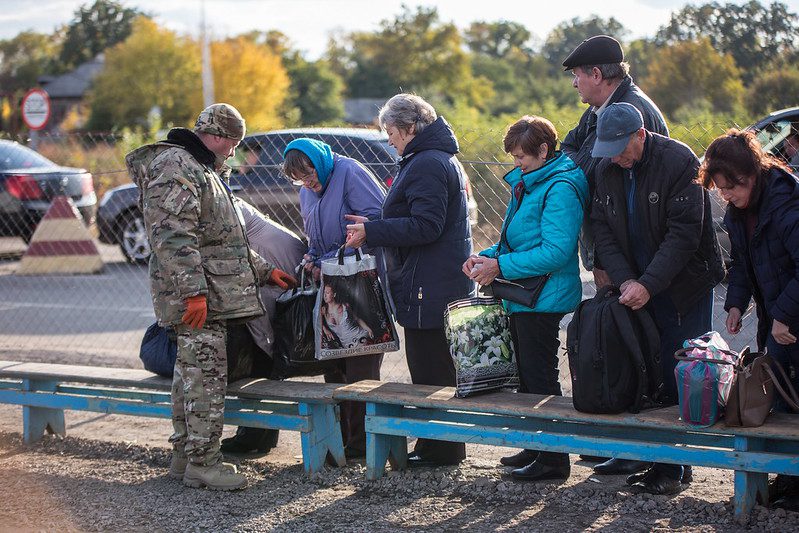
Bethenny Frankel’s aid to Ukraine, “BStrong,” will provide solace to Ukrainian refugees who have been victims of war and severe poverty after Russia invaded Ukraine in February 2022. BStrong also assisted the people of Puerto Rico after Hurricane Maria made it difficult to support their families and find sufficient food and medicine.

Survival Kits

The former reality star, author and philanthropist Bethenny Frankel is using her nonprofit organization BStrong to aid Ukrainian refugees who the Russian invasion has affected. A disaster relief fund, BStrong is sending 100,000 crisis kits, totaling up to $10 million in aid, to Ukraine. Frankel spoke in detail about the aid and the charity’s preparations. The kits include blankets, sleeping bags, toiletry items, non-perishables, water and generators.

Bethenny Frankel’s aid to Ukraine abundantly grew with relief funds and progressed from being a minuscule company to global, with a stockroom continuously piled with relief funds. Frankel describes the quantity of humanitarian aid as volunteers and coordinators ship the crisis kits to Poland, expressing that “Today, one 40-foot container went. Tomorrow, two 40-foot containers will go out… and it’s good to sort of stagger because it’s a lot more than you can visualize: $10 million in aid is an extraordinary amount.” Each box comprises aid with a value of $250,000. Some of the donations came from companies like Goya, Delta and Away.

Frankel dedicated herself to raising more than $10 million of aid, stating “We will go back, we are raising money, we have $6 million more in aid. This is also about how much we can efficiently transport.” She is hoping to continue to provide aid to the people of Ukraine to alleviate poverty.

More Than $100 Million in Aid for Ukraine

Through Bethenny Frankel’s aid to Ukraine charity, “BStrong,” other celebrities partnered to assist Frankel. Jordan Wiseley from “The Challenge,” Maksim Chmerkovskiy from “Dancing with the Stars” and former reality star Ramona Singer are three examples. In partnership with Global Empowerment Mission (GEM), BStrong surpassed its goal of $10 million reaching more than $100 million in charitable aid. The aid contains sanitation and emergency equipment, overnight bags and money to accommodate Ukrainian refugees with inns and airline tickets.

Speaking about the importance of her team and her purpose of BStrong, Frankel said, “It made me realize that we are unstoppable. My focus is on helping people whose lives have been ravaged by unforeseen circumstances. They are in desperate need of aid and an immediate solution.” She describes BStrong as a “hub where many brand name organizations will come to receive aid for their efforts” and explains how it is the organization’s expertise and strong point.

Four Planes to Aid Hurricane Maria Victims

This is not the first time that Frankel took the lead in providing aid to disaster zones. In 2017, she traveled to Puerto Rico to help individuals and families who were victims of Hurricane Maria. From Miami to Puerto Rico, Frankel chartered four planes loaded with medical equipment, food and pepsin weighing more than 20,000 pounds, plus another 2,000 pounds in nutritious meals from Feeding America and City Harvest. Along with food and medical items, the aid comprised an additional $30,000 in Costco gift cards and $25,000 in gift cards and currency from Yieldstreet. In collaboration with Delivering Good, BStrong utilized thousands of dollars in endowments from donors like Andy Cohen. Elvis Duran contributed $10,000 to BStrong, $20,000 for the four planes and $100,000 to Feeding America to assist with disaster aid.

After Frankel’s arrival, the planes delivered hundreds of ill and injured women, children and cancer patients from nearby hospitals to U.S. hospitals for medical care. When Frankel saw the destruction that Hurricane Maria left, she was in disbelief about the living conditions people were subject to, stating “They are starving. They are thirsty. They cannot communicate. They cannot bathe themselves. They wash their babies and laundry in street water.” After witnessing the inhumane living conditions in Puerto Rico, Frankel, with assistance from the Global Empowerment Mission, immediately set out to acquire more than $1 million in funds and provisions.

BStrong for Ukraine

Bethenny Frankel’s disaster relief, “BStrong,” provides necessities and safety to Ukrainian refugees who have become victims of war. With a background in humanitarian work like helping Hurricane Maria and poverty victims, BStrong will continue to give supplies, and aid and be a haven for the lives of Ukrainian refugees.

– Jacara Watkins
Photo: Flickr

June 17, 2022
https://borgenproject.org/wp-content/uploads/borgen-project-logo.svg 0 0 Jennifer Philipp https://borgenproject.org/wp-content/uploads/borgen-project-logo.svg Jennifer Philipp2022-06-17 01:30:532022-07-05 08:58:36Bethenny Frankel’s Aid to Ukraine
Aid, Global Poverty, Poverty Reduction

Cash Handouts to Reduce Poverty in Afghanistan

Cash Handouts
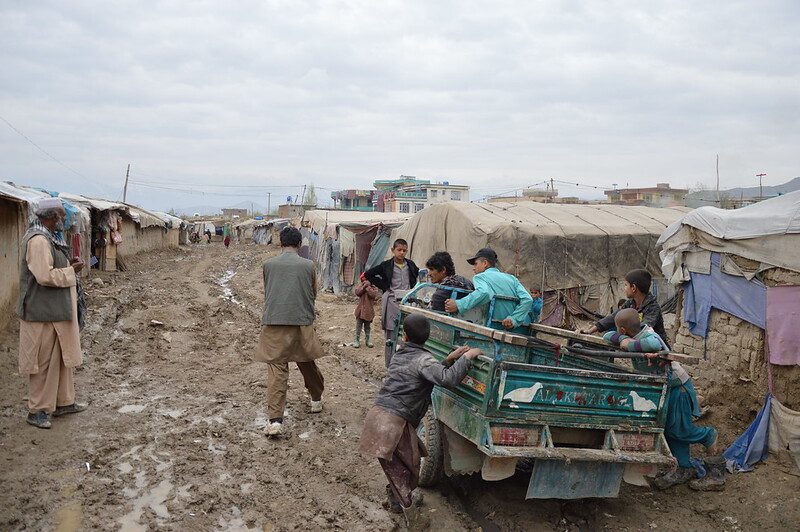
As winter approached and the humanitarian situation in Afghanistan worsened, the United Nations (U.N.) proposed cash handouts to help the millions of Afghans who were struggling in the country. The U.N. announced the proposal of the program on December 1, 2021, as it believes that cash handouts will be the best and most plausible solution to deal with the increasing poverty rate in Afghanistan.

The Problem

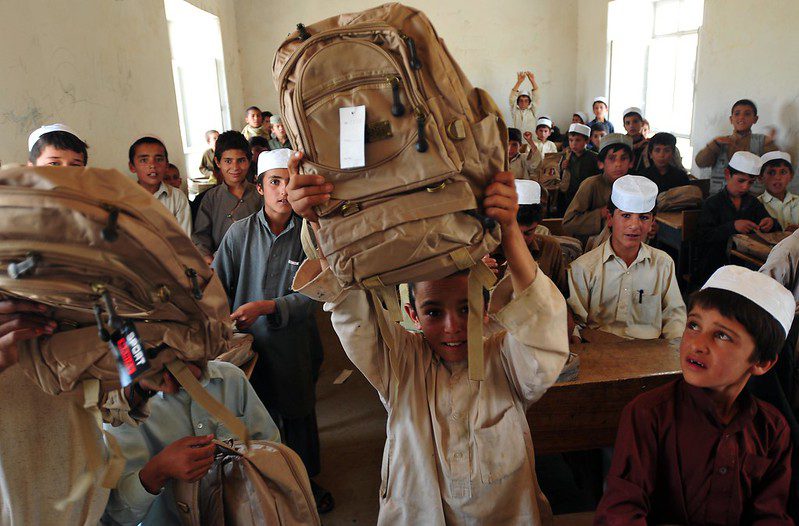
Still reeling from the effects of the full United States withdrawal combined with the Taliban takeover of the government in August 2021, millions of people are suffering. On December 10, 2021, the United Nations humanitarian chief, Martin Griffiths, warned that Afghanistan is inching closer and closer to “economic collapse.” As such, Griffiths urges donor nations to “support basic services” along with “emergency humanitarian aid.” Griffiths said that “4 million children are out of school” and the education of another 9 million children is in jeopardy because 70% of educators in Afghanistan have not received remuneration since August 2021.

Winters in Afghanistan are especially brutal, and this season, the U.N. expects wintertime temperatures to go down to -25 C. The United Nations High Commissioner for Refugees (UNHCR) estimated in early December 2021 that as many as 3.5 million displaced Afghans require essential support to make it through the winter. On top of this, UNHCR spokesperson Babar Baloch has stated that more than half of Afghanistan’s population, equating to 23 million people, are enduring extreme hunger, which may spiral into famine without prompt intervention.

UNHCR is providing essential humanitarian assistance to 60,000 people per week, which involves providing food, thermal blankets and winter clothing as well as rebuilding shelters and supplying cash assistance. This work will continue until February 2022, according to Baloch, at which time the next round of funding will need to begin as he estimated that another $374.9 million is necessary for 2022, especially during the winter.

The Solution

As a potential solution to the severe problems that Afghanistan is facing, the U.N. proposed a program that would provide $300 million annually in cash handouts to Afghan households with children, elderly people and Afghans with disabilities.

At the same time, the U.N. Development Programme (UNDP) wishes to bolster an existing “cash for work” initiative in Afghanistan with another $100 million to increase employment rates and $90 million to support small businesses with cash payments.

The “cash for work” initiative began in October 2021 in the three provinces of Mazar, Kunduz and Herat, with the intention to expand to more provinces. So far, through the initiative, UNDP has distributed $100 million worth of cash payments in exchange for work, creating employment opportunities for 2,300 people.

UNDP estimates that poverty in Afghanistan may reach a staggering 90% by the middle of 2022. In October 2021, with the Taliban in control of Afghanistan, UNDP created “a special trust fund” with an initial $58 million pledge of financial support from Germany to supply urgent cash directly to Afghan citizens. By early December 2021, the fund reached $170 million in pledges from countries around the world.

The Effectiveness of Cash Handouts

The possibility of handing out cash directly to people who need it most seems easy enough, but will Afghans use the money effectively? The World Food Programme (WFP) strongly supports cash transfers as a form of humanitarian aid. In 2020, WFP handed out $2.1 billion worth of cash transfers across 67 nations.

According to WFP, research shows that disadvantaged households that are empowered to make their own decisions through cash transfers “make choices that improve their food security and wellbeing.” For example, in 2018, 91% of households in Lebanon put cash assistance toward food, rental fees and medical costs. Cash handouts also boost local markets as people purchase resources locally, consequently bolstering economies.

Looking Ahead

Though the situation looks dire, there is hope as global organizations step in to assist vulnerable Afghans. However, urgent assistance is still necessary to prevent the collapse of the nation. With more support from the international community, organizations can bolster efforts to safeguard the lives of the people of Afghanistan.

– Julian Smith
Photo: Flickr

January 29, 2022
https://borgenproject.org/wp-content/uploads/borgen-project-logo.svg 0 0 Kim Thelwell https://borgenproject.org/wp-content/uploads/borgen-project-logo.svg Kim Thelwell2022-01-29 01:30:262022-01-18 10:23:36Cash Handouts to Reduce Poverty in Afghanistan
Aid, COVID-19, Development, Global Poverty

Universal Poverty in Afghanistan

Universal Poverty in Afghanistan
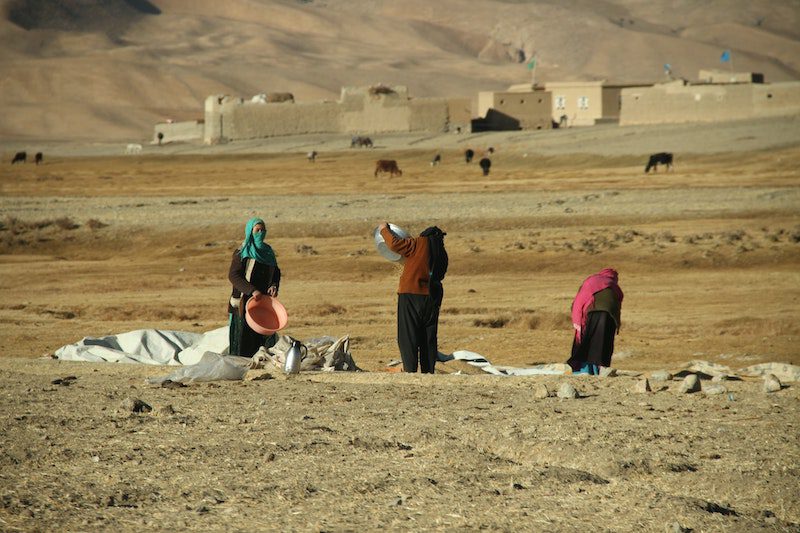
According to the UNDP, 97% of Afghanistan could be in poverty by 2022. This would be a quick plummet considering current UNDP data shows that only 54.5% of Afghans live below the poverty line. This is not particularly good either but is significantly better than the predicted more than doubled rate. This drastic predicted change is a result of a combination of things. Food prices and food insecurity are skyrocketing while economic and essential services experiencing interruption. COVID-19 is still prevalent and presents an active struggle. Those in rural communities and poor urban areas are feeling these problems quickest and hardest. If drastic change does not occur soon, there will undoubtedly be universal poverty in Afghanistan.

UNDP Predictions

The political turmoil of the Taliban resuming power, paired with economic and humanitarian issues, is creating a “full-on development collapse,” according to UNDP regional director Kanni Wagnaria. The UNDP’s 97% prediction is a worst-case scenario.

The prediction is based on 2018 estimates of the country’s GDP declining between 3.6% and 13.2% in the 2022 fiscal year. This depends on how the crisis continues and how other economies interact with the new Taliban leadership. This is a huge contrast to the previously predicted 4% GDP growth under the previous Afghan government.

Local Area-Based Programme

In response to these predictions, the UNDP has created a proposal of strategies to intervene and improve the current living conditions for those in poverty in Afghanistan. The “Local Area-Based Programme,” has four core elements: “provision of essential services, community-based livelihoods and local economies, disaster and climate-resilient response and social cohesion and inclusion participatory processes.”

The major goal of the program is to support approximately 9 million impoverished people over the course of 24 months. Another goal is to ensure the prediction of universal poverty in Afghanistan does not occur.

Local community groups, NGOs and small businesses will lead and implement this program. Within the plan, the most vulnerable would benefit significantly from cash-for-work grants for small and medium businesses and specifically within women-owned businesses. Households including children, the elderly and those with disabilities would receive a temporary basic income as well. There will also be assistance for natural disaster mitigation such as flood protection for farmlands.

ABADEI

The UNDP officially launched the program called ABADEI in October 2021. The primary goal is providing “immediate humanitarian assistance” while keeping the local economies moving. The first priority of the program is to help the people of Afghanistan meet their basic needs, with a focus on health and food security. As it raises more funds and receives more donations, ABADEI will be able to move into other priorities outlined in UNDP’s intervention strategies.

A significant indicator of outcome in the coming months and into 2022 will be how Afghanistan will do in the coming months and how the Taliban chooses to lead the country. The Taliban should be able to avoid the possible universal poverty in Afghanistan but it must make the decision to do so.

As of early September 2021, the Taliban had not reopened government offices. This is leading to many other industries such as banks and universities remaining closed as well, according to the UNDP. This has led to unstable employment and grave uncertainty among most of the country.

Additionally, expectations have determined that the Taliban could restrict capital, likely leading to inflation. This would reduce purchasing power and cause food prices to rise. The number of people below the poverty line would be even higher.

Much of what will happen to Afghanistan is relatively uncertain, yet rather imminent. Nevertheless, there are organizations such as UNDP that are being proactive and involved before universal poverty in Afghanistan becomes reality.

– Alex Mauthe
Photo: Unsplash

December 20, 2021
https://borgenproject.org/wp-content/uploads/borgen-project-logo.svg 0 0 Jennifer Philipp https://borgenproject.org/wp-content/uploads/borgen-project-logo.svg Jennifer Philipp2021-12-20 01:30:392024-05-30 22:25:36Universal Poverty in Afghanistan
Aid, Charity, Global Poverty

5 Facts About The Weeknd’s Charitable Work

The Weeknd’s Charitable Work
Abel Tesfaye, better known as The Weeknd to R&B fanatics, is one of the world’s most well-known musicians. However, his passion extends far beyond his love songs. The Weeknd’s charitable work positions him as a humanitarian celebrity as he uses his celebrity platform to help those in need.

The Weeknd’s Biography

The Weeknd was born in Toronto, Canada, to parents who are immigrants from Ethiopia. The musician grew up in Scarborough, Canada, where “the working poverty rate” stands at roughly 10% and 13% of the population is non-working poor. These circumstances of poverty prompted The Weeknd to take action to reduce poverty in the area and beyond.

5 Facts About The Weeknd’s Charitable Work

  1. Supporting Scarborough with COVID-19 relief. Shortly after the COVID-19 pandemic broke out, The Weeknd began donating profits from the sales of his popular range of face masks, which carry an “XO” label, matching every dollar for COVID-19 relief in Scarborough. In June 2020, the popular singer and songwriter donated $500,000 CAD to the Scarborough Health Network Foundation to provide COVID-19 relief to his hometown. The Scarborough Health Network Foundation began in 1977. It works with volunteers and members of the Scarborough community to build infrastructure and purchase medical technology. This is especially important during the COVID-19  pandemic as hospitals work to fight off the virus. Since implementing a COVID-19 Emergency Fund, the Foundation has raised more than $3 million for COVID-19 relief.
  2. Supporting Musicians During COVID-19. The Weeknd donated $500,000 to MusiCares, a charity that supports musicians with programs to “address financial, medical and personal health issues.” The charity created a COVID-19 Relief Fund to support musicians facing the impacts of COVID-19 and “the cancellation of multiple music events” due to social distancing protocols. The relief fund has provided more than $13 million worth of assistance to about 14,000 people in the music industry.
  3. Providing Food Aid to Tigray. An “ongoing conflict between the government” and the people of the Tigray Region within Ethiopia prompted The Weeknd to give back to his parent’s home country. The conflict arose in November of 2020 after the Ethiopian Prime Minister “ordered a military offensive against regional forces in Tigray” after “an attack on a military base,” home to government troops. The conflict led to thousands of deaths and more than 2 million displacements. A June 2021 article on GlobalGiving indicates that Ethiopia’s Tigray Region now faces the most severe food crisis in 10 years as more than 350,000 people endure “severe famine conditions.” Soldiers within the region “are accused of blocking food aid and stopping farmers from harvesting, plowing or planting” while “killing livestock and looting farm equipment.” Feeling a personal connection to Ethiopia, in April 2021, The Weeknd vowed to donate $1 million through the United Nations World Food Program U.S.A., which would ultimately provide 2 million meals for the people in this region.
  4. Supporting Ethiopic Studies. In 2016, The Weeknd made a donation of $50,000 to the University of Toronto’s Ethiopic studies program. This program commits to helping those of Ethiopian descent with academic, personal and professional achievements. The program works to teach the ancient Ethiopic language of Ge’ez to students in hopes of decoding “excerpts of history” that are rarely understood. The musician also made a donation of $30,000 to the program in 2020.
  5. Assisting Beirut, Lebanon. On August 4, 2020, an explosion in Lebanon’s capital of Beirut led to the deaths of more than 200 people while destroying a majority of the city. In response to his Lebanon-born manager’s call for aid to Lebanon, in August 2020, The Weeknd made a donation of $300,000 to the Global Aid for Lebanon fund which his manager created. The funds went toward supporting “the Red Cross Lebanon, the Children’s Cancer Center of Lebanon and the United Nations World Food Programme.”

Descending from parents who immigrated from Ethiopia to Canada jumpstarted The Weeknd’s strong passion for helping people in Ethiopia, Canada and beyond. His desire to provide people with entertaining music has made him into a household name throughout the United States, but his ability to influence does not end with just that. Through donations and a commitment to use social media to raise awareness of global issues, The Weeknd’s charitable work makes him a rockstar, both on and off stage.

– Nia Hinson
Photo: Flickr

December 10, 2021
https://borgenproject.org/wp-content/uploads/borgen-project-logo.svg 0 0 Jennifer Philipp https://borgenproject.org/wp-content/uploads/borgen-project-logo.svg Jennifer Philipp2021-12-10 01:30:292021-12-06 09:10:095 Facts About The Weeknd’s Charitable Work
Aid, Global Poverty

Foreign Aid to Afghanistan

Foreign Aid to Afghanistan
Some definitions of foreign aid provide a distorted vision of its purpose. This in turn drives citizens, government officials and donors away from supporting it. An accurate definition of foreign aid is one country helping to improve a recipient country’s standard of living through economic, military and various other services. Donors provide this type of support after war or natural disaster. The recent withdrawal of U.S. forces from Afghanistan is slowly concluding more than 40 years of conflict. However, foreign aid to Afghanistan remains necessary.

Afghanistan’s Violent Past

More than half of the population in Afghanistan lives on $1.90 a day. In headlines, history books and news stories, many do not see Afghanistan beyond the label of an economically developing country. This label often comes from a place of unfair judgment.

The longevity of the Afghan crisis is why aid is vital in transforming the country to work toward a better quality of life and future for the younger generations. The detrimental relationship between the state and citizens has damaged every part of what is necessary for a society to flourish. For example, the top-down monopoly with profiteers and warlords on top formed to control economic markets producing bottom-up violence is a significant barrier in the country flourishing. Understanding the nature of the conflict that has created a dystopian climate throughout the country is vital in producing foreign aid to Afghanistan because planning for the long term is what will produce change.

Antony Blinken’s Push for Reform

The U.S. is the world’s largest provider of foreign aid, but reform is necessary for providing quality aid for the future. During secretary of state Antony Blinken’s visit to Afghanistan on April 15, 2021, he spoke on several areas of reform to ensure the foreign aid sector continues to progress and attend to the needs of Afghanistan.

The U.S. is studying previous aid distribution models and methods to ensure that country receives the maximum amount of help. This also promotes other governments to continue the change. The U.S. plans on holding the Afghanistan government accountable to the pledge of acknowledging the basic human rights of their citizens. For example, traveling outside of the country has been nearly impossible for Afghan citizens. The U.S. will also hold the Taliban accountable for using Afghanistan as a base for formulating attacks on other countries. Neutralizing any form of threat prevents damage to other countries that would ultimately produce the need for more foreign aid and will push away allies.

The U.S. will ensure even aid distribution throughout the country. It will have clear communication with the Taliban in the coming years. The Taliban must allow aid groups to work on uninterrupted terms. Overall, the U.S. is enforcing long-term change through rectifying the relationship between the state and citizens that has been upholding the unlivable climate.

The Future of Foreign Aid to Afghanistan

The narrative of putting a stop to the current war or any war in the future is an unreachable goal. Foreign aid will not go towards a single issue. Instead, it will focus on changing the systemic problems that continue to produce wars. The U.S. often uses a militant approach, however, with the updated forms of foreign aid, it will not be using violence to overcome it. This includes $64 million in new humanitarian assistance which the United Nations High Commissioner for Refugees (UNHCR) and the World Health Organization (WHO) will distribute. This new surge of funding will provide a large range of assistance including shelter, essential health care, sanitation, food aid, hygiene services and more. These are forms of aid that will contribute to the overall building of a better livelihood for Afghan citizens.

The Millennium Challenge Corporation (MCC)

The Millennium Challenge Corporation (MCC), which U.S. Congress introduced in 2004 is an agency separate from the State Department and USAID. It continues to abide by its mission statement of reducing poverty through economic growth by providing aid to countries like Afghanistan. The U.S. has also developed a range of grants and programs to assist Afghan women who the civil upheaval greatly impacted. USAID continues to provide grants in helping Afghan women gain access to universities through the Women’s Scholarship Endowment.

The US State Department’s Bureau of Population, Refugees and Migration (PRM)

The U.S. State Department’s Bureau of Population, Refugees and Migration (PRM) funds several programs for Afghan women refugees and internally displaced persons. The programs include literacy training, gender-based violence prevention and mother-child health care. PRM works with various partners to ensure change including the U.N. High Commissioner for Refugees (UNHCR), the International Committee of the Red Cross (ICRC) and the International Organization for Migration (IOM).

In large groups, varying interests can prevent the proper allocation of funds to aid. However, the government and donors continue to work closely together. The impact that aid has extends beyond providing food and emergency medical assistance. It has the potential to provide a hopeful future for those who have only known living in a war zone. It reconciles individual relationships within the society. As aid strategies are revised to adhere to current needs the long-term quality of life for Afghan citizens will improve.

– Maggie Forte
Photo: Flickr

November 28, 2021
https://borgenproject.org/wp-content/uploads/borgen-project-logo.svg 0 0 Jennifer Philipp https://borgenproject.org/wp-content/uploads/borgen-project-logo.svg Jennifer Philipp2021-11-28 01:30:372024-05-30 22:25:29Foreign Aid to Afghanistan
Aid, Global Poverty, Humanitarian Aid, Refugees

Irish Aid For Afghans

Irish Aid
Colm Brophy, Minister for Overseas Development Aid and Diaspora, announced an additional €2 million in Irish Aid support less than two months after the initial €1 million, crediting the severity of the “rapidly deteriorating humanitarian [need] in Afghanistan” as the reason for the additional support. In children under the age of 5 years old, there is a high level of food insecurity and the risk of malnutrition. Minister Brophy stated in the press release that “One in three Afghans is facing crisis levels of food insecurity and more than half of all children under five are at risk of acute malnutrition.”

Ireland Aid Can Make International Changes

The aid that Ireland is providing has the potential to save lives and serve as a model for other countries to follow. Showing the actual impact of aid on Afghan refugees can also spark a positive reflection on the Afghan community, rather than the negative connection from recent conflicts.

Only a month prior, Minister of Foreign Affairs Simon Coveney announced €1 million in Irish aid for humanitarian needs in Afghanistan. This initial assistance was in addition to the €2 million that the HALO Trust, Afghanistan Humanitarian Fund (AFH) and Concern Worldwide received at the start of 2021.

The funds will go to UNICEF and the Afghanistan Humanitarian Fund (AFH). The AFH assists with the health, education and nutrition of the Afghan people.

Changing Visa Policies

On top of the Irish Aid support, Ireland has extended its refugee visas policy for up to another 150 Afghan people under the Irish Refugee Protection Program (IRPP). Ireland strongly condemns the violent action against the people of Afghanistan, especially the attacks against women and children.

It has called for safe and reliable access to humanitarian needs in Afghanistan for Aghani citizens and those who work with U.N. agencies and humanitarian partners, without exemptions. This means that even those across conflict lines must get the humanitarian access they need for safety.

Refugee Visas to Make a Difference

Ireland, which many know for its strong advocacy for women and girls, is attempting to play a role in relocating some Afghan women and girls to Ireland. There will be a priority for those who work in human rights issues and those who work with NGOs, including European and international organizations. Family reunification is also at the top of Ireland’s list in regard to the 150 refugee visas.

This is not the only way for Afghans to obtain refugee visas. There are a few protocols in place that help Afghans obtain refugee visas as long as they meet or find a way to meet the criteria. According to the 2015 International Protection Act, if an Afghani person already knows someone in Ireland who can handle their international protection application or if they have someone who will meet them at the border, they are exempt from the application fee. Deportation has also experienced less strict enforcement since COVID-19. Given the current state of Afghanistan, there is no clear answer to whether someone would experience deportation.

At the end of the day, Ireland is doing everything it can to assist with the humanitarian need in Afghanistan. In this time of crisis, it uses funds, policies and aid to do what it can. By expanding its visa list to accept more refugees, Ireland demonstrates that it will do everything possible to assist another country’s crisis.

– Veronica G. Rosas
Photo: Unsplash

November 4, 2021
https://borgenproject.org/wp-content/uploads/borgen-project-logo.svg 0 0 Kim Thelwell https://borgenproject.org/wp-content/uploads/borgen-project-logo.svg Kim Thelwell2021-11-04 07:30:422021-11-03 11:48:11Irish Aid For Afghans
Aid, Children, Global Poverty

The World Bank Approves Aid for Lebanon

Aid for Lebanon
At the beginning of the year, in January 2021, the World Bank approved and accepted the United States’ $249 million project proposal to bring aid into Lebanon. The social and economic situations in Lebanon over the past several months and years have become desperately dire, and the United States, the World Bank and its parent organization, the United Nations, are all seeking to meet the needs of the many suffering Lebanese people.

The Situation in Lebanon

Lebanon has been facing a prolonged financial crisis as well as economic upheaval, which, in 2020, resulted in severe inflation of the country’s currency, the Lebanese Pound (LBP), and led to a 19.2% drop in the GDP. As of September 2021, the U.N. reported that the multidimensional poverty rate in Lebanon has risen to 82%, with 32% of the Lebanese population living in extreme multidimensional poverty.

The Lebanese people are lacking in basic commodities and healthcare services, which has also exacerbated the COVID-19 pandemic’s effect on Lebanon. Unable to reach treatment facilities or even get diagnoses, the Lebanese people have suffered greatly from the pandemic. The pandemic’s stifling effect on businesses in Lebanon has also further compounded the financial struggles that Lebanon is already facing.

The Emergency Crisis and COVID-19 Response Social Safety Net Project (ESSN)

The Emergency Crisis and COVID-19 Response Social Safety Net Project (ESSN) began official operations in February 2021, providing funds and services to those struggling under the combined crises of Lebanon’s dismal financial state, complicated geopolitical relations and poor COVID-19 response infrastructure. The ESSN will attempt to work with and bolster existing active programs within Lebanon; the goal is to complement other projects without collateral damage to the already fragile internal systems.

The ESSN has been working closely with social programs that are already established, and that both the Lebanese Social Development Centers of the Ministry of Social Affairs and the Ministry of Education run. Understanding the importance of using every available resource, the ESSN has also been working closely with other third-party projects, most notably Lebanon’s National Poverty Targeting Program (NPTP), which also runs through the U.N. and the World Bank to identify problem areas within the country and help codify response programs.

How the ESSN is Providing Aid for Lebanon

To try to get Lebanon back on its feet, there are two main fronts on which the ESSN is attempting to help revitalize economic growth and stem the tide of poverty. The first is basic aid packages in the form of cash deposits for families, individuals, and those with unfortunate circumstances. These are to provide immediate relief and bring some sense of stability to the people stranded in poverty. In order to accomplish this, the ESSN had been providing financial and technical support in order to greatly increase the capabilities and operations of the NPTP. Using the infrastructure already put in place through the NPTP, both projects hope to be able to proliferate aid quickly, effectively and fairly.

The second front that the ESSN is attempting to fight poverty on is that of human capital, specifically the promise of the young people of Lebanon. Recognizing that people are the most valuable resource, the ESSN’s work with the Lebanese Ministry of Education has begun to keep children in schools. Education is the key to opportunity, and ESSN is working to subsidize both the public school systems in Lebanon and also the schooling costs for individual students. By ensuring the quality of education and by granting students the socioeconomic stability to be able to continue attending school, the ESSN is attempting to assist Lebanon with investing in its future.

Becoming fully approved and operational in 2021, the ESSN will receive funding, and it will remain running for three years as it provides aid for Lebanon. Reports as recently as July 2021 have positive responses, and already, a large amount of aid has undergone disbursement to individuals, families and students alike. The ESSN has plans to continue to show support by investing in Lebanon and its people, a hearty show of humanity.

– John J. Lee
Photo: Flickr

October 19, 2021
https://borgenproject.org/wp-content/uploads/borgen-project-logo.svg 0 0 Lynsey Alexander https://borgenproject.org/wp-content/uploads/borgen-project-logo.svg Lynsey Alexander2021-10-19 07:30:222021-10-17 12:25:48The World Bank Approves Aid for Lebanon
Aid, Global Poverty

Why Afghanistan Needs More Foreign Aid, Not less

Why Afghanistan Needs More Foreign Aid, Not less
A 2019 census reports an average household income for U.S. residents of slightly more than $68,000. The thought of running water to brush one’s teeth, three hot meals a day and educational attainment up to a minimum of nine years is a certitude in all states. Yet, many Afghans are not able to access the same. Roughly 42% of Afghan people have access to safe drinking water and more than half the population lives below the poverty line, with 11 million individuals experiencing acute and severe food insecurity. Furthermore, despite Afghanistan mandating nine years of compulsory education, education is not gendered equitable. Afghan education often leaves girls and women behind. For these reasons, Afghanistan needs more foreign aid, not less.

Poverty in Pictures

The foundation Gapminder “is an independent educational nonprofit fighting global misconceptions.” As an educational tool, Gapminder hosts the Dollar Street project. Anna Rosling Rönnlund invented Dollar Street as a way for the global public to understand data. Rönnlund’s 2018 Ted Talk challenged the world’s views on poverty. She ranked countries and families by displaying their wealth in images by comparing resources such as beds, toothbrushes and toilets. Additionally, U.S. citizens saw the United States rank in the top 2% of the wealthiest countries, a far contrast from the bottom 25% where households survive on less than $200 per month. This blatant exhibition of wealth inequality provides a strong case of why a country like Afghanistan needs more aid, not less.

With poverty in images, the strife in Afghanistan is something that simply cannot be ignored. Foreign aid, for example, the U.S. International Affairs Budget, can make real change in an impoverished country. A September 2021 article by Al Jazeera Media Network reports on data projecting that by the half-year mark of 2022, about 97% of Afghan people will face circumstances of poverty. Economically, a country receiving aid can become an emerging or stronger trade partner when its low-income citizens receive assistance. Poverty assistance is not the only way in which foreign aid helps a country. Foreign aid can serve as humanitarian aid and combat transmissible diseases such a COVID-19. In turn, increased foreign aid has the potential to increase the protection of all Americans domestically and internationally, including U.S. military personnel abroad.

The Need for More Foreign Aid

The Borgen Project’s economic and political model is a strategic approach for making real change. The Borgen Project influences multiple U.S. legislative policies to impact foreign aid contributions. Currently, the U.S. donates a mere 0.18% of gross national income (GNI). This contribution of 0.18% is far below the official development assistance target of 0.70% GNI. This 0.70% target was developed and based on the work of Nobel Prize winner Jan Tinbergen. His work demonstrates that a contribution of 0.75% of GNI from high-income nations would allow “developing economies to achieve desirable growth rates.” The U.N. agreed to this target, establishing a timeline for countries to meet this goal by 2015. Yet, since the target was set, the goal has still not been achieved.

Increasing the International Affairs Budget

Aligning with The Borgen Project’s mission, the U.S. and the global community must remember the commitments made to the Organisation for Economic Co-operation and Development in 1970 in order to make significant strides in global poverty reduction. A small increase to the International Affairs Budget will assist humanitarian aid organizations seeking to help Afghans on the ground with immediate needs, such as food, shelter and access to clean water. As a country riddled with conflict, violence and poverty, it is clear why Afghanistan needs more foreign aid, not less. With more individuals supporting the International Affairs Budget, Afghans have an opportunity to rise out of poverty and look toward a brighter tomorrow.

– Michelle Renée Genua
Photo: Flickr

October 14, 2021
https://borgenproject.org/wp-content/uploads/borgen-project-logo.svg 0 0 Kim Thelwell https://borgenproject.org/wp-content/uploads/borgen-project-logo.svg Kim Thelwell2021-10-14 01:30:552024-05-24 23:54:58Why Afghanistan Needs More Foreign Aid, Not less
Aid, Global Poverty

Princess Marie and her Philanthropic Efforts

Princess MariePrincess Marie of Denmark completes her tenth year working with DanChurchAid, an organization working to combat global poverty. She has also contributed to several other philanthropic organizations over the years. Her Royal Highness actively advocates for the critical cause of diminishing global poverty through her work and commitment.

DanChurchAid

DanChurchAid is an organization that works with economically developing nations to combat hunger, poverty, and oppression. It has been operating for over a hundred years, and with the help of donors, volunteers, and partners, it has aided people in more than 120 countries. The group uses popular and political forces to urge political decision-makers to improve living conditions for the underprivileged. Along with their long-term aid in low- and middle-income countries (LMICs), the organization offers relief to disaster-stricken areas. They make sure that communities reemerge more robustly, and are more adequately prepared if disaster strikes again. The group’s mission emphasizes the importance of human rights as well as working with those in need on relevant, sustainable, and practical projects.

Humanitarian Trips

Through her years as a patron, Princess Marie’s philanthropy has shown through her multiple humanitarian trips with DanChurchAid. During a recent trip to Uganda, she visited the Raising Gabdho Foundation in Kampala. There, she learned more about the foundation’s work, and the techniques they developed to cook in a more sustainable way. She also saw a DanChurchAid project called Fresh Fruit Nexus. The Danish International Development Agency first developed this project in Northern Uganda in 2018. Here, Princess Marie visited Ugandan farmers in the Omugo Refugee Settlement. Together with their refugee families, the farmers formed a cooperative in which they collected crops together and had the opportunity to borrow money from each other.

Princess Marie’s philanthropy extends to other countries as well. She has also traveled to Myanmar in the past. In Myanmar, DanChurchAid has provided underdeveloped communities with practical tools to advance their economic status and quality of life. People have worked to financially organize themselves through savings and loan systems. The underprivileged community could use the money to purchase essential tools, such as sewing machines, for economic sustainability. Princess Marie made this humanitarian trip alongside Danish donors who are also passionate about combating global poverty.

Promoting Sustainability and Accessibility

Another project that Princess Marie was active in is a supermarket called Wefood, which is located in the capital of Copenhagen, Denmark. Her Royal Highness worked with DanChurchAid in unveiling the project. Wefood aims to promote sustainability and accessibility by collecting surplus produce daily and selling it. By using this method, they can cut costs by 30 to 50%. The supermarket has aimed to cut back on food waste and provide food to those affected by poverty. This is the first of its kind in the nation.

In addition to Wefood, Princess Marie has also worked with FoedevareBanken, a Danish food bank. This organization also aims to fight food waste and poverty. Similar to Wefood, they work to provide disadvantaged people with sustainable food, and this initiative ensures that all people can have access to nutritious and balanced meals.

Through her advocacy and patronage with DanChurchAid, Princess Marie has effectively influenced the fight against global poverty. After her ten years with the organization, people worldwide eagerly await to see where Princess Marie’s philanthropy will inspire change next.

– Carly Johnson
Photo: Flickr

October 7, 2021
https://borgenproject.org/wp-content/uploads/borgen-project-logo.svg 0 0 Lynsey Alexander https://borgenproject.org/wp-content/uploads/borgen-project-logo.svg Lynsey Alexander2021-10-07 02:50:432024-05-30 22:25:17Princess Marie and her Philanthropic Efforts
Aid, Global Poverty, Health, USAID

US Aid in Vietnam Assists People in Need

U.S. Aid in Vietnam
The relationship between the U.S. and Vietnam was at one time a negative one. However, over several decades, both countries have formed a positive and beneficial relationship. In 1995, both countries established a bilateral relationship and have since developed a friendship. The U.S. hopes for Vietnam to one day be strong enough to be independent of aid from outside sources.

Until that day comes, U.S. aid in Vietnam will continue to help the Vietnamese people. In just the past 20 years alone, the U.S. has provided $706 million worth of aid to improve health in Vietnam. In that same amount of time, the U.S. provided an overall total of $1.8 billion in aid to Vietnam.

US Health Aid in Vietnam

Much of the U.S. aid in Vietnam aims to improve the health of the Vietnamese people. In particular, the U.S. hopes to control the spread of infectious diseases in Vietnam such as HIV. There are various programs USAID has operating within Vietnam to achieve this goal. One such program is Healthy Markets. The purpose of this project is to create a market in Vietnam with easy access to viable medical goods and services used to combat HIV. The program called Local Health System Sustainability (LHSS) provides services directly to the government of Vietnam. This project aims to increase the financing of Vietnam’s health sector. These are just two of the 16 health projects operating in Vietnam thanks to USAID.

US Aid to People With Disabilities

The U.S. aid in Vietnam also targets Vietnamese people with disabilities. Over the years, USAID has changed the way it helps Vietnamese people with disabilities. Originally, the U.S. helped this group of people directly by providing prosthetics. Over time, the U.S. has come to appreciate the fact that people with disabilities in Vietnam also need access to important services and the need for their inclusion in Vietnamese society.

Similar to the medical projects, there are also projects in Vietnam working to help Vietnamese people with disabilities. One of these projects is Advancing Medical Care and Rehabilitation and Education. This project is working toward improving care for people with brain impairments. Projections have determined that this project will last until 2023 on a budget of $10.3 million. The project called the Disability Rights Enforcement, Coordination and Therapies is working to make sure disability rights undergo enforcement within Vietnam. This project also works to improve therapy and other essential services for people with disabilities. It will last until 2023 and has a budget of $10.7 million.

Why it Matters

While Vietnam’s poverty rate has been 5.8% as of 2016, U.S. aid in Vietnam still goes a long way. People living in poverty often do not get to participate in the better aspects of society. This makes U.S. aid in Vietnam so important because it allows all people to have a better life including those in poverty. For example, the U.S. has been able to reach 30,000 people with disabilities in Vietnam. It is numbers like this that show the positive impact aid can have on other countries.

– Jacob E. Lee
Photo: Flickr

September 25, 2021
https://borgenproject.org/wp-content/uploads/borgen-project-logo.svg 0 0 Lynsey Alexander https://borgenproject.org/wp-content/uploads/borgen-project-logo.svg Lynsey Alexander2021-09-25 01:30:472024-05-30 22:24:53US Aid in Vietnam Assists People in Need
Page 23 of 65«‹2122232425›»

Get Smarter

  • Global Poverty 101
  • Global Poverty… The Good News
  • Global Poverty & U.S. Jobs
  • Global Poverty and National Security
  • Innovative Solutions to Poverty
  • Global Poverty & Aid FAQ’s
Search Search

Take Action

  • Call Congress
  • Email Congress
  • Donate
  • 30 Ways to Help
  • Volunteer Ops
  • Internships
  • Courses & Certificates
  • The Podcast
Borgen Project

“The Borgen Project is an incredible nonprofit organization that is addressing poverty and hunger and working towards ending them.”

-The Huffington Post

Inside The Borgen Project

  • Contact
  • About
  • Financials
  • President
  • Board of Directors
  • Board of Advisors

International Links

  • UK Email Parliament
  • UK Donate
  • Canada Email Parliament

Get Smarter

  • Global Poverty 101
  • Global Poverty… The Good News
  • Global Poverty & U.S. Jobs
  • Global Poverty and National Security
  • Innovative Solutions to Poverty
  • Global Poverty & Aid FAQ’s

Ways to Help

  • Call Congress
  • Email Congress
  • Donate
  • 30 Ways to Help
  • Volunteer Ops
  • Internships
  • Courses & Certificates
  • The Podcast
Scroll to top Scroll to top Scroll to top