• Link to X
  • Link to Facebook
  • Link to Instagram
  • Link to TikTok
  • Link to Youtube
  • About
    • About Us
      • President
      • Board of Directors
      • Board of Advisors
      • Financials
      • Our Methodology
      • Success Tracker
      • Contact
  • Act Now
    • 30 Ways to Help
      • Email Congress
      • Call Congress
      • Volunteer
      • Courses & Certificates
      • Be a Donor
    • Internships
      • In-Office Internships
      • Remote Internships
    • Legislation
      • Politics 101
  • The Blog
  • The Podcast
  • Magazine
  • Donate
  • Click to open the search input field Click to open the search input field Search
  • Menu Menu

Archive for category: Advocacy

Information and news on advocacy.

Advocacy, Aid Effectiveness & Reform, Children, Developing Countries

Middle School Students Fight Global Hunger

francisstudents
Middle school can be an unforgiving time for young people, but one group of students at St. Francis Episcopal Day School in Texas are using their middle school years to fight global hunger. Under the direction of faculty Debbie Harris, the St. Francis Wolves Against Hunger are making a global difference. The group consists of 7 eighth grade students. They participated in the World Hunger Leadership Challenge, an initiative founded by Lead2Feed with the purpose of promoting leadership among middle school students in the fight against world hunger.  It is important to develop future leaders and foster a spirit of giving back to the community especially during the tough middle school years.

The St. Francis Episcopal Day School was awarded a $25,000 check from the Yum! Brand Foundation for the work the Wolves Against Hunger did in the World Hunger Leadership Challenge.  More than 300,000 students participated from over 1,500 schools and the Yum! Foundation provided close to $250,000 in prize money grants to 140 schools. The grants will support US public charities engaged in hunger relief. The recognition ceremony was shared with another student group located in Utaar Pradesh, India. The students from St. Francis have been in close contact with the students from K.L. International (KLI) in Utaar Pradesh over the last two semesters.  The St. Francis students packed 5,100 sack lunches, collected more than 6,500 cans of food, and packed boxes at a local food back. The KLI students volunteered time at a local orphanage run by Mother Teresa Missionaries of Charity as well as created Project 365 in which at least one hungry person is fed every day of the year.

Harris had heard about the World Hunger Leadership Challenge and entered her students in the hopes of gaining them some recognition for all their hard work. She noted the students participated in events on the weekends in addition to school activities. The program began when Harris organized a campaign for World Water Day in 2012 and came in contact with Jasdeep Lamba, whose father-in-law runs KLI School. They worked together to get a Skype discussion scheduled between the students and faculty of the two schools. The next school year, they arranged for six Skype forums to be held. The forums gave the US students a greater appreciation for hunger and poverty as well as motivated both groups of students to get more involved in their respective communities.

The award money won by St. Francis will be donated to Kids’ Meals Houston, a charity working to feed children under 5. The work done by the KLI students will benefit The Earth Saviours Foundation, a local charity in New Delhi, India.

– Amanda Kloeppel
Source: Indo American News

May 28, 2013
https://borgenproject.org/wp-content/uploads/borgen-project-logo.svg 0 0 Borgen Project https://borgenproject.org/wp-content/uploads/borgen-project-logo.svg Borgen Project2013-05-28 04:00:422024-05-24 23:42:50Middle School Students Fight Global Hunger
Advocacy, Aid Effectiveness & Reform, Health, Women and Female Empowerment

Mobile Technology for Women is a Global Development Must

rsz_1mother
Closing the gender gap is high on the priorities of those working in global development and one way to accomplish this is through increasing the availability of mobile technology to women according to Patricia Mechael, Executive Director of mHealthAlliance.  In her years working in global health and development, she saw first hand the realities of poverty and gender inequality. The social status of women has a negative effect on their health and ability to care for their families. Problems such as maternal mortality and unintended pregnancies are often the result of poor maternal health care and poor gender representation in countries.

Mobile technology is working to reduce the gender gap and provide women around the globe a chance at a healthy life. Women who would force abortions to save themselves from another mouth to feed now have access to vital family planning information and commodities through the increase of mobile technology. While less than a decade ago, the mobile penetration rate was in the single digits among low-income nations, today reports indicate it stands at 89%.  The digital divide is shrinking between low and high-income nations, but women are still 21% less likely to own a mobile device compared to men. Millennium Development Goal #3 is to promote gender equality and empower women and providing them with mobile technology is a way to get closer to accomplishing that goal.

Beyond meeting MDG3, mobile technology is key in accomplishing MDG5, improving maternal health. The mHealth Alliance and the World Health Organization have worked to bring about mobile technology to improve maternal health. These projects use a variety of mobile technologies to provide everything from information about vaccines to improving access to essential medicine through reducing depletion of stock.

The advances in mobile technology have come a long way and will continue to be essential to promoting global development and accomplishing the MDGs.  In addition, Mechael is working with her company to come up with ways to further include women in the development and discussion of mobile technology and applications to serve and assist them.

– Amanda Kloeppel
Source: Forbes
Photo: WAHA

May 28, 2013
https://borgenproject.org/wp-content/uploads/borgen-project-logo.svg 0 0 Borgen Project https://borgenproject.org/wp-content/uploads/borgen-project-logo.svg Borgen Project2013-05-28 04:00:352024-12-13 17:49:21Mobile Technology for Women is a Global Development Must
Advocacy, Development, Global Poverty

How to Help the World’s Poor

Girl-writing-call_congress_letter_to_editor_community_involvement_opt (1)
Global poverty is an international issue, and because of its scope helping the poor can often seem like an insurmountable problem. However, if everyone one person devoted to the cause could take 5 or 10 minutes to make an effort and get involved, the solution to poverty wouldn’t seem so out of reach. Here are some simple ways to make a difference:

1. Call or Write Congress

The power of free speech is often underestimated; when in reality congressional leaders often support poverty-reduction legislation when as few as 7 to 10 people in their district contact them in support of it. Calling your leaders each week only takes up to a minute out of your schedule – all you need to say is that you are calling to support funding for USAID or poverty-focused aid. Simple as that!

2. Donate to the Cause

There are many ways to donate either time or money – instead of birthday or graduation presents, ask for donations. Set up a fundraiser with your local bakery. Volunteer and donate your time to aid organizations. The options are endless.

3. Spread the Word

In order to solve a global problem, it is important to have a global presence. Whether through flier posting, blogging, or word of mouth, make sure to educate those around you to the trials of those in poverty and the simplicity of the solution. Encourage others to call their congressional leaders in order to have the most impact on foreign aid legislation. It’s as easy as posting a link with the information to your social media accounts.

Being an active member of the movement to eradicate poverty is incredibly important; and the more people that get interested and involved, the faster the government will take note and put more poverty-focused aid into legislation. It’s quick and simple, so why not take a minute to call right now?

-Sarah Rybak
Source: The Borgen Project
Photo: The Ambrose School

May 28, 2013
https://borgenproject.org/wp-content/uploads/borgen-project-logo.svg 0 0 Borgen Project https://borgenproject.org/wp-content/uploads/borgen-project-logo.svg Borgen Project2013-05-28 04:00:132024-05-24 23:51:33How to Help the World’s Poor
Advocacy, USAID

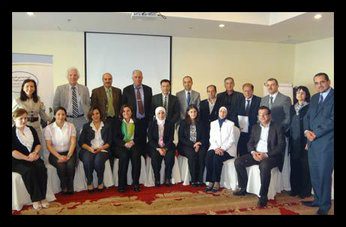
Jordanian Law Students Receive Human Rights Coursework

Jordanian Law Students
Jordanian law students will get human rights coursework thanks to the American Bar Association and USAID. The Human Rights Curriculum for Jordanian law students was launched on May 15th to Jordanian law faculties. This curriculum hopes to bring innovative, multimedia approaches to the law classrooms of Jordan and improve the quality of students’ legal education. Students have been dissatisfied with their education as it has failed to keep up with evolving technologies, and this program is one solution to the complaints.

The launch brought 19 human rights law professors together as well as several other faculty members to experience and use the curriculum. Demonstrations were done as well as hands-on simulations. The curriculum was created as part of the American Bar Association’s program “Enhancing Protection and Promotion of Human Rights in Jordan.” The program was designed by Jordanian and international professors and human rights experts to provide a complete picture of Jordanian law and human rights principles.

The coursework is designed to be interactive and deviates from the lecture model found in most legal classrooms. The material is conveyed through role play, case analysis, and video segments.  Each section includes history and theory regarding different aspects of human rights law.  The workshop done at the launch gave professors a glimpse into the curriculum. It gave professors the ability to learn how to implement the program and various outlets for additional resources and help.

The hope is that Jordanian law students will gain greater knowledge and skills through the more hands-on program and have a greater ability to apply the principles to real life law cases.  It will also give them a greater appreciation of the depth of human rights law and the many areas in which it applies.

-Amanda Kloeppel
Source: AME Info

May 27, 2013
https://borgenproject.org/wp-content/uploads/borgen-project-logo.svg 0 0 Borgen Project https://borgenproject.org/wp-content/uploads/borgen-project-logo.svg Borgen Project2013-05-27 04:00:252020-06-18 19:34:23Jordanian Law Students Receive Human Rights Coursework
Advocacy, Aid Effectiveness & Reform, Development, Technology, USAID

USAID and Qualcomm Expand Relationship

cell_phone
USAID and Qualcomm announced a formal agreement to work to expand global technology and increase collaborative efforts in development.  Qualcomm, a San-Diego based telecommunications company, has been working with USAID in recent years to improve access to technology in developing countries. The formal agreement will give Qualcomm’s Wireless Reach Division the ability to carry out projects.

Those that have already benefited from USAID and Qualcomm’s projects are fishermen in Brazil, police officers in El Salvador, and health workers in the Philippines.  In Brazil, the joint project provided small-scale fisherman with mobile devices and applications to connect with buyers, track sales, and get weather updates. Qualcomm was able to equip police in high-crime neighborhoods in El Salvador with smart phones that allowed them to connect to a database to work to reduce crime. Collaboration in the Philippines helped rural health clinics establish electronic records.

USAID commended Qualcomm for being an innovative, nimble, and strategic global technology leader.  USAID and Qualcomm share a vision of how to address the challenges in the developing world. Among the current goals of the formal agreement are to close the mobile phone gender gap, expand access to broadband, reduce the negative effects of climate change, and connect small farmers to market data.  Projects in Africa and Asia are the top priority and future consideration will be given to other areas including Latin America.

The future of technology in developing nations is changing quickly and this is just more step in the right direction.

– Amanda Kloeppel

Source: UT San Diego
Photo: CIAT News

May 26, 2013
https://borgenproject.org/wp-content/uploads/borgen-project-logo.svg 0 0 Borgen Project https://borgenproject.org/wp-content/uploads/borgen-project-logo.svg Borgen Project2013-05-26 07:33:012020-06-18 19:49:50USAID and Qualcomm Expand Relationship
Advocacy

6 Reasons Why Humanosphere Rocks!

6 Reasons Why Humanosphere Rocks!
The independent, nonprofit news organization Humanoshpere has been devoted to covering and analyzing the most important issues in global health, development, and aid since its founding in 2010. The organization aims to expand the relatively meager and overly broad media coverage of humanitarian issues while better outlining the role that aid and development efforts play in their alleviation. If this isn’t a sufficient reason to believe that Humanosphere rocks, here are 6 more.

1.   Tom Paulson is one funny man: In addition to being terrifically intelligent and an incredible journalist, the founder and editor of Humanosphere have a wit that is unheard of in the somewhat stiff world of humanitarian journalism He deems his news coverage as “often irreverent” in its coverage of humanitarian issues and admits that global poverty just really “ticks him off.” He also claims that he and a childhood friend invented Earth Day. So there’s that.

2.   In with the warm, out with the fuzzy:  The language surrounding humanitarianism is tinged with a sort of hopefulness that is often overly ambiguous. Humanosphere attempts to maintain the warm characteristics while refraining from the fuzziness. They aim to clearly define the issues while promoting dialogue rather than simply declaring simplistic solutions.

3.    3. They’re based in Seattle: Often called the humanitarian center of the United States, there is no better place for the headquarters of an independent news organization trying to make the world a better place. Bolstered by the National Public Radio and other local affiliates, their “moss-backed bias” that poverty is a negative thing in need of alleviation is well supported in a city that is the nation’s leader in global health, aid, and development.

4.   They’re deadly serious, but not deadly boring: Poverty, injustice and suffering are by no means light-hearted matters, and Humanosphere does not approach them as such.  However, while Humanosphere is devoted to raising awareness about these international issues, they do not wish to do so in a hum-drum manner. Instead, they post articles with engaging titles such as “Feed the World: Bugs” and “On the West’s awkward relationship with Kenya,” and keep their rhetoric understandable and approachable.

5.   They don’t beat around the bush: In the words of Tom Paulson, “We’re journalists. We like the difficult, politically charged and awkward.” The writers at Humanosphere delve directly into the issues that matter most at any given moment. They aren’t afraid to call out any news or governmental organization that fails to do the same. They simply don’t shy away from the discomfort that inevitably arises from shedding light on the issues of poverty and injustice.

6.  They are a refreshing step in the right direction: Perhaps most importantly, Humanosphere is representative of the positive direction that the humanitarian journalism field is working toward. Aside from having the entirely admirable mission of making the world a better place, their coverage tactics are better aimed at reaching their modern readership base than most existing news organizations.

Does anyone need any more convincing? Ok, here’s a video of Tom Paulson himself performing Psy’s “Gangnam Style.” (He uploaded this himself. Like I said, he’s one funny man.)

– Kathryn Cassibry

Source: Humanosphere
Photo: Humanosphere Facebook

May 24, 2013
https://borgenproject.org/wp-content/uploads/borgen-project-logo.svg 0 0 Borgen Project https://borgenproject.org/wp-content/uploads/borgen-project-logo.svg Borgen Project2013-05-24 06:00:262024-12-13 17:53:466 Reasons Why Humanosphere Rocks!
Advocacy, Aid Effectiveness & Reform, USAID

UTSA Partners with Small Business in Tunisia

tunisia

The International Trade Center housed within the UTSA (University of Texas at San Antonio) institute of Economic Development is partnering with USAID to train small businesses in Tunisia.  UTSA will take their Small Business Development Center (SBDC) Counselor and Director Certificate Training program to Tunisia.  The goal of the training is to help Tunisia establish SBDCs to train and support small business owners and entrepreneurs. Many of these are women and young adults with little hope of a sustainable future.

UTSA’s training program is just one component of a larger initiative focused on strengthening Tunisia’s economic development. The initiative is funded and led by USAID.  UTSA and USAID will provide the SBDC training in Tunisia, as well as stay involved with providing technical support to owners and employees of small and medium-sized enterprises.  The program will work to provide a competitive  advantage to these small business owners and work to improve  their lifestyles.

North Africa’s smallest country, Tunisia, is working to rebuild its democracy after the 2011 revolution. It is bordered by Algeria, Libya, and the Mediterranean Sea. Tunisia is ready to promote economic growth and trade opportunities with a special focus on small and medium businesses.

The International Trade Center at UTSA has grown to be one of the largest trade assistance organizations in Texas. They have been  working with countries in Central and South America.  The trade center helps companies increase their global competiveness through technical trade consulting, market research, and innovative training. Follow them on Twitter (@TexasTrade) or find them on Facebook (facebook.com/texastrade).

– Amanda Kloeppel
Source: UTSA

May 23, 2013
https://borgenproject.org/wp-content/uploads/borgen-project-logo.svg 0 0 Borgen Project https://borgenproject.org/wp-content/uploads/borgen-project-logo.svg Borgen Project2013-05-23 05:00:132020-06-16 13:20:16UTSA Partners with Small Business in Tunisia
Advocacy, Development, Global Poverty

Following Seattle’s Lead in International Development

Following Seattle's Lead in International Development

The city of Seattle has teamed up with the Seattle International Foundation (SIF) to launch the Seattle Ambassador program, a campaign intended to educate residents about how their community is making some pretty amazing strides in the global fight against poverty, and inspire even more locals to pitch in.

Seattle is a leader in international development efforts; over 300 local organizations are working in 144 developing countries. The Borgen Project has been headquartered in Seattle since 2003, and we are honored to be part of a community that cares so much about the rest of the world.

We have more than a few neighbors who are doing incredible things; Literacy Bridge develops and distributes Talking Books so that illiteracy doesn’t prevent education. Ayni Education International began building schools for girls in rural Afghanistan after 9/11, in an effort to counteract growing prejudice on both sides. One By One fights to end Fistula, which is directly related to maternal mortality during childbirth.

Residents who sign up for the Seattle Ambassador program will receive updates on the efforts of these organizations and others, and also learn ways that they can help. As a bonus, registering for the program automatically enters you for a chance to win an all-expense-paid trip to Africa, Asia, or Latin America, too see up close how your home is improving the world.

The first winner will be announced in June, so visit Seattle Ambassador or text SEATTLE to 80088 to register. If you don’t live in Seattle, contact your government representatives about following Seattle’s lead. Just imagine what ten, twenty, fifty cities like Seattle could accomplish.

– Dana Johnson

Sources: Seattle Ambassador, Seattle Globalist
Photo: Global Journal

May 22, 2013
https://borgenproject.org/wp-content/uploads/borgen-project-logo.svg 0 0 Borgen Project https://borgenproject.org/wp-content/uploads/borgen-project-logo.svg Borgen Project2013-05-22 05:00:402020-06-21 22:21:06Following Seattle’s Lead in International Development
Advocacy, Global Poverty

How Bono Got Interested in Global Poverty

How Bono Got Interested in Global Poverty

Nowadays, Bono’s face is synonymous with activism. The lead singer of U2 is known as much for his humanitarian work as for his music, if not more. Known for his charisma and tirelessness, Bono has been championing causes such as poverty reduction and AIDS relief for decades. He is the celebrity face of activism and has had incredible impact in garnering momentum for the movement of international aid.

Bono got his start in activism after he performed at Bob Geldorf’s groundbreaking fundraiser, Live Aid, in the late eighties. The performance spurred a month-long trip to Ethiopia with his wife, Ali Hewson, where they worked on a famine relief project. The two said they were stunned by the conditions, and Bono walked away determined to change what he’d seen. He repeatedly tells the story of the end of his visit, when a man asked the singer to take his son with him. As Bono explains, “He knew in Ireland that his son would live and in Ethiopia, his son would die…At that moment, I became the worst thing of all; I became a rock star with a cause.”

After that, his humanitarian work began in earnest and has only increased in intensity and scale. The early 90s saw tours around Central America and campaigns with major organizations to rally support for development work. As U2’s fame grew, so did Bono’s influence. He is a key player in a number of powerful advocacy organizations including DATA (Debt, Aid, Trade, Africa), the ONE campaign and the Make Poverty History movement, as well as launching an ethical fashion campaign and promoting the RED campaign. He’s famous for using his celebrity star power to draw attention to emergency causes throughout the world and has become a regular at political events. He’s been credited with the implementation of the US’s massive and incredible AIDS program in Africa and been awarded an honorary knighthood for his efforts.

– Farahnaz Mohammed

Sources: TED – Bono’s Call to Action for Africa
Photo: Andpop

May 17, 2013
https://borgenproject.org/wp-content/uploads/borgen-project-logo.svg 0 0 Borgen Project https://borgenproject.org/wp-content/uploads/borgen-project-logo.svg Borgen Project2013-05-17 13:53:072020-06-21 22:13:31How Bono Got Interested in Global Poverty
Advocacy

How to Find Your Members of Congress

How to Find Your Members of Congress
Democracy is a wonderful thing. Any U.S. citizen, no matter their level of education, age, race, or social standing can call up their members of Congress and request that they vote in favor of or against specific legislation or simply a topic they feel is important.

So why don’t more people contact their representatives? Excellent question. Skepticism? The intangibility of the benefits perhaps? Whatever the reason, it remains clear that not enough people are taking advantage of this excellent tool of democracy. We at The Borgen Project think that needs to change. And that change starts with you. So, to help you get started, here’s a breakdown of how the U.S Congress works.

So What Exactly Is Congress?

Congress is composed of two chambers, the Senate and the House of Representatives. 100 senators make up the Senate, 2 from each state. The House of Representatives currently has 435 members and the population determines the number of representatives per state. For example, Alaska has only 1 representative while the state of Texas has over 30.

This means that 3 people represent you in congress, 2 state senators and 1 representative.

And, There’s an App for That

Contacting your representatives seriously can’t get any easier if you have a smartphone. A free app is available for the iPhone called “Contact Congress”. Once you’ve downloaded the app, open it up and hit the “use my location button”. Your 3 representatives will pop up on your screen. You can call each one from the app without ever looking anything up or dialing the numbers. You can also share your activity on Facebook and Twitter so everyone will know how gosh darn cool you are for calling your reps. You know you want to.

If you don’t have an iPhone, never fear. Check out The Borgen Project website to find your representatives via your area code.

Once you’ve figured out who your reps are, Congratulations! You’ve taken the first step towards making sure those who represent you are in fact, representing how you feel about certain issues and bills.

Great, so now what?

Call them! Yes, pick up that thing that plays music and updates your twitter and….(gasp) dial some digits. (or tap on the faces if you have the app) It will feel strange to talk to a real human but don’t be dismayed. All you have to say is, “I’m a Borgen Project supporter. Please increase funding for USAID.” Or, “Please vote to increase funding for global poverty-related legislation”. That’s it. You can call anytime you want, just be sure to leave a message if it’s after business hours.

The person taking the call will make note of your call. This is the important part! The aide will tally the number of calls on certain issues and often times the representative will decide how they vote based on the calls they get from people like you and me. If constituents don’t call requesting global poverty be on their radar, it probably won’t be, particularly in our current political environment. For example, some of the issues currently listed on my representatives’ web pages include the following- jobs, fiscal responsibility, immigration reform and healthcare. Not ONE mention of global poverty from any of my 3 reps. Where my BP supporters at?

Still not convinced? It’s simple. One 30-second phone call a week is the easiest way to make a difference in fighting global poverty. It takes almost no time and costs next to nothing (much less than donating to a cause or volunteering your time).

For more detailed information regarding your leaders in Congress, this website is a pretty handy tool. You can look up your members of Congress and their voting records as well as bills that are on the docket for the coming week. Stalk your congressional leaders with ease! And don’t forget to call them.


– Erin Ponsonby

Sources: The Borgen Project, U.S. Senate,
Photo:America Bikes

May 15, 2013
https://borgenproject.org/wp-content/uploads/borgen-project-logo.svg 0 0 Borgen Project https://borgenproject.org/wp-content/uploads/borgen-project-logo.svg Borgen Project2013-05-15 10:52:272024-05-24 23:50:33How to Find Your Members of Congress
Page 73 of 77«‹7172737475›»

Get Smarter

  • Global Poverty 101
  • Global Poverty… The Good News
  • Global Poverty & U.S. Jobs
  • Global Poverty and National Security
  • Innovative Solutions to Poverty
  • Global Poverty & Aid FAQ’s
Search Search

Take Action

  • Call Congress
  • Email Congress
  • Donate
  • 30 Ways to Help
  • Volunteer Ops
  • Internships
  • Courses & Certificates
  • The Podcast
Borgen Project

“The Borgen Project is an incredible nonprofit organization that is addressing poverty and hunger and working towards ending them.”

-The Huffington Post

Inside The Borgen Project

  • Contact
  • About
  • Financials
  • President
  • Board of Directors
  • Board of Advisors

International Links

  • UK Email Parliament
  • UK Donate
  • Canada Email Parliament

Get Smarter

  • Global Poverty 101
  • Global Poverty… The Good News
  • Global Poverty & U.S. Jobs
  • Global Poverty and National Security
  • Innovative Solutions to Poverty
  • Global Poverty & Aid FAQ’s

Ways to Help

  • Call Congress
  • Email Congress
  • Donate
  • 30 Ways to Help
  • Volunteer Ops
  • Internships
  • Courses & Certificates
  • The Podcast
Scroll to top Scroll to top Scroll to top