• Link to X
  • Link to Facebook
  • Link to Instagram
  • Link to TikTok
  • Link to Youtube
  • About
    • About Us
      • President
      • Board of Directors
      • Board of Advisors
      • Financials
      • Our Methodology
      • Success Tracker
      • Contact
  • Act Now
    • 30 Ways to Help
      • Email Congress
      • Call Congress
      • Volunteer
      • Courses & Certificates
      • Be a Donor
    • Internships
      • In-Office Internships
      • Remote Internships
    • Legislation
      • Politics 101
  • The Blog
  • The Podcast
  • Magazine
  • Donate
  • Click to open the search input field Click to open the search input field Search
  • Menu Menu

Archive for category: Advocacy

Information and news on advocacy.

Advocacy, Aid Effectiveness & Reform, Health

Top 10 Global Health Blogs

Top 10 Global Health Blogs

Interested in global health? Check out this list of global health blogs!

1. https://blogs.plos.org/globalhealth/

PLOS Blogs covers a wide range of science and health topics but has a particular blog devoted to global health. Their Translational Global Health blog gathers knowledge and blogs from emerging knowledge leaders around the world. Most recently they highlighted the TEDMED 2013 conference. This blog is full of interesting information and is updated regularly which is why it took a spot on the top 10 list.

2. https://www.cgdev.org//globalhealth

The Center for Global Development has a blog specifically dedicated to Global Health Policy.  Writers post on issues related to global health policy and changes going on within that arena. The articles are relevant and contain solid, evidence-based research and topics.

3. https://www.who.int/mediacentre/en/

This is the media center for the World Health Organization. While not exactly a blog in the truest sense of the word, the media center offers news, events, features, stories, and resources on world health. It is comprehensive and contains a wealth of knowledge on global health which is why it made the list.

4. https://blogs.cdc.gov/global/

The official CDC blog contains all things related to global health.  The blog has a nice list of categories on the side and provides interesting and relevant information for the public relating to global health.  The CDC blog is a well-rounded source of global health information and resources.

5. https://capsules.kaiserhealthnews.org/

The Henry J. Kaiser Family Foundation is another excellent resource for world health.  They work through advocacy and policy to help change global health.  Within their health news section, they have a blog with short posts on news and events in both national and global health.

6. https://ghcorps.org/fellows/blog/

The Global Health Corps works with activists and leaders under the common vision that health is a human right. Fellows in the program work all over the world in various global health fields and blog about their experiences. The blog provides both information and a personal component highlighting the experience of the fellows as they work in global healthcare.

7. https://www.publichealthnewswire.org/

The American Public Health Association blog was chosen for its focus on advocacy and change. While the focus on global health is small, the organization has some great tips on advocating for change and activities one can do to get involved in advocacy and policy change.

8. https://www.unfoundation.org/blog/

The United Nations Foundation plays a significant role in global health. From eradicating polio to providing mosquito nets, the UN works hard in the arena of global health.  The blog is not especially focused on global health but covers an array of UN topics.  It can be narrowed down to global health topics and is a great resource for global development in general.

9. https://globalhealtheducation.org/SitePages/Home.aspx

The Global Health Education Consortium made the list because of the extensive list of resources available to educators.  The resources tab under the home pages has units, PowerPoint presentations, and handouts on global health geared towards the classroom.  It is a great place to get students started in advocacy and awareness of global health issues and ways to get involved in global action.

10. https://www.ghi.gov/

Closing out the Top 10 list is the U.S. Global Health Initiative blog.  The GHI works to engage in global health through strategic engagement with foreign countries. Sustainability is key in the programs the GHI funds as well as the overall impact on global health. The blog provides updates on key programs and initiatives as well as news relating to global health.

– Amanda Kloeppel
Photo: Twitter

May 15, 2013
https://borgenproject.org/wp-content/uploads/borgen-project-logo.svg 0 0 Borgen Project https://borgenproject.org/wp-content/uploads/borgen-project-logo.svg Borgen Project2013-05-15 04:00:062024-12-13 17:49:19Top 10 Global Health Blogs
Advocacy

Nelson Mandela: Inspirational Activist

nelson-mandela-quotes
An advocate for peace, unity, and love from a very young age, Nelson Mandela is an integral part of the history of human rights. Through his involvement and eventual leadership of the African National Congress (ANC) and after being awarded the Noble Peace Prize for his efforts in ending the apartheid, Mandela became South Africa’s first black president in 1994. Since his retirement in 1999, Mandela continued with his advocacy of social and human rights and supporting the international Make Poverty History movement and the fight against AIDS. In recent years, Mandela’s birthday, July 18, has become a day of international good works.

Here are ten inspirational quotes by Mandela to motivate advocacy:

1. “Our single most important challenge is therefore to help establish a social order in which the freedom of the individual will truly mean the freedom of the individual”

2. “I am fundamentally an optimist. Whether that comes from nature or nurture, I cannot say. Part of being optimistic is keeping one’s head pointed toward the sun, one’s feet moving forward. There were many dark moments when my faith in humanity was sorely tested, but I would not and could not give myself up to despair. That way lays defeat and death.”

3. “A good head and a good heart are always a formidable combination.”

4. “If you talk to a man in a language he understands, that goes to his head. If you talk to him in his language, that goes to his heart.”

5. “No one is born hating another person because of the color of his skin, or his background, or his religion. People must learn to hate, and if they can learn to hate, they can be taught to love, for love comes more naturally to the human heart than its opposite.”

6. “There is no such thing as part freedom.”

7. “There is nothing like returning to a place that remains unchanged to find the ways in which you yourself have altered.”

8. “There is nothing I fear more than waking up without a program that will help me bring a little happiness to those with no resources, those who are poor, illiterate, and ridden with terminal disease.”

9. “If you are poor, you are not likely to live long.”

10. “Freedom would be meaningless without security in the home and in the streets.”

 – Kira Maixner

Source: Answer Africa, African American Registry

May 11, 2013
https://borgenproject.org/wp-content/uploads/borgen-project-logo.svg 0 0 Borgen Project https://borgenproject.org/wp-content/uploads/borgen-project-logo.svg Borgen Project2013-05-11 08:03:092024-06-05 01:53:29Nelson Mandela: Inspirational Activist
Advocacy, Global Poverty

Top 10 Global Poverty Blogs

impatient-optimists-blog-bill-gates
These top 10 global poverty blogs are some of the best of the best in addressing the issues, solutions, and concerns surrounding the global battle against extreme poverty.

1. The Borgen Project – Works with US Congressional leaders to improve the USAID response to the global poverty crisis; advocacy to secure crucial poverty-reducing legislation, mobilization and awareness campaigns making poverty a political priority. The blog addresses the impact of poverty from every angle, and highlights innovative and dynamic development successes.

2. The Impatient Optimist – The Bill & Melinda Gates Foundation blog features the work of the foundation’s grantees, partners, leadership, and staff, as well as other bloggers, to provide commentary and insight on the issues of poverty. Stories and updates from the people working every day to help alleviate poverty, help promote health, and to help every student in the United States realize his or her full potential through education.

3. The Huffington Post – The highly respected news agency developed their Impact blog with reputable contributors from around the world, renowned journalists, stories about celebrities and average people, domestic and global poverty concerns and innovations, and good-news-stories. Type in the search word “poverty” and find a vast archive of videos and articles covering poverty concerns.

4. The World Bank – “Working for a world free of poverty,” this blog is a forum for discussing development issues and provides open access to WB data. Open access to data is a key part of the WB’s commitment to sharing knowledge to improve people’s lives.  The Open Data Initiative believes that “statistics tell the story of people in developing countries, and can play an important part in helping to overcome poverty” – WB’s President, Robert Zoellick.

5. The United Nations Development Programme – Details the UNDP’s 6,000+ development projects and 8,000 outputs in 177 countries and territories worldwide; comprehensive, qualitative and timely information about how aid flows and its results. The blog is also part of the International Aid Transparency Initiative (IATI) to which UNDP is a signatory, advocating voluntary transparency aimed at making information about aid spending easier to access, understand and use.

6. The U.S. Department of State – Mission: to create a more secure, democratic, and prosperous world for the benefit of the American people and the international community. Blogs.state.gov offers up to the minute news coverage of U.S. foreign policy information; their blog offers the opportunity for participants to discuss important foreign policy issues with senior Department officials. Blog.usaid.gov shows exactly what America is doing around the world to help reduce poverty and improve development.

7. InterAction – An alliance organization of more than 180 U.S. based non-governmental organizations (NGOs), working around the world. InterAction serves as a convener, thought leader and voice of their member community. Their blog represents the collective mobilization of its members in: international development, humanitarian aid, accountability and policy creation.

8. ONE – Is a global mobilization of over three million people, unifying to fight “the absurdity of extreme poverty.” Co-founder Bono is part of the group’s influential leadership team, joined by other political and humanitarian experts from around the world. Their blog aims to educate and facilitate the general public in direct action for poverty reduction, and subsequent issues resulting from poverty.

9. Oxfam America – “Working together to end poverty and injustice,” Oxfam America is a global organization working to right the wrongs of poverty, hunger, and injustice and to develop long-term solutions for social change. The international Oxfam confederation works in more than 90 countries, and their blog is a comprehensive look at all political, economic, humanitarian angles of poverty issues.

10. Business Fights Poverty – The world’s largest network of business and development professionals, NGOs and academia all focused on fighting poverty through business. Their blog highlights how business can combat poverty, providing resources, methods and tools for business and thus economic development, showing impact and opportunities.

– Mary Purcell

Photo Source: Impatient Optimist

May 11, 2013
https://borgenproject.org/wp-content/uploads/borgen-project-logo.svg 0 0 Borgen Project https://borgenproject.org/wp-content/uploads/borgen-project-logo.svg Borgen Project2013-05-11 05:23:022024-12-13 17:49:19Top 10 Global Poverty Blogs
Advocacy

Modernizing Foreign Assistance Network

Modernizing Foreign Assistance Network
Modernizing Foreign Assistance Network (MFAN) supports the modernization of foreign assistance through collaboration with both Republican and Democratic Administrations and Congress to reform US development policy and practice. The coalition is composed of international development and foreign policy practitioners, experts, concerned citizens and private sector organizations that believe that the US should play a leadership role in achieving economic growth and reducing poverty and suffering around the world. MFAN believes that we can play this role with more effectiveness, efficiency, and transparency.

On May 2, Co-Chairs David Beckmann, George Ingram, and Jim Kolbe commended Congressman Gerry Connolly for introducing the Global Partnerships Act of 2013. The bill would eventually overhaul the Foreign Assistance Act (FAA) of 1961 and allow for more efficiency and effectiveness in providing US foreign assistance.

MFAN supports the Global Partnerships Act of 2013 because it prioritizes several reform principals including the promotion of local ownership and partnerships with governments and citizens. As well, the Act strengthens accountability and transparency through budget planning and ensures program decisions are evidence-based. The approach to development adopted by the Act is one that is more integrated, coordinated, and outcome-based. It is flexible within sectors and agencies and elevates USAID as the US Government’s lead development agency.

Along with the Global Partnerships Act of 2013, MFAN also supports Obama’s latest budget requests and hopes that more representatives and members of the Obama Administration will support the bill. According to MFAN, these budget requests reaffirm Obama’s commitment to an approach to foreign assistance that is more evidence-based and selective. This will allow the US to maintain leadership on global health issues like HIV/AIDS and exercise new leadership with a strong proposal to reform the way the US delivers food aid.  MFAN looks forward to playing a constructive role in this effort to make our foreign assistance more effective and accountable.

– Kira Maixner
Source Modernize Aid
Photo US Embassy

May 11, 2013
https://borgenproject.org/wp-content/uploads/borgen-project-logo.svg 0 0 Borgen Project https://borgenproject.org/wp-content/uploads/borgen-project-logo.svg Borgen Project2013-05-11 04:00:062024-05-24 23:51:09Modernizing Foreign Assistance Network
Advocacy

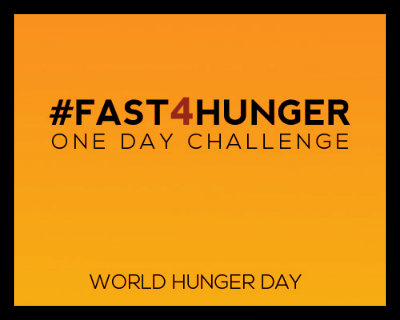
Join Africare’s #Fast4Hunger Challenge

Fast4Hunger
World Hunger Day is May 28th, and to raise awareness, Africare, a non-profit organization working to improve the lives of people in Africa, is advocating the #Fast4Hunger One Day Challenge. It encourages people to fast for a few hours or a whole day to get a better sense of how hungry and starving people in Africa live every day.

The challenge takes place through social media, where participants can use Twitter, Facebook, and Instagram to share their experiences while fasting with the hashtags #Fast4Hunger or #Fast4HungerChallenge. Those who want to take the #Fast4Hunger pledge can visit Africare’s website and download the #Fast4Hunger Challenge Toolkit to get everything they need to raise awareness about world hunger on World Hunger Day. Africare will also be hosting a Twitter chat between donors, partners, and the general public on May 28th from noon to 3pm to further advocate and raise awareness about people who need help, especially those in developing countries in Africa.

Kendra Davenport, Africare’s Chief Development and Communications Officer, explains that the hunger experienced by hundreds of millions around the world is a problem that most of the global population remains largely disconnected from. “#Fast4Hunger is an opportunity for people to begin understanding the severity of global hunger, viscerally and intellectually, and to learn how they can become part of its solution,” said Davenport.

– Katie Brockman
Source: Wall Street Journal
Photo: Africare

May 10, 2013
https://borgenproject.org/wp-content/uploads/borgen-project-logo.svg 0 0 Borgen Project https://borgenproject.org/wp-content/uploads/borgen-project-logo.svg Borgen Project2013-05-10 04:00:372020-05-26 08:59:24Join Africare’s #Fast4Hunger Challenge
Advocacy, Foreign Aid

Where Does Foreign Aid Money Go?

Where_Does_Aid_Money_go_UN_USAID_international_aid_fund_World_Bank_business_economy_microfinance_opt

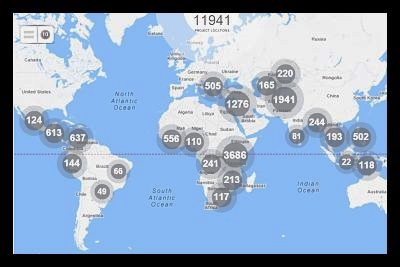
The website AidData.org is designed to make it easier for researchers, reporters, and anyone else for that matter, to answer that question for themselves. Established in 2009 through a joint partnership of the College of William & Mary, Brigham Young University, and the nonprofit organization Development Gateway, the site provides a growing searchable database of global foreign aid distribution. It is all part of an effort to make hard data on the allocation of foreign aid money easier to obtain. For example, anyone who wants to know how much money the United States invested in Bangladesh for food security in 2009 can simply use the database filters and find the answer here.

The foreign aid information collected on AidData is not limited to the United States.  The site compiles information from countries across the globe, using data going back to 1945.  Users who want to know more about where foreign aid money goes can just as easily find out how much money Norway invested in Cambodia for health-related programs in 1996. Filters allow users to search by donor country, recipient country, type of program, and date.

The site was the brainchild of an undergraduate student at the College of William & Mary in 2003.  In researching his honors thesis on the distribution of foreign aid for environmental assistance, he found it extremely difficult to find specific numbers.  He got the idea to compile all of this information in a single database.  With help from three professors, he managed to secure a series of grants and partnerships that eventually led to the establishment of the AidData organization and website. To date, the site includes information on 3,000 aid projects in 144 recipient countries, for a total of about 35,000 locations across the globe.

According to AidData founders, the goal of this innovative initiative to increase transparency and accessibility of foreign aid data is to “improve the quality of research on aid allocation and aid effectiveness.” Because of AidData’s work, reliable answers to the question “where does foreign aid money go?” are now just a few keystrokes away on the web.

– Délice Williams

Source:Aid Data
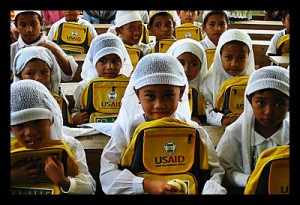
Photo:USAID

May 9, 2013
https://borgenproject.org/wp-content/uploads/borgen-project-logo.svg 0 0 Borgen Project https://borgenproject.org/wp-content/uploads/borgen-project-logo.svg Borgen Project2013-05-09 11:01:132024-06-05 01:53:29Where Does Foreign Aid Money Go?
Advocacy, Children, Foreign Policy, Human Trafficking

Chairman Royce on Human Trafficking

Chairman Royce on Human Trafficking
 “Trafficking in persons is a grievous offense against human dignity that impacts every country on earth, and disproportionately victimizes girls and children.” – Rep. Ed Royce (R-CA)

House Foreign Affairs Committee Chair Ed Royce opened a hearing on human trafficking on May 7th, 2013. The hearing will discuss local and private sector initiatives to combat human trafficking.  Modern-day slavery, human trafficking is a growing global crime.

One of the things society must wrestle with is how the vulnerable are treated and protected as well as what their responsibility is in coming to the aid of the exploited. Human trafficking exists in every nation worldwide and targets women and children in disproportionate amounts.  Numbers indicate over 20 million victims of forced labor and forced sex work worldwide. However, bigger than the numbers are the faces and stories of the victims, largely children, who have been stripped of their hope, innocence, and youth.

Chairman Royce’s Chief of Staff, Amy Porter, spent time in India and Cambodia serving victims of human trafficking. She recounts girls as young as 3 years old in awful, disgusting situations. Closer to home, it is estimated that 100,000 children in the US are victims of human trafficking.  The Foreign Affairs Committee has worked tirelessly to get human trafficking on the minds of Congress and will continue to work hard to make the issue an urgent and pressing one in the coming weeks and years.

The hearing will look at some of the promising private sector and community partnerships going on worldwide and the implications of those innovative partnerships in eradicating human trafficking. The tools that are being developed and the relationships established on the local, community level may just be the answer to fighting human trafficking worldwide.

Videos of the Question and Answer session as well as the opening statement can be found here.

– Amanda Kloeppel

Source: House Foreign Affairs Committee
Photo: Jewish Journal

May 9, 2013
https://borgenproject.org/wp-content/uploads/borgen-project-logo.svg 0 0 Borgen Project https://borgenproject.org/wp-content/uploads/borgen-project-logo.svg Borgen Project2013-05-09 05:00:082024-05-24 23:50:13Chairman Royce on Human Trafficking
Advocacy, Aid Effectiveness & Reform, Developing Countries

Business and Africa: A Continent on the Move

africaglobalbusinessforum

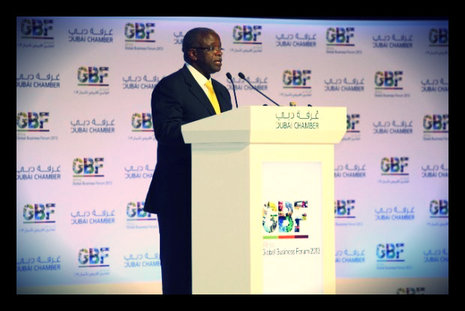
May 1, 2013 was the kick-off of the two-day Africa Global Business Forum in Dubai.  Africa, a continent on the move, has been showing promising signs of economic growth and development.  The Africa Global Business Forum is just one more step in the right direction for a continent on the move.

The Africa Global Business Forum, as announced by the UAE Prime Minister, is set to become an annual event.  The forum brings together leaders from Africa and the UAE to promote business investment, development, and collaboration between the nations of Africa and Dubai.  More than 3,500 delegates are in attendance.  The Prime Minister of Uganda gave the keynote address and stressed the importance of the forum as a signal of the interest in African business and investment opportunities.  He also discussed the importance of the private and public sectors working together as has been done in Dubai.

Dubai serves as a center of 150 different shipping lines and could be a very key logistics hub for Africa to export goods.  The young population and growing middle class in Africa are indicators of the potential for increased growth within Africa. Consumer spending is set to hit US $1.4 trillion by 2020. The forum will seek to strengthen alliances between Africa and outside investors with the goal of reducing poverty in Africa and increasing economic growth and self-sufficiency.

Other topics of note at the forum are looking at boosting Africa’s trade through the role of free trade areas and private equity.  Already major telecom companies are looking to invest in Africa and the prospects for future growth and development are exciting.

– Amanda Kloeppel
Source: CPI Financial

May 4, 2013
https://borgenproject.org/wp-content/uploads/borgen-project-logo.svg 0 0 Borgen Project https://borgenproject.org/wp-content/uploads/borgen-project-logo.svg Borgen Project2013-05-04 14:00:032020-05-26 08:24:21Business and Africa: A Continent on the Move
Advocacy

UNICEF Criticizes Facebook Slacktivism


In the wake of the END IT Movement and Human Rights Campaign, more attention is being paid to what  (if any) tangible benefits are derived from the social media form of activism commonly referred to as slacktivism. In an effort to highlight the financial shortcomings of social media activism, UNICEF Sweden has launched a new advertisement criticizing Facebook slacktivism and calling for greater monetary support.

The advertisement (pictured above) shows the ubiquitous UNICEF (United Nations Children’s Fund) logo eclipsed by the sobering phrase, “Like us on Facebook, and we will vaccinate zero children against polio.” The ad goes on to critique the efficacy of Facebook slacktivism is by asking for donations as opposed to “likes” to help purchase polio vaccines for children.

In regards to the advertisement criticizing Facebook slacktivism, UNICEF Sweden Director of Communications Petra Hallebrant remarked that, “We like likes, and social media could be a good first step to get involved, but it cannot stop there.”

UNICEF Sweden’s critique of social media activism marks a turning point in what was previously full-fledged support of outreach via Facebook slacktivism. Is their criticism warranted? Researchers from Georgetown University recently published a study showing that social-media promoters were just likely as non-promoters to donate money, however, the promoters did in fact volunteer 15% more of their time than non-supporters.

The challenges facing NGOs in increasing donations has never been more difficult given the current economic climate and high unemployment figures. However, for those activists who lack the capital necessary for frequent donations, participation in Facebook slacktivism is a means of raising awareness when the requisite finances are lacking.

– Brian Turner

Source: The Atlantic

May 4, 2013
https://borgenproject.org/wp-content/uploads/borgen-project-logo.svg 0 0 Borgen Project https://borgenproject.org/wp-content/uploads/borgen-project-logo.svg Borgen Project2013-05-04 12:56:162020-05-26 08:25:48UNICEF Criticizes Facebook Slacktivism
Advocacy, Extreme Poverty, Foreign Aid

Religious Leaders Fight World Hunger

Global_Hunger_Poverty_Religious_Leaders_Lobby_Congress
On May 15th, hundreds of religious leaders from 170 difference spiritual organizations will unite in combating the issue of global hunger by lobbying parliament. The Catholic Agency For Overseas Development (CAFOD) has organized the mass lobby on behalf of the “Enough Food for Everyone IF” campaign. This campaign has a strong message encompassed by four IFs.

Enough food for everyone…

IF governments keep their promises on aid, invest to stop children dying from malnutrition and help the poorest people feed themselves through investment in small farmers.
IF governments stop big companies dodging tax in poor countries, so that millions of people can free themselves from hunger.

IF we stop poor farmers being forced off their land, and use the available agricultural land to grow food for people, not biofuels for cars.
IF we force governments and investors to be honest and open about the deals they make in the poorest countries that stop people getting enough food.

These hundreds of monks, nuns, priests, and others will meet with members of Congress to discuss the reasons behind world hunger and ways to end the epidemic. Many of these religious leaders have first hand experience in third world countries working with people suffering from hunger and malnutrition.

One of the campaign’s organizers, Sister Pat Robb CJ, plans to inform members of Congress about her time in developing countries where she witnessed children dying from lack of food. She also hopes that the large scale of this lobby will put pressure on Congress to not merely listen, but to take action against world hunger.

Other groups that support the IF campaign are JPIC Links (Justice Peace and Integrity of Creation), the Africa Europe Faith and Justice Network (AEFJN), the Conference of Religious (COR), Progressio, Trocaire, Church Action on Poverty and SCIAF.

Archbishop Desmond Tutu hopes that this anti-hunger movement will be as successful as the anti-Apartheid campaign that happened several decades ago. He is confident that if people can unite over the issue of hunger, then the campaign will be a victory. One of the ways to reach this goal, he says, is for wealthy countries to commit to invest 0.7 percent of their gross national incomes in foreign aid. However, it is also important to change the systems that created extreme poverty in the first place.

These religious leaders are hoping that their influence will sway the minds of politicians to support foreign aid legislation. In the words of Sister Pat Robb, “As long as one person is still hungry, our work is not over.”

– Mary Penn

Source: INC
Photo: Theatre Goodman

May 4, 2013
https://borgenproject.org/wp-content/uploads/borgen-project-logo.svg 0 0 Borgen Project https://borgenproject.org/wp-content/uploads/borgen-project-logo.svg Borgen Project2013-05-04 10:00:212020-05-26 08:27:01Religious Leaders Fight World Hunger
Page 74 of 77«‹7273747576›»

Get Smarter

  • Global Poverty 101
  • Global Poverty… The Good News
  • Global Poverty & U.S. Jobs
  • Global Poverty and National Security
  • Innovative Solutions to Poverty
  • Global Poverty & Aid FAQ’s
Search Search

Take Action

  • Call Congress
  • Email Congress
  • Donate
  • 30 Ways to Help
  • Volunteer Ops
  • Internships
  • Courses & Certificates
  • The Podcast
Borgen Project

“The Borgen Project is an incredible nonprofit organization that is addressing poverty and hunger and working towards ending them.”

-The Huffington Post

Inside The Borgen Project

  • Contact
  • About
  • Financials
  • President
  • Board of Directors
  • Board of Advisors

International Links

  • UK Email Parliament
  • UK Donate
  • Canada Email Parliament

Get Smarter

  • Global Poverty 101
  • Global Poverty… The Good News
  • Global Poverty & U.S. Jobs
  • Global Poverty and National Security
  • Innovative Solutions to Poverty
  • Global Poverty & Aid FAQ’s

Ways to Help

  • Call Congress
  • Email Congress
  • Donate
  • 30 Ways to Help
  • Volunteer Ops
  • Internships
  • Courses & Certificates
  • The Podcast
Scroll to top Scroll to top Scroll to top