• Link to X
  • Link to Facebook
  • Link to Instagram
  • Link to TikTok
  • Link to Youtube
  • About
    • About Us
      • President
      • Board of Directors
      • Board of Advisors
      • Financials
      • Our Methodology
      • Success Tracker
      • Contact
  • Act Now
    • 30 Ways to Help
      • Email Congress
      • Call Congress
      • Volunteer
      • Courses & Certificates
      • Be a Donor
    • Internships
      • In-Office Internships
      • Remote Internships
    • Legislation
      • Politics 101
  • The Blog
  • The Podcast
  • Magazine
  • Donate
  • Click to open the search input field Click to open the search input field Search
  • Menu Menu

Archive for category: Advocacy

Information and news on advocacy.

Advocacy, Women and Female Empowerment

Berhane Hewan: Ethiopia Gives Girls a Future

Berhane Hewan: Ethiopia Gives Girls a Future
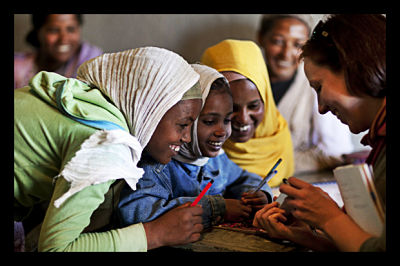
In 2004 the Berhane Hewan project was established in one community in Ethiopia to empower adolescent girls. The program is now considered award-winning by the U.N. Population Fund (UNFPA) and has expanded into 36 communities in Northern Ethiopia. Child marriage is a major issue in the Amhara Region of Northern Ethiopia and the Berhane Hewan project seeks to educate girls about the dangers associated with early marriage and their rights as women. Almost half of the female population of this region is married before they are 15 years old and many girls are also deprived of the chance of attending school because their families cannot afford to send them.

Child marriage can lead to girls being forced to have sex at too young an age, which causes health issues including premature pregnancy, high infant mortality, and difficult or even dangerous births. It also has many psychological ramifications as girls are forced into marriages with older men whom they do not know and have the traumatic experience of being forced into sex as adolescents.

The Berhane Hewan program addresses the issues associate with child marriage at multiple levels. Community-wide talks are held that encourage everyone to participate and learn about the ramifications of early marriage and health issues associated with young pregnancies and STDs. The program also provides financial assistance for girls to encourage them to stay in school and avoid early marriage. Informal educational groups have also been established so that girls unable to attend school can still receive schooling.

Girls are becoming aware of their rights and leaving isolated lives to join an empowered community of women. Zufan Fentahun’s marriage was annulled and with the help of Berhane Hewan, she was able to begin attending school and supporting herself with the sale of several animals and keeping a garden. Almost 12,000 girls have become involved with the project in some capacity and there is the potential to reach many more as it continues to expand. UNFPA has passed the program over to the U.K.’s Department for International Development who has increased funding and has ambitious plans to increase the number of communities involved.

– Zoë Meroney

Source: UNFPA
Photo: Take Part

June 16, 2013
https://borgenproject.org/wp-content/uploads/borgen-project-logo.svg 0 0 Borgen Project https://borgenproject.org/wp-content/uploads/borgen-project-logo.svg Borgen Project2013-06-16 04:00:542024-05-24 23:54:21Berhane Hewan: Ethiopia Gives Girls a Future
Advocacy

Meet Owen Benko

owen_benko_borgen_project

Name: Owen Benko
Location: Colorado Springs, CO
Title: Chief Cuteness Officer

Why I joined The Borgen Project: “I believe everyone deserves life, liberty and a binky. I happened to enter the world in America, but for my fellow toddlers who entered the world in places like Somalia and Sudan, life is extremely difficult. Let me be frank, many don’t have binky’s or play time. I find this unacceptable. I joined The Borgen Project to help right this preventable wrong… And because my Aunt Kate gave me this awesome T-Shirt.”


June 13, 2013
https://borgenproject.org/wp-content/uploads/borgen-project-logo.svg 0 0 Borgen Project https://borgenproject.org/wp-content/uploads/borgen-project-logo.svg Borgen Project2013-06-13 20:24:282020-06-26 21:37:29Meet Owen Benko
Advocacy

Angola Blood Diamonds

Angola Blood Diamonds
Aside from the popularity afforded by a Leonardo DiCaprio movie, the world has largely forgotten about blood diamonds. A romantic name for an entirely unromantic subject, blood diamonds refer to the gemstones that are mined in conflict zones, often exploiting the miners and putting them at great risk, and benefiting warlords instead of governments.

In 2000, attempts were made to stem the flow of diamonds through the Kimberley Process, which required all diamonds to be certified by governments as legitimate (i.e. mined in non-conflict zones) before exportation. The program was initially successful but quickly fell apart after corruption saw most governments bribed to allow the sale of blood diamonds.

Through ongoing, the issue faded from public awareness until 2011 when Angolan journalist and human rights activist Rafael Marques published “Blood Diamonds: Corruption and Torture in Angola”.

The book documented the human rights abuses and killings in Angola at the hands of the military. Marques describes events of shocking brutality in the military’s effort to maintain control over the diamond trade. Among them, 15 miners were forced to jump to their deaths from a speeding truck at different times so that their bodies would be scattered and more difficult to locate, a mine was purposefully destroyed to bury and kill 45 workers, and there were routine stripping and beating of workers and villagers with the flat sides of machetes.

The book has garnered attention not only for its graphic content but for the struggles Marques has had to face as a result of writing it. He was subsequently sued by eight generals for libel, in an attempt to intimidate or bankrupt him, but recently the courts found his writings protected under free speech.

Yet Marques’ fight seems as though it will be fruitless without international intervention. Angola’s Attorney General is not pursuing the case. Also, the generals accused in the book remain free as Angola’s leader, Jose Eduardo dos Santos, cannot afford to turn against them.

The responsibility now lies with consumers; the flow of diamonds responds entirely to demand in consumer countries. Human rights movements are urging consumers to demand ethically-sourced products or seek alternatives. Though Africa seems unable to stop the production of blood diamonds, global consumers wield the power to deny them a market.

– Farahnaz Mohammed

Sources: Brilliant Earth, All Africa
Photo: Mickeyboston

June 9, 2013
https://borgenproject.org/wp-content/uploads/borgen-project-logo.svg 0 0 Borgen Project https://borgenproject.org/wp-content/uploads/borgen-project-logo.svg Borgen Project2013-06-09 04:07:342024-12-13 17:49:24Angola Blood Diamonds
Advocacy, Aid Effectiveness & Reform, USAID

Rice Farming Productivity in Ghana Increases

ricepaddy

Rice farming in Botanga, Ghana, has seen an increase in productivity due to an agricultural project funded by the USAID.  The Agricultural Development and Value Chain Enhancement (ADVANCE) program started two years ago to help farmers who use the lands of the Botanga Irrigation Scheme. The program was designed to increase productivity.

Marketing companies and produce buyers were brought into the project to help the rice farmers grow and cultivate improved rice varieties. Currently around 600 farmers are farming the land and many of them have benefited from the ADVANCE project. The rice cultivated is used mainly for cereal and vegetables. The project brought in combine harvesters that have improved rice harvesting and helped to lower some of the post-harvest losses in Botanga. Rice farmers were educated on better farming techniques. They were shown how to create nurseries and replant with adequate spacing to ensure better yields for future crops. The ADVANCE project also helped improve the business side of rice farming.  Farmers were offered support in selling crops and provided information and expert knowledge on controlling pests and disease.

Food insecurity is a major issue across all developing nations and Ghana is no exception. The USAID-ADVANCE project hoped to improve food security and increase the incomes of households of rice farmers in the Botanga region.  A value-chain method was developed to allow farmers access to all parts of the production process such as input dealers, seed suppliers, and produce buyers.  The method starts first with identifying a buyer and demand for the product to ensure crops can be sold. Premium Foods and AMSIG Resources were two buyers linked to the rice farmers. The buyers then developed contracts with the farmers that provide support, weed control, seeds, and an agreed upon price to buy the rice from the farmers.

Since the ADVANCE program began, 29,000 low income farmers are being supported. These farmers grow maize, rice, and soybeans. They are getting the help they need to grow successful crops and are being paid a fair market price for their produce. 269 demonstration sites have also been set up to show farmers new technology and how to best utilize it.  The introduction of infrastructure and technology have helped Botanga rice farmers improve their lifestyles. The project also falls in line with President Obama’s Feed the Future initiative.

– Amanda Kloeppel
Source: GhanaWeb

June 6, 2013
https://borgenproject.org/wp-content/uploads/borgen-project-logo.svg 0 0 Borgen Project https://borgenproject.org/wp-content/uploads/borgen-project-logo.svg Borgen Project2013-06-06 05:00:582024-06-04 01:17:30Rice Farming Productivity in Ghana Increases
Advocacy, Global Poverty

Student Documentary Sheds Light On Poverty

chris_temple_Zach_ingrasci_claremont_mckenna_college_Economics_international_Development_college_documentary_opt

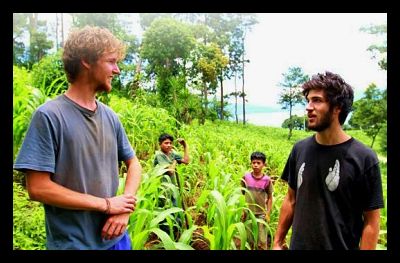
For Chris Temple and Zach Ingrasci, students at Claremont McKenna College studying economics and international development, the daily struggle that over a billion people living on one dollar per day face is more personal than it is for the average westerner. After a visit to Guatemala with a microfinance group, Temple began to lay the foundation for what some might call a radical experiment. Along with two filmmakers, Temple and Ingrasci set out to shine a light on global poverty in a bold way: by living it themselves.

For 56 days in the rural village of Pena Blanca, each of the four young men vowed to live on just one dollar per day. Because many people who live in such poverty must take work as it is given, the quartet paid itself random dollar amounts (often $0) each day to make the experience more realistic. The film even takes a pragmatic turn as the students investigate the powerful impact of microloans on the lives of people in the region. They do all of this while battling chronic hunger and parasitic infections.

Although the documentary, which was available on Hulu for a limited time, began as a small project with only four crew members, it eventually drew the attention of big names such as Jeff Klein, the former general manager for the L.A. Times, David Doss, the former executive producer of Anderson Cooper 360, and Mike Lange, who was the former CEO of Miremax.

Currently, the filmmakers are travelling to promote the film. Those interested in watching the film can find a screening in their area or even host one themselves via the organization’s website.

– Samantha Mauney

Source: Huffington Post
Photo: My Northwest

June 5, 2013
https://borgenproject.org/wp-content/uploads/borgen-project-logo.svg 0 0 Borgen Project https://borgenproject.org/wp-content/uploads/borgen-project-logo.svg Borgen Project2013-06-05 05:00:342020-06-27 02:54:15Student Documentary Sheds Light On Poverty
Advocacy, Aid Effectiveness & Reform, Developing Countries

Colin Brannen to Cycle for World’s Poor

Colin Brannen to Cycle for World's Poor

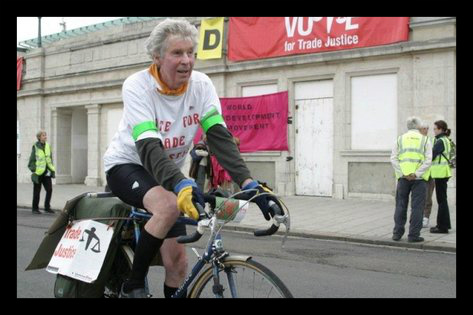
Age is but a number for Colin Brannen, a 76-year old from London who plans to ride his bike from Newcastle-Upon-Tyne to London and back to raise awareness to end global hunger. The former teacher does not own a car and will take time along his route to stop and talk to people about global hunger and the IF Campaign.  This campaign tackles the idea that the world makes enough food for everyone, and yet not everyone has enough food.

Brannen’s goal is to get to London to take part in the IF campaign’s rally in Hyde Park on June 8.  The rally and campaign is being supported by Christian Aid and over 200 different development organizations.  Brannen has been a Christian Aid organizer for over 30 years.  Throughout his ride he will discuss with people what Christian Aid is doing to support the IF campaign.

According to Brannen, campaigning is increasingly important in current times.  Poverty reduction is not all about raising money, although that is important, it is equally about raising awareness and inspiring action.  Brannan hopes to bring change and encourage the government to be more supportive of the fight against poverty.

As an avid cyclist, Brannen has cycled to raise awareness for social and justice issues throughout his life.  In 1998, he cycled to Birmingham for the G8 conference and part of the way to Cologne, Germany in 1999 for another G8 rally. In 2004, he cycled to Brighton for a trade justice event.  Christian Aid is asking people to show their support for ending global hunger by attending the rally.  In a world where we produce enough food for everyone, it is inexcusable that one in eight people still go hungry.

The IF campaign is calling for G8 leaders to take action at the meeting in Northern Ireland later in June and continue to fight hunger.  For more details go to the Christian Aid website at www.christianaid.org.uk/if.

– Amanda Kloeppel

Source: Christian Today

June 3, 2013
https://borgenproject.org/wp-content/uploads/borgen-project-logo.svg 0 0 Borgen Project https://borgenproject.org/wp-content/uploads/borgen-project-logo.svg Borgen Project2013-06-03 06:00:542020-06-27 02:46:46Colin Brannen to Cycle for World’s Poor
Advocacy, Aid Effectiveness & Reform, Health

Collaboration is Key to Effective Aid

aid
The old model of aid consisted of rich countries bringing funds and ideas to poor countries and implementing plans to “save” the country.  Recent criticism has brought to light the idea that collaboration is key to effective aid. In the arena of healthcare, this is even more important as oftentimes, developing countries are given funds for healthcare uses, but told exactly what they have to do with it beforehand.

Ethiopia led the way in 2002 with their ambitious plan to provide primary healthcare to 85 million rural citizens. These citizens did not live within accessible distance of a doctor or hospital.  The Ministry of Health gave themselves 5 years to accomplish their goal.  Without resources or facilities to train the 30,000 community health workers necessary, Ethiopia embarked. Health workers were trained and sent out and since the program’s implementation, decreases in the number of women dying in childbirth and in the number of children dying before age 5 have been reported.  The relatively successful plan began with simple, community-level improvements.

Ethiopia is far from the regular standard as, typically, governments receiving outside aid do not start their own programs.  A representative from Rwanda’s Ministry of Finance and Economic Planning remarked that rarely do they get a say in where the money goes at all. Rwanda has requested money for low-income health insurance and was denied. Using tax money instead, Rwanda funded the pilot program and today over 90% of Rwandans have health insurance.

Developing countries are not being ungrateful for aid, but are slowly starting to speak up and question the potential of effectiveness for the money and programs involved in it.  The World Health Organization (WHO) is helping change the way aid is delivered by using coordination and collaboration. Donors are asked to contribute to health plans managed and implemented by the government rather than go in and start their own. The initiative is called the International Health Partnership. The goal is to allow developing countries a say in how and where the money is used, preventing rich countries from bullying or denigrating their plans and ideals.

As the economy continues to struggle and aid dollars are decreasing, collaboration and coordination are very important to continue to meet needs like adequate healthcare worldwide. Allowing developing nations to innovate and have a seat at the table will enable aid to be used more effectively and efficiently.

– Amanda Kloeppel

Source: The Atlantic

June 2, 2013
https://borgenproject.org/wp-content/uploads/borgen-project-logo.svg 0 0 Borgen Project https://borgenproject.org/wp-content/uploads/borgen-project-logo.svg Borgen Project2013-06-02 04:47:572020-06-27 02:49:22Collaboration is Key to Effective Aid
Advocacy, Food & Hunger

Just Falafel & World Food Programme to Raise $1M

falafel

A fast food retail chain in the UAE, Just Falafel, has joined forces with the World Food Programme (WFP) to raise $1 million over the next three years. The money will go to fight hunger worldwide.  Over the next three years, $500 will be donated to the WFP for every new Just Falafel franchise opening worldwide. Franchisees will be encouraged to match the $500 donation, doubling the impact and allowing the WFP to feed twice as many people.

Business predictions estimate over 1,000 franchises will open before the end of 2016. With the matching donation program from both Just Falafel and the franchisees, the goal of raising $1 million is very much in reach.  Nearly 900 million people worldwide do not have enough to eat to lead active, healthy lives.  This makes hunger and malnutrition the number one health risk worldwide and gives organizations like Just Falafel a reason to contribute to fighting hunger.

As estimates report 1 in 8 people in the world are malnourished and many of these in the Middle East and Asia, Just Falafel has a personal connection to the cause.  Giving back to their communities is deeply rooted in the values and mission of Just Falafel. The partnership with the WFP takes that connection one step further and formalizes their commitment to fighting hunger.

WFP’s regional head of private partnerships and business development, Ashraf Hamouda, commended Just Falafel for their initiative and act of generosity to help fight hunger.  The WFP is working hard to end hunger, but they can’t do it alone and partnerships like this allow them to continue to fight.  Social Media will be a major player in Just Falafel’s strategy to raise awareness as well as promote new franchisees.

– Amanda Kloeppel 

Source: Trade Arabia

May 31, 2013
https://borgenproject.org/wp-content/uploads/borgen-project-logo.svg 0 0 Borgen Project https://borgenproject.org/wp-content/uploads/borgen-project-logo.svg Borgen Project2013-05-31 04:30:462020-06-26 14:23:20Just Falafel & World Food Programme to Raise $1M
Advocacy

Illinois Wesleyan University Addresses Human Rights

Illinois Wesleyan University Addresses Human Rights
Each year Illinois Wesleyan University students have the option to participate in a May Term course, which is a one-month course intended to give students an opportunity to explore areas they normally couldn’t in traditional fall and spring semesters. Along with the classes, there are several other opportunities for students to get involved and learn more about a specific theme.

This year, the May Term theme is making human rights real. Through a series of activities, students can learn more about the topic. One such activity is a poverty simulation workshop, which gives students a genuine view of how those in poverty and extreme poverty live each day and also encourages action by discussing solutions to community problems.

Another activity promoted during this term is a “Mini Course on Community Action,” which is led by community leaders to teach students the basics of founding a successful community action campaign, including how to overcome obstacles and encourage others to participate and give back to society.

May Term also offers many volunteer opportunities to give students a better sense of giving back, including the Adopt A Meal program to prepare meals for a local homeless shelter, and Titan2Titan, a program designed to allow current IWU students to work with retired university alums for a day of service.

While May Term is often considered the “play term” by students at the university, it has potential to change lives and encourage a lifetime of service by allowing students to experience new activities related to human rights and giving back.

– Katie Brockman
Source: IWU

May 29, 2013
https://borgenproject.org/wp-content/uploads/borgen-project-logo.svg 0 0 Borgen Project https://borgenproject.org/wp-content/uploads/borgen-project-logo.svg Borgen Project2013-05-29 04:00:322020-06-27 02:44:41Illinois Wesleyan University Addresses Human Rights
Advocacy, Global Poverty, Health

Meet One Doctor Healing the Blind

drsimjee
As a young child, Dr. Aisha Simjee contracted Trachoma, an eye disease that can lead to blindness if not treated.  Dr. Simjee grew up in Burma and as a 7 year-old was being prepared for a life as a housewife when she contracted the disease. She was cured by a folk remedy that consisted of having a local women squirt breast milk into her eye. The experience led Dr. Simjee to a life mission-healing the blind.  Her fascination with eye health led her to immigrate to the US and study to be an ophthalmologist in Orange Country, CA.

Now in her sixties with two grown children, Dr. Simjee has written a book reflecting on her life experience.  The experiences of a youth growing up in Burma impacted her and motivated her to do more than simply be a good doctor. She wanted to prevent blindness and eye disease in the world’s poor. Her book, “Hope in Sight: One Doctor’s Quest to Restore Eyesight and Dignity to the World’s Poor” tells of her journey and includes decades of personal journals and accounts from friends, families, and colleagues.  She wrote the book to motivate others to give back and encourage other young ophthalmologists to help others.

The World Health Organization reports that over three-quarters of all blindness worldwide can be prevented or treated.  Around 285 million people are visually impaired due to various treatable causes and about 90% of the world’s visually impaired people live in developing nations where there are little or no welfare services. Dr. Simjee has seen firsthand how eyesight can be a matter of survival.  She has served on more than 25 medical missions, often putting her private practice on hold and paying her own expenses.  Her trips have spanned Asia, South America, Eastern Europe, and Africa.  The 69-year-old persists  in taking the trips and she often serves in rural areas.  Her mission is not to travel to well-equipped capital cities, but to the villages miles and miles away from modern civilization.

She has worked with children suffering from wounds from knives, people who have walked miles to see her, prison inmates, and indigenous Indians.  Her goal is eyesight and helping people regardless of status. Her book focuses on hard facts and short anecdotes about her travels and the experiences she has had.  Dr. Simjee wants to motivate others to give their time and money to help others.  Dr. Simjee is a wonderful example of someone using their talents to serve the world’s under-resourced. Check out her book from White Spruce Press.

– Amanda Kloeppel
Source: Ophthalmology Times
Photo: Twitter

May 28, 2013
https://borgenproject.org/wp-content/uploads/borgen-project-logo.svg 0 0 Borgen Project https://borgenproject.org/wp-content/uploads/borgen-project-logo.svg Borgen Project2013-05-28 04:00:492020-06-21 14:35:20Meet One Doctor Healing the Blind
Page 72 of 77«‹7071727374›»

Get Smarter

  • Global Poverty 101
  • Global Poverty… The Good News
  • Global Poverty & U.S. Jobs
  • Global Poverty and National Security
  • Innovative Solutions to Poverty
  • Global Poverty & Aid FAQ’s
Search Search

Take Action

  • Call Congress
  • Email Congress
  • Donate
  • 30 Ways to Help
  • Volunteer Ops
  • Internships
  • Courses & Certificates
  • The Podcast
Borgen Project

“The Borgen Project is an incredible nonprofit organization that is addressing poverty and hunger and working towards ending them.”

-The Huffington Post

Inside The Borgen Project

  • Contact
  • About
  • Financials
  • President
  • Board of Directors
  • Board of Advisors

International Links

  • UK Email Parliament
  • UK Donate
  • Canada Email Parliament

Get Smarter

  • Global Poverty 101
  • Global Poverty… The Good News
  • Global Poverty & U.S. Jobs
  • Global Poverty and National Security
  • Innovative Solutions to Poverty
  • Global Poverty & Aid FAQ’s

Ways to Help

  • Call Congress
  • Email Congress
  • Donate
  • 30 Ways to Help
  • Volunteer Ops
  • Internships
  • Courses & Certificates
  • The Podcast
Scroll to top Scroll to top Scroll to top