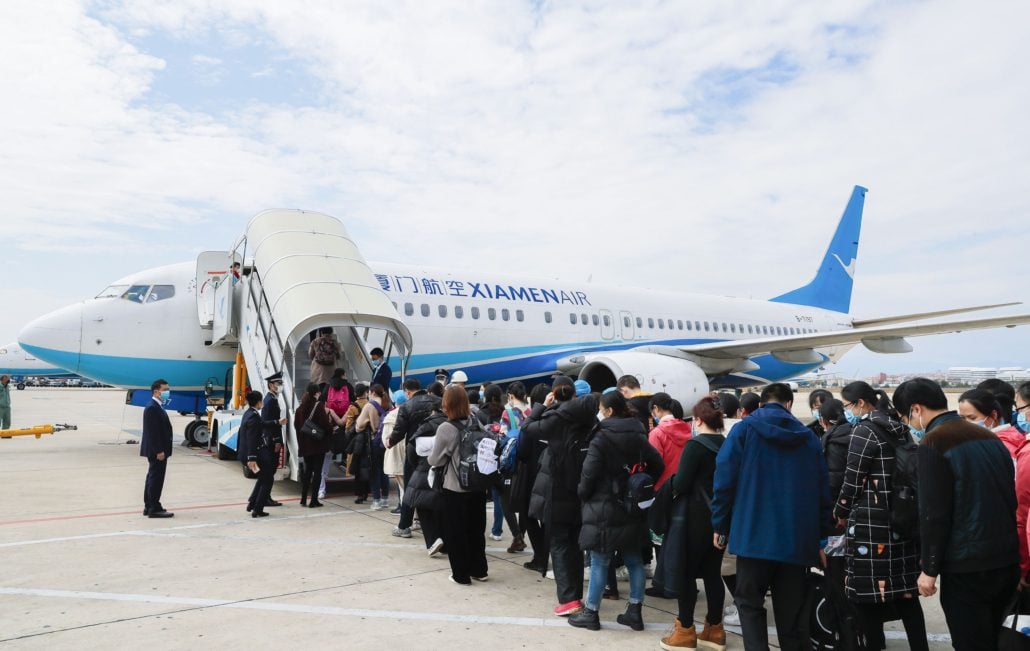
 China has a relatively small foreign population compared with major immigrant destinations, but international travel, education and employment are expanding as China strengthens its global connections. This raises questions about how foreign residents, particularly those facing social or economic barriers, can participate fully in Chinese society. Here is more information about migration to China and what life is like for foreign residents in the country.
A Growing International Presence
China’s 2020 census recorded 845,697 foreign nationals living across mainland China, less than 0.1% of its 1.41 billion residents. While permanent immigration remains limited, international migration to China has grown since COVID-19.
In 2025, Chinese immigration authorities recorded 82.04 million entry and exit trips involving foreign nationals, 26.4% more than in 2024. Foreign nationals made 30.08 million visa-free entries, representing 73.1% of foreign entries and increasing 49.5% from the previous year. Although these figures measure border crossings rather than permanent immigration, they demonstrate China’s growing international connections.
International students are another important group. China’s Ministry of Education recorded 254,019 international students in higher education in 2023, allowing many to develop local connections while accessing education and professional opportunities.
Different Experiences for Foreign Residents
Foreign residents’ experiences vary according to nationality, race, employment, immigration status and finances.
Research into African migrants in Guangzhou and Foshan found that perceived discrimination affected perceptions of personal safety. Among participants from Nigeria, the Democratic Republic of the Congo, Angola and Uganda, 75.3% held business visas, with trading goods the most common occupation.
A 2024 China Quarterly study documented challenges facing Guangzhou’s African community, largely made up of traders and entrepreneurs. The number of Africans officially recorded in Guangzhou fell from 16,000 in 2014 to 10,344 in 2017.
In an interview with The Borgen Project, Cindy Li, a Chinese national from Fushun City, described differences in how foreign nationals experience Chinese society. She said some people view white Western foreigners more favorably in certain professional settings. While this is her personal experience rather than evidence of a nationwide pattern, it adds perspective to research showing that foreign communities can experience integration differently.
Li also identified employment, as well as nationalistic views, as factors in public attitudes toward migration, citing, “If you don’t want the job, there are plenty of people who do,” to illustrate perceptions of China’s competitive labor market.
Asian Migration
China does not primarily attract migrants from the world’s poorest populations; many come from other Asian countries for employment, business or education. However, migrants from poorer parts of Southeast Asia and Africa may seek economic opportunities and face financial hardship through low-paid work and limited social protections. Research shows migrants can experience deprivation despite relatively high incomes, meaning migration does not necessarily protect against poverty.
Lower-income migrants may also be viewed more negatively by some Chinese natives. Cindy stated that she has “seen many discussions online where people express concerns about crime involving some foreign residents, particularly in lower-income communities” and that, regardless of the accuracy of these views, “they have definitely influenced public opinion.”
These experiences show why integration matters alongside immigration policy. Greater mobility does not automatically provide equal access to services, employment or community life.
China Expands Services for Foreign Residents
In December 2024, the Ministry of Human Resources and Social Security integrated foreign work permits with social security cards, allowing applications, extensions and modifications online.
The resulting “Join in Card” provides access to 264 public services covering health care, transportation, finance, tourism and government services. It can be used for public transportation in 336 cities and medical services at tens of thousands of health care institutions and pharmacies across 41 cities. Previously, work-permit applications could require visits to two departments and take about a month; the new online process can deliver the card within 10 days.
These changes can particularly benefit residents facing language barriers or unfamiliar administrative systems, reducing practical obstacles to integration.
Shanghai Takes Integration into Communities
In June 2026, Shanghai opened the Changshou Subdistrict Immigrants’ Integration Service Station in Putuo district. The 1,000-square-meter center provides immigration policy consultations, accommodation registration, legal education, cultural exchange, entrepreneurship assistance and everyday-life services.
Moving support into local communities can help foreign residents understand local requirements while encouraging cultural exchange.
China has also expanded short-term international mobility. Nationals from 55 countries, including the U.K. and U.S., can use China’s 240-hour visa-free transit policy.
A Positive Path Toward Inclusion
Migration to China remains small compared with the country’s population, but international connections are growing. Expanding travel, education and employment creates opportunities for integration systems that benefit foreign residents and local communities.
The “Join in Card” and Shanghai’s integration station improve access to health care, transportation, legal information, employment services and everyday assistance, reducing barriers that can marginalize foreign residents.
Cindy described cultural exchange as an opportunity for societies to “learn from one another and adopt each other’s strengths,” a sentiment that will continue to grow as immigrants can acclimate more fully to their new country.
The future of migration to China depends not only on how many foreigners enter, but whether those who live, study and work there can participate in their communities with financial freedom. By expanding accessible services and cultural exchange, China is taking steps toward greater understanding, opportunity and connection, particularly for the poorest immigrants.
– Lilia Clark
Lilia Clark is based in Oxford, UK and focuses on Politics for The Borgen Project.
Photo: Pexels

3 Recent Improvements to Higher Education in Peru
The 2014 University Law
In 2014, Peru enacted the University Law, bringing much improvement to Peru’s tertiary education system, requiring universities to go through evaluations to prove basic quality standards, set stricter academic requirements for educators and provide special monthly bonuses for researchers at public universities who produce indexed scientific papers.
Before this, universities experienced lots of expansion with limited government oversight, which resulted in disparities in the quality of education among schools. During this time, many institutions operated without meeting any specific academic standards, resulting in graduates who often lack adequate experience to be successful in the labor market. To mitigate this, the law established SUNEDU, a specialized agency responsible for institutional licensing, taking away operations for universities that failed to meet a set of minimum quality requirements.
This system required universities to demonstrate that they met minimum quality conditions regarding faculty, infrastructure, student services, etc. Universities that failed to meet these standards had their operating licenses revoked and, in some cases, had to close. These efforts highlighted the goal to prioritize the quality of education in Peru, strengthening public confidence in higher education, and encouraged institutions to invest more in student success.
The 2016 Law on Institutes and Schools of Tertiary Education
This law was built on the University Law, laying the foundation for a more transparent and rigorous quality checking system. It was designed to “promote more effective student-centered, competence-based approaches to teaching and learning.”
Technical schools play a crucial role in getting students ready for a career in industries that might require practical skills, yet they have historically received less attention than universities. This 2016 law introduced several changes, including licensing requirements, quality assurance systems and stronger oversight for schools offering technical and professional education. These changes pushed for clearer educational standards while promoting continuous improvement among institutions. Additionally, the law aimed to strengthen the connection between technical education and labor market demands by encouraging institutions to engineer programs that reflect employer needs and evolving workforce trends. This allowed graduates from technical institutes to be better prepared for their future employment, and gave employers access to workers with more relevant skills, depending on the work. This reform also recognized technical schools as a crucial aspect of Peru’s tertiary education, as opposed to a secondary alternative to university.
The 2020 National Policy
When Peru enacted this policy, the policy “laid out, for the first time, a comprehensive strategy for the entire vocational and tertiary education sector through to 2030.”
This policy gives Peru more direction when creating a tertiary system that is increasingly aligned with national priorities. Instead of concentrating only on institutional regulation, this policy provides a more complete vision for the entire higher education sector, including universities and technical institutes. Its primary goals include improving educational quality, expanding equitable access, strengthening government institutions and ensuring that graduates develop the knowledge necessary to be successful in Peru, as well as increasing collaboration among institutions. The policy encourages better coordination between educational institutions, employers, the government and regional authorities so that academic programs can remain responsive to changing labor market demands. Furthermore, it seeks to lessen educational inequalities by increasing opportunities for disadvantaged groups and improving student services that result in successful graduation.
How Has This Benefited Peruvian Citizens?
About 54% of adults aged 25-34 have completed tertiary education as of 2024. This gives Peru the highest tertiary attainment rate compared to all OECD countries in the region. The country’s tertiary participation rate in the early 2000s was close to that of other OECD countries; however, Peru’s net enrollment rate has since increased at a faster pace than its peers. This achievement highlights substantial progress in accessibility in university programs, both academically focused institutions and technical-focused institutions.
Between 2000 and 2023, enrollment in private universities has increased by more than 600% (going from about 169,000 to 1.2 million students). Enrollment in public universities has seen minor increases, going from about 255,000 students to 355,000 (about a 40% increase).
To add to this, overall enrollment has increased, going from 33.92% of eligible children in 2006 and skyrocketing to 73.22% of eligible children in 2016. This highlights the ability of Peruvian schools to make changes in their educational structures that increase participation in schooling as a whole.
In terms of unemployment rates, Peru was also on a steady decline until the effects of the COVID-19 Pandemic in 2020, sitting at 3.38% in 2019. This is likely a result of improved tertiary education, which draws the connection between quality education and post-grad success. Since the pandemic, unemployment rates have decreased again from 7.18% to 5.12% as of 2025, and will likely return to the low numbers we were seeing in the late 2010s.
Concluding Thoughts
In all, these reforms have significantly improved the higher education system in Peru by creating a system that prioritizes accountability and student-centered tertiary education. Peru has done a great job of making efficient and effective adaptations to the education system that focus on the quality of the student experience, not the institutions themselves.
– Emily Fleetwood
Photo: Wikimedia Commons
Empowering Fishing Communities in Mozambique
Mozambique Battles Food Insecurity
Mozambique faces food insecurity, with 1.2 million people experiencing high levels of acute insecurity categorized as phase three, “Crisis,” or above by the Integrated Food Security Phase Classification (IPC). Changeable weather conditions contribute, as rainfall and dry spells throughout the 2025 to 2026 agricultural season destroyed more than 300,000 hectares of crop-growing land and increased food prices. Improving fishery production could provide a pathway to better food security and transform livelihoods and opportunities in rural fishing communities in Mozambique.
Community Fishery Councils: Power to Local Collectives
Community Fishery Councils (CCPs) play a significant role in managing fishing at a local level. They help government fishing authorities effectively monitor and regulate fishing activities, promote sustainable practices and mediate conflict within their fishing communities. The impact of this local authority is significant. In Cabaceira Pequena, CCPs have implemented controls and closures of fishing grounds to allow regeneration of fish levels. This sustainable practice leads to a greater yield during fishing seasons and greater food security for the community.
In 2020, Mozambique’s government recognized CCPs as official legal entities, granting them powers to co-manage and share regulatory and decision-making authority. This encourages fishing communities in Mozambique to take ownership of their productivity and collaborate with authorities for effective management that will allow their industry to thrive.
The Smart Fisheries Co-Management Project
The Food and Agriculture Organization of the United Nations has pioneered the Smart Fisheries Co-Management Project (SFC), which has been a major support to the activities of CCPs. Operating in Mozambique from 2021 until 2026, the project aims to promote effective co-management and collaboration between CCPs and governmental authorities, fostering sustainable use of resources and improved livelihood opportunities in rural fishing communities.
SFC worked closely with communities in Vilankulo and pushed for the signing of formal co-management agreements in 2024, further solidifying local empowerment. Activities included a variety of training programs. Some took the form of guidebooks, e-learning courses and in-person trainings that shared knowledge and skills aimed at improving co-management and promoting more efficient running of small-scale fisheries. Others provided practical training for fishing-adjacent livelihoods such as freediving, hospitality and ecotourism, broadening career opportunities beyond traditional roles and promoting local economic development. With support from SFC, the Escola Superior de Hotelaria e Turismo offered a 15-day course to 15 community members, all of whom received official certifications in sustainable tourism practices that enhance their career prospects in a growing industry.
SFC also provided equipment to CCPs that addressed communities’ limitations in fish processing, enhancing productivity and business opportunities. In 2025, it supported the CCPs of Macunhe, Mabandene and Guitine by providing 10 freezers, three motorbikes and 15 cool boxes; these resources enabled better preservation of fish and increased yield from ships spending longer at sea. Indeed, this strengthens Mozambique’s fishing sector and enhances fishing communities’ access to business opportunities.
Looking Forward
Despite the significance of empowered CCPs and the important work of SFC, progress remains to be made. Fisheries’ potential to drive economic growth is underutilized, representing only about 2% of Mozambique’s GDP. Despite their contributions to fisheries activities and adjacent industries, women and young people remain largely excluded from male-dominated CCP management. Proposed 30% inclusion quotas for women and young people in training and fishery management could help address this issue as part of efforts to streamline effective co-management.
– Hannah Rix
Photo: Flickr
How Public Libraries in Namibia Support Economic Opportunity
Namibia has made progress in reducing poverty, with the national official poverty rate falling from 37.5% in 2003 to 2004 to 17.4% in 2015 to 2016. However, the World Bank reports that recent census data placed unemployment at 36.9% among the working-age population in 2023, showing that many Namibians still face barriers to stable incomes.
Library Services and Support
The Namibia Library and Archives Service operates public libraries that provide residents with access to books, computers and internet services. These resources allow people to search for employment opportunities, complete online applications and access information without paying for private internet services.
Electronic Information for Libraries (EIFL) has supported Namibia’s library sector since 2013. In partnership with the Namibia Library and Archives Service, EIFL ran a two-year project that strengthened professional development for public librarians and helped establish new digital library services designed around community needs.
Practical Assistance and Impact
Public libraries also provide practical assistance with online government services. A 2022 study of Namibia’s community libraries surveyed staff at 64 of the country’s 65 community libraries and found that residents used library facilities to download and complete employment forms, access employment information and file tax returns. The study also identified limited workstations, unreliable internet connections and slow bandwidth as continuing challenges.
The libraries’ employment-related outcomes have also received independent evaluation. A Millennium Challenge Corporation study of Namibia’s regional libraries recorded nearly 250,000 patron visits in 2017, exceeding the program’s target for its third year. Among surveyed patrons, 39% of self-employed respondents and 16% of wage earners reported higher incomes, while 1% of sampled job seekers reported obtaining new employment.
These findings show that libraries can support economic opportunity while also highlighting the limits of their impact. The evaluation found that learners, business patrons and wage earners reported improvements in skills, job performance and career prospects, but libraries alone could not overcome wider barriers to employment.
Human Impact and Economic Mobility
The human impact of these services can be significant. In a study of public library users in Namibia, one woman explained that she “got my job because of the library,” describing how she typed and printed her curriculum vitae (CV) there and used the library’s internet to send an application that proved successful. The researchers found that many users visited libraries specifically to search for jobs, prepare their CV, access computers and use the internet for employment-related activities, showing how libraries can support economic mobility for low-income residents.
EIFL’s wider Public Library Innovation Programme demonstrates how libraries can provide practical tools for economic inclusion. The program has supported more than 400 public libraries in developing and transition economies, focusing on public access to information and communication technology, digital skills and services that can help people find jobs and improve their livelihoods.
Conclusion
Public libraries therefore offer a relatively low-cost way to connect low-income communities with information and digital opportunities. Namibia’s experience shows that these institutions can contribute to employment, entrepreneurship and digital inclusion, particularly when government agencies and development organizations provide the infrastructure and training needed to make those services effective.
Public libraries in Namibia are becoming important community hubs for economic inclusion. Although libraries cannot solve unemployment or poverty alone, their growing role in providing internet access, employment resources and digital skills gives residents additional tools to participate in the economy. As Namibia continues to address its high unemployment rate and persistent inequality, strengthening these community resources can help more people access opportunities that may otherwise remain out of reach.
– Archie Monton-Black
Photo: Flickr
5 Organizations Helping Fight Poverty in Comoros
Role of the Government
Although many organizations help improve living conditions, the Comorian government also plays a major role in fighting poverty. The National Strategy for Disaster Risk Reduction currently works to prevent disasters and strengthen the country’s resilience. The strategy ensures rapid and effective responses to emergencies, which helps reduce the amount of damage and impact on communities. However, most support comes from outside groups and organizations, and without their assistance, poverty levels would increase.
World Bank Group
The World Bank Group is one of many organizations helping fight poverty in Comoros. It supports the Regional Emergency Preparedness and Inclusive Recovery Program (REPAIR), which enhances financial readiness to respond to environmental disasters in Comoros, Madagascar and Mozambique. As a participating country, Comoros will now benefit from financial tools that will deliver funds to the country within seven days of a disaster. This support will help reduce the damage to communities.
REPAIR aims to preserve jobs and support all enterprises and livelihoods in areas facing climate shocks and climate disasters. These disasters cause major economic losses and often affect poorer communities, further worsening poverty. Since the introduction of REPAIR, Comoros has received aid in its water supply through the supply of water tanks and pipelines, after the Tropical Cyclone Chido that affected villages on Anjouan Island.
Agence Française de Développement
The Agence Française de Développement (AFD) is also a notable organization that works to reduce poverty in Comoros. The islands off the coast of Southeast Africa face significant vulnerability to the changing climate because of their location. As a close neighbor of Mayotte, a French overseas department, Comoros maintains strong historical and cultural ties with France.
Through the AFD, Comoros received grants to help strengthen the government, aiding economic development and social sectors. Remittances from the large Comorian diaspora living in France account for nearly 20% of the country’s gross domestic product (GDP). As agriculture remains a major part of the country’s economy, climate change impacts the country on a significant level. Through its 60-year partnership with Comorian authorities, AFD has reinforced health, education, economic development, and economic diversification.
Muslim World League
The Muslim World League is another one of the many organizations helping fight poverty in Comoros. Cataracts remain a leading cause of preventable blindness in the country, and the organization has funded surgeries and other medical services to help address gaps in eye care.
As part of their humanitarian mission in Africa, the organization has carried out several health aid programs in Comoros. These programs include the construction of medical facilities throughout many under-resourced communities and funding of cataract surgeries.
Comoros Red Crescent
The Comoros Red Crescent helps communities respond to emergencies and address long-term needs. These needs include disaster risk reduction, climate change adaptation, and development through volunteering. The organization relies on community engagement and financial sustainability to support its programs, operating through three branches and 224 local units staffed by more than 3,200 volunteers across the islands.
MAEECHA
MAEECHA, also known as Mouvement Associatif pour l’Éducation et l’Égalité des Chances, is a nongovernmental organization based in the Union of Comoros and focuses on education. Many children in the country are unable to read and understand age-appropriate texts by the age of 10, which contributes to the country’s learning crisis. MAEECHA has supported children’s education since 2005.
MAEECHA works to provide families living in poverty more opportunities to send their children to school. The organization aided in the development of primary public schools and built the first community school in the village of Adda. By providing specialized training needed for children’s education, their support in schools and for teachers has directly helped more than 9,952 children and another 4,900 indirectly
– Jacquelyn Orr
Photo: Flickr
7 UNICEF Celebrity Ambassadors Helping Children Worldwide
UNICEF launched its Goodwill Ambassador program in 1954 when entertainer Danny Kaye became the first public figure to represent the organization. Since then, actors, athletes, musicians and digital creators have partnered with UNICEF to raise awareness and support programs that provide children with nutrition, education, medical care and emergency assistance.
1. Millie Bobby Brown
Millie Bobby Brown became one of UNICEF’s youngest Goodwill Ambassadors when she accepted the role in 2018 at just 14 years old. Since then, she has focused on promoting children’s rights, mental health awareness and gender equality. In 2025, Brown traveled to Brazil with UNICEF, where she met with adolescent girls to learn about the barriers they face, including gender-based violence, unequal access to education and limited opportunities to shape decisions affecting their futures. During her visit, she highlighted UNICEF’s work with local partners to create safe spaces for girls, expand educational opportunities and strengthen programs that empower young people to advocate for their rights. Brown emphasized the importance of listening to girls’ experiences and creating equal opportunities for every child.
2. David Beckham
For nearly two decades, former soccer star David Beckham has worked alongside UNICEF to support children around the world. Appointed a Goodwill Ambassador in 2005, Beckham has visited countries including Sierra Leone, Indonesia and Nepal to see UNICEF programs firsthand. In 2015, to mark 10 years as a UNICEF Goodwill Ambassador, Beckham launched the 7 Fund, named after the jersey number he wore throughout much of his soccer career. The fund supports UNICEF programs that protect children from violence, improve access to education and health care and respond to emergencies. Since its launch, the initiative has helped UNICEF reach vulnerable children in countries affected by conflict, poverty and natural disasters while advocating for lasting change for children worldwide.
3. Sofia Carson
Singer and actor Sofia Carson has become a strong advocate for children through her work as a UNICEF USA Ambassador. Beyond using her platform to encourage public support, Carson has traveled with UNICEF to learn about programs benefiting children and young people. She has highlighted UNICEF initiatives that provide children with access to education, nutrition, clean water, vaccines and mental health support, particularly in communities affected by poverty and humanitarian crises. Carson has also participated in fundraising efforts that help finance education, emergency relief and health initiatives worldwide.
4. Orlando Bloom
Since becoming a UNICEF Goodwill Ambassador in 2009, Orlando Bloom has visited communities affected by conflict, displacement and natural disasters. His travels have taken him to countries including Bangladesh, Ukraine and Nepal, where he has highlighted the challenges children face during humanitarian emergencies. Bloom continues to advocate for access to education, health care and protection for vulnerable children.
5. Roger Federer
Roger Federer has supported UNICEF’s mission since becoming a Goodwill Ambassador in 2006. While best known for his success on the tennis court, Federer has devoted much of his humanitarian work to expanding educational opportunities for children, particularly in southern Africa. Through both UNICEF and the Roger Federer Foundation, which began investing in early childhood education in southern Africa in 2003, Federer has helped improve access to quality preschool education in countries including Malawi, Zambia, Zimbabwe, Namibia and South Africa. The foundation has reached millions of children and trained thousands of teachers with the goal of giving young children a stronger start before entering primary school.
6. Khaby Lame
Content creator Khaby Lame joined UNICEF as a Goodwill Ambassador in 2025 after visiting programs in Senegal, where he met children and young people working to improve their communities. Having experienced financial hardship during his own childhood, Lame often speaks about the importance of creating opportunities for young people. Today, he uses his global audience to promote children’s rights and encourage support for UNICEF’s work.
7. Amanda Gorman
Poet and activist Amanda Gorman became a UNICEF ambassador in 2025, bringing her voice and advocacy to the organization’s efforts on behalf of children. Through her speeches, writing and public appearances, Gorman has emphasized the importance of education, gender equality and protecting children affected by humanitarian crises. Her work reflects UNICEF’s mission of ensuring every child has the opportunity to reach their full potential.
Why Celebrity Advocacy Matters
The work of UNICEF celebrity ambassadors extends far beyond public appearances. By visiting communities, sharing the stories of children and encouraging governments and donors to take action, these ambassadors help bring attention to challenges that might otherwise go unnoticed.
Their influence also helps UNICEF reach millions of people through television, interviews and social media, inspiring individuals to donate, volunteer and learn more about the organization’s mission. While celebrities cannot solve global poverty on their own, their visibility helps connect people around the world with causes that need support.
As humanitarian crises continue to affect children across the globe, UNICEF celebrity ambassadors remain valuable partners in UNICEF’s efforts to improve access to health care, education, nutrition and protection. Their advocacy demonstrates how influential voices can help create meaningful change for children and families worldwide.
– Kayla Moore
Photo: Wikimedia Commons
The Cure: AI in Healthcare in Rwanda
The Gates Foundation and OpenAI have recently partnered to create Horizon 1000, an artificial intelligence service aimed at reaching 1,000 primary healthcare clinics in rural Africa by 2028. The Gates Foundation points to the unbalanced current healthcare system in sub-Saharan Africa; one healthcare worker per 1,000 people, far from the World Health Organization’s recommendation of four healthcare workers per 1,000 people. This exemplifies an overworked system, and overworked systems rarely flourish. Horizon 1000 aims to alleviate this. Currently, Rwanda’s life expectancy at birth is 67.5. The leading cause of death for both men and women is stroke. Rwanda has a current population (2023) of 13.95 million people, with a projected population of 22.7 million by 2050. This is consistent with a lower-middle-income country.
The Need for More
While these advancements in AI in healthcare in Rwanda have helped patients and workers, there is still a need for improvement. Village-level healthcare or “health posts,” as they are called in Rwanda, serve the communities furthest away from primary healthcare. Outside the scope of Gates’ Horizon 1000, these are necessary parts of a puzzle helping further economic growth.
When only a portion of the population in any given country is receiving healthcare, the entirety of the population is still at risk. This is a significant problem in sub-Saharan Africa. Healthcare facilities are simply too far from villages. Rwanda exemplifies this problem. Until around 2020, the closest healthcare facility would take up to 95 minutes to walk to from a Rwandan village. In 2020, this was reduced by around half, but the walk would still take around 47 minutes for many patients, including elderly people managing conditions like malaria. There is a need for more health posts in villages.
The Current System
Rwanda has made great headway in reducing commute times for healthcare services, although its healthcare system still needs revising. This is where AI in healthcare in Rwanda can do the impossible. Rwanda needs a program that allows all citizens to be educated on health and wellness practices, such as proper water treatment methods, malaria prevention and nutrition.
In 2015, Rwandan officials introduced a new education curriculum called Competence Based Curriculum, one that envelops more skills and knowledge than their old curriculum, based solely on academics. The new curriculum involves criteria like standardization culture. Education officials in Rwanda state standardization culture will play “a vital role in health improvement.” While this is necessary information that could play a vital role in improving health and well-being, the reality of this new curriculum seems to circulate around technological education among other things.
Horizon 1000 has an opportunity to provide this kind of health education to the Rwandan public, but its public materials have not yet addressed this need. The program, announced in January of this year at the Davos Convention, will provide services to healthcare workers that will alleviate the burnout affecting workers in sub-Saharan Africa. There is not a clear start date for this project, nor an abundant amount of information on what the specific missions of the project are.
Looking Ahead
Looking ahead to the future of Rwanda and all of sub-Saharan Africa, it is clear there needs to be more work going into healthcare systems. However, there are some positives. The number of people in Rwanda living below the $3-a-day poverty line has dropped to 38.5% as of 2023. This is the result of collective action. The addition of health posts in rural areas, the Competence Based Curriculum and the recent addition of the Health Intelligence Center have all benefited Rwanda in a way that is making life for Rwandans somewhat easier.
The Health Intelligence Center is a data bank that doctors and researchers in Rwanda can use to help eradicate diseases and stop the spread of harmful viruses. Horizon 1000 has the potential to be helpful in assisting healthcare professionals in using the new AI-powered tools becoming available to them. There needs to be more information available about what the work on the ground will actually look like for Horizon 1000.
Overall, this is great progress, although progress does not equal the final product. The need for more healthcare workers is real and is something that is not being addressed. Sub-Saharan Africa’s need for more health-conscious education is a real necessity, something that Horizon 1000 has the possibility to address. With the long commute to healthcare clinics for a large portion of people in sub-Saharan Africa, mixed with the inadequate number of healthcare professionals, personal health and wellness education becomes extremely important, especially because diseases like malaria are preventable.
– Lily K Gibson
Photo: Flickr
Youth Activism in India: Education and Economic Opportunity
From Satire to Civic Action
One of the most visible figures in this movement is Abhijeet Dipke, a 30-year-old political communications strategist from Maharashtra. Dipke, who studied journalism in Pune and later public relations in the United States, created the Cockroach Janta Party (CJP), a satirical political movement that grew into a platform for young Indians frustrated by unemployment, examination controversies and other concerns.
The CJP began after Dipke responded on May 16 to remarks by Chief Justice of India Surya Kant that referred to unemployed young people and social-media activists as “cockroaches.” Dipke adopted the term for his satirical party, turning an insult into an online identity. As the movement gained followers, its discussions expanded to issues including unemployment, education and government accountability.
What began online eventually moved into public demonstrations. CJP supporters gathered in New Delhi and called for changes to the examination system and greater government accountability. The movement illustrates how social media can become an entry point into civic participation for young people who may not be involved in established political organizations. This form of youth activism in India also brought economic concerns into the conversation, including the connection between education, employment and opportunity.
Why NEET Matters for Poverty
The importance of NEET extends beyond admission to medical school. Students from lower-income households can face financial barriers throughout the preparation process, including the costs of coaching, books, practice materials, transportation and repeated attempts. When an examination is disrupted, those costs can create additional pressure for families that have fewer resources to absorb unexpected expenses.
Poverty can also limit educational opportunities in less visible ways. UNICEF describes poverty as involving not only income, but also deprivation in areas such as education, health, housing and other basic needs. In India, 248 million people were estimated to have moved out of multidimensional poverty between 2013-14 and 2022-23, demonstrating progress while also highlighting the importance of continuing investments that reduce barriers to opportunity.
Education can play an important role in that process. The World Bank describes education as a foundation for skills, employment and earnings and identifies it as an important pathway toward poverty reduction. For students from economically disadvantaged families, access to reliable education and fair examinations can therefore affect more than academic results; it can influence their ability to pursue careers that provide greater economic stability.
Young People Demand Accountability
As concerns over NEET grew, CJP demonstrations focused increasingly on accountability within the education system. Protesters called for the resignation of Union Education Minister Dharmendra Pradhan, while activist and educator Sonam Wangchuk also joined demonstrations, bringing additional national attention to the movement. The protests continued as youth representatives and government officials held discussions about the concerns surrounding the examination.
On July 25th, Pradhan resigned as Union Education Minister amid continuing protests, opposition criticism and political pressure surrounding the examination controversy. CJP supporters viewed the resignation as a significant development, although the political pressure surrounding the government came from multiple sources. The movement nevertheless demonstrated the ability of young organizers to bring education and economic concerns into national public debate.
Current Efforts Toward Greater Opportunity
Reforming examination security is one part of addressing the problem, but reducing financial barriers to education is another. India’s government operates scholarship programs intended to support students from economically weaker families. The Central Sector Scheme of Scholarship for College and University Students, for example, provides financial assistance to meritorious students from poorer families to help with educational and living expenses.
Meanwhile, examination reform remains under consideration. The Centre has told the Supreme Court that it is considering shifting NEET-UG from its current paper-based format to computer-based testing, potentially using a model similar to the Joint Entrance Examination. The Supreme Court is scheduled to hear the matter on August 19, 2026. A change in format could address some vulnerabilities associated with physical question papers, although secure technology, testing infrastructure and accessibility would also need to be considered.
Looking Ahead
For India’s young people, youth activism in India has become a way to raise questions about how education systems affect their futures. The NEET controversy has shown that examination security and affordability are connected to a larger issue: whether students from different economic backgrounds have a fair chance to pursue education and improve their circumstances. As India continues reducing poverty and expanding educational opportunity, reforms that make examinations more secure while supporting students who face financial barriers could help ensure that academic potential is not limited by economic circumstances.
– Anvitha Nakka
Photo: Unsplash
Fragility and Rule of Law in Ghana
Corruption and Bribery
Despite anti-graft legislation, corruption continues to persist within Ghana’s government. One metric of corruption, the Bertelsmann Stiftung’s Transformation Index (BTI), ranked Ghana as the 32nd most corrupt nation out of 129 countries surveyed. This index notes that multiple scandals involving elite members of the Ghanaian government have eroded public confidence in institutions.
This corruption is apparent in the system of bribery that pervades Ghana’s government. In 2015, scores of government officials–including judges and state attorneys–were implicated in accepting bribes for favorable legal rulings. Although some of these officials were suspended, no formal legal charges were brought against any of the culpable. Moreover, Ghana’s police force also accepts bribes in exchange for the alteration of criminal or civil cases.
The Judiciary
Ghana’s judicial system is uniquely disposed to internal corruption. Although Ghana’s constitution protects judicial independence, the structure of the judiciary prevents it from swiftly and accurately exacting justice. Firstly, Ghana’s justice system is slow. This has led many Ghanaians to perceive the judiciary as being corrupt or biased. Moreover, the government does not have an obligation to provide citizens with legal representation in court. This forces some citizens to represent themselves in legal battles, which greatly reduces the likelihood of winning recompense. Lastly, Ghana’s law provides little protection for women against discrimination, which hinders their ability to find education and employment. Overall, Ghana’s judiciary has numerous flaws that permit corruption to erode society.
External Influence
Officially, Ghana is a part of what political analysts call the Non-Aligned Movement. This group refers to states that oppose strong military or ideological alignment and embrace a democratized system of international relations. Despite this, Ghana has struggled to articulate a coherent foreign policy that emphasizes these values. Though Ghana has pledged some of its resources toward peacekeeping operations via the Economic Community of West African States, the desire to raise funds for its military has often motivated these missions instead of its Non-Aligned Movement affiliation. Furthermore, Ghana’s foreign policy regularly contradicts itself, and sometimes even contradicts its own constitution, such as when Ghana remained silent during the Tongolese coup de ta in 2005.
It is not just regional issues that threaten fragility and rule of law in Ghana either. The U.S. State Department has issued warnings of Islamist extremist groups that may seek to expand into western Africa. It has also noted that Russian influence is growing in the region, which may threaten Ghana’s independence. All of these international strains have the potential to erode Ghana’s stability as it continues to develop.
Connections to Poverty and Looking Ahead
Poverty and stability are not isolated variables in developing nations. Political stability and strong governance are both associated with lower rates of poverty, whereas corruption exacerbates human poverty and low income levels. So, as Ghana continues to reduce its poverty levels, corruption and threats to the rule of law will certainly be factors that it must take into account.
That being said, Ghana’s future is promising. Poverty rates are dropping: in 2016, the poverty rate was 39.03%, as opposed to just 21.9% as of 2025. Furthermore, Ghana unveiled its new National Ethics and Anti-Corruption Action Plan (NEACAP) this year, which seeks to fight corruption in the government, civil society and private sector. Ghanaian officials, in alignment with the United Nations’ Convention against Corruption, believe that NEACAP will help to increase institutional capabilities, improve judicial integrity, strengthen rule of law and fight organized crime in the country.
Though Ghana has only just implemented this plan, it ultimately seeks to increase access to public services and encourage investment. Thus, if successful, NEACAP will not only help to eliminate corruption in Ghana, but will also expand important government resources that work towards reducing poverty in the country. All in all, despite challenges to its stability that threaten to decrease quality of life, fragility and rule of law in Ghana appear to be on a stable path as the nation works to eliminate corruption and widespread poverty.
– Tucker McSpadden
Photo: Flickr
Migration to China: Building a More Inclusive Society
A Growing International Presence
China’s 2020 census recorded 845,697 foreign nationals living across mainland China, less than 0.1% of its 1.41 billion residents. While permanent immigration remains limited, international migration to China has grown since COVID-19.
In 2025, Chinese immigration authorities recorded 82.04 million entry and exit trips involving foreign nationals, 26.4% more than in 2024. Foreign nationals made 30.08 million visa-free entries, representing 73.1% of foreign entries and increasing 49.5% from the previous year. Although these figures measure border crossings rather than permanent immigration, they demonstrate China’s growing international connections.
International students are another important group. China’s Ministry of Education recorded 254,019 international students in higher education in 2023, allowing many to develop local connections while accessing education and professional opportunities.
Different Experiences for Foreign Residents
Foreign residents’ experiences vary according to nationality, race, employment, immigration status and finances.
Research into African migrants in Guangzhou and Foshan found that perceived discrimination affected perceptions of personal safety. Among participants from Nigeria, the Democratic Republic of the Congo, Angola and Uganda, 75.3% held business visas, with trading goods the most common occupation.
A 2024 China Quarterly study documented challenges facing Guangzhou’s African community, largely made up of traders and entrepreneurs. The number of Africans officially recorded in Guangzhou fell from 16,000 in 2014 to 10,344 in 2017.
In an interview with The Borgen Project, Cindy Li, a Chinese national from Fushun City, described differences in how foreign nationals experience Chinese society. She said some people view white Western foreigners more favorably in certain professional settings. While this is her personal experience rather than evidence of a nationwide pattern, it adds perspective to research showing that foreign communities can experience integration differently.
Li also identified employment, as well as nationalistic views, as factors in public attitudes toward migration, citing, “If you don’t want the job, there are plenty of people who do,” to illustrate perceptions of China’s competitive labor market.
Asian Migration
China does not primarily attract migrants from the world’s poorest populations; many come from other Asian countries for employment, business or education. However, migrants from poorer parts of Southeast Asia and Africa may seek economic opportunities and face financial hardship through low-paid work and limited social protections. Research shows migrants can experience deprivation despite relatively high incomes, meaning migration does not necessarily protect against poverty.
Lower-income migrants may also be viewed more negatively by some Chinese natives. Cindy stated that she has “seen many discussions online where people express concerns about crime involving some foreign residents, particularly in lower-income communities” and that, regardless of the accuracy of these views, “they have definitely influenced public opinion.”
These experiences show why integration matters alongside immigration policy. Greater mobility does not automatically provide equal access to services, employment or community life.
China Expands Services for Foreign Residents
In December 2024, the Ministry of Human Resources and Social Security integrated foreign work permits with social security cards, allowing applications, extensions and modifications online.
The resulting “Join in Card” provides access to 264 public services covering health care, transportation, finance, tourism and government services. It can be used for public transportation in 336 cities and medical services at tens of thousands of health care institutions and pharmacies across 41 cities. Previously, work-permit applications could require visits to two departments and take about a month; the new online process can deliver the card within 10 days.
These changes can particularly benefit residents facing language barriers or unfamiliar administrative systems, reducing practical obstacles to integration.
Shanghai Takes Integration into Communities
In June 2026, Shanghai opened the Changshou Subdistrict Immigrants’ Integration Service Station in Putuo district. The 1,000-square-meter center provides immigration policy consultations, accommodation registration, legal education, cultural exchange, entrepreneurship assistance and everyday-life services.
Moving support into local communities can help foreign residents understand local requirements while encouraging cultural exchange.
China has also expanded short-term international mobility. Nationals from 55 countries, including the U.K. and U.S., can use China’s 240-hour visa-free transit policy.
A Positive Path Toward Inclusion
Migration to China remains small compared with the country’s population, but international connections are growing. Expanding travel, education and employment creates opportunities for integration systems that benefit foreign residents and local communities.
The “Join in Card” and Shanghai’s integration station improve access to health care, transportation, legal information, employment services and everyday assistance, reducing barriers that can marginalize foreign residents.
Cindy described cultural exchange as an opportunity for societies to “learn from one another and adopt each other’s strengths,” a sentiment that will continue to grow as immigrants can acclimate more fully to their new country.
The future of migration to China depends not only on how many foreigners enter, but whether those who live, study and work there can participate in their communities with financial freedom. By expanding accessible services and cultural exchange, China is taking steps toward greater understanding, opportunity and connection, particularly for the poorest immigrants.
– Lilia Clark
Photo: Pexels
Dedicated Freight Corridor: Reducing Poverty in India
Why Did India Need the DFC?
Before the DFC, India’s freight network suffered from congestion and low speeds, making it harder and more expensive to move goods—and these costs ultimately affect businesses, workers and low-income households. Freight trains previously never averaged more than 42 km/h. On the completed sections of the Eastern DFC, trains now run at an average of 75 to 80 km/h, with some trains reaching nearly 100 km/h. India’s rapidly growing economy placed additional pressure on already congested routes. Industries also needed reliable rail infrastructure to move raw materials and finished goods efficiently. Rising costs and delays also pushed some businesses toward road freight, adding pressure to India’s roads and highways.
DFC Reducing Poverty in India
The Dedicated Freight Corridor lowers logistics costs by moving goods more efficiently. Lower transport costs can encourage business investment, create jobs, and expand economic opportunities for low-income communities. Eastern Indian states like Bihar, Uttar Pradesh and West Bengal benefit from these new corridors. The Eastern DFC connects several mineral- and agriculture-producing regions with major markets, improving access to industries and ports. New industrial activity can create employment and raise household incomes, particularly in regions connected to the freight corridors.
The DFC’s economic impact
The DFC has significantly improved freight movement and supported industrial development along its corridors. The area around the Jawaharlal Nehru Port in Mumbai has seen increased investment due to the upcoming Western Dedicated Freight Corridor. Villagers near DFC construction sites earned between $20 and $31 per day through skilled and unskilled labor, according to the World Bank. The Western Dedicated Freight Corridor is home to the Delhi-Mumbai Industrial Corridor, while the Eastern Dedicated Freight Corridor is home to the Amritsar-Delhi-Kolkata Industrial Corridor. Both corridors have generated substantial construction and operational employment along their routes. These employment opportunities can increase household incomes and expand economic opportunities for low-income communities connected to the freight corridors.
Land acquisition for the massive project presents a significant drawback however, particularly in Uttar Pradesh, Bihar and Punjab. Furthermore, the project also faces the ongoing challenge of seamlessly integrating the exclusive high-speed tracks with the legacy Indian Railways network and private logistics network.
Conclusion
The Dedicated Freight Corridor demonstrates how infrastructure investment can do more than improve transportation. By strengthening supply chains, reducing logistics costs and expanding employment opportunities, it can support long-term poverty reduction while contributing to India’s economic growth. As the network continues to expand, it may offer valuable lessons for other developing countries seeking inclusive economic development.
– Dhruv Bandhu
Photo: Pexels