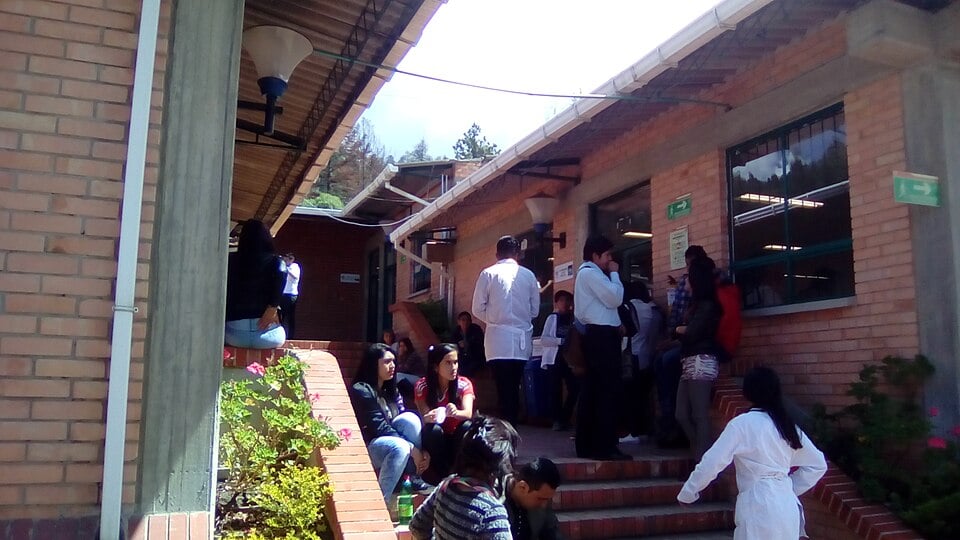
 Vocational education training centers in Colombia are helping people develop practical skills that can lead to employment and entrepreneurship. This training can be particularly important for people experiencing poverty, as access to skills and employment opportunities can affect a person’s ability to obtain a stable income. One of the country’s largest providers of vocational education is the National Training Service, known as SENA. The public institution provides free training programs designed to prepare Colombians for occupations in areas ranging from technology and business to agriculture and manufacturing.
Poverty and Employment in Colombia
Poverty remains a challenge in Colombia, particularly in rural communities. According to Colombia’s National Administrative Department of Statistics (DANE), 28% of the country’s population lived in monetary poverty in 2025. The rate was higher in rural and dispersed areas, where 39.5% of people lived in monetary poverty. Monetary poverty measures whether a person’s income is sufficient to meet the basic needs represented by Colombia’s official poverty line.
Employment opportunities can also influence the ability of people to move out of poverty. The OECD reports that around 56% of workers in Colombia are employed informally, meaning they generally do not have access to employment protections or social security benefits. The organization identifies high informality, low access to high-quality education and other inequalities as factors contributing to poverty in Colombia. Developing skills that correspond with labor-market needs can help workers pursue more productive employment opportunities.
For people in low-income and underserved communities, vocational education can therefore provide a pathway toward employment and greater economic stability. By giving students practical skills that employers need, vocational education training centers can help address some of the barriers that make it difficult for people to access higher-quality work.
SENA Provides Free Vocational Training
SENA offers vocational training at several levels, including auxiliary, technical and technological programs. Its certified training programs are designed to prepare people for occupations needed by Colombia’s productive and social sectors. SENA also provides free virtual training, allowing Colombians to access courses without attending a physical training center.
SENA has a large network throughout the country. The institution currently provides in-person services through 33 regional offices and 118 training centers. This network allows vocational education to reach communities throughout Colombia rather than being concentrated solely in the country’s largest cities.
Connecting Training to Employment
Vocational education training centers in Colombia can be especially valuable when training is connected to the needs of employers. SENA’s Public Employment Agency helps connect job seekers with companies while also providing occupational guidance and employment services. The agency works to coordinate labor-market needs with vocational training, occupational certification and employment opportunities.
The connection between vocational training and employment is reflected in recent results from SENA’s Labor and Occupational Observatory. More than 35,600 people who completed SENA programs during the first half of 2025 obtained formal employment within six months of receiving their certification. According to SENA, 58% of the graduates evaluated entered the formal labor market during the six-month period following their certification.
These employment opportunities can be especially significant for people who previously relied on informal or low-quality work. Access to formal employment can provide greater economic stability and access to benefits that are often unavailable to informal workers. In this way, vocational education can help address employment challenges that contribute to economic insecurity and poverty.
Reaching Communities Across Colombia
SENA also works to expand vocational education beyond Colombia’s major urban centers. The OECD has identified SENA as an important provider of job training in Colombia and noted that it reaches some of the country’s more remote areas. Expanding access to training can give people in underserved communities opportunities to develop skills that can be used in the labor market.
The importance of reaching rural communities is particularly evident because poverty rates are higher outside Colombia’s urban centers. Providing training opportunities in these areas can help reduce geographic barriers to skills development and give people more opportunities to pursue employment without leaving their communities.
Other Vocational Education Training Centers
SENA is one of the most prominent providers of vocational education in Colombia, but it is part of a broader network of institutions that provide technical and technology-focused education. The Institución Universitaria Pascual Bravo in Medellín, for example, offers programs in areas including software development, electrical technology, mechanics, mechatronics and industrial production. Some programs are available through in-person, distance or virtual formats.
The Instituto Tecnológico Metropolitano (ITM), another public institution in Medellín, also maintains a strong technological focus. The institution offers programs in technological and professional fields and has been recognized for its emphasis on preparing students for life and work. Government sources have also highlighted ITM and Pascual Bravo as institutions participating in programs designed to expand access to technological education.
Together, these institutions demonstrate that vocational and technology-focused education in Colombia extends beyond a single organization. Different training centers provide pathways into fields that correspond with the needs of Colombia’s labor market, giving students opportunities to develop skills that can improve their employment prospects.
Preparing Colombians for the Future
Vocational education in Colombia is also adapting to changing demands in the labor market. The International Labour Organization (ILO) has worked with SENA and Colombian partners to develop training based on occupational competencies and current labor-market needs. According to the ILO, its professional training program in Colombia has reached more than “387,000 direct beneficiaries” since 2016.
SENA’s programs include fields such as software development, accounting, tourism, marketing, logistics, electrical installation and health services. By providing free opportunities to gain practical skills, vocational education training centers can help Colombians prepare for employment while supporting the country’s broader economic development.
Looking Ahead
For Colombians living in poverty or working in informal employment, gaining skills that correspond with labor-market needs can provide an opportunity to pursue more stable sources of income. As training centers expand access to technical and technological education, they can help address employment barriers while giving people tools to improve their economic circumstances.
The diversity of programs in vocational education training centers in Colombia demonstrates how practical education can create pathways toward employment and economic opportunity. As SENA and other institutions continue expanding access to training and connecting education with labor-market needs, vocational education can remain an important tool for helping Colombians build skills, find employment and pursue greater economic stability.
– Kenneth Dyer
Kenneth is based in Westwood, CA, USA and focuses on Good News for The Borgen Project.
Photo: Wikimedia Commons

Vocational Education Training Centers in Colombia
Poverty and Employment in Colombia
Poverty remains a challenge in Colombia, particularly in rural communities. According to Colombia’s National Administrative Department of Statistics (DANE), 28% of the country’s population lived in monetary poverty in 2025. The rate was higher in rural and dispersed areas, where 39.5% of people lived in monetary poverty. Monetary poverty measures whether a person’s income is sufficient to meet the basic needs represented by Colombia’s official poverty line.
Employment opportunities can also influence the ability of people to move out of poverty. The OECD reports that around 56% of workers in Colombia are employed informally, meaning they generally do not have access to employment protections or social security benefits. The organization identifies high informality, low access to high-quality education and other inequalities as factors contributing to poverty in Colombia. Developing skills that correspond with labor-market needs can help workers pursue more productive employment opportunities.
For people in low-income and underserved communities, vocational education can therefore provide a pathway toward employment and greater economic stability. By giving students practical skills that employers need, vocational education training centers can help address some of the barriers that make it difficult for people to access higher-quality work.
SENA Provides Free Vocational Training
SENA offers vocational training at several levels, including auxiliary, technical and technological programs. Its certified training programs are designed to prepare people for occupations needed by Colombia’s productive and social sectors. SENA also provides free virtual training, allowing Colombians to access courses without attending a physical training center.
SENA has a large network throughout the country. The institution currently provides in-person services through 33 regional offices and 118 training centers. This network allows vocational education to reach communities throughout Colombia rather than being concentrated solely in the country’s largest cities.
Connecting Training to Employment
Vocational education training centers in Colombia can be especially valuable when training is connected to the needs of employers. SENA’s Public Employment Agency helps connect job seekers with companies while also providing occupational guidance and employment services. The agency works to coordinate labor-market needs with vocational training, occupational certification and employment opportunities.
The connection between vocational training and employment is reflected in recent results from SENA’s Labor and Occupational Observatory. More than 35,600 people who completed SENA programs during the first half of 2025 obtained formal employment within six months of receiving their certification. According to SENA, 58% of the graduates evaluated entered the formal labor market during the six-month period following their certification.
These employment opportunities can be especially significant for people who previously relied on informal or low-quality work. Access to formal employment can provide greater economic stability and access to benefits that are often unavailable to informal workers. In this way, vocational education can help address employment challenges that contribute to economic insecurity and poverty.
Reaching Communities Across Colombia
SENA also works to expand vocational education beyond Colombia’s major urban centers. The OECD has identified SENA as an important provider of job training in Colombia and noted that it reaches some of the country’s more remote areas. Expanding access to training can give people in underserved communities opportunities to develop skills that can be used in the labor market.
The importance of reaching rural communities is particularly evident because poverty rates are higher outside Colombia’s urban centers. Providing training opportunities in these areas can help reduce geographic barriers to skills development and give people more opportunities to pursue employment without leaving their communities.
Other Vocational Education Training Centers
SENA is one of the most prominent providers of vocational education in Colombia, but it is part of a broader network of institutions that provide technical and technology-focused education. The Institución Universitaria Pascual Bravo in Medellín, for example, offers programs in areas including software development, electrical technology, mechanics, mechatronics and industrial production. Some programs are available through in-person, distance or virtual formats.
The Instituto Tecnológico Metropolitano (ITM), another public institution in Medellín, also maintains a strong technological focus. The institution offers programs in technological and professional fields and has been recognized for its emphasis on preparing students for life and work. Government sources have also highlighted ITM and Pascual Bravo as institutions participating in programs designed to expand access to technological education.
Together, these institutions demonstrate that vocational and technology-focused education in Colombia extends beyond a single organization. Different training centers provide pathways into fields that correspond with the needs of Colombia’s labor market, giving students opportunities to develop skills that can improve their employment prospects.
Preparing Colombians for the Future
Vocational education in Colombia is also adapting to changing demands in the labor market. The International Labour Organization (ILO) has worked with SENA and Colombian partners to develop training based on occupational competencies and current labor-market needs. According to the ILO, its professional training program in Colombia has reached more than “387,000 direct beneficiaries” since 2016.
SENA’s programs include fields such as software development, accounting, tourism, marketing, logistics, electrical installation and health services. By providing free opportunities to gain practical skills, vocational education training centers can help Colombians prepare for employment while supporting the country’s broader economic development.
Looking Ahead
For Colombians living in poverty or working in informal employment, gaining skills that correspond with labor-market needs can provide an opportunity to pursue more stable sources of income. As training centers expand access to technical and technological education, they can help address employment barriers while giving people tools to improve their economic circumstances.
The diversity of programs in vocational education training centers in Colombia demonstrates how practical education can create pathways toward employment and economic opportunity. As SENA and other institutions continue expanding access to training and connecting education with labor-market needs, vocational education can remain an important tool for helping Colombians build skills, find employment and pursue greater economic stability.
– Kenneth Dyer
Photo: Wikimedia Commons
How a Drought Lead to International Aid to Zambia
Poverty in Zambia
Zambia is a landlocked country in Africa. The poverty rate within the country is estimated to be around 64.3%. The rural areas largely make up the high poverty rate. It is estimated that 78.8% of people living in rural areas are in poverty, compared to 31.9% of people living in urban areas. The ramifications for people living under the poverty line has led to a severe restriction of accessing food and clean water, it limits the ability of getting an education and has created one of the largest orphan populations in Africa. A contributing factor for the high poverty rate is the weather and how it causes extreme droughts to the country in recent years.
Causes and Severity of the Droughts
In 2024, Zambia had one of the deadliest droughts in its history. The severity of this drought negatively affected 84 out of 116 districts, leading the President of Zambia to declare a national emergency. Zambia’s long history of droughts occurring is due to the weather climate of El Nino.
The results from the 2024 drought led to rising groceries prices, leading to roughly 2 million Zambians lacking adequate access to food and water. This severe drought also led to power shortages repeatedly occurring and water sources having a high risk of containing harmful diseases like malaria. The repercussions do not end there. The lack of water has led Zambia to be one of the most malnourished countries in the Sub-Sahara, a higher risk for violence towards women and young girls and a higher chance of a girl being married at a young age. All of these challenges indicate a necessity for international aid to Zambia.
The World Bank’s Solution
After the severe drought in 2024, the World Bank agreed to provide international aid to Zambia. The World Bank agreed to financially support the African country by approving a $100 million grant. This money was split into two categories. The $25 million went towards Developing Policy Financing (DPF). The DPF could assist with a country’s budget and debt and could create policy reforms. The DPF also comes with conditions on how to utilize the funds. Regarding this finance support for Zambia, the World Bank outlined the $25 million must be used to:
Meanwhile, the $75 million came in the form of a Catastrophe Deferred Drawdown Option (Cat-DDO) to address natural disasters.
The Results
In 2025, Zambia showed several signs of improvement. The country’s GDP per capita rose from 1% to 2.4%. Inflation decreased from 14.8% to 14%. The public debt also decreased from 101% to 87.6%. Zambia’s banking system became stronger during 2025 and the government focused on providing funding to different sectors to combat inequality. These sectors include education, health and agriculture. Lastly, in 2025, Zambia saw an increase in rainfall, resulting in a better harvest in the agriculture sector.
Yet, Zambia still faces several issues, climate conditions still pose a threat to the country and the energy, water and transportation sectors have huge deficits. In March 2026, the World Bank agreed to continue financially assisting Zambia. This year, the World Bank granted Zambia an additional $25 million to fight areas that have a higher chance of poverty and climate readiness.
Looking Ahead
Through the assistance of the World Bank, Zambia has improved since the 2024 severe drought. Zambia’s economy is gradually recovering, the climate provided more rain for the country and the country looked into eliminating inequality. Although poverty and climate concerns still linger, the relationship between Zambia and the World Bank shows a dedication to ending these issues and bettering the country and improving the citizens’ living conditions.
– Dorothea A Pudwill
Photo: Unsplash
The Plight of Western Sahara and the Sahrawi People
Where Is Western Sahara?
Western Sahara is a region sitting on the Atlantic coast, just south of Morocco and north of Mauritania. It’s a region slightly larger than the U.K., but has only a population of around half a million. Before Morocco annexed the territory, Spain governed it as a colony. Under Spanish rule, the Sahrawi people lived a sedentary life by force, abandoning their nomadic lifestyle. The West ignored this until the UN began demanding the decolonization of Western Sahara in 1965.
In 1960, the UN passed resolution 1514, which recognized that the peoples of the world have an ardent desire to end colonialism in all forms. The UN classified Western Sahara as a non-self-governing territory, meaning that decolonization must happen. However, in 1975, King Hassam defied the resolution and ordered the “Green March,” a demonstration where 350,000 Moroccan civilians marched into Western Sahara. This sent the message that Morocco should have determination over the Western Saharan territory.
How Did Western Sahara Respond?
The Moroccan military forces and the Polisario Front began combat over Western Sahara. The Polisario Front is a collection of resistance fighters, aiming to liberate Western Sahara as an independent nation. In 1973, a group of students established the Polisario Front in Algeria, aiming to ensure that the Spanish Sahara would become an autonomous country, unburdened by colonialism. The UN brokered a ceasefire after 16 years of fighting. This left approximately 20% of the country under Polisario control. The other 80% belongs to Morocco, defended by the “Berm” wall, manned by 150,000 soldiers.
The Sahrawi Who Stayed
Those who remain in their homeland continue to face pressure from the Moroccan government. The Moroccan authorities have arrested journalists and human rights activists, some being imprisoned for only trying to enter the Western Sahara region. Recently, the Moroccan parliament adopted Draft Law 97-15, the draft law includes a passage outlawing strike action for political purposes. This restriction on freedom of speech would prevent the Sahrawi people striking to demonstrate their desire for autonomy. On the other hand, youth protests calling for better health care and job opportunities in rural Morocco, have seen success. Western Sahara could benefit from these protests, giving the Sahrawi people some long awaited improvement.
Morocco has significantly reduced poverty in recent years, including across the territories of Western Sahara. Between 2001 and 2007, the region formerly known as Laâyoune-Boujdour-Sakia El Hamra, which covers the northern half of Western Sahara, reduced its poverty rate by 66%. The study also shows that Oued Ed-Dahab-Lagouira, which covers much of the southern part of Western Sahara, has one of the lowest poverty rates in Morocco. These reductions have significantly improved the quality of life for Sahrawis who remain in the territory. However, poverty still affects rural communities in Laâyoune-Boujdour-Sakia El Hamra, with around 8% of the rural population living below the poverty line.
The Sahrawi Who Fled
Those who fled the conflict have dispersed across the world, with many fleeing to Algeria. Some refugees have lived in refugee camps based in the Algerian Sahara for over 45 years. In the camps the Sahrawi combat 50 degree centigrade summers, sub-zero temperatures in the winter, and total reliance on humanitarian aid in order to survive. Despite the challenges, they still think of a future for their children, believing that in the future they will be able to return to their home country.
Sahrawi refugees in Algeria live across five different camps and face food insecurity and limited employment opportunities. WFP reports that 78% of Sahrawi refugees experience food insecurity, which contributes to other health problems. For example, 53.5% of Sahrawi refugee women aged 15–49 suffer from anemia, as do more than half of children aged six months to five years. In response to these challenges, the Algerian government developed the Sahrawi Refugee Response Plan (SRRP), which aims to address the refugees’ most pressing needs. The plan estimates a funding requirement of approximately $200 million and focuses on three main objectives: protection, food security and employment opportunities. The plan also extends beyond these priorities by outlining development initiatives in areas such as education, sport and logistics.
The International Response
The Sahrawi people have seen mixed results with the international community. After Western Sahara was recognized by the UN in 1965, very little has been done to help the Sahrawi people, by the West. The UN brokered a peace deal between Morocco and the Polisario Front, in 1991, creating a task force named MINURSO to help establish a referendum on independence.
Looking Ahead
While there is peace in West Sahara now, the Sahrawi people remain displaced across North Africa. Various legislative resolutions concerning their independence have challenged the idea of an autonomous Western Sahara. However, Algerian aid to Sahrawi refugees is opening the door to a better life. These people still have hope that their children will one day be able to return to their homeland, clinging to that dream for 45 years and counting.
– Eoin Baxter Mackay
Photo: Wikimedia Commons
Addressing the Gender Wage Gap in Lesotho
Statistics
Researchers struggle to determine the gender wage gap in Lesotho because they lack access to national data on pay differences between men and women. Even with collected data, large gaps remain between what organizations publish and what they don’t. According to UN Women, 33.6% of the national indicators that researchers need to determine the gender pay gap were available, highlighting gaps in what organizations release. These included women’s access to assets; relations to poverty, gender and environment; and workplace harassment.
The garment industry accounts for much of the gender wage gap in Lesotho, where factories employ more women than men. The Guardian reports that, “According to the trade ministry, there are about 36,000 textile workers [in Lesotho] – mostly women.” Although women make up the overwhelming majority of workers, employers deny them equal pay. Additionally, many young women aged 15+ do unpaid domestic work, which makes up 15.6% of their time, compared to men, who receive 6.2% of their domestic work unpaid.
Community Impact
Since women make up the majority of the garment industry, they are more likely to work in harsher conditions. Men are more likely to enter professions with higher salaries, such as mining. In contrast, women are more likely to work in the textile industry, which pays significantly lower wages, contributing to the gender wage gap in Lesotho.
As a result, women may struggle to earn a livable wage to support themselves and their families. As a result, many families can no longer afford daily necessities. This has sparked many social movements, as women have begun protesting for equal pay and equal opportunities.
Solutions
Lesotho is currently addressing the wage gap through numerous measures. For instance, Lesotho has begun implementing the Labor Act of 2024, which provides stronger equal-pay rights. It states that employers must pay men and women equally for the same work and that employers cannot discriminate based on a person’s gender. The country also has a Department of Gender, which works to promote equal opportunities for all genders by raising awareness and supporting initiatives to stop discrimination.
The Lesotho Agreement is also an outcome of the government’s work, creating a system to acknowledge and address industry complaints through investigation. It pushed the industry to accept the agreement, allowing workers to submit complaints about discrimination or unfair treatment from supervisors and benefiting more than 10,000 workers. Progress reports show that evaluators have recommended that supervisors take classes on fair treatment of workers, and operatives have substantially increased their investigations, helping many in Lesotho.
Looking Ahead
The gender wage gap in Lesotho is a large issue; however, promoters and lawmakers are taking steps to eliminate the unfair treatment and unequal access to wages and opportunities for women. Legal protections, along with better data collection like the WRS Network, improve access to opportunities to fight for better pay and open doors to equal opportunity. Therefore, Lesotho will be closer to closing the wage gap if it continues to follow these legal and social movements.
– Zaynab Faruqi
Photo: Flickr
Higher Education in Cambodia
Cambodia’s Higher Education
Between 2004 and 2019, enrollment in higher education in Cambodia increased from 6% to 15% of the eligible population, reflecting stakeholders’ prioritization of tertiary education. However between 2019 and 2022, enrollment fell by 15% due to rising costs and disruptions to secondary school education during the pandemic.
Even before the pandemic, only 5% of students from the poorest quintile graduated from high school, compared to 52% of students from the wealthiest quintile. Limited access to laptops and poor internet infrastructure in rural areas, where the majority of the poor live, meant more children were out of school, thus widening the graduation gap between wealth quintiles.
While efforts have been in place to return high school graduation rates to pre-pandemic levels, declining literacy and math proficiency in primary and lower secondary schools means this remains a concern for the coming years.
Beyond this, higher education costs have risen by 62% in the last decade, making it increasingly hard for the poor to send their children to university. Indeed, the lowest wealth quintile only accounts for 4% of tertiary enrollment while the wealthiest makes up 46% of the student population. Unless addressed, this divide will continue to grow, limiting both national and regional development as the poor continue to miss out on opportunities.
National Scholarships
To address this, the Khmer Government intends to introduce national scholarships. These scholarships would focus on increasing access for the poor, women, those in disadvantaged areas, disabled students and those enrolling in STEM programs. By offering free tuition to these target groups, the government hopes to increase enrollment and thus lift more of its vulnerable population out of poverty.
Their focus on STEM programs links to hopes for technological innovation, as this will raise the value of goods and services Cambodia produces. Unlike other ASEAN countries where STEM-associated degrees make up the majority of tertiary education, in Cambodia, 41% of students are enrolled in business and management degrees. While this helps maintain current sectors, there is limited opportunity for innovation, thus hindering economic growth.
The Question of Quality
Beyond access, the quality of higher education in Cambodia also remains a concern. Since funding is allocated according to institute age rather than research or graduation percentage, there is little incentive for older universities to invest in developing their programs. Only 9% of full-time academics have PhDs, the staff’s limited research expertise limiting both their students’ learning and university progress. Furthermore, the focus on enrollment rather than graduation means less than 60% of students complete their studies.
To help address some of these barriers, Lotus Outreach established the Cambodian Tertiary Education and Leadership Youth Training (CATALYST). The program provides vocational training for high school graduates from Cambodia’s poorest rural areas through scholarships, mentoring and workshops. The aim is to ensure disadvantaged students are able to thrive and complete their studies, rather than be forced to drop out due to financial or academic struggles.
CATALYST has also sponsored 266 women through higher education. Its vocational training and workshops run alongside the scholarships and mean that all 20 of the 2025 graduates secured salaried employment following their graduation.
Charity Organizations
Lotus Outreach is among many charitable organizations seeking to help the disadvantaged to pursue higher education.
The Life and Hope Association’s Program Advancing Girls Education (P.A.G.E) tackles the gaps in secondary school education, giving full-time accommodation and teaching to 36 girls from rural areas near Siem Reap. The girls live in the city with the monks who run the organization and are given the support and space needed to complete their education, rather than being pushed into domestic care.
The Asia Foundation has also made huge strides, funding 146 scholarships for rural girls to achieve bachelor’s degrees from Western University. Paired with the Foundation’s Career Development plan where the young women acquired English language, computer and leadership skills, the graduates have gone on to pursue careers in both civil and private sector organizations.
Since only 11% of girls in Cambodia continue to upper secondary school, these programs have proved vital in opening doors for young women.
Looking Ahead
Higher education in Cambodia has developed significantly in the last two decades, however there remains work to be done. National scholarships and charitable organizations are helping to tackle access issues. If this is paired with budget reform and support programs, the country can ensure students thrive at both university and beyond.
– Elizabeth Holden
Photo: Unsplash
Positives of USAID Programs in Lesotho
The most vulnerable groups in Lesotho are farmers, young girls and children and women. USAID programs in Lesotho such as USAID Global Health Supply Chain Program-Procurement and Supply Management Program (USAID GHSCP-PSMP), which started in 2016, promote effective supply chain management for HIV/AIDS medication. Other programs include the DREAM Initiative, which started educating young women and girls about HIV protection in 2016, and Bophelo Bo Botle or Good Health Activity, which began in 2024 and works to educate people on good health practices.
The Ways That Lesotho Benefited From US Foreign Assistance
USAID programs in Lesotho have helped address the HIV/AIDS epidemic. According to Lesotho’s 2025 National HIV Estimates Report, new HIV infections declined by 83% between 2010 and 2024, with approximately 3,200 new infections estimated in 2024. While this progress reflects the country’s broader HIV response, U.S.-supported programs have contributed through prevention, education and treatment. Programs such as the Bophelo Bo Botle Activity and DREAM Initiative have provided HIV prevention education, while USAID’s Global Health Supply Chain Program-Procurement and Supply Management (GHSCP-PSM) has helped provide access to life-saving HIV treatment. By helping people prevent and manage HIV, these programs can support healthier communities and enable more people to participate in education and economic opportunities.
Data from the World Health Organization and UNAIDS indicate that Lesotho has made significant progress in its response to HIV/AIDS. At the same time, life expectancy in Lesotho has increased from 44.3 years in 2008 to 57.8 years in 2024. Despite this improvement, Lesotho’s life expectancy remains well below the global average of 73.48 years. The gap reflects the country’s broader health and development challenges, including poverty, limited access to health care and the ongoing impact of HIV/AIDS.
USAID programs in Lesotho have helped significantly with the HIV/AIDS epidemic, with the United States funding more than $100 million towards economic growth and development in Lesotho. For example, through the GHSCP-PSMP model, it has helped promote the proper management of HIV/AIDS medications, leading to an increased supply of sterile needles and medications for HIV treatment. It has also provided $63.4 million towards irrigation planning and infrastructure, and allocated $29.5 million to primary health care services, such as the DREAM Initiative. This could explain the upward trends in life expectancy data.
Bophelo Bo Botle
The Bophelo Bo Botle Activity started in 2024 in Lesotho. This program focuses on educating people in Lesotho on general good health practices by utilizing people-centered prevention, care and treatment. This program was unfortunately terminated in 2025 due to United States budget cuts and cuts to the PEPFAR program. With the program only running for a year, the program did not have many accomplishments.
The DREAM Initiative
The DREAM Initiative began in Lesotho in 2016, focusing on the factors making adolescent girls and young women vulnerable to HIV/AIDS. Such factors include “gender-based violence, exclusion from economic advancement opportunities and a lack of access to secondary education.” After three and a half years of implementation, new infections among adolescent girls and young women decreased by 71.4% in the two districts where the program was operational.
USAID GHSCP-PSMP
The USAID Global Health Supply Chain Program-Procurement and Supply Management Program (USAID GHSCP-PSMP) began in 2016 and is scheduled to end in September 2026. This program has promoted supply chain management of HIV/AIDS medication and treatments. The USAID GHSCP-PSMP provided continued availability of HIV treatment and tuberculosis treatment. As of 2020, “97% of HIV positive adults were receiving antiretroviral treatments and 92% were virally suppressed.”
Setbacks
All of this progress comes with a substantial budget cut for USAID programs in Lesotho, and in U.S. foreign assistance all around. In 2025, the U.S. gave $24.7 million in total aid to Lesotho. This is a stark difference from just three years prior, when it gave $150 million.
However, the Chinese government has been strengthening relationships with Lesotho, along with 53 other African countries, and implementing many educational and health-based practices through foreign aid. For example, in 2024, China and UNAIDS pioneered a joint campaign called “Eliminating the Triple Threat in Girls and Young Women in Lesotho,” which reached 20,000 young women and promised $2 million. This is very promising after the budget cuts the United States made.
China also introduced scholarships for Lesotho in 2025. These scholarships are helping create skilled workers and “ease the financial burden of overseas education.” This is very promising after the budget cuts the United States made.
Looking Forward
Considering the U.S. foreign aid cuts, USAID programs in Lesotho like the DREAM Initiative, GHSC-PSM and the Bophelo Bo Botle Activity may not be able to continue. Thankfully, China has stepped in and introduced new programs and initiatives geared towards economic growth and development in Lesotho.
– Lily K Gibson
Photo: Pexels
How Project Hope is Helping After the Earthquakes in Colombia
It was the strongest earthquake to hit Colombia in over a decade, followed by at least 250 aftershocks, just weeks after two detrimental earthquakes in Venezuela.
With more than 156,000 homes damaged or destroyed, more than 170 collapsed buildings, at least 300 dead and more than 4,500 injured, immediate outside help is necessary. Organizations such as Project HOPE, a nonprofit dedicated to emergency response, are working to provide hygiene supplies, medical assistance and infrastructure repairs in the days after the earthquake.
President Abelardo de la Espriella declared a state of emergency, and Project HOPE responded within hours.
Project HOPE’s Efforts
Project HOPE is aiding Colombia by providing hygiene supplies such as toilet paper, feminine hygiene products, diapers, soap, cleaning supplies and more. Without the worry of basic hygiene and dignity items, those affected by the earthquake can focus on finding their families and rebuilding their lives. In Cali, Colombia’s third-largest city, Project HOPE began assessing health facilities within hours of the earthquake, surveying the partially collapsed Hospital Universitario del Valle Evaristo García, where health workers have had to set up tents outside to treat the injured after a wing of the hospital collapsed.
Mental Health Focus
Project HOPE also focuses intensely on mental health. Traumatic events such as earthquakes and other natural disasters leave wounds that are not always visible. Post-traumatic stress disorder (PTSD) and anxiety surrounding possible future tremors can leave people with immense fear and inability to function.
Project HOPE is working to make mental health services a part of basic healthcare, regardless of social or financial circumstances. One billion people around the world suffer from psychological challenges, and less than 30% of those people will receive treatment. Challenges increase significantly in areas impacted by war or natural disasters. Project HOPE’s implementation of mental health services in Colombia helps to address all injuries a person may suffer from after a traumatic event, including mental ones.
Pre-Existing Needs
While it is vital to respond quickly during an emergency, need existed before the earthquakes in Colombia. Nearly 7 million individuals were already in need of humanitarian support before the earthquake hit. After the disaster, that number is expected to grow as families face further displacement, disrupted services, loss of income and reduced access to basic necessities. The limited access to healthcare, clean water and psychological first aid makes recovery from the earthquakes more difficult, emphasizing the importance of aiding those in need before disaster strikes.
– Julia Cholerton
Photo: Pixabay
Malaria Vaccination Program in Rwanda Helps Families in Poverty
Malaria’s Impact on Household Incomes
Malaria has imposed an economic burden on Rwanda. The Rwanda Biomedical Center (RBC) has reported an increase in malaria prevalence in Rwanda, with the disease affecting 76 people per 1,000 population—equivalent to 7.6%—in the 2024/2025 period, up from 4.5% recorded in 2023/2024. This has reduced the country’s economic growth, as families struggle with higher costs for essential goods and services and lack basic needs, which will inevitably push them into deeper poverty. As seen in high-deprivation regions, the price of food, transportation and school equipment amplifies the strain on low household incomes. This situation forces families to choose between medical care and necessities. This situation can decrease Rwanda’s economy and lead to a lack of internal wealth that affects trade, infrastructure and levels of employability.
Government-Led Immunization Strategy
Nevertheless, Rwanda’s Ministry of Health began its malaria vaccine program in 2024. RBC figures show that in 2025/2026, malaria cases stood at 928,616, down from 1,131,314 in 2024/2025, indicating a recent decline after the previous surge. Thus, the Ministry of Health integrated the vaccine into childhood immunization to ensure households can access jabs at local Rwandan clinics without transportation costs.
Experts say this will help reduce malaria cases in Rwanda, with improvements reported in mid-2026. In Rwanda, national childhood vaccination coverage is at 95%, yet gaps persist in reaching last-mile and hard-to-reach populations. Community Health Workers (CHWs) play a critical role in promoting and delivering vaccination services at the community level. This majority of vaccinated children reduces emergency appointments at clinics and financial strain on households.
GAVI and UNICEF’S Role
Since 2024, Gavi has played a significant role in the new malaria vaccination program in Rwanda. Gavi introduced the malaria vaccines RTS,S and R21/Matrix-M through procurement deals that enabled Rwanda to access affordable malaria vaccines while reducing hospitalizations. Gavi’s website stated that “[a]ccording to WHO estimates, the vaccine saves 1 life for every 200 children vaccinated.” Here, Gavi partnered with UNICEF to subsidize the entire cost, making the malaria vaccine free to every Rwandan child. Gavi financing the vaccine and UNICEF procuring it, with the Rwandan Ministry of Health delivering it through immunization, benefits every Rwandan citizen by protecting them from financial strain.
Vaccination Produces Widespread Economic Benefits
Recent results from the new malaria vaccination program in Rwanda show that it has directly reduced poverty across the country. The Rwandan government’s relationship with the organization Gavi has helped communities access life-changing protection that keeps children and adults safe while preventing families from extreme medical costs. This organization shows how international interventions can lift deprived countries out of poverty while strengthening national economic development.
– Alexandra Eaton
Photo: Unsplash
A Thirst for Change: Tackling Water Insecurity in Angola
Water Insecurity in Angola
According to the World Health Organization, 44% of the population does not have access to clean drinking water, with 55% having access to basic sanitation. High levels of water insecurity, particularly in rural areas, have triggered a cholera outbreak, resulting in 11,500 cases.
In Luanda, the capital, only 32% of people have piped water, leading many to buy water from tank trucks at excessively high prices. The economic burden of water insecurity is exacerbated by low wages and rising unemployment, leaving millions facing poverty and uncertainty regarding water access.
Water insecurity has threatened local businesses relying on water to stay afloat. N’Gola Beer, brewed in the Lubango municipality, depends on high-quality water from the rocks of Tundavala. Their main factory, a major source of income for Lubango, employs about 700 people. With scarce water supplies, many risk losing their jobs. Additionally, water access in homes becomes increasingly fragile. Currently, only 23% of homes in Lubango have a clean water supply.
The Government’s Approach
The International Bank of Reconstruction and Development and the French Agency of Development have provided funds for the Second Water Sector Institutional Development Project (WSIDP-2). This project aims to strengthen the effectiveness and capacity of Angola’s water agencies, resulting in improved water supplies at local and national levels. This government initiative works with Instituto Regulador do Setor Elétrico e de Águas (IRSEA), Angola’s water and electricity regulator, to develop regulations within the water and sanitation sector and improve IRSEA’s functionality to tackle water insecurity.
In 2025, the government announced the beginning of its flagship program called PROAGUA, financed by the Swiss company Mitrelli. The project aims to revolutionize the production of water systems and their distribution across Luanda and Icolo e Bengo, providing access to clean water to more than 9 million people.
PROAGUA aims to tackle water insecurity by reducing the pressure on current water supplies. This includes repairing four major wastewater treatment plants, six desalination units, and 9,000 water meters, including smart meters to manage the increasing volume.
Water Security at a Local Level
Water insecurity impacts the most isolated and vulnerable regions and their residents. In Sumbe, a city with a population of approximately 350,000, there was no wastewater infrastructure before 2015. In response, the African Development Bank developed the Institutional and Sustainability Support to Urban Water Supply and Sanitation Project. It provided latrines and bathrooms to people who did not previously have access and connected 59,008 homes to water, reaching more than 472,000 people. This initiative highlights how transformative water initiatives are producing long-term improvements in daily lives.
A New Approach to Water Supply
SUEZ, a French-based environmental services company, and EPAL, a Portuguese water company, are working on a project to rehabilitate five of Luanda’s water plants by installing new production facilities. The project is expected to improve the lives of more than 12 million people, offering a modern approach to combating water insecurity.
On the coast, desalination is the answer to water insecurity. Angola’s Ministry of Energy and Water has signed an agreement with private companies Cox and AMEA Power to develop a seawater desalination plant on the Mussulo Peninsula. This venture will provide drinking water to more than 800,000 people and further reduce the pressure on the region’s water supplies. The project is expected to begin in 2028 and will provide up to 300 construction jobs, along with roughly 25 permanent positions once operational.
Looking Ahead
Despite numerous challenges contributing to water insecurity, various initiatives have succeeded in building and improving the infrastructure that supplies clean water. By investing in water security, the focus is on people’s livelihoods, health, and dignity, ensuring everyone has access to the basic necessity of water. As initiatives continue to progress and develop, Angola marks a shift toward a more sustainable future.
– Maya Tailor
Photo: Wikimedia Commons
Understanding Disability and Poverty in Jordan
The Cycle of Poverty and Disability
Poverty can contribute to disability, while disability can increase the risk of poverty. A USAID report found that households with a person with a disability tend to face higher health care costs and earn lower incomes. Poverty can further increase the risk of disability through inadequate health care and malnutrition. Barriers to employment and education can further reinforce this cycle of disability and poverty in Jordan.
Barriers to employment are one way in which disability can contribute to economic vulnerability in Jordan. In 2017, 32.8% of men with disabilities aged 15 to 64 held employment, compared with 61.4% of men without disabilities. The employment rate for men with disabilities was roughly half that of men without disabilities. A similar disparity existed for women, although employment rates were lower overall: only 5.2% of women with disabilities held employment, compared to 13.5% of women without disabilities. These figures demonstrate that people with disabilities face significant disadvantages in accessing employment. In 2025, the International Labour Organization (ILO) reported that inaccessible architecture and infrastructure, along with institutional and social barriers, continue to limit employment opportunities for people with disabilities.
Expanding Avenues to Education
Education is one important pathway for disrupting the cycle of poverty and disability. Jordan has expanded access to public schooling for students with disabilities. Enrollment reached approximately 26,700, representing nearly a 44% increase over recent academic years. The number of accessible schools also reached 1,002, including 132 pioneering inclusive schools. However, significant barriers remain, particularly because some curricula and instructional materials do not adequately meet the needs of students with different disabilities.
Beyond expanding access to schools, Jordan has made longer-term efforts to promote inclusive education and reduce stigma toward people with disabilities. A 2026 study found that attitudes toward people with disabilities have changed as government policies and international development programs have expanded. The study highlights several important policy measures, including the 2017 Rights of Persons with Disabilities Act and the government’s 10-year Inclusive Education Strategic Plan, which it launched in 2019. Community organizations and additional international assistance have further supported efforts to create a more inclusive education system.
Expanding Inclusive Workplaces
Recent programs in Jordan have targeted employment barriers that can reinforce the cycle of disability and poverty. In July 2025, the Higher Council for the Rights of Persons with Disabilities and the ILO promoted a national dialogue focusing on reducing barriers and improving workplace inclusion for people with disabilities in Jordan’s garment sector. With support from the Canadian government, the initiative emphasized institutional awareness, workplace practices and other measures that aim to create more accessible work environments. Participants also reviewed guidelines for implementing reasonable accommodations and promoting more inclusive workplaces.
Strengthening Social Protection
Beyond education and employment initiatives, Jordan has expanded its broader social protection system. In 2025, the government launched its National Social Protection Strategy for 2025-2033 with support from UNICEF. The organization also supported a new Cash Plus Unit within the National Aid Fund that connects financial assistance with health care, education and other needs. UNICEF reported that Jordan’s nationwide social protection awareness campaign reached more than 3 million people in 2025. Additional efforts include the 114 Makani centers, which have reached approximately 105,500 people, including 87,100 children, through educational programs, child-focused services and skills-building activities. Although these programs serve populations beyond people with disabilities, they can help reduce broader economic vulnerabilities that contribute to the cycle of poverty and disability.
Looking Ahead
Despite recent progress, significant obstacles remain in employment, education and access to social protection for people with disabilities in Jordan. At the same time, ongoing reforms are addressing some of the social and economic conditions that reinforce poverty. Expanded access to education, inclusive employment initiatives and broader social protection reforms can improve economic participation and access to essential services. Sustained implementation of these programs could help weaken the mutually reinforcing cycle of disability and poverty in Jordan.
– Elias Haskins
Photo: Flickr