Everything You Need to Know About Hunger in Venezuela
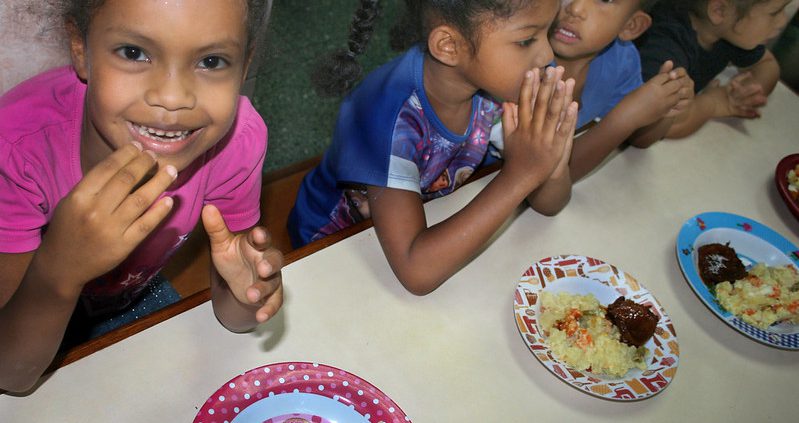 For years, empty shelves, shortages and long lines outside grocery stores defined Venezuela’s food crisis. While scarcity was once a visible sign of the country’s economic collapse, the current reality is more complex. In many cities, supermarkets and local markets now have food available. However, availability does not always mean access. Hunger in Venezuela is now largely an affordability crisis: food may be present, but millions of families cannot consistently afford a nutritious diet.
The Affordability Crisis Behind Hunger in Venezuela
The central issue is the gap between wages, inflation and the cost of food. In 2026, Venezuela’s official minimum wage remained fixed at 130 bolivars per month, while the government announced that monthly minimum income would rise to $240 through a system that includes bonuses. However, this income structure remains uncertain for many workers because bonuses do not always function as a formal salary increase. At the same time, the cost of a basic family basket remains far higher than regular income for many households.
The Associated Press reported that Venezuela’s monthly minimum wage of 130 bolivars was worth less than $1 in dollar terms in 2025. Even with government stipends, many public sector workers survived on roughly $160 per month, while the average private sector employee earned about $237, according to the independent Venezuelan Observatory of Finances. At the same time, the cost of a basic food basket exceeded $500. This means that even families with some income may still struggle to buy enough food.
As a result, families buy less food, choose cheaper and less nutritious products, skip meals or depend on credit from small local stores. In some communities, corner stores have become a survival tool because families can buy food on credit and pay later when they receive wages, stipends or support from relatives. This shows how hunger in Venezuela is not only about food supply, but also about purchasing power.
Poverty and Nutrition
Food prices make access to protein especially difficult. When prices rise, families often reduce or eliminate foods such as chicken, beef, eggs, milk and cheese. Many households rely on cheaper and more filling foods, including rice, pasta, corn flour, bread and beans. These foods may help prevent immediate hunger, but they do not always provide the nutrients needed for long-term health. Eating something is not the same as being well nourished.
This distinction is key to understanding hunger in Venezuela. Many families may not be completely without food, but they live with incomplete, repetitive and nutrient-poor diets. Health experts cited by the Associated Press explained that families reduce or eliminate animal protein first when prices increase. Poor nutrition can contribute to stunting, headaches, fatigue and other health problems in children.
The 2025 National Survey of Living Conditions, known as ENCOVI, found that 68.5% of Venezuelan households remained in income poverty, underscoring the close relationship between poverty and food insecurity. The survey also found that one in three households did not have enough food. These figures show that hunger in Venezuela is rooted not only in food prices, but also in the persistent poverty that limits families’ ability to buy a balanced diet.
Children and School Meals
Children are among the most vulnerable. Limited access to protein and other essential nutrients can affect children’s growth, immune health and cognitive development. Hunger can also affect their ability to attend school, concentrate in class and perform academically. The Associated Press reported cases of students skipping school or struggling during the school day because they had not eaten enough.
ENCOVI 2025 found that only 29% of schools with a school feeding program served food every day. For some children, a meal at school may be one of the few reliable sources of food during the day. When school feeding programs are reduced, irregular or unavailable, the impact goes beyond nutrition. It can also affect attendance, academic performance and future opportunities.
In a country where many families cannot consistently afford breakfast or lunch, school meals help protect both health and education. They also show why food security is closely tied to poverty reduction: when children eat regularly, they are better positioned to learn, stay in school and build long-term opportunities.
Basic Services and Food Insecurity
The deterioration of basic services also exacerbates hunger in Venezuela. ENCOVI 2025 found that only 10% of Venezuelans had continuous electricity and only 19% of households had continuous running water. These conditions make it harder for families to store, prepare and cook food. Even when a household manages to buy groceries, it may still face obstacles to cooking beans, refrigerating perishable products or maintaining safe hygiene.
Low income, weak public services, limited school attendance and poor access to food reinforce one another. In many cases, students miss school because there is no water, no electricity, no transportation, no food at home or because teachers are absent. Hunger in Venezuela is therefore not only a nutrition issue; it is also connected to education, infrastructure and long-term development.
A Recent Emergency Raises New Food Needs
The earthquakes that struck northern Venezuela on June 24, 2026, added new pressure to a country already facing severe food insecurity. Reuters reported that the twin earthquakes, with magnitudes of 7.2 and 7.5, devastated parts of La Guaira state and that the government had confirmed at least 1,943 deaths by June 30. The full scale of the disaster remains uncertain, but aid workers have warned that displacement, damaged infrastructure and disrupted markets are deepening humanitarian needs, including access to food, clean water and health care.
The disaster does not change the underlying causes of hunger in Venezuela, but it makes them more urgent. Families who were already struggling with low wages, weak public services and limited access to nutritious food now face additional barriers when homes, markets, roads and local businesses are damaged. WFP USA reported that homes, markets and food supplies in La Guaira were devastated, leaving families with little or nothing to eat. The organization said it is expanding emergency food assistance to reach up to 500,000 people in the hardest-hit areas.
Humanitarian and Community Responses
Despite these challenges, humanitarian and community-based efforts continue to provide relief. The World Food Programme (WFP) supports school meal programs in vulnerable communities across Venezuela. According to WFP, its school meals program reaches more than 330,000 people across more than 1,100 schools, including students with disabilities. WFP also reports that the program helps boost school enrollment and attendance while providing essential nourishment for children.
The recent earthquake response also shows the importance of rapid food assistance. WFP USA reported that WFP already had more than 3,000 metric tons of food in Venezuela, enough to support more than 10,000 families for two months, and that it is bringing in additional supplies. Reuters also reported that WFP is seeking $50 million to feed 500,000 people affected by the earthquakes. These figures show how existing humanitarian networks can respond quickly when an emergency increases food needs.
However, funding shortages threaten these efforts. El País reported that WFP’s operation in Venezuela was reduced from 11 states to four: Delta Amacuro, Sucre, Zulia and Falcón. The same report stated that 7.9 million Venezuelans needed humanitarian assistance in 2025, while WFP had only 15% of the funds needed to assist its target population of 5.1 million. In the area of nutrition and food security, funding reached only 7% of what was required.
These numbers show both the value and the vulnerability of humanitarian programs. School meals, emergency food distributions and nutrition support can make a measurable difference for children and families, but funding gaps limit their reach. When organizations have adequate resources, they can help families meet immediate needs while supporting children’s health, education and stability.
Local initiatives also play an important role. Churches, community groups, volunteers and family networks help support vulnerable people through food donations, community kitchens and informal aid. After the earthquakes, Venezuelans inside and outside the country quickly organized donation drives and supply networks. The Associated Press reported that Venezuelan communities in the United States collected medicine, water and food, while Reuters reported that international aid included rescue teams, medical supplies, field hospitals, food distribution and emergency funding from several countries and humanitarian partners. Pope Leo XIV also sent emergency aid through the Vatican’s charity fund.
These efforts do not solve the structural causes of hunger, but they provide immediate relief for families who cannot meet their daily food needs. In many communities, this local and international support has become essential for children, older adults, displaced families and households without stable income.
Looking Ahead
The situation in Venezuela shows that food security depends on more than the physical availability of food. It also requires sufficient income, stable public services and consistent support for the most vulnerable households. When families can see food on the shelves but cannot afford to buy it, the crisis remains real.
The earthquakes of June 2026 make that reality even clearer. A sudden disaster can quickly turn an affordability crisis into an emergency food crisis, especially when families already lack savings, reliable services and stable income. Yet the response also shows that humanitarian systems, local volunteers and the Venezuelan diaspora can mobilize quickly when communities need help.
School feeding programs, emergency food distributions, nutrition support and humanitarian aid can help reduce the short-term impact of food insecurity. At the same time, improving household income, strengthening basic services and expanding access to nutritious food are essential for lasting progress.
Continued international cooperation and local action can help protect vulnerable communities and support a more food-secure future for Venezuelan children and families. Hunger in Venezuela remains a serious challenge, but targeted assistance, stronger school feeding programs, emergency relief and sustained support for basic services offer practical ways to reduce its impact and protect the next generation.
– Adriana Carolina Herrera
Adriana lives in Mentor, OH, USA and focuses on Good News for The Borgen Project.
Photo: Flickr
