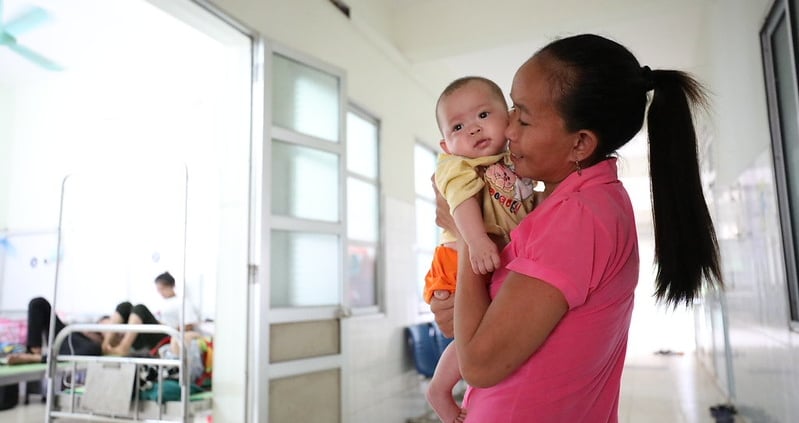
 Human Immunodeficiency Virus/Acquired Immunodeficiency Syndrome (HIV/AIDS) and poverty are closely connected. In Vietnam, significant progress has been made in reducing poverty over the last few years. The number of people living on less than $1.90 a day fell from 37% in 2002 to 1.8% in 2018, and about 10 million people moved out of poverty between 2010 and 2020. However, that progress has not reached everyone equally.
Poverty remains a serious issue for ethnic minority communities, farming families and people living in rural and remote areas, especially in the Midlands and Northern Mountains and the Central Highlands. Many in these communities continue to struggle with low incomes and limited access to education, health care and jobs.
These challenges can be especially difficult for people living with HIV/AIDS, who may face additional costs for treatment and care. In 2022, an estimated 250,000 people were living with HIV/AIDS in Vietnam, and by 2024, that number had grown to roughly 270,000 people of all ages.
Groups Affected by HIV/AIDS
Groups vulnerable to HIV/AIDS in Vietnam include people who use drugs, men who have sex with men, transgender women and female sex workers. One main way HIV spreads is through sharing needles among people who inject drugs. This can occur because clean needles are not always accessible or affordable. A mother can also pass HIV to her child during pregnancy, childbirth or breastfeeding, and hundreds of infants contract HIV this way each year.
HIV and poverty are interlinked, exacerbating each other. People living in poverty often face conditions that increase their risk of HIV infection, including limited access to education, health care, stable employment and prevention services.
In Vietnam, many leave rural communities to find work in cities or across the country’s borders because they cannot earn enough to support themselves at home. These migrants, often young adults, may spend long periods away from their families and support networks. This isolation, combined with economic hardship, can increase their likelihood of engaging in risky behaviors such as unprotected sex, commercial sex or injecting drugs.
Many women who migrate to urban areas for work may turn to sex work as a way to earn money. Meanwhile, men employed as truck drivers or construction workers may also face situations that increase their exposure to HIV.
As health declines, individuals may be unable to work, resulting in income loss while medical expenses increase.
HIV/AIDS not only impacts individuals but can also trap entire families in a cycle of poverty that is difficult to escape. Relatives may reduce their working hours or leave jobs to care for a family member living with HIV. If the person dies, funeral expenses and the loss of a wage earner can create additional financial hardship. Some households must use savings, sell productive assets or take on debt just to survive. These financial pressures can continue for years, affecting children’s education, nutrition and future opportunities.
Fear of discrimination remains a major barrier to ending HIV/AIDS in Vietnam, discouraging many people from getting tested or seeking health care and support services.
Addressing HIV/AIDS in Vietnam
To address these barriers, several organizations support the fight against HIV/AIDS in Vietnam; among them is LightHouse, also known as Hai Dang. This community-based organization has supported people living with HIV and other vulnerable communities since 2004, with a particular focus on the LGBTQ+ community.
Through education programs and community communication campaigns, Hai Dang works to increase awareness about HIV prevention, reduce stigma and provide accurate health information.
For example, it supported campaigns such as the K=K communication campaign from 2018 to 2022. This campaign aims to spread accurate information about HIV treatment and reduce stigma toward people living with HIV. The campaign explains that people living with HIV who take their medication as prescribed and maintain an undetectable viral load cannot transmit HIV through sexual contact. Hai Dang supported the campaign by connecting with communities, organizing events and sharing information through social media.
A major part of the organization’s work involves connecting individuals with health care services through its Hai Dang Clinic, which provides the following:
- General health check-up package
- HIV counseling, screening and prevention package – pre-exposure prophylaxis (PrEP)
- HIV post-exposure prophylaxis (PEP) counseling, examination and treatment package
- STIs service package
- Screening and counseling services
Conclusion
Organizations like Hai Dang show how community support can make a difference in preventing HIV/AIDS in Vietnam and reducing its wider impact on people’s lives. Its work also helps address the stigma and fear that often stop individuals from seeking services. By creating safe and welcoming spaces, it makes it easier for people to access health care, stay healthy and avoid the financial struggles that can come with untreated HIV.
– Daniela Escobar
Daniela is based in Huntington Station, NY, USA and focuses on Good News for The Borgen Project.
Photo: Flickr

Futbol Mas: Social-Sport Methodology to Promote Equality
Introduction to the Organization
Founded in 2008, Futbol Mas (Football and More) was created to foster five fundamental values of respect, joy, responsibility, creativity, and teamwork represented by the Green Card. Formed in the Metropolitan Region, the nongovernmental organization (NGO) was founded by Guillermo Rolando Vicente, Rodrigo Abarzúa Molina, Juan Araya Ariztía and Victor Gutierrez Rojas to promote well-being for children facing social vulnerability. The organization teaches community leaders and young families to take care of their emotional and physical health through a social-sport methodology. Since its founding, the program has positively impacted the lives of more than 51,000 children across Chile’s 13 regions.
The NGO’s first international experience came in Ecuador in 2013, with later expansion occurring the following year in Haiti, where more than 1,200 children still actively participate in social-sport programs. Additionally, success continued in Kenya in 2016 as part of Futbol Mas’s first development into Africa. Expansion into the European continent began in 2018 as social-sport workshops were set up at refugee centers in Paris to support roughly 800 migrant children from more than 14 countries. The international nature of these workshops meant language and cultural barriers posed a potential hurdle, but through collaborations with local organizations and communities, Futbol Mas has instituted its methodology worldwide.
Specific challenges that expansion has helped address include COVID-19 lockdowns and natural disasters. In 2020, the NGO adapted to pandemic issues through urban camps in Spain that involved children from more than 14 countries, pursuing community engagement as well as respect and teamwork as part of its five values. Additionally, working in Mozambique in 2021, Futbol Mas collaborated with the United Nations Children’s Fund (UNICEF) to help more than 200 members of internally displaced communities impacted by Cyclone Eloise and Cyclone Idai.
UNICEF Collaborations
In addition to partnerships with UNICEF in Mozambique, earlier collaborations between Futbol Mas and UNICEF occurred during the COVID-19 lockdown as part of an online program called ‘#MiCasaMiCancha.’ Translating in English into ‘#MyHouseMyCourt,’ the program promoted taking care of family members, children and the local community through daily exercise, healthy eating and other hygienic practices. To mitigate the spread of disease and support self-care during times of isolation, this nine-week initiative distributed socio-sports materials online to provide at-home challenges. Designed to stimulate young minds, this program was available worldwide to involve young children in reading and collaboration, connecting the local Chilean initiative to the rest of the world. Similar ideas of respect for different regions were also shared between Futbol Mas and UNICEF during its ‘América Nos Une’ campaign during the 2015 Copa América football competition.
Furthermore, in 2023, Futbol Mas worked with UNICEF and the municipality of Viña del Mar to create a ‘Soccer Match’ for Children. This program supported children from local Viña del Mar schools who were impacted by the Dec. 2022 fires which destroyed more than 200 homes. By providing psychosocial support, this socio-sport program mitigated risks of isolation by coordinating community bonding and creating protected spaces for young children to learn and grow. This illustrates how Futbol Mas supports communities across both health and natural disasters, ensuring that all children are supported by the environment in which they grow up.
Other Collaborations
A third issue Futbol Mas has focused on is children in internally displaced camps (IDP). Collaborating with UNICEF MENA (Middle East and North Africa) and Mercy Without Limits, this 2023 program worked to protect displaced children and families in Syria. With more than 2,000 children involved with a roughly 50% split between girls and boys, the project known as ‘Sport for Child Protection and Emergency Response in Northwest Syria’ promoted gender equality and empowered young people through its socio-sport methodology. The program also teaches trust and conflict resolution, overcoming language barriers through a shared vision and building community around engagement and recreation.
Through training Syrian humanitarian professionals and providing interactive learning adapted to the specific challenges of the region, all trained professionals passed the practical test while 83% passed the written test. This not only proves the success of the training program but also illustrates how Futbol Mas supports career and skills development in impoverished and disaster-impacted regions.
Conclusion
Overall, Futbol Mas has supported the growth of new local initiatives through its socio-sport methodology, using football as the backbone for community engagement and to address children’s rights. By promoting emotional development and inclusion, the Chilean-based program continues to support youth impacted by war, poverty, health issues or natural disasters. As the initiative continues to adapt across the world, Futbol Mas has overcome language barriers and collaborated with international organizations such as UNICEF or Mercy Without Limits to address the specific challenges facing local children. Furthermore, well-being also improved in countries such as Chile, Peru and Mexico, where Futbol Mas’ 2025 Global Report found regional improvements in mental health, alongside increased physical activity and reduced sedentary behavior among participating children and youth. In the future, it is certain to benefit thousands more children and communities around the world.
– Niamh Werner
Photo: Flickr
Bilingual Education in South Africa Reducing Systemic Poverty
Poverty and Inequality in South Africa
In 1994, South Africa officially became a democracy. After centuries of white minority rule rooted in colonialism, every South African citizen received the right to vote. Apartheid laws, designed to maintain economic inequality based on race, were lifted, and the nation entered a new era. However, despite the promise of democracy, systemic inequalities from years of oppression remained, making South Africa one of the most unequal countries in the world. As of 2023, 37.9% of South Africans lived below the national poverty line, down from 46.7% in 2015. Of those in poverty, the majority live in regions that suffered the most from Apartheid regulations or ancestral homelands, and most of them are Black.
Access to education is a key metric for determining poverty due to its pivotal role in shaping futures. Higher levels of education increase the likelihood of achieving better-paying jobs and living above the poverty line. In South Africa, the quality of education mirrors the pattern of poverty. Schools in former Apartheid regions are underfunded, lack resources and pose dangerous environments for students due to improper infrastructure. Education is partially determined by lineage, with Black students receiving fewer opportunities and resources than their white counterparts, perpetuating inequality and poverty in ancestral South African regions.
Bilingual Education in South Africa
Colonialism has significantly impacted South Africa’s education system. In poor regions such as Limpopo, 91% of students cannot read for meaning, while 85% cannot in the Eastern Cape. Of 100 students who start school, only 14 go on to university. These low success rates make escaping poverty nearly impossible without serious, systemic reform.
The implementation of bilingual education offers a powerful solution. After completing Grade R and the first three grades, South African students are expected to study entirely in English. Studies suggest successful study in a secondary language requires six to eight years of preparation, yet grade four students must make the jump to English. As a result, South Africa’s learning gap emerges in grade four, where 81% of learners struggle to read for meaning. Using this evidence, the South African government initiated bilingual education through the Basic Education Laws Amendment (BELA) and Mother Tongue-Based Bilingual Education (MTbBE) Acts, implemented in 2025.
BELA and MTbBE
Under the BELA act, several educational reforms are listed. The act seeks to promote inclusive learning by regulating and empowering educators and students. Policies require Grade R to create a more equal foundation for all students, the government to control educator appointments, language-based discrimination to be banned, and schools to revise their language policy every three years. The MTbBE act, while covering less ground, is one of the most essential educational reforms in South African history. It requires instructors to use multiple languages during instruction to prevent comprehension issues beginning in grade four. Additionally, it calls for increased training for instructors to better prepare them for bilingual instruction.
These acts together make bilingual education a regulated and influential resource to increase opportunities and educational quality for all students. They aim to make education more equal by allowing all South African students to learn in a language comfortable to them, rather than just the white minority.
Expanding Equality with Bilingual Education
Bilingual education in South Africa has proven its capacity to improve learning outcomes. Students who learn in multiple languages are more likely to retain comprehension of both languages, have increased vocabulary levels and perform better on standardized assessments. The opportunity to learn bilingually reveals the oppressive history of English-centered education and its role in maintaining economic inequality. Including instruction in students’ native languages offers a way to fight this inequity. Bilingual education is not only a way to combat systemic poverty but also the lasting impacts of colonialism. It improves learning and future outcomes among impoverished South Africans and offers potential to break the cycle of poverty rooted in colonial rule and Apartheid-era policy. Bilingual education is a key part of building a more equal future.
– Aubrey Wallen
Photo: Flickr
Growing Climate Resilience in Kiribati and Vanuatu
This effort has drawn support from global organizations such as the World Health Organization (WHO) and the International Federation of Red Cross and Red Crescent Societies (IFRC), along with government agencies from South Korea and the European Union. Together, they have taken a range of steps to strengthen climate resilience in Kiribati and Vanuatu.
Changing Climate in Kiribati and Vanuatu
Small, developing island nations like these contribute little to global emissions. According to the IFRC, Kiribati and Vanuatu together produce just 0.02% of global emissions, yet they face some of the most severe consequences of a warming climate. In 2025, Vanuatu’s gross domestic product was $1.35 billion, while Kiribati’s was $350 million. None of Kiribati’s 33 islands rise more than four meters (about 13 feet) above sea level at their highest points, leaving them vulnerable to flooding and saltwater intrusion. Rising seas also make drought more common.
These nations rely heavily on the sea for food and income, particularly fishing. When ocean temperatures rise, however, fisheries suffer, as has been the case in Vanuatu. Increasingly severe storms have also damaged food supplies. In 2015, Cyclone Pam destroyed much of Vanuatu’s food crop — an estimated 96%. Many families in these nations live in extreme poverty and cannot afford enough food. As food scarcity worsens, so does malnutrition among the most vulnerable. Damage to infrastructure also reduces tourism, cutting island-wide income and further straining the economy.
With a population of around 135,000, Kiribati recorded about 4,000 displacements from natural disasters across 2023 and 2024, according to the nation’s 2024 household income and expenditure survey. More than a quarter of the population reported either damage to their homes or a sharp drop in agricultural output. These figures underscore the urgency of climate resilience efforts in Kiribati and Vanuatu.
Recent Climate Resilience in Kiribati
In 2021, the Korea International Cooperation Agency (KOICA), part of the Government of the Republic of Korea, provided $6 million to the WHO and the Kiribati Ministry of Health and Medical Services to drive the Te Mamauri project.
Te Mamauri aimed to improve conditions at health centers, schools and other public buildings on Marakei, one of Kiribati’s outer islands. Because the outer islands are especially exposed to natural disasters, their health care systems have suffered. Over four years, the WHO installed solar lamps at health centers to provide reliable lighting, as many had lacked a sufficient power supply.
Environmental health teams also inspected water systems at schools and other community sites, repairing faulty pipes to improve Marakei’s water access during droughts. By the project’s close in 2025, the WHO reported that 800 health workers benefited directly, with further effects reaching across the outer islands.
Coming Together
In 2025, the IFRC joined the Vanuatu and Kiribati Red Cross Societies to launch a locally led climate resilience program funded by DG Clima, the European Union’s climate action department. The program emphasizes local participation and community knowledge. Vanuatu Red Cross Secretary-General Dickinson Tevi said a risk-assessment process would guide the partners toward “risk-informed solutions to the challenges” their communities face.
The program follows a risk-informed, ecosystem-based approach intended to remain effective and adaptable across both nations. Community members and volunteers help identify local risks and set priorities, including island-council climate policies, integrated climate-and-health assessments, and broader efforts to build safety and resilience across the Pacific.
The IFRC reports that the approach has encouraged collaboration both between the two nations and among local residents, supporting their capacity to act and, in turn, advancing poverty reduction. The IFRC has also said it plans to expand the program to Belize and Guyana.
– Aren Lau
Photo: Unsplash
Being Poor in Madagascar: The Poverty Paradox of a Nation
Government Instability and Infrastructure
Since gaining independence in 1960, Madagascar has remained an impoverished nation despite a wealth of natural resources. A consistently fragile governmental system has resulted in little investment in developing the nation’s infrastructure. Accusations of corruption have been a constant issue surrounding the country’s governance, with Madagascar ranking 148th out of 180 countries on the Corruption Perceptions Index in 2025.
Frustration over failures to provide basic amenities like water led to nationwide protests in 2025, when the youth movement Gen Z Madagascar demanded the removal of President Andry Rajoelina. Rajoelina fled the country and was impeached, and the military then seized power. Despite this, Madagascar remains one of the poorest countries in the world. With a gross domestic product (GDP) per capita of about $550 and inflation rates of more than 8%, the sluggish economy is reflected in the nation’s underdeveloped infrastructure.
Madagascar’s poor quality of road networks is an area where this underdevelopment is stark. Both national and local roads are mainly dirt tracks, with more than 17 million rural residents not living within two kilometers of an all-season road. This creates issues for those in rural communities accessing essentials such as water, as well as reducing Madagascar’s agricultural productivity. National electrification also remains low, with only 36% of the population connected to electricity, and those connected facing consistent issues. The consequences of this electrical instability have seen production costs rise, as well as businesses unable to expand.
Food Insecurity
In Madagascar, about three-quarters of households rely on agriculture to survive. However, recurrent climate shocks have drastically reduced agricultural production, with rural communities in the southern region experiencing the worst effects. Scarred landscapes have been further damaged by drought, destroying rain-dependent crops.
Frequent cyclones and flooding in the southeastern regions have had similarly devastating consequences. Frezina Iarina, a 30-year-old mother from a remote village in Madagascar, has felt these consequences firsthand, as the European Commission documented her struggles in 2024. Iarina had to work 10 hours a day as a laborer, being paid four cups of rice, after losing her small plot of land to Cyclone Freddy in 2023. She told of how a diet of only rice and cassava had led to three of her youngest children showing signs of malnutrition. This resulted in them having to be fed fortified peanut paste by members of Action Contre la Faim, one of the European Union’s humanitarian partners.
These events, combined with limited market access, mean that roughly 1.7 million people in Madagascar are facing high levels of food insecurity. With nearly 40% of children under five affected by malnutrition, many of them are also being denied an education, as they are required to work in fields alongside their parents.
Aid and Being Poor in Madagascar
A handful of organizations are providing humanitarian assistance to try to relieve some of the suffering that being poor in Madagascar creates.
Future Outlook
Despite the current situation in Madagascar remaining bleak, with nearly 1.9 million people assisted by WFP in 2025, there is hope that the future does not have to be. Rural development, through improving both the country’s road systems and farming methods, can ease the pressure on urban labor markets. However, both internal systemic change and help from outside governments and organizations are needed.
There is evidence that these changes are already taking place, with the government promoting agro-ecology through drought-resistant seeds. Continuation of these practices can help to finally reduce poverty and potentially free Madagascar from this decades-long paradox.
– William Snow
Photo: Flickr
Locally Led Humanitarian Aid in Nigeria
The Humanitarian Reset
On July 14, 2026, Nigerian Minister of Humanitarian Affairs and Poverty Reduction, Bernard Doro, opened a humanitarian transition workshop led by the government in collaboration with the U.N. and other development partners. In his remarks, he described a “profound reset” underway across the global humanitarian sector, with Nigeria among the countries leading the transition.
The global Humanitarian Reset is not just a rhetorical or political slogan. Launched in 2025 in response to shrinking funding and growing humanitarian needs, the initiative aims to reshape how organizations coordinate and deliver aid. It seeks to strengthen national leadership rather than rely on a system in which international actors coordinate much of the relief response in developing countries, redefining the role of international counterparts as financial and technical partners.
This change of strategy has acquired urgency following the shift in United States (U.S.) foreign aid policy under the Trump administration. The European Parliament reported that the U.S. disengagement from international humanitarian assistance, including the termination of up to 83% of programs administered by the United States Agency for International Development (USAID), disrupted operations for international NGOs and U.N. agencies.
Funding Cuts
For Nigeria, this shift comes at a pivotal time. Conflict for 16 years in the northeastern regions of Borno, Adamawa and Yobe, combined with the country’s vulnerability to natural disasters, has left millions of people dependent on humanitarian assistance.
Vulnerable countries have relied heavily on the U.S. for humanitarian aid, particularly for food security and disaster relief, so the funding shift has posed a significant challenge for humanitarian work worldwide. The U.N. Resident and Humanitarian Coordinator in Nigeria, Mohamed Malick Fall, told Reuters that funding dropped by nearly half in 2025 compared with the previous year, slowing response efforts and life-saving assistance. Of the $516 million needed in 2026, only $255.5 million has been secured. Global aid cuts leave vulnerable families with fewer resources to cope with shocks such as conflict, disease or natural disaster, increasing the risk of long-term poverty.
Humanitarian Crisis
The scale of the humanitarian crisis compounds the funding gap. In the northeastern states affected by the conflict that erupted after the Boko Haram insurgency in 2009, an estimated 5.9 million people will require humanitarian assistance in 2026. According to the U.N., more than 90% of the population in northern rural areas already lives below the poverty line.
Ongoing conflict and insecurity have displaced more than 3.5 million people in Northern Nigeria, disrupting local agricultural activity and worsening food insecurity and malnutrition. Devastating floods have compounded the crisis, further pushing vulnerable families into severe poverty and stripping them of their livelihoods and land. World Bank data shows that 87% of internally displaced people in northeast Nigeria live in poverty, illustrating the link between displacement and poverty.
In 2026 alone, an estimated 35 million Nigerians are projected to suffer from acute food insecurity, while three million children risk suffering from acute malnutrition. As a direct consequence of a shrinking budget, only 600,000 of the 2.5 million people targeted for urgent aid between January and March 2026 actually received assistance — a mere 22.1%. Against this backdrop, locally led humanitarian aid in Nigeria is becoming increasingly important in helping affected communities recover.
Success of Localization
Given this funding gap and the ongoing crisis, the transition to localization has become a practical necessity, and the strategy is already showing results. According to the Nigeria Humanitarian Fund — established by the United Nations Office for the Coordination of Humanitarian Affairs in 2017 — national NGOs received a record 70% of direct allocations in 2025. By bypassing heavily bureaucratized international intermediaries, localization allows for faster aid delivery.
Local civil society organizations often bring cultural literacy and a deep-rooted understanding of the communities they serve, helping them navigate local dynamics that international actors may not fully grasp. National NGOs like the Lake Chad Peace and Development Initiative, which works with war-torn rural communities in Yobe State to access basic services, helped more than 40,000 emergency-affected children in the northeastern states gain access to education through a network of 350 local volunteers, demonstrating the reach of local initiatives.
Transitioning from an internationally led humanitarian response to a nationally led one will require navigating a complex bureaucratic landscape and maintaining rigorous financial accountability, but the reset represents a historic opportunity. The growth of locally led humanitarian aid in Nigeria can help offset the broader decline in international humanitarian funding. This strategy is not just about doing more with less; it is about building a resilient, self-sufficient and locally led system that gives Nigerians the tools to recover from crisis and fight poverty.
– Mateo Montes Asturias
Photo: Pexels
Vocational Education Training Centers in Pakistan
The program not only accommodates youth who have not received formal education but also serves as a bridge between classrooms and the real world. It ensures an efficient transition into the job market by equipping one with the necessary skills. The official government site states that as of now, the country has 322 vocational centers and 41 technical colleges to go along with it.
Further Development of the Ideology
The vocational institutes offer options in multiple fields like computer applications, web design and professional cooking alongside many others. Online registrations and portals have led to an increase in enrollment up to 14,000 as statistics on the official government site showed.
The TVET sector receives additional funding from the European Union, and the United Nations Educational, Scientific and Cultural Organization (UNESCO) has created a separate website for TVET to store its documents and research. Pakistan has a large capability for development due to its very young population, mostly under 30, which allows for an excellent opportunity to create a skilled labor force.
Relation and Connection of the Overseas Departments
The vocational education training centers in Pakistan also correspond with the Overseas Employment Corporation to provide maximum benefit to the country’s population. Their motive is “To be Pakistan’s most trusted gateway for safe and dignified overseas employment” alongside offering vocational opportunities, allowing for an interesting blend of skills and output, letting Pakistanis earn a living globally.
The Overseas Pakistan Foundation has also been actively working on launching vocational training programs since 1980 in several locations throughout the country. It has managed to train 60,000 students in multiple technical fields. However, the program closed until 2013, when it reopened it with a newfound purpose. It then offered training in two skills: Electricity and Refrigeration & Air-Conditioning.
Opportunities for Women
Vocational education training centers in Pakistan also serve as a route for underprivileged women to take when formal education is not available. Grow Foundation offers free courses for women while providing state-of-the-art facilities and tools. Multiple fields ranging from traditional handicraft making to computer training form the basis of the courses. This offers women a fair chance to learn skills which will allow them to earn high salaries like their male counterparts.
The Women Development Department Punjab oversaw a project to create more chances for women to learn skills through vocational centers and aimed to develop diverse skills in aspects of housekeeping so that they could earn their own keep and uplift themselves. It also placed a special emphasis on the rights and on raising the socio-economic importance of women in society.
Effect on Poverty
Vocational education has allowed many people to grow out of poverty by ending the repetitive cycle of education and then economic inactivity by providing valuable skills which lead directly to higher economic stability. These informal centers also act as a release from poverty for many due to their higher accessibility and flexible hours. Pakistan Children Relief mentions the uprising of vocational education training centers in the most remote province of Pakistan where education is mostly scarce.
As SOS Children’s Villages Pakistan states that Pakistani youth require these institutes to provide a guided platform and mentorship to steer them away from falling down the path of poverty. It also aids them in their outlook by providing highly sought after certifications in the technical sector. These programs also allow them to create important connections allowing for a helping hand out of poverty.
Future Outlook
Although Pakistan still largely faces unemployment and a lack of opportunities, these centers can be the future of the nation to provide accessibility to skills without formal education, which may be difficult to afford for many. Through future investment plans and the implementation of technology in these institutes, these institutes may achieve a new phase of development.
– Eshal Fatima
Photo: Wikimedia Commons
Child Labor in Burkina Faso: What is Being Done to Help
Sections of Child Labor
The largest section of child labor is agriculture, specifically within the cotton production system. While the livelihood of these families is a factor that contributes to higher rates of child labor, Burkina Faso shows a division stemming from rural versus urban neighborhoods. Those living in rural neighborhoods are increasingly susceptible to child labor as they face increased challenges to education access and the necessity of working on family farms.
Cotton farming requires intensive labor with long hours of physical work in high temperatures, insufficient pay, rest or nutrition. Economic need largely motivates the high rate of children working in cotton production or agriculture. A report published in Frontiers in Public Health points to the sector’s importance to the country’s economic development, citing the financial benefits from cotton production and sales.
A lack of education, finances and alternative employment options in the rural communities contributes to the many children forcibly working in these cotton factories. The percentage of rural children involved in child labor is more than double urban children, sitting at 42.5% of ages 5 to 14. Each policy and initiative in place aims to counteract at least one or more of these contributing factors, creating the infrastructure and policy that will provide accessible options for these children and families who are struggling.
Solutions
One of the efforts that Burkina Faso is making to eradicate the issue of child labor is through policy reform and law enforcement. To counteract the contributing factors of lacking education and alternative employment, “the minimum age of employment and compulsory schooling has been set at 16 years.” By implementing this, it holds these agricultural sectors and services legally accountable for the children they forcibly employ, allowing the government and law enforcement to take legal action against these institutions.
Compulsory schooling is a necessary change as it keeps children away from the smaller family farms they work at in the poorer and more rural areas. It helps reduce child labor by keeping children in school while improving their long-term employment options.
The CLEAR Cotton project is an initiative that helps children and families forced into labor in the cotton industry. It works as an integrative approach that meets these children’s basic needs and upholds the legislative framework governing bodies have implemented. The project builds community trust as it also aims to work with these affected local communities.
The International Labour Organization (ILO) brief explains that the project achieves this by expanding economic opportunities in these cotton farm districts. It is a way to directly address the lack of alternative employment opportunities.
Lastly, the newly implemented agencies and organizations demonstrate awareness and reform. The Ministry of Civil Service, Labor and Social Protection along with the Ministry of Humanitarian Action and National Solidarity, are in charge of removing these children from exploitative labor and raising awareness of the situation. The National Coordination Committee for the National Strategy Plan to Combat the Worst Forms of Child Labor (CNC-SN/PFTE) is in charge of defining these strategies on what resources to implement with the former two ministries, working in unison to monitor and implement new efforts.
Along with this, mandatory training equips childcare workers and those in positions of authority to recognize and act when they notice a child is involved with forced labor. This includes but is not limited to, “social workers, health workers, magistrates… [and] school teachers.”
Results
The community directly benefits from the combination of infrastructure the project has created and beneficiaries that will help families financially to resolve their pressing economic issues. The project has established 30 community bodies and five child protection networks in response to the recent efforts. This demonstrates the physical and direct change visible in the country as it moves toward reducing and eradicating child labor.
While child labor remains a significant issue, investing in education and child protection services showcases promising progress. Continued government support and outside assistance could help the country save countless children and provide them with a more hopeful future.
– Angelica Ciaravino
Photo: Flickr
HIV/AIDS In Vietnam: Vulnerable Communities Access Care
Poverty remains a serious issue for ethnic minority communities, farming families and people living in rural and remote areas, especially in the Midlands and Northern Mountains and the Central Highlands. Many in these communities continue to struggle with low incomes and limited access to education, health care and jobs.
These challenges can be especially difficult for people living with HIV/AIDS, who may face additional costs for treatment and care. In 2022, an estimated 250,000 people were living with HIV/AIDS in Vietnam, and by 2024, that number had grown to roughly 270,000 people of all ages.
Groups Affected by HIV/AIDS
Groups vulnerable to HIV/AIDS in Vietnam include people who use drugs, men who have sex with men, transgender women and female sex workers. One main way HIV spreads is through sharing needles among people who inject drugs. This can occur because clean needles are not always accessible or affordable. A mother can also pass HIV to her child during pregnancy, childbirth or breastfeeding, and hundreds of infants contract HIV this way each year.
HIV and poverty are interlinked, exacerbating each other. People living in poverty often face conditions that increase their risk of HIV infection, including limited access to education, health care, stable employment and prevention services.
In Vietnam, many leave rural communities to find work in cities or across the country’s borders because they cannot earn enough to support themselves at home. These migrants, often young adults, may spend long periods away from their families and support networks. This isolation, combined with economic hardship, can increase their likelihood of engaging in risky behaviors such as unprotected sex, commercial sex or injecting drugs.
Many women who migrate to urban areas for work may turn to sex work as a way to earn money. Meanwhile, men employed as truck drivers or construction workers may also face situations that increase their exposure to HIV.
As health declines, individuals may be unable to work, resulting in income loss while medical expenses increase.
HIV/AIDS not only impacts individuals but can also trap entire families in a cycle of poverty that is difficult to escape. Relatives may reduce their working hours or leave jobs to care for a family member living with HIV. If the person dies, funeral expenses and the loss of a wage earner can create additional financial hardship. Some households must use savings, sell productive assets or take on debt just to survive. These financial pressures can continue for years, affecting children’s education, nutrition and future opportunities.
Fear of discrimination remains a major barrier to ending HIV/AIDS in Vietnam, discouraging many people from getting tested or seeking health care and support services.
Addressing HIV/AIDS in Vietnam
To address these barriers, several organizations support the fight against HIV/AIDS in Vietnam; among them is LightHouse, also known as Hai Dang. This community-based organization has supported people living with HIV and other vulnerable communities since 2004, with a particular focus on the LGBTQ+ community.
Through education programs and community communication campaigns, Hai Dang works to increase awareness about HIV prevention, reduce stigma and provide accurate health information.
For example, it supported campaigns such as the K=K communication campaign from 2018 to 2022. This campaign aims to spread accurate information about HIV treatment and reduce stigma toward people living with HIV. The campaign explains that people living with HIV who take their medication as prescribed and maintain an undetectable viral load cannot transmit HIV through sexual contact. Hai Dang supported the campaign by connecting with communities, organizing events and sharing information through social media.
A major part of the organization’s work involves connecting individuals with health care services through its Hai Dang Clinic, which provides the following:
Conclusion
Organizations like Hai Dang show how community support can make a difference in preventing HIV/AIDS in Vietnam and reducing its wider impact on people’s lives. Its work also helps address the stigma and fear that often stop individuals from seeking services. By creating safe and welcoming spaces, it makes it easier for people to access health care, stay healthy and avoid the financial struggles that can come with untreated HIV.
– Daniela Escobar
Photo: Flickr
Renewable Energy in Trinidad and Tobago
An Economy Built on Oil and Natural Gas
The twin island nation of Trinidad and Tobago historically relied heavily on oil revenue to support its economy. The country developed the Caribbean’s largest hydrocarbon industry, initially through crude oil production and later through natural gas, liquefied natural gas and petrochemicals. According to the International Monetary Fund (IMF), the energy sector accounted for nearly 20% of gross domestic product, approximately 80% of goods exports and about 35% of central government revenue in 2025.
A Gradual Shift Toward Renewable Energy
Despite its long dependence on oil and natural gas, Trinidad and Tobago has begun building a more diversified energy system. The country aims to generate 30% of its electricity from renewable sources by 2030. It also seeks to reduce greenhouse gas emissions from the power generation, transportation and industrial sectors by 15% compared with projected levels.
With support from the United Nations Development Programme (UNDP), the government drafted a renewable-energy policy and a tariff plan that could eventually allow residents and organizations to supply renewable electricity to the national grid.
Several projects have already brought renewable energy in Trinidad and Tobago into schools and communities. Through the European Union-funded Global Climate Change Alliance Plus initiative, UNDP installed rooftop solar systems at 12 locations, including Brasso Venado Primary School, Speyside High School, the Trinidad and Tobago Red Cross Society and Nature Seekers.
By July 2024, the initiative had installed 108 kilowatts of solar capacity, trained 92 people to operate and maintain the systems and introduced more than 10,000 people in both rural and urban communities to renewable energy.
Renewable-energy projects can also create local economic opportunities. They create paid work, build usable technical skills and improve access to reliable electricity. Solar farms employed approximately 300 skilled and unskilled workers many from rural communities providing income and experience in a rapidly growing industry. Separately, solar systems employed at schools and community organizations improve educational outcomes by introducing electricity necessary for technological educational tools. These projects address important drives of poverty by expanding employment opportunities and strengthening workforce skills along with supporting reliable community services.
These developments show how the country’s energy transition is expanding from small community installations to national electricity production. Smaller projects, however, offer the clearest view of how renewable energy can affect daily life.
Solar Power at Brasso Venado Primary School
At the Brasso Venado Government Primary School, renewable energy in Trinidad and Tobago is supporting a rural community where unreliable electricity has created challenges for teaching and communication.
Located near the center of Trinidad, the school serves children from Brasso Venado, Los Atajos and Tabaquite. An EU project profile reported that frequent power outages and the absence of wired telephone service complicated internet-based learning and communication with parents.
Despite these limitations, the school arranged private internet access and helped parents develop the technical skills needed to support their children’s education. At the time of the profile, the school enrolled 42 students between ages 5 and 13 and employed nine staff members.
Through the EU-funded Global Climate Change Alliance Plus initiative, the school received a 10-kilowatt rooftop solar system designed to generate an estimated 16,780 kilowatt-hours of electricity each year.
The project aimed to provide more reliable power for technology-based teaching, school programs and communication with families. The installation also gave students and residents a visible example of how solar energy can support education and community development.
A Model for Wider Change
For students at the Brasso Venado Primary School, the solar panels represent more than a new source of electricity. They demonstrate how renewable energy can support education, improve access to technology and strengthen essential community services.
Across developing nations, similar projects can bring more reliable power to schools and other institutions that face limited infrastructure or frequent outages. Brasso Venado offers a hopeful example of how a relatively small renewable-energy investment can create lasting opportunities for children, families and communities.
– Dimitri Moschochoritis
Photo: Wikimedia Commons
7 Facts About Mental Health in Guinea-Bissau
7 Facts About Mental Health in Guinea-Bissau
Looking Ahead
Improving mental health in Guinea-Bissau will require continued investment in services, trained professionals and stronger health systems. Recent initiatives show that work is already taking place. UNICEF, WHO and Interpeace have supported mental health and psychosocial training, while the World Bank’s Human Capital Project is investing in the country’s health and social service workforce.
Guinea-Bissau’s participation in the WHO African Region’s 2026 Mental Health Intercountry Learning Workshop provides another opportunity for the country to learn from regional experiences and contribute to plans for strengthening mental health systems ahead of the region’s 2030 targets. Together, these initiatives could help expand the country’s capacity to respond to mental health needs over the coming years.
– Aniya Akram
Photo: Wikimedia Commons