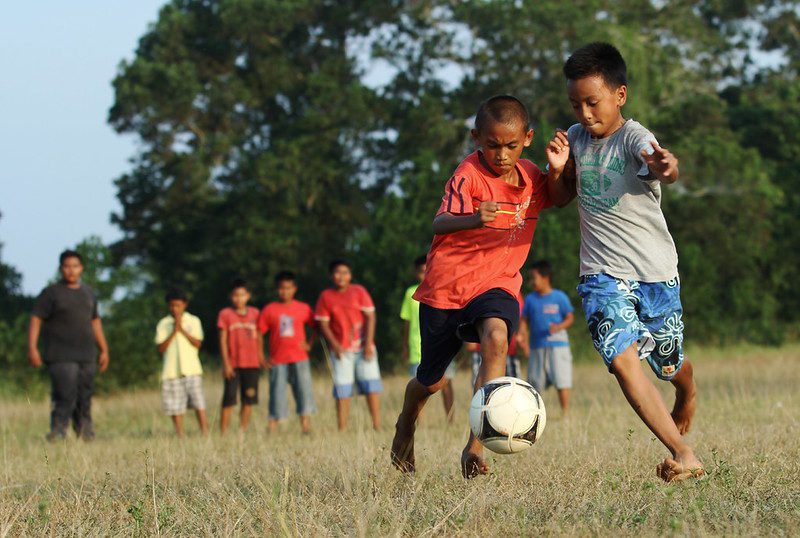
 Malaysia has a population of around 36 million, of whom 5.8% live below the poverty line. To tackle poverty, Malaysia has many youth-led projects which are vital, as young people are not only the leaders of tomorrow but also the key players in change today.
These initiatives allow young people to gain experience applicable to future employment, provide pathways out of poverty, and offer a way to be influential in the long-term, as young leaders are not just focused on themselves, but also the generations yet to come.
Youth Empowerment Foundation in Malaysia
The Youth Empowerment Foundation (YEF) is an NGO working in Malaysia with the aspiration to eradicate poverty, improve education, create pathways into employment, reduce inequalities, and ensure these changes endure in the long run. Its work is highly successful, with more than 8,000 people benefiting from assistance within community projects, helping them all move toward a better future.
Its Youth Empowerment Program provides education to Malaysia’s most vulnerable young people, such as orphans. The program also teaches technical skills that young people will need as they enter the workforce.
The SPARK, IGNITE, BLAZE system in place allows for a well-rounded education to Malaysian youth. SPARK delivers skill-based training, including computer skills, English language, Islamic knowledge, and finance management. These skills open employment to more people and influence young leaders in Malaysia. IGNITE develops an individual’s personal growth, guiding them toward their employment roadmap, reviving confidence in their skills, and improving transferable skills, such as time management. BLAZE promotes youths’ community engagement, helping strengthen relationships and drive youth-led change within communities.
Overall, YEF’s work creates positive change in the lives of Malaysian youth and opens up opportunities, such as quality education, that previously were denied to those in poverty. This creates a better future, and long-term opportunities open doors that were once shut to young leaders in Malaysia.
ASEAN Youth Dialogue
In 2025, Kuala Lumpur, Malaysia’s capital, hosted the Fourth ASEAN Youth Dialogue. The event helps participants understand why youth-led change matters now, not later, and gives young people the opportunity to share their opinions on issues critical to their lives, such as sustainable businesses.
ASEAN aims to continue highlighting that young leaders in Malaysia, as well as Singapore and Brunei Darussalam, is the way to achieve the Sustainable Development Goals (SDGs) and create a sustainable future for everyone. The event featured a series of sessions where young people engaged with social issues and developed solutions. The dialogue concluded with the ASEAN Youth Resolution, a document that summarizes everything participants discussed.
The ASEAN Youth Dialogue centers on the idea that youth-led change is a matter of now, not later. Decisions today affect those under 30 more than anyone else, so empowering them to control their future is the best way to ensure a positive outcome.
HopesMalaysia
HopesMalaysia is an NGO set on giving young people tools to tackle inequalities, especially because of the persistence of poverty in rural areas. Young people, aged between 15 and 30, work closely in rural areas such as Sabah, to support sustainable farming, building of small businesses and gravity-fed water systems that remain clean. This empowers people in poverty to live more self-sufficiently, as well as putting young people at the top of long-term, sustainable change.
This work has played an important role in Malaysia, helping 40% of farming families increase their household income, rebuilding five suspension bridges, and implementing 200km of gravity-fed water systems in 30 villages. These achievements highlight the influence of young leaders in Malaysia, who are already positively impacting thousands of people.
Takeaways
Overall, these three initiatives, aiding youth empowerment in Malaysia, show the significance of recognizing that young people need opportunities to take action for their futures now, not later. When young people have that opportunity, they create real, long-term change.
Youth-led change not only increases young people’s employability and access to education, but also inspires people of all ages to live self-sufficiently and build lives outside of poverty. It shows that, when given the chance, young people seize opportunities; they simply need access to them.
The main takeaway is that when young people have the chance, youth-led change produces sustainable, long-term solutions to poverty, especially in rural areas of Malaysia.
– Caitlin Cooper
Caitlin Cooper is based in Aberdeen, Scotland and focuses on Global Health and Politics for The Borgen Project.
Photo: Flickr

Proactive Poverty Reduction in China
With 90% of the country’s poverty concentrated in rural areas, providing effective welfare faces many obstacles. The Chinese government has stepped up to this task, creating a focused policy mechanism. This initiative, officially known as a regular mechanism for dynamic monitoring and targeted support to prevent a relapse into poverty (often abbreviated as SHIELD), embodies a proactive poverty reduction strategy in China.
This method of proactive poverty reduction has proven incredibly effective, offering a global model for safeguarding populations of any size. To achieve this, the SHIELD mechanism breaks down its approach into three core areas: dynamic monitoring, precise identification and targeted support, all funded and staffed by a multi-departmental effort.
Proactive Poverty Reduction in China
Impact and Effort
The SHIELD policy represents a major government priority, backed by substantial investment. The Ministry of Agriculture and Rural Affairs leads the effort, with support from most other government departments, including health and education. Since the transition period began in 2021, cumulative government investment in formerly impoverished areas has reached 850 billion yuan (approximately $127.5 billion).
Given the scale of this multi-departmental collaboration, the policy’s impact is evident. Under this system, authorities have identified seven million people as high-risk and are now providing support to them. SHIELD has also helped secure jobs for 33.05 million people, either through employment opportunities or community service roles. In addition, in isolated rural areas, systems established under SHIELD have increased access to safe drinking water to 94%.
The SHIELD policy represents the culmination of a multi-departmental effort and wise allocation of resources. The policy provides a comprehensive and replicable model of proactive poverty reduction in China, with support tailored to citizens’ needs. As a result, it may serve as a global roadmap for poverty alleviation, a goal the evidence suggests SHIELD is already moving toward.
– Eli Thomson
Photo: Flickr
Sudan Refugee Crisis Response Amid Famine and War
Even with the high displacement numbers, there is no current sign of a peace deal that would end the conflict. Displaced Sudanese are fleeing to overwhelmed refugee camps in nearby countries such as Chad, Ethiopia and South Sudan. Organizations and governments are working to accelerate the Sudan refugee crisis response to meet growing demand.
Intervention by Nonprofit Organizations
Because of the conditions in Sudan, a number of nonprofit groups such as the United Nations Crisis Relief, Doctors Without Borders and Save the Children are in the area providing resources. Because of the growing famine, groups are prioritizing food access. For example, Save the Children is providing food, water, shelter and medical services that reach 224,000 Sudanese. While this is already a large number, many more are in need of services.
Proposed Response Efforts
Sudan has experienced conflict in recent decades, including the Darfur War in 2003. Adding resources to the area is considered a strong investment because this is not the first period of displacement that Sudanese people have experienced. Building significant infrastructure in the region would help sustain responses to future crises. From there, governments and nonprofit groups could focus on long-term stability rather than immediate nutrition and medical needs.
The United Nations High Commissioner for Refugees (UNHCR) has developed a strategy it believes will best support the Sudan refugee crisis response. According to the UNHCR, there needs to be a focus on keeping borders open across seven countries to support asylum seekers. The U.N. and various nongovernmental organizations (NGOs) will then implement resources for displaced populations. This will include increased food access, medical care, expanded agriculture, general education and vocational education programs. To establish these programs without straining neighboring countries, the UNHCR has stated that a large investment must be made.
A Way Forward
The largest obstacle is the proposed budget for relief. The UNHCR estimates a need of $907 million to make this plan work. Because the number of displaced people is so large and issues like famine require quick action, significant resources are necessary. The most urgent needs, such as addressing famine, will be addressed with available and incoming resources, while funds can be raised for additional programs.
– Nicole Miller
Photo: Flickr
SDG 14 in South Africa: Fisheries and Sustainability
In South Africa, where unemployment rates are among the highest globally and poverty rates remain widespread, the health of marine ecosystems provides an undeniable economic opportunity. Efforts to protect life below water and reach SDG 14 in South Africa have not only become environmental priorities, but a broader strategy to support livelihoods for all generations.
Marine Resource Management Challenges
South Africa’s marine environment continues to face growing pressure through the exploitation of marine resources, changing weather patterns and plastic pollution. Overfishing remains one of the most significant threats to ocean ecosystems, with 34% of South Africa’s fish stocks either depleted or heavily depleted. Nearly half of South Africa’s marine sources are already fully exploited with another 15% overexploited, putting substantial pressure on key economic species like rock lobster and tuna. Local marine ecosystems are being reshaped along the country’s expansive coastline, driven by changing weather patterns. Fisheries are highly dependent on ecosystem health as the food web drives biodiversity and biomass.
Sardines play a crucial role in the region’s marine food web supporting a large portion of the country’s pelagic fishing industry. However, sardine biomass declined 25% of its historical maximum since 2004 along South Africa’s west coast, significantly impacting fish stocks up the food chain. As populations decline, annual catch quotas are reduced with significant decreases in employment opportunities in fisheries, processing plants and export sectors.
Only 46% of South Africa’s 122 million tons of plastic waste is recycled, leaving an estimated 79,000 tons every year to enter rivers, oceans and the environment. This makes South Africa one of the largest contributors of land-based marine plastic pollution. Beyond plastics, 86% of sewage treatment did not meet safety standards and continues to release effluent contaminants into rivers. These environmental pressures have consequences beyond biodiversity by threatening coastal economies that rely heavily on ocean resources. With unemployment in South Africa reaching around 32%, fisheries and marine tourism provide important sources of income.
How SDG 14 Initiatives Are Combating Challenges
In response to SDG 14, South Africa continues to invest in research and collaboration efforts to improve scientific understanding, expand marine protection efforts, and promote sustainable resource management. Most notably, South Africa has increased marine protected areas from 0.4% to 5.4% of its Exclusive Economic Zone, protecting more than 1.5 million hectares of marine critical habitat.
Researchers at the University of Cape Town play a key role in this effort by tracking ocean conditions to inform fisheries policies. One major initiative is the Marine and Antarctic Research for Innovation and Sustainability (MARIS) program. The Benguela Current system alone supports fisheries valued at more than $1 billion annually, highlighting the importance of research programs such as MARIS in guiding sustainable marine policy. Another key focus is the implementation of ecosystem-based fisheries management in the Benguela Large Marine Ecosystem through three primary objectives:
The nutrient-rich Benguela current supports hundreds of thousands of livelihoods across southern Africa. To ensure sustainable fisheries policies and regulations within the marine park is critical. As Melrus managing director Tomas Kjelgaard states: “It’s very important for us to have a long-term business. If we overfish like they have done in many places during the last 20 years, then we don’t have a business the day after tomorrow.” To protect the livelihoods of future fishermen, continued cooperation between government agencies, local stakeholders and neighboring countries such as Namibia and Angola is essential.
Government-led education campaigns continue to spearhead community-driven initiatives in South Africa. Particularly, coastal cleanup programs removed 111.85 tonnes of waste from beaches and waterways during volunteer cleanup campaigns in 2024 and has employed more than 200,000 volunteers across the country. Additionally, academic programs such as SEAmester have helped train more than 500 students from 15 institutions, supporting next generation of marine scientists and securing employability across the sector.
The Future of South Africa’s Life Below Water
As South Africa continues to strive towards reaching the SDG 14, oceanic health and prosperity are becoming increasingly important toward reducing poverty and supporting sustainable economic development in South Africa. Despite universal challenges of overfishing, the changing climate and pollution, ongoing targeted research, informed policy decisions and community initiatives show that progress is possible. With expanding marine protected areas, stronger fisheries management, and education programs training the next generation of ocean stewards, South Africa is charting a course toward a healthier ocean and stronger coastal communities.
– Alyssa Forget
Photo: Unsplash
Child Marriage in Tajikistan: Multi-Sector Solutions Gain Momentum
Courts Tighten Approval Standards
Some families in Tajikistan use Family Code Article 13, which allows marriage in exceptional circumstances, to arrange child marriages. In 2024, courts rejected 15% more of these requests after the ombudsman became involved. Poverty plays a significant role, with 80% of 17-year-old brides coming from conservative regions like Rasht and Khatlon, where families struggle financially. Enforcement efforts helped 1,200 girls return to school in 2023, and makhalla councils turned down 350 underage marriage requests following new legal reforms.
Education and Health
UNICEF holds theater performances in 300 villages each year, reaching 150,000 people with plays about the health risks and missed educational opportunities linked to child marriage. After these events, surveys show that 68% of parents chose to delay their daughters’ weddings by at least two years. Girls Not Brides trains 5,000 imams to speak against child marriage, reaching two million worshippers each week. As a result of these efforts, local councils now receive 25% fewer underage marriage requests as more elders support delaying marriage.
Additionally, the World Bank’s Adolescent Girls Initiative provides $30 monthly stipends to 50,000 families who keep their daughters in school after age 15. The program has raised secondary school enrollment by 18% in Khatlon and Sughd. Vocational centers train 10,000 teenagers each year in tailoring, agriculture and information technology, and graduates earn 35% more than early-married peers within two years. Child marriage in Tajikistan rates among stipend households fell from 22% in the poorest quintile to 11%.
In the Rasht Valley, mobile classrooms provide evening classes in 120 villages, helping 85% of working girls at risk of marriage at age 14 to finish school. Government scholarships provide uniforms and textbooks to 100,000 at-risk students, raising school retention from 65% to 82% between 2022 and 2025. The program also offers nutritional support, which has lowered anemia rates by 28% among participants through fortified meals.
In 2025, health ministry clinics screened 120,000 adolescent girls for reproductive risks related to child marriage in Tajikistan and distributed 300,000 booklets about health risks. Specialized camps treated 1,100 women for childbirth complications caused by teen pregnancies. Hotlines received 7,500 calls from minors seeking help to escape forced marriages. HIV screening is now part of these programs, reducing mother-to-child transmission rates by 22% among young brides in targeted districts.
Making Progress
From 2017 to 2020, Tajikistan prosecuted 36 cases under Article 168 for child marriage and 27 cases under Article 169 for marrying minors. Officiants can receive up to five years in prison. Following recommendations from the Committee on the Elimination of Discrimination Against Women (CEDAW), authorities increased oversight of nikah ceremonies and rejected 20% more parental petitions that cited cultural tradition. These enforcement steps help Tajikistan fulfill its 2023 Universal Periodic Review commitment to apply the age 18 rule across all 58 districts.
Surveys from the State Statistics Committee show that school dropouts caused by child marriage fell by 8% since the digital marriage registry started in 2023. New agreements with Kyrgyzstan and Uzbekistan now block 90% of duplicate underage marriage applications by using shared databases. Donor-funded mobile registration units also help track child marriage in remote areas like the Pamir and Zeravshan mountains.
Tajikistan is sharing its court protocols for denying underage marriages at Central Asia summits through 2025 and is working to align marriage registration rules with neighboring countries. The Aga Khan Foundation runs 15 safe houses that shelter 900 escapees each year, offering counseling and helping families reunite. Awareness campaigns about child marriage now reach 65% of households. A 2025 poll found that 62% of household heads support marriage after age 20.
Looking Ahead
Tajikistan plans to lower child marriage rates to below 7% by 2030 through court enforcement, financial support, mobile education and community awareness, in line with Sustainable Development Goal (SDG) 5. As more girls finish secondary school and enter the workforce, social norms are shifting. Girls who graduate from secondary school are three times less likely to marry before 18. Tajikistan’s multisector approach could serve as a model for other parts of Central Asia addressing similar challenges.
– Niaz Youssefian
Photo: Flickr
Healing Gaza’s Children: Teachers As Mental Health Workers
Beyond PTSD
Dr. Aneeza Pervez urges psychologists to reflect on how they respond to the suffering of children in contexts of war and extreme violence, arguing that healing Gaza’s children requires psychologists to address the issue openly. She asks whether silence or neutrality in the face of widespread harm is compatible with the responsibilities of psychology, as children in Gaza are individuals entitled to safety, dignity, care and psychological support.
Psychotherapist Teresa Bailey explains that trauma rewires a child’s brain and argues that these children do not suffer from post-traumatic stress disorder (PTSD) but something more severe, because they experience traumatic terror daily.
Red Paint, Silence and Rap
A young girl from Deir al-Balah, a displacement camp in Gaza, used only red in an art therapy session, overcome by memories of violence following repeated bombings. Humanitarian practitioners should track child mental health and protection as a separate priority from wider health clusters because the funding allocated to psychosocial support remains unclear. Training teachers to support and offer pathways for these children to communicate and release their emotions is essential.
Asal al-Ladawi, 9, suffered from traumatic mutism after witnessing the death of her mother in a bombing. However, psychotherapy techniques such as virtual reality programs have aided children like her in finding their voices again and rebuilding a sense of security.
MC Abdul is a teenager who left Gaza and makes music about the ongoing suffering of people there, as well as his family. His song “The Pen & The Sword,” released in 2023, addresses the lost dreams of children living in Gaza.
Teachers as Healers
According to a 2019 report, Mental Health and Psychosocial Support (MHPSS) received only 0.14% of Overseas Development Assistance funding between 2015 and 2017. In Gaza, SOS Children’s Villages provides specialized psychosocial support programs to help integrate children and adolescents through recreational activities. Zoya Thatlgieh of SOS Children’s Villages Palestine stated that when a child opens up to someone they trust, recovery is always possible. According to a report in October 2025, SOS Children’s Villages provided mental health assistance to 30,632 children in Gaza.
Teacher Ahmed Abu Riziq set up schools in tents to bring structure and learning to his pupils. Abu Riziq and his colleagues launched Gaza Great Minds in 2024. By 2025, more than 3,000 students between the ages of 3 and 16 were receiving lessons in tents alongside professional psychiatric support.
In displacement camps south of Khan Younis in the Gaza Strip, more teachers have set up schools in tents. Teacher Abdulsalam explained that these tents have become a line of defense, describing education in the camps as a form of therapy as well as a source of knowledge. Teachers can detect behavioral changes in children and can support the mental health of young people in Gaza.
Hadeel al-Gharbawi, a Palestinian teacher, helps children cope with trauma through yoga practice. These classes allow children to step away from their fears and feel in control, even if only temporarily. The tent also offers educational and other recreational programs for displaced children.
Evidence of Success
Education International member organizations from South Africa, the U.K., Portugal, Italy, Spain and Australia set up a joint initiative to support the General Union of Palestinian Teachers. The project trains hundreds of female teachers across the region and financially assists teachers in Gaza and the West Bank.
Similar programs such as the Syrian American Mental Health Network have delivered and supervised training on Teaching Recovery Techniques to large numbers of children in Jordan, Lebanon and Turkey. The Union of Medical Care and Relief Organizations (UOSSM) has reached more than 50,000 displaced Syrians through school and camp programs, offering telepsychiatry through Yale University.
This demonstrates that teachers trained in basic mental health support can play a meaningful role in healing Gaza’s children.
Looking Ahead
Teachers can become a major lifeline for children in Gaza if they receive training in psychological first aid, helping to reduce the effects of conflict on young people. Healing Gaza’s children requires trained teachers, sustained funding and continued international support.
– Anisa Begum
Photo: Flickr
Poverty and Healthcare in Kenya
Navigating HIV/AIDS in Poverty
HIV/AIDS affects 1.4 million people in Kenya, and 32% of orphanhood stems from HIV/AIDS. This happens due to how widespread HIV is within families, and how it will directly affect the families labor force and overall income. HIV also plays a major role in the health of parents in the family, causing deaths of either one or both parents, leaving more children orphaned. Poverty directly impacts access to antiviral drugs (ARVs) as
the citizens of Kenya rely heavily on donors. In January 2025, the U.S. shut down its USAID, reducing its programs to Kenya from 149 to 30. This massive exit from humanitarian aid has caused many healthcare workers to experience lay offs and forced healthcare facilities to close.
Vitamin Deficiencies in Pregnant Women
In Kenya, many pregnant women have vitamin deficiencies which are due to the limited amounts of nutritional products for maternal health along with overall nutritious foods required during pregnancy. In Kenya, 26% of pregnant women suffer from iron deficiency, creating an anemia rate of 42.6%. Kenya as a whole is facing a drought which is not only affecting their resources, but also the ability for families to have stability which leads to a lot of children in orphanages. Many of the orphans in Kenya have living relatives but widespread poverty leaves them without substantial resources, leading to children being placed in orphanages with the idea that they will live a better life.
Gender Disparities
Only 6% of women have titles to land in Kenya. Although it is a legal right for them to own property, societal norms of discrimination against women have long been the driving factor of them being unable to obtain and keep property. Kenyan women are at risk of being victims of land grabbing, usually in the way of their husbands running them off or abusing them causing them to have to flee. These women are put in vulnerable situations, feeling forced to abandon their children to orphanages, and pushes women to make less than ideal choices, such as prostitution. This can lead to a higher mortality rate, and ultimately leaves many children orphaned.
Available Resources
To help combat these issues, many organizations and campaigns, such as Stand for Her Land and Kenyan Peasants League have started garnering support and finding these depleted resources to help the community. Stand for Her Land has worked on advocacy for women of lesser status and income to exercise their rights on gaining legal access to land. Along with this, the Kenyan Peasants League gathers community-based funding to purchase land for women who had their lands usurped during major land-grabbing times.
Policy Action
The government has now also taken a stronger stance on these issues, one main way being by creating the National Care Reform Strategy for Children in Kenya. This specific act focuses a lot on family based care in society and ensuring that they are provided with the resources to continue in society. However, to break this cycle of poverty as a whole, national and international organizations need to prioritize things such as accessibility to healthcare, enforcing a woman’s right to own land, and overall strengthening child-welfare programs. Changes like these can likely help the livelihoods of not only the children in Kenya, but also the community that exists around them.
Conclusion
In summary, poverty in Kenya has shown to have lasting effects that have caused severe damage to especially the orphaned children of the country. Studies show that there will be long term effects on their overall developmental issues that will likely follow them into their adulthood. In order to properly address these matters, more accessible resources need to be implemented.
– Mansi Sampda, Jessica Norman, Melissa Kronblat and Kalea Mailangi
Photo: Unsplash
Youth Empowerment in Malaysia
These initiatives allow young people to gain experience applicable to future employment, provide pathways out of poverty, and offer a way to be influential in the long-term, as young leaders are not just focused on themselves, but also the generations yet to come.
Youth Empowerment Foundation in Malaysia
The Youth Empowerment Foundation (YEF) is an NGO working in Malaysia with the aspiration to eradicate poverty, improve education, create pathways into employment, reduce inequalities, and ensure these changes endure in the long run. Its work is highly successful, with more than 8,000 people benefiting from assistance within community projects, helping them all move toward a better future.
Its Youth Empowerment Program provides education to Malaysia’s most vulnerable young people, such as orphans. The program also teaches technical skills that young people will need as they enter the workforce.
The SPARK, IGNITE, BLAZE system in place allows for a well-rounded education to Malaysian youth. SPARK delivers skill-based training, including computer skills, English language, Islamic knowledge, and finance management. These skills open employment to more people and influence young leaders in Malaysia. IGNITE develops an individual’s personal growth, guiding them toward their employment roadmap, reviving confidence in their skills, and improving transferable skills, such as time management. BLAZE promotes youths’ community engagement, helping strengthen relationships and drive youth-led change within communities.
Overall, YEF’s work creates positive change in the lives of Malaysian youth and opens up opportunities, such as quality education, that previously were denied to those in poverty. This creates a better future, and long-term opportunities open doors that were once shut to young leaders in Malaysia.
ASEAN Youth Dialogue
In 2025, Kuala Lumpur, Malaysia’s capital, hosted the Fourth ASEAN Youth Dialogue. The event helps participants understand why youth-led change matters now, not later, and gives young people the opportunity to share their opinions on issues critical to their lives, such as sustainable businesses.
ASEAN aims to continue highlighting that young leaders in Malaysia, as well as Singapore and Brunei Darussalam, is the way to achieve the Sustainable Development Goals (SDGs) and create a sustainable future for everyone. The event featured a series of sessions where young people engaged with social issues and developed solutions. The dialogue concluded with the ASEAN Youth Resolution, a document that summarizes everything participants discussed.
The ASEAN Youth Dialogue centers on the idea that youth-led change is a matter of now, not later. Decisions today affect those under 30 more than anyone else, so empowering them to control their future is the best way to ensure a positive outcome.
HopesMalaysia
HopesMalaysia is an NGO set on giving young people tools to tackle inequalities, especially because of the persistence of poverty in rural areas. Young people, aged between 15 and 30, work closely in rural areas such as Sabah, to support sustainable farming, building of small businesses and gravity-fed water systems that remain clean. This empowers people in poverty to live more self-sufficiently, as well as putting young people at the top of long-term, sustainable change.
This work has played an important role in Malaysia, helping 40% of farming families increase their household income, rebuilding five suspension bridges, and implementing 200km of gravity-fed water systems in 30 villages. These achievements highlight the influence of young leaders in Malaysia, who are already positively impacting thousands of people.
Takeaways
Overall, these three initiatives, aiding youth empowerment in Malaysia, show the significance of recognizing that young people need opportunities to take action for their futures now, not later. When young people have that opportunity, they create real, long-term change.
Youth-led change not only increases young people’s employability and access to education, but also inspires people of all ages to live self-sufficiently and build lives outside of poverty. It shows that, when given the chance, young people seize opportunities; they simply need access to them.
The main takeaway is that when young people have the chance, youth-led change produces sustainable, long-term solutions to poverty, especially in rural areas of Malaysia.
– Caitlin Cooper
Photo: Flickr
How IoT Sensors Are Helping Moroccan Farmers Fight Drought
Agriculture remains a significant part of Morocco’s economy. Around 40% of Morocco’s workforce is employed in agriculture, meaning millions of livelihoods depend on stable harvests. At the same time, the sector contributes between 13% and 20% of the country’s GDP, making water shortages not only an environmental issue but also a major economic challenge.
Water management is also crucial, as only 15% of Morocco’s cultivated land is irrigated. Yet, this land produces about 75% of the country’s agricultural exports. With so much production reliant on limited irrigation systems, improving smart irrigation technology has become essential to maintaining crop yields during droughts.
IoT Sensors in Morocco
To address these challenges, IoT sensors are helping Moroccan farmers monitor soil health and manage water more efficiently. These smart sensors collect real-time data on soil moisture, nutrient levels and pH, enabling farmers to make informed decisions about irrigation and fertilization. Farmers can then use this data to apply the precise amount of water their crops need rather than relying on traditional estimates.
According to industry reports, adopting smart agricultural technologies and IoT sensors in Morocco has already led to a 20% increase in water-use efficiency. A key technology that supports this transformation is the Long Range Wide Area Network (LoRaWAN). It enables low-cost sensors to transmit data across large rural areas.
Agricultural organizations and technology developers are deploying these sensors directly in farmers’ fields, making digital solutions more accessible to small-scale farmers. These technologies are also improving crop stability. Even with less water overall, delivering irrigation at the precise moment plants need it can improve crop quality and maintain yields.
For many smallholder Moroccan farmers, this reliability can mean the difference between a successful harvest and a failed season.
Bridging the Digital Divide in Rural Morocco
Despite its promise, IoT technology alone cannot solve Morocco’s agricultural challenges. Several barriers still limit the widespread adoption of smart agriculture tools. First, the upfront costs of IoT sensors and digital irrigation systems can still pose a risk for farmers operating on narrow profit margins.
While the technology is relatively affordable compared to traditional equipment, many small-scale farmers need financial support to adopt it. Second, digital literacy remains a challenge. Farmers must learn to interpret soil data and integrate it into daily farming decisions.
Finally, there remain infrastructure gaps in rural regions. LoRaWAN networks rely on communication gateways that transmit sensor data over long distances, making the expansion of connectivity in remote agricultural areas essential.
Looking Ahead
Morocco is investing heavily in long-term solutions to its growing water crisis. The government’s “Generation Green 2020-2030” strategy aims to expand water-saving irrigation systems to “one million hectares” of farmland by 2030. At the same time, digital agriculture is becoming a national priority, with many programs supporting smart irrigation tools, satellite monitoring and connected soil sensors.
If these initiatives continue to expand, especially for smallholder farmers, technologies like IoT sensors could become a key part of Morocco’s strategy to protect harvests and conserve water. They could also help build a more climate-resilient agricultural sector.
– Ines Wargui
Photo: Flickr
4 UK Charities Providing Aid in Colombia
The Catholic Agency for Overseas Development
The Catholic Agency for Overseas Development (CAFOD) has been providing aid in Colombia for more than 60 years. Through partnerships with local organizations and Indigenous leaders, it works to protect local environments, build peace and support human rights defenders and Indigenous communities. One of its most notable contributions has been supporting the people of Cajamarca in their fight against AngloGold Ashanti, one of the world’s largest mining companies.
In March 2017, 98% of Cajamarca’s residents, more than half of whom depend on farming, voted against proposed mining in the area to protect their water sources from pollution. Although the vote was legally binding, energy and government officials have tried to overturn it in favor of the mine. However, their efforts have been challenged by a legal coalition of local groups.
These include the Cajamarca Youth Socio-Environmental Collective (COSAJUCA) and the Socio-Legal Center for Territorial Defense (SIEMBRA), both supported by CAFOD partners.
The Scottish Catholic International Aid Fund
The Scottish Catholic International Aid Fund (SCIAF) has operated in Colombia since 1985, providing aid, promoting peace and helping Indigenous and Afro-Colombian communities preserve and protect their land. One example of its work came in 2011, when SCIAF supported COCOMOPOCA, a coalition of 43 Afro-Colombian communities. After 12 years of appeals, their application for collective legal ownership of 73,000 hectares of land in the Chocó region was approved. While SCIAF has continued supporting efforts to protect Indigenous and Afro-Colombian land, it has recently expanded its focus to the growing number of Venezuelan migrants entering Colombia.
In 2019, SCIAF received more than $140,000 from the Scottish Government’s Humanitarian Emergency Fund for projects in Colombia. This funding provided food support to 13,259 Venezuelan migrants and nonfood items to assist 6,339 migrants traveling through the country, both 25% above projected targets. These efforts have become even more significant amid rising regional instability. Colombia already hosts around three million Venezuelan migrants and could face another large influx following recent U.S. strikes in Venezuela.
Tearfund
Tearfund is a Scottish-based charity that has provided aid in Colombia since 1980, with assistance ranging from supporting Venezuelan migrants to responding to natural disasters. Through collaboration with its local church partner, CORSOC and funding from the Scottish Government’s Humanitarian Emergency Fund, Tearfund has provided 500 families with basic household goods and food. It has also offered medical assistance to 1,175 people at four church locations across Colombia.
Additionally, 24,000 children of Venezuelan migrants are now Colombian citizens as a result of campaigns supported by Tearfund. In recent weeks, catastrophic flooding in northern Colombia has heavily affected the Córdoba region, where officials report that 156,000 people have been impacted and 80% of the territory remains underwater following heavy rainfall. In response, a network of local churches that participated in Tearfund’s Transforming Communities program has helped more than 3,000 people rebuild their lives, including 700 families.
Christian Aid
Christian Aid has supported local communities and strengthened resilience among Indigenous groups for more than 20 years by helping them secure land and territorial rights. One of its most significant achievements came in 2016, when it partnered with the Inter-Church Justice and Peace Commission (CIJP) to help obtain a collective land title for Afro-descendant communities in the Naya River basin. The title recognizes the land rights of 52 communities that have lived there since the 17th century.
The agreement secured 177,817 hectares of land for 18,000 beneficiaries, marking a powerful milestone 15 years after the Naya Massacre, when right-wing paramilitaries killed 25 civilians in the town of Alto Naya.
Future Efforts
While the aid provided by these four U.K. charities has helped reduce economic gaps between urban and rural areas, more must be done to address the inequality that makes Colombia the second most unequal country in Latin America. The U.K. continues to support efforts in Colombia and has called for faster implementation of the 2016 Peace Agreement.
– Sean Welsh
Photo: Flickr
Initiatives Helping Domestic Violence Survivors in Pakistan
Impoverished women also do not have their community or family’s support when it comes to gender-based violence. Furthermore, the police are often unwilling to help them, which further exacerbates their situation.
Domestic Violence and the Law
This year, Pakistan’s President Asif Ali Zardari approved the Domestic Violence (Prevention and Protection) Bill of 2026. The new law imposes stricter punitive measures for perpetrators and increases protections for those suffering from domestic violence. Under the bill, domestic violence includes acts causing bodily harm, stalking, harassment, repeated humiliation, threats of violence, false allegations, abandonment and coercion.
It also includes threats of divorce, threats of a second marriage, sexual conduct that violates dignity, depriving someone of financial resources or restricting access to money or property. Stronger legal protections for victims and penalties for aggressors are steps toward ending domestic violence. However, they do little for women whose cases never reach the courts, whose abuse goes unreported or whose perpetrators are protected by local police.
Thus, below are some initiatives helping domestic violence survivors in Pakistan, especially those already living in poverty.
Panah
The Panah Shelter Home provides refuge for survivors of domestic violence in Pakistan. It aims to rehabilitate abused women, improve their well-being and help them reintegrate into society stronger. The home provides survivors with resources, social services and access to social workers, lawyers, doctors and psychiatrists.
Panah also equips them with skills for financial independence through literacy classes and vocational training in arts, crafts, cooking, sewing and beauty treatments. Women can also participate in recreational activities such as art therapy, yoga and games.
Bedari
Bedari is a national nongovernmental organization that addresses violence against women and children. It established the country’s first crisis center for domestic violence survivors. At first, the organization provided domestic violence survivors with resources such as legal aid, medical care, psychiatric counseling and other support services.
Recently, Bedari launched initiatives to educate the public and raise awareness about the harms of domestic violence, aiming to denormalize abuse against women in Pakistani society. It also runs programs that empower, educate and train women to become financially independent, helping them escape abuse and poverty. These projects have impacted more than 3,000 women and girls in the Khushab and Bhakhar districts of Pakistan.
Dastak
Dastak Society is a justice center that supports survivors of domestic and gender-based violence in Pakistan through its women’s protection and child rights units. The center provides crisis management services, a 24/7 helpline, free legal assistance and shelter for survivors. Dastak Society also runs campaigns and programs to increase outreach, build capacity, raise community awareness and sensitize the public.
These projects aim to shift sociocultural attitudes that enable domestic violence and ultimately bring an end to all violence against women.
Shirkat Gah
The Shirkat Gah Women’s Resource Center is one of Pakistan’s leading women’s rights organizations, advocating for gender equity and addressing gender-based violence. It supports survivors of domestic violence, forced marriage and sexual violence. The center also provides training and safe spaces for connection, learning and social services.
Its goal is to help women become more resilient and better informed about their right to live free from violence.
Humqadum Mobile App
With funding from the U.N. Trust Fund, the Shirkat Gah Women’s Resource Centre, the National Commission on the Status of Women and Lahore University of Management Sciences collaborated to release a free mobile application called Humqadam. The app connects survivors of domestic and gender-based violence with existing support services across Pakistan, including legal aid and psychosocial counseling.
It provides 24/7 support while helping break the taboo around seeking help and raising awareness of available resources.
Ending Domestic Violence in Pakistan
To conclude, several initiatives support domestic violence survivors in Pakistan, including a mobile app that connects them to available services. However, domestic violence will persist as long as gender-based violence remains normalized and widely ignored in Pakistani society. Ending domestic violence requires stronger educational initiatives and a broader societal shift in attitudes toward gender-based violence.
– Umaymah Suhail
Photo: Unsplash