Initiatives Helping Domestic Violence Survivors in Pakistan
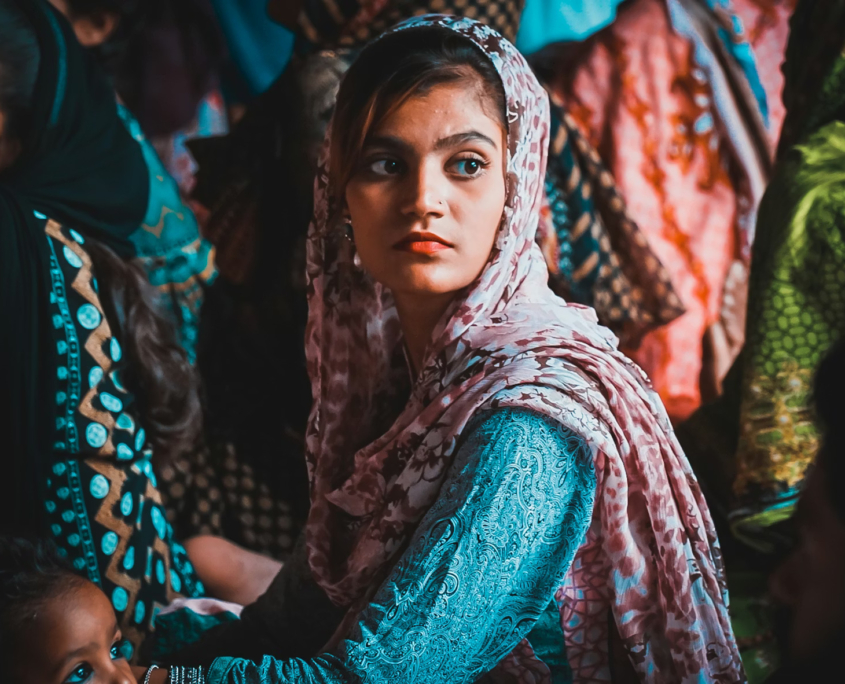 According to the Human Rights Commission of Pakistan, about 70% of women in Pakistan have experienced domestic violence. The Pakistan Bureau of Statistics reports that one in three women experiences at least one form of domestic abuse during her lifetime. Women living in poverty are more vulnerable to domestic violence, especially when they lack education and financial independence.
Impoverished women also do not have their community or family’s support when it comes to gender-based violence. Furthermore, the police are often unwilling to help them, which further exacerbates their situation.
Domestic Violence and the Law
This year, Pakistan’s President Asif Ali Zardari approved the Domestic Violence (Prevention and Protection) Bill of 2026. The new law imposes stricter punitive measures for perpetrators and increases protections for those suffering from domestic violence. Under the bill, domestic violence includes acts causing bodily harm, stalking, harassment, repeated humiliation, threats of violence, false allegations, abandonment and coercion.
It also includes threats of divorce, threats of a second marriage, sexual conduct that violates dignity, depriving someone of financial resources or restricting access to money or property. Stronger legal protections for victims and penalties for aggressors are steps toward ending domestic violence. However, they do little for women whose cases never reach the courts, whose abuse goes unreported or whose perpetrators are protected by local police.
Thus, below are some initiatives helping domestic violence survivors in Pakistan, especially those already living in poverty.
Panah
The Panah Shelter Home provides refuge for survivors of domestic violence in Pakistan. It aims to rehabilitate abused women, improve their well-being and help them reintegrate into society stronger. The home provides survivors with resources, social services and access to social workers, lawyers, doctors and psychiatrists.
Panah also equips them with skills for financial independence through literacy classes and vocational training in arts, crafts, cooking, sewing and beauty treatments. Women can also participate in recreational activities such as art therapy, yoga and games.
Bedari
Bedari is a national nongovernmental organization that addresses violence against women and children. It established the country’s first crisis center for domestic violence survivors. At first, the organization provided domestic violence survivors with resources such as legal aid, medical care, psychiatric counseling and other support services.
Recently, Bedari launched initiatives to educate the public and raise awareness about the harms of domestic violence, aiming to denormalize abuse against women in Pakistani society. It also runs programs that empower, educate and train women to become financially independent, helping them escape abuse and poverty. These projects have impacted more than 3,000 women and girls in the Khushab and Bhakhar districts of Pakistan.
Dastak
Dastak Society is a justice center that supports survivors of domestic and gender-based violence in Pakistan through its women’s protection and child rights units. The center provides crisis management services, a 24/7 helpline, free legal assistance and shelter for survivors. Dastak Society also runs campaigns and programs to increase outreach, build capacity, raise community awareness and sensitize the public.
These projects aim to shift sociocultural attitudes that enable domestic violence and ultimately bring an end to all violence against women.
Shirkat Gah
The Shirkat Gah Women’s Resource Center is one of Pakistan’s leading women’s rights organizations, advocating for gender equity and addressing gender-based violence. It supports survivors of domestic violence, forced marriage and sexual violence. The center also provides training and safe spaces for connection, learning and social services.
Its goal is to help women become more resilient and better informed about their right to live free from violence.
Humqadum Mobile App
With funding from the U.N. Trust Fund, the Shirkat Gah Women’s Resource Centre, the National Commission on the Status of Women and Lahore University of Management Sciences collaborated to release a free mobile application called Humqadam. The app connects survivors of domestic and gender-based violence with existing support services across Pakistan, including legal aid and psychosocial counseling.
It provides 24/7 support while helping break the taboo around seeking help and raising awareness of available resources.
Ending Domestic Violence in Pakistan
To conclude, several initiatives support domestic violence survivors in Pakistan, including a mobile app that connects them to available services. However, domestic violence will persist as long as gender-based violence remains normalized and widely ignored in Pakistani society. Ending domestic violence requires stronger educational initiatives and a broader societal shift in attitudes toward gender-based violence.
– Umaymah Suhail
Umaymah is based in Karachi, Pakistan and focuses on Good News and Global Health for The Borgen Project.
Photo: Unsplash
