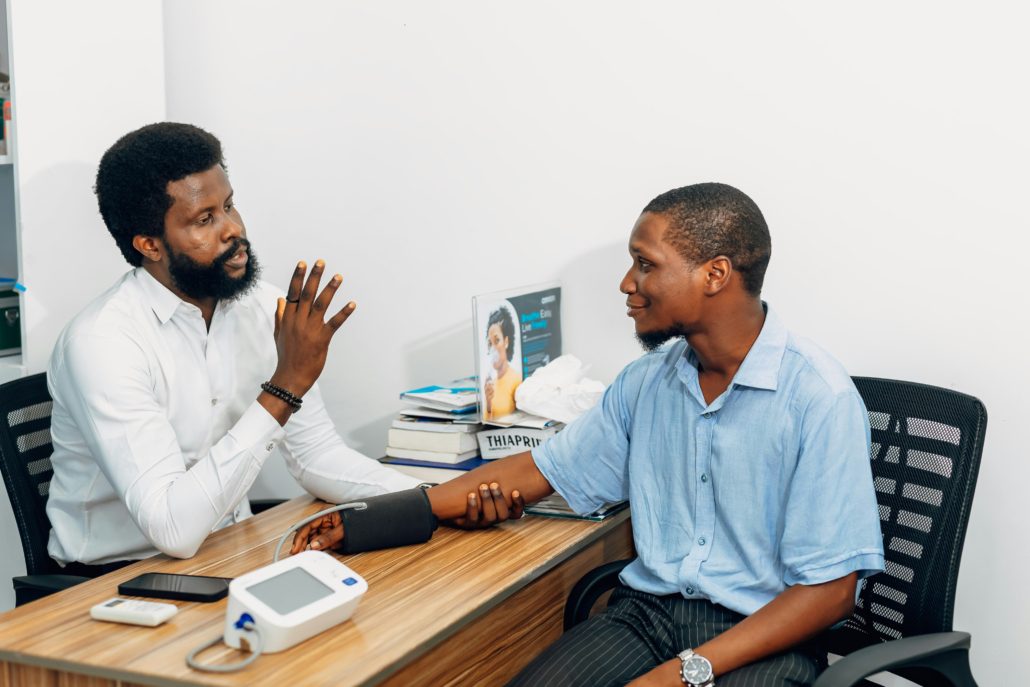
 The progress of Nigeria toward Sustainable Development Goal 3 (SDG 3), which focuses on good health and well-being, reflects both policy commitment and persistent development challenges. Health outcomes in Nigeria remain closely tied to poverty, limited healthcare access and uneven infrastructure across rural and urban areas. While government reforms and international partnerships have expanded immunization campaigns and maternal health programs, the country continues to face structural barriers that slow progress toward the 2030 targets.
However, several initiatives at the community and sub-national levels are improving health outcomes. Data-driven health interventions, expanded immunization campaigns and partnerships among government agencies, multilateral partners and civil society organizations continue to strengthen Nigeria’s health system. These targeted efforts demonstrate how improved data systems and coordinated implementation can accelerate progress toward SDG 3 in Nigeria as the 2030 deadline approaches.
Updates on SDG 3 in Nigeria
SDG 3 is one of the 17 Sustainable Development Goals that the United Nations adopted to create a better world by 2030. The goal focuses on ensuring healthy lives and promoting well-being for people of all ages.
In Nigeria, SDG 3 focuses on improving health outcomes by reducing disease, expanding healthcare access and promoting healthier lifestyles. Key priorities include maternal health, reducing child mortality, combating infectious diseases and strengthening mental health services.
Overview of SDG 3 in Nigeria
Nigeria reaffirmed its commitment to the Sustainable Development Goals in July 2025 when it presented its Third Voluntary National Review (VNR) at the United Nations High-Level Political Forum in New York. The review involved an inclusive national consultation process that engaged stakeholders across Nigeria’s six geopolitical zones, including youth, children and persons with disabilities.
The review highlights both progress and persistent structural challenges. Nigeria has improved child survival and expanded immunization campaigns through partnerships with global health organizations. However, rapid population growth, resource limitations and uneven healthcare access continue to slow progress toward SDG 3 targets.
Health outcomes in Nigeria also closely intersect with poverty. According to the World Bank, about 40% of Nigerians live below the national poverty line, which limits access to healthcare, nutrition and sanitation services. Poverty increases the likelihood that families delay medical treatment, skip vaccinations or rely on under-resourced health facilities, particularly in rural communities.
Nigeria’s development strategy also links health improvements to broader economic reforms. The upcoming Medium-Term National Development Plan (2026–2030) prioritizes strengthening primary healthcare infrastructure, improving maternal and child health services and expanding digital health data systems. Policymakers designed the plan to increase investment in rural healthcare and expand partnerships with international development agencies to accelerate SDG progress.
Maternal Health and Systemic Challenges
Maternal health remains a critical component of SDG 3 in Nigeria. The country continues to record one of the highest maternal mortality ratios globally, with estimates exceeding 500 deaths per 100,000 live births in recent years. This figure remains far above the SDG target of 70 deaths per 100,000 live births.
Several structural factors contribute to this challenge. Many women still lack access to skilled birth attendants and emergency obstetric care. Rural communities often face shortages of trained healthcare workers, essential medicines and transportation to health facilities. Economic hardship also limits access to maternal care services.
Nigeria’s health authorities have begun addressing these gaps through stronger data systems. Health agencies introduced a real-time national platform that tracks maternal and newborn health outcomes across 54 hospitals. Policymakers use this system to identify treatment gaps and improve healthcare delivery decisions.
Child Mortality and Survival
Child mortality remains a critical public health challenge in Nigeria. According to UNICEF (2024), the country’s under-five mortality rate exceeds 100 deaths per 1,000 live births, far above the Sustainable Development Goal target of 25 per 1,000 by 2030.
Research published in Scientific Reports shows that under-five mortality in Nigeria is strongly linked to socioeconomic and geographic inequalities. More recent evidence indicates that Nigeria accounts for a significant share of global child deaths, with disparities driven by poverty, regional inequalities and access to healthcare. Additional peer-reviewed studies confirm that preventable causes, weak health systems and low immunization coverage remain key barriers to improving child survival outcomes.
Low immunization coverage remains one of the main drivers of child mortality. In 2022, Nigeria recorded more than 2.2 million “zero-dose” children who had not received the first dose of the diphtheria-tetanus-pertussis vaccine, the highest number globally.
Immunization
Immunization programs remain central to Nigeria’s SDG 3 strategy. The country achieved major success in eliminating wild poliovirus transmission, demonstrating the effectiveness of coordinated national campaigns.
However, routine immunization coverage still faces logistical and social barriers in many communities. To address these challenges, Nigeria’s government expanded targeted outreach campaigns through the Community Health Influencers, Promoters and Services (CHIPS) program. The initiative trains community health workers to improve vaccine awareness, track immunization coverage and connect families to local health facilities.
Community-Level Health Actions
Local innovation continues to strengthen Nigeria’s healthcare response. One example is the ADVISER program (AI-Driven Vaccination Intervention Optimiser), which health authorities implemented in Oyo State. The initiative uses artificial intelligence to analyze vaccination data and identify households that need targeted outreach.
The program has already improved vaccination delivery strategies for more than 13,000 families by helping health workers identify barriers to immunization and adjust outreach strategies.
Community health initiatives also play a key role in expanding healthcare access beyond formal health facilities. Several organizations operate outreach programs that provide malaria screening, deworming treatments, nutrition assessments and health education for children in underserved areas.
Challenges in Data and Implementation
Nigeria’s 2025 Voluntary National Review also emphasizes the importance of reliable development data for monitoring SDG progress. Policymakers launched Nigeria’s Inclusive Data Charter Action Plan to strengthen the collection and analysis of disaggregated development data.
Improved data systems will help policymakers identify healthcare gaps, measure program outcomes and design targeted interventions that address regional health disparities and gender inequality.
Looking Ahead
Nigeria still faces major obstacles in achieving SDG 3 by 2030, but expanding partnerships, stronger health data systems and increased investment in primary healthcare offer signs of progress. If these reforms continue and policymakers address the link between poverty and health access, Nigeria could significantly reduce preventable deaths and improve well-being for millions of people in the coming years.
– Umeobi Andrew Felix Nonso
Umeobi is based in Abuja, Nigeria and focuses on Global Health for The Borgen Project.
Photo: Unsplash

Updates on SDG 3 in Nigeria
However, several initiatives at the community and sub-national levels are improving health outcomes. Data-driven health interventions, expanded immunization campaigns and partnerships among government agencies, multilateral partners and civil society organizations continue to strengthen Nigeria’s health system. These targeted efforts demonstrate how improved data systems and coordinated implementation can accelerate progress toward SDG 3 in Nigeria as the 2030 deadline approaches.
Updates on SDG 3 in Nigeria
SDG 3 is one of the 17 Sustainable Development Goals that the United Nations adopted to create a better world by 2030. The goal focuses on ensuring healthy lives and promoting well-being for people of all ages.
In Nigeria, SDG 3 focuses on improving health outcomes by reducing disease, expanding healthcare access and promoting healthier lifestyles. Key priorities include maternal health, reducing child mortality, combating infectious diseases and strengthening mental health services.
Overview of SDG 3 in Nigeria
Nigeria reaffirmed its commitment to the Sustainable Development Goals in July 2025 when it presented its Third Voluntary National Review (VNR) at the United Nations High-Level Political Forum in New York. The review involved an inclusive national consultation process that engaged stakeholders across Nigeria’s six geopolitical zones, including youth, children and persons with disabilities.
The review highlights both progress and persistent structural challenges. Nigeria has improved child survival and expanded immunization campaigns through partnerships with global health organizations. However, rapid population growth, resource limitations and uneven healthcare access continue to slow progress toward SDG 3 targets.
Health outcomes in Nigeria also closely intersect with poverty. According to the World Bank, about 40% of Nigerians live below the national poverty line, which limits access to healthcare, nutrition and sanitation services. Poverty increases the likelihood that families delay medical treatment, skip vaccinations or rely on under-resourced health facilities, particularly in rural communities.
Nigeria’s development strategy also links health improvements to broader economic reforms. The upcoming Medium-Term National Development Plan (2026–2030) prioritizes strengthening primary healthcare infrastructure, improving maternal and child health services and expanding digital health data systems. Policymakers designed the plan to increase investment in rural healthcare and expand partnerships with international development agencies to accelerate SDG progress.
Maternal Health and Systemic Challenges
Maternal health remains a critical component of SDG 3 in Nigeria. The country continues to record one of the highest maternal mortality ratios globally, with estimates exceeding 500 deaths per 100,000 live births in recent years. This figure remains far above the SDG target of 70 deaths per 100,000 live births.
Several structural factors contribute to this challenge. Many women still lack access to skilled birth attendants and emergency obstetric care. Rural communities often face shortages of trained healthcare workers, essential medicines and transportation to health facilities. Economic hardship also limits access to maternal care services.
Nigeria’s health authorities have begun addressing these gaps through stronger data systems. Health agencies introduced a real-time national platform that tracks maternal and newborn health outcomes across 54 hospitals. Policymakers use this system to identify treatment gaps and improve healthcare delivery decisions.
Child Mortality and Survival
Child mortality remains a critical public health challenge in Nigeria. According to UNICEF (2024), the country’s under-five mortality rate exceeds 100 deaths per 1,000 live births, far above the Sustainable Development Goal target of 25 per 1,000 by 2030.
Research published in Scientific Reports shows that under-five mortality in Nigeria is strongly linked to socioeconomic and geographic inequalities. More recent evidence indicates that Nigeria accounts for a significant share of global child deaths, with disparities driven by poverty, regional inequalities and access to healthcare. Additional peer-reviewed studies confirm that preventable causes, weak health systems and low immunization coverage remain key barriers to improving child survival outcomes.
Low immunization coverage remains one of the main drivers of child mortality. In 2022, Nigeria recorded more than 2.2 million “zero-dose” children who had not received the first dose of the diphtheria-tetanus-pertussis vaccine, the highest number globally.
Immunization
Immunization programs remain central to Nigeria’s SDG 3 strategy. The country achieved major success in eliminating wild poliovirus transmission, demonstrating the effectiveness of coordinated national campaigns.
However, routine immunization coverage still faces logistical and social barriers in many communities. To address these challenges, Nigeria’s government expanded targeted outreach campaigns through the Community Health Influencers, Promoters and Services (CHIPS) program. The initiative trains community health workers to improve vaccine awareness, track immunization coverage and connect families to local health facilities.
Community-Level Health Actions
Local innovation continues to strengthen Nigeria’s healthcare response. One example is the ADVISER program (AI-Driven Vaccination Intervention Optimiser), which health authorities implemented in Oyo State. The initiative uses artificial intelligence to analyze vaccination data and identify households that need targeted outreach.
The program has already improved vaccination delivery strategies for more than 13,000 families by helping health workers identify barriers to immunization and adjust outreach strategies.
Community health initiatives also play a key role in expanding healthcare access beyond formal health facilities. Several organizations operate outreach programs that provide malaria screening, deworming treatments, nutrition assessments and health education for children in underserved areas.
Challenges in Data and Implementation
Nigeria’s 2025 Voluntary National Review also emphasizes the importance of reliable development data for monitoring SDG progress. Policymakers launched Nigeria’s Inclusive Data Charter Action Plan to strengthen the collection and analysis of disaggregated development data.
Improved data systems will help policymakers identify healthcare gaps, measure program outcomes and design targeted interventions that address regional health disparities and gender inequality.
Looking Ahead
Nigeria still faces major obstacles in achieving SDG 3 by 2030, but expanding partnerships, stronger health data systems and increased investment in primary healthcare offer signs of progress. If these reforms continue and policymakers address the link between poverty and health access, Nigeria could significantly reduce preventable deaths and improve well-being for millions of people in the coming years.
– Umeobi Andrew Felix Nonso
Photo: Unsplash
CRY India and Their Promise of Childhood
Natural Disasters and Children’s Health in India
India is among the world’s most disaster-prone nations, with 27 out of 29 states vulnerable to hazards such as cyclones, earthquakes, landslides and floods. According to the United Nations Children’s Fund (UNICEF), more than 17,000 children lost their lives between 2000 and 2016 as a result of these events.
Multiple aspects of a child’s life are adversely affected by natural disasters, including access to education, displacement and access to sanitation facilities. Between 2016 and 2021, 6.7 million children were displaced. One of the most severe consequences is the impact on children’s health in India, due in part to injuries caused during these events, but also to lost access to medical care that prevents children from receiving immunizations, nutrition or proper monitoring from medical professionals.
According to the UNICEF child displacement report, India is one of the top three countries with the highest record of disaster-related child displacement, with 95% of child displacements driven by floods and storms. These hazards leave 21.4 million people in need of health assistance, 27.6 million in need of nutritional assistance and 28.1 million in need of access to clean water.
A study on the effects of natural disasters on children’s health in India found that extreme events such as floods and droughts increase the likelihood of acute illnesses like diarrhea, fever and acute respiratory illness (ARI) in children under five by 9% to 18%. Both diarrhea and ARI are the leading causes of child mortality in children under five and together account for 40% of the child mortality rate in this age group each year. The research also found that exposure to disaster in the past year is linked to significantly worse nutrition, increasing the risk of stunted growth and being underweight or malnourished.
CRY India’s Work in Children’s Health
Child Rights and You (CRY India) has recognized this issue with children’s health in India and has been working to address it. Established in 1979 by Rippan Kapur, an Indian Airlines purser, CRY began with six co-founders to restore children’s rights. Today, the organization has 144 partners and works across 20 Indian states, having reached 4.7 million children.
CRY’s data shows that two out of five children in India are not fully immunized, two out of three child deaths are due to malnourishment and every third child under five is severely malnourished. The organization addresses these issues through health programs that focus on pre- and postnatal care for mothers, monitoring children’s growth and development, and creating community gardens and kitchens where families can receive proper nutrition in times of disruption and displacement.
According to research on the impact of disasters on children’s health, boys and children under one are more likely to receive medication and food during crises. CRY works to share access to medical care and nutrition with all children and mothers, regardless of socioeconomic background or gender. The organization connects families to communities, aid, schools and government services.
CRY India’s Impact
CRY’s impact on children’s health in India has been substantial. The organization has helped 2,500 children recover from malnutrition through medical monitoring and care from governmental health care centers. Collaboration with the national government has allowed CRY to expand its work and reach children and families in both rural and urban regions. Additionally, 600 kitchen gardens have been set up across seven states under the sustainable nutrition initiative, and more than 7,000 children under one have been immunized.
Looking Ahead
The issue of children’s health and welfare in India is being addressed through collaboration between the government and organizations such as CRY. While the scale of displacement from natural disasters remains large, these efforts represent measurable progress. With continued support, programs like those run by CRY India can help restore stability and equal access to health care for children across the country.
– Jaya Noonan
Photo: Unsplash
Multidimensional Poverty in Sierra Leone
The global Multidimensional Poverty Index (global MPI) is a method used to measure poverty across 100 developing countries. It analyzes and assesses deprivations in health, education and living standards.
The History of the Global MPI
The Oxford Poverty and Human Development Initiative (OPHI) and the United Nations Development Program (UNDP) developed the global MPI in 2010. Since then, it has been used to gauge a country’s poverty intensity by tracking indicators across its population. These indicators include nutrition, child mortality, years of schooling, school attendance, cooking fuel, sanitation, drinking water, electricity, housing and assets.
Why Is Measuring Poverty a Vital Tool?
The Borgen Project spoke with an individual at OPHI’s communications department, who emphasized that the importance of measuring poverty “cannot be overstated.” They added, “Without knowing whether poverty is going up or down or what the components of poverty are, we cannot design policies that are likely to reduce poverty or evaluate whether policies intended to reduce poverty are working.”
They also described MPIs as “vital tools for examining the breadth and depth of poverty in a country, as well as for showing how the composition of poverty differs from group to group.”
The Alkire-Foster Method in Sierra Leone
Sierra Leone’s MPI is based on the Alkire-Foster method, a counting approach used to identify people living in poverty and the deprivations they experience. The individual said, “The purpose of Sierra Leone’s multidimensional poverty measurement journey has been to understand the extent and depth of multidimensional poverty in Sierra Leone to complement monetary poverty measurement and to support national development planning and monitoring.”
Its steps include:
Child Poverty
According to the Government of Sierra Leone (GoSL), multidimensional poverty among children is expected to fall from 66% to 40% by 2030. Several social factors continue to drive child poverty in Sierra Leone, including:
Achieved Targets and Ongoing Progress
The 2019–2023 Medium-Term National Development Plan prioritized education, health care and nutrition, domestic revenue growth, improved governance and the promotion of peace and stability across the country.
Some of the milestones achieved included:
The 2024–2030 Medium-Term National Development Plan has since established a roadmap to guide the country’s poverty reduction goals and development targets over the next seven years.
The Big Five Gamechangers include:
Looking Ahead
The interviewee described the MPI as “a high-impact tool for evidence-based, integrated, multisectoral policymaking.” By using the Alkire-Foster method to measure poverty across Sierra Leone, the country has been able to track progress and guide ongoing implementation. These efforts aim to strengthen governance and improve living conditions across the population.
– Zara Ashraf
Photo: Unsplash
Sri Lanka’s Debt Crisis Recovery
Global public debt has risen rapidly, with almost 40% of the developing world in serious debt. As a result, many developing countries face a difficult choice between paying their debts and investing in public services such as health care, education and infrastructure. The situation requires greater transparency, stronger tools to ensure debt sustainability and faster debt restructuring agreements between governments, private creditors and international financial institutions.
Sri Lanka’s Debt Crisis
Sri Lanka, a lower-middle-income developing country, experienced a severe economic crisis in 2022 when the government failed to repay its foreign debt for the first time in its history. Before this, Sri Lanka had maintained a perfect record of external debt repayment since gaining independence in 1948. The default triggered the worst economic crisis the country had ever faced.
Prices increased dramatically and there were shortages of essential goods, including fuel, food and medicine. Fuel shortages meant buses, trains and medical vehicles struggled to operate, while gas and diesel prices rose sharply. Schools had to close and many people had to work from home to conserve fuel. The country also experienced long power cuts and widespread inflation, including food inflation that reached 95%.
Additionally, taxes on goods were doubled, electricity prices increased and fuel subsidies were removed. As a result, poverty in Sri Lanka doubled, reaching 26% of the population, with millions of people pushed into hardship.
What Caused the Crisis?
One of the key causes of Sri Lanka’s crisis was a shortage of foreign currency. The country imported about $3 billion more goods each year than it exported, which gradually drained its foreign exchange reserves. By the end of 2019, Sri Lanka had about $7.6 billion in foreign reserves, but this rapidly fell to around $250 million, leaving the country unable to repay its sovereign debt.
Government policy decisions also worsened the situation. In 2019, large tax cuts introduced by the government reduced public revenue by more than $1.4 billion per year. This weakened the country’s finances and made it more difficult to service its debt.
How the Government Responded
To address Sri Lanka’s crisis, the government proposed using funds from workers’ retirement savings to help repay the country’s debt. The government also sought international support. The International Monetary Fund (IMF) determined that Sri Lanka’s debt was unsustainable and agreed to provide a $3 billion loan while helping design an economic recovery program.
The government also sought financial assistance from other partners to mitigate the crisis’s impact on citizens, with its major creditors, including China and India, agreeing to extend the repayment timeline. As part of the recovery plan, Sri Lanka also introduced tax increases on products such as fuel and food. Furthermore, it announced plans to raise funds by restructuring state-owned enterprises and privatizing the national airline.
In 2024, Sri Lanka’s national debt was formally restructured after negotiations with creditors. However, challenges remain. In 2025, a cyclone caused further devastation, prompting people to call for a suspension of the country’s debt repayments.
What Happens Next?
By 2024, Sri Lanka’s economy had stabilized faster than expected, surpassing the performances of other debt-defaulting countries. Inflation fell to single digits, but stabilization alone is not enough. The country has often failed to introduce deeper structural reforms after past crises. For long-term recovery, it will need strong political commitment to implement policies that encourage sustainable growth.
Many experts argue that Sri Lanka will need debt relief or cancellation to recover fully. People need decent jobs, wages, rights, social protection, inclusion and equality. The outcome will also serve as an important test for international organizations such as the IMF in how they manage sovereign debt crises and it will demonstrate the urgent need to reform how debt crises are managed.
– Jeanne Pellet
Photo: Unsplash
Towards Climate Collaboration: The U.K.–Pakistan Green Compact
In response to these challenges, the U.K.–Pakistan Green Compact stands as a landmark agreement in global climate cooperation, marking a critical step toward safeguarding one of the world’s most at-risk nations.
The Deal
The U.K.–Pakistan Green Compact offers Pakistan a collaborative means to ameliorate some of the most pressing ecological challenges that it has faced in recent years. The agreement unlocks more than $35 million in targeted U.K. funding for projects that support the development of green energy and promote preventative solutions, such as the investment in expanding mangrove conservation.
The compact is centered around five pillars:
Stabilizing Pakistan’s Vulnerable Regions
The accessibility of finance to support sustainable climate projects is one of the major barriers to progress in Pakistan, a central concern that this compact hopes to address. The climate development that this will facilitate will, in turn, stabilize the regions in Pakistan most directly impacted by the floods, droughts and heatwaves that claimed more than 1,000 lives in 2025 alone. In particular, greater efforts in mangrove conservation made possible by this deal will help protect coastal communities from ongoing flooding risks.
These floods weaken local economies, destroy homes and infrastructure and threaten the lives of both people and their livestock. More than 18 million Pakistanis were affected by the 2025 monsoon floods. The disaster led to widespread displacement and the destruction of vital public assets.
Essential cropland exceeding 2.23 million acres was either submerged or destroyed. This loss erased critical resources that support regional food security and an economy partly dependent on agriculture. The macroeconomic effects of the disaster are severe. It is projected to reduce the nation’s GDP for 2025–26 by up to 2%, posing a significant barrier to development.
The targeted solutions that the U.K.–Pakistan Green Compact provides hope to the roughly 60 million people living in poverty in Pakistan. The highest concentration of national poverty is found in the most rurally situated districts. As a result, it is the communities most reliant on agriculture that are made the most vulnerable by the impacts of changing climatic conditions.
Final Thoughts
Collaborative action between international powers, such as the U.K.–Pakistan Green Compact, is essential for building a global framework for climate cooperation. This approach enables the sharing of data, resources, systems and expertise to address the climate crisis and its direct link to high poverty rates.
The future of climate action and poverty reduction is closely interconnected. It depends largely on sustained, large-scale international collaboration. The Green Compact deal stands as a strong example of the kind of coordinated economic action needed to support a more environmentally stable and economically resilient future.
– Evan Meikle
Photo: Flickr
Increase to Scotland’s International Development Fund
What is Scotland’s International Development Fund?
Scotland’s International Development Fund started in 2005 with an annual budget of £3 million after signing an agreement with the Malawi Government to aid in a variety of development projects. In 2008, the programme and fund expanded to include Zambia and Rwanda, and Pakistan has been included since 2016.
In 2012, Scotland also launched their Climate Justice Fund alongside their International Development Fund as the first nation to commit money specifically towards natural disasters. These funds help several projects and organizations in each of the partner countries across several thematic areas of focus:
Global Humanitarian Crisis Projects
Scotland’s International Development Fund has seen gradual annual budget increases over the past 20 years. This year, the Scottish Government has allocated £16 million to Scotland’s International Development Fund in the 2026/2027 budget, which is a 26% increase compared to the 2025/2026 budget, SPICe Spotlight reports. It also exceeds the forecasted £15 million budget set in 2021. One million pounds of this budget will go towards humanitarian crisis response aid. The Climate Justice Fund is also set to receive £12.7 million, although this is a £1 million reduction compared to last year’s budget.
Reduction in UK Foreign Aid Spending
This increase in Scotland’s International Development Fund comes as a welcome surprise in light of the U.K. government announcing that it will reduce foreign aid spending from 0.5% of gross national income (GNI) to 0.3% in 2027. This decrease comes as the Prime Minister, Keir Starmer, has announced an increased investment in defence spending at 3% of gross domestic product (GDP) in 2027, up from previous targets of 2.5%.
In 2027, 0.3% of GNI could be around £9.2 billion available for aid, down from £15.3 billion spent on aid in 2023. This is far from the duty of 0.7% of GNI that the International Development Act of 2016 sets out; 1999 was the last time that aid was at or below 0.3% of GNI. However, the Prime Minister emphasises that the UK will continue to support Sudan, Ukraine, Gaza and global health.
Scotland-Pakistan Scholarships for Women and Girls
According to the Scottish Government, £500,000 pounds from Scotland’s International Development Fund will help remove barriers for women and girls to pursue and finish secondary education, as well as transition to higher education for bachelor’s and master’s degrees in Pakistan. Partnered with regional organizations, young women and girls receive scholarships targeting girls from minority religious groups and disabled students. Funding education continues to be a successful way to help individuals and communities combat extreme levels of poverty.
Kamuzu University of Health Sciences, Malawi
The Fun will help support research advancements for Africans, by Africans, in Africa at Kamuzu University of Health Sciences, which specifically trains health professionals such as doctors, nurses, midwives and pharmacists. This 15-year-long partnership has already helped establish the first dental school in Malawi.
Democratic Republic of the Congo
Scotland’s humanitarian crises budget provided £250,000 in 2025 to help support emergency relief efforts across eastern Democratic Republic of the Congo. DR Congo is one of the poorest and most populous countries in Africa. Almost three in four people, or around 72% of the population, live in extreme poverty with less than $1.90 per day. This situation could only worsen with the ongoing conflict in the eastern provinces, which has displaced hundreds of thousands of people and has resulted in significant civilian casualties. This humanitarian aid funding helped families pay for bare essentials such as food, shelter, fuel and urgent medical care.
Looking Forward
This increase to Scotland’s International Development Fund, including its humanitarian aid spending, is positive news in light of other countries stepping back, such as the U.K. government. Scotland’s refusal to step back “from commitments to the world’s poorest and most vulnerable” offers some hope for a better, more inclusive, more sustainable world to come.
– Stephanie Gable
Photo: Flickr
SDG 6 in Palestine: Water, Sanitation and Life Under Blockade
SDG 6 and What It Promises
SDG 6’s goal is to “ensure availability and sustainable management of water and sanitation for all.” This includes targets for safe drinking water, proper sanitation and hygiene, better water quality and fairer, more efficient water use. Around the world, billions of people still lack safe water and sanitation, and progress is not fast enough to reach everyone by 2030. In Palestine, SDG 6 shows how conflict and political restrictions can make even basic improvements difficult.
Water Access in Palestine Today
Official SDG 6 data indicate that most people in Palestine have access to safely managed drinking water, but these numbers do not reflect the significant differences across regions and communities. In Gaza, years of blockade, over-pumping and damaged infrastructure have made the coastal aquifer very polluted. Even before the latest crisis, about 97% of its water did not meet World Health Organization (WHO) standards. Recent reports show that many families in Gaza get much less than the 50 liters of water per person per day that the U.N. says is needed for health. This forces people to use unsafe water or pay high prices for trucked water.
Gaza: Living With Extreme Water Insecurity
Gaza’s crowded population and broken infrastructure make SDG 6 especially important there. According to Anera, only about 10% of people in Gaza have safe drinking water at home. Most families must buy desalinated or delivered water if they can afford it. Pollution from untreated sewage, flooding and old, rusty pipes worsens water quality and increases the risk of disease.
West Bank: Inequality and Control Over Resources
In the West Bank, SDG 6 is affected by unequal control over water resources and restrictions on Palestinian infrastructure projects. Researchers say Israel has “hydro-hegemony” because it controls the main aquifers and the Jordan River. This means Palestinian communities often have less water per person and face frequent shortages. In many parts of Area C, Palestinians need permits to build or improve water and sanitation facilities, and the risk of demolition makes long-term planning difficult.
Lack of water and sanitation hurts health, education and jobs across Palestine, especially for children and low-income families. Not enough clean water and poor wastewater management lead to more cases of diarrhea and other diseases. Experts warn that crowded places like Gaza could face health crises. When families spend much of their money on water, they have less for food, rent, and school, which makes poverty worse.
Local and International Efforts
Even with these problems, people are working to improve SDG 6 in Palestine by building better infrastructure and making services better. In Gaza, Anera has put in 1 million meters of water pipes, providing 35,700 people in Rafah with steady water at home. It has also connected more than 2,300 homes to safer wastewater systems and added drainage to help with flooding. Other projects, like a sanitation effort in Khan Younis, aim to improve basic services by helping local governments with technical, organizational and financial support.
Strengthening these efforts could help Palestine get closer to SDG 6 and improve health, dignity, and opportunities for millions living through ongoing crisis.
– Niaz Youssefian
Photo: Wikimedia Commons
EDISCA in Brazil
If dance groups are lucky enough, they have the chance to make a difference in the world. In Brazil, using the unique medium of dance as a way to help children create a life for themselves that is safer than the roads on which many young girls fall in Fortaleza.
Background
Escola de Dança e Integração Social para Criança e Adolescente (EDISCA) is a non-governmental group based in Fortaleza, Brazil. Fortaleza faces many challenges with urban poverty, extreme inequality, and a large expanding slum population, and these problems infiltrate the lives of young girls who want to make a life for themselves.
According to the 2025 census data, Fortaleza could have a population of around 2.58-3.24 million. With an estimated 23.1% below the country’s poverty line in 2023-2024. The majority of the children who go to EDISCA cannot read or write, many have health problems, and are close to running away from their violent home lives. EDISCA is important for these young girls to break the habit of global poverty that many children face.
Importance of EDISCA with Poverty
The mission of EDISCA is to promote human development through education, art, and practices that encompass goodness, beauty, and justice. Founded in 1992 by Dora Andrade, EDISCA was made to “provide dance, theater and various other art forms… helps the children understand their and their families’ struggles.”
Andrade first started her dance career in the USA, but quickly changed her pathway when she returned home to teach girls to dance their way out of the slums, along with multiple life skills, critical skills, education, and self-esteem.
Andrade, along with other staff members, teaches the students about health care, nutrition, art, theater, and reading and writing. There is even a psychologist at EDISCA, Madeline Abreu, who talks to the children about the emotional burdens they may carry, according to PassBlue.
EDISCA focuses on children and adolescents who live in the most vulnerable favela communities, offering them an opportunity for an empowering path. The idea is that the girls can become ambassadors of change and take control of their lives by breaking the cycle of poverty and social exclusion. Families and government officials have the opportunity to come and witness the changes being made in EDISCA.
Dance as a Stepping Stone for Change
EDISCA helps outsiders understand that children, specifically from favela communities, can be an important resource for change. Indeed, the performing arts give people the chance to “learn teaching, and teach learning,” SIT study abroad reports. Politicians who come to see some of the work going on at EDISCA see that these underprivileged kids are part of the change, not just the elite
In a country facing extreme poverty, like Brazil, dance serves as an important outlet for young people. For children who go to EDISCA, it is a way to learn basic everyday skills, the chance to turn their life around, and even develop healthy habits, instead of falling down a pathway of prostitution or drug abuse.
EDISCA goes around the world, performing for a wide audience, showcasing the talent that the children have, with the potential to gain more students. It uses dance as a way to push for social justice and build a better future. EDISCA has changed so many lives, and hopes to continue that.
With all the success EDISCA has achieved using dance as a unique medium, it has become a stepping stone for other organizations, including “Dance Out of Poverty” in India, to create their own dance group. The poverty these children face in the favela communities was imposed on them by the higher communities, but EDISCA has flipped the cards by showing them the problems and how EDISCA is making a change.
– Elizabeth Fryer
Photo: Flickr
AI Diagnostics in Rwanda Could Strengthen Frontline Health Care
Why Health Care Access Matters in Rwanda
This matters because poverty and health care are closely connected in Rwanda. World Bank data shows that 27.4% of the population lives below the national poverty line and 38.55% lives below the $3-a-day international poverty line. When families live with limited income, delays in diagnosis, transport costs and shortages in local care can make treatment harder to reach and more expensive in practice.
Rwanda has made major health gains, but access challenges remain. Government information says the country has about 58,000 community health workers and 66% of them are women. These workers are often the first link between communities and the formal health system. They monitor health at the village level, provide basic services and refer patients when cases become more serious. That makes better decision support at the community level especially important.
What the Study Found
A February 2026 study published in Nature Health tested five large language models using real clinical questions from Rwanda’s community health system. Researchers built a dataset of 5,609 questions submitted by 101 community health workers across four districts. They compared responses from Gemini-2, GPT-4o, o3-mini, DeepSeek R1 and Meditron-70B with answers from local clinicians. In a subset of 524 question-and-answer pairs scored across 11 expert-rated metrics, Gemini-2 and GPT-4o performed best and all five models outperformed local clinicians across every metric measured.
The cost difference made the findings even more striking. The study reported that clinician-generated answers cost an average of $5.43 per question for general practitioners and $3.80 for nurses. Model-generated responses cost about $0.0035 in English and $0.0044 in Kinyarwanda. Even when performance dropped slightly in Kinyarwanda, the models still outperformed clinicians and remained more than 500 times cheaper per response. For a health system trying to stretch limited resources, that level of efficiency matters.
Why AI Diagnostics in Rwanda Could Help
The promise of AI diagnostics in Rwanda is not only about answering questions faster. It is also about helping frontline workers decide when a case may be urgent, when symptoms point to a likely condition and when a patient should receive a referral for higher-level care. In settings where staff shortages and access gaps create pressure on the system, stronger support for frontline workers could improve speed, consistency and patient outcomes. Rwanda’s own health labor market analysis has documented workforce constraints and uneven distribution of health professionals, especially in lower-resource settings.
Rwanda is also building systems that could help these tools work at scale. In April 2025, the Ministry of Health launched the National Health Intelligence Center, a platform designed to collect and process real-time health data for evidence-based decisions. That matters because useful AI tools need more than strong models. They also need data systems, implementation planning and oversight.
International support is also growing in that direction. In January 2026, OpenAI and the Gates Foundation announced Horizon 1000, a $50 million initiative beginning in Rwanda. The goal is to support leaders in African countries, starting with Rwanda, and reach 1,000 primary health care clinics and surrounding communities by 2028. Reuters reported that the effort aims to improve health care delivery in places facing severe health worker shortages.
What Still Needs To Be Proven
Still, this story is not just about excitement over new technology. In February 2026, Wellcome, the Gates Foundation and the Novo Nordisk Foundation launched the Evidence for AI in Health initiative, backed by $60 million to support locally led evaluations of AI tools in low- and middle-income countries. That matters because governments need evidence on what works, where it adds value and how it can be used responsibly. In Rwanda, language quality, privacy safeguards, clinical safety and real-world implementation will shape whether these tools truly help patients.
AI will not replace doctors, nurses or community health workers. But it may help them do more with limited time and limited resources. That is what makes AI diagnostics in Rwanda worth watching. If Rwanda continues to pair innovation with evidence, oversight and local implementation, this approach could become a strong example of how technology can expand access to quality care in places that need it most.
– Adriana Carolina Herrera
Photo: Wikimedia Commons
Women in South Sudan Are Creating Their Own Financial Futures
In response, the United Nations Mission in South Sudan has recognized both their resilience and the urgent need for reform. It implemented a multifaceted strategy to advance gender equality, support women’s development and position women as central to the country’s future.
South Sudanese Women Are Shaping Their Financial Futures
Across South Sudan, women have long sustained households and communities through farming, harvesting and trade. Yet conflict, limited access to education and finance and widespread gender-based violence have repeatedly constrained their progress. For decades, many women’s ambitions have far exceeded the opportunities available to them.
That reality is beginning to shift. In 2023, the South Sudan Women’s Social and Economic Empowerment Project (SSWSEEP) launched as a four-year, $52 million government-led initiative funded by the World Bank. The project is expanding opportunities for women by providing business skills training and financial support to help them start, sustain and grow their own businesses.
NGOs Expand Economic Opportunities for Women in South Sudan
Nongovernmental organizations (NGOs) are also helping expand economic opportunities for women in South Sudan. Groups such as the Whitaker Peace & Development Initiative (WPDI), the Women’s Peace and Development Initiative and Women for Women International focus on strengthening women’s entrepreneurial capacity. In 2025, WPDI celebrated 150 women who graduated from its entrepreneurship program in Juba, the capital of South Sudan.
As more women launch businesses, many are gaining greater financial stability for themselves and their families. NGOs continue to play a critical role in advancing women’s rights in South Sudan, especially in areas where government support remains limited. Several organizations are working directly to improve women’s access to justice, economic opportunity and community support:
How Entrepreneurship Is Changing Lives in South Sudan
One recent success story is that of Rose Juru Chaplin, a South Sudanese entrepreneur who owns a boutique in Munuki Market. With support from the SSWSEEP, she gained the training and assistance needed to strengthen her business skills and expand her enterprise. Her boutique now serves as a key source of income for her family while helping her build greater financial security.
Chaplin’s experience reflects a broader shift taking place across South Sudan, where hundreds of women-owned businesses have received similar support. Her story highlights how access to training and financial assistance is helping women strengthen not only their own livelihoods but also those of their families, local economies and communities.
Conclusion
The resilience of South Sudanese women continues to drive a powerful shift from survival to economic participation and growth. While challenges such as weak infrastructure and ongoing economic instability remain, the progress women are making highlights the impact of investing in female entrepreneurship. Programs that combine education, financial access and peer support are proving to be effective tools for long-term development.
As South Sudan continues to rebuild, women entrepreneurs are playing a critical role in shaping the country’s future. Through determination and increased access to opportunity, they are improving their own lives while driving meaningful change across their families, communities and the wider economy.
– Erin Sian Mongillo
Photo: Flickr