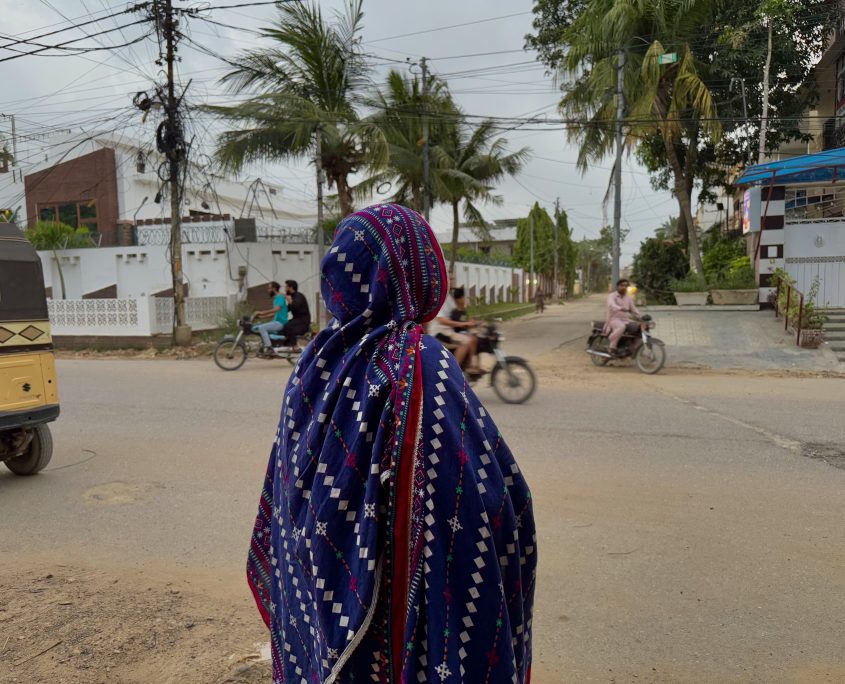
 When Maryam was a little girl, she loved going to school.
“As I grew up, I became more fond of studying,” Maryam told The Borgen Project. “I thought that I would become a teacher, doctor, anything — but that I would study for sure.”
When Maryam was in fifth grade, she stopped going to school to work as a maid and help support her parents and three younger siblings. Her mother wanted her to continue her education, but her father did not think it was feasible.
“The circumstances did not allow it, so I had to stop studying,” she said. “There was no other adult to help out. I was the eldest. I saw that the situation at home was difficult, so I started working on my own.”
Now, Maryam is 26 and works as a maid for three households in Karachi, Pakistan. She lives with her husband, whom she married at 17, and their 4-year-old son in a small one-room apartment that has no gas, a leaky roof and a bathroom with no ceiling and a curtain as a door.
Poverty in Pakistan
Every month, Maryam earns Rs 30,000, equivalent to $150. Including her husband’s income as a rickshaw driver, there is just enough to cover their rent of Rs 15,000, rickshaw installment of Rs 20,000 and their son’s school fees and gas cylinder, both Rs 5,000, along with other monthly household expenses.
Maryam said she used to purchase groceries such as flour, sugar, oil, tea leaves, salt and pepper on a monthly basis for up to Rs 15,000, not including staples like rice or lentils. Currently, she buys her groceries in small amounts every day because it is cheaper.
For those living in poverty in Pakistan, sticking to a tight budget forces them to make sacrifices. When her son started school, Maryam said she sold her phone to pay for his uniform, school bag and stationery on top of tuition fees. She also recently purchased a small fridge for Rs 50,000, which cut into her budget for new Eid clothes, even though one of her employers loaned her Rs 37,000 to help pay for it.
“You have to kill your wishes,” Maryam said. “If I have an interest in something, then I have to look after the house first…either the child or the house, nothing else.”
She said her household usually runs well with her income, but she never has money left at the end of the month.
“I get really angry because I work for the whole month and as soon as some money comes into my hands, it all gets spent,” Maryam said. “If I had my own house, I would not have to pay rent or if I had my own rickshaw, I would have saved some of my income. But no, I never have any savings.”
Rising Cost of Living
Sometimes Maryam picks up extra cleaning jobs after work to pay for new shoes, clothes and educational expenses for her child.
“I work in three houses and I am not saving, so I feel like I should work more. But with time, I am losing my strength. I have been doing this work for so long, I get tired,” she said.
When Maryam managed to save some money, she put a down payment of Rs 120,000 on a 120-acre plot of land with the hope of owning a house and started paying monthly installments totaling Rs 170,000. However, she later found out that five other people were also paying for the same property. Although she was refunded her down payment, she lost the money she put toward the installments. Maryam said she did not pursue legal action, even if it would be free, because she is afraid someone will come after her family.
Another time, Maryam spent Rs 150,000 on a hysterectomy operation for her mother. The procedure required confirmation from an MRI scan, which costs Rs 16,000, an expense her family could not afford. Eventually, one doctor was willing to perform the surgery based on the results of an ultrasound.
Lack of Fair Pay
Maryam said her family only knows two professions: maid or rickshaw driver. The same applies to her relatives who completed their education at the matric, or 10th-grade, level.
“The boys are well-educated, but they still drive a rickshaw and the girls are also well-educated, but they still work,” she said. “It is very difficult to find a job in Pakistan.”
After Maryam married, she pursued a long-time interest and learned beauty work at a salon. Even then, she could not land a job because she had only one year of experience in the field. As a maid, Maryam completes various household tasks, including sweeping, mopping, dusting, ironing clothes, cooking, washing dishes and cleaning bathrooms.
One of her employers pays her Rs 9,000 per month, but Maryam said it should be closer to Rs 15,000 based on the size of the house. Another employer pays her Rs 7,000 per month when it should be Rs 18,000 given the workload. Once, Maryam mentioned her low pay to one of her employers but was told that someone else would do the work for less.
Poor Treatment
Maryam said the most challenging part of her job is not the work itself but tolerating insults from her employers.
“Everyone scolds me…. When people scold me, it makes me feel bad,” she said. “I cannot say anything. I stay quiet. I just cry.”
Whenever her employers feel she did not adequately complete a chore, Maryam said they require her to redo it without paying for the extra work.
“They are not paying me for free, nor am I working for free, so why should I have to listen to so many scoldings?” she said. “I am a human being too.”
Maryam said she does not share these struggles with her husband anymore because he would stop her from working, but her income keeps the peace in her home and pays for her child’s education.
Benazir Income Support Program
Maryam said many people in her husband’s family receive financial assistance from the government through the Benazir Income Support Program (BISP). Families living in poverty in Pakistan are eligible for this assistance if they have a monthly salary of less than Rs 50,000.
Every four months, qualified recipients receive Rs 13,000 in cash, which accounts for Rs 3,250 per month. To register, an individual brings their National Identity Card and children’s Child Registration Certificate to a BISP office and fills out a survey to complete the application, which is free.
However, Maryam said she has not signed up because it would be difficult for her to collect the payments. The address on her National Identity Card is for her family’s home in her village, not where she lives and works in Karachi.
“It costs Rs 3,000 to go to the village and again Rs 3,000 to come back. There is no point,” she said.
She was also told that registering for the program is expensive and lengthy. Maryam said her family members paid someone Rs 20,000 to collect their documents and enroll on their behalf. That person also pocketed the first payment her relatives received.
Saverya Foundation UK
Saverya Foundation, United Kingdom (U.K.), is a women’s empowerment charity that provides shelter and training to women living in poverty in Pakistan. Maryam said she may have heard of it but has not used its services.
The organization’s goal is to help women become financially independent by building skills that will allow them to work or start their own business from home. These skills range from computer education to beauty work, sewing, stitching and embroidery. The charity has helped more than 10,000 women in Pakistan.
The Future for Maryam
Maryam said that whenever she comes home tired from a long day at work, she often thinks about opening her own food stall.
“I really want to cook,” she said. “It is better than doing this job. I have to listen to everyone’s scolding here, but I will not have to [over] there. It will be my own work.”
As for her son, Maryam is determined that he stay in school.
“Whatever degree he wants to study, whatever it is, I will make sure that he can do it,” she said. “I could not fulfill my dreams, but my son will fulfill his.”
– Umaymah Suhail
Umaymah is based in Karachi, Pakistan and focuses on Good News and Global Health for The Borgen Project.
Photo: Umaymah Suhail

Gender Inequality in Azerbaijan
Gender Disparity in the Workforce
Azerbaijan has made legal progress on women’s employment, but gender segregation and pay inequality limit women’s economic participation. Women make up 17% of the workforce in transport and storage, 11% in energy and 8% in construction. According to the World Bank, women in Azerbaijan earn 35% less than men on average.
According to the United Nations (U.N.) Women’s data, gender inequality in Azerbaijan remains a structural problem across both public and private sectors. Women and girls aged 15 and above spend an average of 25.4% of their daily time on unpaid care and domestic work. This unequal burden limits women’s ability to participate in paid employment, education and public life.
Women in Politics
According to the Baku Research Institute, the level of women’s political participation remains low. In 2024, women’s representation in Milli Majlis, the national parliament, reached 20.8%. In 2025, women’s representation in municipalities was 39.34%. According to 2025 statistics, there are no female heads of executive authorities or ministers in Azerbaijan, and there are only six female deputy members. According to the Global Gender Gap Index, Azerbaijan ranked 133rd out of 146 countries in 2024 in terms of political participation.
Gender stereotypes, women’s economic dependence and the political environment in Azerbaijan function as interconnected factors that affect women’s political participation. Society often perceives a woman’s place as being in the family and at home, while men are regarded as the main decision makers.
Women-Led Initiatives to Tackle Gender Inequality
In Azerbaijan, efforts to address gender inequality have taken the form of women-led civic initiatives. UNDEF has funded a project to establish Azerbaijan’s first women’s parliament, giving female leaders a platform to push for stronger rights and better governance. The initiative brings together women from civil society, business and academia to address issues such as girls’ education, maternal health, early marriage and support for female entrepreneurs. The project aims to turn women’s participation into influence on public policy.
WARD is an independent nongovernmental organization in Azerbaijan dedicated to advancing gender equality, women’s empowerment and sustainable development. Over the years, WARD has launched the country’s first maternity school, the first Women’s Resource Center, the Women’s Dialogue School and its first expert group on gender. The organization has also led several awareness-raising campaigns across the country.
In an interview with U.N. Women, WARD chair Shahla Ismayil said that women-led think tanks occupy a space where expertise meets empathy and where knowledge becomes a tool for change. She added that initiatives such as the Women’s Dialogue School prepare a new generation of women leaders to enter public life and propose practical solutions, ensuring that women’s leadership becomes institutional rather than episodic.
Looking Ahead
Women in Azerbaijan have made measurable efforts to address gender inequality despite societal challenges. NGOs and activists continue to work toward structural change, with initiatives such as the women’s parliament and WARD’s programs offering pathways for greater representation and economic participation.
– Bonnie Parkinson
Photo: Flickr
Mental Health Resources in Uganda
However, programs have been developed to increase mental health resources in Uganda, such as YouBelong Uganda and Pamoja Afya Initiative.
YouBelong Uganda
Founded in 2016, YouBelong Uganda works to deinstitutionalize people from mental institutions and focus on support through the community. A major concern surrounding mental health resources in Uganda is that many people become trapped in institutional systems and are unable to reacclimate to their communities. YouBelong uses “The YouBelong linked model of engagement and care [to build] a bridge between the institution and the community.”
A key part of this is that YouBelong provides transport for people from institutions back to their communities. YouBelong also uses government resources to prepare the individual for community life and to prepare the community to best support the individual.
The YouBelong HOME is a section of YouBelong that focuses on addressing the inflow and outflow problems at the national mental institution. It works to reintegrate between 40 and 60 people a month from Butabika National Referral Mental Hospital back into their communities. To reduce inflow to the mental hospital, YouBelong is working to expand resources at local health centers to help people before they reach institutionalization.
YouBelong has several programs under its wing. These programs address issues such as inequalities in mental health care for women, early intervention for children experiencing mental health issues, psychosis and learning from the experiences of those in recovery. YouBelong Uganda is a large organization that works at many levels to increase access to mental health resources in Uganda.
Pamoja Afya Initiative
Pamoja Afya focuses on communities surrounding Uganda’s national parks and was founded in 2024. This organization operates on a much broader scale, covering topics such as water and sanitation, snakebite prevention and coexistence with wildlife. Among its many programs, Pamoja Afya Initiative also has a mental health program that provides targeted interventions to help communities.
The initiative brings awareness to youth in schools about disorders such as depression, substance abuse and PTSD. These awareness programs teach students emotional regulation, healthy coping mechanisms and relationship building. Pamoja Afya also works with teachers to foster a more emotionally safe learning environment.
It equips teachers with the tools to support their students and themselves. The program also conducts mental health screenings and gives those diagnosed with mental health issues access to resources.
Conclusion
Programs like YouBelong Uganda and Pamoja Afya Initiative are helping bridge the gap in access to proper mental health resources that many Ugandan citizens lack. By giving small communities resources to address mental health problems early on, people are better able to cope with the growing mental health crisis. YouBelong then steps in to help reintegrate people into their communities and get the support they need.
Mental health resources in Uganda are few and far between, but certain organizations are working to increase access for more people.
– Kaitlyn Crane
Photo: Flickr
Haiti’s Irrigation Canal Fights Food Security Crisis
Building From the Ground Up
With insecurity persisting and food shortages worsening, local agricultural production has become increasingly critical to economic stability. The Kanal la Pap Kanpe (KPK) initiative sits at the center of Haiti’s irrigation canal movement, a grassroots effort to bring water to one of the country’s most fertile and underserved farming regions. By expanding access to water, the project could strengthen food security and support the livelihoods of thousands of farmers.
A Shared Island, a Contested River
The island of Hispaniola is split into two countries, Haiti and the Dominican Republic, which inevitably share common natural resources. However, issues persist between the two countries. A clear example is the Massacre River in the north of the island.
The river not only carries significant historical importance, but is also essential to the livelihoods of the surrounding communities. In 1929, officials from the two countries signed the Treaty of Peace, Friendship and Arbitration. Article 10 of the treaty stipulates that both countries may use the water “justly and equitably,” provided its use does not interfere with the river’s natural flow.
In August 2018, Haiti’s irrigation canal project took shape with the start of construction on the Pittobert canal. The project is designed to irrigate more than 7,000 acres of fertile land on the Maribaroux Plain at a total operating flow of about 1.5 cubic meters per second. In a 2021 report, the Dominican National Institute of Hydraulic Resources (INDRHI) counted 10 irrigation canals on the Dominican side.
Together, they had a total operating flow of 3.22 cubic meters per second, while the Pittobert canal would be the first on the Haitian side. Progress on the canal halted in 2021 with the assassination of Haitian president Jovenel Moïse. However, grassroots efforts led local farmers to resume it in August 2023.
Dominicans strongly opposed this move, framing it as a unilateral act that threatened shared resources and border agreements and claimed that the canal would divert water. This disagreement created a transnational dispute with significant consequences for both sides. On September 11, 2023, President Luis Abinader unilaterally announced the complete closure and militarization of the border, prohibiting the migration of people and goods. In response, the Haitian government announced that the construction of this canal would not halt.
According to the popular Haitian media outlet AyiboPost, this canal has sparked one of the biggest grassroots movements uniting Haitians in decades. Both local Haitians and the diaspora mobilized resources and forces to aid in the construction of the canal and in “the recovery of national dignity,” as stated by Gaston Étienne, the treasurer of the project.
From Irrigation to Export: KPK Rice Making Its US Debut
Although completion of the canal has not yet been confirmed, it has already begun benefiting surrounding communities. In November 2024, a new rice brand named after the movement, KPK, was launched. It uses water from the newly built Haitian irrigation canal to irrigate its rice fields and exports to the U.S. have already begun.
Additionally, construction of a second canal in the Fort-Liberté area, the Malfety canal, is well underway, with support from local and diaspora communities. It is estimated that this canal will irrigate approximately 17,000 acres upon completion. Although imports still account for more than 70% of total cereal consumption in Haiti, mainly wheat and rice, the KPK movement also has implications for other countries.
Why the World Should Pay Attention
First, initiatives like KPK have economic lessons that go beyond Haiti’s borders. As local agricultural production increases, new trade and investment opportunities emerge both domestically and internationally. In Haiti, increased domestic production can reduce its heavy reliance on imports and create new export opportunities. Internationally, this can create more opportunities for actors to partner with local farmers to improve and increase production.
Second, for aid and development organizations and policymakers, projects like KPK highlight the importance of supporting locally driven solutions to economic challenges rather than relying solely on foreign aid. These initiatives demonstrate how targeted infrastructure investments can unlock productivity, strengthen rural economies and improve food security, especially in poverty-stricken areas. Supporting these efforts through technical assistance, financing and market access could further amplify their impact and contribute to long-term stability for these communities.
Final Thoughts
Global attention is increasingly turning toward sustainable development and economic resilience, even as international aid declines and economic challenges persist. In this regard, Haiti’s experience offers valuable lessons. While Haiti navigates ongoing instability, projects like KPK demonstrate how Haiti’s irrigation canal movement and grassroots movements more broadly, can contribute to long-term economic resilience and poverty reduction.
By investing in local production and empowering communities, these initiatives show how countries can build more self-sufficient economies while creating new opportunities for global partnerships. KPK rice reaching U.S. shelves is only the beginning. It is proof that communities do not need to wait for stability to start creating it and that supporting grassroots movements may be one of the most effective investments the international community can make.
– Chloe Bonnefil
Photo: Wikipedia
Working With Seaturns To Strengthen Mauritius’ Ocean Economy
Wave energy is a renewable, high-density power source generated by harnessing the movement of ocean surface waves. In Mauritius, wave energy is vital for assessing renewable energy potential, informing coastal protection against erosion and planning marine infrastructure. This project aligns with the United Nations (U.N.) Sustainable Development Goals (SDGs).
It contributes to the implementation of the European strategy, as defined in the Strategic Research and Innovation Agenda for Ocean Energy (SRIA) 2024. Seaturns is also supported by the FRANCE 2030 program, run by Business France. This project aims to keep Mauritius on the path to a better future since it gained independence.
Staying Above the Poverty Line
Mauritius has been above the poverty line since the late ’80s. By changing the trajectory it was on after gaining independence in 1968, the country set poverty on a path toward eradication. By 2017, extreme poverty had been virtually eradicated.
In recent years, poverty has remained relatively stable at around 7%. With Seaturns being developed with support from the local company Taylor Smith Group, the project aims to create local job opportunities within the maritime sector.
Seaturns’ Goals
The Seaturns technology features a floating, cylindrical buoy that harnesses wave motion for power generation. Choosing Mauritius was a strategic choice for Seaturns. Mauritius is an island country in the Indian Ocean, east of Madagascar and has high-potential, consistent wave energy resources and a commitment to change.
The project is part of the Mauritius Renewable Energy Agency (MARENA) initiative. The initiative supports Mauritius’s energy transition, aims to expand to 10 MW in the future and seeks to establish Mauritius as a regional hub for wave energy technology in the Indian Ocean. In 2025, Mauritius emitted 6.96 megatonnes of CO₂e.
Mauritius relies heavily on fossil fuels, mainly oil and oil products. In 2023 alone, the total energy supply in Mauritius accounted for nearly 62%. With Seaturns providing a clean energy solution, the project helps decrease the island nation’s dependence on imported fossil fuels and reduce greenhouse gas (GHG) emissions from electricity generation. With a goal of reducing GHG emissions by 40% by 2030, Seaturns is a stepping stone for other countries to follow Mauritius’ footsteps.
Countries have the opportunity to learn from this pilot project in Mauritius and become active in lowering their GHG emissions while advancing the blue economy.
The Blue Economy
The blue economy is the sustainable use of ocean, sea and coastal resources for economic growth, improved livelihoods and jobs while preserving the health of marine ecosystems. Mauritius joined this economy in 2013 to become a large ocean state and updated that goal in 2023. Being surrounded by water, Mauritius has a high economic dependence on the ocean relative to its landmass, which has driven its interest in ocean energy.
This economy is vital for poverty reduction in Mauritius, aiming to diversify beyond tourism and sugar by leveraging its large Exclusive Economic Zone. The Mauritian ocean economy contributed 10% to 12% of GDP in 2026. Given that the ocean economy is relatively new, Mauritius is seizing the opportunity to expand in a positive direction.
With the ocean economy growing 2.5 times since 1995, outpacing other global sectors, wave energy is yet another stepping stone toward combating climate instability. Wave energy provides a consistent, renewable and emission-free source of electricity.
Final Remarks
Ocean energy is a relatively new, untapped renewable energy source. It has the potential to cut GHG emissions by up to 3.60 gigatonnes per year in 2050. As countries implement more stringent measures to limit GHG emissions, using renewable resources is a key element toward a better future.
– Elizabeth Fryer
Photo: Wikimedia
Surviving Poverty in Pakistan
“As I grew up, I became more fond of studying,” Maryam told The Borgen Project. “I thought that I would become a teacher, doctor, anything — but that I would study for sure.”
When Maryam was in fifth grade, she stopped going to school to work as a maid and help support her parents and three younger siblings. Her mother wanted her to continue her education, but her father did not think it was feasible.
“The circumstances did not allow it, so I had to stop studying,” she said. “There was no other adult to help out. I was the eldest. I saw that the situation at home was difficult, so I started working on my own.”
Now, Maryam is 26 and works as a maid for three households in Karachi, Pakistan. She lives with her husband, whom she married at 17, and their 4-year-old son in a small one-room apartment that has no gas, a leaky roof and a bathroom with no ceiling and a curtain as a door.
Poverty in Pakistan
Every month, Maryam earns Rs 30,000, equivalent to $150. Including her husband’s income as a rickshaw driver, there is just enough to cover their rent of Rs 15,000, rickshaw installment of Rs 20,000 and their son’s school fees and gas cylinder, both Rs 5,000, along with other monthly household expenses.
Maryam said she used to purchase groceries such as flour, sugar, oil, tea leaves, salt and pepper on a monthly basis for up to Rs 15,000, not including staples like rice or lentils. Currently, she buys her groceries in small amounts every day because it is cheaper.
For those living in poverty in Pakistan, sticking to a tight budget forces them to make sacrifices. When her son started school, Maryam said she sold her phone to pay for his uniform, school bag and stationery on top of tuition fees. She also recently purchased a small fridge for Rs 50,000, which cut into her budget for new Eid clothes, even though one of her employers loaned her Rs 37,000 to help pay for it.
“You have to kill your wishes,” Maryam said. “If I have an interest in something, then I have to look after the house first…either the child or the house, nothing else.”
She said her household usually runs well with her income, but she never has money left at the end of the month.
“I get really angry because I work for the whole month and as soon as some money comes into my hands, it all gets spent,” Maryam said. “If I had my own house, I would not have to pay rent or if I had my own rickshaw, I would have saved some of my income. But no, I never have any savings.”
Rising Cost of Living
Sometimes Maryam picks up extra cleaning jobs after work to pay for new shoes, clothes and educational expenses for her child.
“I work in three houses and I am not saving, so I feel like I should work more. But with time, I am losing my strength. I have been doing this work for so long, I get tired,” she said.
When Maryam managed to save some money, she put a down payment of Rs 120,000 on a 120-acre plot of land with the hope of owning a house and started paying monthly installments totaling Rs 170,000. However, she later found out that five other people were also paying for the same property. Although she was refunded her down payment, she lost the money she put toward the installments. Maryam said she did not pursue legal action, even if it would be free, because she is afraid someone will come after her family.
Another time, Maryam spent Rs 150,000 on a hysterectomy operation for her mother. The procedure required confirmation from an MRI scan, which costs Rs 16,000, an expense her family could not afford. Eventually, one doctor was willing to perform the surgery based on the results of an ultrasound.
Lack of Fair Pay
Maryam said her family only knows two professions: maid or rickshaw driver. The same applies to her relatives who completed their education at the matric, or 10th-grade, level.
“The boys are well-educated, but they still drive a rickshaw and the girls are also well-educated, but they still work,” she said. “It is very difficult to find a job in Pakistan.”
After Maryam married, she pursued a long-time interest and learned beauty work at a salon. Even then, she could not land a job because she had only one year of experience in the field. As a maid, Maryam completes various household tasks, including sweeping, mopping, dusting, ironing clothes, cooking, washing dishes and cleaning bathrooms.
One of her employers pays her Rs 9,000 per month, but Maryam said it should be closer to Rs 15,000 based on the size of the house. Another employer pays her Rs 7,000 per month when it should be Rs 18,000 given the workload. Once, Maryam mentioned her low pay to one of her employers but was told that someone else would do the work for less.
Poor Treatment
Maryam said the most challenging part of her job is not the work itself but tolerating insults from her employers.
“Everyone scolds me…. When people scold me, it makes me feel bad,” she said. “I cannot say anything. I stay quiet. I just cry.”
Whenever her employers feel she did not adequately complete a chore, Maryam said they require her to redo it without paying for the extra work.
“They are not paying me for free, nor am I working for free, so why should I have to listen to so many scoldings?” she said. “I am a human being too.”
Maryam said she does not share these struggles with her husband anymore because he would stop her from working, but her income keeps the peace in her home and pays for her child’s education.
Benazir Income Support Program
Maryam said many people in her husband’s family receive financial assistance from the government through the Benazir Income Support Program (BISP). Families living in poverty in Pakistan are eligible for this assistance if they have a monthly salary of less than Rs 50,000.
Every four months, qualified recipients receive Rs 13,000 in cash, which accounts for Rs 3,250 per month. To register, an individual brings their National Identity Card and children’s Child Registration Certificate to a BISP office and fills out a survey to complete the application, which is free.
However, Maryam said she has not signed up because it would be difficult for her to collect the payments. The address on her National Identity Card is for her family’s home in her village, not where she lives and works in Karachi.
“It costs Rs 3,000 to go to the village and again Rs 3,000 to come back. There is no point,” she said.
She was also told that registering for the program is expensive and lengthy. Maryam said her family members paid someone Rs 20,000 to collect their documents and enroll on their behalf. That person also pocketed the first payment her relatives received.
Saverya Foundation UK
Saverya Foundation, United Kingdom (U.K.), is a women’s empowerment charity that provides shelter and training to women living in poverty in Pakistan. Maryam said she may have heard of it but has not used its services.
The organization’s goal is to help women become financially independent by building skills that will allow them to work or start their own business from home. These skills range from computer education to beauty work, sewing, stitching and embroidery. The charity has helped more than 10,000 women in Pakistan.
The Future for Maryam
Maryam said that whenever she comes home tired from a long day at work, she often thinks about opening her own food stall.
“I really want to cook,” she said. “It is better than doing this job. I have to listen to everyone’s scolding here, but I will not have to [over] there. It will be my own work.”
As for her son, Maryam is determined that he stay in school.
“Whatever degree he wants to study, whatever it is, I will make sure that he can do it,” she said. “I could not fulfill my dreams, but my son will fulfill his.”
– Umaymah Suhail
Photo: Umaymah Suhail
Toward Ending Poverty in Mayan Communities in Guatemala
Conditions are generally worse for Mayan communities, many of whom live in rural areas far from major cities. As a result, access to essential services such as health care and education is often extremely difficult and in some cases, impossible. Poverty affects 75% of Indigenous populations in the country, compared to 36% of non-Indigenous people.
A Brief History
The Mayan civilization was a highly advanced, agriculture-based Mesoamerican society. It established city-states, developed sophisticated trade routes and made significant advances in writing, mathematics and astronomy. The Spanish conquest of the Maya in the 16th century led to a sharp decline in civilization, marking the first of three major periods of cultural erasure.
The Liberal Revolution of 1871 triggered a second wave of repression against Mayan communities. The new government dispossessed Indigenous populations of their land, including farms belonging to Mayan families. Many were then forced into exploitative labor systems, working on lands that had been taken from them.
In the ’80s, during a period of military rule, General Efraín Ríos Montt led a counterinsurgency campaign targeting Mayan communities that had long advocated for basic rights and cultural recognition. The army destroyed more than 600 villages, killing or disappearing more than 200,000 people. It also displaced more than 1.5 million others during three years of conflict.
Despite these periods of violence and repression, Mayan communities in Guatemala have endured. Today, the country is home to 24 Indigenous ethnic groups that continue to practice their cultures and preserve their languages.
Medicine and Health
Access to health care is often more difficult for rural Indigenous communities around the world and Mayan communities in Guatemala are no exception. With few hospitals located in rural areas, many people must travel for hours to receive care. Maternal mortality rates among Mayan women are also significantly higher.
The maternal mortality ratio for Mayan women is 166, compared to 78 for non-Indigenous Guatemalans. This disparity is partly driven by limited access to health facilities in rural areas, which forces many women to give birth at home. At the core of these disparities is a “deep-seated mistrust of institutional health care, rooted in historical trauma and systemic neglect.”
Beyond physical distance, Mayan communities also face major cultural and structural barriers, including language, cost and discrimination. For many, the challenge is not only a lack of access to health facilities, but also a lack of what some experts describe as “cultural accessibility.”
Wuqu’ Kawoq (Maya Health Alliance) strives to address the health care challenges Mayan communities face every day. With a mission to advance health equity, the alliance serves more than 11,000 people annually. It plays a significant role in improving both access to care and the quality of health care available to Mayan communities in Guatemala.
Education
Access to education is similarly restricted when children have no nearby schools to attend each day. Karla Sucely Ramos Reyes, a kindergarten teacher based in Guatemala City, told The Borgen Project that in some cases, “children have to walk several kilometers to attend” school, contributing to low attendance and a “shortage of teachers.” She also noted that while nearly all children in major cities complete secondary education, “in rural areas, boys typically study up to the sixth grade of primary school.”
Adult literacy rates in Guatemala are relatively high overall, reaching 82% in 2024, according to the World Bank. However, literacy rates are significantly lower among Indigenous communities, at just 33%. Reyes also noted that “public schools [in Guatemala] do not have libraries.” She added that the government “provides little funding to libraries,” which means many rely largely on “donations from organizations that support literary and cultural arts.”
Chajul, a small town in Guatemala and home to the Ixil Maya community, opened its first public library, the Saber Sin Límites (Limitless Knowledge) Community Library, in 2010. The library houses more than 11,500 books in English, Spanish and Ixil, along with quiet study rooms and community spaces designed to support learning and growth. It also offers a range of programs, classes and projects to bridge the educational gap and encourage young people to embrace their Indigenous language and culture.
Labor and Employment
The labor market is often unforgiving for many urban Mayan people. Linguistic and cultural barriers continue to shape employment opportunities, as those who speak little or no Spanish and wear traditional clothing often face discrimination when seeking work. This can severely limit access to stable employment, social security and a livable income.
Women’s labor force participation in urban areas is nearly 50%. For Indigenous women in rural areas, however, that figure is significantly lower. Reyes also told The Borgen Project that gender-based wage inequality is more common in rural areas than in major cities.
Employment patterns also reflect deep inequality. For example, Mayan people make up 80% of domestic workers in private homes. In politics, by contrast, Indigenous people account for only 15% of parliamentarians.
Mayan Power and Light (MPL), a project developed by the nonprofit Appropriate Technology Collaborative, is one initiative helping Mayan women pursue careers as entrepreneurs through training in green technology, particularly solar energy. Through workshops and training sessions, MPL seeks to address unemployment and gender inequality in the workforce. MPL also promotes sustainable, renewable energy solutions in Guatemala. In doing so, it is helping create a brighter future in more ways than one.
Looking Forward
Several other organizations are also making a meaningful difference for Mayan communities in Guatemala. The Office of the Ombudsman for Indigenous Women (DEMI), for example, is a government institution that works to defend the rights of Indigenous women by addressing discrimination and other forms of vulnerability. Although many initiatives are working to challenge inequality and confront the lasting effects of colonial oppression on Mayan communities in Guatemala and beyond, significant work remains.
Advocating for increased government investment in health care and education, while raising awareness of the inequalities faced by Mayan communities across the country, are essential steps toward a brighter, sustainable and equal future.
– Brittany Buscio
Photo: Flickr
How Motorbikes Are Helping Fight Poverty in Kenya
As a result, the U.N. World Food Program (WFP) states that 29% of children living in Kenya’s rural areas are stunted due to severe malnutrition. The country also faces a growing housing crisis, with an estimated 46,639 people in Kenya living without a stable shelter. However, a solution to Kenya’s poverty has emerged from an unlikely yet remarkable sector: the motor industry.
Motorbikes are helping to fight poverty in Kenya by creating new economic opportunities across the country. Data from World Population Review shows that Kenya has more than one million motorbikes, surpassing other major nations such as Canada, with around 736,200 and South Africa, with 346,600.
Alleviating Youth Unemployment
Motorbikes play a critical role in alleviating youth unemployment. Kenya’s overall unemployment rate stands at approximately 12.7%, with young people accounting for 67% of that figure. From the age of 15, many young Kenyans struggle to secure stable forms of employment. For many young people, motorbikes are more than just transport; they allow riders to work independently and set their own hours, offering greater economic autonomy.
On average, young motorbike operators can earn at least $8.87 per day, providing a vital livelihood and reducing reliance on scarce formal employment opportunities.
Supporting Small Businesses
Motorbikes also play a crucial role in supporting small businesses struggling to compete with larger companies. In Kenya, more than 7.4 million Micro, Small and Medium Enterprises (MSMEs) operate, contributing to 40% of the country’s total GDP. Despite their importance, many of these businesses face significant challenges, including limited mobility and difficulty reaching customers.
Motorbikes address these barriers by providing an affordable and reliable means of transport. Their efficiency has earned the trust of small business owners. Thus, by reducing logistical constraints, motorbikes enable local entrepreneurs to increase productivity and compete more effectively within Kenya’s growing economy.
The Boda Girls Initiative
Motorbikes not only support individual livelihoods but also strengthen key public sectors. Within the humanitarian sector, the motorbike industry has created new opportunities to improve access to health care. In 2022, a group of women known as the Boda Girls emerged, using motorbikes to reach remote communities and support maternal care. Their work focuses on transporting expectant mothers to medical facilities for essential checkups and scans at no extra cost.
This intervention is particularly important given the scale of preventable infant deaths in Kenya. Poor living conditions and limited access to health care contribute to high child and maternal mortality rates. According to UNICEF, approximately 64,500 children in Kenya die each year before the age of 5 from preventable causes such as pneumonia and diarrhea.
In addition to providing medical support for pregnant mothers, protection for younger girls traveling to and from school is being strengthened through the use of boda boda motorbikes. Young girls often encounter predatory behavior and instances of assault during long journeys to school. The Boda Girls initiative addresses this problem by providing free transport for schoolgirls and ensuring a safe environment.
By supporting schoolgirls with safe transportation, the likelihood of them staying in education increases, improving their academic outcomes and long-term opportunities. This increased school attendance further equips girls with the skills and knowledge needed to improve their future earning potential, enabling them to break free from cycles of poverty.
Conclusion
The operation of these motorbikes in Kenya represents more than a simple means of transportation. They serve as a significant tool in the fight against poverty in Kenya, contributing both economically and socially to the communities they serve. By facilitating education, improving safety and supporting livelihoods, these motorbikes enhance individual potential and help reduce broader challenges associated with poverty.
– Sophia Lupo
Photo: Flickr
How Babychecker Transforms Maternal Health Care in Honduras
The State of Maternal Health Care in Honduras
Although Honduras has reduced maternal mortality over the past two decades, significant disparities persist, especially in rural and underserved regions. The country lowered its maternal mortality ratio from 199 deaths per 100,000 live births in 2000 to 47 in 2023. However, unequal access to care still puts many women at risk.
The COVID-19 pandemic exposed and intensified these vulnerabilities. Health system disruptions limited access to prenatal and reproductive services. This caused maternal mortality rates to surge from 61 to 125 deaths per 100,000 live births in the aftermath. This situation reflects a broader global pattern.
The World Health Organization (WHO) reports that nearly 800 women die every day from preventable pregnancy-related causes, with 90% of these deaths occurring in low-resource settings. In Honduras, limited access to essential diagnostic tools continues to hinder progress.
Health care providers struggle to use traditional ultrasound machines in remote areas because these devices are expensive, require stable electricity and specialized training. As a result, many women complete their pregnancies without adequate monitoring, which increases the risk of complications.
Why Are Ultrasounds Crucial To Preventing Prenatal Death?
Ultrasound plays a critical role in reducing prenatal and neonatal mortality by enabling the early detection of life-threatening complications. Globally, neonatal deaths account for nearly half of all deaths among children under 5, with preterm birth complications, infections and intrapartum-related conditions among the leading causes. Many of these risks originate during pregnancy and can be identified early through proper monitoring.
Health care providers use ultrasound to detect a wide range of complications that can endanger both mother and child. For example, ultrasound can identify ectopic pregnancies (when a pregnancy develops outside the uterus), allowing doctors to intervene before rupture and internal bleeding occur. It also helps assess fetal heart activity and development, enabling the early detection of miscarriage risks.
In addition, clinicians rely on ultrasound to screen for chromosomal abnormalities such as Down syndrome and detect structural defects like congenital heart conditions or spina bifida. They also use it to monitor fetal growth and prevent complications linked to growth restriction. Ultrasounds also allow providers to diagnose placental issues, such as placenta previa or placental abruption, which can pose severe risks during delivery.
By identifying these conditions early, health care workers can plan safer deliveries and refer patients to appropriate care on time. Evidence highlights the impact of this technology: one study found that the introduction of ultrasound reduced fetal mortality by nearly 20% overall and by more than 50% in post-term pregnancies. These findings underscore the importance of ultrasound access in improving pregnancy outcomes, particularly in settings where other forms of monitoring remain limited.
Babychecker: A Digital Solution to the Rescue
To address these gaps, the Honduran Ministry of Health partnered with the United Nations Population Fund (UNFPA) and Delft Imaging to launch the BabyChecker pilot project. BabyChecker uses a smartphone-based, AI-powered ultrasound system to expand access to prenatal care. The device allows health care workers with minimal training to perform scans and assess pregnancy risks.
By guiding users through six simple sweeps across the abdomen, the tool provides key clinical information, including gestational age, fetal position, heart rate and early signs of complications. This approach transforms how providers deliver care. Instead of requiring patients to travel to distant hospitals, BabyChecker enables frontline health care workers to conduct diagnostics directly within their communities.
By decentralizing access to diagnostics, BabyChecker is transforming maternal health care in Honduras.
Transforming Care in Underserved Communities
In October 2024, health care teams deployed BabyChecker devices across hospitals and rural clinics in regions including Intibucá, Choluteca and La Paz. These areas include Indigenous communities such as the Lenca, Garífuna and Miskito. During the pilot phase, around 400 pregnant women received care through the program.
Local health assistants and community volunteers quickly learned how to use the device, even in settings without reliable internet or electricity. They used BabyChecker to estimate gestational age, detect multiple pregnancies and identify warning signs, allowing them to refer high-risk cases to advanced care in time.
The initiative also improved trust in health care services. In many Indigenous communities, women prefer to consult trusted local figures rather than unfamiliar medical professionals. By equipping community members with this technology, the program increased acceptance of prenatal care. It strengthened engagement, further demonstrating BabyChecker’s transformation of maternal health care in Honduras.
A Step Toward Reducing Maternal Mortality
BabyChecker is transforming maternal health care in Honduras by enabling earlier detection of complications and accelerating referrals to appropriate care. The technology allows health care workers to act quickly and reduce preventable risks for both mothers and infants. More broadly, the initiative shows how targeted, low-cost innovation can help close persistent gaps in health care access, particularly in underserved and rural communities.
As Honduras continues to face structural challenges such as poverty, inequality and environmental vulnerability, solutions like BabyChecker are increasingly vital. By combining accessible technology with community-based care and international partnerships, health care systems can better protect vulnerable populations and improve pregnancy outcomes.
This model is already expanding beyond Honduras. BabyChecker is currently in use in countries such as Sierra Leone and Ghana, where it similarly supports frontline health care workers and improves access to prenatal diagnostics. Its growing adoption highlights its potential as a scalable global solution to reduce maternal mortality and strengthen health care systems in low-resource settings.
– Inès Maudire
Photo: Unsplash
How Community Grains Banks Reduce Hunger in Rural Nepal
Food Insecurity in Rural Nepal
In rural regions of Nepal, food insecurity remains a significant challenge for many families. Geographic isolation, limited infrastructure and seasonal farming cycles often leave communities without reliable year-round access to food. During the months between harvests, many households face shortages that can lead to malnutrition, debt and deepened poverty.
According to the journal “Food Insecurity, Food Grain Imports and Agricultural Exports in Nepal: A Data Analysis Comparison (1990–2023),” “Food insecurity persists as a pressing issue, particularly in rural areas where undernutrition and food shortages remain prevalent.”
The Impact of Post-Harvest Loss
One major factor contributing to food insecurity in Nepal is post-harvest loss. Limited access to proper storage facilities and technologies leaves stored grain vulnerable to pests, moisture and spoilage. As a result, a substantial portion of harvested crops is lost before they can be consumed or sold.
According to research, “Farmers in Nepal lose up to one-third of stored grain to pests and diseases.” This significantly reduces both household food availability and income.
A Community-Based Solution
To address these challenges, some communities have turned to an innovative and locally driven solution: community grain banks. Grain banks are cooperative systems in which villagers collectively store surplus crops such as rice, wheat or maize after harvest. Each household contributes a portion of its yield to a shared reserve.
When food becomes scarce, families can borrow from the bank and repay the grain after the next harvest, often with a small additional amount to sustain the system. This approach provides a critical safety net. By ensuring access to food during difficult periods, community grain banks in rural Nepal help prevent hunger and reduce the need for high-interest loans, which many families would otherwise rely on to purchase food. In doing so, they play a direct role in breaking cycles of poverty.
In one rural community in Nepal, a grain bank was established to support families vulnerable to seasonal flooding and food shortages. Households contribute grain during harvest and those in need can borrow supplies during emergencies, repaying slightly more after the next harvest. The system follows a structured policy: “If people take 40 kilograms of paddy from the bank, they must return a total of 50 kilograms once they harvest their farm.”
Community leaders emphasize the program’s impact, with Urmila Rishidev, president of Shanti Nari DMT, stating, “The grain bank has been a boon for our community because our children do not have to starve when a flood comes.”
Improving Storage and Long-Term Resilience
In remote areas where access to markets is limited, the role of community grain banks in reducing hunger in rural Nepal is further demonstrated through their ability to stabilize local food systems. Instead of depending on fluctuating food prices or distant supply chains, communities can rely on their own reserves. This increases resilience and allows families to better manage economic uncertainty.
Additionally, improving storage practices is essential to maximizing the impact of these systems. Research highlights that improved technologies can significantly reduce losses and strengthen food security. According to findings, hermetic storage methods are viable, chemical-free alternatives to traditional methods and pesticides used by smallholder farmers for grain storage.
They effectively control pests of stored products, maintain seed quality, improve food security and increase the income of smallholder farmers. This demonstrates how better storage solutions can directly support both food availability and household income.
Conclusion
Community grain banks represent a practical and community-driven approach to addressing food insecurity in rural Nepal. By reducing post-harvest losses, improving access to food during seasonal shortages and strengthening local cooperation, these systems help mitigate key drivers of poverty. While challenges remain, continued support for grain banks and improved storage solutions can help build more resilient, food-secure communities.
– Grelby Santos
Photo: Flickr
How Gamified Learning Is Expanding Access to Education in Kenya
What Is Gamified Learning and Why It Matters
Gamified learning refers to the use of game elements, such as quizzes, rewards and progress tracking, to make learning more engaging and interactive. Instead of relying solely on traditional teaching methods, it introduces systems that allow learners to “level up,” monitor their progress and improve through practice rather than being penalized for mistakes.
This model also supports more flexible learning, enabling individuals to follow different paths and build skills at their own pace. By creating a more supportive and motivating environment, gamified learning encourages consistent participation. It helps learners stay engaged over time, especially in contexts where maintaining motivation is a challenge.
Expanding Access Through Digital and Gamified Learning in Kenya
Digital learning platforms are helping address long-standing education challenges in Kenya, particularly in areas where resources and classroom support remain limited. Research shows that gamification within e-learning platforms can improve motivation, engagement and overall learning outcomes, making it a valuable tool in education systems facing persistent learning gaps.
In Kenya, platforms such as Eneza Education use mobile-based learning to reach students who may lack access to traditional educational resources. Through SMS-based lessons, quizzes and interactive features, students can practice regularly and receive feedback, even with basic mobile phones. This approach is especially valuable in rural areas, where internet access and infrastructure are often limited.
At the same time, increasing mobile access is making these solutions more widely available. Smartphone penetration in Kenya has reached around 83.5%, enabling more students to access digital learning tools and educational content through their devices.
Beyond Eneza, the broader rise of education technology in Kenya is making learning more flexible and accessible. Digital tools allow students to learn at their own pace, revisit difficult topics and stay engaged through interactive content. By combining accessibility with engagement, gamified digital learning is helping reduce educational gaps and reach students who might otherwise be left behind.
From Learning to Economic Opportunity
Education is often the starting point for preventing long-term challenges, especially poverty. When people have access to quality learning, they are more likely to develop the skills needed to secure stable jobs, build businesses and improve their living conditions. In Kenya, this link between education and economic growth is already becoming clear.
According to the World Bank, the country has made significant progress through education reforms, reaching more than 16 million students across nearly 90,000 schools. These improvements have helped position Kenya among the top education performers in Eastern and Southern Africa. At the same time, the country’s economy is expected to grow by around 5% annually, highlighting the role of education in broader economic development.
Learning outcomes have also improved over time. For example, performance in subjects such as mathematics and languages has improved, while secondary school enrollment rose by more than 50% in the years before the pandemic. These developments matter because stronger learning outcomes are directly linked to better job opportunities and higher income potential.
Similarly, research shows that innovative approaches such as gamified learning can further strengthen this impact. Gamification is not just about engagement; it also helps build practical skills such as problem-solving, decision-making and digital literacy. In development contexts, these skills are essential for employment and entrepreneurship.
Studies have shown that gamified learning environments can improve motivation, participation and knowledge retention, making education more effective overall.
Conclusion
As digital access continues to expand in Kenya, learning is no longer limited to traditional classrooms. Gamified learning, combined with mobile-based education, is creating more flexible and accessible ways for students to build skills and stay engaged. This is especially important in contexts where consistent access to quality education remains a challenge.
Together, these developments point to a clear pathway: education builds skills, skills create opportunities and opportunities help reduce poverty. By improving both access to education and the way people learn, Kenya is not only strengthening its education system but also creating new pathways for economic participation and long-term development.
– Elif Oktar
Photo: Flickr