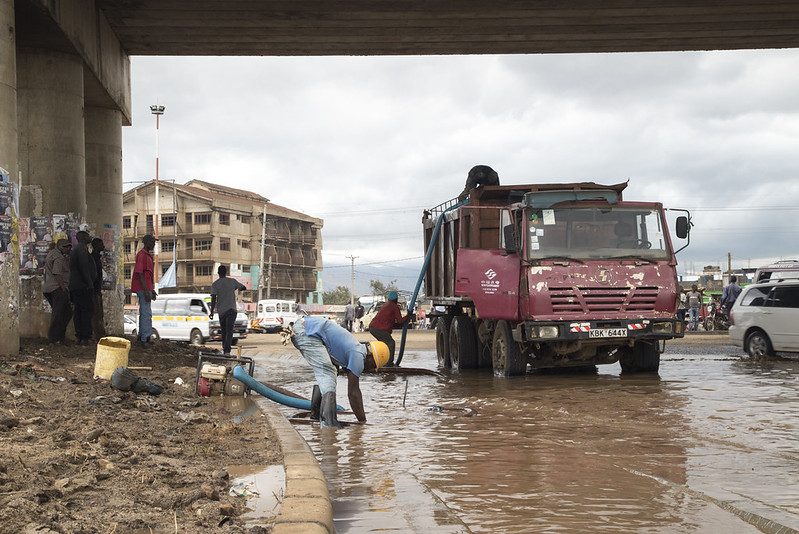
 Flooding in Kenya has displaced more than 412,000 people since September 2025. Unprecedented levels of rainfall, following the El Niño rainy season, triggered the flooding, recording one of the heaviest rain seasons in Kenya’s history. These torrential rains have now led to floods across 33 out of Kenya’s 47 states, and the situation has only been worsened by the prolonged drought that has resulted in ruined infrastructure and farmland, almost irreparably damaging thousands of people’s livelihoods. These extreme weather events are not just extraordinary occurrences, but evidence of how natural disasters can affect the country.
The Effects of Flooding in Kenya
The flooding in Kenya has resulted in displacement, deaths, damaged or lost infrastructure and farmland, with destruction across all sectors: 11,311 losses in livestock, submergence of 61 key roads and the destruction of nearly 2,000 schools and 62 health centres nationwide, according to Help.NGO.
One personal testimony comes from Felista, who states: “Flooding has taken away my livelihood source.” Felista is a displaced mother and business owner as a herbalist, who looks after her daughter and grandchildren owing to her daughter’s mental health issues, and now “[she] can no longer access herbs.”
Unfortunately, the combination of flooding in Kenya and the ensuing fast-onset drought has not only hurt individuals’ and families’ incomes, but also people’s health and access to basic necessities such as food, water, and education.
Public Health Concerns
According to Dr Pius Mutuku, a medical epidemiologist from the Ministry of Health, flooding made 14 facilities close down and affected a major water treatment facility, resulting in a shortage of clean water for 3,000 people. Tana River County alone reported 44 cholera cases, which is one of the most flood-affected regions and in displacement camps that are rapidly filling up, medical emergencies such as this are significant worries to public health.
Poverty is a multidimensional issue, affecting not only the economy but also creating a poverty of knowledge and independence. Schools across the country have closed due to water damage, postponing term for two weeks due to the disruption and lost infrastructure that prevents staff and students travelling to school. The Kenyan government has chosen to demolish houses, specifically informal settlements near the major rivers – the worst affected flood zones- to reduce future flood damage. However, this means destroying nearby infrastructure also, which puts families in the worst socio-economic situations at greater risk, removing their access further to facilities for health care or education.
The Response
Kenya Red Cross (KRCS) has traditionally been the centre of emergency response efforts, but the organization found itself stretched beyond capacity in this crisis and in need of additional man-power and financial support. County emergency funds had been depleted, and local authorities were unable to respond to the flooding in Kenya alone until Help NGO joined KRCS, offering field support and new technology.
The United Nations Central Emergency Response Fund (CERF) has also contributed to the crisis team, allocating $3 million US dollars to humanitarian partners to support the assistance of 190,000 people across 10 counties severely ruined by the flooding in Kenya.
Funding is a silent but crucial element of resolving national and international crises like this one, and this money from CERF went toward organizations like the World Food Program (WFP), which is providing cash assistance to affected families, to help them meet their most urgent needs in the time of disruption and loss. This cash assistance aimed to reach those most vulnerable in society, and those most harshly affected by the floods and drought, such as the disabled, chronically ill, or the urban poor population.
Another method of cash assistance and funding is the Adaptation Fund, which finances projects worth more than $49 million to reshape infrastructure so it can withstand natural disaster-influenced events like shock floods and droughts. This aid is especially significant to those living in urban poverty, whose informal settlements are most vulnerable to extreme weather events.
The Results
Part of Help.NGO’s action has been providing new advanced drone technology to work alongside satellites, and survey the extent of damage done to Kenya’s landscape. Without this level of surveillance, the government would not be able to accurately implement aid to the regions and communities that are most in need. These drones have provided invaluable data for “recovery and reconstruction,” according to a Help NGO spokesperson.
The images and data from Help.NGO’s technology helped a multitude of missions, including organizing medical assistance. The Ministry of Health has immensely benefited from this information, and have been able to set up medical camps with the support of KRCS for continuity of services for the more than 4,000 people hurt by hospital closures.
In addition, WHO deployed more than 720 first responders to flood-affected zones to offer on-site recovery and attention, and attend to patients across Kenya’s 192 medical camps. The mission also distributed cholera kits and treated approximately 10,000 people.
The Future
Funding can change an individual’s life, like Felista, who has now been able to reopen her business and return her grandchildren to school. CERF provided her with KES 10,000- equivalent to $80, which has enabled her to pay school fees, buy food, and, significantly, the herbs and materials she needs to get her business up and running again. With the help of KRCS and Help NGO, financial aid and technology are reshaping Kenya, socially and physically, building a safer and more stable country for generations to come.
– Jaya Noonan
Jaya is based in London, UK and focuses on Good News and Global Health for The Borgen Project.
Photo: Flickr

Women’s Life Centers in Türkiye
In response, Women’s Life Centers in Türkiye have emerged as important community hubs supporting women and families as they rebuild their lives after the disaster.
Safe Spaces for Women and Girls
Women’s Life Centers in Türkiye provide safe environments where women and girls can access protection services, counseling and community support. According to U.N. Women, the centers offer psychosocial support, referral services and information on protection programs for women facing vulnerabilities following the earthquake. These services are especially important in crisis recovery settings when women and girls may face increased risks of violence, displacement and poverty.
The centers also host workshops, group discussions and social activities that allow women to connect and rebuild social networks. Strengthening community relationships plays an important role in disaster recovery, helping individuals access resources, share information and regain a sense of stability after experiencing significant loss.
Supporting Children’s Well-Being and Learning
Children also benefit from programs organized within the centers. Activities designed for young people focus on emotional well-being, social interaction and the maintenance of routines after traumatic experiences. Structured activities and safe learning environments help children cope with stress and continue their development during periods of disruption following disasters.
UNICEF reports that child-friendly spaces and temporary learning environments are an important part of the earthquake response in Türkiye. These programs provide safe areas where children can play, learn and receive psychosocial support while communities rebuild homes and schools. Maintaining access to educational and social activities helps children regain a sense of normalcy during long recovery periods.
Strengthening Women’s Economic Resilience
Women’s Life Centers in Türkiye also focus on strengthening long-term resilience by supporting women’s economic participation. The centers offer skills development programs, information sessions and community initiatives that help women explore employment opportunities and rebuild livelihoods disrupted by the earthquake. Economic recovery is an essential part of reducing long-term poverty risks following natural disasters.
According to the World Bank, disasters can significantly affect vulnerable households by disrupting employment and access to services. Programs that support women’s economic participation and financial stability can therefore contribute to stronger community recovery and long-term resilience.
Community-Driven Recovery
Community initiatives such as Women’s Life Centers in Türkiye demonstrate how locally grounded support systems can help families recover after major crises. By providing protection services, psychosocial support and opportunities for social and economic engagement, the centers address several challenges faced by women and children following disasters.
As recovery efforts continue in earthquake-affected regions, programs that prioritize the well-being of women and children remain essential. Women’s Life Centers in Türkiye highlight how community-based support can strengthen resilience, promote stability and help vulnerable families rebuild their futures after disaster.
– Isil Ertas Senturk
Photo: Flickr
Estonia’s Startup Ecosystem Supports Economic Growth
As a result, Estonia is often recognized as one of the most digitally advanced countries in Europe. Government initiatives and public-private partnerships play a central role in supporting startups. By combining digital governance with entrepreneurial support programs, Estonia has built a system that encourages innovation while reducing barriers to entry for new businesses.
Startup Estonia
One of the primary initiatives supporting Estonia’s startup ecosystem is Startup Estonia. This government-backed program aims to develop the country’s startup sector by connecting entrepreneurs with funding, mentorship and global markets.
Startup Estonia works to attract international investors while also supporting local entrepreneurs through networking opportunities and training programs. The initiative has helped foster a collaborative environment where startups can grow and access global resources. By strengthening connections between businesses, investors and policymakers, the program supports long-term economic development.
E-Residency Program
Another major contributor to Estonia’s startup ecosystem is the e-Residency program. This initiative allows individuals from around the world to establish and manage businesses in Estonia entirely online. Through e-Residency, entrepreneurs can access Estonia’s digital services, including company registration, banking and tax filing.
This program has attracted thousands of international business owners, increasing foreign investment and expanding Estonia’s economic reach. By reducing administrative barriers, e-Residency enables startups to operate efficiently in global markets.
Digital Infrastructure and Innovation
Estonia’s digital infrastructure plays a central role in the success of its startup ecosystem. Platforms such as X-Road allow secure data exchange between government institutions, reducing bureaucracy and improving efficiency.
Digital ID systems also enable citizens and entrepreneurs to access services quickly, from signing contracts to filing taxes. These systems reduce the time and cost associated with starting and running a business. As a result, startups can focus more on growth and innovation rather than administrative processes.
Investment and Economic Impact
The Estonian startup ecosystem has attracted significant investment from both domestic and international sources. Venture capital funding and accelerator programs provide startups with the financial resources needed to scale their operations.
These investments have contributed to job creation in sectors such as technology, finance and logistics. As startups expand, they create employment opportunities and contribute to economic diversification. This growth can also benefit low-income Estonians by opening up new pathways to stable employment, particularly for young people and job seekers looking to enter emerging industries.
Over time, a stronger, more diversified economy can help reduce poverty by increasing household incomes and expanding access to economic opportunities.
The Big Picture
The Estonian startup ecosystem demonstrates how targeted policies and digital innovation can drive economic growth. Programs such as Startup Estonia and e-Residency, combined with strong digital infrastructure, create an environment where businesses can thrive.
As Estonia continues to invest in entrepreneurship and innovation, its startup ecosystem offers insights for other countries seeking to promote economic development. By reducing barriers to entry and supporting small businesses, the startup ecosystem in Estonia contributes to long-term economic stability and opportunity.
– Jason Hill
Photo: Unsplash
How Charities Are Responding to Flooding in Kenya
The Effects of Flooding in Kenya
The flooding in Kenya has resulted in displacement, deaths, damaged or lost infrastructure and farmland, with destruction across all sectors: 11,311 losses in livestock, submergence of 61 key roads and the destruction of nearly 2,000 schools and 62 health centres nationwide, according to Help.NGO.
One personal testimony comes from Felista, who states: “Flooding has taken away my livelihood source.” Felista is a displaced mother and business owner as a herbalist, who looks after her daughter and grandchildren owing to her daughter’s mental health issues, and now “[she] can no longer access herbs.”
Unfortunately, the combination of flooding in Kenya and the ensuing fast-onset drought has not only hurt individuals’ and families’ incomes, but also people’s health and access to basic necessities such as food, water, and education.
Public Health Concerns
According to Dr Pius Mutuku, a medical epidemiologist from the Ministry of Health, flooding made 14 facilities close down and affected a major water treatment facility, resulting in a shortage of clean water for 3,000 people. Tana River County alone reported 44 cholera cases, which is one of the most flood-affected regions and in displacement camps that are rapidly filling up, medical emergencies such as this are significant worries to public health.
Poverty is a multidimensional issue, affecting not only the economy but also creating a poverty of knowledge and independence. Schools across the country have closed due to water damage, postponing term for two weeks due to the disruption and lost infrastructure that prevents staff and students travelling to school. The Kenyan government has chosen to demolish houses, specifically informal settlements near the major rivers – the worst affected flood zones- to reduce future flood damage. However, this means destroying nearby infrastructure also, which puts families in the worst socio-economic situations at greater risk, removing their access further to facilities for health care or education.
The Response
Kenya Red Cross (KRCS) has traditionally been the centre of emergency response efforts, but the organization found itself stretched beyond capacity in this crisis and in need of additional man-power and financial support. County emergency funds had been depleted, and local authorities were unable to respond to the flooding in Kenya alone until Help NGO joined KRCS, offering field support and new technology.
The United Nations Central Emergency Response Fund (CERF) has also contributed to the crisis team, allocating $3 million US dollars to humanitarian partners to support the assistance of 190,000 people across 10 counties severely ruined by the flooding in Kenya.
Funding is a silent but crucial element of resolving national and international crises like this one, and this money from CERF went toward organizations like the World Food Program (WFP), which is providing cash assistance to affected families, to help them meet their most urgent needs in the time of disruption and loss. This cash assistance aimed to reach those most vulnerable in society, and those most harshly affected by the floods and drought, such as the disabled, chronically ill, or the urban poor population.
Another method of cash assistance and funding is the Adaptation Fund, which finances projects worth more than $49 million to reshape infrastructure so it can withstand natural disaster-influenced events like shock floods and droughts. This aid is especially significant to those living in urban poverty, whose informal settlements are most vulnerable to extreme weather events.
The Results
Part of Help.NGO’s action has been providing new advanced drone technology to work alongside satellites, and survey the extent of damage done to Kenya’s landscape. Without this level of surveillance, the government would not be able to accurately implement aid to the regions and communities that are most in need. These drones have provided invaluable data for “recovery and reconstruction,” according to a Help NGO spokesperson.
The images and data from Help.NGO’s technology helped a multitude of missions, including organizing medical assistance. The Ministry of Health has immensely benefited from this information, and have been able to set up medical camps with the support of KRCS for continuity of services for the more than 4,000 people hurt by hospital closures.
In addition, WHO deployed more than 720 first responders to flood-affected zones to offer on-site recovery and attention, and attend to patients across Kenya’s 192 medical camps. The mission also distributed cholera kits and treated approximately 10,000 people.
The Future
Funding can change an individual’s life, like Felista, who has now been able to reopen her business and return her grandchildren to school. CERF provided her with KES 10,000- equivalent to $80, which has enabled her to pay school fees, buy food, and, significantly, the herbs and materials she needs to get her business up and running again. With the help of KRCS and Help NGO, financial aid and technology are reshaping Kenya, socially and physically, building a safer and more stable country for generations to come.
– Jaya Noonan
Photo: Flickr
Supporting Rural Communities in Tonga
Connectivity and Communication
The eruption of the Hunga-Tonga-Hunga-Ha’apai underwater volcano and subsequent tsunamis in 2022 severed 55 miles of the underwater data cable that connected Tonga to the world via Fiji. While most countries have multiple data cables, the U.K. has 50, Tonga has only one. During the five weeks it took for repairs to be conducted, the island nation was cut off from the internet and the wider world.
The damage from the once-in-1,000-year eruption highlighted the fragility and importance of internet connectivity. Of the 130 people over the age of 10 on Hunga, only 44 had access to the internet in 2024, a trend seen across the Asia-Pacific region, where only 47% of individuals in rural areas use the internet compared with 82% in urban areas.
In response, the International Telecommunication Union (ITU), as part of a Joint Program to support the United Nations Sustainable Development Goals (SDGs) and its Smart Villages and Smart Islands Initiative (SVSI), established Hunga’s Digital Hub. The hub provides locals with high-speed and reliable internet access, which has reshaped the island’s education and agricultural sectors. Teachers at the two primary schools on the island now have access to online resources, while older students, whose attendance at high schools on the main island of Vava’u was previously affected by ocean conditions, are now able to learn online. Fishermen and farmers can also market online and arrange sales before costly trips to the mainland.
Community Empowerment and Food Security
The most well-known development project in Tonga is the Tonga Rural Innovation Project (TRIP), which has had two phases — Phase I from 2012 to 2017 and Phase II from 2018 to 2025 — with a third phase agreed upon in February 2026. The project is a collaboration between the government of Tonga, the International Fund for Agricultural Development (IFAD) and other key stakeholders.
The success of TRIP II was apparent in the project’s recent Completion Report, which highlighted the ways the program exceeded targets in several key areas. With a total budget of $12.66 million, the project reached 9,291 households and more than 32,000 people across 122 communities, exceeding targets by 93%. Post-project surveys revealed that 99.8% of households surveyed reported knowledge of TRIP II, with a participation rate of 97.4% in Community Development Planning.
The project was not without difficulties. The COVID-19 pandemic and the Hunga-Tonga-Hunga-Ha’apai eruption presented challenges for the program. In response, increased funding and a time extension were allocated to ensure success, with an additional grant of $0.7 million financed by the IFAD and the Australian government. Overall, TRIP II helped support rural communities in Tonga by increasing the volume of crops cultivated and incomes generated by agriculture, with yam, sweet potato and Tonga taro yields rising by 52.9%, 59.4% and 54.3%, respectively.
Climate Resilience and Infrastructure
The financial implications of natural disasters are often severe for Tonga, with the Hunga-Tonga-Hunga-Ha’apai eruption contributing to a decline in real GDP of almost 6% in 2021 and 2022. Combined with the threat such events pose to the lives of Tongans, the need to act is apparent. This led to the establishment of the Tonga Australia Resilient Communities Program (TARCP), agreed in December 2024 between the Australian government and the MORDI Tonga Trust (MORDI).
With a budget of AUD $9.7 million, the project aims to work alongside other initiatives and align with several U.N. SDGs to establish greater economic and climate resilience, as well as build climate infrastructure and improve access to water, sanitation and hygiene supplies through local approaches and international funding. The project remains in its early stages, with targets to improve resilience and quality of life for around 39,300 Tongans across five of Tonga’s main island groups: Tongatapu, Vava’u, Ha’apai, ‘Eua and the Niuas.
Looking Ahead
Progress has been made to support rural communities in Tonga and projects continue to expand. Indeed, the recent agreement of TRIP III represents a continuation of the work begun under previous phases. Together, ongoing international development projects offer pathways to strengthen rural communities in Tonga and reduce the financial and social impact of natural disasters and economic isolation.
– Sean Patrick Welsh
Photo: Flickr
Francis Kéré’s Survival Architecture and Health Care in Burundi
The architecture of health can take both literal and metaphorical forms. Global poverty is one of the biggest threats to a person’s health, and East Africa has historically been one of the poorest regions in the Global South. As a result, many countries in the region are spending more on debt repayments than on health care. Alongside cholera epidemics and vaccine inequality, countries such as Burundi have extremely low health ratings, with a poverty rate of 74.2% and a high maternal mortality rate.
Emmanuel Niyonkuru, a nurse at a local health facility in Burundi, stated that more funding for infrastructure, more training for doctors and nurses and a reliable supply of essential medicines are needed to make the necessary progress.
The Architect
As of March 2026, a new health care facility is underway in Burundi’s Bubanza region, and Francis Kéré, African laureate and winner of the 2022 Pritzker Prize, is the figure behind it. Kéré, often referred to as the “Nobel of Architecture” recipient, was praised by judges for his efforts to change unsustainable patterns of production and consumption and for helping to develop new infrastructure that prioritizes sustainability.
Kéré’s work demonstrates a commitment to Africa and its topography. He was raised in Burkina Faso in West Africa and has received global recognition for his work. He currently has large-scale projects in countries such as the United States (U.S.), Brazil and Germany. The ethos of his architecture is survival, and he has said that everything he does is born out of necessity.
This new clinic will focus on maternity care and specialized surgical treatment, taking into account the absence of electricity in the region and the acute challenges facing Burundi’s health as one of Africa’s poorest countries.
The Architecture
In 2001, Kéré set out to build the Gando Primary School in the Boulgou area. Different from the concrete and glass buildings of Europe, the primary material involved in the construction of the school was mud bricks. In areas without electricity, these clay bricks are heat-absorbent, allowing the school to remain cool. Kéré aims to use regional knowledge in his architecture, showing commitment to local resources and local techniques.
The Burundi health care facility will follow this pattern, reducing costs through using locally sourced bricks, clay and stone, along with traditional building skills. Alongside providing health care to the region, this approach will also support the regional economy by training local workers. Beyond the building itself, Kéré is building systemic networks of support and stability for the communities that need them.
Looking Ahead
Recent United Nations (U.N.) reports note that the health sector in many African countries remains highly dependent on foreign funding. Funding can take different forms, and addressing global poverty involves both small-scale support for individuals and the larger-scale infrastructure that facilitates it.
Nana Biamah-Ofosu, a Ghanaian British architect and critic, has called Kéré the leading figure of an African renaissance of architecture. She has also stated that learning from Africa as a place of deep knowledge is important for the survival of humanity.
The 3,000-square-meter complex is expected to open in 2026, improving access to health care in Burundi.
– Grace Sandall
Photo: Flickr
Emergency Backpacks and Flood Relief in Bangladesh
Flooding and Poverty in Bangladesh
Bangladesh has a poverty rate that has fluctuated significantly in recent years. In 2022, the poverty rate dropped to 18%, but as of 2025, it has risen to 28%. More than a quarter of the population suffers from increasing amounts of infrastructure vulnerability, food insecurity and chronic illness. A huge reason for this recent rise in poverty rate is due to floods brought about by climate change.
In recent years, Bangladesh has been the country that became significantly vulnerable to natural disasters, since its geographical location makes it particularly prone to floods. This is due to nearby basins that receive massive amounts of rain year-round. The rain pools in basins and then washes through Bangladesh into the Bay of Bengal. Plus, the location of the country’s residential infrastructure is placed right in the way of the flood path. The facts make Bangladesh’s future seem daunting, but hope is not lost.
CARE and Emergency Backpacks
In the midst of the flood, no help could get in to those in need because of the harsh conditions, except CARE, which had planned ahead of time. It placed 500 emergency backpacks in easy-to-access places, so that when the need arose, emergency tools would be available. In addition, CARE operated to distribute more packages to those most in need, even during holiday hours.
These CARE packages are compact, lightweight tube-shaped backpacks that consist of essential hygiene products, first aid materials, and emergency equipment personalized to the needs of each individual. They may contain any of the following:
During post-effort surveys, CARE recorded some inspiring metrics. Women specifically reported that the menstrual hygiene products provided were extremely helpful, improving their wellbeing in ways beyond just cleanliness. 66% of women used the kits mainly because of their hygiene products. Solar-powered technology was also among the most used items; 72% of households used solar power to restore use of their mobile devices to contact help and find crucial information. Sixty four percent of people reported that solar-powered lights helped them remain safe and calm at night.
Overall, backpacks helped 336 households, and 99% of those who received the packages reported their satisfaction with the tools provided. Thanks to this success, CARE has been able to implement CARE packages in Nepal, Malawi, the Philippines, and Mozambique in addition to Bangladesh. CARE has even partnered with The Coca-Cola Foundation to expand the production and distribution of the packages.
CARE’s flood relief aid in Bangladesh is a beacon of hope for poverty eradication. If projects like this continue to be well-funded and backed by influential donors like Coca-Cola, positive change is on the horizon.
– Lucas Cain
Photo: Flickr
Lenacapavir’s Introduction in Zimbabwe
Lenacapavir’s Introduction in Zimbabwe
In February 2026, Zimbabwe became one of the first countries in Africa to introduce Lenacapavir, a long-acting injectable HIV-prevention drug developed by Gilead Sciences. Administered only twice a year, Lenacapavir’s introduction in Zimbabwe marks a major milestone in the region’s response to HIV. The rollout positions Zimbabwe at the forefront of next-generation prevention strategies, offering a discreet and highly effective alternative to daily oral pre-exposure prophylaxis (PrEP).
Health officials and global health bodies have welcomed the introduction. Zimbabwe’s Health Minister Douglas Mombeshora described Lenacapavir as a new approach, noting that it offers a less complicated method compared with daily oral PrEP.
While daily oral PrEP has been available for years, its impact has been limited by stigma, partner suspicion, unpredictable schedules and social scrutiny. A survey conducted by The Lancet found that 51% of participants held discriminatory attitudes toward HIV and reported shame of association.
A discreet biannual injection removes many of these barriers. As one early recipient explained, clients often misinterpreted PrEP pills as HIV treatment, leading to stigma and lost income, a challenge that the injection avoids.
Constance Mukoloka, one of the first recipients, said the injection makes her “feel safe” and able to “work with confidence,” explaining that daily PrEP pills often created tension with clients and were difficult to take consistently.
A Tool for High-Risk Groups
Lenacapavir’s introduction in Zimbabwe is significant for vulnerable communities, particularly adolescent girls, young women, sex workers and other high-risk groups who face disproportionate vulnerability to new infections. Its introduction signals a shift in HIV prevention strategy, particularly in regions where incidence remains high despite decades of progress. Early evidence from large-scale trials shows that more than 99% of participants remained HIV negative while on the twice-yearly regimen, underscoring its potential to overcome adherence challenges that have previously undermined daily oral PrEP uptake.
Although national HIV prevalence has declined significantly over the past two decades, women and girls continue to bear a disproportionate share of new infections, driven by structural inequalities, gender-based violence and economic precarity.
The rollout has also sparked public debate, as some community voices celebrate the new treatment while others raise concerns about access, affordability and the need for transparent communication to build trust in long-acting biomedical prevention. As global partners such as the U.S. government and the Global Fund frame this as a landmark in innovation and health system strengthening, Zimbabwe may become a critical test case for how long-acting PrEP can be scaled equitably across Sub-Saharan Africa.
Early Evidence and Implementation
Early pilot programs indicate that Lenacapavir’s introduction in Zimbabwe has seen strong uptake, with clinics reporting that the simplified regimen is easier to manage, reduces drop-off rates and integrates smoothly into existing reproductive health services. These findings mirror broader regional trends, as early adopters across Africa have seen strong interest in Lenacapavir even before full national rollout. Public health experts argue that the injection could significantly reduce new infections if scaled nationally, especially in rural areas where clinic visits are infrequent and transport costs are high. Several states are already exploring similar pathways.
Looking Ahead
Zimbabwe’s decision to move early on long-acting PrEP signals a broader shift in global health leadership. Rather than waiting for donor-driven adoption cycles, the country is asserting itself as a regional pioneer in HIV-prevention innovation. The rollout is supported by partnerships including the President’s Emergency Plan for AIDS Relief (PEPFAR) and the Global Fund, but Zimbabwe’s strong HIV-response infrastructure, having already met the UNAIDS 95-95-95 targets, has enabled rapid integration of the new technology.
In a region where HIV remains a leading cause of mortality, the introduction of a discreet, effective and user-friendly prevention tool represents a meaningful step forward. It offers new autonomy to individuals who face stigma or safety risks when using visible prevention methods, strengthens health system efficiency and demonstrates African leadership in adopting public health technologies.
– Max Kenway
Photo: Flickr
Don’t Just Eat Chocolate; Grow the Ghana Cocoa Industry
Despite the cocoa industry bringing in a high export of $1.46 billion, in 2024, many farmers are below the poverty line. They are facing delayed payments from local regulators on top of a very low minimum wage, some earning only $3 per day
Global Poverty of the Chocolate Industry
Only a small share of chocolate’s final value reaches producers. As Frontiers in Sustainable Food Systems reports, “only 7% of the price that consumers pay for chocolate makes its way back to the producers.” Cocoa farmers are on the very end of the value chain because Ghana ships more than 80% of its cocoa abroad in raw form, which means that the most profit is made from the final product.
Though smallholder farmers dominate Ghana’s cocoa industry, they often work on small plots with limited resources. As emphasized in the Cocoa Barometer, poverty is not just one issue among many; it is a central factor underlying many challenges in the cocoa sector.
The Cocoa Barometer highlights how this system reflects deeper historical inequalities tied to colonial trade structures. The result is a persistent “extraction” model, where value leaves producing countries instead of being reinvested locally.
The cocoa industry and cocoa farming have been in the traditions of many farmers in Ghana. There are approximately 800,000 smallholder farm families across regions including Ashanti, Western, North, Eastern and Central Ghana. For this livelihood of many to disappear, farmers would face severe poverty and trigger an economic downturn.
Cocoa Industry in Ghana
Recently, John Mahama, the president of Ghana, has made major efforts to prioritize local processing of raw bean exports, aiming to cease raw cocoa sales by 2030.
In a recent visit to Temple University, in Philadelphia, PA., President Mahama brought light to this situation and his reasoning behind the push.
“It is because for almost 70 years after we gained independence, we’re still exporting raw beans to the world,” Mahama said. “I believe that what has happened in the international market should be a wake up call for us.
President Mahama has put a strict deadline on when he believes the goal of this program should be where they should be; with at least 50% of the country’s cocoa beans in local production, while halting raw mineral ore exports by 2030. “By 2030, there won’t be any raw mineral ores leaving Ghana. You must process all that locally,” said President Mahama.
The Future
The hopes in these major switches have short-term and long-term goals including:
President John Mahama, is pushing this advocacy of consuming local chocolate, with a short yet powerful statement of, “Eat Chocolate, Grow Ghana.”
– Elizabeth Fryer
Photo: Flickr
Comoros’ Ylang-Ylang Industry: Why Greener Growth Matters
This industry also strengthens the national economy. Agriculture accounts for about one-third of Comoros’ GDP and export crops such as ylang-ylang, vanilla and cloves drive much of that growth.
Greener Practices, Stronger Incomes
Ylang-ylang creates direct economic opportunities for many families in Comoros. Around 10,000 producers cultivate the crop, particularly on the island of Anjouan. Farmers and workers earn a steady income from harvesting and selling the flowers. Women play a central role, spending long hours collecting blossoms to sell by the kilogram.
Because producers can harvest ylang-ylang flowers multiple times each month, the crop provides income year-round. This cycle of greener growth helps households manage expenses and reduces income instability. The industry also supports broader economic activity.
Small distilleries purchase flowers from independent farmers, allowing even small-scale producers to participate in export markets. These businesses create jobs and strengthen local skills in processing and production. Licensed exporters help maintain quality standards and connect Comoros to global markets.
As a result, even remote communities benefit from international trade. In 2022, ylang-ylang exports generated about $5.56 million, making the crop one of Comoros’ most valuable export products. Major markets include France, Switzerland, the U.S. and the U.K. This global demand brings valuable foreign income into the country.
Comoros’ Ylang-Ylang Industry
Recent developments are improving both sustainability and economic resilience in Comoros’ ylang-ylang industry. Producers are upgrading distillation equipment to reduce costs and improve efficiency. Improved ovens and stainless-steel alembics use less wood, lowering production expenses and making operations more sustainable.
Farmers are also planting trees such as mango and breadfruit to secure fuel sources while protecting natural forests. These efforts support long-term productivity and help preserve the resources on which livelihoods depend.
A Future Rooted in Prosperity
New environmental programs are also creating additional income streams for rural communities. NGOs now pay farmers, known as “water guardians,” to restore forests and protect water systems. These initiatives provide financial incentives while strengthening local ecosystems.
By linking conservation with income generation, these programs help reduce poverty and build economic security. Ylang-ylang already generates export revenue, employment and steady income for rural communities. Now, greener production methods are improving efficiency, protecting natural resources and creating new opportunities.
With these changes, the “flower of flowers” can continue to drive economic growth while helping communities move out of poverty. Looking ahead, greater investment in ylang-ylang production could further accelerate poverty reduction in Comoros. Training farmers in improved harvesting techniques could increase yields and raise incomes without requiring more farmland.
Expanding local distillation capacity would also allow communities to capture more value before export, creating additional jobs. Improved infrastructure, including transport and storage, could reduce waste and increase profitability. As international demand for sustainable fragrances grows, Comoros is well-positioned to establish itself as a premium, ethical supplier.
This shift could strengthen export earnings while supporting rural livelihoods. By combining sustainability with productivity, ylang-ylang production offers a practical path toward inclusive economic growth and long-term poverty reduction.
– Demetra Mykoniatis
Photo: Flickr
How Legal Aid Clinics in Uganda Help Deliver Justice
Why Access to Justice Matters
Legal problems are widespread in Uganda and they often hit low-income households the hardest. A 2024 justice-needs study by The Hague Institute for Innovation of Law found that 45% of legal problems had not yet been resolved, with 29% still ongoing and 16% abandoned. The report also identified land problems, family disputes, crime and domestic violence as some of the most serious justice issues people face. It noted that family problems and domestic violence are more common among people who say they cannot cover their basic needs.
These figures help explain why legal aid clinics in Uganda matter for poverty reduction. Legal support is not only about court cases. It can help families keep land, secure child maintenance and settle disputes before they become even more damaging. For households already living on tight budgets, that can protect income, housing and long-term stability.
How Legal Aid Clinics are Improving Access to Justice
One of the main ways legal aid clinics in Uganda are expanding access to justice is by bringing free services closer to vulnerable communities. The International Development Law Organization’s (IDLO) 2022 annual report says the Uganda Law Society clinic in Kampala is one of six regional legal aid clinics supported through its Community Justice Programme. These clinics provide pro bono services on both civil and criminal matters, including legal representation, legal advice and counseling. They also support cases involving land disputes and run community sensitization on issues such as gender-based violence, family law and children’s rights.
This matters because many justice problems have a direct connection to poverty. Land disputes can threaten the asset a family depends on most. Family cases can determine whether a parent receives financial support for a child. By offering free legal help, clinics make it more possible for low-income Ugandans to act on rights that might otherwise remain out of reach.
Results for Vulnerable Communities
The impact of legal aid clinics in Uganda becomes clearer in the numbers. IDLO reported that in 2022, Uganda Law Society clinics supported through its programme provided free legal advice and representation to 10,423 vulnerable justice seekers. In the same year, 956 people secured timely remedies through mediation, plea bargaining, police bonds, bail or quick-win sessions. Another 163 civil cases were concluded through litigation. IDLO also reported that through the clinics, 34 complainants recovered 154 acres of disputed land, while 10 others received monetary compensation.
IDLO’s 2023 annual report shows that this work continued. It says the six clinics provided free legal aid support to 4,390 people in 2023, including legal representation, advice, counseling and community sensitization. The report highlights the importance of land cases in particular, noting that one of the main reasons people approach the clinics is for help resolving disputes over land rights.
Justice at the Individual Level
The benefits of legal aid clinics in Uganda are also visible in individual cases. In one example from IDLO’s 2022 annual report, a university student Rose went to a Uganda law society legal aid clinic in Kampala after the father of her child refused to provide support, with help from the clinic, she took the case to court. After several court appearances and home mediation sessions, the case was settled with a monthly support payment that allowed her to provide a more stable life for her child.
IDLO’s 2023 report also describes a land case in Masese, where a resident sought help from the Uganda Law Society legal aid clinic in Jinja after learning that land titles in his community had been sold off to outside buyers. Lawyers from the clinic filed the case in court and advised the community on how to understand and claim their rights. The beneficiary won his case, beginning a process to cancel the illegal land titles and strengthening the community’s position in future negotiations.
Technology is Helping Close the Justice Gap
Some organizations are widening access through digital tools as well. BarefootLaw, a Ugandan nonprofit founded in 2013, says it has empowered more than 1 million people across Uganda, Kenya and Malawi through pro bono legal support. Its 10th anniversary report says its lawyers receive support from Winnie, an artificial intelligence tool that helps respond to legal questions more quickly. For people who cannot easily travel to a legal office, that kind of support can offer an important first step.
As organizations such as the Uganda Law Society and BarefootLaw continue to expand legal support, more Ugandans are gaining practical ways to defend their rights. In that sense, legal aid clinics in Uganda are doing more than improving access to justice. They are helping vulnerable families protect land, income and personal safety, making justice more reachable for people living on the economic margins.
– Tom Basu
Photo: Flickr