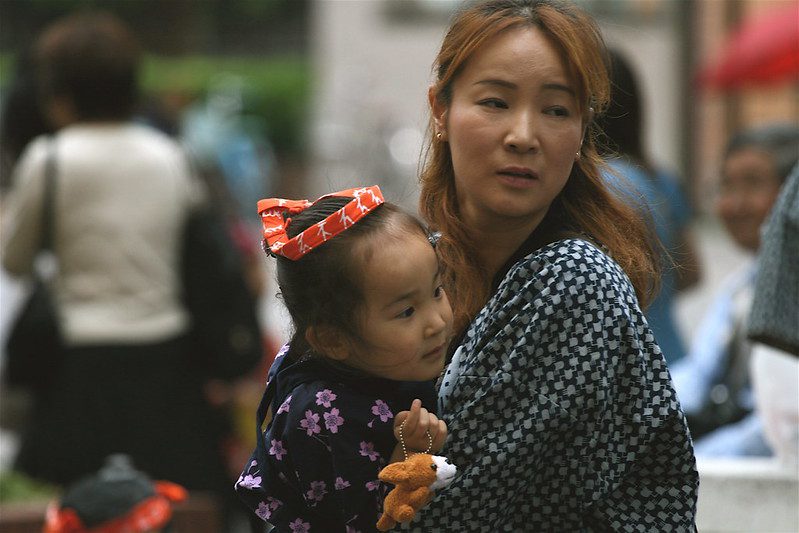
 Despite being one of the wealthiest developed countries worldwide, Japan grapples with a significant child poverty issue, ranking among the highest in the Organisation for Economic Co-operation and Development (OECD) countries. Alarming statistics reveal that one in seven Japanese children lives in poverty.
Causes of Child Poverty in Japan
A significant factor contributing to child poverty is the high percentage of children living in single-parent households. Approximately 50% of single-parent families, most often mother-children households, fall below the poverty line. The summary report shows that the number of mother-children households is roughly 565,000 in 2022, while the number of father-children households is only 75,000.
Furthermore, the societal structure in Japan predominantly favors full-time male employees, leading to a gender wage gap where women, even those working full-time and overtime, often receive lower wages and fewer benefits. The average income per mother-children household is merely 3.73 million yen ($23,529) a year, compared to 6.06 million yen ($38.199) in “single-parent families with a father.” Nearly two million mothers with children in households have no jobs.
“I feel deprived of my dignity because I’m a single mother, I’m on public welfare, I don’t have enough money for daily food and school and I don’t have a job,” said Mika, a 45-year-old single mother who raises her two children, aged 3 and 7, on her own. “My children would like to join clubs and travel, but I can’t afford it.”
Additionally, 22.5% of mother-child households have no savings, the highest percentage among all types of households. Meanwhile, the lowest percentage of mother-child households have savings. In the self-assessed survey of living conditions, around 39.4% of mother-child households claimed a “very difficult” condition, the highest among all types of households. Only 23.4% of mother-child households think they live in a “normal” condition.
The Japanese Social Care System
The Japanese social care system involves local governments offering protective services to children who are either without parents or whose parents are unable to care for them. The system involves fostering psychological care and local community support goals. Other supportive systems such as psychological treatment facilities for children, facilities to support the development of children’s self-sustaining capacity and maternal and child living support facilities also provide home assistance and daycare to assist children and their parents.
Additionally, a children’s home provides a safe living environment for children without parents or those whose parents are unable to care for them due to abuse, serious health issues, or financial difficulties. According to data from the Ministry of Health, Labor and Welfare, the number of children’s homes in Japan is approximately 600 and the number of children living in such homes is 27,300.
NGOs Providing Solutions
Apart from government support, many organizations are fighting for child poverty in Japan:
- Lights On Children: A nonprofit organization that assists and supports children’s social needs.
- Kids Door: A nonprofit organization that provides education, comfortable homes and career workshops.
- YouMeWe: A Tokyo-based nonprofit organization that nurtures and supports local students from institutionalized homes, helping them achieve full independence by the age of 18 through initiatives like financial literacy programs.
Final Remark on Child Poverty in Japan
These supportive programs and institutes have effectively alleviated children’s poverty. A report from the Ministry of Health, Labor and Welfare indicates a decrease in children’s poverty rate from 2018 (14%) to 2021 (11.5%). The relative frequency distribution of the number of children in households with disposable income shows a drop in the range of less than 400,000 yen ($2,520) and between 400,000 and 1,400,000 yen ($2,520 and $8,820). The frequency of single-parent and children in households also declines in the range between 1,000,000 and 1,400,000 yen ($6,300 and $8,820).
Nevertheless, the Japanese government repeatedly made promises to provide financial support to children in poverty and mother-children households. However, the action was very slow. Akihiko Kato, a professor at Meiji University, has criticized the Japanese government for its sluggish response in delivering financial support to families with children. “It’s one thing we can do more of in society: try to recognize people’s cries for help,” said McAvoy, the filmmaker of Japanese single mother film “The Ones Left Behind.”
– Cindy Hong
Cindy is based in Milpitas, CA, USA and focuses on Good News for The Borgen Project.
Photo: Flickr

Education in Angola: Challenges and Developments
The Angolan peninsula’s resources include oil and diamonds, but although these resources suggest wealth for the nation, the great majority of the country lives in poverty. The Angolan system lacks in meeting the needs of all of the nation’s citizens, with education being a prime example. Development within the system has quickly ensued, with the prospect of a refined education plan getting closer and closer each day.
The Civil War
With more than one-fourth of the population being considered illiterate and approximately two million children being out of school, the question arises as to why a country with such abundant resources has been lagging in its educational advancement. After the Portuguese granted Angola its independence, from 1975 to 2002, civil war invaded the lives of the Angolan people. Buildings and infrastructures nationwide were dilapidated from the war and one common structure that was destroyed was schools.
According to the United Nations Children’s Fund (UNICEF), more than 1500 schools were destroyed between 1992 and 1996 alone. Now that the war has officially ended, a lot of these schools have since been abandoned or burned out. With the schools that survived the war, the quality of these structures still lacked essentials. Many classrooms lack windows, doors, toilets, roofs, or even basic reading and writing facilities.
Not Enough Classrooms
According to statistics taken by Angop, the state-controlled news agency, the annual average rate of enrolling children without a place to study stands at a whopping 18.59%. Although children are willing to attend school, spatial barriers prevent many from receiving an education. The Luanda province, located on the Northern coast of Angola, reported that it was unable to find room for roughly 16,000 children who finished the 9th grade to continue their education.
Children who want to either enter or continue their schooling in various Angolan provinces are continually being denied due to a lack of infrastructure, although recent legislation regarding education seems to be improving the future of Angolan schooling.
Improvements and Progresses
Strides have been made to alleviate the issues within the education system, as legislation and funding for schooling have risen in recent years. As of December 8, 2023, the World Bank granted a 10-year program to support Angola’s tertiary education system, providing $550 million to enhance and aid the quality of programs in priority areas and strengthen governance within the education system. The program’s goal is to increase the number of highly qualified graduates who have labor market-aligned skills in various areas. In the next ten years, the expansion and progress of Angolan schooling will reach up to 3.2 million students nationwide, providing them with better learning opportunities and educational access.
Another initiative that has aided in the Angolan education system is the Back to School Campaign, supported by UNICEF, with its origin stemming from 2002. The campaign has supported the training of more than 20,000 teachers. It has also restored roughly 13,000 classrooms while still preparing thousands of education kits for children and teachers. The goal of the campaign is to increase the number of children in schools, as well as to improve the literacy rate throughout the country.
In recent years, progress in literacy has been made. The Angolan literacy rate has increased from 67.4% in 2001 to 72.4% in 2022 and has an average annual growth rate of 3.8%. This growth is concurrent with the implementation of funding and legislation in support of Angolan education. With an estimated increase in literacy each year, the future of schooling in Angola can take many turns for the better.
The Future of Education in Angola
Improvement of the Angolan education system will be a long-term process, especially after the devastation its infrastructure and economy have faced after the war. From the lack of classrooms to the low rates of literacy and graduation, the Angolan youth continue to seek a successful education.
Now, with the increase in funding for school governance, quality of programs, school building and teacher training, the future of Angolan education seems promising. Suppose the government continues to prioritize the restoration and development of the education system. In that case, Angola can transition into one of the educational powerhouses of Africa.
– Oliver Martin
Photo: Flickr
How Poverty in India Makes It Difficult to Seek Support
A watershed moment in awareness for those struggling with their mental health in India was the Mental Health Care Act 2017. The act ensured that every person has the right to access mental health care and treatment from services run or funded by the government; this treatment must be of good quality, affordable and available without discrimination.
The Role of Poverty in India
These acts alone cannot overcome the exceptionally disadvantaged position impoverished individuals in India face. People experiencing poverty in India often reside in rural or underserved urban areas where mental health services are scarce or nonexistent. Even these government-run mental health facilities are limited and unevenly distributed around the country. According to a National Mental Health Survey (NMHS) conducted in 2015-16, about 70-80% of those suffering from mental disorders in India did not receive treatment, an unsettlingly high statistic.
Additionally, communities are unable to band together to support these individuals, with almost half of persons surveyed by the NMHS attributing mental health struggles to personal weakness. This deep-seated stigma surrounding mental health is prevalent in India, which leads struggling children and adults to blame themselves for disorders rather than seeking the help necessary. In these areas, school systems also tend to have less information to speak about mental health, unknowingly allowing deep-seated cultural beliefs and superstitions about mental health to persist to the detriment of struggling citizens.
In fact, the literacy rate in rural India stands at around 68.91%, compared to 84.11% in urban areas. This disparity limits the dissemination of mental health information. Even online means fail, with those in poverty-stricken areas only accounting for about 25% of the country’s total internet database, hindering access to online mental health resources and telehealth services.
Perseverance
Because of India’s shortage of trained mental health professionals, telehealth services are absolutely vital yet inaccessible to those who need them. Despite the government’s attempts at change, their reach has been limited; however, this isn’t to say that all hope is lost. Mental health services are currently being integrated into primary health care to ensure that mental health assistance is accessible at a base level.
The Central Board of Secondary Education has made another example of the attempts to raise support. Schools are essential in shaping children’s foundational beliefs, which is why discussing mental health topics in the school curriculum and providing training for teachers to identify and support students with mental health issues is the best way to bring change to the country.
– Abby Collins
Photo: Flickr
Pharma Giants against Poverty: Merck’s Plan to Eradicate Bilharzia
Answer to the Problem
Merck’s plan to eradicate Bilharzia is one of education, innovation and practicality. The water-borne parasite that causes the disease is far more widespread in poorer communities with a lack of access to clean water. This indicates that the ultimate cause of the disease is rooted in poverty. In 2007, Merck allied with the World Health Organization (WHO) to eradicate schistosomiasis, pledging to wipe out the disease by 2030.
The Merck Praziquantel Donation Program is an initiative developed by Merck to tackle the disease. It focuses on the distribution of praziquantel, the tablet used to treat the disease, with enormous success rates. The program primarily focuses on preventing and treating the disease in school-age children in poorer communities. Additionally, the program emphasizes the role of education in preventing schistosomiasis.
Is It Working?
In short: yes! Merck has donated more than 1.5 billion tablets of praziquantel to the WHO. Additionally, more than 800,000 people have been treated as a result of Merck’s plan to eradicate Bilharzia. Countries are targeted individually to increase efficiency and maximize the number of people who can benefit from the program.
In Rwanda, a further 8 million tablets have been supplied in support of its plan to eliminate schistosomiasis and “Neglected Tropical Diseases.” Merck has also pledged money to the Deworming Innovation Fund, which looks to wipe out schistosomiasis and intestinal worms in Zimbabwe, Kenya, Rwanda and Ethiopia, furthering its campaign against tropical diseases.
The Bilharzia Storytelling Lab
After previous sessions in Rwanda and Kenya, in 2024, the Bilharzia Storytelling Lab (sponsored by Merck) took place in Ethiopia, a competition that asks candidates to formulate storytelling-oriented answers to facing schistosomiasis. The winning solution is decided by a panel of judges and granted more than $10,000 to facilitate the implementation of the solution throughout the country. Focusing on the educational dimensions of tackling Bilharzia, the workshop this year was held in Addis Ababa. The initiative has so far helped treat more than 800,000 people. Individual communities that are most in need of education and treatment for the disease have benefitted from the initiative.
The groups most at risk are still largely unaware of the disease. Most at risk include school-age children and women, highlighting how necessary the money invested by Merck truly is. As is the case in many developing areas, women are still largely tasked with domestic duties that require access to clean water. This is not realistic for many women in sub-Saharan Africa, meaning many women have no choice but to expose themselves unknowingly to schistosomiasis in order to carry out tasks expected of them. Because of the Praziquantel Donation Program and Bilharzia Storytelling Lab, Merck’s plan to eradicate Bilharzia stands a chance of meeting the 2030 goal set out in 2007.
Final Remark
The financial capability of pharmaceutical giants can evidently be utilized for change. When corporations decide to use their wealth to benefit the international community, millions benefit. The benefits help those who are suffering needlessly from curable diseases to spend their time furthering their families and businesses. Once healthy, they can become assets in their communities and consequently improve the country’s prospects in the future. Merck has demonstrated this beautifully. It has returned futures to countless school children, allowing them to contribute to society rather than sentencing them with disease.
– Molly Ralph
Photo: Flickr
Single-Mother Families and Child Poverty in Japan
Causes of Child Poverty in Japan
A significant factor contributing to child poverty is the high percentage of children living in single-parent households. Approximately 50% of single-parent families, most often mother-children households, fall below the poverty line. The summary report shows that the number of mother-children households is roughly 565,000 in 2022, while the number of father-children households is only 75,000.
Furthermore, the societal structure in Japan predominantly favors full-time male employees, leading to a gender wage gap where women, even those working full-time and overtime, often receive lower wages and fewer benefits. The average income per mother-children household is merely 3.73 million yen ($23,529) a year, compared to 6.06 million yen ($38.199) in “single-parent families with a father.” Nearly two million mothers with children in households have no jobs.
“I feel deprived of my dignity because I’m a single mother, I’m on public welfare, I don’t have enough money for daily food and school and I don’t have a job,” said Mika, a 45-year-old single mother who raises her two children, aged 3 and 7, on her own. “My children would like to join clubs and travel, but I can’t afford it.”
Additionally, 22.5% of mother-child households have no savings, the highest percentage among all types of households. Meanwhile, the lowest percentage of mother-child households have savings. In the self-assessed survey of living conditions, around 39.4% of mother-child households claimed a “very difficult” condition, the highest among all types of households. Only 23.4% of mother-child households think they live in a “normal” condition.
The Japanese Social Care System
The Japanese social care system involves local governments offering protective services to children who are either without parents or whose parents are unable to care for them. The system involves fostering psychological care and local community support goals. Other supportive systems such as psychological treatment facilities for children, facilities to support the development of children’s self-sustaining capacity and maternal and child living support facilities also provide home assistance and daycare to assist children and their parents.
Additionally, a children’s home provides a safe living environment for children without parents or those whose parents are unable to care for them due to abuse, serious health issues, or financial difficulties. According to data from the Ministry of Health, Labor and Welfare, the number of children’s homes in Japan is approximately 600 and the number of children living in such homes is 27,300.
NGOs Providing Solutions
Apart from government support, many organizations are fighting for child poverty in Japan:
Final Remark on Child Poverty in Japan
These supportive programs and institutes have effectively alleviated children’s poverty. A report from the Ministry of Health, Labor and Welfare indicates a decrease in children’s poverty rate from 2018 (14%) to 2021 (11.5%). The relative frequency distribution of the number of children in households with disposable income shows a drop in the range of less than 400,000 yen ($2,520) and between 400,000 and 1,400,000 yen ($2,520 and $8,820). The frequency of single-parent and children in households also declines in the range between 1,000,000 and 1,400,000 yen ($6,300 and $8,820).
Nevertheless, the Japanese government repeatedly made promises to provide financial support to children in poverty and mother-children households. However, the action was very slow. Akihiko Kato, a professor at Meiji University, has criticized the Japanese government for its sluggish response in delivering financial support to families with children. “It’s one thing we can do more of in society: try to recognize people’s cries for help,” said McAvoy, the filmmaker of Japanese single mother film “The Ones Left Behind.”
– Cindy Hong
Photo: Flickr
Alleviating Poverty: The SAKALA Foundation
The country is struggling with fuel shortages, which have left many in need of necessities, a resurgence of gang violence, which has limited access to education and health services and the aftermath of a 2022 cholera outbreak. Haiti’s shrinking economy has led to past gains in poverty reduction being undone and has left the youth vulnerable to the effects of worsening poverty and gang violence.
Cité Soleil
Cité Soleil, located in Port-au-Prince, is a highly dangerous area of Haiti due to extreme poverty and gang violence. It is an impoverished area where an estimated four million children aged 5-19 are at risk of losing learning opportunities. They are also faced with violence, malnutrition and poverty, which severely impact their livelihoods and ability to learn.
The SAKALA Foundation
The SAKALA Foundation is a beacon of hope for some of the most impoverished children in Cité Soleil. As the only youth community center in the area, it offers programs to educate and develop children and young people. Its vision is to provide a safe space for young people as an alternative to violence and gangs.
The SAKALA Foundation offers education, athletics and agronomy programs. Classes in English, IT, sexual health and leadership are available, teaching important life skills and academic subjects. Sports are important to the foundation, as they are part of after-school programs and day camps. The initiative stresses sports as a vehicle for community development. Therefore, it offers boys and girls a range of sports. SAKALA’s agronomy program focuses on teaching the youth agroecology and nutrition, leadership skills and sustainable development.
Haiti’s Education Sector
SAKALA’s programs offer children and young people the opportunity to learn important academic, professional and personal skills. For children living in areas controlled by armed groups, accessing education is difficult due to a lack of qualified teachers and forced school closures. In some of the most harrowing instances of gang violence, shootouts occur in schools as gangs and police use them as a base.
The disruption to education is clear and SAKALA’s importance is also clear. Providing a haven for some youth and allowing them to learn and grow among the chaos drives the foundation. Through a partnership with the Global Fund for Children, the foundation covers school fees for 160 local youth, helping them break the cycle of poverty through education.
The Future of Cité Soleil
Without economic stimulus and political stability, addressing the situation in Cité Soleil is difficult. This is where charities, foundations and existing schools can be the key to progress in the immediate future. Due to the lack of economic opportunities in the region, education is one of the only paths out of poverty. This means that schools that are operating and foundations like SAKALA are important in helping children and young people out of their predicament.
– Lauren Alkhalil
Photo: Flickr
Dreamwater Providing Drinking Water in Bangladesh
Bangladesh’s Water Crisis
Bangladesh, with a population of 171 million, faces a severe water crisis. More than 18% of its population lives below the poverty line and more than 40% lack access to safe water. This lack of access to clean water sources contributes to the prevalence of water-borne diseases such as diarrhea, dengue fever and tuberculosis. One of the most pressing issues is water contamination. Bangladesh has the highest rate of arsenic-contaminated water in the world, primarily due to natural geological sources polluting groundwater. The presence of arsenic in drinking water poses serious health risks, including skin lesions, cancer, cardiovascular diseases and developmental effects.
Furthermore, the country faces significant challenges due to high salinity levels in its water. This problem is exacerbated by a decrease in the Ganges River’s upstream flow, which has led to increased salinity intrusion from the Bay of Bengal. High salinity not only makes drinking water unsafe but also affects agriculture, as saline water can damage crops and reduce agricultural productivity. This, in turn, threatens food security and the livelihoods of farmers, who make up a significant portion of the population.
Bangladesh’s frequent and severe flooding compounds the water crisis. Flooding can contaminate freshwater sources with pollutants and pathogens, further reducing the availability of safe drinking water. During the monsoon season, the risk of water-borne diseases increases as floodwaters spread contaminants over large areas.
Dreamwater’s Work
Dreamwater’s innovations in water filtration have enabled it to take water from floods and convert it into safe drinking water. The filters take flood water and eliminate odor, enhance taste and remove potential toxins. Its portable water filters can be carried anywhere to convert any water into drinking water. The hand-powered version of the filter allows those in areas without electricity to have access to clean drinking water.
Dreamwater has created centralized water plants that can filter water for entire houses, apartment buildings, factories and other large-scale facilities. This creates safe tap water for drinking and bathing, helping eliminate the spread of waterborne disease in highly populated areas.
Dreamwater filters can convert more than 75 liters of water an hour and last more than 15,000 liters before needing replacement. They are priced at 20,000 BDT, which is around $170, making them affordable for low-income communities throughout the country.
Final Remark
With Dreamwater’s filters, areas in Bangladesh that have been ravished by flooding have an ensured source of clean drinking water at an affordable price. These filters help communities throughout Bangladesh save money and avoid disease, helping fight the country’s poverty and illness issues.
– Nicolas Mezzaucella
Photo: Flickr
Philippine NGOs Offering Scholarships to the Underprivileged
TORM Philippines Education Foundation
The NGO was founded in 2007 and is devoted to promoting quality education to children from unprivileged families in the Philippines. Many rural families in the Philippines often struggle to send their children to school. Aside from low-income families, the organization also helps deserving individuals gain a college education. The organization has awarded more than 200 scholarships since its inception.
UPL
While the NGO mostly aims to help farmers in their agricultural endeavors and, in the process, provide millions of families with their daily sustenance, UPL also offers scholarship opportunities to grass-roots families. UPL predominantly offers scholarships to farming families. The scholarships are designed to enhance the farming family’s agricultural knowledge and allow them to cultivate the land more effectively and efficiently.
Project Pearls
Project Pearls is one of the Philippine NGOs predominantly aimed at feeding people experiencing poverty in the city of Tondo. While it is mostly devoted to funding feeding programs, it also has educational programs that aim to provide underprivileged children with a means of gaining education. The organization’s educational programs are predominantly aimed at teaching young people the right skills to gain jobs. These programs include livelihood programs, training seminars and workshops. The organization also provides underprivileged students with monetary help for school supplies. It has provided scholarships for more than 700 students in four communities in the Philippines.
Diwa ng Magdalo Foundation
The Diwa nang Magdalo Foundation was founded by a group known as Bagong Katipuneros. Its main goal is to promote better governance in the Philippines. The organization was first registered in 2011 and is meant to create a self-sufficient Philippines. To do so, the organization focuses mostly on the country’s youth.
Its main intent is to effect societal change and it has created various programs that help grassroots-level students meet their educational needs. A key function that the organization fulfills every year is the giving away of scholarships to unprivileged students. These scholars are usually sent to well-known colleges in the country, such as the University of the Philippines.
Aside from giving away free scholarships, the NGO is also focused on assisting its beneficiaries with financial aid and assistance during times of crisis.
Conclusion
The Philippines is a developing nation rife with corruption and poverty and many families cannot afford to send their children to school for a meaningful education. Through these Philippine NGOs, children from impoverished families are now able to attend high school and even gain a college education.
– Neil Lorenz Misola
Photo: Unsplash
HIV and Syphilis: Mother-to-Child Transmission in Belize
Improving Medical Services in Belize
Since the early 2000s, Belize’s health care services, in collaboration with the Pan American Health Organization (PAHO), have been following the organization’s Plan of Action for the Prevention and Control of HIV and Sexually Transmitted Infections. This initiative has improved and promoted access to prenatal HIV and syphilis testing. Health care providers now screen every pregnant woman for these viruses two to three times during pregnancy, at delivery and at 18 months postpartum.
The vastly improved testing services have reduced mother-to-child transmission in Belize, of HIV and syphilis by 81% from 2007 to 2023, achieving eradication by 2024. This success depended on effective treatments administered to pregnant women who tested positive for these diseases. For syphilis, health professionals administer three consecutive weeks of penicillin injections; HIV-positive mothers receive daily antiretrovirals along with prenatal vitamins. These treatments effectively prevent the transmission of HIV and syphilis to their children. To further ensure children are born virus-free, nurses follow up with mothers a week after treatment completion to verify the full course was administered and to identify any potential complications.
Encouraging Mothers to Seek Testing and Treatment
Throughout Belize’s collaboration with PAHO under its Plan of Action, the country has enhanced the research capabilities and capacity of its health care services, enabling more pregnant women to be tested earlier and more accurately for both HIV and syphilis. The percentage of women attending health clinics in their first trimester has risen to 90%, allowing for earlier and more effective administration of preventative treatments. When mothers test positive for these diseases, health care providers also encourage their partners to get tested, fostering community awareness and enabling more individuals to know their statuses and receive necessary treatment. As of 2022, 81% of people living with HIV in Belize are aware of their status.
Screenings and treatments in these clinics are free, ensuring that all women in Belize can access life-saving treatments for themselves and their unborn children. This accessibility has been crucial in eradicating the viruses and underscores the relentless efforts of Belizean health care workers. Additionally, if a mother misses an appointment, a nurse visits her home to conduct a follow-up check.
Nurses Maintaining the Transmission Rates
The critical roles of nurses in eliminating mother-to-child transmission of HIV and syphilis in Belize, particularly in remote areas like San Lazaro, are pivotal. The Belize Ministry of Health facilitates mobile health services that allow nurses to travel between villages to conduct screenings and treatments. This commitment underscores the dedication of health care workers to achieving the certification for eradicating HIV and syphilis transmission from mothers to their children.
Health care services in Belize actively educate and promote awareness of HIV and syphilis, encouraging mothers to seek regular testing. During prenatal checkups at clinics, health care workers emphasize the importance of screenings for both the women and their unborn children. This approach normalizes early testing upon pregnancy, increasing awareness and helping more women know their health status.
Testimonies from Belizean health care workers emphasize that their diligence, research and efforts are crucial for sustaining the elimination of mother-to-child transmission of HIV and syphilis. The Minister of Health and Wellness of Belize, Hon. Kevin Bernard, notes that cooperation and teamwork between health care workers and the communities they serve are essential for delivering optimal services and effectively preventing the spread of the disease.
Looking Ahead
The WHO certification confirming the elimination of mother-to-child transmission of HIV and syphilis in Belize highlights the success of the country’s health care workers and medical services. According to Dr. Natalia Largaespada Beer, this achievement not only ensures a new generation free of these diseases but also represents an opportunity to strengthen the health care system. The enhancement of services and nationwide access to life-saving treatments promise a bright future for Belize in sustaining this elimination, ensuring every child has the right to be born free from these diseases.
– Ben Kane
Photo: Flickr
Poverty in Egypt: Everything You Need to Know
Food
Egypt is one of the most food-import-dependent countries in the world. It imports approximately 40% of its food in terms of total value, meaning that the country is highly vulnerable to shocks in global food prices. These food price shocks can have an outsized impact on the poor, who need to spend a much larger proportion of their income on food than the wealthy.
Understanding this, the Egyptian government has long implemented a comprehensive system of ration cards to combat food insecurity. As of June 2024, 71 million Egyptians, or 64% of the total population, participate in the country’s subsidized bread program. This program allows beneficiaries to buy up to 150 loaves of bread a month at the price of 20 piasters a loaf, or about $0.004 each. This price amounts to only 16% of production costs, while the government compensates bakeries for the remaining 84%, according to a 2024 report.
While this program is expensive for the government, it represents a buffer against swings in global food prices and a crucial lifeline for millions of low-income Egyptians.
Water
Water, the basic necessity for all life, is getting scarcer in Egypt. Egypt’s population has grown rapidly as its economy has expanded, exploding from just 27 million people in 1960 to about more than 100 million today. According to the Atlantic Council, this population growth has caused the per capita water supply to quarter over the same period.
The agricultural sector, which relies on traditional flood-based irrigation, is responsible for 86% of the country’s freshwater withdrawals while generating only between 11% and 14% of Egypt’s GDP, making it an ideal target for reform, the Atlantic Council reports.
The Egyptian government is addressing this by giving soft loans to farmers who switch to sprinklers or drip irrigation, which could reduce water usage by as much as 30% to 70% while increasing crop yields by 20% to 90%. At the 2023 Sustainable Development Goals (SDGs) Summit, Egypt launched the Decent Life Initiative and committed to ending both hunger and poverty by 2027.
Income, Education and Health
Egypt is an admirably equal country when measured by its Gini score, a metric that proxies household income distribution. Boasting a score of 0.36 (where 0 equals perfect equality and 1 means perfect inequality), Egypt is the second most equal country in the Middle East by this metric, and among the most equal in the world.
Aiding this image of equality is that 100% of Egyptians have had access to electricity since 2017, while 99.9% have had access to clean fuel for cooking since 2016.
Health and education gaps between rich and poor Egyptians have historically been large, but are closing. For example, 93% of Egypt’s population had access to skilled birth attendants as of 2014, a marked increase from just 65% in 2000. Over the same period, infant mortality was cut in half in the country.
More than 95% of Egyptians have access to safe drinking water, and more than 90% have access to improved sanitation, according to the Economic and Social Commission for Western Asia (ESCWA) report. On the education front, the total proportion of Egyptians completing secondary education has more than doubled over the past decade, reaching 55% of the population.
The poorest quintile of Egyptians reached a secondary education completion rate of 41% in 2014, a huge improvement from the 8% completion rate in 2000, according to the ESCWA report. Despite this progress, the richest quintile has reached a secondary completion rate of 80%, which is almost double that of the poorest.
Final Thoughts
This overview of everything you need to know about poverty in Egypt shows that despite challenging circumstances, Egypt has made laudable progress in reducing domestic poverty in recent years. The country has significantly reduced health, education, and income gaps while supporting small farmers and low-income households through loans and targeted subsidies. While much is still to be done, the future looks hopeful for Egypt’s poor.
– Kipling Newman
Photo: Pixabay
Reducing the Gender Wage Gap in Zambia
Understanding the Gender Wage Gap
In the 2023 Global Gender Gap Index rankings, Zambia ranked 85th out of 146 countries, with a score of 0.699. The Global Gender Gap Index considers education, health, politics and economic involvement. On the scale of the score, zero equals imparity whilst parity equals one. Zambia’s Index decreased from 0.723 in 2022 to 0.699 in 2023.
In terms of the economy, account ownership of either a bank account or a mobile money service was lower for women (45%) than men (52.5%). This difference helps to understand the gender wage gap. Although the rate of women working in vulnerable employment remains at 80.1% in Zambia, the number of female workers in vulnerable employment has decreased since 1991.
Education is a huge part of tackling the gender wage gap in Zambia and on a global scale. In 2024, the U.N. Women launched its economic empowerment strategy to champion clearer accountability for plans to achieve gender equality. These goals include U.N. Women working together with organizations such as UNICEF and the World Bank to advocate for gender equality.
Improving Education
UNICEF and the London Stock Exchange Group Foundation created Zambian Girls 2030. This scheme emerged because of the Zambian government’s “Vision 2030” aiming for the country to become a middle-income nation by 2030. The number of girls dropping out of education after completing primary school is almost double that of boys of the same age. Zambian Girls 2030 involved internships focusing on science, technology, engineering and mathematics (STEM) subjects and the girls who participated in the program met women working in these industries, including accountants and business owners. Between 2016 and 2018, almost 10,000 girls participated in the initiative’s school clubs, whilst 233 girls had the opportunity to complete the internship. Zambian Girls 2030 provided education opportunities to girls in Zambia which could further help reduce the gender wage gap.
One reason why girls drop out at a higher rate than boys after leaving primary school is the lack of transport. Between 2012 and 2022, World Bicycle Relief and the Ministry of Education in Zambia provided 36,977 girls living in rural areas with Buffalo Bicycles so they could attend school. This removal of one barrier to their education meant that these girls were 19% less likely to drop out of school than those without access to bicycles and the amount of lessons missed fell by 28%.
Financial Literacy
Mother’s Union is a women-led organization that addresses trafficking, unemployment and the financial empowerment of women. Across Zambia, more than 12,000 Mother’s Union members campaign against violence against women and advocate health awareness schemes.
Mother’s Union has been running the Literary and Financial Education Programme (LFEP) since 2000. The program educates both men and women. Therefore, the environment is one where both men and women realize the importance of furthering women’s education and how they can contribute to the household income.
The Girls’ Education and Women’s Empowerment and Livelihoods (GEWEL) project has helped 96,000 women in Zambia to access support and opportunities. Projects such as these could challenge the gender wage gap by giving women the opportunity to have a more active role within the economy. The project links with the Zambia Agribusiness and Trade Project, which aims to stop the challenges farmers face. Therefore, these two projects combine to allow women the opportunity to succeed through accessing opportunities within agribusiness.
Numerous initiatives are working to fight gender inequality in Zambia. By understanding the extent of gender equality, these schemes are addressing the causes of the gender wage gap.
– Amy Fox
Photo: Unsplash