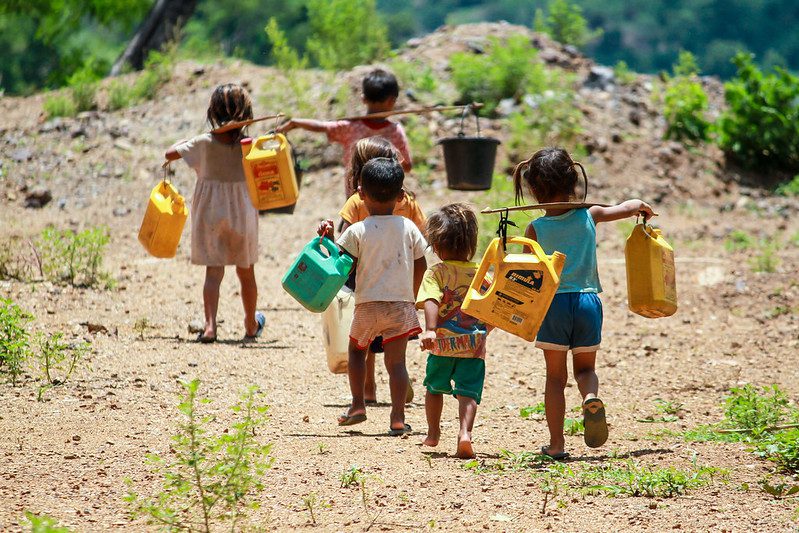
 The issue of water in Laos is not one of abundance but cleanliness. The Southeast Asian nation is home to heavy rainfall, the Mekong River and plenty of other smaller bodies. However, according to the United States Agency for International Development (USAID), only 17.87% of people in Laos have access to an improved water source that is safely managed. This means that of the 7.5 million Lao people, only 1.5 million can obtain properly treated clean water that comes from reliable delivery systems such as pipes, wells and protected springs. In terms of rankings, this puts Laos second to last in the region and 110th out of the 120 countries that USAID has calculated this statistic.
Furthermore, a significant portion of the predominantly rural Lao population lacks access to proper sanitation facilities, forcing them to defecate in open areas. This practice leads to runoff, contaminating the drinking water supply with fecal matter. The scarcity of clean water in Laos has severe public health implications. Contaminated water is a major contributor to diarrheal diseases, which are the 8th leading cause of death in the country. According to a 2019 World Health Organization (WHO) estimate, 21.6 people per 100,000 in Laos died from diarrhea.
Joint Partnerships
Even though much needs to be accomplished, improvements have been made. In 2023, the United Nations Children’s Fund (UNICEF) and the Government of Laos celebrated the 50th anniversary of their partnership. When they started working together, less than 300,000 people had access to clean water. As of 2023, the capital province of Vientiane was officially declared Open Defecation-Free (ODF). Additionally, “three more provinces are nearing ODF status and nearly 86% of villages nationally achieved this benchmark.” A lot of this success can be attributed to intergovernmental organizations like UNICEF, the WHO and USAID. However, several smaller organizations have done and continue to do vital work in providing water to the people of Lao. Here are three nonprofits providing access to clean water in Laos.
Abundant Water
Founded in 2008 by Australian Engineer Sunny Forsyth, Abundant Water makes clay pottery water filters. It has been operating in Laos since 2011. After an initial 12-village survey that involved recording water use data, sample testing and trainee hiring, the organization built its production and training center in Vientiane. So far, it has “distributed 11,670 handmade ceramic water filters reaching 103,881 beneficiaries throughout the country.”
Through its work, Abundant Water also promotes sustainability. Beyond manufacturing the clay filters, it also trains local potters on how to make the filters themselves. During the first year of operation, it trained five ceramicists from remote rural villages to produce the filters on their own. By the end of the training, all of them were able to make a filter that produced clean enough water to meet the national standard.
After 12 years, more than 192 Lao people have been trained, leading to a significant impact on the ground. Abundant Water’s flagship project in Xaisomboun province targeted 33 villages, installed 794 filters and provided clean water to 3,864 people. Of all 3864 people, 98% of the households reported improved health, 86% saved time from not having to boil water, 81% reduced firewood consumption and “65% of families saved” between $0.23 to $0.90 (5,000-20,000 KIP) a week.”
Planet Water
Mark Steele established the Planet Water Foundation in 2009. Since then, it has provided clean water to more than 4 million people in 28 different countries in the Asia-Pacific region and Latin America. Planet Water has been operating in Laos since 2010. The primary method by which it produces clean water is through its AquaTower community water filtration system. Mostly implemented in rural schools, the AquaTower uses gravity to remove dangerous pathogens, producing drinking water for up to 1,800 people. There are also handwashing stations attached. This is particularly important because 44% of schools do not have a basic water supply and 68% lack basic sanitation. Most kids in these schools have to “rely on bottled water for drinking. Students who cannot afford this luxury have no option but to bring unfiltered water from their home.”
East Meets West
East Meets West, also known as Thrive Networks, was founded in 1988 by Le Ly Hayslip, the author of “When Heaven and Earth Changed Places.” This memoir, about her peaceful childhood and war-torn early adulthood, later served as the inspiration for Oliver Stone’s “Heaven & Earth,” starring Tommy Lee Jones. Initially, East Meets West operations provided clean water, health and education to communities in Vietnam. However, since 2010, East Meets West expanded into Cambodia and Laos. This was possible with help from the Australian Department of Foreign Affairs, the World Bank and the Bill & Melinda Gates Foundation.
Since 2014, East Meets West has supplied water to nearly 90,000 people in Laos, including more than 12,000 schoolchildren. It has also built more than 5,000 toilet facilities in rural areas. Working in Luang Prabang, Sayyabouly and Champasak provinces, the organization uses a Women-led Output Based Aid (WOBA) solution, creating “meaningful gender empowerment outcomes by systematically engaging women as change agents in the sector and decision-makers in the household.” In the future, East Meets West is looking to expand into more provinces in order to continue providing clean water in Laos.
– Mason Borden
Mason is based in New York, NY, USA and focuses on Technology and Global Health for The Borgen Project.
Photo: Flickr

3 Sisters Raise More than $700K to Help Tackle Global Poverty
What Do They Do?
The kind-hearted family raised more than $90,000 (£75,000) during this past Ramadan for those experiencing the hardship of the 2022 Pakistan floods. From collecting mosque buckets to university sales, these sisters have done everything they can to ensure people have access to a good and safe life. They set up regular food drives and also ran health awareness campaigns focusing on hygiene and nutrition. The money that team H&K has raised will support the Jigsaw charity, whose mission is to change the world for the better.
They have regular fundraisers that are partnered with Jigsaw charity, which range from food appeals to cake auctions to educational and health programs. However, the sisters aren’t the only generous ones in the family. Their Father, Yuser, not only balances his home life and his job but also visits countries where he helps others distribute aid. Specifically, Yuser “has recently visited the Sindh, Khyber Pakhtunkhwa and Neelum Valley districts of Pakistan to supervise humanitarian efforts.” He also helps set up and support projects and programs that ensure people can start small businesses and support their families.
Moving Forward
Currently, they have many fundraising projects aimed at combating food insecurity and providing essential nutritional support to families. One such initiative is the “Just Feed” project, which aims to provide regular, fresh, hot meals to families of 5-7. This project is dedicated to ensuring that no family goes hungry by delivering nutritious hot meals daily. The initiative seeks to make a substantial impact on the well-being of families, reducing the stress and health issues associated with food insecurity.
In addition to their food support programs, they also have an initiative focused on education, social welfare and livelihood support. This appeal aims to alleviate the burdens of those experiencing poverty in Hajira, a small town in the Poonch District of Azad Kashmir, Pakistan, by providing them with essential educational infrastructure, health care and livelihood assistance.
Final Remark
Overall, their story is a testament to the power of community action. Their innovative approach and endless dedication inspire many, proving that whether you are young or old, you can help tackle global poverty, even with the smallest of actions. Through their various initiatives, they have shown that collective effort and compassion can lead to meaningful improvements in people’s lives. Their work not only addresses immediate needs but also lays the foundation for long-term positive change.
– Alice Davies
Photo: Unsplash
Challenges and Progress of the Ainu People in Japan
Recognition and Rights of the Ainu
Despite their unique language and culture, the Ainu did not receive formal recognition from the Japanese government until 2008, when the Japanese Diet passed legislation acknowledging them as indigenous people. However, it took another 11 years until 2019 for the Ainu to gain recognition as the native people of Hokkaido.
Historically, past actions of the Empire of Japan during the Meiji Period from 1868 until 1912 made life very difficult for the Ainu and they are still recovering from the consequences at the moment. During this era, the government forbade the Ainu language in schools and banned its traditional hunting and fishing practices. These restrictions quickly marginalized the Ainu socially and economically. In an attempt at rectification in 1899, the government allocated land to the Ainu for farming, but the best farmlands in the region had already been stripped from the Ainu and given to Japanese settlers decades prior.
Economic and Social Advancements
Since the end of World War II, the lives of the Ainu have gradually improved. Organizations such as the Ainu Association of Hokkaido, formed by the Ainu in the 1940s, have strived to overcome the marginalized status of the Ainu. This includes environmental improvement projects and joint workshops in areas inhabited by the Ainu.
In 2006, a study by the Hokkaido government suggested that the economic living conditions of the Ainu had improved. A decrease in the number of tax-exempt Ainu households in the region suggested that median income had increased amongst the Ainu. The study also revealed that the number of Ainu receiving government assistance had also declined. This meant that the income gap between the Ainu and Japanese peoples had also reduced.
Educational Achievements and Challenges
In addition to economic improvement, the Ainu have also experienced improvements in access to education in recent years. In 1972, only 41.6% of Ainu attended high school compared to 78.2% amongst Japanese people. This number has significantly increased to 92.6% of Ainu attending high school in 2013. However, that is still behind the number of Japanese in high school at 98.6%. Similarly, the number of Ainu people attending college has risen from 8.8% in 1979 to 25.8% in 2013. While a great improvement, this falls well short of the 42% national average for college attendance.
Looking Ahead
Recent advancements have significantly improved the Ainu people’s economic conditions and access to education in Japan. Although progress is evident, disparities remain, with Ainu high school and college attendance rates still trailing national averages. Continued efforts are essential to close these gaps and ensure the Ainu community achieves full social and economic equality.
– Kaleb Boyer
Photo: Flickr
Reducing Elderly Poverty in Costa Rica
Reform Strategies
Reform strategies, such as the 2002 Regional Implementation Strategy for Latin America and the Caribbean, focused on mitigating violence-related issues affecting the elderly by promoting conversations between pertinent parties and forming networks for the elderly’s safety. The “Ciudadano de Oro” or “Gold Citizen” award program by the Caja system ensures the rights of citizens 65 years and older are respected. With the Gold Citizen award, the elderly have access to certain medical services, financial aid, discounted activities and community engagement.
Poverty persists among the elderly in Costa Rica, with 23% facing economic hardships as of 2019. Additionally, elderly women have lower earnings-related pension income and longer life expectancy. Patriarchal systems that have historically relegated women to home care roles or supportive jobs rather than leadership positions in society have exacerbated this vulnerability.
Initiatives to Reduce Elderly Poverty
Costa Rica Red de Cuido subsidizes 80% of care costs for elders below the poverty line through local networks. Elders have access to social care, community centers, hygiene, housing services and a long-term care system. The program is funded by taxes on beer, liquor and cigarettes, aiming to alleviate financial stress on poorer older adults and adapt to sociocultural changes in family care.
The National Council for Older Adults (CONAPAM) oversees private residential care through non-organization funds. Elders who are dependent on family, facing neglect, lack access to private centres or lack social and economic assistance can access these funds. In 2018, more than 2,155 beneficiaries have received care. Additionally, CONAPDIS (National Council for Persons with Disabilities) catered to 1,350 people through non-profit residential organizations in 2018.
Elderly Day Care Centers focus on those 65 years and over from low-income backgrounds through external non-profit associations. They provide meals, recreational therapy, social integration activities and psychological support, encouraging youth volunteers to assist. In 2018, centres have supported more than 1,500 people with a subsidy of $175 per month. Home Care, managed by COPANAM, provided services to 13,900 beneficiaries at risk of poverty and adverse social conditions through 59 civil associations, according to a 2022 article.
Providing Economic Stability
Costa Rica’s rapidly growing elderly population highlights the importance of boosting economic stability by reducing elderly poverty. The silver economy—economic activities, products and services for people older than 50—contributes to a more stable economy. Government and non-profit organizations are working to reduce elderly poverty through financial and health care schemes, ensuring a more economically stable Costa Rica.
– Lydie Udofia
Photo: Pexels
Mental Health in Tonga
Causes
Mental health challenges that people in Tonga face mainly stem from difficulties or trauma, even from natural disasters. Tonga’s Prime Minister Hu’akavemeiliku Siaosi Sovaleni, in 2022, tells of the trauma people faced during the aftermath of the volcano and tsunami attacks on their motherland. Disasters have resulted in destroyed homes and infrastructure, leading to a significant toll on mental health.
Another major cause is substance usage and abuse. The Guardian, in 2022, talks about the drug crisis in Tonga, where between 20% to 70% of hospital admissions are because of drug usage and abuse. It further says that drugs have now become a major contributing factor to the onset of mental illnesses and the frequent relapse of individuals with chronic psychiatric disorders like schizophrenia and bipolar disorder.
Stigma
There is a great stigma around receiving mental health treatment in Tonga, a major reason why many who suffer from mental health conditions choose to keep the illness to themselves and don’t seek help. That’s because of Tongan traditional views of being possessed by spirits or cursed if one has a mental illness. Moreover, Tongan culture has a larger role in this in that family image is very important. Ali Latsu, in a Medium article, explains that Tongans rarely embrace an individualistic mindset, if at all. For Tongan parents, hearing their child confess to mental illness can feel like a veiled criticism of their parenting.
Services
Tonga lacks the extent of resources needed to support the growing population of people who are increasingly struggling with mental health challenges. Besides that, instead of resources increasing and progressing, they are decreasing and regressing. The Mental Health Atlas in 2020 found that the number of mental health workers per 100,000 population decreased from 21.62 in 2017 to 17.23 in 2020. Similarly, the number of community mental-based mental health services per 100,000 decreased from 5.67 in 2014 to just 3.83 in 2020. This downward trend is alarming.
Efforts
In 2022, the University of Auckland announced a groundbreaking partnership. This partnership involves researchers from the university, Te Poutoko Ora a Kiwa I Center for Pacific and Global Health and the Tonga Ministry of Health. The New Zealand Ministry of Health Polynesian Health Corridors supports it. The partnership aims to provide essential population-level insights into mental health and mental health services in Tonga. This information will offer much-needed insight and information to improve the mental health resources available in Tonga.
Furthermore, in March 2024, Tonga’s Minister for Mental Health, Matt Doocey, announced the launch of a new initiative to implement mental health and addiction peer support services in hospital emergency departments. The initiative aims to improve outcomes for individuals seeking crisis help while enabling clinical staff to concentrate on clinical work.
– Shreyan Singha
Photo: Wikimedia Commons
5 Charities Operating in Spain
In May 2020, the government modified the Minimum Vital Income (IMV) program, though support levels were high, the cause of inflation ultimately surpassed them. The plan affected particular individuals, those who had not been residents for an entire year and young adults ages 18 through 22. Eventually, it made it more difficult for the IMV to offer sufficient social support. In August 2021 and August 2022, price inflation had increased by 10.5%, reaching the highest level since the official measurement began in 1994. As a result, staple foods increased in price by 25 to 40% by September.
As inflation fluctuates and prices continue to rise and fall, the fight against poverty continues. Charities operating in Spain like the ones listed below advocate to help those in need.
Lanzaderas de Empleo y Emprendimiento Solidario
In the first quarter of the year, the unemployment rate in Spain increased to 12.29% from 11.80% in 2023, demonstrating that the issue remains consistent. Lanzaderas de Empleo y Emprendimiento Solidaria (Employment and Solidarity Entrepreneurship Shuttles) is an educational workshop established in 2013 by the Santa Maria la Real Foundation. The program focuses on supportive proactive training to help individuals overcome the challenges that come with unemployment. More than 800 Employment Shuttles have worked at this free-of-charge program across the country. About 20,000 people have participated and around 60% have improved their employment situation.
Fundación Balia
Founded in 2001, another of the charities operating in Spain is the Fundación Balia, which aims to promote social inclusion by helping disadvantaged children. Its goal is to break the pattern of poverty through education, allowing minors the opportunity to develop their fullest potential. The organization has delivered numerous programs through 27 public primary and 31 public secondary schools. In June 2020, The Scheinberg Relief Fund worked with the foundation to provide “a year’s supply of masks and hygiene items” when its doors reopened after the mass pandemic. Children began to attend the restarting of face-to-face events to prevent the inequality gap from increasing. Its various initiatives have helped more than 1,444 families and 914 children in 2020.
The Human Safety Net España
Developed by Generali in 2017, The Human Safety Net focuses on vulnerable families with children under 6 helping more than 150,000 families. Its For Families program aims to support parents who live in difficult circumstances by providing the best possible foundation for their children’s future. The program allows parents to invest in courses on positive parenting and learn how to educate their children at each stage of their growth. It joins forces with NGOs and private sectors that share the same objectives to accomplish its goals.
Acción Contra el Hambre
Since 2014, Acción contra el Hambre (Action Against Hunger) has been approaching the food safety problem. It helps the unemployed by offering training and programs to detect food insecurity. In 2023, its programs opened employment opportunities for more than 5,000 people. By offering employment and training itineraries, they achieved a labor insertion rate of 43% in less than six months. The organization has helped around 24.5 million people working in 55 countries.
Cáritas Española
The Spanish Episcopal Conference established Caritas, associated with the Catholic Church, in 1947. Its objective is to improve conditions and promote social justice by helping in areas of health and housing. One of its many projects includes Nueva Esperanza (New Hope), a temporary house for women seeking sanctuary. Cáritas has provided support to around 500,000 people in Spain in 2023 and continues to make a difference.
Poverty remains an issue in Spain as the cost of living fluctuates, resulting in higher prices. However, with the work of charities operating in Spain, a difference is being made.
– Savannah Garza
Photo: Flickr
AMVA: An Initiative to Expand Vaccine Manufacturing in Africa
AMVA Launch
GAVI has officially launched its innovative financing system, the African Manufacturing Vaccine Accelerator (AMVA), in an effort to increase the vaccine manufacturing industry in Africa. The aim is to prevent outbreaks, promote health and prepare for pandemic response. The African Union, along with the French government and members of the European Union, will contribute more than $800 million toward the diversification and improvement in the accessibility and distribution of vaccines locally within the continent.
Supplying a Continent in Need
Africa remains the least vaccinated continent, importing 99% of vaccines yet manufacturing less than 1% globally. With a population of more than one billion, the impact of COVID-19 brought a harsh reality upon much of the region. By the end of 2021, 50% of the world was fully vaccinated compared to only 7% of the African population. Many countries faced issues with supply, lack of funding and logistics and inadequate distribution, creating challenges in obtaining a sustainable vaccination program. This resulted in a push for change in becoming self-reliant.
Therefore, the Partnership for African Vaccine Manufacturing (PAVM) was launched in 2022 by the African Union and managed by the African Centers for Disease Control and Prevention (African CDC), also a stakeholder in this new accelerator initiative. Currently, more than 56% of Africans have reached full COVID-19 vaccination; while this is an achievement, more work needs to be done. Africa needs to begin manufacturing vaccines in order to continue this progress.
How AMVA Operates
AMVA will use financing to encourage manufacturers to invest in Africa. It offers two incentive types: the milestone payment and the accelerator payment. The milestone payment is issued for producing vaccines listed as a priority by GAVI for treating diseases such as Cholera, Malaria, Measles-rubella, hepatitis B, Yellow Fever and Ebola.
In contrast, the accelerator payment is a “pay per dose” option that is paid upon delivery of vaccines purchased through the United Nations Children’s Fund (UNICEF) tenders. All manufacturers must submit an application to GAVI for an assessment and prequalification process. Additional requirements are that vaccines must be fully manufactured in Africa or the fill and finishing process must be handled at a facility in Africa.
Looking Ahead to the Future
The goal of PAMVA is to meet 60% of the continent’s vaccine requirements by 2040. This vision will not come without challenges, though. About $30 billion in funding is needed for this strategy and many African countries have different struggles, from issues with unreliable pricing to negotiating contracts to a lack of budget and expertise in vaccine procurement. This plan is going to take time, training and careful planning, but this could be the start of a major shift in reshaping Africa, saving lives and advancing the economy.
– Tanita Love
Photo: Flickr
Uyghur Health Care Disparities in Xinjiang
Current Health Care Situation
The distribution of health care services in Xinjiang is highly unequal. Approximately 80% of the region’s health care infrastructure is concentrated in urban areas predominantly inhabited by Han Chinese. Consequently, rural Uyghur communities are forced to rely on substandard and unregistered clinics. Moreover, reports indicate that Uyghurs have been subjected to forced medical treatments, including sterilizations and organ harvesting. These practices violate basic human rights, instill fear and mistrust in the health care system and discourage many from seeking assistance.
Impact on Poverty
Uyghur health care disparities compound existing poverty levels. Poor health reduces an individual’s ability to work and contribute economically. The lack of adequate maternal and child health care services has also led to higher infant mortality rates, further hindering the community’s development. This has created a vicious cycle of poverty and illness.
Health care inequalities contribute to the broader economic divide in Xinjiang. Employment discrimination and social exclusion limit Uyghurs’ opportunities for upward mobility. The economic marginalization fuels ethnic unrest and perpetuates a sense of injustice among the Uyghur population.
NGO Efforts and Interventions
Several nongovernmental organizations (NGOs) have stepped in to address such challenges. These organizations focus on research-based advocacy, raising awareness of human rights violations and pushing for policy changes to improve health care access. The Uyghur Human Rights Project (UHRP) and Human Rights Watch (HRW) document and report crimes against humanity, advocating for global recognition and condemnation of these practices. Such efforts aim to increase international pressure on the Chinese government to improve conditions and ensure the rights and well-being of the Uyghur population.
On the ground, organizations like Muslim Aid USA are taking vital steps to aid Uyghur refugees by providing essential health care services. It established medical clinics and mobile health units in refugee camps and urban settlements, offering maternal and child health services, vaccinations and treatment for common illnesses. Additionally, it recognizes the psychological trauma many refugees endure and is working to provide mental health support. These efforts are crucial in mitigating the Uyghur health care disparities that result in their impoverishment.
Positive Prospects and Technology
Technological advancements such as telemedicine offer innovative solutions to bridge the health care gap. By leveraging digital platforms, providers can reach remote Uyghur communities with medical consultations, health education and monitoring services. Telemedicine is a step toward improving their well-being and empowering individuals to take charge of their health. With continued advocacy and international support, there is potential for progress in Uyghur health care access and quality to create a more equitable future.
– Asiya Siddiqui
Photo: Flickr
Empowering Women in West Africa
The Women Leaders Network for Development
In 2012, Gloria founded the Women Leaders Network for Development or Réseau des Femmes Leaders pour le Développement (RFLD). RFLD is a nonprofit organization that promotes sustainable development and, more specifically, gender equality and women’s rights. The organization is based in West Africa and has its headquarters in Benin. RFLD is active in 27 countries and works with more than 60 women-led organizations, tackling both “structural and individual barriers to gender equality” and “social inclusion.”
Focus and Expertise
RFLD seeks to empower women in the context of regional initiatives that focus on issues surrounding:
Strategic Plan 2023-2028
In March 2024, RFLD announced that it was raising $10 million to fund its 2023–2028 Strategic Plan. The vision for change lies within the plan’s objectives, promoting:
The plan emphasizes the importance of women human rights defenders (WHRDs). Experienced women are best suited to address unique gender-based challenges, offer fresh perspectives and lead efforts in various human rights struggles, making their involvement essential for lasting change. WHRDs not only safeguard basic rights and freedoms but actively work to expand their influence and effectiveness. RFLD has recognized the vital role of these stakeholders and now strives to empower them with its strategic plan.
Country-Level Impact
Notable areas of impact are the issues covered at a country level. Across 27 countries, RFLD conducts awareness campaigns and education workshops, provides training and resources and supports a range of women, from entrepreneurs to small farmers. It also raises civil society activists, lawyers and judges on women’s rights.
From supporting women in the fishing industry in Mauritania and promoting gender equality in cocoa farming in Ghana to combating food insecurity and early marriage in Chad, RFLD’s work follows its various issues of focus. In Mauritius, the organization promotes women’s entrepreneurship in the technology sector. In the Central African Republic, RFLD promotes peacebuilding through interfaith dialogue. Its impact across sub-Saharan Africa is variable and ongoing and this hard work has allowed the RFLD’s progress to spread.
RFLD’s Delegation
The nonprofit’s influence is now reaching the African Union. The RFLD is funding a 13-person delegation to attend the 6th Gender Is My Agenda Campaign Network (GIMAC) Strategic Engagement in Accra, Ghana. The GIMAC Network aims to promote the rights and leadership of women in West Africa and monitor the implementation of the Solemn Declaration on Gender Equality in Africa.
These events will go from 12 to 15 July 2024. The theme of the 6th GIMAC Strategic Engagement is “Educational Transformation for Gender Equity and Sustainability.” With a delegation composed of young women leaders, government officials and CSOs, women’s voices are amplified and contributions are made toward the future of girls’ education in Africa. The delegates also will benefit from the opportunity to network with influential leaders, represent their constituencies and contribute to discussions.
RFLD’s strategic plan, country-level impact and delegation are significant strides in women’s empowerment in sub-Saharan Africa. The organization symbolizes hope for a future where women in West Africa can flourish and fully exercise their rights.
– Caroline Albright
Photo: Flickr
3 NGOs Providing Clean Water in Laos
Furthermore, a significant portion of the predominantly rural Lao population lacks access to proper sanitation facilities, forcing them to defecate in open areas. This practice leads to runoff, contaminating the drinking water supply with fecal matter. The scarcity of clean water in Laos has severe public health implications. Contaminated water is a major contributor to diarrheal diseases, which are the 8th leading cause of death in the country. According to a 2019 World Health Organization (WHO) estimate, 21.6 people per 100,000 in Laos died from diarrhea.
Joint Partnerships
Even though much needs to be accomplished, improvements have been made. In 2023, the United Nations Children’s Fund (UNICEF) and the Government of Laos celebrated the 50th anniversary of their partnership. When they started working together, less than 300,000 people had access to clean water. As of 2023, the capital province of Vientiane was officially declared Open Defecation-Free (ODF). Additionally, “three more provinces are nearing ODF status and nearly 86% of villages nationally achieved this benchmark.” A lot of this success can be attributed to intergovernmental organizations like UNICEF, the WHO and USAID. However, several smaller organizations have done and continue to do vital work in providing water to the people of Lao. Here are three nonprofits providing access to clean water in Laos.
Abundant Water
Founded in 2008 by Australian Engineer Sunny Forsyth, Abundant Water makes clay pottery water filters. It has been operating in Laos since 2011. After an initial 12-village survey that involved recording water use data, sample testing and trainee hiring, the organization built its production and training center in Vientiane. So far, it has “distributed 11,670 handmade ceramic water filters reaching 103,881 beneficiaries throughout the country.”
Through its work, Abundant Water also promotes sustainability. Beyond manufacturing the clay filters, it also trains local potters on how to make the filters themselves. During the first year of operation, it trained five ceramicists from remote rural villages to produce the filters on their own. By the end of the training, all of them were able to make a filter that produced clean enough water to meet the national standard.
After 12 years, more than 192 Lao people have been trained, leading to a significant impact on the ground. Abundant Water’s flagship project in Xaisomboun province targeted 33 villages, installed 794 filters and provided clean water to 3,864 people. Of all 3864 people, 98% of the households reported improved health, 86% saved time from not having to boil water, 81% reduced firewood consumption and “65% of families saved” between $0.23 to $0.90 (5,000-20,000 KIP) a week.”
Planet Water
Mark Steele established the Planet Water Foundation in 2009. Since then, it has provided clean water to more than 4 million people in 28 different countries in the Asia-Pacific region and Latin America. Planet Water has been operating in Laos since 2010. The primary method by which it produces clean water is through its AquaTower community water filtration system. Mostly implemented in rural schools, the AquaTower uses gravity to remove dangerous pathogens, producing drinking water for up to 1,800 people. There are also handwashing stations attached. This is particularly important because 44% of schools do not have a basic water supply and 68% lack basic sanitation. Most kids in these schools have to “rely on bottled water for drinking. Students who cannot afford this luxury have no option but to bring unfiltered water from their home.”
East Meets West
East Meets West, also known as Thrive Networks, was founded in 1988 by Le Ly Hayslip, the author of “When Heaven and Earth Changed Places.” This memoir, about her peaceful childhood and war-torn early adulthood, later served as the inspiration for Oliver Stone’s “Heaven & Earth,” starring Tommy Lee Jones. Initially, East Meets West operations provided clean water, health and education to communities in Vietnam. However, since 2010, East Meets West expanded into Cambodia and Laos. This was possible with help from the Australian Department of Foreign Affairs, the World Bank and the Bill & Melinda Gates Foundation.
Since 2014, East Meets West has supplied water to nearly 90,000 people in Laos, including more than 12,000 schoolchildren. It has also built more than 5,000 toilet facilities in rural areas. Working in Luang Prabang, Sayyabouly and Champasak provinces, the organization uses a Women-led Output Based Aid (WOBA) solution, creating “meaningful gender empowerment outcomes by systematically engaging women as change agents in the sector and decision-makers in the household.” In the future, East Meets West is looking to expand into more provinces in order to continue providing clean water in Laos.
– Mason Borden
Photo: Flickr
Assisting Zambia’s Agricultural Communities
Despite a slight rise in urban poverty since 2015 due to factors such as the impact of COVID-19, the urban poverty rate remains around 31.9%, which is about half the national average. This difference is usually attributed to the nature of industry, which differs between these regions. While rural areas primarily derive their income from the agricultural industry, urban areas have benefitted from the growth of construction and financial sectors.
Challenges Facing Zambia’s Agricultural Sector
Multiple factors have contributed to Zambia’s agricultural industry’s deterioration. A report by the International Growth Center (IGC) found that while the sector employs 59% of the workforce, it makes up only 3.4% of the country’s national gross domestic product (GDP). The IGC lists a number of factors that contribute to this underperformance, many of which converge around issues of low levels of funding and limited access to sophisticated technology, hindering farmers’ ability to harvest and deliver crops cost-effectively and efficiently.
The report outlines a specific issue: many farmers’ limited access to suitable finance and insurance. Where 85% of the credit is dedicated to larger-scale commercial producers, many small-scale farmers lack access to the same financial services. This limits their growth potential and makes it difficult for them to compete. Many of the factors contributing to agricultural decline are out of farmers’ control, such as increasing levels of drought. However, improving the accessibility of financial resources among Zambia’s agricultural communities would empower small-scale farmers. Additional finances would allow them to invest in efficient technology, make bigger agricultural investments and track their supply and demand.
Supporting Zambia’s Agricultural Communities
Various schemes have been introduced to support Zambia’s agricultural communities. The International Development Enterprises (iDE), a global organization that works to empower entrepreneurs in the fight against global poverty, has run a number of schemes across the country. Recognizing the impact technology can have, iDE has set up demonstration plots to showcase various labor-saving technologies, such as water-saving irrigation systems. These plots have become important centers of community for farmers to meet, sell products and learn about productive farming practices and technologies. iDE has also helped lift a number of rural farmers out of poverty through the provision of microloans, supplying them with the necessary capital to cover the costs of crops and propel their small businesses.
E-Commerce Empowering Zambia’s Agricultural Sector
The move toward introducing forms of e-commerce into Zambia’s agricultural communities has and will have, a profound impact. The introduction of e-commerce will empower and assist small-scale farmers to gain control and autonomy over their finances. Assisted with funding from the Citi Foundation, the World Food Programme (WFP) has recently introduced an initiative that seeks to boost financial inclusion and resilience among Zambia’s agricultural communities.
In addition to helping farmers further develop their financial literacy skills and increasing their access to affordable credit, the scheme aims to scale up the financial app “Maano.” This is an e-commerce platform that allows farmers to advertise their products and track levels of supply and demand. Schemes like this empower small-scale entrepreneurs, recognizing the benefits that financial autonomy and management can have for rural farmers.
Final Remark
The decline of Zambia’s agricultural productivity can be partially explained by large-scale factors such as increasing levels of drought and low government funding. However, declining levels of productivity and efficiency could be reduced through empowering farmers on an individual economic scale. By teaching farmers financial literacy skills, they will be able to manage their sales more efficiently. Furthermore, it will ensure that they are maximizing the economic potential of their crops. This financial control will also assist farmers in achieving long-term economic resilience in the face of possible market fluctuations.
– Aimee Masters
Photo: Flickr