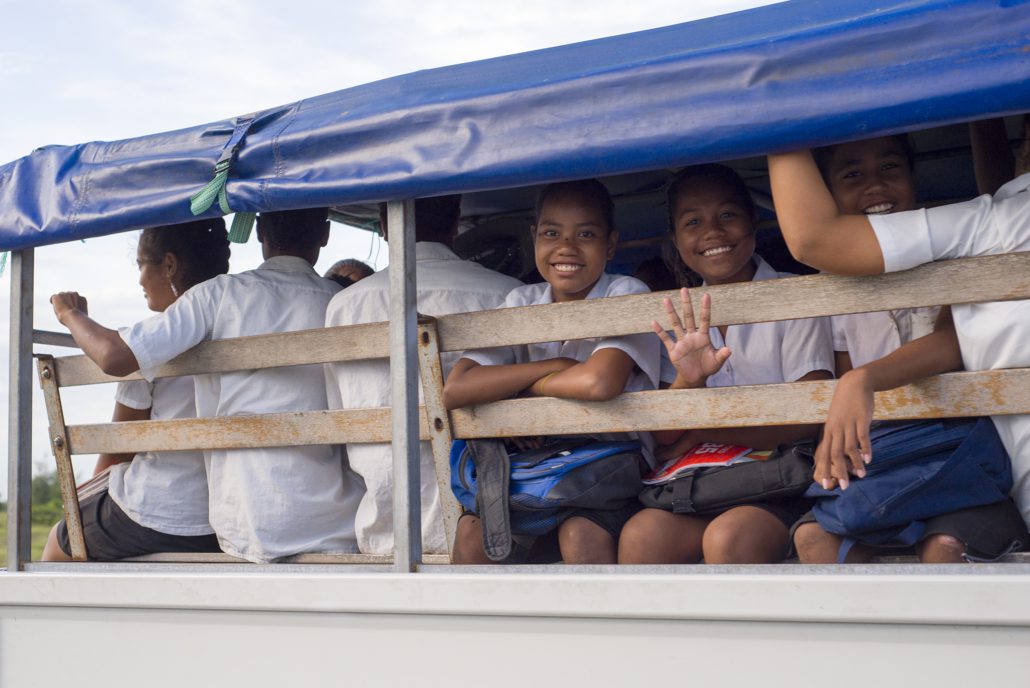
As a country that is geographically isolated, fragmented, environmentally vulnerable and economically challenged, Kiribati struggles with degraded soil, and challenges with education access, along with overpopulation. This trickles down to the children–the heart and bulk of its society. About 21.9% of the country lives below the poverty line, living off of subsistence farming, sea-faring industries or opportunities in the urban center of South Tarawa. Child poverty in Kiribati results in a lifestyle for those who must fend for themselves.
The Current State
Kiribati is a youthful country. About 36% of the population is under the age of 15. The under-5 mortality rate sits at 48 per 1,000 live births and has one of the highest neonatal rates of mortality in the Pacific—39 per 1,000 live births. In comparison, Australia sits at three per 1,000 live births.
About 22% of people live in poverty. However, this varies based on the region, education and labor market characteristics of certain households. Kiribati’s remote, decentralized structure, makes it hard to obtain an accurate sense of the situation amongst these islands. However, there seem to be two groups of poor existing in Kiribati: those in South Tarawa, the capital, and those who live in the southern and northern divisions of the country.
Those who live in South Tarawa—a rapidly growing urban center—have access to more services, human capital and opportunities for employment and education, according to the SPC Statistics for Development Division. Those in other regions may not have access to basic needs or the possibility of economic mobility.
Geography
Kiribati is vulnerable to sudden weather changes. None of the islands rises above eight meters, the highest being Banaba (285 feet). Lower levels leave the land at risk of floods, as well as droughts, according to Britannica. In 2022, an extended drought created a scarcity of quality drinking water, putting people at risk for waterborne disease.
The bulk of Kiribati’s economy comes from the capital of South Tarawa, where tourism, agriculture and fishing provide jobs.
Overpopulation and Waste Management
Though the increasing population makes for a larger workforce, the lack of economic diversity, its remote location and reliance on imports create a situation where much of the population still lives in poverty.
South Tarawa is devastatingly overcrowded, holding upwards of 69,000 people with a density that resembles Tokyo or Hong Kong. People who live a subsistence lifestyle on the outer islands aim to move to the urban sectors. This migration to the main islands puts pressure on the structural systems of the city, leaving multitudes of citizens struggling and unemployed.
Waste and sewage management is an issue that puts freshwater sources at risk. The city holds just over half the total population of Kiribati, contributing to the water crisis. The Country holds the highest infant mortality rates in the Pacific, the deaths inevitably linked to diarrhoea, dysentery and gastroenteritis.
Education
Primary education is free for children ages six through 15. Eight out of 10 children complete lower-level secondary education, but the rate dips to two out of 10 for upper-level secondary education. Though many teachers have certification up to year 11 of secondary primary school, there have been reports of inaccurate qualifications and certifications.
Those who can send their children to secondary school do so in Tarawa, swelling the overpopulation issue. Children attending school in urban centers are isolated from their parents. This leaves them more vulnerable to different forms of neglect and abuse. In the home, corporal punishment is an accepted form of discipline, a practice that is embedded in social and cultural norms.
By law, children under the age of 14 cannot work in Kiribati and those under 16 are not allowed to work industry jobs or on sea-faring ships. As a result, many children work unofficially after mandatory school hours, producing funds by selling small items such as brooms, combs, etc.
The lack of status, education and money exacerbates child poverty in Kiribati. Many are at risk of sexual exploitation and violence. These issues have been linked to fishing vessels coming to sell food and other items. According to the U.S. Department of State, Kiribati is a “source country” for sex trafficking.
Food Poverty and Malnutrition
The malnutrition crisis is the leading cause of death for children under 5. Poor soil quality makes agriculture challenging. As a result, people rely on imported, processed foods that fail to provide adequate nutrition needs. The intake of more unhealthy food intensifies the problem, increasing levels of anaemia, malnutrition and overweight/obesity issues.
Food poverty affects many developing countries living under adverse conditions. As of 2022, one in three children (200 million globally) consume food from less than two food categories a day, as opposed to the recommended eight. Half of East Asian and Pacific children eat under four food groups, according to Global Citizen.
As for Kiribati, the situation is dire. A recent study from UNICEF found that “upwards of 90% of children live in food poverty,” Global Citizen reports. The situation could only get worse with the stagnation of the efforts to improve food security in the East Pacific.
Improving Child Poverty in Kiribati
Doctors Without Borders (MSF) began providing maternal and neonatal health care in Kiribati in 2022, focusing on Tarawa and the Gilbert Islands. It aims to reduce pregnancy-related illnesses and mortality by training local health care workers and offering clinical support. In 2022, MSF assisted 520 births and conducted 87 parental consultations.
The Child Fund helps impoverished children and their communities build self-reliance. In the Pacific, it focuses on Kiribati, Papua New Guinea and the Solomon Islands. The organization addressed the water crisis in Kiribati by installing solar water distillation units in schools and communities and educating about sanitation and hygiene, according to its website.
– Jonathan McCloud
Jonathan is based in Royse City, TX, USA and focuses on Good News and Global Health for The Borgen Project.
Photo: Flickr

Sahar: The Organization Unlocking Education in Afghanistan
Education’s Impact
Education can bring social and economic development, reduce poverty and promote gender equality. In Afghanistan, educated girls are better equipped to contribute to their communities and the country’s development. However, the benefits of education are not limited to those who receive it directly. Educated women are more likely to ensure their children are educated, creating a positive cycle.
Sahar
Sahar, a nonprofit organization, has been at the forefront of the fight to educate Afghan girls. Since its creation in 2001, Sahar has helped educate 250,000 girls through 2024. The nonprofit provides grassroots schools and underground education, with people risking their lives to teach and learn. In 2001, Sahar aimed to build connections between the United States (U.S.) and Afghanistan, gradually expanding its mission. In this war-torn country, Sahar has built and supplied 39 schools, striving to serve those denied educational opportunities. Through education, Sahar opens pathways for girls to aim for a better life, targeting the 1.1 million girls lacking access to formal education.
Founded by Julia Bolz, an international humanitarian lawyer, Sahar has achieved remarkable success through partnerships. Information about said partners is limited, as partners in Afghanistan are actively breaking oppressive laws by protecting the human right to education. However, outside of Afghanistan, Sahar collaborates with several global partners. Sahar partners with the Afghan Ministry of Education, which helps maintain schools once they have been constructed. Additionally, foundations and philanthropists like Janet Wright Ketcham support the initiative, helping to construct two schools in Afghanistan. Institutes like the University of Washington and Coe Elementary School in Seattle have also supported Sahar’s goals through architectural assistance and fundraising efforts.
The Bright Future of Education in Afghanistan
The struggle for educational access in Afghanistan is ongoing. The Taliban’s restrictive policies, combined with cultural barriers, create significant challenges. However, the resilience and determination of Afghan girls and the organizations supporting them offer hope. Sahar’s work demonstrates the power of grassroots efforts and underground education in overcoming obstacles. By continuing to support Sahar and similar organizations, we can open up education and brighter futures for young girls. The fight for educational access in Afghanistan is far from over.
– Abby Collins
Photo: Flickr
Everything You Need to Know about Poverty in Tibet
China’s Poverty Alleviation Tactics in Tibet
China’s mission to alleviate poverty in Tibet is synonymous with modernizing the region. Some poor Tibetans now own cars in Tibet, according to ThinkChina, with paved expressways and a billboard advertising a “Westernised” café amid the Himalayan mountains. Some young Tibetans own cell phones and dream of “leaving the mountains and plains” to Lhasa, the capital of Tibet, or to mainland China, ThinkChina says.
The Central Tibetan Administration (CTA) reported that China’s efforts are a “scheme” that the government carries out under the guise of poverty alleviation. The economic gain from China’s poverty alleviation mission has come at a large cost to rural Tibetans and their culture. The Chinese government has relocated Tibetan nomads and farmers en masse from poverty-stricken areas to other locations in Tibet or China, forcing them into military training and factory labor.
China also seeks to eliminate what it calls the “harmful influence” of Buddhism and change Tibetans’ “way of thinking” by way of “re-education,” according to the CTA. U.N. experts are “very disturbed” that around a million Tibetan children face seemingly forced cultural, religious and linguistic assimilation into the majority Han culture, the U.N. reported in February 2023.
Forced Evictions and Relocations
In May 2024, Human Rights Watch (HRW) reported that 500 Tibetan villages with more than 140,000 residents have faced or are currently facing forced eviction and relocation. When individual households are relocated, poorer households are often selected — between 2016 and 2020, 567,000 people were relocated under this program by the government. These relocations are “severely eroding Tibetan culture and ways of life,” HRW’s China director Maya Wang said.
The Chinese government states that the goal of resettling Tibet’s poorest into urban areas is to improve their housing conditions, health care and education. However, the government’s mission left many of those resettled living in poverty in urban areas, according to the United States Department of State.
Despite China’s occupation, many Tibetans’ alliances continue to lie with His Holiness the 14th Dalai Lama, who created a nonprofit organization working for the welfare of destitute Tibetans.
14th Dalai Lama’s Central Tibetan Relief Committee
Tibet used to be an independent region — in the 1950s, China forcibly claimed Tibet, destroying many Buddhist monasteries and killing thousands. His Holiness the 14th Dalai Lama fled to northern India, along with around 80,000 refugees, according to BBC. In 1994, he established the Central Tibetan Relief Committee (CTRC) in India.
The CTRC’s main objective is to rehabilitate and settle Tibetan refugees, as well as uplift the poor and make the Tibetan settlement “viable and sustainable,” according to its website. One of its primary initiatives is to “take care of genuinely poor and destitute elders who have no one to take care of them.” The CTRC has built more than 14 homes and accommodates more than 500 Tibetan elders, as of 2020.
“The awesome power that economic institutions have acquired in our society, and the distressing effects that poverty continues to wreak, should make all of us look for means of transforming our economy into one based on compassion,” His Holiness the 14th Dalai Lama wrote in 2008.
Chinese government claims it has lifted Tibet out of extreme poverty, however, the CTA, the U.N. and HRW dispute this claim. China’s poverty alleviation tactics may have diminished Tibet’s poverty in an economic sense, but individual Tibetans often remain impoverished, with their traditional culture stripped away. Human rights groups and His Holiness the 14th Dalai Lama continue to look out for poor Tibetans, ensuring proper poverty relief.
– Ahna Fleming
Photo: Flickr
Renewable Energy in Mauritania
Conditions in Mauritania
Monetary poverty in Mauritania is falling. In 2023, according to the UNDP, 6.5% of the population lives below the income poverty line. However, the UNDP also reports that the nation’s standard of living indicators are lower than in similar economies. Electricity access, for example, is low for rural populations at 4%.
Mauritania is chiefly a “traditional subsistence economy,” with agriculture and livestock raising being its largest sector. Mining and fishing are the nation’s major exports. At the same time, Mauritania has remarkable potential for renewable energy production. Straddling both the Sahara desert and the Atlantic Ocean, the nation has more than 700,000 square kilometres of space for solar and wind energy generation. The nation is leveraging this potential for development and economic growth.
Opportunities for Development
Renewable energy technology is offering new opportunities for development initiatives. One example is solar energy-powered water drilling, which has been effective in expanding access to clean water in Mauritania’s most isolated communities. UNICEF, which supports the initiative, has found solar energy to be the most cost-effective power source when compared to other, non-renewable sources. As of 2018, solar energy supplies the majority of drinking water drills, a rise to 60% from 20% in 2015.
Investments in renewable energy in Mauritania have also expanded the power grid capacity of the nation. More than 40% of the country’s energy is now generated from renewable sources, according to the International Trade Administration (ITA). This effort is continuing to grow, with $289.5 million invested in two projects to increase solar energy production and connectivity, both to rural regions and neighboring nations.
Center of International Cooperation
Export potential has made the renewable energy sector a focus for international cooperation. Under its Power Africa initiative, USAID has worked with the nation to increase electricity connection, including helping create 8,436 solar lamp connections. The development of renewable energy production and technologies has also been a key area of interest for the ITA as well as the U.S. Department of Energy. The latter signed a Memorandum of Understanding (MoU) at the COP28 to support Mauritanian clean energy technologies and low-carbon exports including steel and green hydrogen.
Green hydrogen in particular is at the forefront of clean energy development, piquing the interest of large energy firms. With this, the nation has signed four MoUs with multinational energy corporations for green hydrogen production and development, including one with CWP Global to create the largest green hydrogen production facility in the world, according to ITA.
Much of the pledged development remains in the early stages, although the growing share of renewables in Mauritania’s energy supply is promising. Renewable energy in Mauritania and green hydrogen, in particular, presents opportunities to add value to the nation’s exports and economy, as well as efforts to elevate standards of living. As the world begins to transition to green economies, Mauritania represents a nation where this effort and economic development intersect.
– Imme Koolenbrander
Photo: Wikimedia Commons
Health Care in Palestine
Health Care Difficulties
Even before the most recent conflict, the health care system in Palestine could not always provide satisfactory health services to all of its residents. Limitations have been imposed on items coming into Palestine, most notably the Gaza Strip, making it difficult for the health care sector in the region to get access to the supplies it needs to treat everyone properly.
Deficits of water, electricity and staff have also further created problems for the health care industry in Palestine. On top of this, many Palestinians live in refugee camps, which not only produces more health risks, but these camps do not often receive the health care that they need.
Israel’s Impact
However, activity coming from Israel has amplified these health care limitations as the Israeli military has destroyed hospitals and has been attacking patients and workers in the Gaza Strip. Beyond just health care, the Israeli military has prevented Palestinians from receiving “water, food, electricity and fuel,” as evidenced by the Institute for Palestinian Studies and this certainly creates its own set of problems. In the West Bank as well, roads that ambulances utilize have been blocked by Israeli forces.
As far as aid goes, only certain entrances to the country have been made accessible by Israel to allow relief to come into the country. Israeli forces have been accused of killing many individuals hoping to provide aid to the Gazan people.
Limitations of Aid
On top of these issues, robberies on deliveries of aid are further extrapolating the difficulties of getting assistance to the Palestinian people. Some argue that Israel needs to institute stronger levels of security to ensure that aid can actually make it into the country and be utilized to help the Palestinians. Aid in other forms, such as food, has also been limited in entering the country which has certainly created repercussions for the welfare of Palestinians. Malnutrition has become a widespread problem across the region.
Doctors Without Borders has identified how slow the process of moving aid into the country has been, which has created the problem of less than sufficient medical care resources being available. In fact, the organization has reported that “it has been unable to bring any medical supplies into Gaza since the end of April.”
Providing Aid
However, Doctors Without Borders has still been able to help thousands of people in the state of Palestine in the past couple of months. Thousands of wounds have been bandaged, tens of thousands of health appointments have been administered to Palestinians and surgeries have been able to take place as a result of Doctors Without Borders’ efforts.
Another organization, Medical Aid for Palestinians (MAP), has also completed enormous amounts of work in the region. This group has provisioned Gaza with millions of dollars worth of medical necessities, such as antibiotics, bandages and medicines, while simultaneously working to limit the impacts of malnutrition. MAP has worked in both Gaza and the West Bank.
– Brendan Sheehan
Photo: Flickr
WFP Pushing for Poverty Relief in Togo
WFP Provides Poverty Relief in Togo
Out of 71,991 total beneficiaries, 33,392 are male and female, from ages 5-11 years old. WFP has not given up on the nation of Togo. There is still room for improvement in WFP’s poverty relief initiative, including but not limited to cash-based transfers, asset creation and livelihood, additional resource transfers and overall beneficiaries over the age of 12. The cash-based transfers are meant to directly affect the pockets of impoverished Togo residents as well as refugees residing in the nation. In addition to the projects that the World Bank financed, with the age group of 5-11 years seeing the most beneficiaries, age groups more than 12 years old are receiving less than 45% of the expected amount.
The latest report from the World Food Programme, published May 13, 2024, displays WFP’s progress in the poverty relief of the Togolese Republic. WFP has distributed a total of 77,554 school meals, reaching 14,207 children in 50 different schools supported by WFP in northern Togo. The World Food Programme is also appealing to the United Nations for a sum of $12.5 million in order to reach more beneficiaries in Togo. WFP, along with the Economic Community of West African States (ECOWAS) are aiming to assist vulnerable parts of Togo damaged by flooding in the Northern region with 185.5 metric tons of food. Furthermore, a warehouse has been established in Kara to support the humanitarian operations in the Northern Region of Togo. However, there has been some struggle in WFP’s efforts to rehabilitate Togo’s infrastructure.
Rainfall
Food security has deteriorated in 2024 due to the Sahel crisis, the inflation of food and agricultural impacts due to the Ukrainian crisis and the extreme climate crisis occurring in Northern Togo. There has been a steady decrease in rainfall in West African countries. This disproportionately affects the population since the economy is heavily reliant on agriculture. Several studies have reported that on average in a 30 year scale (1968-1997) rainfall was 15%-40% lower than the earlier 30 year margin (1931-1960).
Looking Ahead
WFP has made immense progress in bolstering fiscal policy and debt management, business employment opportunities, the energy and digital sector, as well as agricultural productivity, health resources and food security. The budget that WFP provided to Togo and donations are financing these efforts. Donors to WFP’s efforts include the European Commission, the United States Agency for International Development (USAID), the Government of Togo, the Bureau for Humanitarian Assistance and more.
The European Commission is supporting poverty relief in Togo not just by donating to WFP, but through the Togolese government in the “Togo 25” roadmap for a total of 145 million euros to Togo. The strengthening of the internal infrastructure of Togo has led to immense social, political and economic growth in the struggling nation. These efforts have received support not just from the World Food Programme, but also from several other organizations and countries, pushing for humanitarian relief in the Togolese Republic.
– Petralyn Yeboah-Manson
Photo: Flickr
How USAID Programs in South Africa Are Fighting HIV
E-International Relations article has identified an undeniable and inextricable link between poverty and ill health, with poverty preventing access to hospital treatment, and ill health preventing the ability to carry out labor. It may be unsurprising, then, that HIV in the country is not just widespread, but at the epicenter of the wider HIV epidemic. Despite this, USAID programs in South Africa aim to change this reality and recent developments in their work suggest a brighter future for the health of the population.
HIV Prevalence in South Africa
In 2022, the South African government estimated that 8.45 million people were living with HIV in the country, and as of 2019, 20% of all new HIV cases occurred there. The concentration of cases in the 15-49 age group, where individuals are of reproductive age further exacerbates the crisis. Combined with conditions such as low condom use in the 15-24 age group, and young men debuting sexually at earlier ages (before age 15), HIV continues to wage its war on the South African population, according to the Center for Strategic and International Studies (CSIS).
USAID’s Response
USAID is doing critical work in the health sector. The agency’s work in the region is facilitated through the President’s Emergency Plan for AIDS Relief (PEPFAR), a scheme through which the U.S. government has contributed more than $110 billion to the global HIV/AIDS response. PEPFAR’s funding allows USAID to work effectively against the HIV crisis in South Africa, ultimately aiming to strengthen the country’s overall health system.
Though the South African government finances almost 80% of its HIV response, according to the CSIS, USAID has also been instrumental. The agency has been able to provide more than 1.4 million antiretroviral treatments (ART) in South Africa, a treatment that prolongs the lives of those already infected with HIV. Furthermore, according to its website, it has supported the South African National TB Program in expanding its treatment capacity, an essential strategy in fighting the public health threat posed by HIV and AIDS-related tuberculosis.
A Future of Prevention
In September 2023, USAID announced that it had partnered with the South African Medical Research Council, contracting them for research and development of an HIV vaccine. This development in USAID programs in South Africa marks a notable shift from a focus on treating HIV infection, to preventing it, and fittingly accompanies PEPFAR’s plan to focus on sustainable prevention of HIV throughout the next five years, according to USAID’s website. The search for an HIV vaccine has been ongoing for 40 years, and this localized initiative will now allow South African scientists to be at the forefront of healing their country from crisis.
In USAID’s official press release for this contract, Deputy Administrator Paloma Adams-Allen emphasized that, in South Africa, “the scientific community is on the cusp of developing a vaccine to prevent HIV.” This hopeful suggestion, and the clear shift from treatment towards prevention, points to a brighter future for South Africa and is a significant step towards USAID and PEPFAR’s goal to end HIV as a public health threat by 2030.
– Maeve Relihan
Photo: Flickr
How Francis Ngannou is Fighting Poverty in Cameroon
Poverty in Cameroon and Sub-Saharan Africa
According to the World Bank, in 2019, 57% of the world’s poor lived in sub-Saharan Africa. This means that more than half of the families in the subcontinent experience poverty and consequently have challenges accessing necessities like food, water, clothing and shelter.
In Cameroon, 43.6% of people live in multidimensional poverty. Multidimensional poverty is a World Bank index that measures the percentage of households that experience poverty in “health, education and standard of living.”
Francis Ngannou escaped poverty in Cameroon by traveling a dangerous route to Europe, in the process getting jailed and becoming homeless. Luckily, he found fortune as an MMA fighter initially in France, later in the U.S., and also crossed over to global elite boxing.
Life in Cameroon
Francis Ngannou was born on September 5, 1986, in the village of Batié in Western Cameroon, the fourth of five children. He struggled to get an education as the system in the country did not embrace the needs of diverse young learners like him. He became a child laborer for meager wages in the sand mines to support his poor family at the age of 10. In 2012, at the age of 25, his relentless spirit for success led him to undertake a dangerous odyssey to leave Cameroon and try to reach Europe. His dream was to become a professional boxer.
His ordeal became further complicated when he arrived in Spain by boat as an undocumented immigrant and was jailed for two months for illegally crossing the border. In the same year, he made it to France, where he was homeless for many months before his fortune changed.
Francis Ngannou’s career as a mixed martial artist began in France, where he achieved initial success, which allowed him to catch the attention of American mixed martial artists’ biggest company, the Ultimate Fighting Champion (UFC), where he became Heavy Champion of the World in 2021.
Ngannou was able to leave Cameroon, however, millions who live in the country, face challenges like child labor, poverty and low wages.
The Francis Ngannou Foudation
Founded in 2018, the Francis Ngannou Foundation was his way to give back to his community and country. According to the foundation’s website, its mission is to “reach highly low-income, underserved and vulnerable populations, marginalized communities, causes and geographical locations often overlooked by mainstream philanthropy in Cameroon and Africa.” The foundation focuses its work on core areas: education, sports and arts, health, mental health and drug addiction and Emergency Relier.
Notable achievements of the foundation include renovating, modernizing, and expanding dozens of schools across Cameroon. The foundation provided school materials to thousands of children and students with quality supplies so that they could start their academic year well-equipped and motivated. During the COVID-19 crisis, the foundation distributed groceries and financial aid to 1,050 families. The organization has also built the first and second MMA-certified gyms in Cameroon and Central Africa in Douala.
– Jonathan Ajah
Photo: Flickr
Addressing Child Poverty In Kiribati
As a country that is geographically isolated, fragmented, environmentally vulnerable and economically challenged, Kiribati struggles with degraded soil, and challenges with education access, along with overpopulation. This trickles down to the children–the heart and bulk of its society. About 21.9% of the country lives below the poverty line, living off of subsistence farming, sea-faring industries or opportunities in the urban center of South Tarawa. Child poverty in Kiribati results in a lifestyle for those who must fend for themselves.
The Current State
Kiribati is a youthful country. About 36% of the population is under the age of 15. The under-5 mortality rate sits at 48 per 1,000 live births and has one of the highest neonatal rates of mortality in the Pacific—39 per 1,000 live births. In comparison, Australia sits at three per 1,000 live births.
About 22% of people live in poverty. However, this varies based on the region, education and labor market characteristics of certain households. Kiribati’s remote, decentralized structure, makes it hard to obtain an accurate sense of the situation amongst these islands. However, there seem to be two groups of poor existing in Kiribati: those in South Tarawa, the capital, and those who live in the southern and northern divisions of the country.
Those who live in South Tarawa—a rapidly growing urban center—have access to more services, human capital and opportunities for employment and education, according to the SPC Statistics for Development Division. Those in other regions may not have access to basic needs or the possibility of economic mobility.
Geography
Kiribati is vulnerable to sudden weather changes. None of the islands rises above eight meters, the highest being Banaba (285 feet). Lower levels leave the land at risk of floods, as well as droughts, according to Britannica. In 2022, an extended drought created a scarcity of quality drinking water, putting people at risk for waterborne disease.
The bulk of Kiribati’s economy comes from the capital of South Tarawa, where tourism, agriculture and fishing provide jobs.
Overpopulation and Waste Management
Though the increasing population makes for a larger workforce, the lack of economic diversity, its remote location and reliance on imports create a situation where much of the population still lives in poverty.
South Tarawa is devastatingly overcrowded, holding upwards of 69,000 people with a density that resembles Tokyo or Hong Kong. People who live a subsistence lifestyle on the outer islands aim to move to the urban sectors. This migration to the main islands puts pressure on the structural systems of the city, leaving multitudes of citizens struggling and unemployed.
Waste and sewage management is an issue that puts freshwater sources at risk. The city holds just over half the total population of Kiribati, contributing to the water crisis. The Country holds the highest infant mortality rates in the Pacific, the deaths inevitably linked to diarrhoea, dysentery and gastroenteritis.
Education
Primary education is free for children ages six through 15. Eight out of 10 children complete lower-level secondary education, but the rate dips to two out of 10 for upper-level secondary education. Though many teachers have certification up to year 11 of secondary primary school, there have been reports of inaccurate qualifications and certifications.
Those who can send their children to secondary school do so in Tarawa, swelling the overpopulation issue. Children attending school in urban centers are isolated from their parents. This leaves them more vulnerable to different forms of neglect and abuse. In the home, corporal punishment is an accepted form of discipline, a practice that is embedded in social and cultural norms.
By law, children under the age of 14 cannot work in Kiribati and those under 16 are not allowed to work industry jobs or on sea-faring ships. As a result, many children work unofficially after mandatory school hours, producing funds by selling small items such as brooms, combs, etc.
The lack of status, education and money exacerbates child poverty in Kiribati. Many are at risk of sexual exploitation and violence. These issues have been linked to fishing vessels coming to sell food and other items. According to the U.S. Department of State, Kiribati is a “source country” for sex trafficking.
Food Poverty and Malnutrition
The malnutrition crisis is the leading cause of death for children under 5. Poor soil quality makes agriculture challenging. As a result, people rely on imported, processed foods that fail to provide adequate nutrition needs. The intake of more unhealthy food intensifies the problem, increasing levels of anaemia, malnutrition and overweight/obesity issues.
Food poverty affects many developing countries living under adverse conditions. As of 2022, one in three children (200 million globally) consume food from less than two food categories a day, as opposed to the recommended eight. Half of East Asian and Pacific children eat under four food groups, according to Global Citizen.
As for Kiribati, the situation is dire. A recent study from UNICEF found that “upwards of 90% of children live in food poverty,” Global Citizen reports. The situation could only get worse with the stagnation of the efforts to improve food security in the East Pacific.
Improving Child Poverty in Kiribati
Doctors Without Borders (MSF) began providing maternal and neonatal health care in Kiribati in 2022, focusing on Tarawa and the Gilbert Islands. It aims to reduce pregnancy-related illnesses and mortality by training local health care workers and offering clinical support. In 2022, MSF assisted 520 births and conducted 87 parental consultations.
The Child Fund helps impoverished children and their communities build self-reliance. In the Pacific, it focuses on Kiribati, Papua New Guinea and the Solomon Islands. The organization addressed the water crisis in Kiribati by installing solar water distillation units in schools and communities and educating about sanitation and hygiene, according to its website.
– Jonathan McCloud
Photo: Flickr
Challenging Poverty in The Solomon Islands
Advancing Gender Equality and Women’s Rights
The Solomon Islands is a deeply patriarchal and conservative society, but it is making significant progress toward female empowerment. The U.N. General Assembly adopted the Convention on the Elimination of All Forms of Discrimination against Women on 18 Dec. 1979. It advances the roles of women and girls in all spheres of life, from agriculture to government. The Solomon Islands enacted its first Family Protection Act 35 years later, a landmark piece of legislation that outlawed domestic violence and significantly stepped toward protecting women from physical and sexual assault. According to the U.N. Women, the government advances women’s equity by implementing fee-free education and enacting targeted measures to increase primary and secondary education enrollment rates, enabling girls to start and stay in school.
Economic Competitiveness through Agriculture
Solomon Islanders primarily work in agriculture, mining, forestry, fishing and tourism. Their main exports—fish and timber—have been depleted. This has led to widespread underemployment and left thousands unable to provide for their families. To enhance the Solomon Islands’ economic competitiveness, USAID partnered with the largest cocoa buyer in the Solomon Islands to promote farmers’ education, develop nurseries, renew family plantations and improve processing techniques. This collaboration has significantly impacted agribusiness by increasing farmers’ productivity and income. These interventions have also improved the governance of natural resources through partnerships with national, provincial and community partners.
Enhancing Health Care and Disease Prevention
The U.N. and USAID have played critical roles in advancing health care in the Solomon Islands. Each organization has significantly protected islanders from disease outbreaks and combated endemic strains of malaria, tuberculosis and dengue. Under its Sustainable Development Cooperation Framework, the U.N. is upgrading the Islands’ Public Health Laboratory and enhancing access to clean water through its Water, Sanitation and Hygiene (WASH) program. Similarly, USAID has been supporting the Solomon Islands in combating COVID-19. This is being achieved by enhanced data collection, promoting vaccination campaigns, training health workers and procuring emergency equipment. During the pandemic’s peak, USAID worked with civil society organizations to establish quarantine facilities. Additionally, they supported case tracking and assisted in repatriating Solomon Islanders stranded overseas.
Looking Ahead
The Solomon Islands are steadily overcoming the aftermath of years of civil conflict through targeted efforts by the U.N. and USAID. These organizations are focusing on advancing gender equality, improving food security and enhancing health care services. By promoting women’s rights, boosting agricultural productivity and strengthening public health systems, the foundations for reducing poverty in the Solomon Islands are being set. A brighter and more resilient future for the Solomon Islands are being established.
– Natalie Kaufman
Photo: Flickr
Initiatives in Benin Combating Poverty
The Hunger Project
Since its establishment in Benin in 1997, the Hunger Project has assisted more than 300,000 people in rural areas. In 2023, the organization launched new initiatives aimed at expanding its support to central and northern parts of the country, with programs set to continue until 2027. These initiatives focus on enhancing food and nutritional security in these regions. Additionally, the Hunger Project is dedicated to empowering younger generations and women, who are among the more vulnerable populations in these areas.
The Hunger Project in Benin has partnered with the Hunger Project in Australia to support the community of Bouanri. This initiative aims to enhance the community’s sustainability and strengthen various aspects of life, including food security, health, nutrition, as well as access to clean water, hygiene and sanitation.
GoMedical
Open SI has developed a new app, GoMedical, to enhance health care access in Benin. Since its 2017 launch, GoMedical has significantly expanded the country’s digital health care network. The app provides lists of doctors and enables users to schedule appointments, offering easy access to various features and facilitating communication with health care professionals. Despite nearly half of Benin’s population living below the poverty line, which complicates funding for emergency visits and general doctor access, many Beninese people utilize mobile money accounts to pay for appointments via GoMedical.
GoMedical benefits both patients and health care professionals in Benin. Patients easily access their medical history, manage appointments and handle cancellations or rescheduling directly through the app. Professionals can quickly retrieve patient information and manage mobile files with just a few taps on their devices. Since launching this initiative, GoMedical has seen a 60% increase in customer base, a 150% rise in usage and a 40% growth in the number of doctors adopting the system. These figures are expected to continue rising as the country increasingly embraces this technology.
Looking Ahead
Efforts to reduce poverty in Benin and improve life expectancy and education levels show promise through initiatives by The Hunger Project and GoMedical. The Hunger Project’s programs aim to enhance food security and empower women and youth, particularly in central and northern regions. GoMedical’s digital health care app is revolutionizing access to medical services, benefiting both patients and health care providers. These initiatives collectively contribute to advancing Benin’s human development metrics and improving the quality of life for its citizens.
– Dorothy Howard
Photo: Flickr