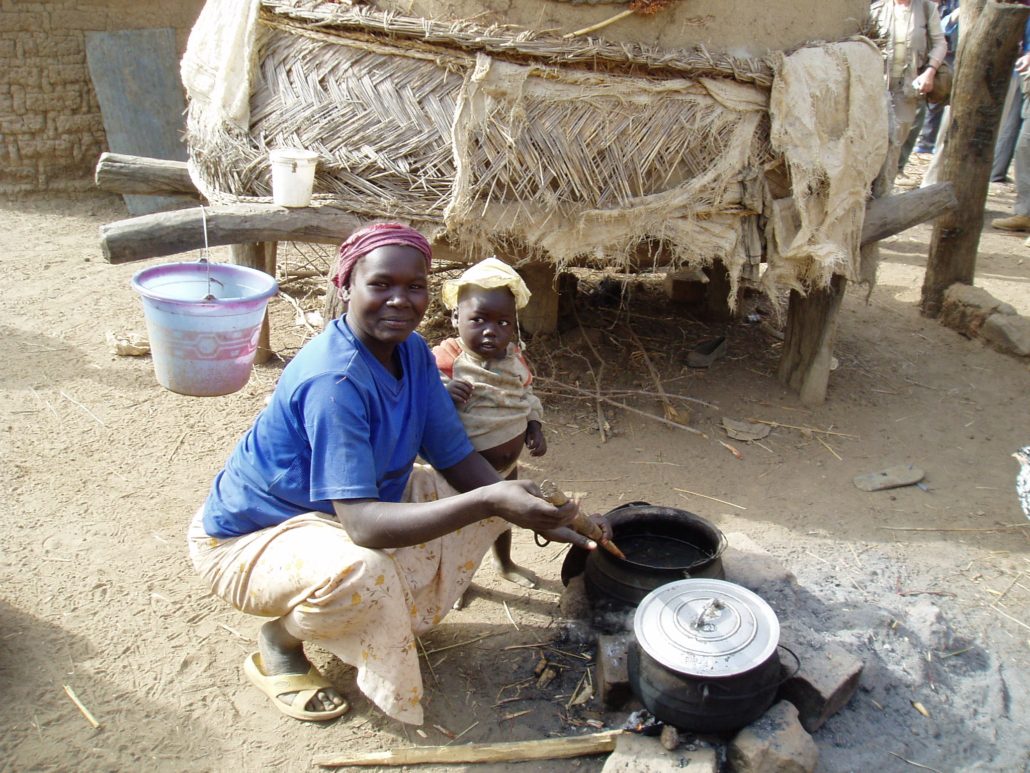
 Located in North Central Africa, Chad is an exceptionally diverse country, home to more than 200 ethnic groups and 100 different languages. However, with a cumulation of political instability and natural disasters, Chadians are suffering from rising food insecurity and poverty levels. In 2023, extreme poverty across the country was recorded at 35.4%. Energy is scarce and unreliable across Chad. Only 4% of the population has access to electricity. Currently, traditional wood fuel is the primary source of energy consumption across the country. Despite this, the country has optimistic targets to achieve nearly a 50% increase in electricity access by 2050.
The source of this increase derives substantially from the innovation and expansion into renewable energy. Utilizing Chad’s high levels of solar irradiation, The Djermaya Solar Project is paving the way for socio-economic prosperity that can combat the rising poverty levels. Here is information about renewable energy in Chad.
The Djermaya Solar Project
Initiated in 2015, the Djermaya Solar Project has two stages. Firstly, a 36 MWp solar photovoltaic (PV) plant in Djermaya will be constructed, 30km north of N’Djamena, Chad’s capital. Following this, there will be a 24 MWp phase. This will gradually integrate renewable power into Chad’s national grid, according to InfraCo Africa.
Chad’s first renewable energy project is jointly developed by InfraCo Africa and Denham Capital, as well as supported by government agencies, including the African Development Bank Group (ADB).
The European Investment Bank (EBI) described the solar PV plant as a “pioneering project” that “will help liberalise the energy sector, and mobile private investment in Chad.” It is calculated that the cost of electricity will be less than half the current cost of power following the project.
Catalyzing Chad’s Socio-Economic Prosperity
The Djermaya Solar Project will significantly improve Chad’s socio-economic prosperity. Not only will the project provide lower cost energy, increasing accessibility across the country, but it will also create 250 jobs during construction, as well as 12 permanent positions during the operational phase.
Once online, the Djermaya solar project could power 60,000 households and reduce the overall cost of electricity generation. USAID’S Power Africa has guided tariff approaches, indicating that the Djermaya plant will produce electricity at a cost that is 40% less than existing sources. Overall, Chadians will have an increased access to cleaner, sustainable energy.
In the long term, this project will provide a sustainable and reliable source of energy for the Chadian electricity distribution network. Subsequently, this increases high-speed internet access and improves the transport routes used for business.
People across Chad have to use conventional energy resources, such as biomass and charcoal in order to cook, light their house and other economic activities. In particular, it is women and children who spend a lot of time sourcing the biomass materials, which increases their risks of harmful respiratory diseases. Therefore, this creation of renewable energy in Chad offers a new alternative to the old conventional way of energy production. Women and children could then dedicate this time to income-generating activities instead.
A Pathway Out of Poverty
Investment director at Emerging Africa Infrastructure Fund, Paromita Chatterjee, emphasizes that The Djermaya project is the key to “unlock the country’s economic potential and to fly the flag for more green energy projects”.
The Djermaya Project will help alleviate poverty, as well as foster universal economic activity across Chad. This is because the solar project provides lower cost power to the grid, in comparison to the current fossil fuel-fired generation. This is a fundamental step in achieving Chad Vision 2030’s target of becoming an emerging country.
Resultantly, this will enable the government to reduce its current subsidies to the energy sector, and instead, focus its limited resources on other essential services, such as education and health.
In addition, the Djermaya Project is a pioneer in liberalizing Chad’s energy sector, encouraging independent power producers. This mobilizes private investment across Chad, spurring sustainable economic prosperity. Alongside this, this is a crucial development into renewable energy within Chad, adding to the sustainable eradication of poverty.
Looking Ahead
Overall, the Djermaya Solar Project yields a significant role in the alleviation of poverty across Chad, on both a small and large scale. Not only does Chad’s renewable energy project maintain its climate commitments under the Paris Agreement, but, crucially, it offers a solution to the destitute poverty suffered by millions of Chadians. As development begins, this is an exciting and prosperous project for the long term socio-economic success of Chad.
– Sian Ameer-Beg
Sian is based in Durham, UK and focuses on Technology and Solutions for The Borgen Project.
Photo: Flickr

Transforming Lives in Rwanda’s Progressive Legislation
Economic Rebound of Rwanda
The NST1 is a pivotal framework designed to boost Rwanda’s economic growth and sustainable development. Key initiatives under NST1 include promoting industrialization, creating jobs and enhancing agricultural productivity. These initiatives have significantly contributed to Rwanda’s economic progress, with the World Bank reporting a 7.6% gross domestic product (GDP) increase in the first three quarters of 2023 despite external challenges and inflation control measures.
Moreover, educational reforms have led to universal enrollment in primary schools and substantial improvements in secondary education attendance and completion. Completion rates have increased by 57% in students and if we count late completion, this number jumps to 71%. This multifaceted approach underscores the effectiveness of NST1 in driving Rwanda’s economic and social advancements.
Securing the Future in Rwanda
To secure its upward projection, Rwanda implemented the Economic Recovery Fund (ERF). The Rwandan government’s initiatives under the ERF, particularly its focus on supporting key sectors like tourism, have indeed shown significant results. The first phase of the ERF, which included substantial support for the tourism sector, helped many businesses survive the impact of COVID-19. This support, along with continued funding, allows for more jobs to be created; it is estimated that 1,328 additional jobs will arise from tourist-based activities per million invested. As ERF fulfilled its duties, the second phase of the fund launched $250 million to increase access to finance and to continue the economic recovery that the country still feels.
Protection for Everyday
In 2024, Rwanda introduced the Social Protection Transformation Project (SPTP), a new initiative aimed at enhancing the country’s social protection system. Funded by the World Bank and coordinated by the Ministry of Local Government (MINALOC) and the Local Administrative Entities Development Agency (LODA), the SPTP focuses on strengthening social safety net programs, supporting economic inclusion and improving delivery systems.
The project includes various components such as direct support, nutrition-sensitive programs, public works, early childhood development and skills development. It aims to ensure that vulnerable households have better access to human capital and economic opportunities, thereby improving their overall resilience and well-being.
The Role Model
When compared to other African nations, Rwanda’s approach to social and economic development stands out due to its innovative use of Information and Communication Technology (ICT) in governance and service delivery. Unlike many of its peers, Rwanda has integrated ICT into nearly all facets of public administration, which has streamlined processes and increased transparency. Initiatives such as the Irembo platform allow citizens to access a wide range of government services online, reducing bureaucratic inefficiencies and fostering greater civic engagement.
This digital transformation is a key reason why Rwanda’s model is considered progressive and effective; it not only improves service delivery but also supports data-driven decision-making and policy implementation. Additionally, Rwanda’s focused and comprehensive strategies, like the NST1 and the ERF, have led to measurable successes in poverty reduction and economic growth, further distinguishing its approach from other nations on the continent.
Rwanda’s innovative and effective strategies position it as a potential model for other nations striving for sustainable development and poverty reduction. The country’s success underscores the critical role of community resilience and Rwanda’s progressive legislation in driving economic and social progress. By learning from Rwanda’s experience, other nations can adopt similar approaches to foster inclusive growth and enhance the well-being of their citizens.
– Demi Olin
Photo: Flickr
Australia Awards – Direct Aid Programs Impacting Millions
Australia Awards – Scholarships for Thousands
The Australia Awards are a scholarship program in Australia designed to recognize the achievements of individuals from underrepresented backgrounds. Australia has historically offered favorable opportunities for individuals seeking higher education in developing countries neighboring Australia. This is part of the agreement with Tuvalu, the Falepili Union, which includes the establishment of a visa allowing Tuvaluans to live, study and work in the country.
What makes the Australia Awards particularly impactful is the targeted nature of the Awards. Applications from often marginalized groups such as women and those with disabilities are encouraged. The Awards also target specific areas of study and the program, in particular, seeks to elevate those studying in fields such as education, tourism and engineering. Providing forward-thinking and relevant fields of study like this, especially in developing countries, allows thousands of individuals across the Pacific to access resources they may not have had the opportunity to come across otherwise.
Australia and the Indo-Pacific
A significant amount of Australia’s development budget is earmarked for Official Development Assistance (ODA). That said, ODA is only one of many ways the country assists the many countries impacted by its outreach. Australia is committed to helping many countries enact their specific development plans. One way these programs are effective is the way Australia is committed to assisting Tuvalu.
In 2023, the two countries announced the formation of the Falepili Union, which serves to strengthen the two-way partnership between the two countries. In a joint effort, Australia allocated $88 million to Tuvalu’s development budget. Out of this amount, $50 million was utilized for the construction of Tuvalu’s inaugural undersea telecommunications cable. This marks a significant milestone for a nation that has historically relied on the internet as a steady revenue stream.
Another example of work being done to extend aid to developing countries is Australia’s dedication to development in Southeast Asia. Australia allocated $1.3 billion ODA toward the region in 2023. Programs targeting specific initiatives such as the Australia-Indonesia Climate and Infrastructure Partnership (KINETIK) and the Aus4Adaptation initiative in Vietnam. Taking a position at the forefront of the development in countries shows that when economic powers commit to developing countries impactful change can be made.
In Summary
Providing educational grants to underrepresented communities and directly putting funding and resources in the pockets of local, boots-on-the-ground programs working to enact lasting change are just a few ways Australia’s Direct Aid Programs can impact millions around the world. This is just a glimpse into how the $4.96 billion Australian developmental budget can create a tangible impact.
– Malik Vega
Photo: Flickr
Recycling in Kakuma Refugee Camp: Waste into Opportunity
Several factors compound the camp’s waste management problems. The demand for wood fuel has led to deforestation in the surrounding areas. The reliance on diesel power generators contributes to air pollution. The shortage of potable water for both humans and livestock has exacerbated sanitation concerns. The lack of disposal space in the overcrowded camp has also created a pressing need for innovative waste management solutions.
However, amid these challenges, community-led recycling initiatives work to protect the camp’s natural environment and the inhabitants’ livelihoods. One such initiative is the Fraternity for Development Integrated (FRADI), founded by Raphael Basemi, a Congolese refugee who arrived in Kakuma in 2009.
FRADI
Basemi’s journey from a refugee with nothing but a bag of clothes and education certificates to the founder of a thriving recycling enterprise exemplifies the resilience and ingenuity of the camp’s residents. Established in 2013, FRADI has transformed the waste management landscape in Kakuma. FRADI’s approach is comprehensive, addressing not only waste management but also other refugee limitations, such as language barriers and lack of technical skills.
The Impact of FRADI’s Work
Since November 2019, the organization has recycled more than 10 tons of plastic, significantly improving living conditions in the camp. FRADI’s recycling initiative has been met with overwhelming enthusiasm, with 2,000 applicants vying for positions in the program after the first call for volunteers. In the last three years, the organization has created more than 500 jobs for refugees and local community members, providing much-needed income opportunities.
FRADI’s Plastic Recycling System and Products
The collection process involves individuals gathering plastic and nonbiodegradable materials. The collected waste is then categorized and sent to a central processing facility in Kakuma. Two specialized machines recycle plastics into new products through melting and reforming. Thirty-eight tons of semi-recycled materials have been sold to Nairobi-based companies so far.
Its product range includes everyday items such as pegs, buttons, rulers, plates and cups, all made from recycled plastic. These products are sold in a shop at the Kakuma incubation center, a United Nations High Commissioner for Refugees (UNHCR)-funded economic development initiative supporting start-up businesses.
The Future of Kakuma Refugee Camp
The future looks promising for waste management initiatives in Kakuma. Kenya’s signing of the Refugee Act in November 2021 has ushered in new policies supporting refugee economic success and inclusion. This legislative change has enabled FRADI to expand its operations, reaching out to larger companies that collect plastic for recycling.
Moving forward, the success of FRADI and similar initiatives offers a blueprint for addressing waste management challenges in refugee camps. These community-led efforts not only improve environmental conditions but also create economic opportunities. Furthermore, they foster a sense of purpose among refugees. As Basemi aptly puts it, “When I see the volunteers bringing in the plastic they have collected, I see a community that is coming together for a greater cause.”
With continued support and innovation, the transformation of waste into opportunity in Kakuma serves as an inspiring model for sustainable development in challenging environments.
– Lauren Thompson
Photo: Flickr
Mental Health in India: Community-Based Care
Mental Health in India
India lacks a unified health infrastructure, leading to exorbitant prices and unequal access to mental health care. High treatment costs have a detrimental effect on vulnerable populations, pushing some families into poverty as they seek treatment. While the country provides free health care to the most impoverished 40% of its population, significant gaps in coverage remain. Many people are left to pay out of pocket for up to 50% of their healthcare needs, including prescriptions.
This inconsistency in healthcare contributes to the 55 million people who are pushed back into poverty every year in India. Despite these numbers, India, the most populated country in this region, spends less than 2% of its gross domestic product on health care. Low spending has resulted in a shortage of medical staff and resources. To combat this mental health epidemic, leaders are looking toward implementing more community-based care models.
Community-Based Care
Traditionally, institutionalization has been the mainstay in treating people with mental disorders. This was first thought to provide people with a safe place to heal while struggling with a mental disorder. However, new research has shown that it is not the most effective method. New understandings push public health leaders to advocate for and develop a new community-based care system. The care system will center the individual and their community at the core of treatment. The Southeast Asia Director of the World Health Organization (WHO), Ms. Saima Wazed, explains how “as our understanding of mental health has evolved, so too must our methods of care.”
As WHO Southeast Asia transitions to a community-based care model, it is emphasized that this shift will reduce the negative impacts of institutionalization. It will provide more community support for individuals with mental disorders. This new model of care will increase the number of people with access to mental health care and offer improved treatment outcomes. In March 2024, a three-day meeting was held in Bangkok, Thailand, to discuss how best to implement community-based care in the region.
Those working to create more awareness and implement community-based care are also fighting the deep stigma that surrounds mental health in India. Often fueled by misinformation, the stigma prevents many people from accessing the care they need for fear of social marginalization. This is contributing to an underutilization of available resources.
Final Words
India, having one of the highest percentages of individuals affected by mental health disorders, stands to gain the most from implementing community-based care as a pillar of mental health treatment. This new development from WHO Southeast Asia will aim to eliminate institutionalization as the region’s focal form of therapy and instead explore community as a highly researched alternative.
– Carlee Unger
Photo: Flickr
Social Enterprises in Colombia
Tackling Waste with Innovation
Conceptos Plásticos is a leading example of innovation in waste management and housing solutions. This enterprise transforms plastic waste into building materials for affordable housing. In 2018, Colombia produced approximately 14 million tons of municipal waste daily and only 17% is recycled. Conceptos Plásticos reduces plastic pollution, creates jobs and provides sustainable housing solutions for low-income families. The company has already built more than 1,500 homes using recycled plastic. By converting plastic waste into a valuable resource, Conceptos Plásticos significantly impacts both environmental sustainability and social welfare.
Promoting Economic Inclusion
Fundación Capital is another notable enterprise making strides in Colombia. This organization focuses on economic inclusion by offering financial education and digital tools to low-income individuals. In Colombia, approximately 30% of the population lives below the poverty line. Fundación Capital’s initiatives help individuals manage their finances and improve their livelihoods. The organization has reached more than six million people across Latin America with its programs. By empowering people with the knowledge and tools to achieve financial stability, Fundación Capital plays a crucial role in reducing poverty and promoting economic growth. The initiative highlights the importance of financial literacy in achieving long-term economic sustainability.
Advancing Sustainable Agriculture
SiembraViva, a Colombian social enterprise, addresses environmental sustainability and agricultural innovation. Agriculture accounts for about 6.3% of Colombia’s GDP, with many small farmers struggling to maintain sustainable practices. SiembraViva supports small farmers by providing technology and promoting sustainable farming practices. These ongoing efforts improve crop yields and reduce the environmental impact of agriculture. The enterprise has supported more than 1,000 farmers, reducing waste from 30% to 5% and guaranteeing farmers an income. By focusing on sustainable methods, SiembraViva helps ensure that farming practices contribute to long-term ecological health.
The Broader Impact
These social enterprises in Colombia illustrate the powerful role of entrepreneurship in driving social good. By tackling critical issues such as waste management, economic inclusion and sustainable agriculture, these social enterprises are creating jobs and improving the quality of life for many Colombians. Colombia’s unemployment rate, which stood at 11.3% in 2024, underscores the need for job creation initiatives. The innovative solutions provided by Conceptos Plásticos, Fundación Capital and SiembraViva demonstrate the potential of social enterprises to transform economies and uplift communities. As Colombia continues to support and nurture these initiatives, the positive impact on society is expected to grow, contributing to a more sustainable and inclusive future.
– Chelsea Rasool
Photo: Flickr
3 Nonprofits in Timor-Leste
Oxfam
Oxfam is a nonprofit global organization that works to fight poverty and injustice. Its mission is to provide worldwide equality and give everyone a fair chance at life. Oxfam Australia has been working with Timor-Leste for more than 40 years to help those living in rural areas escape poverty.
There is a significant inequality between those living in rural and urban areas and Oxfam Australia is working to address this issue. One of its ongoing initiatives is the “HAKBIIT Project,” which aims to combat gender inequality in Timor-Leste, particularly in rural areas. The HAKBIIT Project supports women in gaining equal opportunities for education and employment.
Ba Futuru
Ba Futuru is a nonprofit organization based in Timor-Leste that was founded in 2004. The organization’s mission is to reduce violence in Timor-Leste, making it a country that is safer for everyone, especially women and children. It has provided successful training to more than 40,000 people. It has also conducted behavior change programs, which have impacted more than 100,000 Timorese. Currently, Ba Futuru is working to provide improved early childhood education.
Early childhood education in Timor-Leste is rare, with only about 10% of children receiving it. Ba Futuru’s Early Childhood Development Initiative aims to change this by establishing preschools for children ages 2-6, including creating facilities and training educators. These schools will focus on health, safety, language, literacy, science, mathematics, technology and sustainability. The long-term goal of this program is to create a strong foundation for the future of children in Timor-Leste.
CARE
CARE is a 78-year-old nonprofit organization that works to provide humanitarian aid, fight poverty and bring equality. The organization has been involved in Timor-Leste since 1994 and its focus with Timor-Leste has been on long-term changes. As Timor-Leste is susceptible to natural disasters, a big focus of CARE is to aid in reducing the impact of disasters. This is done by supporting improved infrastructure in rural areas and helping with employment for those affected.
It also works to reduce violence and improve education and health. In addition to these long-term goals, CARE has aided in the past with humanitarian crises. In 1999 and 2006, there were violent outbreaks in Timor-Leste. CARE responded with emergency aid to people caught up in the fighting.
Conclusion
Timor-Leste, a nation that gained independence in 2002 after being a Portuguese colony, is still recovering and grappling with numerous challenges, such as poverty, gender inequality and lack of education. Despite these issues, the country is gradually progressing and improving over time.
Organizations such as Oxfam, Ba Futuru and CARE are among the many nonprofits working tirelessly in Timor-Leste. These groups are committed to the betterment of the country and will persist until their goals are achieved. While these goals will take time to realize, it is clear that nonprofits in Timor-Leste have already made significant strides and will continue to play a crucial role in improving the nation.
– Tyra Brantly
Photo: Flickr
Women in Turkmenistan
Restrictions on Women’s Freedoms
The restrictions on women in Turkmenistan extend beyond health care and organizational rights. Recently, a “Taliban-style ban” has been imposed, prohibiting women from wearing tight clothing and using beauty enhancements such as hair dye, fake lashes and nails. Additionally, the ban extends to cosmetic surgeries, including popular procedures like lip fillers and eyebrow microblading. Women who previously had these enhancements or who attempted to bypass these restrictions are facing severe consequences, including job loss and police detention.
Enforcement and Consequences
Turkmenistan has further curtailed women’s freedoms by restricting their transportation options, barring them from sitting in the front seats of cars or being picked up by male drivers who are not relatives. These regulations were not formally announced but are strictly enforced. Authorities rigorously inspect women in both private and public settings to ensure compliance with these transportation and beauty standards. Women found violating these rules face severe penalties, including arrest, job termination and fines that are substantial relative to their monthly income.
International Aid and Women’s Advocacy
Despite numerous challenges, women in Turkmenistan can find support from international organizations aiming to improve their futures. The United States Agency for International Development (USAID), the United Nations Development Programme (UNDP) and the United Nations (U.N.) Population Fund are actively involved in this mission. The U.N. Population Fund, in collaboration with state parties, is providing housing, shelter and work opportunities for women affected by violence in Turkmenistan. Simultaneously, UNDP initiatives are enhancing local infrastructure, supplying clean resources and energy and bolstering peace efforts. Additionally, USAID supports women by equipping national civil servants with the skills necessary to promote gender equality, offering a critical platform for change in the lives of Turkmen women.
Looking Ahead
International organizations like USAID, UNDP and the U.N. Population Fund continue to provide crucial support to women in Turkmenistan, despite the severe restrictions they face. These ongoing efforts include providing shelters, work opportunities and essential resources, along with promoting gender equality and peace initiatives. By equipping local civil servants and enhancing infrastructure, these organizations aim to create a more equitable and supportive environment for Turkmen women, offering hope amid challenging conditions.
– Yeliz Turkdil
Photo: Flickr
5 Ways Young People Are Making a Difference in Global Poverty
Young people make a difference in global poverty in many creative and innovative ways.
Advocacy and Awareness
One way that young people make a difference is through advocacy, as seen in grassroots movements such as Why Hunger. This organization works with young people at the local level to change their food systems. It has connected 932,000 people to nutritious food and services.
Another way they advocate is by raising awareness, often by using social media. For example, Joshua Heart’s Foundation, started when he was just 4 years old, has raised more than $1 million to help end hunger worldwide. This highlights how young people use their tools to effect change in the world.
Entrepreneurship and Innovation
A second way that young people can positively impact global poverty is through entrepreneurship and innovation. This is exemplified by social enterprises such as the Solar Sisters, which enable young women seeking work to become entrepreneurs and create sustainable energy alternatives. This innovation helps provide technological solutions to global poverty issues. The Solar Sisters and other entrepreneurs develop technological solutions that address existing problems with power in the world, offering new ways to combat poverty.
Volunteering
Young people also make a difference through both local and international volunteering. The New York Times found that one initiative in New York managed to serve up to 1,000 people in a food bank, highlighting the impact of young volunteers. It also found that the young people involved wanted to make a change and felt good about it. This demonstrates how they are making a difference now and see the benefits of volunteering, which encourages them to continue supporting the goals of ending world hunger and addressing global poverty.
Education
A penultimate way for young people to make a difference is through education, which can be seen in both educational initiatives and skills training. For example, SEED, a British organization, has significantly impacted global poverty goals through education, with young people leading the charge. SEED aims to enhance young people’s learning to help eradicate global hunger and address global poverty. One study found that SEED improved access to water, sanitation, hygiene and education for more than 400 students at Sainte Luce Primary School. This demonstrates how educational initiatives can significantly influence global poverty outcomes.
Leadership and Governance
Finally, young people can make a difference through leadership and governance. This is most evident through youth representation in groups and at government meetings, such as the Global Food Summit, which led to discussions surrounding policy. Young people put pressure on decision-makers and push the conversation forward. Additionally, governance can involve them in policy development that directly affects those suffering from global poverty. This direct involvement has a positive impact on laws that benefit those in need.
Young people have a significant impact on addressing global poverty. In many different ways, they are one way forward in tackling global poverty and similar issues. They benefit both these goals and provide new and innovative ways of solving problems.
– Rosie Miller
Photo: Pexels
Updates on SDG 1 in Sudan
Updates on SDG 1 in Sudan
The United Nations SDG index ranks Sudan 159th out of 166 countries included in the index analysis. The U.N. identifies that Sudan has major challenges remaining with decreasing trends in terms of achieving no poverty. This indicates that poverty in Sudan is not only extreme but continues to worsen every day. Based on data analytics from the United Nations SDG Index, the percentage of the population in Sudan living in extreme poverty has been steadily increasing from 12.5% in 2016 to 26.98% in 2024, the highest rate since 2000, according to the Sustainable Development Report.
According to the World Poverty Clock, 29% of people in Sudan are living on $2.15/day or less. On top of that, 52% of the population lives on $3.65/day, at or below the poverty line. https://worldpoverty.io/ Furthermore, according to a 2021 UNICEF analysis child poverty rates increased from 12% to 85% between 2014 and 2020.
GDP and Poverty Rates
A 2024 World Bank datasheet on poverty in Sudan explains that GDP could decrease by 3.5% after decreasing by 12% in 2023 due to the collapse of government institutions and conflict throughout the country. The conflict has disrupted public spending and reduced the country’s tax base which has consequently increased poverty rates as data from the World Poverty Clock and the SDG Index indicate. Thus the progress toward SDG 1 in Sudan has seen a negative impact from economic instability and conflict.
Life in Poverty
The interconnectedness of each of the SDGs brings about the discussion of how poverty impacts other aspects of life and development. Life in poverty heavily influences all other aspects of living and is reflected in the progression of many other SDGs.
Education in Sudan is an example that is largely related to patterns of poverty. As of 2018, only 77% of children of the official school age are enrolled in primary education and the participation rate in pre-primary organized learning is just 38.63%. Such information indicates the relationship between poverty and education thus deepening the importance of tackling global poverty as taking action towards one SDG will positively impact others.
The Future
To combat the rising poverty rates, the International Rescue Committee (IRC), along with many other NGOs and foreign aid programs, have identified Sudan as a high-priority concern. As an NGO dedicated to supporting developing countries and their citizens, the IRC has set up and strengthened operations in the Blue Nile, White Nile, and Gaderef states in Sudan to support and bring humanitarian aid to the 25 million Sudanese that need humanitarian aid, the 8.2 million that have been forcibly displaced and the 18 million that are facing crisis levels of food insecurity.
In 2021, the Commission on Social Safety and Poverty Reduction under the Ministry of Social Development launched the Mothers and Child Cash Transfer Plus Program (MCCT+) to support mothers and children affected by poverty. The flagship program in Sudan actively supports those in need with cash provisions, sharing information, and care of women and children and has supported 50,000 pregnant women in just the first phase of the program.
Overall, these updates on SDG 1 in Sudan highlight the troubling situation for the Sudanese people. Poverty rates across the country have continued to rise along with growing economic instability, a declining GDP and its negative influence on education. However, it is with support from foreign aid, government initiatives like the Mothers and Child Cash Transfer Plus program and NGO’s like the IRC that bring hope to Sudan and make progress possible.
– Juliana Granville
Photo: Flickr
Using Renewable Energy in Chad to Combat Poverty
The source of this increase derives substantially from the innovation and expansion into renewable energy. Utilizing Chad’s high levels of solar irradiation, The Djermaya Solar Project is paving the way for socio-economic prosperity that can combat the rising poverty levels. Here is information about renewable energy in Chad.
The Djermaya Solar Project
Initiated in 2015, the Djermaya Solar Project has two stages. Firstly, a 36 MWp solar photovoltaic (PV) plant in Djermaya will be constructed, 30km north of N’Djamena, Chad’s capital. Following this, there will be a 24 MWp phase. This will gradually integrate renewable power into Chad’s national grid, according to InfraCo Africa.
Chad’s first renewable energy project is jointly developed by InfraCo Africa and Denham Capital, as well as supported by government agencies, including the African Development Bank Group (ADB).
The European Investment Bank (EBI) described the solar PV plant as a “pioneering project” that “will help liberalise the energy sector, and mobile private investment in Chad.” It is calculated that the cost of electricity will be less than half the current cost of power following the project.
Catalyzing Chad’s Socio-Economic Prosperity
The Djermaya Solar Project will significantly improve Chad’s socio-economic prosperity. Not only will the project provide lower cost energy, increasing accessibility across the country, but it will also create 250 jobs during construction, as well as 12 permanent positions during the operational phase.
Once online, the Djermaya solar project could power 60,000 households and reduce the overall cost of electricity generation. USAID’S Power Africa has guided tariff approaches, indicating that the Djermaya plant will produce electricity at a cost that is 40% less than existing sources. Overall, Chadians will have an increased access to cleaner, sustainable energy.
In the long term, this project will provide a sustainable and reliable source of energy for the Chadian electricity distribution network. Subsequently, this increases high-speed internet access and improves the transport routes used for business.
People across Chad have to use conventional energy resources, such as biomass and charcoal in order to cook, light their house and other economic activities. In particular, it is women and children who spend a lot of time sourcing the biomass materials, which increases their risks of harmful respiratory diseases. Therefore, this creation of renewable energy in Chad offers a new alternative to the old conventional way of energy production. Women and children could then dedicate this time to income-generating activities instead.
A Pathway Out of Poverty
Investment director at Emerging Africa Infrastructure Fund, Paromita Chatterjee, emphasizes that The Djermaya project is the key to “unlock the country’s economic potential and to fly the flag for more green energy projects”.
The Djermaya Project will help alleviate poverty, as well as foster universal economic activity across Chad. This is because the solar project provides lower cost power to the grid, in comparison to the current fossil fuel-fired generation. This is a fundamental step in achieving Chad Vision 2030’s target of becoming an emerging country.
Resultantly, this will enable the government to reduce its current subsidies to the energy sector, and instead, focus its limited resources on other essential services, such as education and health.
In addition, the Djermaya Project is a pioneer in liberalizing Chad’s energy sector, encouraging independent power producers. This mobilizes private investment across Chad, spurring sustainable economic prosperity. Alongside this, this is a crucial development into renewable energy within Chad, adding to the sustainable eradication of poverty.
Looking Ahead
Overall, the Djermaya Solar Project yields a significant role in the alleviation of poverty across Chad, on both a small and large scale. Not only does Chad’s renewable energy project maintain its climate commitments under the Paris Agreement, but, crucially, it offers a solution to the destitute poverty suffered by millions of Chadians. As development begins, this is an exciting and prosperous project for the long term socio-economic success of Chad.
– Sian Ameer-Beg
Photo: Flickr