Poverty in Egypt: Everything You Need to Know
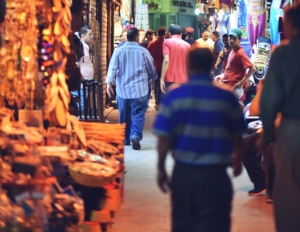 Egypt is a lower-middle-income country in northeastern Africa and as of 2019, 1.5% of the population lives on less than $2.15 a day (the international poverty line) while 17.6% are below the lower-middle income poverty line of $3.65. Here is everything you need to know about poverty in Egypt.
Food
Egypt is one of the most food-import-dependent countries in the world. It imports approximately 40% of its food in terms of total value, meaning that the country is highly vulnerable to shocks in global food prices. These food price shocks can have an outsized impact on the poor, who need to spend a much larger proportion of their income on food than the wealthy.
Understanding this, the Egyptian government has long implemented a comprehensive system of ration cards to combat food insecurity. As of June 2024, 71 million Egyptians, or 64% of the total population, participate in the country’s subsidized bread program. This program allows beneficiaries to buy up to 150 loaves of bread a month at the price of 20 piasters a loaf, or about $0.004 each. This price amounts to only 16% of production costs, while the government compensates bakeries for the remaining 84%, according to a 2024 report.
While this program is expensive for the government, it represents a buffer against swings in global food prices and a crucial lifeline for millions of low-income Egyptians.
Water
Water, the basic necessity for all life, is getting scarcer in Egypt. Egypt’s population has grown rapidly as its economy has expanded, exploding from just 27 million people in 1960 to about more than 100 million today. According to the Atlantic Council, this population growth has caused the per capita water supply to quarter over the same period.
The agricultural sector, which relies on traditional flood-based irrigation, is responsible for 86% of the country’s freshwater withdrawals while generating only between 11% and 14% of Egypt’s GDP, making it an ideal target for reform, the Atlantic Council reports.
The Egyptian government is addressing this by giving soft loans to farmers who switch to sprinklers or drip irrigation, which could reduce water usage by as much as 30% to 70% while increasing crop yields by 20% to 90%. At the 2023 Sustainable Development Goals (SDGs) Summit, Egypt launched the Decent Life Initiative and committed to ending both hunger and poverty by 2027.
Income, Education and Health
Egypt is an admirably equal country when measured by its Gini score, a metric that proxies household income distribution. Boasting a score of 0.36 (where 0 equals perfect equality and 1 means perfect inequality), Egypt is the second most equal country in the Middle East by this metric, and among the most equal in the world.
Aiding this image of equality is that 100% of Egyptians have had access to electricity since 2017, while 99.9% have had access to clean fuel for cooking since 2016.
Health and education gaps between rich and poor Egyptians have historically been large, but are closing. For example, 93% of Egypt’s population had access to skilled birth attendants as of 2014, a marked increase from just 65% in 2000. Over the same period, infant mortality was cut in half in the country.
More than 95% of Egyptians have access to safe drinking water, and more than 90% have access to improved sanitation, according to the Economic and Social Commission for Western Asia (ESCWA) report. On the education front, the total proportion of Egyptians completing secondary education has more than doubled over the past decade, reaching 55% of the population.
The poorest quintile of Egyptians reached a secondary education completion rate of 41% in 2014, a huge improvement from the 8% completion rate in 2000, according to the ESCWA report. Despite this progress, the richest quintile has reached a secondary completion rate of 80%, which is almost double that of the poorest.
Final Thoughts
This overview of everything you need to know about poverty in Egypt shows that despite challenging circumstances, Egypt has made laudable progress in reducing domestic poverty in recent years. The country has significantly reduced health, education, and income gaps while supporting small farmers and low-income households through loans and targeted subsidies. While much is still to be done, the future looks hopeful for Egypt’s poor.
– Kipling Newman
Kipling based in Denver CO, USA and focuses on Good News and Global Health for The Borgen Project.
Photo: Pixabay
