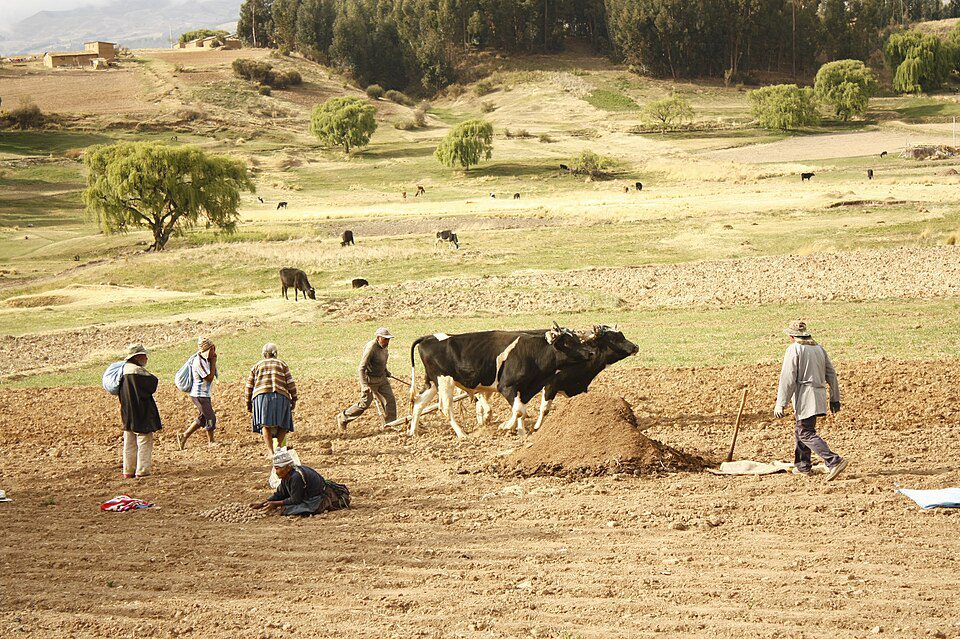
 Bolivia faces major economic and rural development challenges. After the pandemic, the country experienced economic recovery and poverty reduction. However, it still faces high public debt, declining natural gas production, lower international reserves and strong exposure to droughts, floods and wildfires.
Innovations in poverty eradication in Bolivia focus on practical solutions that connect rural communities with markets, energy, water, training and more resilient agriculture.
Agricultural Innovation and Market Access
One major initiative is the Innovation for Resilient Food Systems (Rural Alliances – PAR III) project. In 2022, the World Bank approved $300 million in financing to benefit nearly 130,000 rural families in Bolivia. The project aims to increase food security, improve market access and expand the use of climate-smart agricultural practices.
It also supports at least 1,000 rural community associations and 1,270 rural producer organizations through productive alliances, technology, training and technical assistance. This model matters because it does not treat small producers as passive beneficiaries. It connects farmers with buyers, associations and institutions through business plans designed to improve efficiency, profitability and market access.
Since 2006, the Rural Alliances Project has helped small producers access financing, technology and training, three key tools for improving productivity and quality of life.
Rural Solutions With Real Impact
The Food and Agriculture Organization (FAO) highlights Apiguardia, a beekeeping alliance in San Ramón made up of 18 men and 10 women. With technical support, the group improved hive management, adopted migratory beekeeping practices, increased honey quality and entered more formal and stable markets. This example shows that innovation does not always mean complex technology.
It can also mean specialized training, community organization and better production tools. The results of the Rural Alliances Project highlight the importance of this approach. According to FAO, the first phase benefited more than 28,000 rural households and established 768 alliances.
The second phase reached more than 23,000 families in 120 municipalities. In addition, the market value of certain products increased by 35%, while moderate poverty fell by 11.7% and extreme poverty fell by 10.1% among lower-income beneficiaries.
Sustainable Energy for Rural Communities
Another key aspect of innovation in poverty eradication in Bolivia is access to sustainable electricity. In 2023, the World Bank approved $125 million to expand and improve electricity service in rural communities. More than 141,000 people will receive new or improved access to electricity through grid extensions, mini-grids and individual solar systems.
These solutions will benefit households, schools, health centers and small agricultural, commercial and industrial production units. Electricity can reduce poverty by improving living conditions and boosting productivity. In rural areas, it can support food preservation, tool use, nighttime study, health center operations and the creation of small businesses.
The project also includes solar systems, renewable mini-grids and training in efficient energy use, helping support a cleaner transition that depends less on polluting fuels.
Water, Irrigation and Climate Resilience
Access to water is also essential for reducing rural poverty. In 2024, the World Bank approved $150 million to improve water resource management, irrigation and climate resilience in 15 basins and 256 municipalities. The project will benefit about 30,000 rural families, especially subsistence farmers in upper-basin areas affected by drought, deforestation and soil erosion.
The project focuses on three main areas: protecting water sources through reforestation and native grassland recovery, optimizing household and community irrigation systems and building flood- and erosion-resistant infrastructure. It also includes automated irrigation to improve crop productivity, diversify production and improve household income.
These investments can help rural families adapt to climate instability while strengthening agriculture.
A Practical Strategy Against Poverty
These initiatives demonstrate that Bolivia is combining agricultural innovation, basic infrastructure and climate adaptation to address rural poverty. These are not immediate or perfect poverty eradication solutions, but they target concrete problems in Bolivia: low productivity, limited market access, water insecurity, power shortages and vulnerability to climate change.
The strongest part of these strategies is that they strengthen rural communities as producers, entrepreneurs and participants in value chains. When a rural family gains access to irrigation, electricity, training and stable buyers, it has more opportunities to increase income, diversify production and withstand climate crises. Bolivia still faces major economic and social challenges.
However, these projects show that innovation can be a real tool against poverty when it responds to concrete needs. The Bolivian experience shows that reducing poverty depends not only on large national plans but also on practical solutions that reach rural communities and improve their ability to produce, sell and live with greater stability.
– Adriana Carolina Herrera
Adriana is based in Painesville, OH, USA and focuses on Technology and Solutions for The Borgen Project.
Photo: Wikimedia

Innovations in Poverty Eradication in Bolivia
Innovations in poverty eradication in Bolivia focus on practical solutions that connect rural communities with markets, energy, water, training and more resilient agriculture.
Agricultural Innovation and Market Access
One major initiative is the Innovation for Resilient Food Systems (Rural Alliances – PAR III) project. In 2022, the World Bank approved $300 million in financing to benefit nearly 130,000 rural families in Bolivia. The project aims to increase food security, improve market access and expand the use of climate-smart agricultural practices.
It also supports at least 1,000 rural community associations and 1,270 rural producer organizations through productive alliances, technology, training and technical assistance. This model matters because it does not treat small producers as passive beneficiaries. It connects farmers with buyers, associations and institutions through business plans designed to improve efficiency, profitability and market access.
Since 2006, the Rural Alliances Project has helped small producers access financing, technology and training, three key tools for improving productivity and quality of life.
Rural Solutions With Real Impact
The Food and Agriculture Organization (FAO) highlights Apiguardia, a beekeeping alliance in San Ramón made up of 18 men and 10 women. With technical support, the group improved hive management, adopted migratory beekeeping practices, increased honey quality and entered more formal and stable markets. This example shows that innovation does not always mean complex technology.
It can also mean specialized training, community organization and better production tools. The results of the Rural Alliances Project highlight the importance of this approach. According to FAO, the first phase benefited more than 28,000 rural households and established 768 alliances.
The second phase reached more than 23,000 families in 120 municipalities. In addition, the market value of certain products increased by 35%, while moderate poverty fell by 11.7% and extreme poverty fell by 10.1% among lower-income beneficiaries.
Sustainable Energy for Rural Communities
Another key aspect of innovation in poverty eradication in Bolivia is access to sustainable electricity. In 2023, the World Bank approved $125 million to expand and improve electricity service in rural communities. More than 141,000 people will receive new or improved access to electricity through grid extensions, mini-grids and individual solar systems.
These solutions will benefit households, schools, health centers and small agricultural, commercial and industrial production units. Electricity can reduce poverty by improving living conditions and boosting productivity. In rural areas, it can support food preservation, tool use, nighttime study, health center operations and the creation of small businesses.
The project also includes solar systems, renewable mini-grids and training in efficient energy use, helping support a cleaner transition that depends less on polluting fuels.
Water, Irrigation and Climate Resilience
Access to water is also essential for reducing rural poverty. In 2024, the World Bank approved $150 million to improve water resource management, irrigation and climate resilience in 15 basins and 256 municipalities. The project will benefit about 30,000 rural families, especially subsistence farmers in upper-basin areas affected by drought, deforestation and soil erosion.
The project focuses on three main areas: protecting water sources through reforestation and native grassland recovery, optimizing household and community irrigation systems and building flood- and erosion-resistant infrastructure. It also includes automated irrigation to improve crop productivity, diversify production and improve household income.
These investments can help rural families adapt to climate instability while strengthening agriculture.
A Practical Strategy Against Poverty
These initiatives demonstrate that Bolivia is combining agricultural innovation, basic infrastructure and climate adaptation to address rural poverty. These are not immediate or perfect poverty eradication solutions, but they target concrete problems in Bolivia: low productivity, limited market access, water insecurity, power shortages and vulnerability to climate change.
The strongest part of these strategies is that they strengthen rural communities as producers, entrepreneurs and participants in value chains. When a rural family gains access to irrigation, electricity, training and stable buyers, it has more opportunities to increase income, diversify production and withstand climate crises. Bolivia still faces major economic and social challenges.
However, these projects show that innovation can be a real tool against poverty when it responds to concrete needs. The Bolivian experience shows that reducing poverty depends not only on large national plans but also on practical solutions that reach rural communities and improve their ability to produce, sell and live with greater stability.
– Adriana Carolina Herrera
Photo: Wikimedia
AI, Data Annotation and Global Poverty
Data Annotation and Global Poverty
The development and accuracy of AI are heavily dependent on its training data. However, before this data is fed to AI for training, it needs to be labeled or annotated with the necessary context. This process has led to a new occupation known as data annotation or data labeling, in which individuals review raw data and label it with the context needed by the specific AI model.
These annotations include outlining specific objects in pictures so that AIs know to pay special attention to that item or explaining the semantics of a word or phrase that could only be understood colloquially. The overall range of annotations depends on the model’s use. However, these examples showcase the wide range of responsibilities and the need for data annotators.
Furthermore, human annotators provide nuance in their work that computers lack, which helps make AI models more accurate. This job is traditionally outsourced to countries in Africa and Asia, where populations live in impoverished communities. These data annotators work in poor conditions, with their workplaces even being referred to as “digital sweatshops.”
However, the tides might turn in favor of these communities with the right business practices and national policies. This is because AI companies want more qualified individuals to step into this role and annotate academic content. This shift in demand indicates the potential for AI to address economic poverty in areas with large populations of data annotators.
Impacts
Many large technology firms routinely outsource jobs to countries with highly skilled but undervalued workforces. Data annotation represents just one segment of the broader outsourcing trend within the Western AI industry. This fosters economic prosperity, benefiting the countries receiving foreign investment.
On that note, data annotation is a new sector these countries can capitalize on for proper foreign investment. Many countries have skilled and knowledgeable human capital working in “lower-level” jobs, such as data annotation, due to a lack of opportunities in their countries. However, with the aforementioned shift in data annotation, these same individuals could easily qualify for “higher-level” positions, demand higher wages and advance professionally.
Sama’s Role in Africa’s AI Labor Economy
Sama is a subcontracting company hired by major technology firms to source and manage data annotation work in Africa. Through this model, the company has become a key part of the AI supply chain, connecting global tech companies with large workforces that label and process the data used to train artificial intelligence systems. Sama has helped lift more than 59,000 people out of poverty since 2008.
Its client and partner network includes companies such as Microsoft, Walmart, Getty Images and other AI-focused firms seeking large-scale human annotation services.
Final Thoughts
Due to the rigorous nature of data annotation, the labor market is expansive. By leveraging current business practices, outsourced workers can capitalize on the shift to make this job more lucrative and even on par with other, more traditionally skilled occupations. This would lead to a holistic alleviation of poverty in local communities, as companies provide new opportunities to impoverished populations without losing the benefits of paying less for the same skill set.
Additionally, if national governments enact policies that both attract foreign investment and protect business practice standards, data annotation could become a powerful force in lowering global poverty and empowering international trade.
– Saanvi Mudpa
Photo: Unsplash
The Higher Education System in Equatorial Guinea
Historical Development of Higher Education
The higher education system in Equatorial Guinea has undergone significant changes since the country gained independence in 1968. Portugal first colonized the territory between 1472 and 1778 before transferring control to Spain, which ruled the country until independence.
After its independence, the education system suffered under the rule of Francisco Macías Nguema. Teachers and academics were arrested and some were executed. In comparison, neighboring country Cameroon established the University of Yaoundé shortly after its independence in 1962 and expanded its higher education system throughout the 1970s. Equatorial Guinea, however, did not establish a national university until 1995.
The government passed the General Education Law in 1995 to promote equal access to education. During the same period, the National University of Equatorial Guinea (UNGE) was established and introduced courses in engineering, medicine, social sciences and humanities. Despite these reforms, higher education enrollment remains low. According to the World Bank, in 2024, only 8,151 students were enrolled in higher education institutions.
Improvements and Current Reforms
Continuing Challenges in Higher Education
In Equatorial Guinea there is currently one university, UNGE, with campuses in Bata and Malabo. Additionally, there are currently five specialized vocational training institutions. In comparison, neighboring country Cameroon has 11 universities. Although Cameroon’s tertiary enrollment rate remains relatively low at 17%, it still exceeds Equatorial Guinea’s rate of 12.8%.
Therefore, despite recent reforms, the higher education system in Equatorial Guinea still faces major challenges such as accessibility, funding and vocational preparation. According to a World Bank report, weaknesses in the sector continue to create employment barriers due to a lack of relevant vocational skills. The country has a very young population, 56% of which is under 25, making investment in higher education crucial for the country’s development.
Conclusion
The higher education system in Equatorial Guinea has faced many historical and structural challenges. However, recent reforms show progress in digital infrastructure and workforce preparation. Continued investment in higher education could expand employment opportunities, strengthen workforce development and encourage future generations to pursue higher education.
– Emma Wheeler
Photo: Unsplash
Disability and Poverty in Turkmenistan: Breaking the Cycle
Barriers for People with Disabilities in Turkmenistan
Starting with education, because that is where everything else begins. For decades, children with disabilities in Turkmenistan were placed in residential facilities or excluded from school altogether. According to a 2024 UNICEF report that The BEARR Trust highlighted, approximately 7% of children with disabilities in Turkmenistan have never attended school, while nearly 60% of children with severe disabilities do not receive disability cash benefits.
Employment presents another significant challenge for people with disabilities in Turkmenistan. Workplaces are not built for accessibility. Hiring practices do not account for inclusion and sitting underneath all of it is stigma, the kind that not only makes it harder to find work but also harder to access health care and to be seen as a full participant in community life. These barriers reinforce long-term economic instability for people with disabilities.
International organizations and regional advocacy groups have pushed for stronger disability inclusion policies in employment. UNICEF and the World Bank have both supported broader disability inclusion initiatives across Central Asia, including efforts focused on accessibility, social protection and workforce participation. While Turkmenistan still faces major barriers in employment access for people with disabilities, these programs aim to strengthen long-term inclusion efforts.
The Link Between Disability and Poverty
Poverty in Turkmenistan remains difficult to measure accurately because publicly available government data is limited. However, international economic reporting shows that many households continue to face financial instability, particularly in rural areas. People with disabilities often experience even higher economic vulnerability due to limited employment opportunities and inconsistent access to benefits and support services.
Disability and poverty in Turkmenistan do not just coexist. They create each other. Poverty means inadequate health care, poor living conditions, and no early intervention for children who need it. Those conditions increase disability rates. Disability, in turn, limits access to education and employment, which keeps income low. The World Bank’s Europe and Central Asia disability inclusion brief describes this as a bidirectional cycle, particularly acute in countries with weak social protection systems.
Efforts to Improve Disability Inclusion
UNICEF has worked with Turkmenistan’s Ministry of Education to expand inclusive education programs through pilot schools, accessibility improvements and teacher training initiatives. In January 2025, UNICEF and the Ministry continued specialized training programs for teachers, school administrators and education professionals working in inclusive classrooms in Ashgabat. These programs aim to improve mainstream classroom access for children with disabilities nationwide, though access in rural areas remains limited.
Turkmenistan made a major commitment in 2008 by ratifying the U.N. Convention on the Rights of Persons with Disabilities. That ratification required legal frameworks protecting equal access to education, employment and social services. The World Bank has since worked with policymakers in the region to examine how benefits are distributed and where coverage falls short for people with severe disabilities.
The BEARR Trust, a U.K.-based organization founded in 1991, has tracked this work from the outside. It monitors social welfare conditions across the former Soviet Union, documents what is happening on the ground and produces the kind of independent analysis that governments and NGOs need to know where to direct resources.
A Path Forward
Progress on disability and poverty in Turkmenistan is real. More children with disabilities are in mainstream classrooms than a decade ago. Policy frameworks are stronger. International partnerships are deepening, but real progress and enough progress are not the same thing. Employment discrimination persists. Benefit access remains uneven. Rural communities are still largely left out.
Experts and advocacy organizations continue to emphasize that inclusive education, enforceable employment protections and stronger social support systems are necessary to reduce the long-term effects of disability and poverty in Turkmenistan.
– Sarah Jeanelle Taylor
Photo: Unsplash
Gender Wage Gap in Tanzania: Beyond the Hourly Rate
Small Pay Gap, Large Employment Gap
At first glance, Tanzania appears close to achieving pay equality. The unadjusted gender wage gap stands at just 2.9% at the hourly level, which economists consider too small to hold meaningful economic significance. On a monthly basis, women actually earn 4% less than men. However, these figures hide major differences in employment patterns between men and women.
Across every age group, women work fewer paid hours than men. Among employed workers, 33.4% of women work part-time compared to 17.3% of men. In other words, while women who secure paid employment tend to earn roughly the same hourly wages as men, they are less likely to work the same number of hours.
The broader employment picture shows an even more significant gap. Women’s employment rate is 75.5%, compared to 84.6% for men. Meanwhile, unemployment among women reaches 12.7% under Tanzania’s national definition; more than double the 5.8% rate for men.
Unpaid Care Work and Poverty
One of the biggest barriers affecting the gender wage gap in Tanzania is unpaid domestic and care work. Women spend an average of 4.6 hours each day on unpaid care and household responsibilities, compared to men who spend only 1.2 hours. This means women shoulder nearly four times the unpaid care burden.
That imbalance has direct economic consequences, contributing to the higher poverty rates among women. In urban Tanzania, female-headed households face a 20% poverty rate compared to 14% for male-headed households. Women who cannot commit to full-time paid work often move in and out of informal employment as well, where workers typically lack social protection, paid leave and job security. In non-agricultural sectors, 93.8% of employed women work informally, compared to 86.6% of men.
Occupational Segregation and Informality
Women and men also remain concentrated in different sectors of the economy. The Duncan Segregation Index estimates that roughly 30% of workers would need to change sectors to create equal employment distribution between men and women.
Women are more likely to work in care-related fields such as education, health and household services, while men dominate sectors including manufacturing, construction and transport. Women also face barriers to advancement within these occupations, as they hold only 27.9% of senior and middle management positions. Another area of vulnerability is contributing to family work. Nearly 40% of employed women work as contributing family members—unpaid workers assisting on family farms or businesses—compared to 18% of men. In rural areas, the figure rises to nearly 51% of employed women.
Progress and Solutions Underway
When researchers consider factors such as age, marital status, education, occupation and sector, the adjusted gender pay gap becomes statistically insignificant. This suggests that differences in working hours and occupational segregation, rather than direct wage discrimination, account for most of the observed gap. These are areas where policy interventions can make a measurable difference in reducing the gender wage gap in Tanzania.
Tanzania has already introduced laws addressing sexual harassment and gender discrimination, while also providing maternity and paternity benefits. The country has also ratified the ILO Equal Remuneration Convention, which mandates equal pay for men and women for work of equal value. Together, these legal protections create a framework for equal treatment in the workplace. Financial inclusion remains another key area of focus. Expanding women’s access to banking and financial tools will help more women start businesses, manage financial risks and build long-term economic independence.
In December 2024, the World Bank signed a $104 million agreement supporting the Pamoja Project. This is an initiative that aims to directly benefit nearly 320,000 women by expanding economic opportunities and strengthening services that prevent and respond to gender-based violence.
The World Bank also continues to work with Tanzania on implementation frameworks designed to turn legal protections into measurable outcomes. As the UN Women brief notes, collecting better data at more frequent intervals would improve understanding of the gender wage gap and would help policymakers shape more effective policies.
Looking Ahead
Reducing the unpaid care burden, expanding women’s access to formal employment and enforcing equal pay protections remain key to closing the gender wage gap in Tanzania. With recent legal reforms, financial inclusion initiatives and targeted projects like the Pamoja Project, these goals are becoming more realistic with each passing year.
– Camila Correch
Photo: Flickr
Women-Led Shea Butter Cooperatives in Northern Ghana
Shea Production Supports Rural Livelihoods
In many rural communities across northern Ghana, livelihoods depend heavily on agriculture and natural resources. Shea production has become one of the region’s most important economic activities for women. According to the United Nations Development Programme’s (UNDP) article “The Shea Revolution: Modernizing the Shea Value Chain for Ghana’s Women,” the global shea butter market is valued at approximately $2.75 billion and is projected to grow to $5.58 billion by 2033.
Despite the product’s value, traditional shea processing remains physically demanding and time-consuming for many women. Osman Mariam, a shea producer in northern Ghana, described the importance of shea butter production by stating, “For the women here, shea butter is like our gold,” Mariama said. “It is what we depend on to support our families.”
Women-Led Shea Butter Cooperatives Expand Opportunities
Women-led shea butter cooperatives help women improve production quality, increase output and access international markets. One example is the Sunkpa Shea Women’s Cooperative in Ghana’s Savannah Region. Founded in 2013, the cooperative began with 565 women from eight smaller associations and has since expanded to include more than 800 women across 12 sub-cooperatives.
The cooperative operates within Community Resource Management Areas (CREMAs), which support sustainable land management and conservation practices. Through these initiatives, women help restore degraded land, protect shea trees and participate in agroforestry projects. According to the Equator initiative report, the cooperative has restored 650 hectares of agroforestry parklands and established a nursery capable of growing 700,000 seedlings.
The report also states that the cooperative supports several women throughout the shea value chain and employs 200 women at its processing facility. Memuna Braimah, chairperson of the Sunkpa Shea Women’s Cooperative, explained the impact of the organization by saying, “This encourages us to know that our actions are not only making an impact by changing our landscape but also serving as a lesson for others to know that we women, when united, can reach greater heights and achieve much more than we can imagine.”
Environmental Conservation and Women’s Rights
Environmental protection has become increasingly important for women-led shea butter cooperatives in northern Ghana. According to the Global Shea Alliance article “Protecting Shea Trees: Securing Women’s Livelihoods,” women in many communities depend on nearby shea parklands for income and economic stability. However, deforestation and land-use changes have threatened shea production in recent years.
The article explains that shea trees are increasingly being cut down for charcoal production and land development, reducing women’s access to shea nuts and forcing them to travel farther to collect them. Latifa Chimsi Abdulai, a member of the Wunda Bangbeebu Women’s Cooperative, emphasized the importance of conservation efforts. “She knows preservation is key,” the article states, as cooperative members work with chiefs and local leaders to restore protections for shea parklands.
The Global Shea Alliance reported that more than 16,000 shea trees across Ghana, Togo and Benin have been digitally mapped. The initiative also linked more than 3,500 women producers through the Enhancing Women’s Land Tenure through Shea Tree Mapping project. The initiative helps strengthen women’s land rights while supporting environmental sustainability.
Modern Technology Improves Working Conditions
Modern shea-processing equipment is also helping improve working conditions for women. According to UNDP Ghana, the organization partnered with Community Development Alliance Ghana and the Government of Japan to establish modern shea butter processing facilities in communities in northern Ghana. The facilities include grinders and roasters that reduce processing time and lessen the physical burden placed on women.
The initiative is expected to support approximately 150 women involved in the shea value chain. Speaking about the project, UNDP Peace and Governance Analyst Melody Azinim said, “When you reduce the burden on a woman, you multiply her potential.” Improved access to technology allowed women-led shea butter cooperatives to increase production and compete more effectively in international markets.
Looking Ahead
Women-led shea butter cooperatives in northern Ghana continue to create economic opportunities while supporting environmental conservation and sustainable development. Organizations such as the Sunkpa Shea Women’s Cooperative demonstrate how cooperative business models, international partnerships and conservation initiatives can help reduce poverty and strengthen local economies. As global demand for ethically sourced shea products continues to grow, these cooperatives may continue expanding opportunities for women and families across Ghana.
– Grelby Santos
Photo: Flickr
The Rise of Digital Literacy in Pakistan
Background
Rural areas of Khyber Pakhtunkhwa are areas with more structural barriers. Around 70% of girls drop out before 10th grade. Families prioritize sons’ education due to poverty. Society considers men the breadwinners, and families consider investment in women’s education as a waste of money. Shortage of female teachers in rural and remote areas further contributes to the low enrollment rate. Women’s enrollment rate in universities and degree-awarding institutions, technical and vocational training is also less than that of men.
For adult women, barriers are more strangling. Structural challenges restrict adult women from reentering “brick and mortar” school. Poverty, domestic responsibility, and cultural mobility restrictions make it impossible for women to physically attend school. However, the rise of digital literacy is serving as a solution to these long-standing challenges. Women use smartphones beyond their communication purpose; smartphones are becoming a means of adult education. Digital Literacy is essential for economic empowerment, bridging the gender gap in education.
Digital Literacy Initiatives
The government funds the digital literacy initiatives, such as Digiskills.pk, TCF, and HEC programs, specifically designed for adults to provide basic training on the basics of computer, AI, freelancing, E-commerce and foreign languages (English, Chinese, German) accessible for free. All these programs contributed to adult women’s education and awareness and also helped them become financially independent. The success of these programs inspired more detailed programs. The educational crisis and gender gap became the reason for starting gender-specific initiatives. One of the major shifts is the “E-Learn, She Earn” 2026 model.
The 2026 Paradigm: “E-Learn, She Earn”
“E-Learn, She Earn” 2026 model is the cornerstone for digital literacy efforts in Pakistan. The model does not require women to physically attend a vocational center, which makes it easy to access. Women can easily access learning materials and lessons via video modules on platforms like YouTube or dedicated LMS apps. Women can access lessons at any time, which makes it easy to manage learning between household chores. Laptops are not easily available in rural areas, and the curriculum is optimized for smartphones and low-bandwidth areas. Lessons and the offered training are not just theoretical learning, but it focuses on digital skills, including Social Media Marketing, Virtual Assistance and Data Entry to make women financially empowered and combat poverty.
Digital literacy in Pakistan has overcome triple barriers. The first barrier is mobility, where traditional solutions require travel, which safety concerns and cultural norms often discourage. Digital literacy crushes this barrier with access everywhere without the need to travel. Time is the second barrier, which also ends with access 24/7, which allows women to learn at their own convenience. Poverty is a major factor that restricts women’s education. Tuition fees and transportation costs are no longer a problem due to the rise of digital literacy in Pakistan. Even digital literacy is contributing to rapid monetization by making women learn skills and earn.
The Future is Decentralized
Emergence of digital literacy is the primary driver of adult education in Pakistan. It indicates a new beginning where the supremacy of one-size-fits-all school models comes to an end. The success of digital literacy initiatives shows how digital solutions can address educational challenges. “E-Learn, She Earn” further solidifies the foundation of digital literacy in Pakistan by removing the mobility, time and financial obstacles.
– Noor Ul Ain Ameer
Photo: Flickr
Reducing School Dropout Rates In Nigeria
Menitos introduced a feeding program in 2019, and by 2022, more than 7,000 underprivileged pupils had benefited. The organization’s outreach model is intentionally community-rooted. Most beneficiaries are identified through schools or during grassroots engagement events, and are then invited to a center where they receive empowerment materials. This approach ensures support reaches children in environments where need is most visible.
Toluwalope explained that the program equips children with essential educational tools while motivating them to pursue their academic goals. Furthermore, the school lunch intervention further boosts attendance by providing nutritious meals to children who come to school. According to Toluwalope, the foundation aims not only to tackle hunger-related barriers but also to create a supportive environment that nurtures students’ well-being.
Causes of School Dropout Rates in Nigeria
Toluwalope described school dropout rates in Nigeria as rarely a single event but rather a gradual erosion driven by a “poverty of hope.” Economic pressure often pushes children into petty trade or manual labor to support their families. Missing a few classes leads to falling behind, and many withdraw permanently. A lack of guiding figures creates a “ceiling effect,” where education is seen as a luxury rather than a pathway out of poverty.
Poverty acts as the baseline stressor. It manifests as chronic hunger, which directly affects cognitive function and classroom behavior, making it harder for children to learn and stay engaged. Menitos views drug abuse as both a cause and a symptom of school disengagement. Children in neglectful environments are more likely to be exposed to substance use by older peers or guardians, often turning to drugs as a coping mechanism for trauma, instability or boredom.
Educational neglect often appears as what Toluwalope calls “educational abandonment.” Parents overwhelmed by economic hardship may become less involved in their child’s schooling or fail to provide basic supplies. This leaves the child emotionally disconnected from the school system.
The WACANDA Program
To address rising school dropout rates in Nigeria, Toluwalope created the War Against Child Abuse and Drug Abuse (WACANDA) sensitization program. The initiative travels across schools and communities to raise awareness about drug demand reduction, child rights and reporting channels, and provides psychosocial support through volunteer psychologists and counselors.
The program is built on “hyper-local engagement.” Instead of formal lectures, Menitos uses community town halls, street theatre and peer-to-peer workshops to de-stigmatize difficult conversations. This approach brings the issue to the doorstep of communities and transforms passive bystanders into active protectors of children’s rights.
Psychosocial Support Services for At-Risk Children
Menitos’s volunteer psychologists and counselors provide trauma-informed support through three key services:
The Back2School Initiative
Menitos has reached more than 2,000 children through its Back2School projects. Launched nearly a decade ago, the annual program provides essential school supplies — including textbooks, bags and uniforms — to reduce dropout rates. In its early years, the program supported more than 200 beneficiaries annually.
The initiative identifies at-risk children through community mapping. Volunteers collaborate with teachers to flag students with high absenteeism or those lacking uniforms and books. Once identified, children receive a Success Kit, which includes supplies, uniforms and a mentor. Parents also sign a Commitment Pact to ensure consistent school attendance. Sustainable funding turns one-off donations into multi-year partnerships, allowing Menitos to support a child from primary school through graduation.
Community Engagement Models
Menitos operates through a multi-stakeholder model. Schools serve as an early-warning system, parents participate in Caregiver Circles where they receive tools to support their children’s education, and Menitos partners with health care nongovernmental organizations (NGOs) to address medical needs that may hinder school attendance.
One of the most notable shifts resulting from Menitos’s work is an increase in community reporting. Residents now flag cases of abuse or neglect that previously went unaddressed. This has led to renewed interest in schooling, higher attendance rates and a decline in the normalization of drug use among teenagers.
In one case, a young boy’s father refused to buy him school supplies. After the school contacted Menitos, the team convinced the father to support his son’s return to education, assuring him that supplies and ICT fees would be covered. With the right resources, parents and caregivers become more willing to keep their children in school, reducing both dropout rates and vulnerability to drug abuse.
Challenges and the Path to Broader Access
Toluwalope identifies entrenched silence as one of the biggest challenges. In many underserved communities, drug abuse and domestic issues are viewed as private matters. Breaking through this code of silence requires patience and long-term trust-building rooted in nonjudgmental engagement.
There is also a growing need for vocational integration. For older teenagers who have missed years of schooling, traditional primary education may no longer be suitable. Bridging formal education with technical skills can create pathways to employment and long-term stability.
To maximize impact, Menitos requires mobile counseling units to reach remote areas, digital tracking tools to monitor long-term progress and temporary shelters for children in unsafe environments. Indeed, with adequate resources, Menitos can expand its reach across Nigeria and continue supporting vulnerable children through education, psychosocial care and community engagement.
– Gabriela E Silva
Photo: Flickr
Telemedicine: Health Care access for Afghan Women
The impact on Afghan women has cut the deepest. Now lacking almost all fundamental rights, health care has taken a backseat. Not a single woman received screening for any cancer form and less than 10% received screening for sexually transmitted infections. Even where diagnosis is possible, treatment for these demographics remains virtually inaccessible.
Barriers to Health Care Access for Afghan Women
These obstacles to health care access for Afghan women are not accidental but structural. The Taliban’s governance has systematically dismantled the conditions in which women can safely seek and receive medical attention. At the center of this is the Mahram Policy, which requires female health workers to be accompanied by a male guardian at all times outside the home.
On December 21, 2022, women were banned from working with NGOs nationwide, except in health care. Yet the requirement for them to be chaperoned now hinders their ability to provide and receive adequate health care. Even when women reach a facility, barriers persist; whether they would like to or not, male doctors can scarcely provide the necessary care except in life-threatening conditions.
Additionally, medicines are in short supply and the financial burden of travel pushes families to impossible decisions, leading women to disregard their health and rely on traditional cures.
The Organizations Still Showing Up
Despite the deteriorating environment, the international humanitarian response has been remarkable. In 2024 alone, nearly one million patients, 65% of whom were women and children, received primary care across 47 implemented health facilities. Alongside these infrastructural changes, the International Committee of the Red Cross (ICRC) has upgraded equipment, improved staff competency and educated hospitals on mass-casualty incidents.
Through expanding services into urban areas, organizations like the ICRC are pivotal in improving access to health care and alleviating difficult living conditions in Afghanistan. Médecins Sans Frontières (MSF) has equally refused to retreat. Operating across eight provinces, MSF has seen the number of patients it treats double in the last three years.
The organization prioritizes the most acute needs: emergency trauma care, maternal health and malnutrition. In 2024 alone, the organization admitted more than 400,000 emergency patients and assisted in more than 45,000 births. Despite attacks from the Taliban, the remaining feeding center and trauma facility in Kunduz have become vital for Afghanistan’s health care infrastructure.
What makes these organizations so significant is not just the scale of their operations but the conditions under which they persist. They hold together the health care system in a place of such turmoil, despite uncertain funding, restrictions on female staff and the collapse of broader public health systems.
Telemedicine: A Bridge No Wall Can Close
Among the most promising developments for Afghanistan’s health care system is the expansion of telemedicine. When physical access is blocked by Taliban restrictions, a mobile phone may still get through. Telemedicine is being pursued by many organizations and charities, with evidence of its impact.
The Central Asia Health Systems Strengthening project connected seven tertiary care facilities with 14 secondary care facilities across the region. The project enabled more than 6,000 teleconsultations and delivered 52 e-learning sessions to more than 2,000 health staff. A tele-ICU service running from 2020 to 2023 provided the same number of teleconsultations to nearly 1,600 patients.
This began as a response to COVID-19 before expanding into neonatal, pediatric and surgical critical care. Researchers found that increased consultation frequency was associated with reduced patient mortality, demonstrating clinical applicability.
Arian Teleheal
Dr. Waheed Arian grew up in Afghanistan during the Soviet conflict, sheltering in cellars from rockets and bombs. Later, his family fled to Pakistan, where he contracted malaria and tuberculosis in a refugee camp. He arrived in the U.K. at 15 with $100 in his pocket, went on to study medicine at Cambridge and is now the founder of Arian Teleheal.
Founded in 2015, Arian Teleheal began by connecting Afghan hospitals to a global network of volunteer specialists via smartphones and tablets. As expensive medical systems are inaccessible to medics in these low-resource settings, this enables medical personnel and patients to receive appropriate care by being routed to a network of more than 150 international volunteers. The results have been unparalleled, with a three-year study finding that Arian Teleheal’s volunteers have helped care for thousands of patients.
The organization has also since partnered with the World Health Organization (WHO) to provide emergency, mental health and psychosocial support to people in need across the globe.
Final Remarks
Initiatives such as these show great promise for those in need in Afghanistan, who face a health care system rocked by political repression, stripping the right to provide medical care freely. As humanitarian organizations struggle to fill the gap, telemedicine is emerging as a quiet revolution. Where Taliban restrictions try to block the door, a smartphone may still get through.
– Juliette Dall’Aglio
Photo: Flickr
Pakistan and Mozambique Hit Hardest by UK Cuts to Foreign Aid
UK Shifts Focus to Defense and Investment Partnerships
Bilateral aid arrangements will face the largest reductions, Cooper said, with Pakistan and Mozambique hit hardest by U.K. foreign aid cuts. The two countries will see their direct grant funding reduced significantly, while Yemen, Somalia and Afghanistan will also face cuts. At the same time, she said the government plans to expand “partnerships for investment” to help raise private funds or bring in expertise to help countries raise funds themselves.
In response to concerns about combating infectious diseases such as polio, Cooper said organizations such as Gavi, the Vaccine Alliance, a multilateral vaccine program partly funded by the U.K., would need to take on more of this work. She added in a statement in March, “National security is the first duty of government and this country faces the most serious security situation for a generation. For too long under previous governments, our defense investment was cut back, so last year this government took the necessary decision to deliver the biggest increase in defense spending since the Cold War.”
“Allocating a reduced [aid] budget inevitably leads to hard choices and unavoidable trade-offs, so we are focusing aid on the people and places that need it most and we will still be a major player. We expect to be the fifth-biggest funder in the world. We will still use international leadership, such as our 2027 G20 Summit presidency, to shape the global agenda for development,” she added.
The cuts, alongside reductions by the U.S. and other wealthy nations, could threaten multiple aid programs and leave developing countries increasingly reliant on other sources of funding.
Remittances Fill Some of the Aid Gaps in Pakistan
In Pakistan, the share of aid funding generated by remittances from more than eight million Pakistanis living abroad has risen significantly, now reaching around $30 billion. Naseer Memon, an Islamabad-based social sector expert, said last year this funding helped charities and NGOs absorb some of the earlier aid reductions and sustain much of their work.
He added, “Pakistan’s decades-old development sector, particularly the big NGOs, is deeply rooted and increasingly pursuing a multi-sectoral, multi-donor approach to avoid dependence on one or a few donors.” However, that resilience will be tested further over the next year as U.K. cuts take effect.
Mozambique Relies on UN Agencies
Mozambique has far less capacity to raise donations from its diaspora, so it will rely more heavily on multilateral organizations, including the U.N. The country suffered devastating floods in January that displaced hundreds of thousands of people, particularly in Gaza Province.
The International Organization for Migration (IOM) has provided emergency assistance, including health care, water and sanitation, accommodation centers and coordination support. However, tens of millions of dollars are still needed to restore livelihoods.
– Lawrence Dunhill
Photo: Wikimedia Commons