Ghana’s Poverty Reduction Efforts in its Northern Regions
 Although Ghana, a country in West Africa, experiences consistent economic growth, its impact is felt unequally. Southern regions, such as Accra, have significantly better infrastructure and schools compared to the northern regions. In many northern regions, the absolute poverty rate rises above 50%.
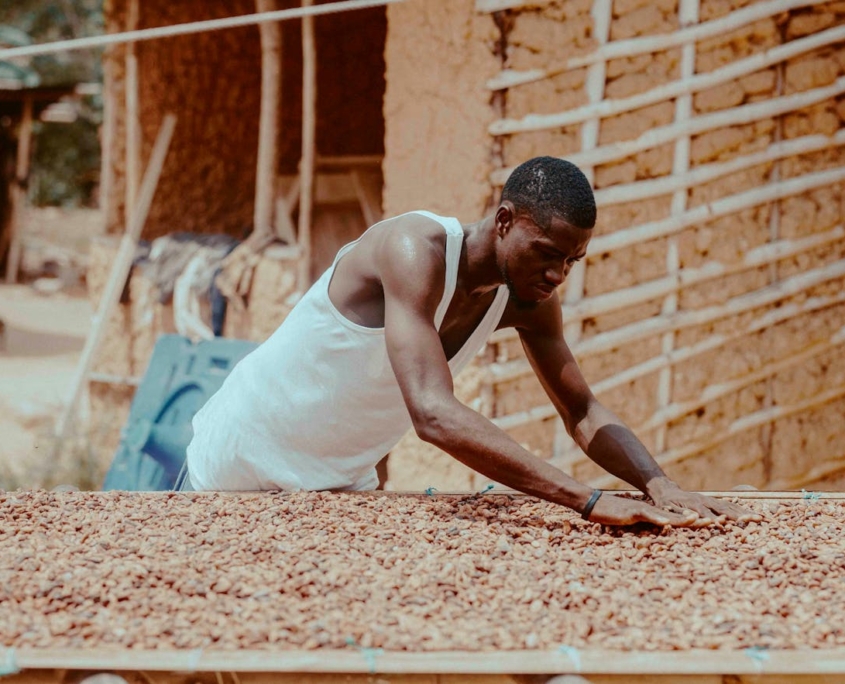
Several factors contribute to the spatial inequality in Ghana. Because agriculture is the primary employer in the north, there are more severe economic consequences due to the variable climate. Rainfall has declined, droughts have increased and floods have become more frequent. In addition, several cash crops, such as cocoa, are not suited to the area’s savannah characteristics.
In light of these challenges, the Ghanaian government is working to improve the economic strength and reduce poverty levels in the northern regions.
The Northern Development Authority
The Northern Development Authority (NDA) is an independent organization established in 2017 by an Act of Parliament, with one of its goals being to support Ghana’s poverty reduction efforts in the north. It succeeded the Savannah Accelerated Development Authority (SADA), an organization with a similar goal but described as inefficient. The NDA facilitates the distribution of social programs and helps secure foreign investment in the region.
The NDA’s projects are gradually transforming cities and regions. For instance, in the Bunkpurugu Nakpanduri District, the organization dug 32 boreholes, providing families with access to fresh water. However, Ghanaian leaders believe that the NDA has room for improvement. The Acting Chief Executive Officer of the Northern Development Authority, Dr. Emmanuel Abeere-Inga, pointed out in 2025 that government funds rarely reach the northern regions because “it’s taken by bureaucrats in Accra,” the country’s capital.
This public concern, while highlighting challenges within the NDA, does not negate the initiatives it has implemented. The organization continues to play a role in efforts to reduce poverty in the region.
Investment Assisting Ghana’s Poverty Reduction Efforts
The Ghanaian Ministry of Food and Agriculture and AAK, a supplier of plant-based oils, signed an agreement to expand the country’s shea industry. With a planned intensification of direct sourcing, around 300,000 women from the northern regions are expected to benefit. Additionally, the creation of an “Innovation Academy” and a processing factory will expand job opportunities and support poverty alleviation.
Investments such as these stem from government-led efforts. Recently, Ghana hosted the African Prosperity Dialogues, in which national leaders emphasized supporting inflows of investment, including restructuring investment laws to be more accessible to smaller investors. These efforts aim to grow local markets and reduce poverty, particularly in northern areas.
Free Senior High School Program
In 2017, Ghana launched the Free Senior High School program, with the aim of expanding access to secondary education across the country. Since its inception, the program has enrolled around 1.6 million students, though it continues to face capacity challenges. Many qualified students do not earn spots simply because demand exceeds supply.
Recently, Ghana initiated steps to close this gap by opening 25 private schools across all regions to participate in government-funded education. These efforts may contribute to easing poverty, especially in northern regions where rates are higher. A 2023 article by the United Nations Development Programme (UNDP) explains the connection between poverty and education, noting that poverty rates would be “halved if all adults completed secondary school.” In this way, Ghana’s Free Senior High School program supports education reform and contributes to poverty reduction in the north.
Looking Ahead
Through both progress and challenges, the Ghanaian government continues working to address poverty in its northern regions. Programs such as the Northern Development Authority may face bureaucratic delays, while other initiatives demonstrate measurable outcomes. Overall, efforts to reduce poverty in northern Ghana remain complex, involving multiple strategies and ongoing policy adjustments.
– Ben Anderson
Ben is based in Madrid, Spain and focuses on Business and Politics for The Borgen Project.
Photo: Pexels
