Education in Nigeria: Children in Poverty
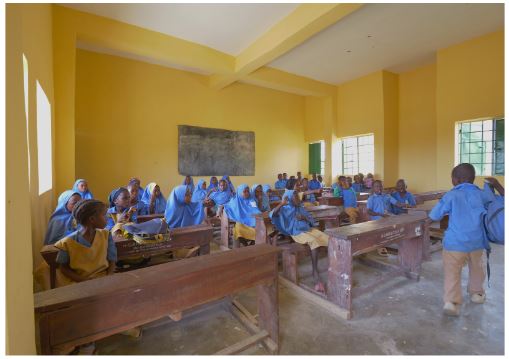 Poverty in Nigeria is one of the main barriers preventing children from accessing education, as many families cannot afford the school fees and materials needed for their children to attend school. As a result, countless children are out of school and trapped in cycles of poverty.
Children in Poverty
The United Nations Children’s Fund (UNICEF) reports that 54% of children in Nigeria are multidimensionally poor, meaning they face more than one form of deprivation. World Bank data further shows that child poverty levels exceed adult poverty levels. Children in northern Nigeria face particularly high rates of poverty. Additionally, parents’ education levels strongly correlate with the likelihood of their families living in poverty and deprivation.
Children from impoverished households are less likely to receive a quality education because they cannot afford essential school materials. Data shows that underserved children in Nigeria achieve only 19.7% learning compared to 49.4% among children from wealthier families.
Children Attending Schools in Nigeria
Violence in northeastern Nigeria has created widespread insecurity, making it difficult for children in the region to access education. The conflict has forced schools to close and displaced 3.3 million people, nearly half of whom are children. For girls, the situation is even more challenging, as cultural norms often prioritize boys’ education.
The Education Policy and Data Center reports that 33% of primary school–aged children in Nigeria are out of school, with girls disproportionately affected. According to the Malala Fund, nearly five million adolescent girls and a total of 8.97 million girls are out of school in the country. This makes young girls more vulnerable to child marriage.
The INEMO Foundation
The INEMO Foundation is a nongovernmental organization (NGO) that believes education is one of the most effective ways to reduce poverty in Nigeria. It directly supports families and schools to help keep children in school.
The INEMO Foundation was founded by Dr. Opeyemi Adeosun, the Executive Director and his wife, Sophia Inemotimi Adeosun, in Abuja, Nigeria. Adeosun was inspired by the novel “Only God Can Save Nigeria: What a Myth?”, which motivated him to help children in his community attend school in 2017.
After speaking with the novel’s author, Adeosun was invited to share his story on the author’s platform. This appearance attracted sponsors to his work, enabling him and his wife to help 62 children attend school in 2018. The couple officially registered the INEMO Foundation as an NGO in 2019 to continue and expand their efforts.
The Borgen Project spoke with Adeosun, who shared that he is a public health practitioner and wanted to help children in his community access education. “The education aspect has been the main part we focus on,” Adeosun said.
Reviving Schools, Restoring Hope
The Foundation’s latest project involved renovating a school in Keffi, Nasarawa State. “The Bank of Industry gave us some money to refurbish and renovate some of the classrooms,” Adeosun explained. “According to the school’s headmistress, since the renovations, they have seen more children enrolling and an increase in admissions.”
“That’s the biggest achievement we’ve had in any school,” says Adeosun, referring to the school’s renovation. The Foundation not only refurbished the school but also installed functional toilets and a reliable water supply for the community to use.
The Foundation also focuses on supporting local mothers and this approach has shown positive results. The financial assistance provided has helped cover school fees for many families. “Inflation has increased and many parents cannot afford this. So instead of the situation getting better, it’s actually getting worse,” Adeosun said.
“Poverty does not know religion, does not know ethnicity in Nigeria, but mostly those who are not educated, because the majority of the parents of these children in poverty I’m talking about are not educated,” says Adeosun as he expresses how uplifting education can be from poverty. For Adeosun, education in Nigeria is a key tool to help children escape poverty. So far, the Foundation has supported 300 children in returning to school.
Charities Working To Improve Education Access in Nigeria
Britain-Nigeria Educational Trust (BNET) is a charity that provides funding toward the advancement of education in Nigeria. The charity aims to support the training and development of teachers in Nigeria while also maintaining funding for other projects in education.
The BNET Trust has helped many schools and one of the projects it has given funding to is the Pacelli School for Blind and Partially Sighted Children. BNET’s funding has been significant as it enabled the school to buy a JAWS screen reader for the blind and partially sighted children. This has given children better resources fitted to their needs.
The Malala Fund is an international organization that aims to provide quality education for every girl. Founded by activist Malala Yousafzai, the Fund invests in local education advocates who can help to shape policies for girls’ education.
The priorities for the Malala Fund regarding Nigeria are to strengthen the right to education for girls who are married and young mothers. Another priority is to enhance the funding for girls in secondary schools. The organization wants to increase education funding at the federal and state levels so that girls in Nigeria receive better education.
UNICEF has reported that one in four Nigerian children is out of school and deserves to be educated. The charity has found that 73% of children aged between 7 and 14 do not have foundational reading skills. There is a significant gap between primary and secondary schools, with a lack of infrastructure, leaving only one secondary school for every five primary schools.
UNICEF aims to reach several goals for education in Nigeria by 2027 and one of these is to give 10 million children access to education. Another aim is to provide 4.8 million children with access to vital learning materials and for 22 states to increase and scale up their approach to literacy and numeracy learning.
– Alice Haston
Alice is based in Liverpool, UK and focuses on Good News and Global Health for The Borgen Project.
Photo: Dr. Opeyemi Adeosun
