Reducing School Dropout Rates In Nigeria
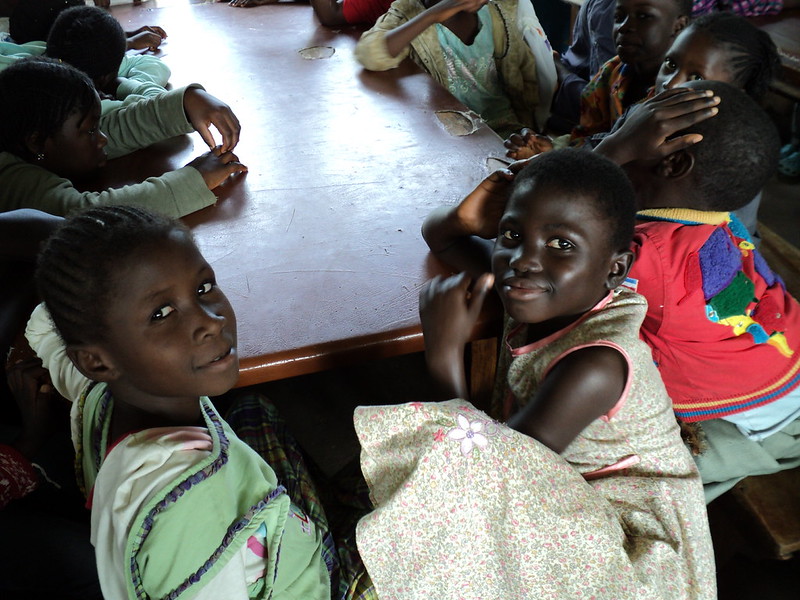 Daramola Toluwalope Oluwaseun, founder of the Menitos Charity Foundation, leads an organization dedicated to helping disadvantaged children complete basic education and pursue vocational opportunities. She notes that school dropout rates are shaped by multiple factors, including poverty, drug abuse, child neglect or abuse, limited access to opportunities and deeply rooted limiting beliefs.
Menitos introduced a feeding program in 2019, and by 2022, more than 7,000 underprivileged pupils had benefited. The organization’s outreach model is intentionally community-rooted. Most beneficiaries are identified through schools or during grassroots engagement events, and are then invited to a center where they receive empowerment materials. This approach ensures support reaches children in environments where need is most visible.
Toluwalope explained that the program equips children with essential educational tools while motivating them to pursue their academic goals. Furthermore, the school lunch intervention further boosts attendance by providing nutritious meals to children who come to school. According to Toluwalope, the foundation aims not only to tackle hunger-related barriers but also to create a supportive environment that nurtures students’ well-being.
Causes of School Dropout Rates in Nigeria
Toluwalope described school dropout rates in Nigeria as rarely a single event but rather a gradual erosion driven by a “poverty of hope.” Economic pressure often pushes children into petty trade or manual labor to support their families. Missing a few classes leads to falling behind, and many withdraw permanently. A lack of guiding figures creates a “ceiling effect,” where education is seen as a luxury rather than a pathway out of poverty.
Poverty acts as the baseline stressor. It manifests as chronic hunger, which directly affects cognitive function and classroom behavior, making it harder for children to learn and stay engaged. Menitos views drug abuse as both a cause and a symptom of school disengagement. Children in neglectful environments are more likely to be exposed to substance use by older peers or guardians, often turning to drugs as a coping mechanism for trauma, instability or boredom.
Educational neglect often appears as what Toluwalope calls “educational abandonment.” Parents overwhelmed by economic hardship may become less involved in their child’s schooling or fail to provide basic supplies. This leaves the child emotionally disconnected from the school system.
The WACANDA Program
To address rising school dropout rates in Nigeria, Toluwalope created the War Against Child Abuse and Drug Abuse (WACANDA) sensitization program. The initiative travels across schools and communities to raise awareness about drug demand reduction, child rights and reporting channels, and provides psychosocial support through volunteer psychologists and counselors.
The program is built on “hyper-local engagement.” Instead of formal lectures, Menitos uses community town halls, street theatre and peer-to-peer workshops to de-stigmatize difficult conversations. This approach brings the issue to the doorstep of communities and transforms passive bystanders into active protectors of children’s rights.
Psychosocial Support Services for At-Risk Children
Menitos’s volunteer psychologists and counselors provide trauma-informed support through three key services:
- Individual counseling, addressing post-traumatic stress disorder (PTSD), anxiety and low self-esteem.
- Group therapy creates safe spaces for children to process shared community trauma.
- Crisis intervention, offering immediate emotional stabilization for families in acute distress.
The Back2School Initiative
Menitos has reached more than 2,000 children through its Back2School projects. Launched nearly a decade ago, the annual program provides essential school supplies — including textbooks, bags and uniforms — to reduce dropout rates. In its early years, the program supported more than 200 beneficiaries annually.
The initiative identifies at-risk children through community mapping. Volunteers collaborate with teachers to flag students with high absenteeism or those lacking uniforms and books. Once identified, children receive a Success Kit, which includes supplies, uniforms and a mentor. Parents also sign a Commitment Pact to ensure consistent school attendance. Sustainable funding turns one-off donations into multi-year partnerships, allowing Menitos to support a child from primary school through graduation.
Community Engagement Models
Menitos operates through a multi-stakeholder model. Schools serve as an early-warning system, parents participate in Caregiver Circles where they receive tools to support their children’s education, and Menitos partners with health care nongovernmental organizations (NGOs) to address medical needs that may hinder school attendance.
One of the most notable shifts resulting from Menitos’s work is an increase in community reporting. Residents now flag cases of abuse or neglect that previously went unaddressed. This has led to renewed interest in schooling, higher attendance rates and a decline in the normalization of drug use among teenagers.
In one case, a young boy’s father refused to buy him school supplies. After the school contacted Menitos, the team convinced the father to support his son’s return to education, assuring him that supplies and ICT fees would be covered. With the right resources, parents and caregivers become more willing to keep their children in school, reducing both dropout rates and vulnerability to drug abuse.
Challenges and the Path to Broader Access
Toluwalope identifies entrenched silence as one of the biggest challenges. In many underserved communities, drug abuse and domestic issues are viewed as private matters. Breaking through this code of silence requires patience and long-term trust-building rooted in nonjudgmental engagement.
There is also a growing need for vocational integration. For older teenagers who have missed years of schooling, traditional primary education may no longer be suitable. Bridging formal education with technical skills can create pathways to employment and long-term stability.
To maximize impact, Menitos requires mobile counseling units to reach remote areas, digital tracking tools to monitor long-term progress and temporary shelters for children in unsafe environments. Indeed, with adequate resources, Menitos can expand its reach across Nigeria and continue supporting vulnerable children through education, psychosocial care and community engagement.
– Gabriela E Silva
Gabriela is based in A Coruña, Spain and focuses on Global Health for The Borgen Project.
Photo: Flickr
