 Bangladesh has made significant progress in expanding access to education, especially at the primary level. However, many students still drop out before completing secondary school, with only around 64% continuing beyond primary education. Factors such as child labor, early marriage and limited access to quality education continue to shape these outcomes.
These challenges affect all students, but they disproportionately impact girls, limiting their long-term economic opportunities.
Access to Education in Bangladesh
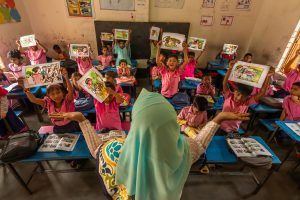
Surovi, a nonprofit school in Dhaka, makes education accessible for children who are often excluded from the system, including those living on the streets or growing up without stable family support. Founded in 1979, the organization focuses on reaching vulnerable groups who would otherwise remain out of school.
For many girls, Surovi serves as a critical entry point into education. They face higher risks of early dropout, child marriage and long-term economic dependency, making access to Surovi school especially important. However, access alone is not enough.
The quality of education remains uneven, as limited resources and a shortage of trained teachers continue to affect how students learn and progress.
The Role of Education in Shaping Opportunities
Education plays a key role in shaping both individual futures and broader economic development, particularly in regions like South Asia, where poverty remains a persistent challenge. According to the World Bank, although Bangladesh has reduced poverty over time, many people still face economic vulnerability, especially in marginalized communities. In this context, education in Bangladesh becomes essential for creating long-term opportunities, particularly for women.
Beyond basic skills, education builds awareness, confidence and independence. More educated societies tend to be more open to new ideas and better equipped to respond to social and economic challenges. For women, this impact is even more significant. Education helps delay early marriage, improves access to employment and allows women to participate more actively in the workforce.
Research by UNESCO shows that expanding access to education can significantly reduce poverty, with studies suggesting that poverty could be cut by more than half if all adults completed secondary education. As Malala Yousafzai emphasizes, education is a powerful tool for change. In this sense, it not only provides knowledge but also creates more capable and economically active individuals who can shape their own futures.
Education and Economic Pathways in Bangladesh
Pathshala South Asian Media Institute creates an atmosphere that makes education an alternative pathway into competitive job markets, particularly within creative industries. For one female student, studying photography became a turning point after a disrupted education journey. She explained that gaining skills and confidence helped her begin building a career, even in a field where income is not immediate and requires personal investment.
A teacher at Pathshala highlighted that these experiences reflect broader structural challenges. Barriers to education remain closely linked to poverty, geographic inequality and unequal access to quality institutions, especially outside major cities. Entering the job market is also highly competitive, with networks and connections often playing a crucial role alongside skills.
However, this dynamic is gradually shifting. More students are using digital platforms, portfolios and professional networks to access opportunities in media, freelancing and small-scale entrepreneurship. According to the teacher, when education is combined with practical skills, it enables students to move from unstable, low-income work to more sustainable livelihoods. While this transition takes time and is not equal for everyone, it shows how education can support long-term economic mobility.
From Education to Economic Empowerment
The experiences of students and educators in Bangladesh show that education is not just about learning but about creating pathways out of poverty, especially for women. As more women gain access to education, they are better positioned to move beyond low-income, unstable work into more secure and independent sources of income. In a situation where economic vulnerability and social expectations continue to shape women’s opportunities, education plays a critical role in shifting this reality.
Women who gain skills, confidence and professional networks are more likely to enter the workforce, start their own ventures or build sustainable careers over time. While challenges such as unequal access, limited resources and a competitive job market remain, they do not erase the progress being made. Instead, they highlight the need for more inclusive and practical education systems.
Closing Remarks
Ultimately, breaking barriers in Bangladesh is not only about increasing access to education but ensuring that education leads to real economic outcomes. When women in Bangladesh can turn education into income and independence, the impact extends beyond individuals and directly reduces poverty across communities and generations.
Globally, education remains one of the strongest tools to fight poverty. According to UNESCO, around 171 million people could escape extreme poverty if all students left school with basic reading skills. Expanding access to quality education, especially for women, can accelerate this progress and create more equal economic opportunities across generations.
– Elif Oktar
Elif is based in London, UK and focuses on Good News for The Borgen Project.
Photo: Pexels

NanumVitamin and Undernourishment in South Korea
Poverty in South Korea
As of the latest reports from 2021, South Korea has a very low rate of extreme poverty, measured as living on less than $3 a day, at 0.1% of the general population. However, considering the relative poverty rate, the picture is slightly different. The relative poverty rate is 15.1%, which means 15.1% of households in South Korea receive 50% or less than the average household income across South Korea. Although this rate has been decreasing gradually since 2011, there is clear room for improvement.
Ageing Population
South Korea’s picture of poverty becomes even more interesting when looking at demographics within the relative poverty rate. The relative poverty rate jumps from 15.1% of the general population to 39.3% for those over 66 and retired; this is the highest rate for any country in the Organisation for Economic Co-operation and Development (OECD), which promotes free market and trade policies, according to the 2023 SDG report.
In large, this is because the population of South Korea also happens to be ageing faster than any other OECD country. These statistics also reveal the uneven distribution of social protection and welfare systems in South Korea across the course of one’s life. While working-age households receive income stabilization, transitioning into retirement is a shift away from security and into economic precarity.
Children, Poverty, and Undernourishment in South Korea
Looking at the age category for children (under 18 years of age), the relative poverty rate is 9.9%, according to the 2023 SDG report. While this statistic appears much better than that for the over-66 age group, when looking closer at factors of multidimensional poverty, the situation remains concerning, especially when looking at eliminating poverty by 2030 in accordance with the U.N. SDG.
A 2018 survey revealed that 19% of children did not have access to fruits daily, 16% of children did not have access to meat, fish, or vegetables at least once a day, and 12% of children in South Korea did not have three meals a day. In 2020, 18.9% of the population was considered to be undernourished, meaning that their energy intake was less than 75% of the required amount, as well as deficiencies in key vitamins and mineral intake, such as calcium, iron, and vitamin A.
These revelations reveal that looking at income is not enough to ensure that households have access to balanced nutrition, which can, of course, exacerbate health problems, leading to further social and financial stress for the household.
NanumVitamin and Naviyam
In 2023, Hayeon Kim decided to tackle these issues of poverty and undernourishment in South Korea and founded NanumVitamin, a warm meal sharing platform that helps to ensure that children in South Korea have access to balanced meals for free or low cost. The platform itself functions as a social support network. It helps to connect children from low-income households who are concerned about skipping meals with local stores where they can use digital vouchers to access warm, nutritious meals for free or at a heavily discounted price.
NanumVitamin works in conjunction with local governments, businesses and companies such as Woowa Brothers, a large domestic food-delivery service, to provide these services. Similarly, other consumers of the app can help to cover meals for children on the app. Businesses that work to provide these free or low-cost meals also benefit from their work by being marketed as a ‘good small business owner’ by Naviyam. They also continue their social impact through organising campaigns that deliver lunch boxes to ensure sufficient nourishment for those children in poverty.
Named as one of Forbes 30 Under 30 for social impact, Hayeon Kim and her technology-focused business have helped more than 30,000 people access warm meals with dignity across 60,000 local stores, cafes and businesses, helping also to improve both the physical and mental health of the beneficiaries.
Looking Ahead
NanumVitamin and Naviyam’s meal-sharing platform, which helps to tackle poverty and undernourishment in South Korea, offers an interesting system and strategy using technology and apps that hold great potential to help tackle several other Sustainable Development Goals across the globe.
– Stephanie Gable
Photo: Flickr
How The Hunger Project Is Empowering Women in Rural India
Empowering Women in Rural India
The patriarchal social structures embedded in Indian culture push women to focus on domestic responsibilities. As a result, many women feel pressure to prioritize child-rearing and marriage over education and employment. This is especially apparent in rural areas and marginalized communities.
The inequalities that women face extend beyond their homes and are reflected in both public and private sectors. Representation in ministerial positions is critical to advancing gender-sensitive policymaking. As of 2025, women hold about 10% of seats in parliament or legislative assemblies.
Their limited representation in policymaking makes it difficult to pass legislation that supports their interests. The following statistics highlight key issues:
Although the gap between women and men across education, safety and economic participation is slowly closing, a significant disparity remains that stems from structures historically dominated by men.
The Hunger Project India
To address these disparities, The Hunger Project India works to encourage women to take on decision-making roles through community-based programs and leadership training. The organization focuses on building and strengthening women’s leadership skills in local governance, particularly gram panchayats, or village councils, and expanding access for the most vulnerable and marginalized communities to education, health, nutrition and economic opportunities.
The organization recognizes that meaningful change starts at the community level. The Hunger Project is empowering women in public office to drive development through a social justice and gender lens and to create an enabling environment for adolescent girls to build their confidence, life skills and understanding of the structural barriers that affect their lives.
The program encourages girls to use their voices to claim their rights, negotiate for change and make informed decisions about their lives. By empowering women to take on leadership positions, the program helps create role models for young girls in their communities. Women holding these government positions also advocate against child marriage and encourage young girls to strive for independence.
Through intergenerational dialogue, women who have experienced the barriers created by restrictive practices can inform and educate younger women.
Program Successes
Many women have been successful through these programs. Shakuntala Devi is an elected woman representative from Malipokhar Bhinda, Bihar. She endured child marriage and spent much of her life providing for six children. In her leadership role, she now works to combat child marriage by promoting education. She aims to “educate all the girls in her village,” as she believes “we can truly stop child marriage if we educate and empower adolescent girls.”
In addition to supporting elected women representatives, The Hunger Project works directly with adolescent girls to build their voice and agency through life skills and girls’ leadership workshops.
The organization also spoke with The Borgen Project about the broader narrative around gender equity. A representative noted that women and girls are often seen as means to an end, with development frameworks placing a disproportionate burden on them to drive change for entire communities. To create sustainable change, responsibility must shift from the individual level to address the broader structural issues that shape the system. This requires engagement at multiple levels, including panchayat institutions, families and the larger community.
Looking Ahead
India’s path toward gender equality will depend on two major factors: investment in women’s education and a willingness to address the social barriers that limit women’s opportunities. The initiatives led by The Hunger Project India demonstrate the action needed to change the narrative surrounding women’s rights in India. Through consistent efforts and a community-level approach, the organization is gradually contributing to shifts in cultural norms that are empowering women in rural India.
– Sachin Kapoor
Photo: Flickr
How Broadband Internet Reduces Rural Poverty in the Philippines
Expanding broadband internet infrastructure is central to the Philippines’ poverty reduction strategy, with major projects targeting schools, health facilities and small businesses in often underserved, rural provinces and regions.
The Rural Connectivity Gap
Although the Philippines is largely online, large pockets of the rural provinces remain digitally isolated. In fact, roughly 28% of Filipino households had access to fixed broadband in 2023. For context, its neighbor Vietnam in the same year was at 79%, Thailand at 55% and Malaysia at 54%, according to the World Bank.
The divide also widens by income. Between 2019 and 2022, internet penetration in the wealthiest quintile climbed from 43% to 60%, while in the underserved quintile it rose from 2% to 5%. The effects of this are felt across the daily lives of citizens.
Some of the population that relies heavily on the internet, such as students, small online businesses and enterprises, struggle to access key communication tools and even digital public services. Roughly 18 to 19 million Filipinos remain offline, largely due to affordability and missing infrastructure.
A $287 Million Push for Rural Broadband
In 2024, the World Bank approved $287 million for the Philippines Digital Infrastructure Project. This crucial funding thrusts forward the development of the country’s national fiber-optic backbone and middle-mile network. It is designed to connect rural schools, health facilities and other public institutions in regions such as Mindanao. One of the many aims is to incentivize operators to build last-mile links to households.
The project is expected to expand broadband internet in the Philippines to more than 20 million people by 2028.
The Konektadong Pinoy Act: Opening the Market
The Konektadong Pinoy Act, signed on August 24, 2025, streamlines the licensing process for new internet providers, supports the introduction of infrastructure sharing and establishes cybersecurity standards. Before this, providers faced roadblocks, including the need to secure congressional approval to operate. This became a barrier that made it almost impossible for remote communities to build their own networks, according to the Internet Society.
Benjz Sevilla of the Internet Society Philippines Chapter noted that providers serving geographically isolated and disadvantaged areas can now register as Data Transmission Industry Participants. The law was passed with support from the government, industry, academia and civil society after years of multi-stakeholder advocacy.
National Fiber Reaches the Provinces
The Department of Information and Communications Technology is building the National Fiber Backbone, a government-owned network that stretches from northern Luzon to southern Mindanao. By mid-2026, the third phase of the backbone will be completed, providing high-capacity bandwidth to local government units and lowering entry costs for smaller third-party providers. Telecommunications towers nationwide nearly doubled, from 17,850 in 2020 to more than 35,000 in 2023, expanding coverage in previously unreachable areas.
Broadband Internet in the Philippines Is Already Changing Lives
By 2026, the World Bank projects that the share of Filipino households with fixed broadband will rise to 35%. It also predicted that the cost of a fixed broadband basket will fall from 11.3% to 8.5% of gross national income per capita. With sustained investment, smarter policy and growing rural demand, broadband internet in the Philippines is becoming a powerful engine for inclusive growth and poverty reduction.
– Jamie Noone
Photo: Flickr
Rural Poverty in Kazakhstan and Efforts to Bridge the Gap
Background
According to Kazakhstan’s Bureau of National Statistics, the poverty rate in urban areas is 3.9%, while in rural areas it reaches 7.2%, nearly twice as high. This gap is pronounced more in highly industrialized regions. In Ulytau, the country’s main coal and metal-producing region, poverty in urban areas is 2.2% compared to 12.1% in rural areas. Several western and central regions with a dominating extractive industry show similar trends. This suggests that economic growth driven by major industries did not benefit rural areas of the country equally. While industrial centers attract investments, nearby rural populations continue to experience limited access to jobs and higher incomes.
Low Productivity of the Agricultural Sector
Rural poverty in Kazakhstan is often linked to the low productivity of the agricultural sector. Agriculture generates only 4% of the country’s GDP, yet it employs 15% of the working-age population, according to the Organisation for Economic Co-operation and Development (OECD). Additionally, agriculture remains one of the lowest-paid sectors in Kazakhstan. The Bureau of National Statistics reported that the average monthly salary in agriculture, fishing and forestry reached 263,517 tenge in 2024, which is significantly below the national average of 405,416 tenge.
The contrast becomes even more striking when compared to the extractive industries. Mining and quarrying workers earned an average of 866,486 tenge per month, more than three times higher than agricultural workers. These differences demonstrate that Kazakhstan’s natural resource-driven economic growth has benefited industrial sectors far more than rural agricultural communities, contributing to economic inequality and strengthening rural poverty.
Poor Infrastructure
Poor infrastructure remains one of the main problems in rural communities in Kazakhstan, particularly in the education sector. According to government data, 57% of three-shift schools and 76% of schools under state of emergency are located in rural areas. Many rural schools continue to experience a shortage of essential equipment, qualified teachers and reliable internet access, which limits educational opportunities for rural students. The World Bank data confirms this, according to which students from cities perform much better than their peers from villages. Such disparities in education and infrastructure create serious long-term obstacles for rural populations in overcoming poverty in Kazakhstan and gaining essential qualifications for high-income jobs.
Government Initiatives
The government of Kazakhstan has introduced several initiatives to reduce inequality between urban and rural communities. As part of the Rural Development Concept, authorities plan to build around 180 new rural schools by 2027 and continue modernizing existing educational institutions. Since 2022, the “Development of the Potential of Reference Schools in Rural Areas” program has upgraded thousands of classrooms with modern equipment and educational technologies.
The government has also implemented measures to attract qualified teachers to villages by offering salary bonuses, relocation assistance and housing loans through the “With a Diploma to Rural Areas” program.
International organizations have also supported long-term rural development efforts in Kazakhstan through infrastructure and agricultural modernization projects. The World Bank supported the Second Irrigation and Drainage Improvement Project with a $102.9 million loan to modernize irrigation systems in southern Kazakhstan. The program helped improve water access for approximately 40,000 farming households and modernized irrigation infrastructure across more than 100,000 hectares of land, improving agricultural productivity and water efficiency.
The World Bank has also invested in large-scale transportation projects designed to reduce regional inequality and improve connectivity in remote areas. Since 2009, the South-West and East-West Road Projects have connected approximately 5.5 million people in regions including Kyzylorda Region, Zhambyl Region and Turkistan Region. According to the organization, these projects improved access to essential services, created 50,000 new jobs in construction and more than 1,200 permanent roles in road maintenance for residents.
– Dias Assan
Photo: Flickr
How Satellites are De Risking Poverty in Guatemala
How Aid Is Helping Farmers
In the past, smallholder farmers would rely on traditional insurance to cover crop failures, which typically failed in most cases. Indemnity-based insurance requires manual adjusters to travel to remote mountain slopes to verify damage — a slow, expensive process that results in payouts arriving months after seeds have already withered. A technological shift is changing this for millions of Guatemalans. By leveraging Synthetic Aperture Radar (SAR) satellites and parametric insurance, international aid organizations such as USAID and the World Food Programme (WFP) are helping farmers build a social safety net that triggers financial aid the moment a drought begins, breaking the multigenerational cycle of poverty in Guatemala. WFP covered insurance premiums for 5,484 farming households between 2025 and 2026, providing 24,720 people with a monetary safety net to weather drought and excess rainfall.
How New Technology Is Improving the Situation
Monitoring Central American agriculture has historically been difficult for optical satellites, which take pictures like a camera and cannot see through the thick tropical cloud cover that masks the region during the critical growing season. The launch of a SAR satellite by NASA in 2025 dramatically changed this. Unlike optical sensors, SAR is an active sensor that emits its own microwave pulses, which refract from the earth’s surface. These waves penetrate through clouds, smoke and tree branches. By analyzing the backscatter — the way these waves return to the satellite — scientists can measure the moisture content in the soil.
An image of the Earth is taken twice every 12 days, with sensors resolving individual plots as narrow as 10 meters. This allows stakeholders to monitor week-to-week changes in small-scale holdings as well as broader agricultural shifts. When soil moisture levels drop below a scientifically determined threshold, the system recognizes a trigger event. Because the insurance is based on a measurable parameter rather than a physical inspection, the payout is automatic.
USAID and Poverty in Guatemala
USAID has been a central architect in scaling Insurtech solutions. Initiatives such as the Feed the Future program and partnerships with the Microinsurance Catastrophe Risk Organization have shifted the goal from reactive aid to anticipatory action. As of April 2026, the United Nations (U.N.) The Central Emergency Response Fund (CERF) released more than $10 million to preempt drought affecting Guatemala’s dry corridor. The funding does not wait for a famine to be declared. Instead, it provides cash to keep the parametric insurance pools solvent, guaranteeing that as soon as SAR data confirms a moisture deficit, farmers receive mobile payments directly to their phones.
The speed of these payments is critical for poverty alleviation in Guatemala. A farmer receiving a payout at the onset of a drought does not have to sell livestock or take out high-interest loans to buy food. The capital can be used to purchase drought-resistant seeds for a second planting or invest in small-scale irrigation.
Insights From the Field
To understand the mechanics behind SAR technology, Geospatial World interviewed Matt Wood, Vice President of Go to Market and Business at Capella Space, about the shift from traditional imaging to SAR technology.
Wood explained that, unlike traditional satellites that rely on reflected sunlight, SAR satellites emit their own energy source, which reflects off the earth and is received back by the satellite. Traditional optical satellites, he said, are limited by the same cloud cover that humans see from the ground.
On accessibility, Wood noted that SAR technology was historically the domain of defense and intelligence agencies and required very large antennas and rockets. Advances in miniaturization have changed this, allowing multiple smaller satellites to launch on a single rocket and making SAR data increasingly available for humanitarian and commercial use.
Wood cautioned that SAR data cannot be used in isolation. It needs to be combined with optical satellites, ground-based sensors, Internet of Things (IoT) sensors and other data sources to be effective. He described SAR satellites as filling a key gap in global information on a regular basis.
Looking Ahead
The combination of SAR technology and parametric insurance represents a meaningful shift in how international aid organizations support farmers in Guatemala’s dry corridor. By delivering automated, data-driven payouts at the onset of drought, these tools help smallholder farmers avoid poverty and food insecurity that have persisted for generations in Guatemala. As weather patterns continue to change across Central America, scaling these solutions will be essential to long-term poverty reduction in the region.
– Haydn Goodboy
Photo: Wikimedia Commons
Improving Access to Education in Bangladesh
These challenges affect all students, but they disproportionately impact girls, limiting their long-term economic opportunities.
Access to Education in Bangladesh
Surovi, a nonprofit school in Dhaka, makes education accessible for children who are often excluded from the system, including those living on the streets or growing up without stable family support. Founded in 1979, the organization focuses on reaching vulnerable groups who would otherwise remain out of school.
For many girls, Surovi serves as a critical entry point into education. They face higher risks of early dropout, child marriage and long-term economic dependency, making access to Surovi school especially important. However, access alone is not enough.
The quality of education remains uneven, as limited resources and a shortage of trained teachers continue to affect how students learn and progress.
The Role of Education in Shaping Opportunities
Education plays a key role in shaping both individual futures and broader economic development, particularly in regions like South Asia, where poverty remains a persistent challenge. According to the World Bank, although Bangladesh has reduced poverty over time, many people still face economic vulnerability, especially in marginalized communities. In this context, education in Bangladesh becomes essential for creating long-term opportunities, particularly for women.
Beyond basic skills, education builds awareness, confidence and independence. More educated societies tend to be more open to new ideas and better equipped to respond to social and economic challenges. For women, this impact is even more significant. Education helps delay early marriage, improves access to employment and allows women to participate more actively in the workforce.
Research by UNESCO shows that expanding access to education can significantly reduce poverty, with studies suggesting that poverty could be cut by more than half if all adults completed secondary education. As Malala Yousafzai emphasizes, education is a powerful tool for change. In this sense, it not only provides knowledge but also creates more capable and economically active individuals who can shape their own futures.
Education and Economic Pathways in Bangladesh
Pathshala South Asian Media Institute creates an atmosphere that makes education an alternative pathway into competitive job markets, particularly within creative industries. For one female student, studying photography became a turning point after a disrupted education journey. She explained that gaining skills and confidence helped her begin building a career, even in a field where income is not immediate and requires personal investment.
A teacher at Pathshala highlighted that these experiences reflect broader structural challenges. Barriers to education remain closely linked to poverty, geographic inequality and unequal access to quality institutions, especially outside major cities. Entering the job market is also highly competitive, with networks and connections often playing a crucial role alongside skills.
However, this dynamic is gradually shifting. More students are using digital platforms, portfolios and professional networks to access opportunities in media, freelancing and small-scale entrepreneurship. According to the teacher, when education is combined with practical skills, it enables students to move from unstable, low-income work to more sustainable livelihoods. While this transition takes time and is not equal for everyone, it shows how education can support long-term economic mobility.
From Education to Economic Empowerment
The experiences of students and educators in Bangladesh show that education is not just about learning but about creating pathways out of poverty, especially for women. As more women gain access to education, they are better positioned to move beyond low-income, unstable work into more secure and independent sources of income. In a situation where economic vulnerability and social expectations continue to shape women’s opportunities, education plays a critical role in shifting this reality.
Women who gain skills, confidence and professional networks are more likely to enter the workforce, start their own ventures or build sustainable careers over time. While challenges such as unequal access, limited resources and a competitive job market remain, they do not erase the progress being made. Instead, they highlight the need for more inclusive and practical education systems.
Closing Remarks
Ultimately, breaking barriers in Bangladesh is not only about increasing access to education but ensuring that education leads to real economic outcomes. When women in Bangladesh can turn education into income and independence, the impact extends beyond individuals and directly reduces poverty across communities and generations.
Globally, education remains one of the strongest tools to fight poverty. According to UNESCO, around 171 million people could escape extreme poverty if all students left school with basic reading skills. Expanding access to quality education, especially for women, can accelerate this progress and create more equal economic opportunities across generations.
– Elif Oktar
Photo: Pexels
Community Groups Supporting Indigenous Families in Mexico City
That is why local support matters. In practice, it can mean food, shelter, help staying in school or simply the reassurance that someone is taking a family’s future seriously. Community groups supporting Indigenous families in Mexico City are, at heart, about that kind of practical support and the difference it can make.
The Indigenous Education Support Program
The Indigenous Education Support Program provides lodging and food, promotes cultural identity and supports Indigenous and Afro-Mexican youth as they continue their studies. It is aimed particularly at students who do not have local educational options in their communities. This helps address longer-term issues when poverty is not only about income but also about whether young people can remain in school without being forced to choose between education and survival.
A program like this does more than meet an immediate need; it gives families a better chance of staying stable while helping younger people move forward without losing touch with their cultural identities.
Casa Tochán
Support in Mexico City also comes through shelters and community organizations that help people rebuild and settle after periods of upheaval. Casa Tochán is one such organization that supports people in migration in Mexico City through housing, medical and psychological care, job support and cultural activities. The Unitarian Universalist Service Committee (UUSC) describes it as a place that helps people not only survive but begin to recover some sense of ordinary life.
Casa Tochán also provides paralegal advice, community health campaigns and support with local integration issues. Even though the shelter is not exclusively for Indigenous families, its work still speaks to the wider reality of exclusion in the city. Families arriving with few resources often face overlapping pressures related to housing, legal uncertainty, health and work.
Casa Tochán’s model is useful because it treats those pressures as connected rather than separate. Its works allow families to focus on their own lives rather than becoming caught in the various bureaucratic webs these issues can create when kept separate.
The Impacts of Support
What stands out about both the Indigenous Education Support Program and Casa Tochán is that neither treats poverty as an abstract issue. They respond to it by asking whether a child can remain in school, whether a family has food and shelter and whether people trying to build a life in Mexico City are met with respect rather than indifference. That may sound simple, but it is not insignificant.
For underrepresented families, consistent, local and humane support can shape the course of daily life. These community groups supporting Indigenous families in Mexico City are not only responding to need, but also reflecting the effort, care and quiet solidarity that help people endure and rebuild. Mexico City remains a difficult place for many families living at the margins.
However, these examples show that practical support is within reach. When organizations invest in education, shelter and everyday dignity, they make it easier for families not just to endure the city but to find some footing within it.
– Elliott Carter
Photo: Unsplash
School Readiness: Early Childhood Education in Ghana
These foundational experiences help children transition more successfully into elementary school. However, access remains unequal, particularly in low-income contexts, where many children miss out on early learning opportunities. Expanding early childhood education in Ghana reflects a broader effort to ensure that more children benefit from a strong start.
Expanding Access Through Free Kindergarten
A central feature of early childhood education in Ghana is the integration of two years of free and compulsory kindergarten into the national basic education system. This policy ensures that children ages 4 to 5 have access to structured early learning before entering primary school, helping them develop foundational skills in literacy, numeracy and social interaction. By making kindergarten part of compulsory education, Ghana recognizes early learning as an essential stage rather than an optional step, strengthening school readiness nationwide.
Recent national efforts continue to build on this foundation by improving coordination across sectors and expanding inclusive services that support young children’s development and well-being.
Ongoing Challenges in Early Childhood Education
Despite strong national policies, early childhood education in Ghana continues to face several challenges that affect both access and quality. Shortages of trained kindergarten teachers remain a concern, along with limited teaching and learning materials in many classrooms. In some areas, infrastructure is inadequate to support young learners and classrooms can be overcrowded.
There are also gaps in coordination between institutions and limited data at local levels, making it harder to plan effectively. In addition, family and community engagement is not always consistent and children in rural or underserved areas are less likely to benefit fully from early learning opportunities.
Strengthening Quality Through Teacher Support
Improving the quality of early childhood education in Ghana has become a key priority alongside expanding access. National and international partners support teacher training initiatives to improve classroom practices and learning outcomes. For example, Sabre Education works with kindergarten teachers in Ghana to provide training and ongoing support in delivering the national curriculum through structured, play-based learning.
This approach helps teachers use guided activities and classroom materials to support early literacy and numeracy development. These efforts show how targeted teacher support can strengthen daily learning experiences and improve school readiness.
Building a Strong Foundation for the Future
The progress of early childhood development in Ghana shows how sustained policy commitment and targeted support can improve school readiness and long-term outcomes. By making kindergarten free and compulsory and investing in teacher training and system coordination, Ghana is strengthening the foundation of its education system. While challenges remain, continued efforts to expand access and improve quality can help ensure that more children enter elementary school prepared to learn and succeed.
– Isil Ertas Senturk
Photo: Flickr
Using Football to Protect Vulnerable Women from Exploitation
Homeless World Cup
Poverty and football are complexly and deeply entangled. As an accessible game for most people, football holds great power as a catalyst for social change with grassroots programmes creating jobs and opportunities, developing vocational and life skills and empowering marginalised groups through social cohesion.
The Homeless World Cup has one vision – to create a world in which homelessness does not exist. According to the U.N., there are more than 1.8 billion people who lack suitable housing worldwide, despite it being a human right. Through both its one-of-a-kind Homeless World Cup tournaments and by delivering year-round programs in 75 countries, they help to achieve their mission by helping players into stable housing, education programs, and employment.
Football to Protect Vulnerable Women from Exploitation Project
The FIFA Foundation and the Homeless World Cup Foundation recognized the transformative power of football to protect vulnerable women from exploitation and create safer communities. They partnered with four Homeless World Cup countries to develop and implement a curriculum of both football and non-football related activities: Kenya, Tanzania, Zambia and Zimbabwe. Programs in each country have used the power of sports to focus on and improve on local issues. The overall project had several goals:
Kenya
Around 45% of the Kenyan population lives below the global poverty rate of $3.00 a day. Additionally, around 1.4 million Kenyans live with HIV. As such, the partnership between the FIFA Foundation, the Homeless World Cup Foundation and Vijana Amani Pamoja (a football club formed in 2003 in an area of Kenya with a high rate of HIV), this project to use football to protect vulnerable women also had a large focus on sexual reproductive health and rights for girls and young women. Young women and girls who are vulnerable to sexual exploitation due to poverty and inadequate housing are at an increased risk of HIV, which makes this project all the more important.
Tanzania
Despite seeing significant growth in their economy and a major reduction in poverty since 2000, the poverty rate remains high, with around 29 million people still living in poverty, and 3 million houses are necessary to address the current shelter shortage. Gender-based violence remains a large issue in Tanzania; around 10%, or 2 million, girls and women have experienced female genital mutilation despite the law prohibiting it on girls under the age of 18. Consequently, the project to use football to protect vulnerable women from exploitation in Tanzania focuses largely on tackling gender-based violence to ensure sustainable and safe social development for young people.
Zambia
An astonishing 71% of the Zambian population lives below the poverty line, making it one of the poorest countries in the world. There has been a rapid rate of urbanisation with ‘higher’ paid jobs concentrating in urban areas; there remains a 1.3 million urban housing unit deficit. Zambia’s project partner is Bauleni United Sports Academy, which focuses on children and young people aged 6 to 20 who struggle with poor economic situations and social injustices. They provide resources and facilitate opportunities for 10,000 children to access high-quality sports programmes for positive impacts that last a lifetime.
Zimbabwe
Approximately 9.9 million people live on less than $4.20 a day, and around one in five people live in slums with limited access to water and electricity. Partnering with the FIFA Foundation and the Homeless World Cup Foundation, Zimbabwe’s Young Achievement Sports for Development is a community-based organisation that uses football and education to reach young people and help increase their confidence and prevent substance abuse.
Project Outcomes
This partnership and project have already helped and empowered many girls and women throughout the four partner countries through football and wider initiatives. Sport and football are powerful and effective transformative forces, helping create safer communities by protecting vulnerable women and girls from exploitation. Football and this initiative are far more than a game, but a lifeline for so many experiencing social injustices such as poverty and gender-based violence.
– Stephanie Gable
Photo: Flickr
Poverty Reduction and Water Access in Mayotte
The same European Commission regional fiche reports that current water demand is about 42,000 cubic meters per day, while production capacity is around 39,000. In a territory where 77% of residents live below the poverty line, poor water access in Mayotte has made residents more vulnerable to health risks, increased daily costs and tough living conditions.
When Water Becomes a Poverty Issue
For many residents, the issue is not about lacking a large water supply, but affordability and safety as well. The European Commission states that water-related spending accounts for 17% of average household budget in Mayotte. Families who lack indoor water access most often depend on backyard taps, neighbors or informal sources such as standpipes, wells or streams. Interruptions also pose a health hazard since bacteria and other waterborne disease agents can spread when stored water deteriorates in Mayotte’s heat. Therefore, poor water access in Mayotte negatively affects residents’ public health and a household’s concentration on work, school and other essential needs.
AFD says Mayotte has a population of at least 300,000 people on just 376 square kilometers and continues to experience a growing population. At the same time, the European Commission notes that many of the water network was built to support a much smaller population and that malfunctions in one part of the system can severely disrupt supply across the territory. This helps explain why water shortages in Mayotte are not just the result of a drier climate, they are also related to problems such as aging infrastructure, limited capacity and years of delayed investment.
Major Investments Are Underway
However, active responses are already underway. The European Commission announced additional national investment plans of around €450 million for succeeding years, while the ERDF 2021-2027 program plans to invest €77.5 million ($90,845,500.00 US dollars) in water and sanitation in Mayotte.
AFD also works with local stakeholders to develop infrastructure and support local authorities, including through a project that provides organizational and financial aid to Mayotte’s communes and inter-communal bodies. These efforts matter because poverty reduction in Mayotte partly depends on whether essential services become more reliable and affordable.
A 2024-2027 Water Plan Offers Concrete Steps
The Mayotte prefecture’s 2024-2027 water plan adds more concrete measures. According to the prefecture, leak-repair teams have inspected more than two-thirds of the network since mid-2023 and have repaired more than 1,000 leaks. The plan also includes new boreholes at Coconi and Combani and an Ironi Bé desalination plant with a planned capacity of 10,000 cubic meters per day. Water access in Mayotte is therefore not only a crisis story. It is also a story about whether current repairs, investments and long-term planning can finally turn a basic service into a more stable foundation for health and poverty reduction.
– Ashirah Newton
Photo: Flickr