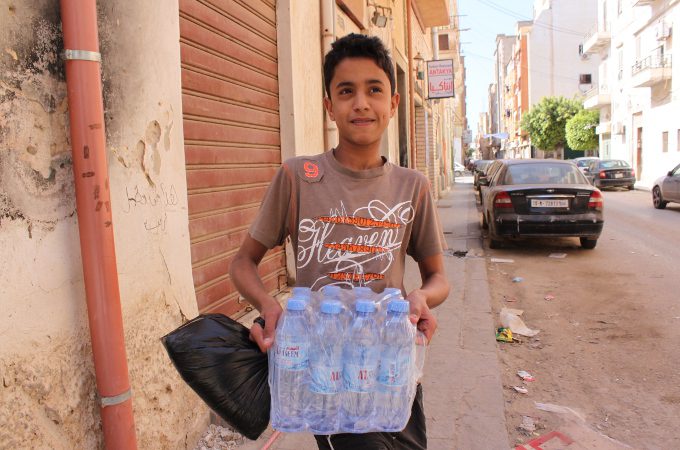
 Libya is a country in North Africa and has one of the largest oil reserves in Africa which is a primary influence in the country’s economic and political state. It was under dictatorship for 42 years and now faces the consequences of the 2011 civil war and NATO intervention. Libya’s economic state and political warfare continue to create instability for the population. Poverty in Libya is a growing issue driven by constant struggle. The country’s fragile economy and growing inflation have limited access to jobs and essential services like health care and education. The ongoing armed conflict in Libya is disrupting people’s livelihoods and fuels regional disputes, causing poverty amongst displaced populations affected by the current situation in Libya.
Current State of Poverty in Libya
After the 2011 revolution and the death of Muammar Al-Gaddafi, the country faced a prolonged civil war, which weakened the state politically and economically. Now Libya faces power struggles, ongoing food insecurity and deteriorating infrastructure. Libya is home to an estimated 8.2 million people and more than 300,000 of the population is currently displaced, with more in need of humanitarian assistance.
Before the 2011 Civil War, Libyan families’ costs for food were offset by the welfare state that provided free education, housing, public services and health care. Since then, poverty in Libya increased with around 325,000 people in need of assistance, according to the World Food Programme (WFP). The impact of COVID-19 further toppled Libya’s economic state and led to its decline in 2020 revealing the severity of the pandemic. Countless people lost their jobs and livelihoods due to the economic downfall of Libya during the outbreak leading to many facing prolonged food insecurity and need for assistance.
Libya’s Economic and Political Situation
The conflict in Libya is the focal cause of Libya’s economic decline. The 2016 internal armed conflict, which lasted until 2018 had severe consequences, including civilian casualties and human rights violations. Security-related outbreaks have led to 2,240 fatalities in 12 months between 2019 and 2020; General Haftar’s Libyan National Army could be responsible for 80% of civilian casualties. Libya’s political struggles between East and West increase the risk of harm and reduce the efforts for stability.
Libya is also struggling with a liquidity problem. Libya relies on oil production and international oil prices to fuel income. However, the instability in Libya has led to “inconsistent government revenues,” according to a 2020 report. This pressure has created liquidity problems for the country, severely impacting people’s ability to withdraw public wages and savings from banks.
Moreover, Libya operates under a dual exchange rate system which causes distortions in currency value and rapid inflation and devaluation. The constant disruptions in the supply chain force Libyans to rely on black-market currency exchange for access to money, according to a 2020 report. This liquidity problem leads to higher living costs due to the limited access to cash, creating food instability for people in Libya.
Education and Health Care
Amongst the Libyan population, the new generations are the most vulnerable and affected by the ongoing unrest and economic instability. Although Libya has seen economic growth in 2023, health care and nutrition are still slowly progressing. According to UNICEF, Libya has seen a decline in child and infant mortality rates as well as a decrease in the population living below the poverty line to 7.1% in 2022. However, primary healthcare and nutrition services plummeted. Education enrolment rates increased to 92%, but many youths, including migrants and refugee children, lack learning opportunities.
Additionally, the World Health Organization (WHO) and the Ministry of Health and Education in Libya revealed the complex situation of the overproduction of health care workers and the shortage of nurses, doctors and specialists. Medical education standards in Libya are rated below average, with low certification standards. This issue limits people from access to quality healthcare, especially for those in poor, rural or disrupted regions.
Solutions and Efforts to Poverty in Libya
The WFP built partnerships with the government of Libya, local NGOs and international organizations to fight poverty and food insecurity in contribution to the U.N. Sustainable Development Cooperation Framework. It has developed a 2023-2025 strategic plan that addresses the need for emergency food assistance and support for the most vulnerable communities in Libya.
WHO and the Red Crescent are working to strengthen and repair the Libyan health care system by providing medical supplies and raining health care workers. This initiative mainly focused on Derna and other regions in Eastern Libya affected by the floods in 2023 that left many displaced and in need of medical and humanitarian assistance.
In 2023, UNICEF and the Ministry of Health ensured the accessibility of primary health care, nutrition and medical support. After the Floods, efforts focused on nutritional screening for 5,461 children and malnutrition management. UNICEF also succeeded in installing 627 vaccination administration systems across Libya, reducing the risk of rising mortality rates, according to 2023 UNICEF report.
Conclusion
Poverty in Libya is deeply caused and rooted in the country’s ongoing conflict, political instability, inflation and economic decline. Limited access to employment and education combined with fragile political and economic structure continues to impact vulnerable populations significantly. Many NGOs and IGOs are addressing and putting in the effort to combat Poverty in Libya. However, the constant instability has made that difficult. Addressing these challenges requires governmental reforms and a stable economy to create a pathway away from poverty.
– Gufran Elhrari
Gufran is based in London, UK and focuses on Politics for The Borgen Project.
Photo: Flickr

Education Initiatives in Namibia
Government Work
Education is mandatory for Namibians between 6 and 16 years old and is free for both primary and secondary school since 2013 and 2016, respectively. In 2023, the country announced the Safeguarding Intangible Cultural Heritage in Basic Education in Namibia and Zimbabwe program, which trains teachers in both nations and establishes a community-based style of learning which emphasizes living heritage and culture.
With this initiative, Namibia moves closer to achieving SDG 4 – access to quality education for all. In addition, Namibia has recently undertaken efforts to digitize its education system, launching “The Digital Schools” as a test project to improve “digital learning environments and enhance teachers’ digital skills.”
USAID
Despite the efforts of the Namibian government, inequalities and deficiencies in education persist. Thankfully, international organizations have stepped up to spur development through their education initiatives in Namibia. USAID has been active since the nation’s birth through its Basic Education Systems Project, helping children in densely populated and underserved regions access primary education before it was free to do so.
USAID’s Ambassador Scholarship Program finances education for orphans and vulnerable children and keeps them in school, helping them receive an equal education to more advantaged students. Finally, a Youth Development program instills in students life skills and vocational training to keep them enrolled in education.
Roger Federer and MCC
Since 2018, the Roger Federer Foundation has encouraged a smooth transition for students entering primary school through its School Readiness Initiative. It assists Namibia’s youth with enrolling and staying in school and promotes equal access between girls and boys. Furthermore, its Early Learning Kiosk offers stimulating digital learning to students at a low cost in the form of a tablet.
The Millennium Challenge Corporation (MCC), another U.S.-based development effort, spent $145 million instituting education initiatives in Namibia through its Namibia Compact. The program trained new teachers and offered new textbooks to students. While test scores and education improved somewhat, the MCC founds new facilities to often not meet the needs of Namibian communities.
UNICEF
UNICEF focuses on education at a young age, using its Integrated Early Childhood Development approach to improve nutrition, stimulation and learning opportunities for pre-primary Namibian children, especially the disabled. Furthermore, the program trains parents in skills to ensure their children’s sustained learning on the path to enrollment in primary education.
Namibia is already far ahead of most African nations in terms of education. However, inequalities exist between vulnerable and disabled populations and the rest of the youth population. With both the government of Namibia and outside organizations recognizing this issue and taking action, vast improvements in education—and development as a whole in Namibia—are sure to follow.
– Cole Zickwolff
Photo: Flickr
Everything You Need to Know About Poverty in Libya
Current State of Poverty in Libya
After the 2011 revolution and the death of Muammar Al-Gaddafi, the country faced a prolonged civil war, which weakened the state politically and economically. Now Libya faces power struggles, ongoing food insecurity and deteriorating infrastructure. Libya is home to an estimated 8.2 million people and more than 300,000 of the population is currently displaced, with more in need of humanitarian assistance.
Before the 2011 Civil War, Libyan families’ costs for food were offset by the welfare state that provided free education, housing, public services and health care. Since then, poverty in Libya increased with around 325,000 people in need of assistance, according to the World Food Programme (WFP). The impact of COVID-19 further toppled Libya’s economic state and led to its decline in 2020 revealing the severity of the pandemic. Countless people lost their jobs and livelihoods due to the economic downfall of Libya during the outbreak leading to many facing prolonged food insecurity and need for assistance.
Libya’s Economic and Political Situation
The conflict in Libya is the focal cause of Libya’s economic decline. The 2016 internal armed conflict, which lasted until 2018 had severe consequences, including civilian casualties and human rights violations. Security-related outbreaks have led to 2,240 fatalities in 12 months between 2019 and 2020; General Haftar’s Libyan National Army could be responsible for 80% of civilian casualties. Libya’s political struggles between East and West increase the risk of harm and reduce the efforts for stability.
Libya is also struggling with a liquidity problem. Libya relies on oil production and international oil prices to fuel income. However, the instability in Libya has led to “inconsistent government revenues,” according to a 2020 report. This pressure has created liquidity problems for the country, severely impacting people’s ability to withdraw public wages and savings from banks.
Moreover, Libya operates under a dual exchange rate system which causes distortions in currency value and rapid inflation and devaluation. The constant disruptions in the supply chain force Libyans to rely on black-market currency exchange for access to money, according to a 2020 report. This liquidity problem leads to higher living costs due to the limited access to cash, creating food instability for people in Libya.
Education and Health Care
Amongst the Libyan population, the new generations are the most vulnerable and affected by the ongoing unrest and economic instability. Although Libya has seen economic growth in 2023, health care and nutrition are still slowly progressing. According to UNICEF, Libya has seen a decline in child and infant mortality rates as well as a decrease in the population living below the poverty line to 7.1% in 2022. However, primary healthcare and nutrition services plummeted. Education enrolment rates increased to 92%, but many youths, including migrants and refugee children, lack learning opportunities.
Additionally, the World Health Organization (WHO) and the Ministry of Health and Education in Libya revealed the complex situation of the overproduction of health care workers and the shortage of nurses, doctors and specialists. Medical education standards in Libya are rated below average, with low certification standards. This issue limits people from access to quality healthcare, especially for those in poor, rural or disrupted regions.
Solutions and Efforts to Poverty in Libya
The WFP built partnerships with the government of Libya, local NGOs and international organizations to fight poverty and food insecurity in contribution to the U.N. Sustainable Development Cooperation Framework. It has developed a 2023-2025 strategic plan that addresses the need for emergency food assistance and support for the most vulnerable communities in Libya.
WHO and the Red Crescent are working to strengthen and repair the Libyan health care system by providing medical supplies and raining health care workers. This initiative mainly focused on Derna and other regions in Eastern Libya affected by the floods in 2023 that left many displaced and in need of medical and humanitarian assistance.
In 2023, UNICEF and the Ministry of Health ensured the accessibility of primary health care, nutrition and medical support. After the Floods, efforts focused on nutritional screening for 5,461 children and malnutrition management. UNICEF also succeeded in installing 627 vaccination administration systems across Libya, reducing the risk of rising mortality rates, according to 2023 UNICEF report.
Conclusion
Poverty in Libya is deeply caused and rooted in the country’s ongoing conflict, political instability, inflation and economic decline. Limited access to employment and education combined with fragile political and economic structure continues to impact vulnerable populations significantly. Many NGOs and IGOs are addressing and putting in the effort to combat Poverty in Libya. However, the constant instability has made that difficult. Addressing these challenges requires governmental reforms and a stable economy to create a pathway away from poverty.
– Gufran Elhrari
Photo: Flickr
HIV Prevention Drug Lenacapavir to Reach 120 Countries
HIV Prevention Drug Lenacapavir
Lenacapavir is a long-acting injectable that provides pre-exposure prophylaxis (PrEP) to reduce the risk of contracting HIV. Earlier this year, a study in South Africa and Uganda revealed the drug’s high efficacy in preventing HIV among HIV-negative girls and women. Furthermore, another trial involving men in Argentina, Brazil, Mexico, Peru, South Africa, Thailand and the United States (U.S.) demonstrated nearly complete protection. Indeed, in the lenacapavir group tested, among women, there were no new cases of HIV infection and the trials revealed no significant safety concerns.
Pressure on Gilead from World Leaders
Following the publication of these findings, Gilead faced pressure from the People’s Medicines Alliance along with a group of 300 world leaders, celebrities, scientists and activists to make the drug available in middle- and low-income countries simultaneously as people in wealthier nations. Among the signatories were actors Gillian Anderson, Stephen Fry, Sharon Stone and Alan Cumming; former heads of state; and Francoise Barré-Sinoussi, a Nobel-winning scientist. In a letter addressed to the Gilead CEO Daniel O’Day, they pushed the company to open the license up to poorer nations immediately. Furthermore, they expressed their hope that the “groundbreaking” development could make “radically positive change for people facing stigma.”
HIV in Low-Income Countries
Gilead is prioritizing the registration of LEN in the 18 countries with the highest HIV incidence rates, in Sub-Saharan Africa and South-East Asia. These high rates stem from inadequate domestic and international funding, with natural disasters and regional conflicts complicating governments’ HIV response efforts. HIV prevalence is higher in specific population groups, including men who have sex with men, which fuels stigma around the disease. However, global efforts to increase treatment accessibility have yielded substantial progress over the past two decades. Currently, 29.8 million of the 39 million people living with HIV are receiving treatment. Indeed, this is a significant increase from 7.7 million in 2010.
Looking Ahead
In response to these promising findings, the WHO has announced it is actively developing guidelines in collaboration with experts and global partners to ensure an affordable supply and equal access to the drug. New pharmaceutical developments are emerging rapidly. HIV prevention drug lenacapavir presents a hopeful method of combating the disease in high-risk countries.
– Hannah Dunford
Photo: Flickr
How the Global Fund Is Addressing TB in India
The Global Fund has integrated numerous services into primary health care systems that use innovative technologies, such as mobile health solutions, to improve patient tracking and adherence to treatment. Health professionals will use vans with technology like X-rays and diagnosis kits to provide free health treatments in the most remote locations. The Fund has vastly increased community access to medicines, testing and protective equipment like mosquito nets.
The Global Fund and India’s Close Collaboration
The Global Fund utilizes various strategies to combat TB in India, which reported 1.96 million cases or one-third of TB cases globally in 2021. The Fund has worked closely with the Indian government since 2006 and multiple local nongovernmental organizations (NGOs) to implement effective TB screening, treatment and prevention programs. The government of India, especially Prime Minister Narendra Modi, has shown immense support for the initiative to end TB in India by next year.
Success in Perspective
In 2012, the Indian government implemented a law requiring all diagnosed cases of TB to be reported to public health officials. This policy has successfully reduced the number of unreported cases plaguing the country. One untreated case can spread the disease to 15-20 people in a year. Due to the highly infectious nature of TB, it is crucial to catch cases as early as possible.
Furthermore, through its close collaboration with the Global Fund, India has transitioned from having the highest tuberculosis population to becoming an innovative supporter of global health. In 2019, India hosted the organization’s Sixth Replenishment Preparatory Meeting. Today, thanks to the efforts of the Global Fund, India can support other global health care organizations by serving as a primary source of low-cost pharmaceuticals.
JEET
The Joint Effort to Eliminate TB (JEET), a nonprofit organization, partners with the Global Fund and NGOs in India to improve access to diagnoses and treatments across all communities. JEET works closely with community health professionals and hospitals to promote sustainable solutions that will continue to benefit the population in the future. Indeed, by collaborating with various NGOs, including TB Alert India and the NGO TB Consortium India (NTC), the organization can reach the most at-risk populations and manage cases and outbreaks efficiently.
India is among the countries with the highest number of private health care providers. Between 2018 and 2020, JEET expanded the Patient-Provider Support Agency model in more than 100 districts across nine high-TB-risk states. This model ensures widespread access to TB treatment and patient support in the most vulnerable communities.
Impact of the Global Fund on Poverty
In 2023, the Global Fund provided treatment to more than 2.4 million people in India, improving life expectancy in low-income communities. As of 2022, the Fund has reduced TB-related deaths by 36% since beginning its work in various countries. Ultimately, TB has a profound impact on poverty levels and economic productivity in India, highlighting how successful TB control can lead to healthier communities, reduced health care costs and enhanced economic opportunities for affected populations.
Impacted individuals struggle on different levels throughout day-to-day life, making access to treatment life-changing for families reliant on working income. Furthermore, reducing the impact of TB on health care systems leaves more time, staff and funding to address other health issues in low-income communities.
– Lauren Sellman
Photo: Flickr
4 Estonian Organizations Making a Difference
Estonian Refugee Council
The Estonian Refugee Council assists refugees globally by providing humanitarian aid, including food and security, support services, mental health services and community services. It also raises awareness about the challenges refugees face in their home countries. The council operates three main programmatic areas with several subprograms focused on education and awareness, entrepreneurship and multi-purpose cash assistance. These programs aim to enhance communal and mental well-being, financial stability and emergency security for refugees. The council has supported more than 293,000 Ukrainian refugees and recently initiated a campaign to aid those affected by the conflict in Lebanon.
Estonian American Fund
The Estonian American Fund or Eesti Ameerika Fond, supports educational, medical and scientific advancements in Estonia by providing equipment and supplies to institutions such as clinics and hospitals. The fund focuses on three core missions: health care, education, and institution building. In health care, the fund has enabled access to drugs and nursing supplies for 7,500 patients, with grants totaling about $18,817. In education, it has allocated $26,068 to train physicians abroad in their chosen specialties, covering education, travel, and living expenses. The institution-building project has received $14,400 to support the construction of hospitals and research centers, including the Estonian Women’s Studies and Research Centre.
UNHCR Estonia
Since Estonia is a member of the European Union (EU), which is one of the three major governmental partners of UNHCR, it hosts a branch of the organization. As part of the Nordic and Baltic regions, Estonia focuses its efforts with UNHCR on supporting governments in European and international legislation concerning asylum, international protection and statelessness. This commitment enables refugees to apply for asylum and gain access to countries in the Nordic and Baltic areas, including Estonia. Additionally, UNHCR in Estonia collaborates with the government, local authorities, NGOs and the media to safeguard refugee rights.
Estonian Foodbank
The Estonian Food Bank, a subsidiary of the German organization Riesenkampff Stiftung, was established in 2010 to combat poverty and food waste. It secures agreements with Estonian organizations, food producers, importers, supermarkets and the EU’s food aid program to supply food to the less fortunate. The food bank trains workers and volunteers to distribute food, organizes local food gatherings in its stores, runs charity campaigns and engages in numerous cooperative projects with other organizations within Riesenkampff Stiftung.
Looking Ahead
Estonia remains committed to supporting both local and international humanitarian efforts through a variety of initiatives. By providing aid to refugees, improving health care and education and addressing food insecurity, Estonia plays an active role in alleviating global challenges. Despite facing financial constraints, Estonian organizations continue to focus on enhancing the well-being of vulnerable populations. These ongoing actions reflect Estonia’s dedication to making a positive difference in global humanitarian work, ensuring assistance reaches those most in need.
– Ashley Diaz
Photo: Flickr
Child Labor in Pakistan: From Factories to Classrooms
To address this issue, vocational training programs are trying to reduce child labor in Pakistan. These programs focus on equipping children with practical, market-driven skills to enhance their employability as they transition into adulthood. Training in various fields allows these children to acquire skills that are in high demand, giving them a chance to secure stable, better-paying jobs.
Vocational Training Reducing Child Labor in Pakistan
The Prime Minister’s Youth Skill Development Program (PMYSDP) plays a pivotal role in providing vocational training opportunities for Pakistan’s youth. By focusing on both high-tech and conventional skills, the program equips young people with market-driven expertise, enabling them to transition from exploitative labor conditions into stable and dignified employment. Through these efforts, PMYSDP could not only help curb child labor in Pakistan but also empower young individuals to improve their socio-economic standing and contribute to the future development of Pakistan.
The Pakistan Bait-ul-Mal School for Rehabilitation of Child Labor, established in 1995, aims to remove children aged 5-14 from hazardous labor and provide them with free education, clothing and a stipend, along with subsistence support for their families. With 159 centers across the country, the program currently benefits 17,871 students. The program helps children from industries like brick kilns, mining and agriculture enroll in schools and receive primary education over four years, with opportunities for higher education.
The joint projects on eliminating child labor in Pakistan have implemented successful strategies, including the use of a unified non-formal education curriculum across districts for consistency and scalability. Furthermore, collaborating with government partners and using the Supporting Children’s Rights through Education, the Arts, and the Media (SCREAM) initiative for teacher training has fostered ownership and improved program delivery. A key achievement is extending pre-vocational and vocational training to working children, including those under 12 and their mothers, offering alternatives to child labor. Involving mothers has empowered them and strengthened their commitment to ensuring their children attend training programs regularly.
Making a Change
In conclusion, Pakistan is making progress in the fight against child labor through education, skills training and empowering families. Programs like the Prime Minister’s Youth Skill Development Program and Pakistan Bait-ul-Mal are giving children the tools to break free from exploitative work and build brighter futures. Indeed with continued commitment to enforcement and support for vocational training, Pakistan can create lasting change, transforming the lives of its youth and unlocking their potential for a better tomorrow.
– Aneela Agha
Photo: Flickr
Refugee Education in Germany
Education Opportunities for Refugees
During what is known as the “refugee crisis” of 2015, Germany quickly developed a culture of openness, with an emphasis on refugee education. Angela Merkel, then the country’s chancellor, introduced the phrase “Wir schaffen das” (“We can do this”) as a rallying call for the more skeptical citizens of Germany. There were many Germans at the time who doubted the capacity of the welfare state to accommodate such high numbers of new arrivals on top of the demands of the native population. However, the story of Germany’s refugee policy is considered to be one of success today. By 2018, 72% of the asylum seekers had been granted protection and the right to work in Germany. By 2020, half of the asylum seekers who had entered Germany in 2015 had found a job.
One of the central strategies Germany has adopted for accommodating and integrating its migrant population is an investment in education opportunities for refugees. According to the World Bank, there are 15 million displaced school-aged children, more than half of whom are not enrolled in education. If these children were in school, they would be less vulnerable to rights abuses like child labor, forced marriage and violence. Additionally, the consistency of attending school every day in a safe and supportive environment can restore a sense of stability and safety to children who have experienced severe trauma and life disruption.
Barriers to Integration in Germany’s Education System
Although it has been widely recognized that “access to education and language courses are … key to the success of social and labor market integration”, the German schooling system was not designed with this intention in mind. Studies have shown that the German schooling system tends to reproduce and cement already existing social and class distinctions. It can be difficult, therefore, for refugee children to move beyond the social class of their parents, even with a German education. One report cites the fact that frequent relocations in accommodations and being enrolled in a preparatory class separate from native German speakers correlated with a lower chance of gaining further qualifications after completion of the mandatory nine years.
The German Expert Council on Migration and Integration released a report in 2018 suggesting that a barrier to social integration and educational advancement of refugee children is the segregated school system. Some schools implement a parallel schooling system, in which refugee children are taught separately from their German counterparts, sometimes without any native speaker in the classroom. When it came to higher education, refugees again faced considerable barriers. Without institutional provisions like scholarships or waived costs, it was largely the work of volunteers and people working within academia that turned Germany into an example of inclusion when it comes to refugee education. There was a large consensus across academic disciplines that federal funding should be opened up for asylum seekers in Germany.
Looking Forward
Humanitarian organizations filled the gaps where federal policy failed to account for refugee education. An important example of this humanitarianism is the charity Kiron. The charity began its work in 2015, ensuring that forcibly displaced people can continue to access education online. Kiron has now provided remote education for more than 100,000 students since its founding. In 2023, it launched the free program THRIVE, aimed at upskilling displaced women in preparation for the job market.
Additionally, the United Nations High Commissioner for Refugees (UNHCR) has committed to enrolling 15% of refugees in higher education by 2030. Achieving this goal will require efforts from not only humanitarian workers but also governments to ensure inclusive education.
– Io Oswald
Photo: Flickr
UNICEF’s Action Against Child Displacement in the DRC
Militia-Induced Child Displacement in the DRC
Much of the DRC is controlled by militia rebel groups, with territories seized on a regular basis. Its east and north provinces experience the most unrest, with violent killings of adults and children, as well as the ransacking of homes, schools and health centers. Families are often separated and forced out of their villages into crowded settlements without safe water, health care and basic services. More than eight million people in the DRC are “acutely food insecure.” Alongside the internal displacement of its citizens, the DRC also hosts refugees from neighboring conflict-affected countries.
Children are being recruited as militia fighters and subjected to sexual assault, violence and separation from their families. Rebel forces have displaced three million children from their homes. The Rwandan-backed M23 rebels are causing mass displacement of civilians and humanitarian organizations in eastern DRC. Recently, militia forces shelled refugee camps in the region, killing 17 people, most of whom were children.
UNICEF’s Mission
Without urgent humanitarian aid, children will continue to suffer. Malnutrition, disease and displacement to unsafe areas are causing high child mortality rates. UNICEF faces challenges while delivering aid due to dangerous environments and weak transport infrastructure for delivering resources. However, UNICEF’s action against militia-induced displacement of children in the DRC, alongside other national partner NGOs, works to provide urgent basic services. These include tarpaulins for shelter, cooking utensils, clean water and sanitation. It also has three long-term initiatives:
Children are provided with health checkups, including routine and emergency immunizations, to prevent the outbreak of diseases such as polio. UNICEF is also responding to the latest cholera outbreak. The organization provides communities with safe drinking water and water treatment kits. The NGO has people on the ground providing decontamination services for homes, as well as prevention techniques such as awareness and surveillance.
The Future
In 2019, the DRC appointed a new president, Félix Tshisekedi. He promised major reforms in a bid to transform the country’s image of poverty and war into a growing economy and a favorable place for investment. With support, the Congolese government is attempting to overthrow militia groups and reassert authority in the country.
Similarly, in 2022, the World Bank Group set up the Country Partnership Framework (CPF). This four-year strategy promotes the stabilization and development of the DRC. A large focus of the CPF is on human development and improving essential services such as education, health and social welfare. In 2023, the DRC received more than $8.6 billion from the World Bank to fund 23 development initiatives.
The DRC still suffers from fragility and conflict. However, missions such as UNICEF’s action against militia-induced child displacement in the DRC and the Country Partnership Framework are having positive impacts on the country’s security, economy and the well-being of its people.
– Millie Trussler
Photo: Flickr
Global Human Rights: Strengthening UN Support to Save Lives
Overall, the theme of the 79th session of the U.N. General Assembly is “Leaving no one behind: acting together for the advancement of peace, sustainable development and human dignity for present and future generations.” Despite the positive aspiration in the theme, reports from U.N. agencies within the last year show that there has not been stronger U.N. support recently.
Institutional Issues Within the UN System
The U.N. system is facing internal institutional challenges, resulting mainly from funding shortages and inadequate support for its efforts to help vulnerable communities in places such as Gaza and Mali. In fact, on August 30, 2024, the acting Under-Secretary-General for Humanitarian Affairs and Emergency Relief Coordinator stated that as the number of humanitarian emergencies increases, a shortage of funding hinders them from “reaching people who need life-saving assistance.”
Although agencies such as the World Food Programme (WFP) and the U.N. Refugee Agency (UNHCR) have been implementing innovative solutions to difficult issues, countries are not providing the stronger U.N. support needed to make these solutions work on a larger scale. This highlights a lack of commitment from the international community to protect and preserve global human rights values.
More Funding Equals More Lives Saved
The main obstacle to the U.N.’s humanitarian work is the lack of adequate funding for its critical life-saving operations. The Office for the Coordination of Humanitarian Affairs (OCHA) at the U.N. has stated that of the $49 billion needed to reach at least 187 million people who need assistance the most, it only received 29% of the funds.
As of August 30, 2024, the countries whose emergency operations are deemed underfunded include Chad, the Democratic Republic of the Congo, Honduras, Lebanon, Niger, Sudan and Syria. Although OCHA was able to assist these countries via its emergency response funds, stronger financial support is still needed to ensure that OCHA can reach as many vulnerable communities as possible around the world.
Funding Innovation in Humanitarian Aid
As humanitarian aid becomes more difficult and complex, U.N. agencies have decided to find new ways to overcome obstacles and deliver more life-saving assistance than before, including digital data-sharing between agencies. For example, UNHCR has a database on digital registration, identity management and case management called PRIMES. In contrast, WFP has one on digital beneficiary information and transfer management called SCOPE.
Thus, in an effort to enhance their aid operations, UNHCR and WFP created a joint database combining both PRIMES and SCOPE called PING that helps both agencies transfer data safely and efficiently. Therefore, if the international community provides stronger U.N. support via more funds, it will enable U.N. agencies to innovate their life-saving operations further.
Strengthening Global Human Rights
The needs and innovations of U.N. agencies highlight the urgent need for stronger support from countries worldwide. With the rise in global conflicts and crises, the number of vulnerable people requiring life-saving aid has grown, outpacing the U.N.’s current funding capabilities. Although U.N. agencies have been implementing the necessary reforms that enhanced their life-saving operations, such as inter-agency digital data sharing, more monetary support is needed for them to implement more innovative reforms.
– Abdullah Dowaihy
Photo: Flickr
IDIL: Mental Health Access for Indigenous People in Oaxaca
The International Decade of Indigenous Languages
The UNGA established the International Decade of Indigenous Languages (IDIL 2022-2032) to fulfill the objectives of the United Nations Declaration on the Rights of Indigenous Peoples. Throughout this decade, initiatives focus on preserving, revitalizing and promoting Indigenous languages worldwide. The Australian Government reports that many of these languages have reached a critical level of endangerment.
UNESCO estimates that approximately 40% of languages spoken will no longer be in use a century from now. Indeed, many are likely to be Indigenous languages. During International Decades, global facilitators coordinate action and mobilizations to raise awareness on a particular topic. La Enfermedad de la que Nadie Habla en el Pueblo is one example of coordinated action for IDIL.
“La Enfermedad de la que Nadie Habla en el Pueblo”
Indigenous youths developed the project La Enfermedad de la que Nadie Habla en el Pueblo (ENHP), which translates to The illness nobody talks about in the village, to make mental health information accessible in Indigenous languages. ENHP successfully provided information in 30 Indigenous languages, addressing a critical gap in health communication. In a UNESCO article, the director of the Network of Interpreters and Intercultural Promoters, Eduardo Ezequiel Martínez Gutiérrez, stated that at least 30% of Oaxaca’s population is not fluent in their doctor’s or government’s language, a key issue ENHP aims to solve. The project also trains interpreters to act as intermediaries in mental health spaces.
According to Socialab, 65% of Indigenous people in Oaxaca, who speak up to 177 linguistic variants, cannot engage with content in Spanish. In response, the ENHP produced short videos with interpreters from various Indigenous communities. These videos discuss the symptoms of anxiety and depression and offer coping strategies. The project’s translation and interpretation efforts exemplify the goals of the International Decade of Indigenous Languages by improving access to mental health care for Indigenous peoples in a culturally relevant context.
Implementation of ENHP
The UNESCO program Impulso Joven, “Because Youth Matter,” awarded $10,000 in startup capital to 20 youth projects across 11 Caribbean and Latin American countries, including ENHP. Impulso Joven also provided practical workshops, training sessions and mentorship. The ENHP project unfolded in four stages. Initially, each interpreter completed a course on emotional disorders and mental health. In the second stage, interpreters adapted the course content to be culturally and linguistically relevant for Indigenous territories. Following this, the third stage involved the creation of audio and video materials. Finally, in the fourth stage, the team distributed these materials to Indigenous communities to help reduce the stigma around mental health.
Importance of Reconceptualization
ENHP’s efforts to reinterpret mental health information plays a crucial role in making mental health resources accessible to more Indigenous Peoples. This approach aligns with the goals of the International Decade of Indigenous Languages. The goals focus on actions supporting the United Nations Declaration on the Rights of Indigenous Peoples. The American Psychiatric Association (APA) has studied the barriers Indigenous Peoples in the United States (U.S.), Canada, the Pacific Islands and Australia face in accessing mental health services. These barriers include mistrust of mainstream services, social stigma associated with seeking help, insufficient awareness to recognize signs of poor mental health and the challenges of accessing mental health services in remote areas.
APA emphasizes that barriers to accessing mental health services for Indigenous populations should be viewed within the broader context of systemic, structural and societal challenges. Sandra García Reyes, an educator with ENHP, told UNESCO that mental health and self-care are integral to community care. ENHP has reinterpreted mental health information from a Western perspective to a holistic and relational approach. Furthermore, they take into account the intergenerational impacts of forced assimilation, relocation and discrimination.
Impacts of the IDIL
IDIL provides a framework for collaboration among diverse stakeholders, promoting coherence, continuity and cross-cultural dialogue in actions taken worldwide. IDIL is a global call to develop policies and make strategic investments to protect and revitalize Indigenous languages and support their speakers. According to UNESCO, IDIL involves 4,213 communities from 60 countries and 1,772 organizations. Across these communities, 202 languages are spoken and 2,635 events have been organized to recognize IDIL. Projects like La Enfermedad de la que Nadie Habla en el Pueblo exemplify how youth-led initiatives can enhance the lives of Indigenous communities by incorporating intersectional, community and cultural perspectives while safeguarding their languages.
– Tanisha Groeneveld
Photo: Flickr