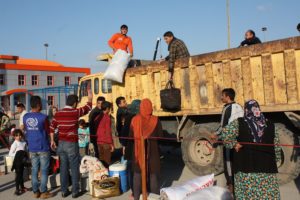
 Most of Kurdistan’s poverty is concentrated in the rural and border areas, where a large segment of the population lacks access to basic services, education, health care and employment. Iraq is an oil-wealthy country. However, the wealth tends to be concentrated in certain areas and has not trickled down to Kurdistan. In comparison to Iraq’s majority Arab population, poverty rates among Kurds tend to be a bit lower in central and southern Iraq, where the majority of Arabs in the country live. Yet, these areas have still not fully recovered from two major wars, ongoing terrorism and persistent government corruption.
Systematic Oppression
The systematic oppression of Kurds has been a longstanding issue in Iraq, with policies such as the Anfal campaign further exacerbating this. The Anfal campaign was implemented between 1986-1989 and sought to dismantle Kurdish groups seeking self-governance and displace Kurds from their villages, particularly in the oil-rich area of Kirkuk. Former president Saddam Hussein Arabized many Kurdish regions in this area, leading to mass displacement, loss of land and the economic network that was created by the native population.
The Halabja massacre in 1988, an extension of the Anfal campaign, was a chemical attack undertaken by the military that resulted in the death of up to 5,000 Kurds and led to the destruction of farmland, mass displacement and the depreciating health of citizens, inhibiting them from working which increased poverty among this population. The former government also moved the Kurdish population from their native lands to collective towns (also referred to as mujamma’at), which restricted their movement and were far away from the country’s economic hubs, putting them in economic isolation. These areas were systematically neglected in terms of development, while other regions in Iraq benefited from infrastructural improvements and oil wealth.
Current Tensions and Poverty in Iraqi-Kurdistan
While the Kurdish region in Iraq has a level of autonomy, meaning that they have more rights to their local resources, they are still heavily reliant on the central government for its oil revenue. The oil is often withheld due to political disagreements between Baghdad and The Kurdish Regional Government. This has led to delayed salaries and cuts in funding for public services and infrastructural investments, exacerbating poverty in the region. Additionally, decades of underinvestment in Kurdistan prior to Saddam Hussein’s government and during his reign have led to a lack of proper infrastructure, with roads, health care and education in rural areas remaining inadequate. This limits economic opportunities for those living in these areas compared to more urban areas of Kurdistan and wealthier majority Arab areas of southern Iraq.
The Kurdish Regional Government remains deeply divided, with two rival factions, the Kurdistan Democratic Party (KDP) and the Patriotic Union of Kurdistan (PUK), being in charge of different areas of the region. Tensions between these two parties have caused a delay in economic reform due to their lack of cooperation and prioritizing their interests rather than regional ones, which also weakens their ability to negotiate on a national level with the central government. Their rivalry has also caused revenue-sharing issues, particularly oil, which has fostered further instability. Both parties are also guilty of corruption and economic mismanagement and keep a large segment of the wealth for themselves and the elite class.
Organizations Reducing Poverty in Iraqi-Kurdistan
Despite the current circumstances, both international and local organizations, such as the United Nations Development Programme (UNDP), the Norwegian Refugee Council (NRC) and Kurdistan Save the Children (KSC), are fighting against poverty by distributing humanitarian aid to vulnerable communities in rural areas and displaced people. The UNDP Iraq has supported the Kurdistan Regional Government to develop a Public-Private Partnership Framework, which encourages the private sector to work with the public sector to deliver services such as health care, roads, electricity and water.
Additionally, the NRC supports displaced people in Iraqi Kurdistan by facilitating access to essentials such as education, shelter and food. The NRC has assisted 31,085 people through its education program, provided shelter for 141,613 individuals and supported 16,212 people through its food program. Local organizations, such as the KSC, focus on the well-being of children by providing access to education, health care and mental health services.
The Future
The future of the region remains uncertain, as tensions between the two rival factions of the KRG are likely to persist, along with ongoing disagreements over the distribution of oil revenue. These issues will continue to contribute to the already high levels of poverty in Iraqi Kurdistan. The region’s future depends on the PUK and the KDP finding ways to resolve their tensions and improve their relations with the central government in Baghdad. Additionally, there is a pressing need for both parties to diversify the economy and lessen their reliance on oil.
– Floria Persis
Floria is based in London, UK and focuses on Politics for The Borgen Project.
Photo: Flickr

UNDP Support Women in Afghanistan Working in Small Businesses
The Situation in Afghanistan
Since August 2021 the Afghan economy has been in decline. In 2022, the number of households not having income to meet basic necessities rose from 16% to 36%. Policies under the Taliban Administration have had an especially limiting impact on women in Afghanistan, with restrictions imposed on education and employment.
In response to the situation, the UNDP adapted its programs to an integrated local development effort – Area-Based Approach to Development Emergency Initiatives (ABADEI). To prevent further economic breakdown, this program applies solutions at a community-based level. Grants are provided to small businesses, with a focus on supporting female-run organizations. Maintaining these local economies supports keeping structure and purpose within Afghan communities. The funds are supplied from U.N. contributions, in combination with the “Special Trust Fund for Afghanistan.” This fund coordinates support from UNDP agencies and non-government organizations.
Supporting Women in Afghanistan
In their support of female-owned businesses, UNDP aims to reboot the Afghan economy by supporting job creation and basic social services. Applying a “women for women” approach, it supplies the financial and technical support to women required to create employment. The UNDP supported 8,728 Micro, Small and Medium Enterprises through in-kind and cash support, 49.2% of these were female-led, according to its website.
An area whereby the ABADEI programme has successfully implemented its goal is expanding community kitchens. Partnered with Care Afghanistan, these kitchens feed families and provide a source of income for those who work there.
Tamana Akbari
As a single mother, before these kitchens, Tamana Akbari had no source of income. In joining she has developed new relationships aiding in growing her confidence and social skills. The benefits are not just social, Tamana now has also fostered new culinary skills and is earning a salary of her own. She now acts as the sole breadwinner for her family.
Across five provinces there are a total of 47 community kitchens, these kitchens have provided 153,000 hot meals, feeding over 86,870 people. Organizations like these, foster social cohesion whilst also providing empowerment for women like Tamana, who prepare the meals. Fifteen female-run kitchens have supplied food for thousands. In Herat, alongside three men, 147 women distributed 2,200 free meals a day.
Local communities have embraced this initiative, and supported by UNDP’s ABADEI program, women in Afghanistan are being inspired to start similar projects of their own.
– Amelia Short
Photo: Flickr
Women’s Rights in Seychelles: Progress and Pathways Forward
Legal Frameworks and Policy Solutions
Seychelles is a signatory to the Convention on the Elimination of All Forms of Discrimination Against Women (CEDAW) and the Southern African Development Community (SADC) Protocol on Gender and Development. These agreements shape national policies guiding efforts to reduce discrimination in education, health care and access to legal rights.
The policy provides a roadmap for engaging both men and women in the national workforce. For example, Seychelles has recently started capacity-building workshops to encourage more women to enter traditionally male-dominated fields like agriculture, where women account for only 6% of the workforce.
In early 2023, a capacity-building workshop held in collaboration with the Department of Agriculture and Family Affairs identified key areas of support, such as access to time-saving technologies, farming inputs and agricultural land. These efforts have already led to increased participation of women in agriculture, addressing the previous gender gap. The government aims to reach hundreds of women through these initiatives by 2025.
Tackling Gender-Based Violence
Gender-based violence (GBV) remains a concern in Seychelles despite legal protections. Surveys reveal that 41% of Seychellois believe a woman reporting GBV might face criticism or harassment. Though 91% of Seychellois disapprove of physical discipline against women, societal attitudes make it difficult for many victims to come forward. However, solutions are emerging. Police reform initiatives have been implemented, focusing on training officers to respond better to GBV cases. Support groups and shelters have also been established to help victims feel safer when reporting abuse.
Economic Empowerment
While Seychelles has made strides in education—women now outnumber men in tertiary enrollment—economic empowerment remains a challenge. Women are still underrepresented in high-income sectors, particularly in agriculture, business leadership and technology. To address this, the government has introduced training programs to help women access higher-paying jobs and entrepreneurial opportunities. Capacity-building efforts, supported by international agencies, promote women’s economic participation in traditionally male-dominated sectors.
Representation in Leadership
Seychelles is known for its relatively high representation of women in government, with women holding about 22.9% of the seats in the national parliament. Despite this achievement, the representation of women in corporate and political leadership positions remains a challenge. In response, the government has introduced leadership development programs aimed at increasing the number of women in senior positions, especially in politics and the corporate sector. These initiatives focus on mentoring young women and providing leadership training to help them rise through the ranks.
Conclusion
Seychelles has made notable progress in promoting women’s rights, particularly in education and political participation. Ongoing efforts, including police reforms, economic empowerment programs and awareness campaigns, are steadily addressing persistent challenges like gender-based violence and economic inequality. Continued collaboration between the government, international organizations and local communities will be key to achieving gender equality. By focusing on solutions and real progress, Seychelles is moving toward a future where women can fully exercise their rights and contribute to national development.
– Fiza Meeraj
Photo: Flickr
Poverty in Iraqi-Kurdistan
Systematic Oppression
The systematic oppression of Kurds has been a longstanding issue in Iraq, with policies such as the Anfal campaign further exacerbating this. The Anfal campaign was implemented between 1986-1989 and sought to dismantle Kurdish groups seeking self-governance and displace Kurds from their villages, particularly in the oil-rich area of Kirkuk. Former president Saddam Hussein Arabized many Kurdish regions in this area, leading to mass displacement, loss of land and the economic network that was created by the native population.
The Halabja massacre in 1988, an extension of the Anfal campaign, was a chemical attack undertaken by the military that resulted in the death of up to 5,000 Kurds and led to the destruction of farmland, mass displacement and the depreciating health of citizens, inhibiting them from working which increased poverty among this population. The former government also moved the Kurdish population from their native lands to collective towns (also referred to as mujamma’at), which restricted their movement and were far away from the country’s economic hubs, putting them in economic isolation. These areas were systematically neglected in terms of development, while other regions in Iraq benefited from infrastructural improvements and oil wealth.
Current Tensions and Poverty in Iraqi-Kurdistan
While the Kurdish region in Iraq has a level of autonomy, meaning that they have more rights to their local resources, they are still heavily reliant on the central government for its oil revenue. The oil is often withheld due to political disagreements between Baghdad and The Kurdish Regional Government. This has led to delayed salaries and cuts in funding for public services and infrastructural investments, exacerbating poverty in the region. Additionally, decades of underinvestment in Kurdistan prior to Saddam Hussein’s government and during his reign have led to a lack of proper infrastructure, with roads, health care and education in rural areas remaining inadequate. This limits economic opportunities for those living in these areas compared to more urban areas of Kurdistan and wealthier majority Arab areas of southern Iraq.
The Kurdish Regional Government remains deeply divided, with two rival factions, the Kurdistan Democratic Party (KDP) and the Patriotic Union of Kurdistan (PUK), being in charge of different areas of the region. Tensions between these two parties have caused a delay in economic reform due to their lack of cooperation and prioritizing their interests rather than regional ones, which also weakens their ability to negotiate on a national level with the central government. Their rivalry has also caused revenue-sharing issues, particularly oil, which has fostered further instability. Both parties are also guilty of corruption and economic mismanagement and keep a large segment of the wealth for themselves and the elite class.
Organizations Reducing Poverty in Iraqi-Kurdistan
Despite the current circumstances, both international and local organizations, such as the United Nations Development Programme (UNDP), the Norwegian Refugee Council (NRC) and Kurdistan Save the Children (KSC), are fighting against poverty by distributing humanitarian aid to vulnerable communities in rural areas and displaced people. The UNDP Iraq has supported the Kurdistan Regional Government to develop a Public-Private Partnership Framework, which encourages the private sector to work with the public sector to deliver services such as health care, roads, electricity and water.
Additionally, the NRC supports displaced people in Iraqi Kurdistan by facilitating access to essentials such as education, shelter and food. The NRC has assisted 31,085 people through its education program, provided shelter for 141,613 individuals and supported 16,212 people through its food program. Local organizations, such as the KSC, focus on the well-being of children by providing access to education, health care and mental health services.
The Future
The future of the region remains uncertain, as tensions between the two rival factions of the KRG are likely to persist, along with ongoing disagreements over the distribution of oil revenue. These issues will continue to contribute to the already high levels of poverty in Iraqi Kurdistan. The region’s future depends on the PUK and the KDP finding ways to resolve their tensions and improve their relations with the central government in Baghdad. Additionally, there is a pressing need for both parties to diversify the economy and lessen their reliance on oil.
– Floria Persis
Photo: Flickr
Updates on SDG 2 in Rwanda
SDG 2 in Rwanda: Beacon of Progress
Despite Rwanda’s strides toward the United Nations’ Sustainable Development Goal 2 being impacted by the COVID-19 pandemic, the country remains a beacon of progress. Rwanda’s score in the 2024 Global Hunger Index (GHI) is at 25.2, better than the regional average. This is also a significant improvement from the country’s GHI score in 2015, which was at 30.2 and in 2000, at 49.6, which was considered extremely alarming.
These successes are made possible by numerous initiatives in Rwanda that provide access to healthy and adequate food for vulnerable populations, especially youth. This includes government-led nutrition programs supplying food to early childhood development centers and initiatives such as “One Cup of Milk per Child.” Through targeted agricultural policies, investments in rural development and community-led programs to combat malnutrition, Rwanda has demonstrated that strategic and collaborative efforts can yield meaningful reductions in hunger, even amid global and regional challenges.
SMART Project
Furthermore, in partnership with the World Food Programme (WFP) and other development agencies, Rwanda has been striving for food security through nationwide programs that empower and educate farmers. One such initiative is Rwanda’s Sustainable Market Alliance and Assets Creation for Resilient Communities and Gender Transformation (SMART) project, which is geared toward strengthening agricultural productivity and promoting better harvesting practices.
By providing farmers with access to training and resources, SMART encourages resilience in the face of climate emergencies, equips local farmers, especially women, with skills to increase crop yields and fosters gender equality within the agricultural sector.
A Future With Zero Hunger
Achieving SDG 2 by 2030 might be ambitious, but the steadfast commitment of Rwanda to sustainable and impactful solutions paints a positive outlook. With food security as a central pillar, Rwanda is not only addressing immediate nutritional needs but also laying the groundwork for broader socioeconomic development, a critical step toward attaining middle-income status. Achieving this milestone will not only transform Rwanda but could set a powerful example for the entire region, showcasing the potential of innovative, community-driven initiatives.
However, current world events have been a significant setback for all SDG targets across the globe. These setbacks underscore the need for a stable global economy and strong international cooperation, which are crucial for achieving the U.N.’s ambitious goals. The success of Rwanda will require support from regional and global partners to overcome these challenges, ensuring that efforts to achieve SDG 2 remain on track and continue to inspire progress across the continent.
– Tessah Keza
Photo: Flickr
Bridging the Gap: Poverty and Maternal Health in Yemen
The ongoing conflict has not only destroyed medical facilities but also led to a severe shortage of medical supplies and personnel. As a result, only approximately half of the country’s health facilities are functional and even fewer are equipped to provide adequate maternal and child health services. This scarcity of resources has left millions of women without access to essential reproductive health care, including prenatal check-ups, safe delivery options and postnatal care.
The crisis is further emphasized by widespread food insecurity and malnutrition, which disproportionately affect pregnant women and new mothers. With the economy struggling, many families struggle to afford necessities, let alone specialized medical care. This economic hardship has created a vicious cycle where poverty and poor health outcomes reinforce each other, with devastating consequences for maternal and infant well-being.
Collapsed Health Care System
The conflict has caused a breakdown of Yemen’s health care system. As of 2024, 17.8 million people require health assistance, with one-quarter being women. Among them, 5.5 million of reproductive age, including pregnant and lactating women, struggle to access necessary health services. This is largely due to a shortage of female doctors and nurses, as well as a lack of essential medical supplies. Currently, only one in five functioning health clinics can provide maternal and child health services.
In addition, more than 2.7 million pregnant and breastfeeding women in Yemen are estimated to require treatment for acute malnutrition. Food shortages and insecurity increase the risks of giving birth to newborns with stunted growth and malnourished infants. The lack of medical infrastructure has left millions of women without access to essential health care services.
Economic Impact
The severe economic conditions in Yemen have left 80% of the population struggling to meet basic needs, which directly impacts maternal and infant health through malnutrition and lack of access to care. The economic crisis has worsened the situation for pregnant women and new mothers. The devaluation of the Yemeni Rial and high inflation rates have severely restricted families’ ability to afford nutritious food.
Additionally, the crisis has led to widespread displacement, with 73% of the 4.2 million displaced people being women and children. Despite the Ministry of Public Health and Population’s policy of free access to health care, Yemenis still pay more than 50% of their health expenditures out of pocket.
International Aid
The United Nations Population Fund (UNFPA) has played a crucial role in addressing Yemen’s maternal health crisis by:
The European Union (EU) has also been a significant contributor to Yemen’s humanitarian efforts by:
Additionally, the United States Agency for International Development (USAID) has been involved in improving maternal and child health in Yemen. The agency-funded Systems Health and Resiliency Project (SHARP) has made strides in improving maternal and child health services in 14 districts across three governorates. SHARP has reached more than 1.8 million Yemeni people with activities aimed at improving their health. The project has trained and partnered with community midwives, reproductive health volunteers, health facility workers and community members to provide essential health care and support.
Conclusion
Addressing Yemen’s maternal health and poverty crisis requires urgent via coordinated international assistance. Many organizations have contributed to aid and support, but the scale of the issue is demanding and requires a greater response to save lives and break the cycle of poverty and ill health.
– Hannah Ravariere-Moakes
Photo: Flickr
3 Charities Operating in Haiti
Poverty in Haiti
Haiti ranks as the poorest country in Latin America and the Caribbean and suffers from some of the highest rates of income inequality worldwide, with more than six in 10 people living in poverty. The nation’s history features persistent political instability and significant natural disasters. Agriculture, forestry and fisheries, which constitute a fifth of Haiti’s GDP, employ nearly half of the labor force. However, agricultural productivity faces severe constraints due to inadequate access to technology and credit, along with substandard road and irrigation infrastructure. Additionally, post-harvest losses are considerable, often due to insufficient storage and processing facilities.
3 Charities Operating in Haiti
Looking Ahead
Humanitarian aid could be crucial in ending the gang violence across the region. The continued support of charities operating in Haiti is similarly important, to not only directly support the people of Haiti but also to raise awareness of the urgent situation in the country. While the work of charities is incredibly impactful, humanitarian assistance from organizations and countries with more substantial resources could greatly benefit the people of Haiti.
– Joshua Marriott
Photo: Flickr
CERF Releases $100 million For Underfunded Crises
Twice annually, the CERF’s Acting Emergency Relief Coordinator (ERC) allocates special grants from the Underfunded Emergencies (UFE) Window to support essential life-saving activities in neglected humanitarian emergencies. Here are the country allocations and the underfunded crises they face.
Underfunded Crises in West Africa
CERF will allocate $10 million to Burkina Faso, where more than 2 million people were internally displaced due to armed conflict between internal militias — part of a broader Sahelian violence caused by Islamic extremism and political instability. Twenty-seven percent of the country requires humanitarian assistance and millions face severe food insecurity.
Similarly, Mali faces a security crisis compounded by economic shocks. More than 7 million require humanitarian assistance, 1.37 million face crisis levels of food insecurity, 1.4 million children face undernourishment, approximately 2,600 individuals face famine and more than 350,000 are internally displaced, according to CERF. Mali will receive $11 million to help displaced populations and alleviate food insecurity
Underfunded Crises in Central and East Africa
Ethiopia is struggling with civil conflict and the aftermath of flooding that has caused deaths, displacement, and food insecurity. Up to half a million could be struggling with displacement and more than 15.8 million are food insecure, according to CERF. Meanwhile, Ethiopia faces cholera and malaria epidemics. CERF will provide $15 million to Ethiopia to help provide access to critical services and to reduce morbidity for 12.3 million vulnerable people.
Malawi is also dealing with weather patterns causing food insecurity among 5.7 million people. Aid worth $11 million could help the country deal with the effects of drought.
Since 2017, Mozambique has experienced violence that has displaced hundreds of thousands of people while weather patterns devastate the agricultural sector, according to CERF. Funding of $7 million is going towards preventing a food insecurity crisis.
Burundi faces food insecurity, violence, epidemics and natural disasters. Heavy rainfall caused flooding by the end of last year and displaced thousands. More than 1 million people are food insecure and landslides have displaced more than 47,000 people, according to CERF. Funding of $5 million will support flood recovery and displaced people.
Cameroon experiences several forms of internal violence and natural disasters. Recent floods exacerbate the situation and an estimated 1.8 million people are without adequate water and health services. Receiving $7 million could help vulnerable populations, particularly women and children, against exploitation and malnutrition.
Middle East, South East Asia and the Caribbean
Yemen is considered the largest humanitarian crisis, an eight-year civil war in Yemen between Houthi rebels and Saudi-backed government forces created an economic, social and health crisis. There are 19 million people experiencing a food insecurity crisis while flooding disrupts access to essential services, according to CERF. Many lack sanitation, water and health care access. CERF will provide $20 million to support food security and health for millions in need.
Following a brief period of democratic rule, a 2021 coup in Myanmar devolved into a civil war between a military government and various ethnic militias. Intensified fighting this year increased displacement to 3.1 million people. Almost 13 million people face moderate or severe food insecurity, according to CERF. The organization will provide $12 million to Myanmar which could hopefully help 18 million people who need funding for essential services and support for displaced populations.
Natural disasters and internal gang violence leave 5.5 million people requiring humanitarian assistance in Haiti. There are 578,000 people who are internally displaced, 8.5 million faced food insecurity earlier this year and many face gang violence, according to CERF. Funding of $9 million will support critical needs in the country.
Conclusion
These countries experience underfunded crises despite dire situations and donor pledges. This demonstrates the need for increased attention. The allocation of $100 million by CERF is a crucial step but support from international donors and organizations is essential to address the ongoing challenges these countries face.
– Luke Ravetto
Photo: Flickr
3 Innovations Reducing Poverty in Kosovo
Economic Growth
According to the World Bank, since declaring independence in 2008, Kosovo has experienced a 50% increase in per capita income and a 35% decrease in poverty. Instead of relying on foreign aid for economic growth, the government has increased investments, with help from projects and a stronger financial system. Kosovo has also faced challenges like inefficient economic management and a weak government, which have impacted the economy’s growth.
As a result, the Kosovo Economic Governance Activity (KEGA) was implemented, which is a five-year initiative funded by USAID to help the Kosovo government make reforms in policies to promote growth in the private sector and strengthen public financial management. This initiative resulted in €1.2 billion in formalized buildings that secured citizens’ property rights and an 86% increase in tax revenues, rising from €457 million in 2018 to €852 million in 2023.
Decrease in Unemployment
Focus Economics reported the rate of unemployment in 2019 at 26.7%, and in 2023, it decreased to 10.9%. This rapid decrease resulted from initiatives such as the electronic platform K-GenU, which UNICEF launched to provide opportunities for Kosovo youths to access paid internships and to establish connections with employers. The platform helps young people with skills in job searching. Another initiative by UNICEF, Generation Unlimited, prepares young people for the labor market and has provided internships for around 500 young people in 57 businesses.
Social Protection Initiatives
Many people in Kosovo do not have access to health care, education and protective services. This is due to the ineffective programs to help reduce this shortcoming. To combat this, UNICEF increased support for the Law on Social and Family Services, which aims to broaden services and ensure that everyone in need has the right to access these services. UNICEF in Kosovo also focuses on ensuring that policies that are aimed at aiding children lead to real change in their lives. This involved planning and managing the money for certain programs and directly helping municipalities to ensure that children most in need are receiving the help.
Moving Forward
While Kosovo faces challenges ranging from high rates of unemployment and ineffective social programs, the Kosovo government and international organizations have taken successful steps to tackle this problem. The World Bank reports on a new strategy called the Country Partnership Framework (CPF) for Kosovo for the years 2023 to 2027. This aims to help the country improve its economy over the next five years to create more jobs and improve living standards.
– Nouf Hunaiti
Photo: Flickr
SNV’S WASH Program: Improving Water Access
SNV’s WASH Program Brief
SNV Netherlands Development Organization is a global developmental partner that works with government and private sectors in more than 20 African and Asian countries to improve basic living conditions in three criteria: water, agri-food and energy. In 2023, SNV has improved the lives of 6.4 million people through system upgrading, income increment, outcome management and widespread inclusion of basic services.
SNV’s inspiration comes from pursuing SDGs objectives. In response to the water question, SNV has improved the water security for 1.6 million in 18 countries, with 562,000 people gaining access to water for the first time, according to the 2023 SNV Annual Report. SNV frames its work around three determining topics: systems transformation, changing weather patterns and social equity.
Water, Sanitation and Hygiene (WASH) is SNV’s main water developmental program. SNV’s WASH Program defines successful water security as safe water usage, lower water pollution, protection from water hazards and safe water resources, according to the 2023 annual report. To achieve its objective, SNV works with all levels of government facilities and civil societies to provide impactful systemic changes in water infrastructure. At the household level, SNV provides open-access educational programs and publications, promoting thoughtful and safe water management.
SNV’s WASH Program in Mozambique
From 2017 to 2019, SNV’s WASH Program provided sanitation for 68,000 people in Mozambique. In those two years, 14 percentage points more households gained access to an improved toilet. In terms of WASH’s educational effort, 40,000 people have practiced washing their hands after defecation.
However, due to Cyclone Kenneth’s impact, the program sees a 21% decrease in hygienic toilet maintenance. The percentage of the population without access to handwashing facilities went from 62% to 75%. This led to a 14% increase in out-of-usage toilets and, eventually, a 5% increase in open defecation, according to the 2020 brief.
The Most Recent WASH Project
Transforming Access to WASH and Nutrition Services II (T-WASH II) is a project launched by SNV and funded by the U.K. government aid organizations. The project has a budget of £55,821,502 nationwide to date. T-WASH II aims to improve national, provincial and municipal stakeholders’ knowledge and relationships. The project brings positive change from community involvement and women-in-decision-making positions. The lasting outcome is its learning opportunities for stakeholders and local communities.
Looking Ahead
Despite increasing weather challenges, SNV’s WASH Program sees positive change. SNV will continue to adapt its WASH system to align with the changing demands of the local communities and the challenges that changing weather patterns may bring. SNV’s WASH Program is in full force with the necessary funding to do its part in achieving UN SDGs 6.
– Jimmy Nguyen
Photo: Flickr
China’s malaria elimination
The 1-3-7 Strategy: The Key to Success
One of the cornerstone strategies in China’s malaria elimination was the 1-3-7 surveillance method. The efficient system requires reporting any confirmed malaria case within one day, then investigating within three days and responding within seven days. This rapid detection and response model was integral to China’s ability to control and eliminate malaria.
Real-time data-sharing technology is further enhanced using this method, according to The Lancet. The country also provided monetary incentives to health care workers to encourage timely reporting in some regions. The Gates Foundation recognized the 1-3-7 approach as a model for other countries with malaria breakouts.
Additional Steps to China’s Success
On top of the 1-3-7 strategy implemented to tackle China’s malaria elimination, the country also developed innovative genetic-based approaches by studying parasite populations. Scientists noticed that there is an ideal stage to intervene when it comes to intracellular parasites, this is when they decide to either continue multiples or be transmitted through a mosquito. This is because only a few parasites turn into gametocytes which is required for the transmission. China used strategies like insecticide spraying and mosquito breeding ground elimination.
Furthermore, China also turned its attention to the surveillance of drug resistance. A similar approach could help reduce malaria transmission rates in Africa. WHO recommends frequent efficacy studies to monitor the effectiveness of antimalarial drugs, according to the International Journal of Maternal and Child Health and AIDS (IJMA). China also partnered with international research institutes such as Harvard University where it used advanced genomic tools to study and predict malaria parasite movements.
China’s Leadership
China’s success in eliminating malaria shows the need for strong government leadership and cross-sectoral collaboration. Starting in the 1940s, when China was reporting 30 million cases of Malaria annually, the country gradually reduced its malaria through a series of national plans and partnerships with other nations. In 2010, it launched the National Action Plan for Malaria Elimination. This, combined WHO guidelines with China’s local strategies to achieve elimination.
During this time, China’s government committed over ¥1.38 billion towards malaria elimination efforts, according to BMJ Global Health. This robust financial backing, combined with scientific research, allowed China to upscale its interventions. The discovery of artemisinin is one of the most notable contributions from Chinese research, according to The Gates Foundation. These advances played a key role in China’s success and remain crucial tools in global malaria control efforts.
Future Prospects: China’s Lessons for Africa
This amazing achievement could help African nations achieve malaria-free status. By creating multi-sector collaborations and adapting the 1-3-7 strategy they can unite in the fight against malaria. Furthermore, adapting China’s genetics-based approach could strengthen these efforts.
Additionally, community engagement could be key to success. Educating communities about malaria prevention and involving local leaders in control measures could help ensure these efforts. With the right combination of financial investment and government action, African nations can make significant progress towards reducing malaria. China’s malaria-free certification is not just a victory for China but also a beacon of hope for the global fight against malaria.
– Ellisha Hicken
Photo: Unsplash