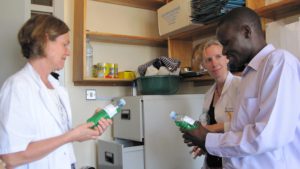
 Palliative care is crucial in mitigating the suffering of individuals who are suffering from serious and/or terminal illnesses. Of the 54 African countries, 43 have no access to basic palliative care systems. Furthermore, even fewer can provide high-quality care to those who need it. Uganda is paving the way for palliative care in Africa. The country is building a nationwide service for citizens to receive care and comfort in the final stages of their lives.
Current Situation in Africa
Basic palliative care services are unavailable in 79.6% of Africa. The vast majority of the continent’s seriously ill population is denied specialized assistance that would improve their quality of life. Relieving the suffering and stress from somebody’s final days is widely regarded as the compassionate thing to do, as palliative care supports both a patient and their loved ones through difficult times.
Palliative care, when available, is offered to people with illnesses such as cancer, heart disease, dementia and HIV/AIDS. In 2023, there were approximately 396,200 AIDS-related deaths in Africa. The data suggests that most of these individuals would not have had the appropriate medical care, guidance and comfort in the lead-up to their passing. Similarly, it is estimated that 367,000 Africans get diagnosed with dementia annually; again, it can be implied that few of these people receive palliative care that would provide comfort in a time of confusion.
Furthermore, half a million Africans are believed to die from cancer annually. In the next 50 years, the figure is projected to increase by 40%. Therefore, palliative care services need to be implemented now so that the future is as comfortable as possible for those facing cancer and other serious illnesses.
Uganda Paving the Way
Uganda’s population is currently estimated at 46 million and is growing at a rate of 2.9%. This expanding East African nation is making remarkable progress in palliative care, following a comprehensive framework that supports everyone involved in the medical process: patients, health care staff and their loved ones.
The Palliative Care Association of Uganda
The Palliative Care Association of Uganda (PCAU) is one of the key forces driving this positive change in Uganda. Established in 1999, the organization provides holistic care and pain relief for needy people. With more than 1,500 individual members and 230 medical facilities offering PCAU services, they implement a framework supporting seriously ill patients in Uganda. PCAU has developed a strategic plan with five focus areas:
- Capacity building
- Advocacy and awareness creation
- Palliative care research and information
- Governance and support functions
- Sustainability and financial efficiency
Those affiliated with PCAU work hard to implement these strategies. Indeed, outcomes are being achieved with the support of the Ugandan Ministry of Health, ensuring 55,000 people in Uganda receive palliative care.
Hospice Africa
Another key provider of palliative care in Uganda is Hospice Africa. Founded in the U.K. in 1992, the charity trains health care staff. It provides palliative care across Africa, with a significant focus on Uganda. Its clinical headquarters is in Kampala, where programs are implemented, patients are treated and morphine is manufactured.
Uganda serves as the base for Hospice Africa, which provides much of its medical attention there. Notably, 95% of Ugandan cancer patients do not seek curative treatment, highlighting the demand for holistic care. In 2023, three Hospice Africa Uganda sites cared for 2,110 individuals needing medical attention. Among these new patients, 66% were diagnosed with cancer and 7% were younger than the age of 18.
Hospice Africa Uganda’s reach is growing. The financial year 2022/2023 saw a 12% increase in patients as the charity expanded and received more funding to help care for seriously ill people.
What the Future Holds
Uganda is an African nation leading by example in providing palliative care to its citizens. Furthermore, the country is inspiring the rest of the continent to follow suit. However, there is still much work to be done. In October 2024, the Ugandan Ministry of Health reported that only 11% of the 500,000 Ugandans needing palliative care were receiving it. While more progress is needed in Uganda, the country is setting a positive example with its strategic frameworks to assist those needing end-of-life support.
By 2050, the Ugandan population is expected to exceed 100 million, making it encouraging to see effective frameworks for providing holistic care already in place. The increasing availability of palliative care in Uganda is poised to enhance the quality of life for the country’s growing population.
– Megan Hall
Megan is based in Suffolk, UK and focuses on Global Health and Celebs for The Borgen Project.
Photo: Flickr

Child Poverty in Antigua and Barbuda
Child Poverty
According to the United Nations Children’s Fund (UNICEF), child poverty in Antigua and Barbuda is largely affected by COVID-19, education and unemployment. In 2016, 24% of children ages 0-17 and 25% of adolescents ages 10-19 were living in poverty. UNICEF’s studies show that adolescents ages 10-19 in female-headed households were twice as likely to be poor compared to those in male-headed households. However, during the COVID-19 pandemic, child poverty rates were projected to rise to 29%.
Education
Secondary school students in Antigua and Barbuda take the Caribbean Secondary Education Certificate (CSEC) exams, which help them gain admission to colleges and universities. In 2018-2019, 27% of students passed five or more CSEC subjects, including English and mathematics. The average pass rate among Organization of Eastern Caribbean States (OECS) member countries is 28%. During the same period, the proportion of trained teachers was 48% at the primary level and 50% at the secondary level, significantly lower than the OECS averages of 72% and 60%, respectively.
Employment and Unemployment
According to UNICEF, youth ages 15 to 19 in Antigua and Barbuda were more likely to be unemployed, as there was little evidence of child labor. Instead, these youths focused on education and exploring future opportunities rather than entering the workforce. In 2016, 36% of youth in Antigua and Barbuda were employed, while 26% were unemployed. In comparison, 87% of adults were employed and 6% were unemployed. Young adults ages 20 to 24 (82%) were four times more likely to be employed than those ages 15 to 19. Additionally, 18% of youth ages 15 to 24 are classified as Not in Employment, Education or Training (NEET), with young NEETs being twice as likely to be ages 20-24 and more likely to be female.
Strengthening Education
UNICEF is focused on strengthening the education system in Antigua and Barbuda. This includes improving teaching quality, enhancing learning materials and integrating more communication technology. Post-COVID-19, UNICEF also aims to address multidimensional child poverty by working toward its eradication. It also wants to boost employability, which often relies on the tourism sector, to support continued economic growth. Additionally, in 2013, the World Bank Board of Directors approved a $10 million loan to Antigua and Barbuda to improve services for the population. Initiatives were aimed at boosting income and employability through temporary employment and training programs.
In Antigua and Barbuda’s 2021 Voluntary National Review (VNR), the government outlined several development goals under the theme “Leaving No One Behind.” These goals included no poverty, good health and well-being, quality education, gender equality and decent work and economic growth. For each goal, the VNR provided examples of the country’s commitment to achieving them. To address poverty among women and children, the government introduced the Social Protection Act of 2020 and a social security scheme aimed at reducing the 24% child poverty rate in Antigua and Barbuda.
Government Actions
In an effort to improve the quality of education, the government ensures universal access to primary and secondary education. It launched the One-Stop Education Center (OSEC) and the Financial Inclusion and Empowerment Center. These initiatives aim to reduce youth unemployment and lower the teenage pregnancy rate (27.7 per 1,000 among ages 15-19). The Social Protection Act of 2020 and the Antigua and Barbuda Labor Code promoted gender equality and improved employability for women and girls. To reduce unemployment rates (8.7% overall), the Financial Inclusion and Empowerment Centre provided opportunities for unemployed women and young women. The government also introduced new training programs to boost youth employment. In “Leaving No One Behind,” the government aims to monitor progress until 2030. This initiative seeks to promote social protection, end extreme poverty, reduce inequalities and address discriminatory behaviors in communities.
– Indira Smith
Photo: Pixabay
Solar Power in Uganda Supports Educational Goals
Good Actors and Initiatives
Jon Paul Ojok developed a mobile solar power box to supply electricity to students in West Nile region in Uganda. Drawing on his experience as a developer at the United Nations High Commissioner for Refugees (UNHCR), Ojok created a device that can be easily moved through neighborhoods and communities to provide affordable internet and electricity to remote villages and camps. Ojok’s solar power box allows students to access course materials and complete assignments. The long-term success of these students will contribute to the goal of upward mobility and the growth of local communities. The solar power box also provides stable electricity and internet to UNHCR staff, enabling them to connect with and retain more refugees for resettlement services.
The Mobile Solar Computer Classroom (MSCC) is a similar initiative serving Ugandan students. For this project, solar panels are attached to an all-terrain vehicle equipped with computers and a router. The project has improved digital literacy and academic performance in local schools. Since 2008, MSCC has trained more than 37,000 students, 200 teachers and 2,000 out-of-school youths in more than 80 schools and 20 libraries. Approximately 70% of the schools MSCC has worked with have seen improved academic performance at the national level.
Impacts of Solar Initiatives
According to the World Bank, about 41.3% of Ugandans lack access to electricity. Uganda’s power grid, though operational, is not always stable, with professionals and students most likely to experience service interruptions. As more people enter the country, innovations in solar power will help reduce stress on the grid and improve the ability of both native Ugandans and refugees to work toward a middle-class life.
According to Uganda’s Energy Transition Plan, educational and industrial advancements made possible by solar power will improve living standards. Enhancing the country’s grid infrastructure will increase the reliability of clean energy connections in the next 10 to 30 years. This will enable Uganda to better support transitioning its youth and students into a self-sustaining, independent workforce.
Final Note
Solar power in Uganda will lead to more equitable access to essential resources such as electricity and internet services. As access improves, students across all regions will receive a stronger foundational education, promoting the resilience of future generations. Expanding solar power to more remote locations ensures no person or family is left behind, increasing the region’s chances of securing a just, peaceful and equitable future.
– Karina Dunn
Photo: Flickr
Tourism in Ethiopia: A Promising Path to Poverty Alleviation
The Role of Tourism in Ethiopia’s Economy
Tourism in Ethiopia has made significant strides, contributing more than 6% to the nation’s Gross Domestic Product (GDP). The sector directly and indirectly employs more than two million Ethiopians, a number that continues to rise as the country attracts more international visitors. Ethiopia experienced a 48% increase in tourism over the past decade due to government efforts to improve infrastructure and market the country as a top destination.
The growth of the tourism sector is especially crucial in rural Ethiopia, where poverty is more pronounced. Tourism is seen as a pathway to economic diversification, providing new income opportunities, especially for women and youth, through job creation in hospitality, guiding, transport services and artisanal handicrafts. But for tourism to effectively reduce poverty, the benefits must flow to the poorest and most vulnerable members of society.
Government Policies
Recognizing the sector’s potential, the Ethiopian government has put in place several policies to align tourism with national poverty alleviation goals. The Growth and Transformation Plan (GTP) identifies tourism as a key sector in driving economic growth and employment. It encourages investment in rural areas to spread the economic benefits beyond major cities like Addis Ababa. Infrastructure improvements, such as road networks and airports, are also part of the strategy to open up remote areas to tourists, helping locals benefit from tourism revenues.
Another important policy is the Sustainable Tourism Master Plan (STMP), which aims to develop sustainable, eco-friendly tourism that benefits local communities. The plan emphasizes the conservation of the environment and cultural heritage while promoting community-based tourism initiatives that ensure tourism revenue stays within the local economy.
Promoting Pro-Poor Tourism in Ethiopia
Several international organizations, nonprofits and local alliances are working on the ground to promote tourism as a means of poverty alleviation in Ethiopia. The World Bank has invested in projects like the Sustainable Tourism Development Project, which aims to create jobs and increase incomes for people living near key tourist destinations such as the Simien Mountains, Lalibela and Lake Tana. Similarly, the United Nations World Tourism Organization (UNWTO), through its Sustainable Tourism-Eliminating Poverty (ST-EP) initiative, works with the Ethiopian government to promote eco-tourism and community-based tourism projects that can directly benefit impoverished populations.
At a more localized level, the Ethiopian Sustainable Tourism Alliance (ESTA) focuses on empowering rural communities through community-based eco-tourism projects. ESTA provides training in hospitality and entrepreneurship, allowing local people to capitalize on tourism in their regions. These ongoing initiatives help locals set up guesthouses, provide guiding services, or sell handicrafts, ensuring that they can directly benefit from the growing number of tourists visiting the country.
SNV Ethiopia, a nonprofit development organization, also plays a significant role in fostering community-based tourism initiatives. SNV’s projects emphasize the empowerment of local communities, helping them build sustainable tourism businesses that offer authentic cultural experiences to visitors.
Initiatives for Local Communities
Several tourism initiatives have been developed across Ethiopia with a specific focus on alleviating poverty. Community-based tourism projects are among the most promising, particularly in areas like the Simien Mountains, where locals serve as guides, porters and lodge operators. In these projects, tourism provides a direct source of income for the community.
Looking Ahead
Ethiopia’s tourism sector holds immense promise, but challenges such as infrastructure limitations and a lack of community resources still need addressing. Expanding access to rural areas and enhancing local skills could be key to unlocking tourism’s full potential. Ensuring sustainable practices in tourism development can potentially protect Ethiopia’s rich cultural and natural heritage while continuing to foster economic growth. With targeted investments and a focus on inclusive development, Ethiopia is well-positioned to turn tourism into a driving force for poverty reduction and a better future for its citizens.
– Yuhan Ji
Photo: Flickr
The Gates Foundation in India: Helping the Fight Against Poverty
Transforming Sanitation in Wai
The unsafe disposal of human feces is a global issue harming public health, increasing psycho-social stress and hindering human and economic development, with more than 80% of untreated sewage still being discharged into the environment. In India, sanitation remains a vital public health challenge, with 11% of the population – around 155 million people – still practicing open defecation in 2022, according to the World Bank.
One notable example of progress is the city of Wai in Maharashtra, which has implemented an inclusive and equitable sanitation model. The initiative aims to reduce health risks by preventing the accumulation of harmful waste in areas lacking proper sanitation infrastructure. With help from the Gates Foundation and through collaboration with its citizens, Wai was the first municipality in India to introduce scheduled desludging of all septic tanks, providing safe waste treatment for its entire population – regardless of their financial status.
Helping Marginalized Farmers in Odisha
In 2023, the Union Home Minister and Minister of Cooperation announced that 65% of India’s population is part of the agricultural sector, providing livelihoods for millions. In Odisha, 70% of the population depends on agriculture for income. A partnership called ADAPT has been established between the Government of Odisha, the Gates Foundation and Samagra- a private consulting firm, to assist marginalized farmers and improve productivity. The goal is to help the state’s policymakers make data-informed decisions in the agricultural sector.
With the ADAPT Dashboard, a Decision Support System that combines agricultural data from various sources into an online platform accessible to government officials, the State of Odisha can then meet farmers’ needs efficiently – anticipating challenges and optimizing the raw material supply chain. ADAPT also shares information on seed treatment, soil health, irrigation and insurance with farmers to increase their productivity.
There has already been a 90% reduction in crop losses with the Customized Pest Advisory service, confirming that while this initiative is boosting agricultural productivity, it is also helping more farmers to thrive despite climate challenges and market fluctuations.
Building Inclusive Financial Systems
Financial inclusion is another pillar of the Gates Foundation’s work in India. One of its key initiatives in this area is supporting the Pradhan Mantri Matru Vandana Yojana (PMMVY) scheme in partnership with the Center for Digital Financial Inclusion (CDFI). This program aims to empower women by providing financial assistance during maternity, reducing the financial burden on low-income families during pregnancy and enhancing maternal health.
Since 2017 and with the Gates Foundation’s involvement, the PMMVY scheme has offered $59.50 in direct cash transfers to lactating mothers, compensating for the wage losses they experience during pregnancy and postnatal care. With access to health care services frequently relying on the family’s financial situation, this digital inclusion initiative is crucial for marginalized women who may otherwise be excluded from the formal banking system or cannot rely on their family’s financial support. The program ensures transparency and accountability by delivering the payments digitally, illustrating India’s inclusive growth and economic development.
Conclusion
Through its focus on sanitation, agriculture and financial inclusion, the Gates Foundation is helping the fight against poverty in India. The success of Wai’s sanitation model, the ADAPT partnership in Odisha and the PMMVY scheme demonstrate how targeted interventions can improve health, economic stability and livelihoods. These initiatives show how combining innovative solutions with data-driven policies and equitable access to services can help India build a more inclusive future.
– Alissa Naydenova
Photo: Flickr
Tackling Malnutrition with Sanku’s Dosifier Technology
The Problem of Micronutrient Malnutrition
Micronutrient malnutrition, often referred to as ‘hidden hunger,’ affects 2 billion people globally. This type of malnutrition results from a lack of essential vitamins and minerals, which can lead to severe health issues. In rural communities in Africa, where poverty rates in Africa are high, nutritious food is limited. In Tanzania, 95% of the population, more than 50 million people, do not benefit from large-scale food fortification programs because they rely on small-scale mills that cannot fortify their flour. These people mainly consume maize flour. Maize flour, although calorie-dense, is nutritionally low. This, in turn, makes them susceptible to preventable diseases and increased mortality rates.
Sanku’s Innovative Dosifier
Sanku’s solution to this is its award-winning dosifier, a device designed specifically for small rural mills in East Africa. The dosifier adds precise amounts of critical nutrients such as iron, zinc, folic acid and vitamin B12 to the calorie-dense maize flour during the milling process. By partnering with local millers, the organization ensures that the fortified flour reaches those who need it most. Sanku has installed nearly 500 dosifiers across 400 mills in Tanzania and Kenya and, therefore, provides this fortified flour to 7.1 million people. The dosifier allows millers to sell the fortified flour at the same price as unfortified flour.
Leveraging IoT
To further expand its reach, Sanku had partnered with Vodafone, incorporating Internet of Things (IoT) technology into its dosifiers. This partnership allows for real-time monitoring of the fortification process, ensuring they are working effectively. With Vodafone’s IoT SIM cards, one Sanku working can now monitor 100 mills, fortifying flour for 500,000 people. This real-time data helps Sanku track maintenance needs, power supply and fortification levels remotely. Moreover, Vodafone’s mobile payment service, M-Pesa, simplifies financial transactions for millers, making it easier for them to purchase fortification premix.
Reaching Millions
Sanku’s ambition is to reach 25 million people in East Africa by 2025, ultimately preventing malnutrition-based diseases, In 2023, the organization also launched a nutrient-premix facility in Tanzania, giving it more control over its supply chain and reducing cost. Sanku’s impact extends beyond just health improvements. By providing fortified flour to vulnerable communities, the organization saves billions in GDP and helps boost productivity. In 2019, Sanku’s dosifier technology was recognized by Time Magazine as one of the top 100 inventions of 2019, highlighting its potential to transform food insecurity globally.
Vision 2030
Sanku’s long-term goal is to reach 100 million people with fortified flour by 2030. The organization is already scaling its efforts beyond Tanzania and Kenya with plans to expand into Malawi and Rwanda. With the continued support of partners like Vodafone, it is set to make a significant dent in global malnutrition. Sanku’s dosifier technology represents a breakthrough in the fight against hidden hunger by enabling small-scale mills to fortify flour with essential micronutrients. With ambitious plans to scale further and reach 100 million people by 2030, Sanku is on its way to making a lasting impact on global food security.
– Ellisha Hicken
Photo: Flickr
Ending Period Poverty in Indigenous Communities
NACCHO
National Aboriginal Community-Controlled Health Organisation (NACCHO) works towards menstrual health equity, or what it calls “period parity,” for all. The NACCHO clinics are trusted among Indigenous people. The practitioners are culturally sensitive and use holistic health approaches. This organization is writing a free teaching guide based on the views of Indigenous students. The focus of the guide is period care products and the biological aspects of menstruation.
Share the Dignity
Share the Dignity’s Indigenous Menstrual Health (IMH) focuses on making sure Aboriginal and Torres Strait Islanders have access to affordable period products. Their approach to ending period poverty in Indigenous communities is working hard to address issues that are a part of the Water, Sanitation, and Hygiene (WASH) system.
Building strong relationships with Aboriginal and Torres Strait Islanders has been an important part of the process. The organization has teamed up with researchers and Indigenous people to start initiatives such as “It’s in the Bag” donations and “Dignity Vending Machines.” These initiatives aim to make period care easy to access discreetly and start important conversations within the communities.
Nunavut Tunngavik Inc.
Nunavut Tunngavik Inc. (NTI) buys, stores and distributes menstrual supplies and necessary equipment to schools and youth program organizations in Nunavut. The NTI is working with Inuit-owned businesses to buy and ship menstrual products to those who need them the most. Schools and health centers sell products, but they are often inaccessible due to their high costs- $20 for a box of 40 tampons. NTI recognizes the barriers blocking access to materials. The organization knows that to be successful in the fight for ending period poverty in Indigenous communities, it must help remove those barriers.
Moon Time Connections
Founded in 2017, Moon Time Connections is a national Indigenous-led period equity group under True North Aid (TNA). The mission of the TNA is to offer humanitarian support to remote and Northern Canadian Indigenous communities. Moon Time Connections works under the TNA umbrella to distribute products to Indigenous menstruators across Turtle Island, focusing on the accessibility of menstrual products and providing menstrual education.
Nicole White is the founder of Moon Time Connections. When White learned that students were missing school because of their lack of access to menstrual products she decided to take action. As of 2024, Moon Time Connections is working towards ending period poverty in Indigenous communities by increasing their support nationwide. So far, this includes offices in Saskatchewan, Ontario, Manitoba and British Columbia. It has shipped over 4 million period products to over 120 northern Indigenous communities, according to TNA.
Fighting Period Poverty in Indigenous Communities
Addressing period poverty in Indigenous communities is a complex and urgent issue. Support from organizations is important for providing resources and support where it is necessary the most. By working with Indigenous people and taking the time to understand the challenges they face, these organizations have made significant strides towards ending period poverty for Indigenous populations worldwide.
– Alysha Miller
Photo: Flickr
ShareTheMeal: Social Media Helping Fight Hunger
Advocacy and Engagement
Many people use multiple platforms such as Instagram and Twitter to raise awareness for issues across the world. Various organizations and individuals have used platforms for advocacy and engagement to help fight global hunger.
In 2015, the World Food Program (WFP) created the ShareTheMeal campaign which allows users to help those in need with just a few taps on their phone. This helped the cause as the ease of creating a change meant that people were more likely to donate and help the issue, as well as create awareness and a place for people to make a change on the issue of global hunger.
Social media can mobilize people to fundraise which is one of the ways how the ShareTheMeal campaign works. Sharing campaign links through social media brings users closer to helping those in need with only a few taps. ShareTheMeal campaign requires €0.70 minimum to pay and in 2022 it has helped provide 150 million meals around the world.
Real-Time Updates and Wider Reach
The fast-paced nature of social media means that there are real-time updates and the updates can reach people faster. With a broader and quicker reach, people all over the world take an interest and want to find out more. This can be seen through the ShareTheMeal campaign by highlighting certain issues quickly and in depth. In 2020, the Beirut blast further worsened the already existing food crisis in Lebanon. Within 48 hours, ShareTheMeal set up a campaign and helped provide food to people who were struggling, WFP reports.
ShareTheMeal also created a campaign to support people living in Palestine without proper resources to feed themselves and supported 1.1 million people with food just in July 2024. This highlights how campaigns that are on social media can reach a vast number of people quickly and create mass awareness and support for issues surrounding global hunger.
ShareTheMeal
This is just one of the many campaigns on social media currently trying to tackle the issue of global hunger. Charities and organizations that are using social media are important to help both large-scale issues as well as small scale, both by raising awareness and funds for global hunger.
– Rosie Miller
Photo: Flickr
Uganda Paves the Way for Palliative Care in Africa
Current Situation in Africa
Basic palliative care services are unavailable in 79.6% of Africa. The vast majority of the continent’s seriously ill population is denied specialized assistance that would improve their quality of life. Relieving the suffering and stress from somebody’s final days is widely regarded as the compassionate thing to do, as palliative care supports both a patient and their loved ones through difficult times.
Palliative care, when available, is offered to people with illnesses such as cancer, heart disease, dementia and HIV/AIDS. In 2023, there were approximately 396,200 AIDS-related deaths in Africa. The data suggests that most of these individuals would not have had the appropriate medical care, guidance and comfort in the lead-up to their passing. Similarly, it is estimated that 367,000 Africans get diagnosed with dementia annually; again, it can be implied that few of these people receive palliative care that would provide comfort in a time of confusion.
Furthermore, half a million Africans are believed to die from cancer annually. In the next 50 years, the figure is projected to increase by 40%. Therefore, palliative care services need to be implemented now so that the future is as comfortable as possible for those facing cancer and other serious illnesses.
Uganda Paving the Way
Uganda’s population is currently estimated at 46 million and is growing at a rate of 2.9%. This expanding East African nation is making remarkable progress in palliative care, following a comprehensive framework that supports everyone involved in the medical process: patients, health care staff and their loved ones.
The Palliative Care Association of Uganda
The Palliative Care Association of Uganda (PCAU) is one of the key forces driving this positive change in Uganda. Established in 1999, the organization provides holistic care and pain relief for needy people. With more than 1,500 individual members and 230 medical facilities offering PCAU services, they implement a framework supporting seriously ill patients in Uganda. PCAU has developed a strategic plan with five focus areas:
Those affiliated with PCAU work hard to implement these strategies. Indeed, outcomes are being achieved with the support of the Ugandan Ministry of Health, ensuring 55,000 people in Uganda receive palliative care.
Hospice Africa
Another key provider of palliative care in Uganda is Hospice Africa. Founded in the U.K. in 1992, the charity trains health care staff. It provides palliative care across Africa, with a significant focus on Uganda. Its clinical headquarters is in Kampala, where programs are implemented, patients are treated and morphine is manufactured.
Uganda serves as the base for Hospice Africa, which provides much of its medical attention there. Notably, 95% of Ugandan cancer patients do not seek curative treatment, highlighting the demand for holistic care. In 2023, three Hospice Africa Uganda sites cared for 2,110 individuals needing medical attention. Among these new patients, 66% were diagnosed with cancer and 7% were younger than the age of 18.
Hospice Africa Uganda’s reach is growing. The financial year 2022/2023 saw a 12% increase in patients as the charity expanded and received more funding to help care for seriously ill people.
What the Future Holds
Uganda is an African nation leading by example in providing palliative care to its citizens. Furthermore, the country is inspiring the rest of the continent to follow suit. However, there is still much work to be done. In October 2024, the Ugandan Ministry of Health reported that only 11% of the 500,000 Ugandans needing palliative care were receiving it. While more progress is needed in Uganda, the country is setting a positive example with its strategic frameworks to assist those needing end-of-life support.
By 2050, the Ugandan population is expected to exceed 100 million, making it encouraging to see effective frameworks for providing holistic care already in place. The increasing availability of palliative care in Uganda is poised to enhance the quality of life for the country’s growing population.
– Megan Hall
Photo: Flickr
Organizations Providing Aid to Palestine
Islamic Relief
Islamic Relief is dedicated to assisting the world’s most vulnerable populations. Founded in 1984 by Hany El-Banna in response to the famine in East Africa, the organization mobilized the Muslim community to support those in need, securing more than $176,000 to fund various poverty-reduction projects. From then on, the organization grew to support many other disadvantaged groups.
Today, it has lifted more than a billion people out of poverty, contributed to the increase in life expectancy and expanded access to education. Islamic Relief is currently partnering with organizations to provide aid to those in Gaza, offering hot meals, clean water, recreational activities and an orphan sponsorship program.
The Palestine Children’s Relief Fund
The Palestine Children’s Relief Fund (PCRF) is a key organization delivering aid to civilians in Gaza and the West Bank. Founded in 1991 by humanitarians in the USA, PCRF focuses on providing health care to ill and injured children who lack access to local medical services. Since its inception, the organization has sent more than 2,000 children abroad for specialized medical care. It has also provided international doctors and nurses to local hospitals at no cost.
UN Organizations
U.N. organizations, such as the United Nations International Children’s Emergency Fund (UNICEF) and the United Nations Relief and Works Agency (UNRWA), also provide aid to the Palestinian people. In Gaza, UNICEF is on the ground, distributing clean water and administering essential vaccines. The organization focuses on the suffering of children in Palestine while advocating for an immediate ceasefire and ensuring the protection and access to resources for all children.
Additionally, UNRWA provides Palestinian families with support services, such as food, water, cash assistance, education and health care. While both U.N. organizations were initially skeptical about the dire situations faced by these disadvantaged groups, rising injury and death tolls, along with the destruction of essential infrastructure, have demonstrated the extreme vulnerability of the Palestinian people and their urgent need for assistance.
Final Note
While the humanitarian crisis in Palestine persists, numerous nonprofit organizations are successfully providing aid to the people of Gaza. Much of this success is due to the countless individuals who recognize the importance of humanitarian efforts in preventing the destruction of a vulnerable population and restoring hope for a better future.
– Sophia Kharal
Photo: Pixabay
Medical Reforms in Chile
Reforms included a focus on rural and ambulatory services and increased community involvement in health care by the government. Furthermore, importance was placed on opening nationwide health centers, moving resources that the hospital sectors once controlled into the community and expanding the milk distribution program. This six-year health plan was a response to some of the previous health plan’s shortcomings, most notably the lack of comprehensive and complete health care coverage and lack of focus on primary care.
With the military coup in 1973, Allende’s “The National Health Service” was replaced by the “National System of Health Services” under the new leadership. Medical care could no longer be provided for free and competition within medical practice became the norm. The Secretary-General said at the time, “We want to incorporate into the health system certain aspects of the market economy…competition will allow the physician who provides the best care to gain a larger clientele.”
Problems With the Current System
Chile’s health care system is currently financed by two main entities: the Fondo Nacional de Salud (FONASA) and the Instituciones de Salud Previsional (ISAPRE). Approximately 80% of the population is covered by FONASA. The remaining 20% relies on ISAPRE, which includes additional charges based on risk assessments. This structure often leaves many elderly and chronically ill individuals unable to afford the necessary services.
Due to insufficient resources, many of those under the FONASA cannot take advantage of hospital services. Indeed this has led many to not be enrolled with a public health care facility, which has caused an increase in emergency care department visits. The current system faces several additional challenges, including:
Program for Universal Primary Health Care
In December of 2023, the World Bank approved a loan of $200 million to aid Chile’s current efforts to reform its health care system. By 2027, it hopes to reach approximately 187 out of 346 municipalities with an emphasis on primary care. The program will have three main areas of focus:
All three focus areas aim to target the population not covered by FONASA. Those with coverage who are not currently in a Public Health Care (PHC) system. The goal is to reduce the number of patients seeking care directly in emergency services. Other medical reforms in Chile seek to further these objectives by expanding effective coverage in PHC. Additional reforms seek to establish a more resilient system, improving the model for both social and health care and optimizing resources for monitoring and evaluating the health care system.
Final Note
With these new implementations, the health care system in Chile aims to grow stronger. Furthermore, care could become more accessible and reliable for its citizens. Chile aims to build on the foundations established by the health care systems of the past and learn from past mistakes and shortcomings.
– Isabella Chavez
Photo: Pexels