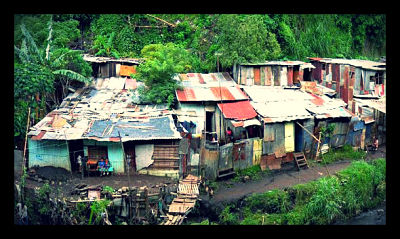
The poverty in Costa Rica surprises many tourist. In the United States, an image of tropical Costa Rica permeates travel websites. Beautiful sandy beaches, tropical getaways. A common suggested destination is the Province of Guanacaste. If someone searched Guanacaste during this week, it is unlikely they made it past the first half of the page without finding the link they needed. The last thing they are likely to find or look for in Guanacaste is social and economic unrest.
For the people of Guanacaste, sandy beaches and tropical getaways merely form the backdrop of their struggles. Costa Rica is no stranger to extreme poverty. In 1982, poverty marred the doorways of 48 percent of households in the country. Activists and policy changes cut away at that statistic and by 1994, less than 16 percent of households were affected. But where does that leave Costa Rica in recent years? In 2011, 15 percent of Costa Ricans were living in extreme poverty. One of every five employees receive all legal compensation, such as paid overtime. Income has decreased by seven percent. Figures from this year show a single percent decrease in national poverty. In Guanacaste, however, almost 22 percent of the regions residents live in extreme poverty.
The Annexation of Guanacaste Festival celebrates the province’s choice to become a part of Costa Rica instead of Nicaragua on July 15, 1824. So why is this normally joyous occasion gaining conflicted attention this year? Over 2000 protestors chose the holiday to air grievances in Nicoya’s central park, a site usually full of celebration. Specific messages were diverse, but the general message to their government was the same: We deserve better.
A prevalent issue among protestors was the lack of response by the Costa Rican government to cure and inform on the high arsenic levels in the water in the Guanacaste region. For three years, citizens have been looking for answers, but their cries have fallen on deaf ears. In fact, Costa Rica’s Constitutional Court issued a Writ of Amparo, or a way to protect constitutional rights, against President Laura Chinchilla and various government agencies due to their lack of action. Roy Wong with the Costa Rican Social Security System, the country’s public health administration, found that the rate for chronic kidney failure is almost 20 percent higher in Guanacaste than that national average. Though no official connection has been made, the high rate of kidney failure and high levels of arsenic coming from the taps of people’s homes could be connected.
Despite signing an emergency decree in March 2012, President Chinchilla and the Ministry of Health have made no apparent progress in finding a cause or solution for the arsenic. In the Writ of Amparo, citizens noted that the government recently issued a similar [emergency decree] due to coffee rust. The health of a bush gets more attention and more budget than the health of the citizens of the Republic. This infuriates us and we cannot let it continue. As it should.
Many onlookers of the protest in Nicoya sympathized with protesters. Hannia Carrillo grew up in Sámara, Guanacaste. While watching both the festivities and protests with her mother, Carrillo told the Tici Times that she agreed with the march. The president’s focus on tourism has left the rest of the province behind, she said.
Many residents felt that focus on tourism lead the Costa Rican government to leniency when dealing with big hotels and landowners. This, some believe, is exhibited best in the poverty prevalent throughout the country. Despite a report by PRWeb.com earlier this month of a growing middle class, the protestors shout something that many in the Costa Rican government might wish to ignore, that they are not treated equally. What do they ask in return? Accountability and transparency.
– Jordan Bradley
Sources: PR Web, YouTube, Tico Times, Inside Costa Rica, Costa Roca Law, World Bank
Photo: Inside Costa Rica

Nigeria’s Flying Doctors
The Flying Doctors Nigeria is an air ambulance service based in Lagos, Nigeria. Founded by Dr. Ola Orekunrin, the service is the first of its kind in West Africa. The company was founded to serve a need for immediate air transport for those injured or in desperate need of medical attention. According to Orekunrin, for many in Nigeria, medical help was next to impossible to find because the two or three good hospitals were two to four day journeys away. For a nation that has a huge oil and gas industry, the fact that there was no system for transporting to hospitals quickly seemed to be a glaring error in heath care to Orekunrin.
Dr. Orekunrin herself was impacted by the lack of transportation for the sick or injured. A few years ago, while Orekunrin was studying in the U.K., her 12-year-old sister fell gravely ill while on vacation in Nigeria. She needed medical care urgently but the local hospital could not care for the condition she had. The family was shocked to find out that there was no available air ambulance service in all of West Africa to move the girl to a better healthcare center and that they would have to call for a flight all the way from South Africa. By the time the flight was even available, the little girl had already passed away.
For Orekunrin, the sudden loss of her younger sister was both shocking and life changing. A doctor by the age of 21, Orekunrin had a promising career in the U.K. as one the youngest, most talented, and ambitious young leaders. Yet she left it all to move to Nigeria to address healthcare in the African nation. So Orekunrin went to study evacuation models and air ambulance in developing countries. In 2010, she launched her own company Flying Doctors Nigeria.
Flying Doctors Nigeria is currently in its third year and continues to swiftly transport people who need urgent medical care. It has since airlifted and provided expert health care en route to 500 patients. The company uses a fleet of planes and helicopters in its work. The service has carried all sorts of injured or ill from victims of traffic accidents to gunshot wounds. This transportation is critical to patients as roads in parts of West Africa are often poorly maintained and badly lit at night, making transportation in cars both inefficient and difficult.
There are still many hurdles that this young company must face. First and foremost, aviation business is highly expensive in Nigeria. Orekunrin has stated “keeping costs down is always a challenge.” Furthermore red tape is always tangling up businesses. Yet with a growing financial services sector and a growing petroleum and gas industry could fuel demand for companies like Flying Doctors Nigeria. For Orekunrin and those who work with her, their labor is difficult, but the rewards for their hard work and dedication are life saving.
– Grace Zhao
Sources: CNN CP Africa Knowledge Fountain
Photo: Blogspot
Beyond The Military: How Drones Can Alleviate Poverty
Drones have gained a negative reputation as aggressors, due to their military use in times of conflict, but the unmanned aerial technology is earning a positive reputation from those who are receiving aid from it. Matternet, a start-up company based out of Silicon Valley, is looking to use drones for social good. The company is trying to develop a network of unmanned mini-helicopters to help transport goods to rural areas and to places that are inaccessible due to lack of developed transportation infrastructure.
The mini-helicopters are capable of flying at heights of roughly 400 feet, and can travel up to six miles in each trip it makes. Matternet lays out a three-stage project which will utilize the technological power of the drones to deliver aid. The first stage will establish stations for drones to swap out batteries along their journeys and second phase will work to establish drone helicopters with solar-powered charging capacity, allowing the drones to travel without having to stop for a charge. The final stage of Matternet’s project will create a global network of drones, allowing for large-scale coordination and transportation of goods.
The mini-helicopters are capable of carrying 4.5 pound loads. While this capacity will not for allow for heavy shipments, it will accommodate most small aid packages. The company states that “80 percent of e-commerce packages are below 2kg,” or roughly 4.5 pounds. The drones should be able to carry items such as medicines for individual or household use, which is one of the main focuses of the project’s development.
Matternet gives an example of how its technology can improve health care in developing areas. Without Matternet’s drones, a mother in rural Africa could have to put off a day’s work and travel many miles to visit a doctor and receive medicine for her daughter’s ear infection. Or, by using the new technology, the same mother could call a doctor, and the medicine that her daughter needs could be shipped to her via drone within minutes, saving time and in critical circumstances, possibly saving lives.
Developers of Matternet emphasize their innovation’s ability to quickly and cheaply transport goods. The company states that it can establish 50 base stations and build 150 drones in Lesotho for $900,000 while it would cost about $1 million to build a single one-mile, one-lane road.
Matternet’s drones were first deployed to Haiti and the Dominican Republic for humanitarian purposes last year. The company says it needs to improve navigation and battery systems in its technologies before the drones can be used on a large scale, but Matternet hopes that in the future its drones will be utilized to help create enormous positive change in the developing world.
– Jordan Kline
Sources: The National, The Guardian Matternet
Photo: Kevin Byrant
10 Years of African Womens Rights Protocol
Despite less than ideal conditions for women in many African countries, the African continent does boast in international instrument to protect women’s rights. The Protocol to the African Charter on Human and Peoples’ Rights on the Rights of Women was passed ten years ago and is commonly referred to as the Maputo Protocol.
The Maputo Protocol’s objective is to make it possible for women in Africa to participate equally in the political process, to obtain social and political equality, have control over their reproductive health, and put an end to misogynistic practices such as female genital mutilation. The protocol has been ratified by the forty-eight of the fifty-four member states of the African Union and has been in force since 2005.
Recently there has been an increased push from civil society organizations ensure that women actually enjoy the rights afforded to them by the protocol. These organizations have placed pressure on governments to sign and enforce the protocol guaranteeing their citizens the rights contained within the document. There are still 18 countries that have yet to ratify the Protocol.
This is, however, a hard battle to win. In order for African women to enjoy their freedoms, there are steep societal and cultural barriers and hurdles which must be overcome. The key to success is working to make sure the protocol acts as a tool for empowerment of women. In order to accomplish this, civil society organizations need to implement strategies ranging from national campaigns to grassroots approaches in order to mobilize support. Additionally, agents of the law need to work to enforce the protocol and hold violators responsible for their actions.
The Maputo Protocol is revolutionary and incredibly important for women in Africa. It exists to protect the human rights of women, a topic often overlooked by local governments in Africa. The protocol establishes vital rights in regards to women’s bodies, marital property, and land and labor. While the Maputo Protocol represents significant progress in the field of women’s rights and it should be celebrated, there is much more work to be done in the area of implementation.
– Caitlin Zusy
Sources: Reuters, No Peace Without Justice
Sources: IBI Times
A Surprising Defense of GMOs
This article does not intend to imply that genetically modified organisms (GMOs) are a positive step toward the future across the board. Biotech giants such as Monsanto spit out “herbicide resistant” plants that have unpredictable and largely untested side effects on both the general population and on the environment. But what if GMOs were used in a responsible way? Or, better yet, in a way that could increase crop yields and provide more nutrients to people without access to an adequate food supply? Turns out, they can.
Dietary micronutrient deficiencies, such as the lack of vitamin A, iodine, iron, or zinc, are a major cause of morbidity and mortality across the globe. The best way to avoid such a deficiency is through a diet of varied fruit, vegetable, and animal products. The Golden Rice Project realizes that this is not a reality for much of the world. Founded by the Rockefeller Foundation, the project aims to make provitamin A (beta-carotene) and zinc more available in the diet of those living in developing countries around the world. A strain of rice is injected with the vitamins, turning the grains yellow and giving the project its namesake.
In addition, an Israeli biotech company plans on converting their groves of eucalyptus trees into the world’s new source of energy, replacing fossil fuels for good. FuturaGene envisions massive plantations of GM eucalyptus trees spreading across Brazil, South Africa, India, and China. They would be modified to grow 40% faster for use as paper, as pellets for power stations and as fuel for cars. The company is very cognizant of the overwhelming opposition to any GMOs, but especially to those planted in as large quantities as their proposition. To address these concerns, they are seeking certification from the Forestry Stewardship Council (FSC) and back organizations such as the WWF.
Purdue University researchers are now finding away to genetically modify poplar trees in a way that will actually help the environment. The researchers plan to plant transgenic poplars into a contaminated former oil storage facility near Kokomo, Indiana this summer. The transgenic trees have been shown to be capable of absorbing trichloroethylene, or TCE, and other pollutants, which they then convert into non-harmful byproducts.
Perhaps the agricultural revolution that the world’s been waiting for actually will be carried in the hands of responsible, progressive-minded scientists through genetic engineering.
– Kathryn Cassibry
Sources: Medium, Goldenrice.org, UNS Purdue, The Guardian
Photo: BrickHouse
What is FEMEN?
You have probably heard about the women who have been protesting, bare-breasted, all over Europe. They are FEMEN.
Started in Ukraine, the FEMEN movement describes itself as “the scandal famous organization of topless women activists, who defend with their breast sexual and social equality in the world.” With “Sextremism” as their motto, FEMEN activists clearly display their struggle: “Be FEMEN – means to mobilize every cell of your body on [sic] a relentless struggle against centuries of slavery of women!” Radical in their beliefs and actions, FEMEN activists depict themselves as “morally and physically fit soldiers, who every day make civil actions of the high [sic] degree of difficulty and provocativity [sic].”
Radical words require radical actions. Since 2010, FEMEN have become increasingly visible on the international political scene because of their turbulent interventions throughout Europe. FEMEN have been protesting intensively against sexism, homophobia, prostitution and religion. Using their bodies as their best weapons, FEMEN activists fight for women’s rights against dictates imposed by dictators, the church and the sex industry. “My Body, My Manifesto,” “Sextremism – FEMEN is the death of Patriarchy,” “I am Free” are some of the messages you can read on FEMEN activists’ breasts. Their protests incorporate political messages displayed on their bodies, enacting shocking scenes which gather attention and mobilization of greater numbers of people.
For instance, on July 3, three FEMEN activists demonstrated in front of the Elysee Palace, in Paris, in order to ask the French President to show solidarity with their imprisoned Tunisian fellow Amina. They were wearing barbed wired around their breasts and faces, lacerating their flesh as the police arrested them.
Banned from Ukraine after she denounced the arrest and subsequent imprisonment of the Pussy Riot – a Russian female punk group that had organized a punk prayer at Moscow’s Cathedral of Christ the Savior- Inna Shevchenko, one of the leading activists of the group, has been granted “political refugee” status in France.
The FEMEN ‘headquarters’ are now based in Paris, France. Recently, the creation of a new postage stamp in effigy of Marianne triggered political turmoil in France. Indeed, the Marianne depicted on the stamp is wearing a crown of flowers, symbol of the FEMEN activists. Inna Shevchenko provocatively commented “FEMEN is on [sic] French stamp. Now all homophobes, extremists, fascists will have to lick my ass when they want to send a letter.” Protest against the new French stamp has arisen, mostly because of the many Islamophobic comments of FEMEN activists.
FEMEN’s extreme actions and statements have been criticized by other feminists. Journalist Mona Chollet denounced the use of stereotyped young, skinny and beautiful women who display their bodies naked to fight for human rights, at the detriment of all those who do not fight naked and do not abide by the classic criteria of beauty and youth.
– Lauren Yeh
Sources: Le Monde, FEMEN, L’Express
Photo: The Atlantic
Remittances Outweigh International Aid to Africa
Millions of Africans live in migrant communities around the world, and a large number of these regularly send money to family back home. In 2010, the total amount of these remittances topped $50 billion – and possibly up to three times that, as much of the money is sent informally. For comparison, official development assistance that year was $43 billion, according to the World Bank. There is a difference too in the manner of aid. Because remittances are sent directly to family members, they are targeted and aimed at specific needs, be they schooling, or essentials like food and medicine. A recent study showed that nearly half of the population of Somalia, among many other countries, is dependent on money sent from abroad and that the total amount of remittances sent annually reaches $350 billion.
In some ways, money sent directly to families in developing countries can be better spent than official international assistance, as there is no bureaucracy to go through and people can address their needs directly. However, this does not allow for infrastructural development and other government driven projects. And if the income of many people is generated abroad, then local governments receive no benefit from taxation. Therefore, international aid is still important as a facilitator of broader governmental programs in conjunction with the individually distributed remittances.
– David M Wilson
Sources: The Economist, BBC
Photo: Zehabesha
Silicon Valley & Ghanaian Entrepreneurs
For any aspiring tech giant, setting foot on the coveted ground of the Silicon Valley is like entering Hollywood for the aspiring actor. A veritable hot bed for up and coming technology, Silicon Valley serves as a who’s who of past, present, and future industry players.
The prospect of an undeveloped African country gaining footing in the tech industry seems far-fetched. For three young men from Ghana, however, their dreams of entering the industry are coming to fruition sooner than expected. While, for many in Ghana, having a home computer is still not a reality, Ghanaian entrepreneurs, David Osei, Kamil Nabong, and Philips Efah are bringing their startup Dropifi to Silicon Valley.
Through the unique mentoring program, 500 Startups, Osei, Nabong, and Efah have been awarded a four-month boot camp in Silicon Valley where they will learn all angles of the startup industry. At its heart, 500 startups is a venture capital firm aimed at building the next generation of startups from the ground up. With their inclusion of the Ghana trio, however, the firm has begun to set their sights beyond Silicon Valley, and into the developing world.
With the goal of streamlining businesses contact forms, Dropify, aims to provide a seemingly underutilized resource to businesses the world over. Despite worldly ambitions, however, the group has kept their feet firmly rooted on the ground and hopes to bring the brunt of business back to Ghana. “I never thought of moving to the Valley as soon as this, because basically we want to build a global startup company right from Ghana that is going to service the whole world,” Osei told CNN.
While there remains a lot of work for the four entrepreneurs, they have their goals set. Osei went on to tell CNN, “Our immediate goal is building a sustainable product that is going to deliver continuous value to our business,” says Osei. “Currently we are focused on the U.S. and international market – the U.S., U.K., Canada – but in a couple of years we want to become leaders in Africa.”
For a country such as Ghana, the hope of entering into the tech industry certainly serves as a goal worth fighting for. With globalized free trade, serving as a business hub in Africa will certainly be a boon to the country’s economy as well as surrounding African countries.
– Thomas van der List
Sources: CNN, Government of Ghana, 500
Photo: The Guardian
Poverty in Costa Rica
The poverty in Costa Rica surprises many tourist. In the United States, an image of tropical Costa Rica permeates travel websites. Beautiful sandy beaches, tropical getaways. A common suggested destination is the Province of Guanacaste. If someone searched Guanacaste during this week, it is unlikely they made it past the first half of the page without finding the link they needed. The last thing they are likely to find or look for in Guanacaste is social and economic unrest.
For the people of Guanacaste, sandy beaches and tropical getaways merely form the backdrop of their struggles. Costa Rica is no stranger to extreme poverty. In 1982, poverty marred the doorways of 48 percent of households in the country. Activists and policy changes cut away at that statistic and by 1994, less than 16 percent of households were affected. But where does that leave Costa Rica in recent years? In 2011, 15 percent of Costa Ricans were living in extreme poverty. One of every five employees receive all legal compensation, such as paid overtime. Income has decreased by seven percent. Figures from this year show a single percent decrease in national poverty. In Guanacaste, however, almost 22 percent of the regions residents live in extreme poverty.
The Annexation of Guanacaste Festival celebrates the province’s choice to become a part of Costa Rica instead of Nicaragua on July 15, 1824. So why is this normally joyous occasion gaining conflicted attention this year? Over 2000 protestors chose the holiday to air grievances in Nicoya’s central park, a site usually full of celebration. Specific messages were diverse, but the general message to their government was the same: We deserve better.
A prevalent issue among protestors was the lack of response by the Costa Rican government to cure and inform on the high arsenic levels in the water in the Guanacaste region. For three years, citizens have been looking for answers, but their cries have fallen on deaf ears. In fact, Costa Rica’s Constitutional Court issued a Writ of Amparo, or a way to protect constitutional rights, against President Laura Chinchilla and various government agencies due to their lack of action. Roy Wong with the Costa Rican Social Security System, the country’s public health administration, found that the rate for chronic kidney failure is almost 20 percent higher in Guanacaste than that national average. Though no official connection has been made, the high rate of kidney failure and high levels of arsenic coming from the taps of people’s homes could be connected.
Despite signing an emergency decree in March 2012, President Chinchilla and the Ministry of Health have made no apparent progress in finding a cause or solution for the arsenic. In the Writ of Amparo, citizens noted that the government recently issued a similar [emergency decree] due to coffee rust. The health of a bush gets more attention and more budget than the health of the citizens of the Republic. This infuriates us and we cannot let it continue. As it should.
Many onlookers of the protest in Nicoya sympathized with protesters. Hannia Carrillo grew up in Sámara, Guanacaste. While watching both the festivities and protests with her mother, Carrillo told the Tici Times that she agreed with the march. The president’s focus on tourism has left the rest of the province behind, she said.
Many residents felt that focus on tourism lead the Costa Rican government to leniency when dealing with big hotels and landowners. This, some believe, is exhibited best in the poverty prevalent throughout the country. Despite a report by PRWeb.com earlier this month of a growing middle class, the protestors shout something that many in the Costa Rican government might wish to ignore, that they are not treated equally. What do they ask in return? Accountability and transparency.
– Jordan Bradley
Sources: PR Web, YouTube, Tico Times, Inside Costa Rica, Costa Roca Law, World Bank
Photo: Inside Costa Rica
What is Rotary International?
With more than 34,000 clubs and 1.2 million members in over 200 countries, Rotary International is one of the largest service organizations in the world. Rotary International assembles business and professional leaders to build peace and goodwill. Members of local Rotary clubs, called Rotarians, engage in service both at home and abroad to alleviate poverty and promote health and education.
Having the primary motto of “Service above Self,” Rotary has been successful in transmitting its humanitarian fervor to young people. Rotary’s service club for young people ages 12 to 18, called Interact, is one of the fastest growing philanthropic programs in the world. It currently has over 300,000 teens involved. Similarly, Rotaract is the subset of Rotary International that caters to college-age people ages 18 to 30. Rotaract clubs boast a membership of over 200,000.
An important facet of Rotary, Interact, and Rotaract clubs is that despite being affiliated with Rotary International, the individual chartered clubs are self-governing – free to engage in service projects in their own communities as well as serve international initiatives. This leads to clubs becoming strong grassroots vehicles for the promotion of service.
There have been many noteworthy Rotarians throughout history, ranging from politicians like former president Warren G. Harding to accomplished entrepreneurs like Sam Walton, founder of Walmart.
One of Rotary’s flagship missions has been to eradicate polio, a goal this organization has been working on for over 25 years. The Gates Foundation has helped, providing Rotary with hundreds of millions of dollars over many years to assist in the eradication of polio. Most recently, in 2013, Rotary International and the Gates Foundation began a joint effort called “End Polio Now – Make History Today,” determined to prevent polio from making a resurgence. This endeavor has been successful, with the annual polio diagnosis rate being reduced by over 99%.
In addition to fighting polio, the Rotary Foundation has been instrumental in effecting change in world communities by establishing many innovative initiatives designed to create a healthier and more educated world. For example, Rotary clubs worldwide have taken a firm stance aimed at promoting literacy by creating a Rotary Literacy Month, establishing book donation drives, and holding reading events for schoolchildren.
Rotary has also worked with U.S. federal agencies such as USAID, thus creating a great partnership between an organization with strong grassroots ties and an agency with technical expertise. For example, in 2009, USAID and Rotary joined efforts to bring clean drinking water and sanitation to countries in the developing world.
Rotary International is an organization that seeks to transcend cultural, ethnic, and language boundaries in order to serve humanity, and it is impossible to overstate the impact this organization has had on the world.
– Rahul Shah
Sources:
Top 5 Malala Quotes
Malala Yousafzai, a Pakistani teenager shot by the Taliban after advocating for girls’ right to education, addressed the United Nations on her 16th birthday, speaking about the power of education to overcome extremism. The U.N. declared July 12 “Malala Day” to honor Yousafzai, who went back to school in March after recovering from the October attack.
According to a report released by UNESCO and Save the Children, 95 percent of the 28.5 million children who are not receiving a primary education live in low and lower-middle income countries, and girls make up 55 percent of those who are not in school. The report also stated that there were more than 3,600 documented attacks on education similar to that faced by Yousafzai. Listed below are five of her most inspiring “Malala quotes”, which highlight the influence and importance of education.
– Katie Bandera
Sources: Huffington Post
Photo: The Guardian
Read Humanitarian Quotes.