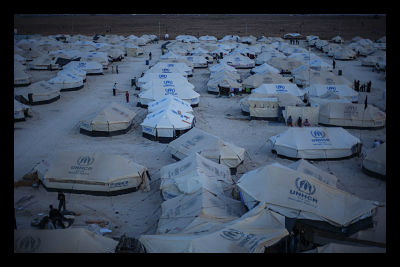
 The U.S. Association for UNHCR, also known as the U.N. Refugee Agency, is based out of Washington, D.C. This organization was during World World II to help the victims displaced by this conflict. The UNHCR faced its first major emergency in 1956 after the Soviet demolition of the Hungarian Revolution. The decolonization of Africa in 1960 produced a dire humanitarian and refugee crisis, and the organization provided relief to victims of displacement in Asia and Latin America for the following two decades, followed by another refugee crisis from the conflict in the Balkans.
The organization won a Nobel Peace Prize in 1954 for its groundbreaking work in Europe, followed by an award in 1981 for being the world’s best worldwide assistance to refugees. The organization has grown from a staff of 34 to over 8,600 national and international members that work in approximately 126 countries.
This organization is dedicated to saving, protecting and rebuilding the lives of the victims of conflict. USA FOR UNHCR responds to the most urgent crises in the world, and is currently specializing in Syria, South Sudan, Central African Republic and Iraq.
Current humanitarian emergencies have produced astounding levels of suffering and displacement; 51.2 million men, women, and children are currently displaced in the world, the average time refugees are separated from their lives is 17 years, and 32,000 people flee their homes every day. USA for UNHCR addresses the basic needs and rights for refugees, most importantly shelter, water and food, and protection from harm. Emergency relief efforts include sending relief supplies within 72 hours, addressing the survival needs of victims with resources such as shelter, clothing, soap, heat lamps, blankets, sleeping mats, kitchen sets, solar lamps and mosquito nets.
In regards to health and nutrition, USA for UNHCR describes their efforts as, “Working closely with partner organizations through supporting their vital work to supply clean water and nutritious food, set up sanitation programs and ensure refugees have access to emergency and basic health care services. For example, USA for UNHCR works with partners to carry out large-scale vaccination campaigns to protect refugees from diseases like polio and measles.”
There is support and relief for refugees whenever and wherever they can for every step of the journey, for UNHCR is the first in and last out in an emergency situation. According to USA for UNHCR, 91 percent of their staff are based in the field providing direct support to people in need. In 2013, 469 emergency experts were dispatched to the field. The ten largest operations have taken place in Afghanistan, Colombia, Democratic Republic of the Congo, Mali, Pakistan, Syria, Jordan, Lebanon, Turkey and Iraq. Currently, there are 434 USA for UNHCR offices worldwide.
There are several ways one is able to join the cause for USA for UNHCR. One is able to become a monthly donor, fundraise for refugees, and raise awareness.
– Neti Gupta
Sources: Guide Star, UNHCR 1, UNHCR 2, UN Refugees
Photo: Flickr

Education in Suriname
Suriname is the smallest independent country on the South American continent, slightly larger than the state of Georgia, and has a relatively small population. Suriname is mostly a tropical rain forest and the majority of the Surinamese population lives along the coast. Recently, UNICEF has made many efforts to reduce inequity in Suriname’s education system.
Although 97 percent of Surinamese children are enrolled in primary education, serious disparities exist between the coastal and rural schools and the interior. Suriname is nationally on track to meet Millennium Development Goal 2, but significant disparities in terms of gender and socio-economic status is significantly lacking progress and falling below the target.
There are various reasons why some children are more successful than others within the education system as well as why the disparities become increasingly evident as the pupil grows and progresses.
According to the United Nations Suriname, the “availability of schooling opportunities, accessibility of schools, quality and appropriateness of the education system affect the learners’ results in the highly varying education context in Suriname. Whereas the national gross primary school enrolment rates are high, enrolment and attendance rates in the interior are generally low in comparison to the national average. Poor availability and quality of pre-schools and the sudden switch from local languages to Dutch, being the medium of instruction and texts books, could be identified as one of the main hurdles, resulting in high repetition rates in first grade and poor net completion rates in the interior.”
Furthermore, the situation regarding water and sanitation for school youth has posed a major challenge. Only 29.4 percent of schools in the rural coastal areas have piped water and 67.5 percent of the other schools in the rural coastal and rural interior do not have piped water— forcing them to collect rain or river water during school hours.
UNICEF has stepped in to reduce the inequities within the school system of Suriname. The UNADF Action Plan 2012-2016 will continue supporting the Ministry of Education and Community Development strengthening the capacity of kindergarten and primary school teachers in an effort to establish child friendly schools. Thirty percent of the teachers in the interior are not qualified to teach and in public primary schools, five percent have not even completed primary education themselves.
Plans have also been made to assist Suriname with the implementation of technology to provide a better education. UNICEF, in close cooperation with the Ministry of Education and Community Development, has implemented the Computer Aided Learning Project.
– Eastin Shipman
Sources: CIA World Factbook, Curacao Chronicle, United Nations Suriname, UNESCO
Photo: UN
Malnutrition in Liberia, an Epidemic
“Stunted” can mean a variety of health problems: hindered growth, a weak immune system, a smaller IQ, blindness, brain damage and eventually death. Not only does Liberia lack the proper means and knowledge to nourish their bodies, they also struggle with gaining access to clean, safe drinking water. When faced with unclean water and other unhygienic practices, children can easily develop diarrhea which makes nourishment an even harder goal to reach.
Another contributing factor to malnutrition in Liberia is teenage pregnancy. They have one of the highest teenage birth rates in the entire world. Thirty-eight percent of girls are pregnant or mothers by age 18. This high birth rate can be attributed to the poverty Liberia faces, which in turn affects their education and resources. Fifteen percent of these mothers are malnourished themselves, impacting a child before he or she is even born.
Organizations are attempting to fix this issue by teaching Liberians about contraception, hygiene, agriculture and the importance of breastfeeding. There is a trend where young mothers in Liberia do not wish to breastfeed for cosmetic reasons. Other charities are providing milk, folic acid and other medical treatment to Liberian’s malnourished, particularly the babies. Once a baby starts to become stunted due to malnourishment, it is difficult to reverse the process.
Those providing aid to Liberians hope to stop this epidemic. While there are many other issues resulting from the poverty in Liberia, malnutrition is dramatically altering and even ending lives. With some small changes to their nourishment practices, a large percentage of lives can be saved.
– Melissa Binns
Sources: Action Against Hunger, AllAfrica, Child Fund International, UNICEF
Photo: Press TV
USA for UNHCR
The organization won a Nobel Peace Prize in 1954 for its groundbreaking work in Europe, followed by an award in 1981 for being the world’s best worldwide assistance to refugees. The organization has grown from a staff of 34 to over 8,600 national and international members that work in approximately 126 countries.
This organization is dedicated to saving, protecting and rebuilding the lives of the victims of conflict. USA FOR UNHCR responds to the most urgent crises in the world, and is currently specializing in Syria, South Sudan, Central African Republic and Iraq.
Current humanitarian emergencies have produced astounding levels of suffering and displacement; 51.2 million men, women, and children are currently displaced in the world, the average time refugees are separated from their lives is 17 years, and 32,000 people flee their homes every day. USA for UNHCR addresses the basic needs and rights for refugees, most importantly shelter, water and food, and protection from harm. Emergency relief efforts include sending relief supplies within 72 hours, addressing the survival needs of victims with resources such as shelter, clothing, soap, heat lamps, blankets, sleeping mats, kitchen sets, solar lamps and mosquito nets.
In regards to health and nutrition, USA for UNHCR describes their efforts as, “Working closely with partner organizations through supporting their vital work to supply clean water and nutritious food, set up sanitation programs and ensure refugees have access to emergency and basic health care services. For example, USA for UNHCR works with partners to carry out large-scale vaccination campaigns to protect refugees from diseases like polio and measles.”
There is support and relief for refugees whenever and wherever they can for every step of the journey, for UNHCR is the first in and last out in an emergency situation. According to USA for UNHCR, 91 percent of their staff are based in the field providing direct support to people in need. In 2013, 469 emergency experts were dispatched to the field. The ten largest operations have taken place in Afghanistan, Colombia, Democratic Republic of the Congo, Mali, Pakistan, Syria, Jordan, Lebanon, Turkey and Iraq. Currently, there are 434 USA for UNHCR offices worldwide.
There are several ways one is able to join the cause for USA for UNHCR. One is able to become a monthly donor, fundraise for refugees, and raise awareness.
– Neti Gupta
Sources: Guide Star, UNHCR 1, UNHCR 2, UN Refugees
Photo: Flickr
Poverty in Manila a Growing Problem
Infrastructure in Manila has improved since Benigno Aquino became president in 2010; however, inequalities in the city still exist. The 586 slums are put at additional risk when natural disasters strike. On Nov. 14, 2013, the effects of a typhoon killed 6,000 people and left many homeless.
The Philippines also has one of the highest birth rates in Southeast Asia. The average population for a Manila slum is 75,000-80,000 people per square mile. It is theorized that Filipinos do not believe in or are not educated about contraception. Families generally have 10-12 children, making adequate resources hard to come by.
Most Manila citizens get their food from agriculture—also the city’s main source of income—but some of the poorest find food in the garbage. There is even a word for the food scrapped up from the trash: “pagpag.” Under these conditions, Manila is widespread with disease and illness.
While the government is aware of the problems and has claimed they will work on it, citizens still feel that they are not doing enough. Most aid comes from outside sources and organizations from other countries. There are many factors contributing to the poverty in Manila. Without major intervention, conditions will only continue to get worse for the people of Manila.
– Melissa Binns
Sources: CNN, Mission Ministries Philippines, News Statesman
Photo: Zimbio
How India’s Emerging Economy Will Impact Its Poverty
India is well acquainted with poverty and has been for many years now, with a large portion of the country’s population living in slums and other unsanitary conditions. Approximately 33 percent of the population lives in poverty, with only 62 percent of adults being literate, and only 49 percent of girls attending secondary school largely due to economic reasons.
The recent change in India’s economy could alter this. India’s stock market has reached new highs in recent months with a stable rupee.
Politics have had a large effect on India’s recent success, with the election of new Prime Minister Narendra Modi. Modi’s Bharatiya Janata Party, or BFP, experienced its first win in 30 years. The result is a more optimistic India that hopes to heal a broken bureaucracy.
Nicholas Smithie, Chief Investment Strategist at Emerging Global Advisors, says Modi is more likely to tackle major obstacles, such as a poor infrastructure, than previous prime ministers. Modi and the BJP work on a pro-growth platform, focusing on government approvals and advances in labor and education.
India might only be getting lucky. Certain aspects of the global economy — slowdown in China, money printing in Japan, Russia’s recession, stagnation in the European zones and falling oil prices — aren’t hitting India quite as hard. The deflation around the world is proving helpful to India, which has suffered high inflation. India has a rare opportunity to capitalize on new political officials and economic reform. International corporations are growing eager to invest in India, now assured that India’s policies will foster economic expansion.
As India’s economy emerges with a strong, stable foundation, the future of poverty reduction looks a little brighter. As the economy improves, families are better able to afford food, clean water and sanitary conditions. Educational opportunities are allowed to expand as the economy grows, creating a more secure future for Indian children, particularly girls. The path to recovery and to reducing poverty in India is long, but with a stronger economy and a hopeful leader, India seems to be on the right track.
– Alaina Grote
Sources: The Economist, UNICEF, U.S. News
Photo: Flickr
Ebola Cases Falling in West Africa
The current Ebola epidemic began a year ago in Guinea and spread throughout West Africa. Guinea, Liberia and Sierra Leone are the worst-affected countries but are also seeing steady decreases in Ebola case numbers since the beginning of the year.
Guinea recorded 52 new Ebola cases in the week of Feb. 8. In August and September 2014, Liberia experienced over 300 new Ebola cases per week; during the week of Feb. 8, Liberia recorded only two new confirmed cases. Sierra Leone now holds the highest infection rate, experiencing up to 248 new Ebola cases per week; however, in January, the numbers declined to 118. During the week of Feb. 8, Sierra Leone confirmed 74 new cases, 54 of which were in Sierra Leone’s capital of Freetown.
The life-threatening disease has caused other problems throughout West Africa. Farming and food production has slowed, numerous roads have been closed, bans have been put on travel and families have been displaced or torn apart.
Experts blame ignorance and fear for contributing to the disease’s rapid spread in West Africa in the worst outbreak on record. There have also been violent attacks on healthcare facilities and workers despite large-scale education campaigns.
However, the decline in cases is already bringing positive effects. President Ernest Bai Koroma of Sierra Leone announced in January that the country was lifting the travel restrictions it had implemented in an effort to contain the virus.
West Africa’s year-long Ebola outbreak has now killed over 9,365 people from among 23,218 cases recorded, mainly in Liberia, Guinea and Sierra Leone.
One challenge has risen from seemingly good news: funding. Officials say that international financial support has also decreased with the number of Ebola cases. Officials say that $1.5 billion is needed to combat the disease for the next six months, and so far only $482 million has been pledged.
– Alaina Grote
Sources: New York Times, Thomson Reuters Foundation
Photo: Flickr
Education in Tajikistan
Tajikistan is a small country located in central Asia that gained independence from the Soviet Union in 1991. A civil war followed for the next six years, which caused the collapse of political regimes and educational systems.
While Tajikistan is one of the poorest countries in the world, the poverty rate decreased from 72 percent in 2003 to 47 percent in 2009. Tajikistan has been working to recover from the effects of the civil war and the global economy, but many remain trapped in a future of poverty due to a significant lack of educational opportunities.
In Tajikistan, children begin school at seven years old and are allowed to continue on to secondary school until age 18. However, many children drop out of school by age 12 to help around the house or to acquire a job, which means that the majority of children are only receiving four years of schooling or less. In addition, 66 percent of children in Tajikistan live in poverty, which affects both mental and physical development. Because of their living conditions, these children usually do not attend school due to economic reasons.
Tajikistan spends 3.8 percent of its GDP on education. Of its total expenditure on education, 73 percent goes to personnel costs, yet teachers’ salaries remain low. These costs leave little for school improvement and teacher training.
However, both Tajikistani officials and citizens are working toward a better educational system. In 2005, Tajikistan joined the Global Partnership for Education, or GPE, which focuses on universal access to quality education. The Tajikistani government spent 68 percent of the educational budget on basic education; yet, there is a funding gap when it comes to implementing the government’s action plan due to a lack of the necessary infrastructure.
The Tajikistani government worked with the GPE to develop the National Strategy for Education Development, which fights to ensure adequate sector coordination in support of the government’s education strategy.
In 2008, Tajikistan received its first grant from GPE for $18.4 million, and it received its second grant for $13.5 million in 2010. The money has been used to construct classrooms safely, provide school furniture and supplies, publish and supply multi-subject textbooks and improve authority training.
Tajikistan is working hard to decrease its national poverty rate, but there is still a lot of work to be done. Without education, children are far more likely to work at young ages, provide for families, take care of homes and continue living in poverty.
– Alaina Grote
Sources: ClassBase, Global Partnership for Education, UNICEF
Photo: Flickr
Proposed Capital Gains Tax Will Benefit Middle Class
The vast majority of congressional members come from upper-middle class families, where connections to senior political members and other social and religious groups are plentiful.
In his State of the Union address, President Barack Obama addressed higher taxes on the wealthy, which are unpopular and unlikely to pass in Congress. His increase is substantial — raising it from 23.8 to 28 percent on couples making over $500,000. This bill in particular received backlash from Republicans.
“Taxes on capital income, such as the capital gains tax, are among the worst ways to raise revenue from the perspective of economic growth,” said Greg Mankiw, professor of economics at Harvard University.
Tax credits would go toward the middle class and the increase in taxes would raise around $200 billion in the next decade.
Former Rep. Tom Perriello wrote, “During the 2010 lame-duck session, Congress passed an $858 billion tax-cut extension, leaving in place generous [Bush-era] tax breaks for the wealthiest Americans. Why was such an opportunity to address inequality and spur economic growth via our tax code missed? … Most of those who prevented the bill from getting a vote before the election privately argued that the income threshold was too low.”
President Obama recently released a plan for a new tax strategy that would affect the rate of the capital gains tax and close lucrative loopholes that avoid the capital gains tax. In addition, he is proposing to close a loophole that allows heirs to avoid paying taxes on large estates.
The economy has recovered since the economic crisis of 2008, and much of this is due to Obama’s financial politics of raising taxes on the high-income earners in America. These tax increases do benefit the middle class by approximately $320 billion in tax credits that would be allotted.
The tax credits will go toward expanding higher education and providing greater support for child care. In addition, they provide substantial assistance to families in the middle-income classes. They provide about $500 for married couples to curb the cost of child care for working-class Americans.
– Maxine Gordon
Sources: NPR, The Atlantic, The Washington Post, Yahoo News
Large Strides Away from Poverty in Nepal
In the past, Nepal has been regarded as one of the poorest countries in the world. Poverty in Nepal is caused by poor infrastructure, health, education and economy. The country is also susceptible to natural disasters due to its location. However, thanks to the people who have been dedicated to improving conditions in Nepal, there is good news: extreme poverty have been reduced by 50 percent in the last 20 years.
How did this happen? Innovative developments are being introduced to the country, and Nepal is already benefiting from them. The newborn mortality rate has already dropped 34 percent since a disinfectant gel to rub on the umbilical cord—rather than the traditional usage of oil, ash and even animal droppings—was presented to Nepalese mothers.
Other strides are being made by implementing different programs for the Nepalese people, like a nutrition program called “Suaahara” that educates families on proper farming and hygiene. Another program prioritizes improving the literacy rate of children. If the population of Nepal becomes 10 percent more literate, this can boost their economy by 0.3 percent.
Important changes are being made in Nepal’s legal system and government, too. Organ selling has only recently become illegal and efforts are being made to help and protect a large number of human trafficking victims. According to USAID, 15,000 Nepali women and girls are trafficked out of the country per year, while 7,500 are trafficked domestically for sexual exploitation.
One of these efforts is the Combating Trafficking in Persons Project, carried out in Nepal to prevent, protect and provide justice for human trafficking victims. Now that the victims are a focus, traffickers are beginning to face legal consequences.
Nepal is also still working on becoming a democracy after having been a monarchy for so many years. This means that citizens of Nepal will get the chance to vote for the first time in 16 years. At this rate, the country is expected to be rid of extreme poverty by 2030. What was once a country full of people living on one dollar a day is now a country with a bright future.
– Melissa Binns
Sources: U.S. Department of State, USAID 1, USAID 2
Photo: Flickr
Poverty Progress Slows in Bangladesh
Progress in Bangladesh is apparent since it is in a position to reach its Millennium Development Goals; however, it remains a low-income country with substantial inequality, deprivation and poverty. With over 45 million people in Bangladesh, approximately one-third of the population lives below the poverty line with a majority living in extreme poverty. Poverty in rural areas is more severe, with 36 percent of the population in poverty whereas the urban centers are estimated at 28 percent. Plagued with an inadequate diet and massive food shortages, over half of the rural children are chronically malnourished and 14 percent suffer from acute malnutrition.
A large source of this poverty is due to a lack of economic opportunity and a reliance on farming. Agriculture accounts for less than 20 percent of the GDP, however the farm sector is the lifeline of over 40 percent of the labor force. Due to urbanization and industrialization, the amount and availability of farmland is decreasing, and the land itself is less cultivable. A lack of technology and access to open bodies of water has affected the fisheries of Bangladesh as well.
A large source of poverty in Bangladesh has accumulated by overpopulation and climate change. Population density has placed significant pressure on the country’s natural resources, yet the urban and rural industries are unable to provide jobs for all Bangladeshi people; many citizens have been forced to seek work abroad. The impact of climate change has increased Bangladesh’s vulnerability, for it is one of the most flood-prone countries in the world. Severe flooding causes detrimental damage to crops, property and livelihoods. Monsoon floods, cyclones and storms significantly impact the rural poor, for their housing is less adequate than the urban centers, and the re-building process is longer, harder and increasingly difficult.
The World Bank released a poverty assessment of Bangladesh studying from 2000-2010 in June of 2013, and concluded with some striking results. The conclusion stated that the development gap ought to be addressed between the East and the West through increasing the economic opportunities for those in both regions. While Dhaka and several other eastern divisions have experienced growth, their western counterparts have remained primarily stagnant and destitute. The growth of Bangladesh is occurring in an uneven fashion, and the impact of remittances, inadequate electricity, roads and access to markets further contributes to the unequal distribution to goods and resources.
– Neti Gupta
Sources: Britannica, Rural Poverty Portal World Bank
Photo: United Nations University