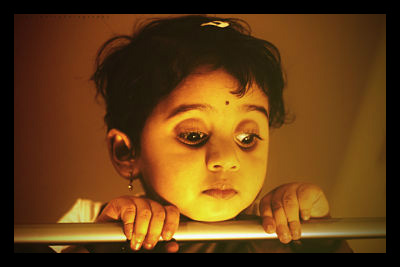
On April 3, the Middle East honored Arab Orphans Day with university campus-based movements to honor abandoned children. Students in Cairo held an event in which individual participants would treat an orphan like a younger sibling for a day, while Kuwaiti Minister of Planning and Development Hind Al-Sabeeh touted the legislation of protective laws
Orphans in Kuwait are one of the most disadvantaged groups in terms of legal protections. In addition to the initial injury of parental abandonment, these children suffer the stigma of “illegitimacy.”
Many in the Middle East discriminate against children born to unwed parents. Often, they base their prejudice on a misinterpretation of the Qur’an. Their choice can have deleterious effects, ranging from overt displays to more subtle denials of academic and job opportunities.
That said, Kuwait has made some significant strides. Abandoned children are first sent to social care facilities for 30 days while the Ministry of Social Affairs attempts to find their parents.
If and when the children are not found, they become wards of the State. In Kuwait’s case, state guardianship grants the orphans Kuwaiti nationality, free health care, fiscal stipends, and free housing.
Kuwait treats its orphans well. According to UNICEF, life expectancy for these orphans was 74.2 in 2012 and approximately 93.9 percent of orphaned youth are literate. The high literacy rate is largely due to a high enrollment rate in primary schools, which UNICEF estimates to be around 98 percent.
The disadvantage, though, lies in the wards’ legal inaccessibility. Once Kuwaiti orphans are declared as wards of the State, only Kuwaiti citizens can adopt them.
This is a particularly problematic law in part because of the popularity of non-White orphans among adopting couples in developed countries. Most of these adoptive parents are financially secure and outfitted to accommodate fewer children at a time, ensuring that the lucky adoptee gets the personal attention and care that she needs.
Kuwaitis may be generous with their aid to orphans, but no amount of generosity can replace parental love. The nation often acts as a mecca for wartime orphans, but its people usually cannot restore a child’s birth parents.
Furthermore, little is reported regarding the care of orphans once they age out of the institution. According to the ILO, the Middle East has some of the highest youth unemployment rates worldwide, with an average of one in four young adults out of work.
This statistic places additional pressure upon Kuwaiti citizens, who have to pay for orphan care through taxes. Kuwait’s economy may enjoy high incomes across the board, but as long as its neighbors suffer, the nation will be operating upon heightened political risk. If it becomes involved in its neighbors’ conflicts, the country’s orphans may very well become the first victims.
Evidence of orphan victimization has already made the news. In 2011, an anonymous blogger commented on a story run in Al Qabas about Kuwaiti orphanages that had been turned into brothels where rape, drugs, smoking, and prostitution were rampant.
While exaggeration by the media is not improbable, orphans remain one of the most frequently vulnerable groups. Kuwait, like its neighbors, is still in development and its media may not always be trustworthy. In any event, it is imperative that the reader checks the validity of news sources. Conditions in Kuwait may not be as rosy as recent propaganda may imply.
– Leah Zazofsky
Sources: KUNA, Middle East Eye, Muslim Observer, SOS USA, The Aggressor, UNICEF
Photo: Flickr

Poverty in Sao Tome and Principe
As one of Africa’s smallest countries, Sao Tome and Principe has experienced periods of dramatic growth and economic and political decline. However, about 45% of the country’s 223,561 residents face poverty, with those in rural areas with dense populations particularly affected.
Causes of Poverty in Sao Tome and Principe
The leading causes of poverty in Sao Tome and Principe are low income, lack of productive assets and means of production, lack of infrastructure and lack of social capital. Most of the country’s citizens depend on subsistence agriculture and farming; many work on cacao plantations, harvesting Sao Tome and Principe’s number one export. Approximately 80% of the country’s cacao production is sent abroad.
Since gaining independence from Portugal in 1975, the country has depended mainly on cacao production to generate national profit. However, due to poor agricultural practices and mismanagement, the quality of cacao coming from Sao Tome and Principe has decreased substantially, as has the quality of life for those who depend on its harvesting to survive.
Sao Tome and Principe also relies heavily on imports, possibly due to its lack of a skilled workforce and high national debt. This reliance on imports makes the country susceptible to fluctuations in global market prices. Similarly, it has a gross domestic product (GDP) of only $542.7 million and a vast amount goes to imported goods. Moreover, according to the African Development Bank (ADB), Sao Tome and Principe imports 50% of its goods and 100% of its oil. Hence, there is little room for emergency funding or poverty reduction spending.
According to the World Factbook, 55.5% (2017 estimate) of Sao Tome and Principe’s population lives below the poverty line. Furthermore, around 11.7% of its children aged less than 5 are suffering from stunting and 4.5% are suffering from being overweight.
Looking Ahead
Despite its lack of economic resources and small population, there are bright prospects for Sao Tome and Principe. In the last decade, the nation has made significant progress. In the education sector, nearly 100% of its children, including boys and girls, complete primary education. Overall, more than 90% of Sao Tome and Principe’s population is literate, leading to better job opportunities, higher productivity and economic growth. Though the country’s residents face poverty, illness and economic hardship, Sao Tome and Principe’s governing body places the utmost importance on education and finding better ways to sustain its integrity.
In the health care sector, Sao Tome and Principe has achieved a significant milestone against HIV/AIDS prevalence, reducing it to less than 1.5% from around 3% to 4% in 2005. The country is also on course to reduce stunting and wasting among its children. Like every other country, Sao Tome and Principe is facing its own challenges. However, it is working to improve the lives of its citizens.
– Candice Hughes
Photo: Pexels
Updated: May 27, 2024
Hunger v. Obesity: Which Problem is Bigger?
In 2010, the Global Burden of Disease published a study that pointed to obesity as a more widespread health problem than world hunger. The study stated that about 30 percent of the global population was overweight or obese and that the latter caused approximately 5 percent of all deaths.
The problem of transitioning from widespread hunger to widespread obesity tends to occur in island countries termed ‘banana republics’, or those known for their direct economical dependence on trade relations with developed nations. Said dependence leads to a massive overconsumption of processed foods imported from the West and soaring rates of obesity.
A poster child for this phenomenon is Nauru: a Pacific island whose people were starving until a U.K. company discovered the country’s potential for phosphate mining. What followed the invariable economic boom was a precipitous rise in average weights as fast food largely replaced the Nauruans’ fresh fish and tropical fruits. Today, approximately 94 percent of Nauru’s population is overweight.
Unfortunately, banning fast foods will not solve the problem. Companies such as Dunkin Donuts and McDonalds have such tremendous political and economic clout that illegalizing their products would mean eliminating thousands of (barely) paid jobs and “food” products that nonetheless quell starvation.
Powerful as they are though, their products make it possible for a person to be obese and undernourished simultaneously. No impoverished individual is going to look at the nutritional labels on food, however deceptive they may be, if she is holding her first meal in a week.
The saddest part is that so-called banana republics cannot afford to buy their own food. Between the menaces of deforestation, immoral trading practices, and perpetuated poverty, their people are increasingly dependent upon foreign aid for unhealthy imports and foodstuffs each year.
If the current rate holds, nearly half of the world’s adult population will weigh in above a healthy range by 2030. The number will rise most prominently in industrialized regions compared to rural; already that trend has taken ahold of India and China.
What lies at the heart of the epidemic is widespread addiction to a substance of which large swaths of peoples’ ancestors were once deprived. It takes several generations, if ever, for their descendants’ brains to catch up to the sudden abundance. Until then, they subconsciously perceive the unhealthy food as a rare, invaluable delicacy and gorge down as much of it as possible.
Education is not enough to stop the obesity epidemic because emotion will always trump logic. The first step to solving the problem does not lie with educators or the educated; it lies with policy-makers.
It is policy-makers who are capable of manipulating the market such that island nations’ exports fetch a higher price on the market so that their people do not have to resort exclusively to fast food. If they have no other feasible options given their budgets, education would be completely useless.
Because people choose which foods to consume based on emotion, educators need to employ compassion. Psychology studies have shown that people are less likely to make unhealthy food choices when their self-esteem is intact. Eating is a social activity, so it is important to also share meals with supportive individuals. Lastly, healthier foods also tend to have more natural ingredients. If there are three or more unpronounceable, unrecognizable ingredients on the nutrition label, don’t buy that product.
– Leah Zazofsky
Sources: ASAHI, Flagler Live, Psychology Today
Photo: Challenged Kids International
Digital Poverty
The digital age has improved quality of life for many people around the world. The digital era has become a great asset to today’s world and has helped with business, community and even the economy. However, as prevalent as technology has become, there are still many countries that live with little or no access to technology; limited access means limited benefits. Among those countries living in what is called digital poverty, they are, more often than not, developing nations. So, what is digital poverty exactly and how does it affect the economy?
“Digital poverty is the inability to use IT, either due to the lack of access or due to the lack of skills,” said Thierry Geiger, co-editor of the Global Information Technology Report. “It is really a form of poverty because without digital access, without digital skills, you cannot tap into the huge potential of technology to improve your lives and create opportunities.”
Digital Poverty and Economic Growth
There’s an apparent link between countries with slow economic growth and limited access to technology, which results in digital poverty, according to a new report. The Global Information Technology Report for 2015 stated that only a minority of the world’s population has internet access; meaning, the economic and even social benefits that arise from being digitally involved are not reached. Approximately 39 percent of the world’s population has access to the internet. Additionally, many of the nations that do not have access to technology are failing to address digital poverty as a means to end poverty in general. Invoking simple, technology-focused reforms can not only help develop the economy, but boost productivity as well. Technology can also help improve education, communication and business practices.
According to Geiger, technology has a powerful impact on economies, especially those which are struggling to sustain their country’s needs. Digital poverty affects nations’ unemployment rates, increases inequalities and financial demands, particularly in countries with emerging and developing economies. In order to help in economic growth, countries need to establish a more advanced, digitally acquainted population.
Geiger also emphasized that the notion that technology is prevalent around the world is actually a myth because only a small percentage of the world’s population has access to technology. According to the report, out of 143 nations, among the top countries that have access to technology and use it as means for communication and economic impact are Singapore, United States, Norway, United Kingdom, Sweden, Japan, Netherlands and Finland. Additionally, the countries that have minimal access includes Yemen, Haiti, Burundi, Madagascar and Angola.
There are also countries that have made significant improvements in technological developments. The report revealed that among the countries that ranked high in development include Latvia, Macedonia, El Salvador and Armenia. The report reveals that those countries that utilize technologies have improved their economies by 20 percent, compared to 10 percent in nations who have not.
Aside from government actions and reforms, the population needs to be willing to become part of the digital world. Governments and content developers producing better and more relevant content can help with the job market, people’s income in particular. Providing the people with an incentive to advocate for technological advancements can help bring nations closer to the digital age. As countries become more digitally acquainted, digital poverty will decrease and in the process, more people will begin to see an increase in economic growth and a reduction in poverty rates.
– Nada Sewidan
Sources: VOA News, WE Forum
Photo: Flickr
Hunger in Maldives
Maldives, located in the southwest of Sri Lanka by the Indian Ocean, is a poster country for other countries in the south of Asia. It is doing remarkably well. Hunger in Maldives is dwindling quickly and effectively.
Maldives is doing well because it has had a lot of quality support from organizations such as the World Health Organization. The WHO has been supporting Maldives for nearly a century now, and has created eight Millennium Development Goals in order for the country to track its progress in the fight against poverty and hunger.
The eight goals are:
Food security is one of the country’s biggest concerns when addressing hunger because of availability, affordability and accessibility to food. There is very low production of food, and therefore, the country must import most of its food, which increases price, making it harder to get sufficient amounts of food. Consumption of meat, fruits, and vegetables in the atolls of Maldives at least once a week is very rare.
Although the situation is dire, the percentage of underweight children has seen much improvement. In 1994, the National Nutrition Survey produced results about nutrition that was eye opening; 43 percent of children under the age of five were underweight. In 2009, that number decreased to 17.2 percent, a big improvement.
Referring back to Goal 1, Maldives has clearly benefitted from the intervention of the WHO, and how it has helped alleviate hunger in Maldives. MDG1 has its own set of government strategies that the WHO has suggested in order to combat hunger.
Since accessibility and affordability are major factors in the availability of food, the government and the WHO try to find strategies to combat these things. Some of the strategies include stimulating the local food production and markets, tackling micronutrient deficiencies, and also starting to develop capacities of trained personnel.
By stimulating local food production and markets, the Maldives can have its local and national markets see improvement. Through coordinated involvement with agriculture, commerce, education and transportation, the WHO and government should see immediate progress.
Micronutrient deficiencies are tackled by promoting nutrition awareness through nationwide nutrition campaigns, specifically targeting vulnerable groups. Breastfeeding practices will also be promoted in order to ensure healthier kids.
Maldives has a shortage of qualified personnel who would deal with agriculture, health and nutrition. By improving education and increasing the amount of qualified workers, Maldives can start to see its crops yield more and its people remain healthy.
Luckily, the WHO is a very efficient organization and MDG1 has been deemed a reached goal. In fact, out of all the countries with MDG’s in South Asia, Maldives is currently one of the only countries to have more than half of the MDG’s met.
Though hunger is an issue that Maldives has tackled, it is faced with other, serious issues. The current legal system of Maldives is relatively shaky. The current president of Maldives runs the country with a semi-tyrannical iron fist and has made the country a police state. Though this is another type of battle, it is still something that needs looking at. A lot of the legal actions taken in the country are often uneven across accounts. The citizens of Maldives haven’t gone silent, however, and protests supporting the people have been developed.
Young Maldives has tackled the tough issue of hunger in the country. Even though there are still people struggling that are still getting attention, hunger seems to be in control on an aggregate level. If the amount of effort put into ending hunger in the country were redirected towards something else, improvement is inevitable. The future is bright for Maldives, and hopefully the rest of the country’s issues can be solved.
– Erik Nelson
Sources: CHRI News, Department of National Planning, FAO
Photo: ARUP
Poverty in Tibet
Tibetans have long been among the poorest people in Asia, and despite some improvements over the past decade, poverty remains widespread. Poverty in Tibet has a high rating in China, where 34 percent of the population live in extreme poverty. The poorest villagers live on only $100 per year.
The Chinese government has spent millions of dollars in its efforts to develop Tibet and lift people out of poverty. The government in Beijing has been eager to highlight its successes, and to its credit, it has helped to raise the living standards for many Tibetans. It has also significantly improved access to medical care, raised life expectancies and reduced child mortality rates.
But of course all of this has come at a heavy price. The Chinese annexation of Tibet was well documented for its brutality, and human rights violations remain widespread. Periodic protests and crackdowns continue. Millions of Han Chinese have settled in Tibet and dominate the local government and economy. Ethnic Tibetans are now a minority by many counts.
The Chinese government has recently claimed that it has reduced poverty amongst Tibetans by half over a three year period. According to government figures, the poverty rate fell from 34 percent to 18 percent between 2010 and 2013. It attributes this success to pension programs aimed at supplementing income and a housing relocation program.
But many are skeptical of the government’s claims and the housing relocation program has attracted a lot of outside criticism. More than two thirds of the Tibetan population has been forcibly resettled and provided with a government subsidy to build a new house. But in many cases the amount of money provided was not enough to pay for the construction and many impoverished Tibetans have been forced to go deep into debt to cover the cost.
Many resettled farmers have lost their source of livelihood and are struggling to find other ways to earn a living. A lot of Tibetans are now completely dependent on government subsidies.
There is still a long way to go in the fight to end poverty and improve the human rights situation in Tibet. But there has definitely been progress and even the Dalai Lama admits this. In fact, the Dalai Lama has backtracked on his demands for Tibetan independence and, recognizing China’s resources to develop Tibet and improve living conditions, says he believes Tibet will be better off staying with China. His main wish is for the government to improve the human rights situation and respect Tibetan culture and autonomy.
– Matt Lesso
Sources: CNTV, Financial Times, Ref World, Tibetan Review 1, Tibetan Review 2,
Photo: Flickr
Orphans in Kuwait
On April 3, the Middle East honored Arab Orphans Day with university campus-based movements to honor abandoned children. Students in Cairo held an event in which individual participants would treat an orphan like a younger sibling for a day, while Kuwaiti Minister of Planning and Development Hind Al-Sabeeh touted the legislation of protective laws
Orphans in Kuwait are one of the most disadvantaged groups in terms of legal protections. In addition to the initial injury of parental abandonment, these children suffer the stigma of “illegitimacy.”
Many in the Middle East discriminate against children born to unwed parents. Often, they base their prejudice on a misinterpretation of the Qur’an. Their choice can have deleterious effects, ranging from overt displays to more subtle denials of academic and job opportunities.
That said, Kuwait has made some significant strides. Abandoned children are first sent to social care facilities for 30 days while the Ministry of Social Affairs attempts to find their parents.
If and when the children are not found, they become wards of the State. In Kuwait’s case, state guardianship grants the orphans Kuwaiti nationality, free health care, fiscal stipends, and free housing.
Kuwait treats its orphans well. According to UNICEF, life expectancy for these orphans was 74.2 in 2012 and approximately 93.9 percent of orphaned youth are literate. The high literacy rate is largely due to a high enrollment rate in primary schools, which UNICEF estimates to be around 98 percent.
The disadvantage, though, lies in the wards’ legal inaccessibility. Once Kuwaiti orphans are declared as wards of the State, only Kuwaiti citizens can adopt them.
This is a particularly problematic law in part because of the popularity of non-White orphans among adopting couples in developed countries. Most of these adoptive parents are financially secure and outfitted to accommodate fewer children at a time, ensuring that the lucky adoptee gets the personal attention and care that she needs.
Kuwaitis may be generous with their aid to orphans, but no amount of generosity can replace parental love. The nation often acts as a mecca for wartime orphans, but its people usually cannot restore a child’s birth parents.
Furthermore, little is reported regarding the care of orphans once they age out of the institution. According to the ILO, the Middle East has some of the highest youth unemployment rates worldwide, with an average of one in four young adults out of work.
This statistic places additional pressure upon Kuwaiti citizens, who have to pay for orphan care through taxes. Kuwait’s economy may enjoy high incomes across the board, but as long as its neighbors suffer, the nation will be operating upon heightened political risk. If it becomes involved in its neighbors’ conflicts, the country’s orphans may very well become the first victims.
Evidence of orphan victimization has already made the news. In 2011, an anonymous blogger commented on a story run in Al Qabas about Kuwaiti orphanages that had been turned into brothels where rape, drugs, smoking, and prostitution were rampant.
While exaggeration by the media is not improbable, orphans remain one of the most frequently vulnerable groups. Kuwait, like its neighbors, is still in development and its media may not always be trustworthy. In any event, it is imperative that the reader checks the validity of news sources. Conditions in Kuwait may not be as rosy as recent propaganda may imply.
– Leah Zazofsky
Sources: KUNA, Middle East Eye, Muslim Observer, SOS USA, The Aggressor, UNICEF
Photo: Flickr
Malnutrition in Botswana
Ranked 52nd from last (out of 182) on the Human Development Index, Botswana lacks a lot of basic needs to support its citizens. Malnutrition in Botswana is taking a bigger toll on the country then most would guess. Affecting things such as wages, health care systems, and cognitive development, malnutrition needs to addresses and reduced drastically.
The cost of health care that is needed to help those affected by malnutrition in Botswana increases the burden that malnutrition has on the economy. Also, children who are malnourished between conception and age two are at high risk for impaired cognitive development. In the future, problems like these can lead to adverse effects in the country’s productivity and growth since many will not have the cognitive capability to carry out tasks that require advanced ability which would most likely benefit the country greatly.
Vitamin and mineral deficiencies are some of the main indicators of malnutrition in Botswana. Vitamin A is an important vitamin that some are missing. It is reported that 29 percent of preschool aged children and 19% of pregnant women have a Vitamin A deficiency. Thirty-eight percent of preschool aged children and 21 percent of pregnant women have an Iron deficiency. Also, nearly one third of all households do not consume iodized salt, which leads to other disorders.
Vitamin deficiency is where UNICEF Botswana comes in to aid. In the past couple of years, UNICEF Botswana has offered a successful Vitamin A Supplementation program for children six-59 months old. UNICEF believes that the way forward is to sustain the child survival achievements.
With the economy heavily reliant on future generations, Botswana has a situation that needs to be dealt with in order to secure prominence not only in the present, but also in the future, when these now malnourished children will live. If Botswana and UNICEF can effectively aid those who are malnourished, the country will start to see improvements in all sectors due to the increased overall productivity of abled bodies.
– Erik Nelson
Sources: UNICEF, World Bank
Photo: WordPress
People Working Toward Ending Global Poverty
Although the fight to end global poverty is still an uphill battle, there are a lot of people who are making a difference. From celebrities to CEOs, a variety of influential leaders have created organizations to bring more awareness to poverty around the globe. While some of these organizations work together to create a larger impact, it is the founders who have made it possible in coming closer to create better living conditions for people around the globe.
Bill and Melinda Gates are both influential leaders in the movement to end world poverty. The Gates Foundation tackles issues from global health to global development, focusing on creating the best living conditions in the most efficient ways possible. Bill Gates has recently partnered with engineer Peter Janicki, where they have developed a machine that turns human feces into clean water and electricity. “The machine’s purpose is to help the 783 million people living without clean water and the nearly 2.5 billion who don’t have adequate sanitation,” according to NPR’s Linda Poon. With Bill Gates’ technological knowledge, developments in better hygiene will further help people in poor countries.
Ten years ago, Bono’s organization ONE utilized the status of famous celebrities to raise awareness about the developing world. Its focus is in Africa, but the organization is passionate about ending poverty and preventable disease around the globe. The most popular accomplishment the organization has achieved is the (RED) campaign. By partnering with multibillion-dollar corporations they have “generated more than $300 million for The Global Fund to support HIV/AIDS grants.”
In May 2013, Mark Goldring was appointed chief executive of Oxfam International. The organization focuses on six key issues to help the developing world. Equality, sustainability and giving voices to the voiceless are some of the topics the organization has tackled. The organization works around the world with 17 congregations to maximize its progress. “Oxfam is determined to change [the] world by mobilizing the power of people against poverty,” according to the organization’s website.
These are only a few of the people taking a stand against world poverty. Organizations like The Hunger Project, UNICEF and Care are bringing the world closer to a poverty-free world. As more developments and strategies are created, these organizations will be able to generate awareness in ending global poverty.
– Kimberly Quitzon
Sources: NPR, ONE, Oxfam
Photo: Flickr
Causes of Poverty
Poverty is a global endemic, caused by a variety of factors that interact with one another. There are three types of poverty: extreme, moderate and relative. Extreme poverty entails lack of basic resources for survival including food, water, shelter and sanitation. There is a dire lack of education and health care among extreme poverty as well. Persons of moderate poverty have access to the basic means of survival, but just barely. Relative poverty entails low income compared to the national average income, and is highly prevalent in more developed territories. While poverty is experienced differently across time, space and culture, there are several causes that often overlap and create dire consequences.
Individuals are a noteworthy source of poverty. This is not to place the blame upon an individual who is born into or experiences poverty; “individuals,” in this context, refers to poor government practices, sadistic leaders, exploitation by peoples and governments and lack of collection individual actions. Social perceptions of individuals contributes to poverty, for cultural ideas about the relative worth of “others” places individuals in different social categories at birth which often determines the opportunities available to individuals in each group.
Causes of poverty that are primarily caused by people also includes corruption and decentralized civil society. Corruption is particularly harmful, for it inhibits development when leaders award themselves money that would otherwise be used for development projects. A history of colonization is a critical cause of poverty.
“Natural” causes of poverty include agriculture cycles, droughts, flooding, natural disasters and warfare. These phenomenons contribute to hunger and especially effect farmers. Limited resources and infrastructure to respond to such crises in developing countries also perpetuate inequality. Warfare has historically contributed to poverty, as it diverts resources from addressing poverty and structural issues to maintaining a robust military.
According to Global Issues, a significant cause of poverty is structural adjustment. Structural adjustment policies, influenced by globalization, are enacted by actors such as the International Monetary Fund and World Bank and prescribe conditions for loans. These policies cause a “race to the bottom” in which developing countries are forced to open their markets and compete with industrialized, developed economies. A reduction of resources for health, education and critical social services have increased poverty and inequality for people around the world.
Inadequate liberal practices contribute to poverty as well. According to Global Issues, “Free, subsidized, or cheap food, below market prices undercuts local farmers, who cannot compete and are driven out of jobs and into poverty … Many poor nations are dependent on farming, and so such food aid amounts to food dumping.” A lack of cohesion among aid, international organizations and the opinions of local culture is a significant cause and perpetrator of poverty.
In order to combat the root causes of corruption, numerous actions need to be enacted simultaneously. There ought to be an improvement in the government capacity to provide universal access to essential goods and services to an area, such as potable water, affordable food, healthcare, education, housing and other social services. In addition to rooting out corruption, there needs to be broadened access to education and technology among marginalized groups, especially among girls and women.
– Neti Gupta
Sources: GDRC, Global Issues, Poverties.org
Photo: Flickr
Poverty in Beijing
In the goal to reduce global poverty, the United Nations implemented Millennium Development Goals. China was included on the list of countries that was in need of these goals because it lacked the proper support for those that were impoverished in the country. China has done remarkably well in achieving these goals. Most of the goals were reached a whole five years before the 2015 deadline. However, there have been some new developments in the country that are leading to more poverty.
A great amount of rural-urban migrants began to move from rural areas to urban areas. This is a result of the implementation of the agricultural responsibility system which, on one hand, greatly improved agricultural efficiency, but, on the other hand, led to a large amount of farmers to not be needed, as they were now redundant. Even though some towns and villages took some of these farmers in in order to give them work, the majority still needed a job.
The increase of construction jobs, factory jobs and various urban services made urban life all that more enticing for the farmers. However, the fast growth of the floating population in Beijing has resulted in growing unemployment and the spread of unstable, temporary and insecure jobs. This is the root of poverty in Beijing.
The jobs available for those floating in between rural and urban life are described as the following:
The lack of quality job opportunity leaves Beijing with a bigger population and no real foundation to support this increase in population, leading to poverty. Those who migrate toward the city to find a job are given jobs that can barely keep them afloat. This is the main cause of poverty in Beijing.
– Erik Nelson
Sources: Beijing Review, Paper
Photo: Flickr